The First Punic War: How Rome Refused to Lose
Quick Summary
The First Punic War lasted 23 brutal years. Discover how Roman stubbornness, naval innovation, and sheer defiance brought down the Carthaginian empire.
In This Article
When Two Empires Decided the Mediterranean Wasn't Big Enough
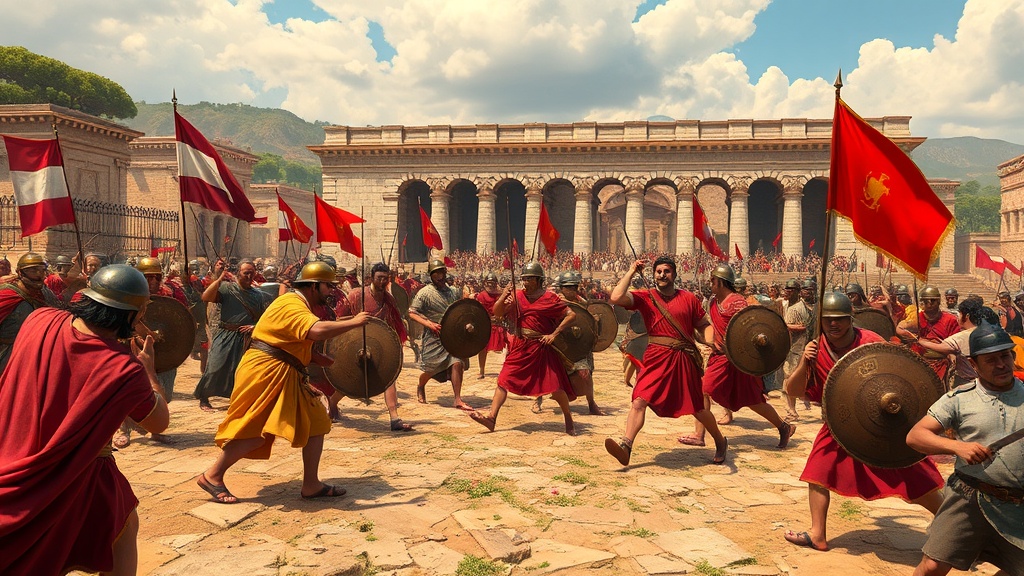
Imagine losing two entire fleets to storms — not to enemy fire, not to tactical blunders, but to the weather — and then deciding to build a third. That is the story of Rome during the First Punic War, and it tells you almost everything you need to know about why Rome eventually ruled the known world. The First Punic War, fought between 264 and 241 BC, was not simply a territorial squabble over Sicily. It was a 23-year collision between two fundamentally different civilisations: one that treated war as a business, and one that treated it as a religion.
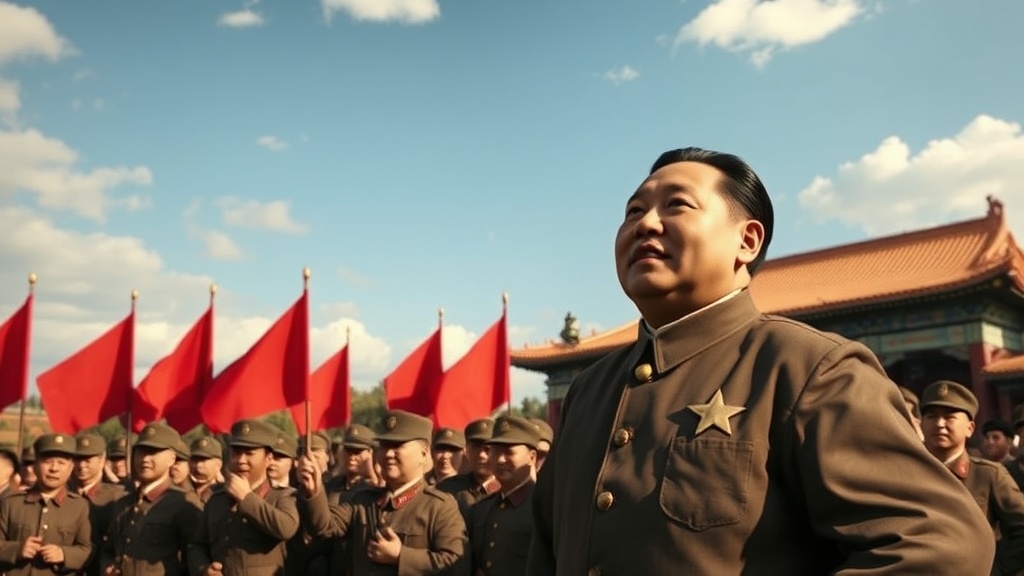
Carthage was rich, cosmopolitan, and pragmatic. Rome was stubborn, hierarchical, and absolutely incapable of accepting defeat. That contrast — more than any single battle or commander — determined the outcome of one of antiquity's longest and most punishing conflicts.
The Roman Invasion of Africa: Ambition Meets Reality
Following their stunning naval victory at the Battle of Cape Ecnomus in 256 BC — one of the largest naval engagements in ancient history, involving perhaps 300,000 men across both fleets — the Romans did something audacious. They took the fight directly to Carthaginian soil in North Africa. It was a bold strategic gamble: rather than grinding through Sicily indefinitely, they aimed to threaten Carthage itself and force a quick surrender.
The early results were intoxicating. Roman forces under consul Marcus Atilius Regulus swept through the Carthaginian countryside, seizing the city of Aspis and taking tens of thousands of slaves. The Carthaginian population, fleeing the advancing Romans, flooded into the capital, creating food shortages and panic within the city walls. On paper, Carthage was on the edge of collapse.
But Regulus, sensing personal glory slipping away as his consular term neared its end, overplayed his hand dramatically. Rather than maintaining pressure and negotiating from a position of overwhelming strength, he demanded total and unconditional surrender — the kind of terms you offer a broken enemy, not one that still has an army. It was a psychological miscalculation with catastrophic consequences. The Carthaginians, insulted and reinvigorated, refused. And then they went shopping for a solution.
Xanthippus and the Art of Knowing What You're Doing Wrong
What makes the Carthaginian response to Regulus so fascinating is not that they fought back — it's how they fought back. Rather than doubling down on the same failed strategies, Carthage did something almost shockingly rational: they admitted incompetence and hired an expert.
Xanthippus of Sparta arrived to find a Carthaginian military committing what military historians would recognise as textbook self-sabotage. Their war elephants — terrifying, crushing instruments of psychological and physical warfare — were being deployed at the rear, well away from any fighting. Their Numidian cavalry, arguably the finest horsemen in the ancient world, were being asked to manoeuvre on rough, hilly terrain that neutralised every advantage they possessed. It was as though a chess grandmaster kept moving their queen into corners.
Xanthippus corrected all of this with blunt efficiency. He moved the elephants to the front line, chose flat ground that suited the cavalry, and rebuilt morale with the kind of brutal honesty that good generals trade in. At the subsequent Battle of the Bagradas River, the reformed Carthaginian army shattered the Roman forces. Regulus was captured. The Roman invasion of Africa was over.
The episode reveals one of the First Punic War's deeper truths: Carthage was not incapable of brilliance. It was incapable of institutional brilliance. Their military genius came in hired packages, not in cultivated traditions. That distinction would matter enormously in the wars to come.
Roman Resilience: The Most Expensive Stubbornness in Ancient History
What followed Regulus' defeat is one of the most astonishing sequences in military history. The Romans sent a fleet to rescue their surviving forces in Africa. The mission succeeded — and then a catastrophic storm destroyed 284 ships and killed perhaps 100,000 men on the voyage home. It was the single greatest loss of life Rome had ever suffered in one event.
They built another fleet. Within three months, 220 new warships were at sea. That fleet was also largely destroyed — this time by another storm. Rome built yet another fleet. When that too suffered disaster at the Battle of Drepana, partly because the Roman commander Publius Claudius Pulcher chose to ignore every available religious omen warning him not to fight, Rome paused, regrouped, and started building again.
This pattern defies easy explanation. Roman society was not uniquely wealthy or uniquely large. What it possessed was an almost pathological refusal to interpret catastrophe as conclusion. Defeat, to Rome, was data — information about what needed to change, not evidence that the enterprise should end. This cultural trait, forged through centuries of grinding warfare on the Italian peninsula, made Rome uniquely dangerous. You could beat them. You could not finish them.
The financial toll was enormous. By the war's final phase, the Roman state treasury was exhausted. The final fleet was built through patriotic donations from the aristocratic upper classes — private citizens funding a war navy because the government could no longer afford one. That the fleet was built at all is remarkable. That it then sailed out and won is the kind of fact that makes ancient history feel mythological.
The First Punic War's Decisive End: Aegates and the Price of Complacency
By 242 BC, Carthage had made a strategic error born of exhausted logic. Convinced that Rome — having lost multiple fleets and hundreds of thousands of men — could not possibly rebuild again, Carthaginian politicians recalled much of their navy and repurposed the ships for merchant trade. Hamilcar Barca, their brilliant guerrilla commander still operating in Sicily, was effectively abandoned to manage as best he could.
It was the kind of assumption that sounds reasonable until the moment it isn't. Rome built another fleet.
At the Battle of the Aegates Islands in 241 BC, the new Roman fleet — lighter, faster, crewed by trained sailors rather than hastily conscripted landlubbers — intercepted a Carthaginian supply convoy heading for Sicily. The Carthaginian ships were heavy, loaded with supplies, and undermanned. The Romans destroyed or captured around 120 vessels. It was not the largest battle of the war, but it was the one that ended it.
With no fleet, no money, and no realistic path to reinforcing their Sicilian forces, Carthage had no choice. Hamilcar Barca — a man who had never been defeated in the field — was instructed by his own government to negotiate peace on whatever terms he could find. By all accounts, he was furious. The war had not beaten him. Politics had.
The Treaty That Made the Next War Inevitable
The peace terms Rome extracted from Carthage in 241 BC were punishing by design. Carthage was to abandon Sicily entirely. All Roman prisoners were to be returned without ransom. Carthage was forbidden from making war against Syracuse or its allies. And then came the financial hammer: an indemnity of 2,200 talents of silver to be paid over 20 years.
Then, in a move that says everything about Roman negotiating style, the Roman Senate reviewed the terms and stiffened them. The indemnity was increased to 3,200 talents, and the repayment period was halved to 10 years. Carthage, already beaten, had no leverage to resist.
The Romans, not content with Sicily, subsequently seized Corsica and Sardinia as well — taking advantage of a separate Carthaginian mercenary revolt, known as the Truceless War, that erupted almost immediately after the peace treaty was signed. The mercenary crisis was itself a direct consequence of Carthage's inability to pay its soldiers the wages owed from the war, a problem rooted in the crushing indemnity Rome had imposed.
Free Weekly Newsletter
Enjoying this guide?
Get the best articles like this one delivered to your inbox every week. No spam.
This is where strategy tips into tragedy. The Romans had won the First Punic War through extraordinary determination and innovation. But the terms they imposed created the conditions for the Second. The humiliation, the financial ruin, and above all the belief among Carthaginian leaders — particularly Hamilcar Barca and his son Hannibal — that Carthage had been robbed of a more honourable peace, would fester for a generation. When Hannibal crossed the Alps in 218 BC, he was not simply invading Italy. He was collecting a debt his father had told him Rome owed.
What the First Punic War Still Teaches Us
The First Punic War is not just a story about ancient ships and forgotten battles. It is a case study in institutional character — in what happens when two fundamentally different organisational cultures collide under pressure.
Carthage was adaptive when it had the luxury of reflection: hiring Xanthippus, importing Numidian cavalry, developing a formidable navy. But it was brittle under sustained attrition. Its mercenary armies lacked cohesion. Its politicians prioritised commerce over commitment. When the war became truly expensive, Carthage blinked.
Rome, by contrast, was rigid in its values but flexible in its methods. It had never fought a major naval war before 264 BC. It learned. It had never built a warship. It studied a beached Carthaginian vessel and reverse-engineered an entire fleet. It lost that fleet. It built another. The Romans did not possess superior technology, superior wealth, or superior numbers. They possessed superior will — and in a war of attrition lasting nearly a quarter century, will turns out to be the decisive resource.
The First Punic War ended in 241 BC with Rome in possession of Sicily, the first province in what would become a vast empire. It was not destiny. It was the accumulated result of thousands of choices, each one pushing toward engagement rather than retreat. The ancient world had seen empires before. It had not seen anything quite like Rome.
Frequently Asked Questions
What started the First Punic War?
The First Punic War began in 264 BC over control of Sicily, particularly the city of Messana. When a group of Italian mercenaries controlling Messana appealed to both Rome and Carthage for protection, both powers responded — and their forces came face to face. Neither side wanted to back down, and a 23-year war began over an island that neither had originally planned to fight over.
Why did Regulus fail in his African campaign?
Regulus came close to forcing Carthaginian surrender in 256–255 BC, but undermined himself in two key ways. First, he demanded unconditional surrender when Carthage was still capable of resistance, removing any incentive for the city to negotiate. Second, he was caught by the military reforms of the Spartan mercenary Xanthippus, who corrected fundamental Carthaginian tactical errors — moving war elephants to the front line and using flat terrain to deploy cavalry effectively — leading to a decisive Roman defeat at the Battle of the Bagradas River.
How many ships and men did Rome lose in storms during the First Punic War?
Rome suffered catastrophic storm losses on at least two major occasions. After rescuing the survivors of the African campaign in 255 BC, a storm destroyed approximately 284 ships and may have killed close to 100,000 men — the worst single disaster in Roman history to that point. A subsequent storm destroyed another large fleet shortly afterwards. Despite these losses, Rome continued to build and deploy new fleets, which ultimately proved decisive.
What were the long-term consequences of the First Punic War's peace treaty?
The Treaty of Lutatius in 241 BC imposed severe financial penalties on Carthage, including a large silver indemnity that was increased at the last moment by the Roman Senate. Rome also later seized Corsica and Sardinia, which had not been part of the original peace terms. These humiliating conditions, combined with a mercenary revolt that Carthage struggled to finance, generated deep resentment. This bitterness directly shaped the ambitions of Hamilcar Barca and his son Hannibal, whose invasion of Italy in 218 BC ignited the far more destructive Second Punic War.
Frequently Asked Questions
When Two Empires Decided the Mediterranean Wasn't Big Enough
Imagine losing two entire fleets to storms — not to enemy fire, not to tactical blunders, but to the weather — and then deciding to build a third. That is the story of Rome during the First Punic War, and it tells you almost everything you need to know about why Rome eventually ruled the known world. The First Punic War, fought between 264 and 241 BC, was not simply a territorial squabble over Sicily. It was a 23-year collision between two fundamentally different civilisations: one that treated war as a business, and one that treated it as a religion.
Carthage was rich, cosmopolitan, and pragmatic. Rome was stubborn, hierarchical, and absolutely incapable of accepting defeat. That contrast — more than any single battle or commander — determined the outcome of one of antiquity's longest and most punishing conflicts.
The Roman Invasion of Africa: Ambition Meets Reality
Following their stunning naval victory at the Battle of Cape Ecnomus in 256 BC — one of the largest naval engagements in ancient history, involving perhaps 300,000 men across both fleets — the Romans did something audacious. They took the fight directly to Carthaginian soil in North Africa. It was a bold strategic gamble: rather than grinding through Sicily indefinitely, they aimed to threaten Carthage itself and force a quick surrender.
The early results were intoxicating. Roman forces under consul Marcus Atilius Regulus swept through the Carthaginian countryside, seizing the city of Aspis and taking tens of thousands of slaves. The Carthaginian population, fleeing the advancing Romans, flooded into the capital, creating food shortages and panic within the city walls. On paper, Carthage was on the edge of collapse.
But Regulus, sensing personal glory slipping away as his consular term neared its end, overplayed his hand dramatically. Rather than maintaining pressure and negotiating from a position of overwhelming strength, he demanded total and unconditional surrender — the kind of terms you offer a broken enemy, not one that still has an army. It was a psychological miscalculation with catastrophic consequences. The Carthaginians, insulted and reinvigorated, refused. And then they went shopping for a solution.
Xanthippus and the Art of Knowing What You're Doing Wrong
What makes the Carthaginian response to Regulus so fascinating is not that they fought back — it's how they fought back. Rather than doubling down on the same failed strategies, Carthage did something almost shockingly rational: they admitted incompetence and hired an expert.
Xanthippus of Sparta arrived to find a Carthaginian military committing what military historians would recognise as textbook self-sabotage. Their war elephants — terrifying, crushing instruments of psychological and physical warfare — were being deployed at the rear, well away from any fighting. Their Numidian cavalry, arguably the finest horsemen in the ancient world, were being asked to manoeuvre on rough, hilly terrain that neutralised every advantage they possessed. It was as though a chess grandmaster kept moving their queen into corners.
Xanthippus corrected all of this with blunt efficiency. He moved the elephants to the front line, chose flat ground that suited the cavalry, and rebuilt morale with the kind of brutal honesty that good generals trade in. At the subsequent Battle of the Bagradas River, the reformed Carthaginian army shattered the Roman forces. Regulus was captured. The Roman invasion of Africa was over.
The episode reveals one of the First Punic War's deeper truths: Carthage was not incapable of brilliance. It was incapable of institutional brilliance. Their military genius came in hired packages, not in cultivated traditions. That distinction would matter enormously in the wars to come.
Roman Resilience: The Most Expensive Stubbornness in Ancient History
What followed Regulus' defeat is one of the most astonishing sequences in military history. The Romans sent a fleet to rescue their surviving forces in Africa. The mission succeeded — and then a catastrophic storm destroyed 284 ships and killed perhaps 100,000 men on the voyage home. It was the single greatest loss of life Rome had ever suffered in one event.
They built another fleet. Within three months, 220 new warships were at sea. That fleet was also largely destroyed — this time by another storm. Rome built yet another fleet. When that too suffered disaster at the Battle of Drepana, partly because the Roman commander Publius Claudius Pulcher chose to ignore every available religious omen warning him not to fight, Rome paused, regrouped, and started building again.
This pattern defies easy explanation. Roman society was not uniquely wealthy or uniquely large. What it possessed was an almost pathological refusal to interpret catastrophe as conclusion. Defeat, to Rome, was data — information about what needed to change, not evidence that the enterprise should end. This cultural trait, forged through centuries of grinding warfare on the Italian peninsula, made Rome uniquely dangerous. You could beat them. You could not finish them.
The financial toll was enormous. By the war's final phase, the Roman state treasury was exhausted. The final fleet was built through patriotic donations from the aristocratic upper classes — private citizens funding a war navy because the government could no longer afford one. That the fleet was built at all is remarkable. That it then sailed out and won is the kind of fact that makes ancient history feel mythological.
The First Punic War's Decisive End: Aegates and the Price of Complacency
By 242 BC, Carthage had made a strategic error born of exhausted logic. Convinced that Rome — having lost multiple fleets and hundreds of thousands of men — could not possibly rebuild again, Carthaginian politicians recalled much of their navy and repurposed the ships for merchant trade. Hamilcar Barca, their brilliant guerrilla commander still operating in Sicily, was effectively abandoned to manage as best he could.
It was the kind of assumption that sounds reasonable until the moment it isn't. Rome built another fleet.
At the Battle of the Aegates Islands in 241 BC, the new Roman fleet — lighter, faster, crewed by trained sailors rather than hastily conscripted landlubbers — intercepted a Carthaginian supply convoy heading for Sicily. The Carthaginian ships were heavy, loaded with supplies, and undermanned. The Romans destroyed or captured around 120 vessels. It was not the largest battle of the war, but it was the one that ended it.
With no fleet, no money, and no realistic path to reinforcing their Sicilian forces, Carthage had no choice. Hamilcar Barca — a man who had never been defeated in the field — was instructed by his own government to negotiate peace on whatever terms he could find. By all accounts, he was furious. The war had not beaten him. Politics had.
The Treaty That Made the Next War Inevitable
The peace terms Rome extracted from Carthage in 241 BC were punishing by design. Carthage was to abandon Sicily entirely. All Roman prisoners were to be returned without ransom. Carthage was forbidden from making war against Syracuse or its allies. And then came the financial hammer: an indemnity of 2,200 talents of silver to be paid over 20 years.
Then, in a move that says everything about Roman negotiating style, the Roman Senate reviewed the terms and stiffened them. The indemnity was increased to 3,200 talents, and the repayment period was halved to 10 years. Carthage, already beaten, had no leverage to resist.
The Romans, not content with Sicily, subsequently seized Corsica and Sardinia as well — taking advantage of a separate Carthaginian mercenary revolt, known as the Truceless War, that erupted almost immediately after the peace treaty was signed. The mercenary crisis was itself a direct consequence of Carthage's inability to pay its soldiers the wages owed from the war, a problem rooted in the crushing indemnity Rome had imposed.
This is where strategy tips into tragedy. The Romans had won the First Punic War through extraordinary determination and innovation. But the terms they imposed created the conditions for the Second. The humiliation, the financial ruin, and above all the belief among Carthaginian leaders — particularly Hamilcar Barca and his son Hannibal — that Carthage had been robbed of a more honourable peace, would fester for a generation. When Hannibal crossed the Alps in 218 BC, he was not simply invading Italy. He was collecting a debt his father had told him Rome owed.
What the First Punic War Still Teaches Us
The First Punic War is not just a story about ancient ships and forgotten battles. It is a case study in institutional character — in what happens when two fundamentally different organisational cultures collide under pressure.
Carthage was adaptive when it had the luxury of reflection: hiring Xanthippus, importing Numidian cavalry, developing a formidable navy. But it was brittle under sustained attrition. Its mercenary armies lacked cohesion. Its politicians prioritised commerce over commitment. When the war became truly expensive, Carthage blinked.
Rome, by contrast, was rigid in its values but flexible in its methods. It had never fought a major naval war before 264 BC. It learned. It had never built a warship. It studied a beached Carthaginian vessel and reverse-engineered an entire fleet. It lost that fleet. It built another. The Romans did not possess superior technology, superior wealth, or superior numbers. They possessed superior will — and in a war of attrition lasting nearly a quarter century, will turns out to be the decisive resource.
The First Punic War ended in 241 BC with Rome in possession of Sicily, the first province in what would become a vast empire. It was not destiny. It was the accumulated result of thousands of choices, each one pushing toward engagement rather than retreat. The ancient world had seen empires before. It had not seen anything quite like Rome.
Frequently Asked Questions
What started the First Punic War?
The First Punic War began in 264 BC over control of Sicily, particularly the city of Messana. When a group of Italian mercenaries controlling Messana appealed to both Rome and Carthage for protection, both powers responded — and their forces came face to face. Neither side wanted to back down, and a 23-year war began over an island that neither had originally planned to fight over.
Why did Regulus fail in his African campaign?
Regulus came close to forcing Carthaginian surrender in 256–255 BC, but undermined himself in two key ways. First, he demanded unconditional surrender when Carthage was still capable of resistance, removing any incentive for the city to negotiate. Second, he was caught by the military reforms of the Spartan mercenary Xanthippus, who corrected fundamental Carthaginian tactical errors — moving war elephants to the front line and using flat terrain to deploy cavalry effectively — leading to a decisive Roman defeat at the Battle of the Bagradas River.
How many ships and men did Rome lose in storms during the First Punic War?
Rome suffered catastrophic storm losses on at least two major occasions. After rescuing the survivors of the African campaign in 255 BC, a storm destroyed approximately 284 ships and may have killed close to 100,000 men — the worst single disaster in Roman history to that point. A subsequent storm destroyed another large fleet shortly afterwards. Despite these losses, Rome continued to build and deploy new fleets, which ultimately proved decisive.
What were the long-term consequences of the First Punic War's peace treaty?
The Treaty of Lutatius in 241 BC imposed severe financial penalties on Carthage, including a large silver indemnity that was increased at the last moment by the Roman Senate. Rome also later seized Corsica and Sardinia, which had not been part of the original peace terms. These humiliating conditions, combined with a mercenary revolt that Carthage struggled to finance, generated deep resentment. This bitterness directly shaped the ambitions of Hamilcar Barca and his son Hannibal, whose invasion of Italy in 218 BC ignited the far more destructive Second Punic War.
About Zeebrain Editorial
Zeebrain publishes independent analysis of markets, investing, personal finance, and business. We disclose affiliate relationships, never accept payment for coverage, and fact-check all claims against primary sources. Read our editorial policy →
How this article was produced: Zeebrain articles are created with AI assistance from primary sources (including cited videos and market data) and reviewed under our editorial standards before publication. Spot an error? Tell us and we will correct it.
More from History & Mysteries



Related Guides
Keep exploring this topic
The First Punic War: How Rome and Carthage Went to War
History & Mysteries · First Punic War · Ancient Rome
The Second Punic War: How Rome Turned the Tide on Hannibal
History & Mysteries · Second Punic War · Hannibal Barca
The Second Punic War: How Hannibal Nearly Broke Rome
History & Mysteries · Second Punic War · Hannibal Barca
Why Mao Won the Chinese Civil War: The Full Story
History & Mysteries
Explore More Categories
Keep browsing by topic and build depth around the subjects you care about most.