The Second Punic War: How Hannibal Nearly Broke Rome
Quick Summary
How a boy raised on hatred and a general who crossed the Alps nearly destroyed the greatest empire in history. The Second Punic War, fully explained.
In This Article
The Second Punic War: How Hannibal Nearly Broke Rome
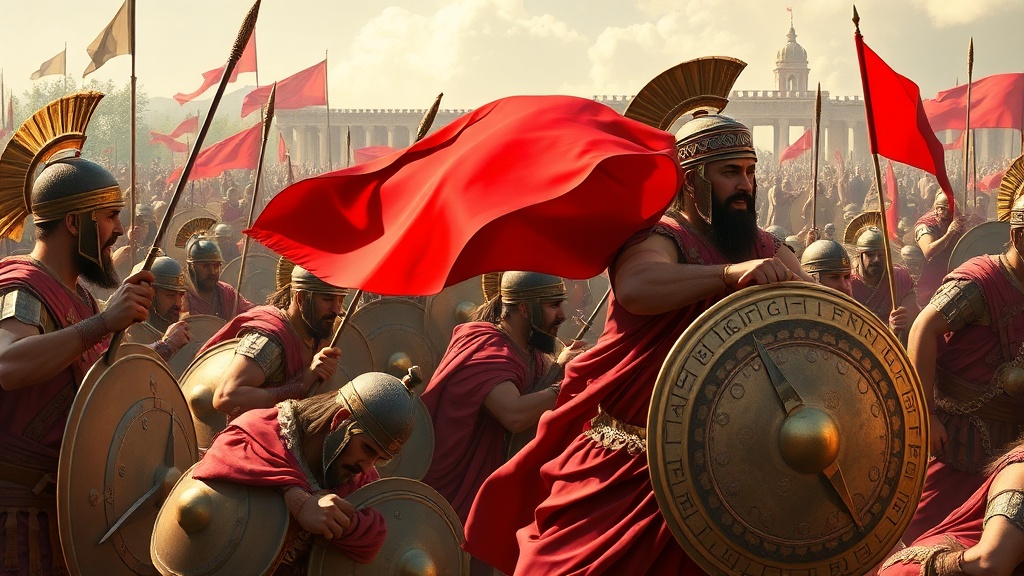
Somewhere in the late third century BC, a nine-year-old boy knelt before an altar in Carthage and swore an oath that would change the course of Western civilisation. He promised never to be a friend of Rome. His father — the brilliant, bitter, and vengeful Hamilcar Barca — watched on with what can only be described as fatherly pride of the most dangerous variety. That boy was Hannibal. And the war he would eventually unleash, the Second Punic War, remains one of the most audacious military campaigns in all of recorded history.
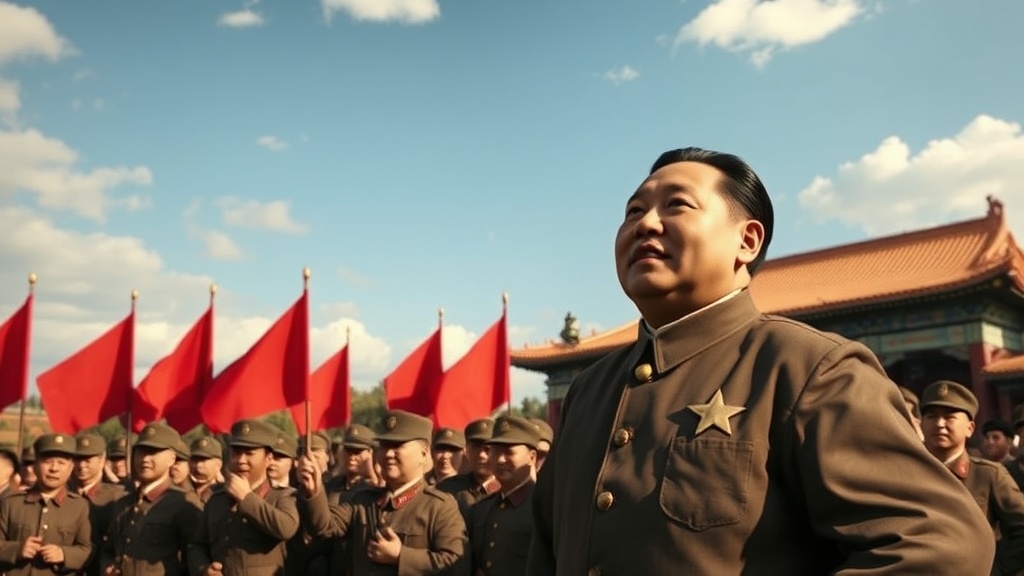
This is not simply a story of two empires colliding. It is a story about humiliation, compounding injustice, and what happens when a civilisation raises its most gifted son on a diet of pure, distilled vengeance.
The Wound That Never Healed: Carthage After the First Punic War
To understand the Second Punic War, you must first understand just how badly the First one broke Carthage — and how deliberately Rome twisted the knife afterward.
The First Punic War, which ground on from 264 to 241 BC, ended with Carthage surrendering Sicily and agreeing to pay Rome a staggering indemnity. That alone would have been humiliating enough. But Carthage's troubles were only beginning. Unable to pay its own mercenaries, the city lurched almost immediately into a catastrophic internal uprising known as the Mercenary War — a savage three-year conflict that brought Carthage to the edge of total destruction.
Rome, observing all of this with the cheerful opportunism of a vulture circling a wounded animal, made its move. When Carthaginian rebels on Sardinia appealed to Rome for help, the Romans didn't hesitate. They swept in, claimed the island, and when Carthage protested, they demanded even more money as compensation. It was a breathtaking piece of imperial extortion — so brazen that even Roman contemporaries struggled to justify it legally or morally.
The message to Carthage was unambiguous: you are beneath us, you will stay beneath us, and there is nothing you can do about it.
Except, of course, there was.
Hamilcar Barca and the Spanish Gambit
Hamilcar Barca was the kind of man who transforms national humiliation into personal mission. A celebrated general from the First Punic War, he had watched Carthage's politicians surrender what he believed could still have been fought for, and he never forgave them for it. When he proposed leading an army to the Iberian Peninsula — ostensibly to exploit its famed silver mines and pay off Carthage's Roman debt — the Carthaginian senate approved the plan, perhaps not fully grasping what they were actually sanctioning.
What Hamilcar was really doing in Spain was building a parallel state. Away from the squabbling politicians of Carthage, he carved out territory, subdued Iberian tribes through a combination of military brilliance and strategic diplomacy, and got the silver flowing. The new city of Carthago Nova — modern-day Cartagena — rose as a gleaming symbol of Carthaginian resurgence. It wasn't just an economic recovery. It was the construction of a war machine, piece by careful piece.
Critically, he brought his son. Hannibal did not merely observe his father's campaigns from a safe distance — he participated in them from childhood, absorbing lessons in logistics, terrain, psychological warfare, and the management of multi-ethnic armies. By the time Hamilcar drowned in a river ambush around 228 BC, his son had already been forged into something extraordinary.
Hamilcar's son-in-law Hasdrubal the Fair continued the Spanish project until his own assassination in 221 BC. Command then fell to Hannibal — twenty-six years old, charismatic, tactically gifted, and carrying a childhood's worth of carefully cultivated fury toward Rome. The men who had served under his father and his brother-in-law followed him without question. He ate what they ate, slept where they slept, and was reliably among the first into battle. Loyalty like that, earned rather than demanded, is the rarest military currency there is.
Saguntum: The Spark in the Powder Keg
Rome had not been entirely oblivious to what was happening in Spain. The Ebro Treaty, agreed sometime around 226 BC, was meant to formalise a boundary — Carthage could operate south of the Ebro River, and Rome's sphere of influence lay to the north. It seemed clean enough on paper.
But then there was Saguntum.
Situated well south of the Ebro — squarely within what should have been Carthage's sphere — the city of Saguntum had somehow cultivated a formal alliance with Rome. How exactly this happened remains a subject of historical debate. Rome may have genuinely been responding to a request for help during an internal dispute. But it is equally plausible, perhaps more so, that Rome was deliberately planting a listening post and a potential military foothold inside Hannibal's operational territory. A stone in his shoe. A dare.
Hannibal, for his part, saw it clearly for what it was: Roman interference, Roman arrogance, Roman provocation. For a time he held back, calculating. But when the Saguntines began raiding into Carthaginian-allied territory, the calculation shifted. In 219 BC, Hannibal laid siege to Saguntum.
The siege lasted eight months. When the walls finally broke, the city fell with terrible violence. Rome, which had loudly declared itself Saguntum's protector, had done nothing — a failure of nerve that haunted Roman political discourse for years afterward. When the Roman delegation arrived in Carthage demanding Hannibal be handed over as a war criminal, the Carthaginian senate refused. The Roman envoy, the distinguished Fabius Maximus, reportedly gathered the folds of his toga and told the Carthaginian assembly he held within them both peace and war — they could choose which he would release.
They chose war.
Crossing the Alps: Military Genius or Organised Madness?
Rome's war plan was straightforward, logical, and entirely reasonable. One army would sail to North Africa and strike at Carthage directly. Another would march into Spain, neutralise Hannibal, and end the threat at its source. The Romans had beaten Carthage before. They were the overdogs now. This, everyone agreed, would be manageable.
Hannibal had different ideas.
Rather than sit in Spain and wait to be cornered, he decided to bring the war to the Italian peninsula itself — marching his army through southern Gaul and over the Alps to strike Rome from the north, a direction from which no serious enemy had approached in living memory. It was the military equivalent of a chess player flipping the board.
The Alpine crossing of 218 BC is one of antiquity's most debated logistical feats. Hannibal's force — estimates vary, but possibly around 38,000 infantry, 8,000 cavalry, and a famous contingent of war elephants when he began the mountain crossing — endured fifteen days of brutal mountain conditions. Rockslides, ambushes by hostile mountain tribes, freezing temperatures, and sheer exhaustion took a punishing toll. He arrived in northern Italy with significantly reduced numbers, some sources suggesting he lost nearly half his force in the crossing alone.
And yet, the strategic effect was everything he had calculated. The Romans were expecting a conventional war. What they got instead was Hannibal — already inside Italy, already moving, already winning.
What the Second Punic War Reveals About Power and Resentment
There is a reason military historians and strategists still study Hannibal's campaigns two millennia later. His genius was real and should not be understated. But the deeper lesson of how the Second Punic War began lies not in tactics but in politics.
Rome's treatment of Carthage after the First Punic War was not merely harsh — it was strategically reckless. The additional seizure of Sardinia, the compounding of financial penalties, the deliberate interference in Spain through the Saguntum alliance: these were the actions of a power that confused dominance with security. Rome won the First Punic War and then, through a series of short-sighted provocations, practically engineered the conditions for a second, far more devastating one.
Free Weekly Newsletter
Enjoying this guide?
Get the best articles like this one delivered to your inbox every week. No spam.
Hamilcar Barca did not invent Carthaginian resentment. He harvested it. And Hannibal did not create the war — he simply became its most perfectly shaped instrument.
The Second Punic War is, among other things, a case study in what happens when the victors of one conflict fail to offer the defeated party any path except humiliation. The Carthaginians were left with no dignified options — only the choice between permanent subordination and desperate resistance. Hannibal chose resistance, and he nearly pulled it off.
The War That Reshaped a Continent
The campaigns that followed Hannibal's Alpine crossing — Trebia, Lake Trasimene, and the catastrophic Roman defeat at Cannae in 216 BC, where Hannibal's forces encircled and annihilated an army of perhaps 70,000 Romans in a single afternoon — rank among the most tactically remarkable engagements in military history. Cannae in particular became a template that military commanders would study and attempt to replicate from Napoleon to the architects of the Schlieffen Plan in World War One.
Yet for all his brilliance on the battlefield, Hannibal would never take Rome itself. The war ground on for over fifteen years before Rome eventually carried the fight back to Africa, defeating Carthage at the Battle of Zama in 202 BC. Hannibal, the child of vengeance, would spend his final years as a fugitive, eventually dying in exile rather than fall into Roman hands.
But the Second Punic War left Rome irrevocably changed. It had been pushed to the absolute edge of survival, and the experience hardened the Roman republic into something sharper, more ruthless, and more imperial in its ambitions. The war that Hamilcar's resentment and Hannibal's genius unleashed did not destroy Rome — but it transformed it into the empire that would dominate the ancient world for centuries to come.
Sometimes the most consequential thing a war does is not what it destroys, but what it forces the survivor to become.
Frequently Asked Questions
What caused the Second Punic War?
The Second Punic War grew from deep Carthaginian resentment following the First Punic War, during which Rome not only defeated Carthage but subsequently seized Sardinia and imposed additional financial penalties while Carthage was struggling with its own internal Mercenary War. The immediate trigger was Hannibal's siege and destruction of Saguntum in 219 BC, a Spanish city allied with Rome. However, the underlying causes stretched back decades and were rooted in Rome's deliberate humiliation of Carthage after 241 BC.
Who was Hamilcar Barca and why does he matter?
Hamilcar Barca was a senior Carthaginian general during the First Punic War and arguably the most important figure in setting the stage for the Second. After the war, he led Carthaginian expansion into the Iberian Peninsula, where he effectively built an independent power base funded by Spanish silver mines. He instilled in his son Hannibal a profound hatred of Rome and a vision of revenge. When Hamilcar drowned in a river ambush around 228 BC, he had already set in motion a generational project of Carthaginian resurgence that his son would carry to its dramatic conclusion.
Why did Hannibal cross the Alps instead of sailing to Italy?
Hannibal's decision to cross the Alps was a strategic masterstroke designed to wrong-foot Roman expectations entirely. Rome anticipated fighting Carthage on its own terms — either defending Spain or attacking North Africa. By marching overland through Gaul and crossing the Alps, Hannibal bypassed Roman naval superiority, appeared in northern Italy from an unexpected direction, and forced Rome to fight a war on Italian soil. It was extraordinarily risky — the crossing cost him a significant portion of his army — but the psychological and strategic shock value was precisely what he needed to destabilise Rome's confidence.
Did Hannibal actually bring elephants across the Alps?
Yes, though the exact number and the specific route remain debated among historians. Ancient sources suggest Hannibal began his Alpine crossing with around 37 war elephants. The mountain conditions — extreme cold, treacherous terrain, hostile tribes — proved devastating, and most of the elephants did not survive long after reaching Italy. The one elephant reported to have survived the longest was reportedly named Surus. Despite their limited practical impact in Italy, the elephants served as powerful psychological weapons and have become the most enduring symbol of Hannibal's audacious campaign.
How long did the Second Punic War last?
The Second Punic War lasted approximately seventeen years, from 218 BC to 201 BC. It encompassed campaigns across the Iberian Peninsula, the Italian peninsula, Sicily, North Africa, and parts of Greece. It concluded with the Roman general Scipio Africanus defeating Hannibal at the Battle of Zama in 202 BC, after which Carthage agreed to a punishing peace treaty that effectively ended its status as a major Mediterranean power.
Frequently Asked Questions
The Wound That Never Healed: Carthage After the First Punic War
To understand the Second Punic War, you must first understand just how badly the First one broke Carthage — and how deliberately Rome twisted the knife afterward.
The First Punic War, which ground on from 264 to 241 BC, ended with Carthage surrendering Sicily and agreeing to pay Rome a staggering indemnity. That alone would have been humiliating enough. But Carthage's troubles were only beginning. Unable to pay its own mercenaries, the city lurched almost immediately into a catastrophic internal uprising known as the Mercenary War — a savage three-year conflict that brought Carthage to the edge of total destruction.
Rome, observing all of this with the cheerful opportunism of a vulture circling a wounded animal, made its move. When Carthaginian rebels on Sardinia appealed to Rome for help, the Romans didn't hesitate. They swept in, claimed the island, and when Carthage protested, they demanded even more money as compensation. It was a breathtaking piece of imperial extortion — so brazen that even Roman contemporaries struggled to justify it legally or morally.
The message to Carthage was unambiguous: you are beneath us, you will stay beneath us, and there is nothing you can do about it.
Except, of course, there was.
Hamilcar Barca and the Spanish Gambit
Hamilcar Barca was the kind of man who transforms national humiliation into personal mission. A celebrated general from the First Punic War, he had watched Carthage's politicians surrender what he believed could still have been fought for, and he never forgave them for it. When he proposed leading an army to the Iberian Peninsula — ostensibly to exploit its famed silver mines and pay off Carthage's Roman debt — the Carthaginian senate approved the plan, perhaps not fully grasping what they were actually sanctioning.
What Hamilcar was really doing in Spain was building a parallel state. Away from the squabbling politicians of Carthage, he carved out territory, subdued Iberian tribes through a combination of military brilliance and strategic diplomacy, and got the silver flowing. The new city of Carthago Nova — modern-day Cartagena — rose as a gleaming symbol of Carthaginian resurgence. It wasn't just an economic recovery. It was the construction of a war machine, piece by careful piece.
Critically, he brought his son. Hannibal did not merely observe his father's campaigns from a safe distance — he participated in them from childhood, absorbing lessons in logistics, terrain, psychological warfare, and the management of multi-ethnic armies. By the time Hamilcar drowned in a river ambush around 228 BC, his son had already been forged into something extraordinary.
Hamilcar's son-in-law Hasdrubal the Fair continued the Spanish project until his own assassination in 221 BC. Command then fell to Hannibal — twenty-six years old, charismatic, tactically gifted, and carrying a childhood's worth of carefully cultivated fury toward Rome. The men who had served under his father and his brother-in-law followed him without question. He ate what they ate, slept where they slept, and was reliably among the first into battle. Loyalty like that, earned rather than demanded, is the rarest military currency there is.
Saguntum: The Spark in the Powder Keg
Rome had not been entirely oblivious to what was happening in Spain. The Ebro Treaty, agreed sometime around 226 BC, was meant to formalise a boundary — Carthage could operate south of the Ebro River, and Rome's sphere of influence lay to the north. It seemed clean enough on paper.
But then there was Saguntum.
Situated well south of the Ebro — squarely within what should have been Carthage's sphere — the city of Saguntum had somehow cultivated a formal alliance with Rome. How exactly this happened remains a subject of historical debate. Rome may have genuinely been responding to a request for help during an internal dispute. But it is equally plausible, perhaps more so, that Rome was deliberately planting a listening post and a potential military foothold inside Hannibal's operational territory. A stone in his shoe. A dare.
Hannibal, for his part, saw it clearly for what it was: Roman interference, Roman arrogance, Roman provocation. For a time he held back, calculating. But when the Saguntines began raiding into Carthaginian-allied territory, the calculation shifted. In 219 BC, Hannibal laid siege to Saguntum.
The siege lasted eight months. When the walls finally broke, the city fell with terrible violence. Rome, which had loudly declared itself Saguntum's protector, had done nothing — a failure of nerve that haunted Roman political discourse for years afterward. When the Roman delegation arrived in Carthage demanding Hannibal be handed over as a war criminal, the Carthaginian senate refused. The Roman envoy, the distinguished Fabius Maximus, reportedly gathered the folds of his toga and told the Carthaginian assembly he held within them both peace and war — they could choose which he would release.
They chose war.
Crossing the Alps: Military Genius or Organised Madness?
Rome's war plan was straightforward, logical, and entirely reasonable. One army would sail to North Africa and strike at Carthage directly. Another would march into Spain, neutralise Hannibal, and end the threat at its source. The Romans had beaten Carthage before. They were the overdogs now. This, everyone agreed, would be manageable.
Hannibal had different ideas.
Rather than sit in Spain and wait to be cornered, he decided to bring the war to the Italian peninsula itself — marching his army through southern Gaul and over the Alps to strike Rome from the north, a direction from which no serious enemy had approached in living memory. It was the military equivalent of a chess player flipping the board.
The Alpine crossing of 218 BC is one of antiquity's most debated logistical feats. Hannibal's force — estimates vary, but possibly around 38,000 infantry, 8,000 cavalry, and a famous contingent of war elephants when he began the mountain crossing — endured fifteen days of brutal mountain conditions. Rockslides, ambushes by hostile mountain tribes, freezing temperatures, and sheer exhaustion took a punishing toll. He arrived in northern Italy with significantly reduced numbers, some sources suggesting he lost nearly half his force in the crossing alone.
And yet, the strategic effect was everything he had calculated. The Romans were expecting a conventional war. What they got instead was Hannibal — already inside Italy, already moving, already winning.
What the Second Punic War Reveals About Power and Resentment
There is a reason military historians and strategists still study Hannibal's campaigns two millennia later. His genius was real and should not be understated. But the deeper lesson of how the Second Punic War began lies not in tactics but in politics.
Rome's treatment of Carthage after the First Punic War was not merely harsh — it was strategically reckless. The additional seizure of Sardinia, the compounding of financial penalties, the deliberate interference in Spain through the Saguntum alliance: these were the actions of a power that confused dominance with security. Rome won the First Punic War and then, through a series of short-sighted provocations, practically engineered the conditions for a second, far more devastating one.
Hamilcar Barca did not invent Carthaginian resentment. He harvested it. And Hannibal did not create the war — he simply became its most perfectly shaped instrument.
The Second Punic War is, among other things, a case study in what happens when the victors of one conflict fail to offer the defeated party any path except humiliation. The Carthaginians were left with no dignified options — only the choice between permanent subordination and desperate resistance. Hannibal chose resistance, and he nearly pulled it off.
The War That Reshaped a Continent
The campaigns that followed Hannibal's Alpine crossing — Trebia, Lake Trasimene, and the catastrophic Roman defeat at Cannae in 216 BC, where Hannibal's forces encircled and annihilated an army of perhaps 70,000 Romans in a single afternoon — rank among the most tactically remarkable engagements in military history. Cannae in particular became a template that military commanders would study and attempt to replicate from Napoleon to the architects of the Schlieffen Plan in World War One.
Yet for all his brilliance on the battlefield, Hannibal would never take Rome itself. The war ground on for over fifteen years before Rome eventually carried the fight back to Africa, defeating Carthage at the Battle of Zama in 202 BC. Hannibal, the child of vengeance, would spend his final years as a fugitive, eventually dying in exile rather than fall into Roman hands.
But the Second Punic War left Rome irrevocably changed. It had been pushed to the absolute edge of survival, and the experience hardened the Roman republic into something sharper, more ruthless, and more imperial in its ambitions. The war that Hamilcar's resentment and Hannibal's genius unleashed did not destroy Rome — but it transformed it into the empire that would dominate the ancient world for centuries to come.
Sometimes the most consequential thing a war does is not what it destroys, but what it forces the survivor to become.
Frequently Asked Questions
What caused the Second Punic War?
The Second Punic War grew from deep Carthaginian resentment following the First Punic War, during which Rome not only defeated Carthage but subsequently seized Sardinia and imposed additional financial penalties while Carthage was struggling with its own internal Mercenary War. The immediate trigger was Hannibal's siege and destruction of Saguntum in 219 BC, a Spanish city allied with Rome. However, the underlying causes stretched back decades and were rooted in Rome's deliberate humiliation of Carthage after 241 BC.
Who was Hamilcar Barca and why does he matter?
Hamilcar Barca was a senior Carthaginian general during the First Punic War and arguably the most important figure in setting the stage for the Second. After the war, he led Carthaginian expansion into the Iberian Peninsula, where he effectively built an independent power base funded by Spanish silver mines. He instilled in his son Hannibal a profound hatred of Rome and a vision of revenge. When Hamilcar drowned in a river ambush around 228 BC, he had already set in motion a generational project of Carthaginian resurgence that his son would carry to its dramatic conclusion.
Why did Hannibal cross the Alps instead of sailing to Italy?
Hannibal's decision to cross the Alps was a strategic masterstroke designed to wrong-foot Roman expectations entirely. Rome anticipated fighting Carthage on its own terms — either defending Spain or attacking North Africa. By marching overland through Gaul and crossing the Alps, Hannibal bypassed Roman naval superiority, appeared in northern Italy from an unexpected direction, and forced Rome to fight a war on Italian soil. It was extraordinarily risky — the crossing cost him a significant portion of his army — but the psychological and strategic shock value was precisely what he needed to destabilise Rome's confidence.
Did Hannibal actually bring elephants across the Alps?
Yes, though the exact number and the specific route remain debated among historians. Ancient sources suggest Hannibal began his Alpine crossing with around 37 war elephants. The mountain conditions — extreme cold, treacherous terrain, hostile tribes — proved devastating, and most of the elephants did not survive long after reaching Italy. The one elephant reported to have survived the longest was reportedly named Surus. Despite their limited practical impact in Italy, the elephants served as powerful psychological weapons and have become the most enduring symbol of Hannibal's audacious campaign.
How long did the Second Punic War last?
The Second Punic War lasted approximately seventeen years, from 218 BC to 201 BC. It encompassed campaigns across the Iberian Peninsula, the Italian peninsula, Sicily, North Africa, and parts of Greece. It concluded with the Roman general Scipio Africanus defeating Hannibal at the Battle of Zama in 202 BC, after which Carthage agreed to a punishing peace treaty that effectively ended its status as a major Mediterranean power.
About Zeebrain Editorial
Zeebrain publishes independent analysis of markets, investing, personal finance, and business. We disclose affiliate relationships, never accept payment for coverage, and fact-check all claims against primary sources. Read our editorial policy →
How this article was produced: Zeebrain articles are created with AI assistance from primary sources (including cited videos and market data) and reviewed under our editorial standards before publication. Spot an error? Tell us and we will correct it.
More from History & Mysteries


Related Guides
Keep exploring this topic
The Second Punic War: How Rome Turned the Tide on Hannibal
History & Mysteries · Second Punic War · Hannibal Barca
Hannibal's Italian Campaign: How Rome Was Outthought
History & Mysteries · Second Punic War · Hannibal Barca
The First Punic War: How Rome Refused to Lose
History & Mysteries · First Punic War · Ancient Rome
Why Mao Won the Chinese Civil War: The Full Story
History & Mysteries
Explore More Categories
Keep browsing by topic and build depth around the subjects you care about most.