The Second Punic War: How Rome Turned the Tide on Hannibal
Quick Summary
How did Rome survive Hannibal's devastating Italian campaign? Explore the strategy, battles, and brilliant minds that reshaped the Second Punic War.
In This Article
When the Unthinkable Happens: Rome on the Brink
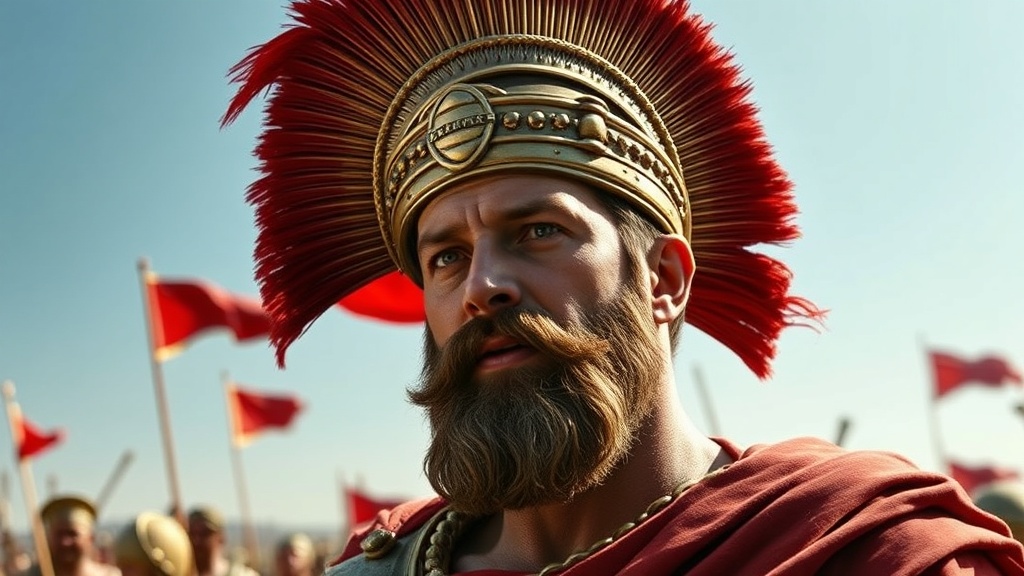
There is a particular kind of silence that follows catastrophe — the kind that falls over a city when it realises the army it trusted with its very existence has been destroyed. After the Battle of Cannae in 216 BC, Rome knew that silence intimately. Hannibal Barca had done the unthinkable: he had annihilated the largest force Rome had ever assembled, wiping out an estimated 20% of the republic's military-aged men in a single afternoon. The Italian peninsula trembled. Southern cities defected. Ancient religious rites were performed in desperation — including, in a grim testament to collective panic, the burial alive of Vestal Virgins accused of breaking their sacred vows.
And yet, Rome did not fall.
What followed the catastrophe of Cannae is one of history's most remarkable recoveries — a story not of heroic pitched battles, but of strategic patience, institutional resilience, and eventually, the emergence of a Roman general who understood Hannibal well enough to beat him at his own game. The Second Punic War, far from ending with Cannae, was only truly beginning.
The Fabian Strategy: Genius Disguised as Cowardice
In the aftermath of Cannae, the Roman political class did something almost unnatural for a culture defined by aggressive military expansion: it chose restraint. The architect of this reversal was Quintus Fabius Maximus, a man whose cautious tactics had previously earned him the mocking nickname Cunctator — the Delayer. After three devastating defeats, Rome stopped laughing at him.
The Fabian strategy was deceptively simple: avoid Hannibal. Do not fight him on open ground where his tactical brilliance could be applied. Instead, shadow his army, cut off foraging parties, and let supply lines and time do the work that Roman legions could not. It was unglamorous, politically unpopular, and profoundly effective.
What made the strategy truly clever, however, was its secondary dimension. While Hannibal had secured the loyalty of many southern Italian cities after Cannae — promising them freedom from Roman domination — Rome systematically turned this prize against him. Roman legions spread across the south, attacking those defected cities one by one. Hannibal found himself transformed from a conqueror into a bodyguard, perpetually racing across the peninsula to protect allies who could not protect themselves. Southern Italy, which had seemed like the spoils of his brilliant campaign, had become a trap. He could not leave it without losing everything, and he could not force Rome into a decisive engagement while he stayed.
The prison had no bars, but it was a prison nonetheless.
Multiple Fronts: Rome Fights Back on Its Own Terms
With Hannibal effectively muzzled in the south, Rome refocused its considerable resources on theatres where Hannibal's tactical genius was absent — and the results were instructive.
In Sicily, the defection of Syracuse after Cannae had handed Carthage a foothold on a strategically vital island. The Roman proconsul Claudius Marcellus laid siege to the city, facing an extraordinary obstacle: the inventions of Archimedes, the mathematician and engineer who had turned Syracuse's harbour into a death trap with mechanical claws that seized Roman warships and, allegedly, mirrors that focused sunlight to ignite enemy sails. These accounts, particularly the mirrors, remain historically contested, but the underlying truth is unambiguous — Archimedes' ingenuity delayed Rome for years. When Marcellus finally took the city during a moment of festival-induced carelessness among the defenders, he reportedly wept at the sight of it burning. The order to capture Archimedes alive came too late. By 210 BC, Sicily was fully Roman again.
In Greece, King Philip V of Macedon had seen Cannae as an opportunity, forging an alliance with Hannibal and dreaming of Roman collapse. Rome responded not with legions but with diplomacy, stirring up Philip's Greek rivals and keeping him perpetually distracted. He never sent Hannibal meaningful aid. The Roman capacity for strategic thinking across multiple theatres — often underappreciated compared to its battlefield prowess — proved decisive in isolating Carthage.
Spain: The War Behind the War
Of all the fronts in the Second Punic War, none was more consequential than Spain, and none is more frequently overshadowed by the drama of Hannibal's Italian campaign. This is a mistake. Spain was Carthage's engine room — rich in silver, manpower, and logistical infrastructure. It was the source from which Hannibal hoped to draw reinforcements. Lose Spain, and Hannibal's army in Italy becomes a brilliantly led but slowly dying island, cut off from any lifeline.
Rome understood this. After Cannae, the Scipio brothers — Publius and Gnaeus — waged a grinding, successful campaign in the peninsula, even recapturing Saguntum, the city whose siege had ignited the entire war. Their deaths in battle in 211 BC, and the near-total loss of Roman gains that followed, were a serious blow. But they had established something important: Spain was winnable.
The question was who would go back and win it.
The Rise of Scipio Africanus: Rome Finds Its Hannibal
The Roman Senate's silence when it called for a new commander for Spain is one of antiquity's most revealing moments. No seasoned general stepped forward. Spain, after the deaths of the Scipios, looked like a graveyard of ambition. The only hand raised belonged to a 26-year-old who did not technically meet the minimum qualifications for the post.
Publius Cornelius Scipio — later to be known as Scipio Africanus — was already something of a legend in his own generation. He had saved his wounded father at the Battle of Ticinus. He had survived Cannae and rallied survivors who were contemplating abandoning Rome entirely. He was brilliant, charismatic, and possessed of something rarer than courage: strategic imagination.
Where most Roman commanders viewed Hannibal's success as a product of superior numbers or luck, Scipio studied it as a methodology. Hannibal had won by wrong-footing his enemies, by attacking where he was not expected, and by striking at the foundations of Roman power rather than at Rome's armies directly. Scipio intended to do the same to Carthage.
His plan for Spain centred on a single audacious move: a surprise assault on New Carthage, the heavily fortified capital of Carthaginian Spain. With three Carthaginian armies spread across the peninsula, none positioned to respond in time, Scipio executed a forced march, arrived before the city, and — exploiting a tidal quirk that left one section of the city's lagoon shallow enough to wade through — stormed it from an unexpected angle. New Carthage fell in a single day.
The psychological and material impact was enormous. Rome had seized Carthage's treasury, its hostages, its war materials, and its strategic communications hub with Africa. The war in Spain had fundamentally shifted.
What Cannae Really Taught Rome
Free Weekly Newsletter
Enjoying this guide?
Get the best articles like this one delivered to your inbox every week. No spam.
It is tempting to read the Second Punic War as the story of Hannibal's brilliance. It is, in part, exactly that. But the deeper story is Rome's. Cannae did not break Rome — it educated it. The republic emerged from that catastrophe with a clearer strategic vision than it had possessed before, one that recognised the difference between winning battles and winning wars.
Rome learned to fight on its own terms. It learned to use its extensive network of allies and client states as instruments of sustained pressure rather than simply as troops for the next pitched battle. It learned, perhaps most crucially, to produce commanders who could think beyond the next engagement — men like Fabius Maximus, who saw the value of patience, and Scipio, who saw the value of striking at foundations rather than symptoms.
Hannibal's tragedy is not that he was outfought. He rarely was. His tragedy is that he faced an enemy whose greatest strength was institutional — an enemy that could absorb catastrophe, adapt, and return. He won nearly every battle he fought in Italy. He simply could not win the war.
Conclusion: The Long Game
The Second Punic War is a masterclass in strategic endurance. Rome's path from the brink of annihilation at Cannae to the eventual defeat of Carthage at Zama in 202 BC was not a straight line — it was a grinding, multi-front, decades-long exercise in collective will. The Fabian strategy bought time. The campaigns in Sicily and Greece closed off Hannibal's potential allies. The Spanish campaign, crowned by Scipio's capture of New Carthage, severed the artery that fed Hannibal's army.
What emerges from this period is a portrait of Rome that its own propaganda sometimes obscures: not simply a city of iron-willed soldiers charging at enemies, but a republic capable of strategic nuance, institutional flexibility, and long-term thinking. Hannibal was, by any measure, one of the greatest military commanders in human history. That Rome found a way to neutralise him without ever consistently beating him in the field is one of the ancient world's most extraordinary achievements.
Frequently Asked Questions
Why didn't Hannibal march on Rome after Cannae?
Hannibal's decision not to immediately march on Rome after Cannae remains one of the most debated questions in ancient history. His army, though victorious, was a relatively small force designed for mobile warfare deep in enemy territory — not ideally suited to a prolonged siege of one of the most heavily fortified cities in the ancient world. Hannibal also appears to have believed that Rome's Italian allies would continue defecting after Cannae, collapsing Rome's support base without the need for a direct assault. He was partly right, but catastrophically underestimated Rome's refusal to negotiate surrender under any circumstances.
What was the Fabian strategy and why was it effective against Hannibal?
The Fabian strategy, named after Roman general Quintus Fabius Maximus, involved avoiding pitched battle with Hannibal while using guerrilla-style harassment, cutting off supply lines, and attacking Roman allies who had defected to Carthage. It was effective because it neutralised the one advantage Hannibal held most decisively — his ability to destroy Roman armies in open battle. By refusing to engage on Hannibal's terms, Rome forced him into a war of attrition he could not win, stranded deep in hostile territory without a reliable supply chain or reinforcement route.
Who was Archimedes and what role did he play in the Second Punic War?
Archimedes was a Greek mathematician, physicist, and engineer who lived in Syracuse, Sicily. When Rome besieged the city after it defected to Carthage following Cannae, Archimedes designed a series of defensive machines that dramatically slowed the Roman assault. These included large cranes with grappling hooks capable of lifting and capsizing Roman warships, and reportedly large mirrors that concentrated sunlight to set ships ablaze — though the mirrors story is disputed by modern historians. His contributions delayed the Roman capture of Syracuse for over two years and represent one of the earliest recorded examples of science being directly applied to military defence.
How did Scipio Africanus change Rome's approach to the Second Punic War?
Scipio Africanus brought a fundamentally different strategic philosophy to Roman command. Rather than seeking to defeat Hannibal directly in Italy — which Rome had consistently failed to do — Scipio identified Spain as the critical theatre of the war. By capturing New Carthage and eventually driving Carthaginian forces from the Iberian Peninsula, he severed Hannibal's logistical lifeline and deprived him of potential reinforcements. Scipio also studied and adapted Hannibal's own tactical methods, using deception, flanking manoeuvres, and psychological pressure in ways that broke from traditional Roman direct-assault doctrine. His campaigns in Spain and later North Africa ultimately forced Hannibal to return to Carthage to face him at the Battle of Zama.
Frequently Asked Questions
When the Unthinkable Happens: Rome on the Brink
There is a particular kind of silence that follows catastrophe — the kind that falls over a city when it realises the army it trusted with its very existence has been destroyed. After the Battle of Cannae in 216 BC, Rome knew that silence intimately. Hannibal Barca had done the unthinkable: he had annihilated the largest force Rome had ever assembled, wiping out an estimated 20% of the republic's military-aged men in a single afternoon. The Italian peninsula trembled. Southern cities defected. Ancient religious rites were performed in desperation — including, in a grim testament to collective panic, the burial alive of Vestal Virgins accused of breaking their sacred vows.
And yet, Rome did not fall.
What followed the catastrophe of Cannae is one of history's most remarkable recoveries — a story not of heroic pitched battles, but of strategic patience, institutional resilience, and eventually, the emergence of a Roman general who understood Hannibal well enough to beat him at his own game. The Second Punic War, far from ending with Cannae, was only truly beginning.
The Fabian Strategy: Genius Disguised as Cowardice
In the aftermath of Cannae, the Roman political class did something almost unnatural for a culture defined by aggressive military expansion: it chose restraint. The architect of this reversal was Quintus Fabius Maximus, a man whose cautious tactics had previously earned him the mocking nickname Cunctator — the Delayer. After three devastating defeats, Rome stopped laughing at him.
The Fabian strategy was deceptively simple: avoid Hannibal. Do not fight him on open ground where his tactical brilliance could be applied. Instead, shadow his army, cut off foraging parties, and let supply lines and time do the work that Roman legions could not. It was unglamorous, politically unpopular, and profoundly effective.
What made the strategy truly clever, however, was its secondary dimension. While Hannibal had secured the loyalty of many southern Italian cities after Cannae — promising them freedom from Roman domination — Rome systematically turned this prize against him. Roman legions spread across the south, attacking those defected cities one by one. Hannibal found himself transformed from a conqueror into a bodyguard, perpetually racing across the peninsula to protect allies who could not protect themselves. Southern Italy, which had seemed like the spoils of his brilliant campaign, had become a trap. He could not leave it without losing everything, and he could not force Rome into a decisive engagement while he stayed.
The prison had no bars, but it was a prison nonetheless.
Multiple Fronts: Rome Fights Back on Its Own Terms
With Hannibal effectively muzzled in the south, Rome refocused its considerable resources on theatres where Hannibal's tactical genius was absent — and the results were instructive.
In Sicily, the defection of Syracuse after Cannae had handed Carthage a foothold on a strategically vital island. The Roman proconsul Claudius Marcellus laid siege to the city, facing an extraordinary obstacle: the inventions of Archimedes, the mathematician and engineer who had turned Syracuse's harbour into a death trap with mechanical claws that seized Roman warships and, allegedly, mirrors that focused sunlight to ignite enemy sails. These accounts, particularly the mirrors, remain historically contested, but the underlying truth is unambiguous — Archimedes' ingenuity delayed Rome for years. When Marcellus finally took the city during a moment of festival-induced carelessness among the defenders, he reportedly wept at the sight of it burning. The order to capture Archimedes alive came too late. By 210 BC, Sicily was fully Roman again.
In Greece, King Philip V of Macedon had seen Cannae as an opportunity, forging an alliance with Hannibal and dreaming of Roman collapse. Rome responded not with legions but with diplomacy, stirring up Philip's Greek rivals and keeping him perpetually distracted. He never sent Hannibal meaningful aid. The Roman capacity for strategic thinking across multiple theatres — often underappreciated compared to its battlefield prowess — proved decisive in isolating Carthage.
Spain: The War Behind the War
Of all the fronts in the Second Punic War, none was more consequential than Spain, and none is more frequently overshadowed by the drama of Hannibal's Italian campaign. This is a mistake. Spain was Carthage's engine room — rich in silver, manpower, and logistical infrastructure. It was the source from which Hannibal hoped to draw reinforcements. Lose Spain, and Hannibal's army in Italy becomes a brilliantly led but slowly dying island, cut off from any lifeline.
Rome understood this. After Cannae, the Scipio brothers — Publius and Gnaeus — waged a grinding, successful campaign in the peninsula, even recapturing Saguntum, the city whose siege had ignited the entire war. Their deaths in battle in 211 BC, and the near-total loss of Roman gains that followed, were a serious blow. But they had established something important: Spain was winnable.
The question was who would go back and win it.
The Rise of Scipio Africanus: Rome Finds Its Hannibal
The Roman Senate's silence when it called for a new commander for Spain is one of antiquity's most revealing moments. No seasoned general stepped forward. Spain, after the deaths of the Scipios, looked like a graveyard of ambition. The only hand raised belonged to a 26-year-old who did not technically meet the minimum qualifications for the post.
Publius Cornelius Scipio — later to be known as Scipio Africanus — was already something of a legend in his own generation. He had saved his wounded father at the Battle of Ticinus. He had survived Cannae and rallied survivors who were contemplating abandoning Rome entirely. He was brilliant, charismatic, and possessed of something rarer than courage: strategic imagination.
Where most Roman commanders viewed Hannibal's success as a product of superior numbers or luck, Scipio studied it as a methodology. Hannibal had won by wrong-footing his enemies, by attacking where he was not expected, and by striking at the foundations of Roman power rather than at Rome's armies directly. Scipio intended to do the same to Carthage.
His plan for Spain centred on a single audacious move: a surprise assault on New Carthage, the heavily fortified capital of Carthaginian Spain. With three Carthaginian armies spread across the peninsula, none positioned to respond in time, Scipio executed a forced march, arrived before the city, and — exploiting a tidal quirk that left one section of the city's lagoon shallow enough to wade through — stormed it from an unexpected angle. New Carthage fell in a single day.
The psychological and material impact was enormous. Rome had seized Carthage's treasury, its hostages, its war materials, and its strategic communications hub with Africa. The war in Spain had fundamentally shifted.
What Cannae Really Taught Rome
It is tempting to read the Second Punic War as the story of Hannibal's brilliance. It is, in part, exactly that. But the deeper story is Rome's. Cannae did not break Rome — it educated it. The republic emerged from that catastrophe with a clearer strategic vision than it had possessed before, one that recognised the difference between winning battles and winning wars.
Rome learned to fight on its own terms. It learned to use its extensive network of allies and client states as instruments of sustained pressure rather than simply as troops for the next pitched battle. It learned, perhaps most crucially, to produce commanders who could think beyond the next engagement — men like Fabius Maximus, who saw the value of patience, and Scipio, who saw the value of striking at foundations rather than symptoms.
Hannibal's tragedy is not that he was outfought. He rarely was. His tragedy is that he faced an enemy whose greatest strength was institutional — an enemy that could absorb catastrophe, adapt, and return. He won nearly every battle he fought in Italy. He simply could not win the war.
Conclusion: The Long Game
The Second Punic War is a masterclass in strategic endurance. Rome's path from the brink of annihilation at Cannae to the eventual defeat of Carthage at Zama in 202 BC was not a straight line — it was a grinding, multi-front, decades-long exercise in collective will. The Fabian strategy bought time. The campaigns in Sicily and Greece closed off Hannibal's potential allies. The Spanish campaign, crowned by Scipio's capture of New Carthage, severed the artery that fed Hannibal's army.
What emerges from this period is a portrait of Rome that its own propaganda sometimes obscures: not simply a city of iron-willed soldiers charging at enemies, but a republic capable of strategic nuance, institutional flexibility, and long-term thinking. Hannibal was, by any measure, one of the greatest military commanders in human history. That Rome found a way to neutralise him without ever consistently beating him in the field is one of the ancient world's most extraordinary achievements.
Frequently Asked Questions
Why didn't Hannibal march on Rome after Cannae?
Hannibal's decision not to immediately march on Rome after Cannae remains one of the most debated questions in ancient history. His army, though victorious, was a relatively small force designed for mobile warfare deep in enemy territory — not ideally suited to a prolonged siege of one of the most heavily fortified cities in the ancient world. Hannibal also appears to have believed that Rome's Italian allies would continue defecting after Cannae, collapsing Rome's support base without the need for a direct assault. He was partly right, but catastrophically underestimated Rome's refusal to negotiate surrender under any circumstances.
What was the Fabian strategy and why was it effective against Hannibal?
The Fabian strategy, named after Roman general Quintus Fabius Maximus, involved avoiding pitched battle with Hannibal while using guerrilla-style harassment, cutting off supply lines, and attacking Roman allies who had defected to Carthage. It was effective because it neutralised the one advantage Hannibal held most decisively — his ability to destroy Roman armies in open battle. By refusing to engage on Hannibal's terms, Rome forced him into a war of attrition he could not win, stranded deep in hostile territory without a reliable supply chain or reinforcement route.
Who was Archimedes and what role did he play in the Second Punic War?
Archimedes was a Greek mathematician, physicist, and engineer who lived in Syracuse, Sicily. When Rome besieged the city after it defected to Carthage following Cannae, Archimedes designed a series of defensive machines that dramatically slowed the Roman assault. These included large cranes with grappling hooks capable of lifting and capsizing Roman warships, and reportedly large mirrors that concentrated sunlight to set ships ablaze — though the mirrors story is disputed by modern historians. His contributions delayed the Roman capture of Syracuse for over two years and represent one of the earliest recorded examples of science being directly applied to military defence.
How did Scipio Africanus change Rome's approach to the Second Punic War?
Scipio Africanus brought a fundamentally different strategic philosophy to Roman command. Rather than seeking to defeat Hannibal directly in Italy — which Rome had consistently failed to do — Scipio identified Spain as the critical theatre of the war. By capturing New Carthage and eventually driving Carthaginian forces from the Iberian Peninsula, he severed Hannibal's logistical lifeline and deprived him of potential reinforcements. Scipio also studied and adapted Hannibal's own tactical methods, using deception, flanking manoeuvres, and psychological pressure in ways that broke from traditional Roman direct-assault doctrine. His campaigns in Spain and later North Africa ultimately forced Hannibal to return to Carthage to face him at the Battle of Zama.
About Zeebrain Editorial
Zeebrain publishes independent analysis of markets, investing, personal finance, and business. We disclose affiliate relationships, never accept payment for coverage, and fact-check all claims against primary sources. Read our editorial policy →
How this article was produced: Zeebrain articles are created with AI assistance from primary sources (including cited videos and market data) and reviewed under our editorial standards before publication. Spot an error? Tell us and we will correct it.
More from History & Mysteries

Related Guides
Keep exploring this topic
The Second Punic War: How Hannibal Nearly Broke Rome
History & Mysteries · Second Punic War · Hannibal Barca
Hannibal's Italian Campaign: How Rome Was Outthought
History & Mysteries · Second Punic War · Hannibal Barca
The First Punic War: How Rome Refused to Lose
History & Mysteries · First Punic War · Ancient Rome
The First Punic War: How Rome and Carthage Went to War
History & Mysteries · First Punic War · Ancient Rome
Explore More Categories
Keep browsing by topic and build depth around the subjects you care about most.