Hannibal's Italian Campaign: How Rome Was Outthought
Quick Summary
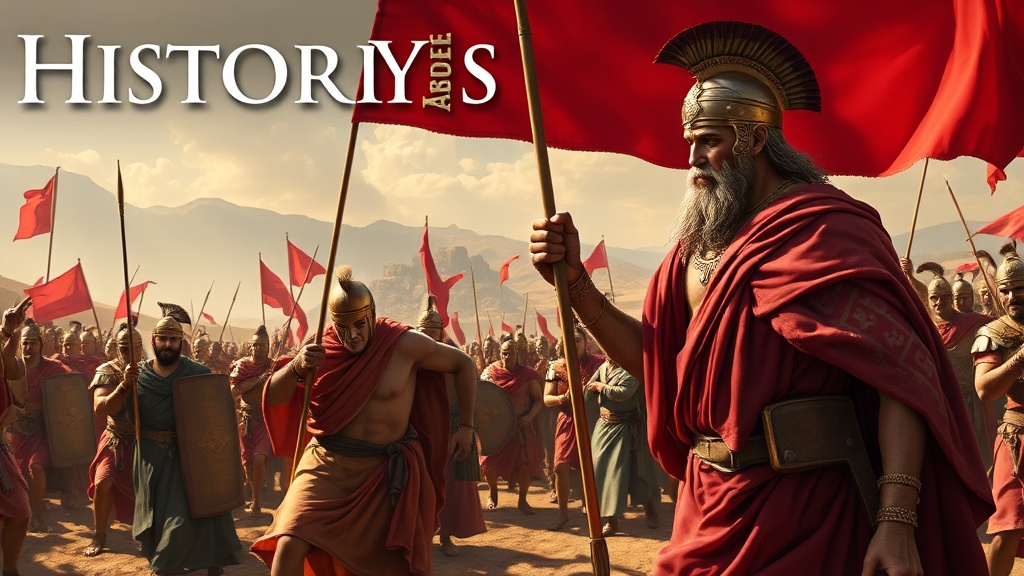
How did Hannibal humiliate Rome on its own soil? Explore the genius tactics, fatal Roman pride, and battlefield disasters of the Second Punic War.
In This Article
When the Unstoppable Met the Overconfident
There is a particular kind of humiliation reserved for those who mistake confidence for competence. Rome, in the early stages of the Second Punic War, experienced this humiliation in vivid, bloody detail. Having expected to carry the war to Carthage's doorstep, the Romans instead found themselves reacting — desperately, clumsily, fatally — to a general who had already decided how the war would be fought, where it would be fought, and who would survive it. That general was Hannibal Barca, and his Italian campaign remains one of the most studied and most devastating military offensives in ancient history.
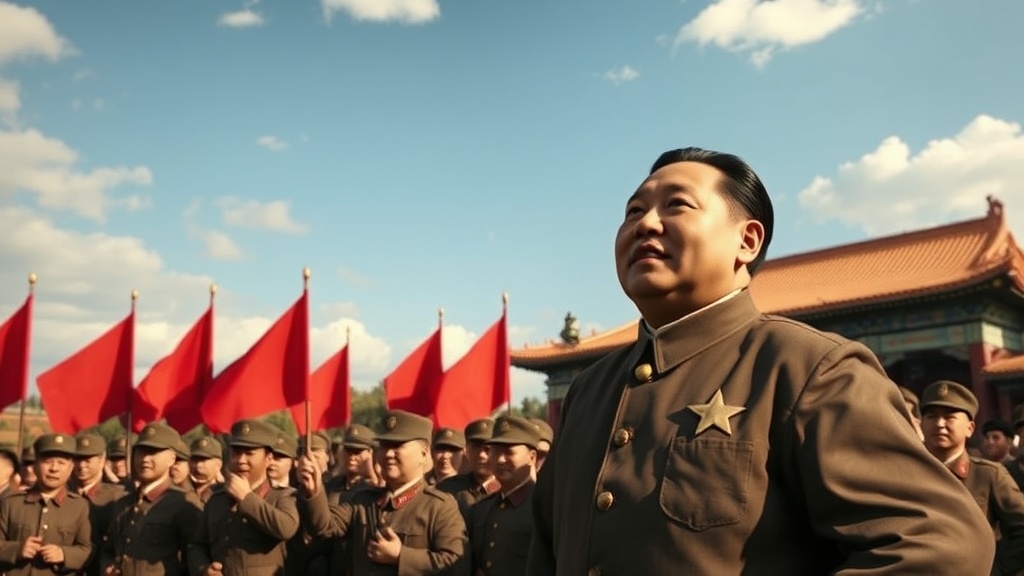
What unfolded across the plains of northern Italy, through the freezing waters of the Trebia river, and along the fog-shrouded shores of Lake Trasimene was not simply a series of battles. It was a masterclass in psychological warfare, strategic patience, and the ruthless exploitation of an enemy's greatest weakness: its own pride.
The Battle of Ticinus and Rome's First Shock
The first serious engagement between Hannibal's forces and Rome on Italian soil came at the Battle of Ticinus in 218 BCE. Roman Consul Publius Cornelius Scipio, moving with the characteristic directness of Roman military doctrine — march toward the enemy, overwhelm by discipline and mass — found himself almost immediately outmanoeuvred. Hannibal's Numidian cavalry, light, fast, and devastatingly effective, shredded the Roman formation before the legions could impose their preferred style of close-quarters combat.
Scipio himself was wounded in the engagement. By some accounts, his teenage son — the future Scipio Africanus — pulled him from the field, an origin story almost too cinematic to be entirely believed, though ancient sources repeat it with enthusiasm. The Romans retreated, destroying the bridge over the Ticinus behind them.
But the military loss, significant as it was, mattered less than its psychological aftermath. The Cisalpine Gauls — Celtic tribes who had long chafed under Roman rule and whom Hannibal had counted on as potential allies — watched the retreat and drew their conclusions. Defections began almost immediately. Some Celtic soldiers fighting within Roman ranks switched sides overnight, delivering to Hannibal not just their swords but the severed heads of their former Roman comrades as proof of loyalty. It was a propaganda victory as much as a military one, and Hannibal understood the difference between the two better than almost any commander of his era.
The Trap at Trebia: Intelligence, Patience, and Pancakes
The Battle of the Trebia in December 218 BCE is where Hannibal's genius truly announced itself. Two Roman consular armies had now merged under Scipio and his fellow consul Longus — a doubling of strength that should have demanded caution from Hannibal and confidence from Rome. Instead, Hannibal used the combined force's internal tensions against it.
The Roman system of alternating daily command between two consuls was, in stable circumstances, a reasonable safeguard against tyranny. In the face of a commander who had planted spies in the Roman camp and studied each consul's temperament with clinical precision, it was a vulnerability. Scipio, burned by Ticinus, urged restraint and winter training. Longus, typically Roman in his contempt for delay, wanted blood.
Hannibal gave Longus what he wanted — on Hannibal's terms. Numidian cavalry provoked the Roman camp before dawn, drawing the legions out before breakfast, marching them through the freezing waters of the Trebia river in December. By the time the Romans reached the Carthaginian position, they were cold, hungry, and exhausted. Hannibal's men, by contrast, had slept, eaten well, and oiled their bodies against the cold. An elite force concealed behind the riverbank — led by Hannibal's brother Mago — waited until the Romans were fully committed to the engagement before springing the ambush. The double envelopment was complete. Around 20,000 Romans died.
Longus escaped with a fragment of his force and, in one of history's less dignified moments of crisis management, attempted to hide the scale of the disaster from the Senate. It did not work for long.
The Arno Marshes: Madness as Strategy
Spring 217 BCE presented Hannibal with a new problem. Two fresh consuls — Servilius and the notoriously hotheaded Flaminius — had taken fortified positions guarding the two main passes south into Etruria. A frontal assault against prepared Roman positions was exactly the kind of battle Hannibal had spent the entire campaign avoiding.
His solution was, by any rational military standard, insane. He led his entire army — some 50,000 men — on a four-day march through the Arno marshlands, a flooded, disease-ridden expanse of mud and contaminated water that offered nowhere to sit, nowhere to sleep, and no shortage of misery. Men and animals died along the way. Hannibal himself reportedly contracted a severe eye infection during the crossing, possibly losing the use of one eye entirely — a wound he treated with characteristically brutal pragmatism.
The gamble paid off in a way that only Hannibal's gambles seemed to. His army emerged, battered but intact, into the rich agricultural lands of Etruria, bypassing both Roman armies entirely. He was now south of Rome's defensive line, free to plunder, recruit, and manoeuvre. And Flaminius, watching Etrurian villages burn from his position to the north, did exactly what Hannibal had predicted he would do: he gave chase alone, without waiting for his co-consul.
Lake Trasimene: The Perfect Ambush
The Battle of Lake Trasimene in June 217 BCE stands as one of the largest ambushes in military history, a feat of concealment and timing that reads more like a heist than a conventional engagement. Hannibal led Flaminius to a narrow pass along the lake's northern shore — a natural corridor with water on one side and wooded hills rising steeply on the other. He walked his main force visibly through the pass as evening fell, allowing the Romans to watch before making camp, confident they had found their quarry.
During the night, in total silence, tens of thousands of Carthaginian troops scaled the forested hillsides above the pass and settled into position. At dawn, as Flaminius marched his army along the lake shore in pursuit, a thick fog rose from the water's surface. Visibility collapsed to almost nothing. Then Hannibal's forces descended.
The Romans had no room to form their legionary battle lines — the foundation of all Roman tactical doctrine. Hemmed between the hills and the lake, they were cut down in the fog in a three-hour engagement that barely deserves to be called a battle. Around 15,000 Romans died, including Flaminius himself, reportedly killed by a Gaul warrior who had crossed the battlefield specifically to find him. Another 15,000 were captured. An entire consular army simply ceased to exist.
What makes Trasimene extraordinary is not just the outcome but the precision of its construction. Hannibal had choreographed terrain, weather, enemy psychology, and troop positioning into a single lethal sequence. Each element — the visible retreat, the tempting pursuit, the fog, the encirclement — depended on the one before it. Remove any piece, and the ambush falls apart. It all held together because Hannibal had studied his enemy well enough to know, with something approaching certainty, what Flaminius would do.
Why Rome Kept Losing: The Anatomy of Strategic Arrogance
It is tempting to frame the early disasters of the Second Punic War as simply a story of Roman incompetence versus Carthaginian genius. The reality is more instructive and more unsettling. Rome did not lose at Ticinus, Trebia, and Trasimene because its soldiers were cowardly or its generals stupid. It lost because its entire military culture was built around a set of assumptions that Hannibal had identified and systematically turned against it.
Roman doctrine prized aggressive forward movement, direct engagement, and the crushing weight of the legionary formation. These were genuine strengths — strengths that had conquered most of Italy and humbled Carthage once already in the First Punic War. But strengths become vulnerabilities the moment an opponent understands them better than you do. Hannibal never fought the battle Rome wanted to fight. He fought the battle he had already won in his head.
Free Weekly Newsletter
Enjoying this guide?
Get the best articles like this one delivered to your inbox every week. No spam.
The alternating consul system, the cultural contempt for caution, the reflexive belief in Roman superiority — these were not bugs in the Roman system. They were features, deeply embedded in Roman identity. Hannibal exploited all of them with the same methodical patience he brought to everything else. He did not need Rome to be weak. He needed Rome to be itself.
There is a lesson here that echoes across centuries of military history, business strategy, and competitive endeavour of every kind. The most dangerous opponent is not the one who attacks your weaknesses. It is the one who turns your strengths into traps.
Conclusion: The Genius of Making the Enemy Fight Your War
By the time Roman legions dragged themselves out of the waters of Lake Trasimene, the Second Punic War had been fundamentally and perhaps permanently redefined. Rome had entered the conflict expecting to carry the fight to Africa. Instead, it was counting its dead on its own soil and levying emergency legions to replace armies that had simply vanished.
Hannibal's Italian campaign in its opening phase — Ticinus, Trebia, Trasimene — was not a sequence of lucky victories. It was the product of extraordinary intelligence gathering, psychological insight, logistical audacity, and an almost inhuman capacity for patience. He knew his enemy. He knew the ground. He knew what each Roman commander would do when provoked, because he had designed the provocation carefully.
The Romans would eventually find their answer to Hannibal — though it would take years, cost hundreds of thousands of lives, and require them to produce a commander willing to study Hannibal as seriously as Hannibal had studied them. But in these early chapters of the war, watching Rome blunder from one catastrophe to the next, the dominant feeling is not of Roman failure but of something rarer and more impressive: a military mind operating so far ahead of its opposition that the outcome of each battle was, in some sense, already decided before a single sword was drawn.
Frequently Asked Questions
What was Hannibal's signature battle tactic during the Second Punic War?
Hannibal's most consistently devastating tactic was the double envelopment — surrounding the enemy on multiple sides simultaneously so that even a numerically superior force could be trapped, fragmented, and destroyed. He combined this with extraordinary intelligence gathering, careful exploitation of terrain, and the deliberate manipulation of enemy commanders' personalities. At Trebia, he used a concealed ambush force led by his brother Mago to complete the encirclement. At Trasimene, he used the natural geography of a lake and hillside to create a kill zone from which the Romans could not escape.
Why did Rome keep falling into Hannibal's traps despite experiencing repeated defeats?
Roman military culture was built on aggressive confidence and a belief in the supremacy of the legionary system. This was not irrational — it had produced remarkable military success. But it created predictability. Roman consuls were expected to be bold, to march toward the enemy, to engage directly. Hannibal studied this cultural template and designed each engagement to exploit it. The Roman alternating consul system also meant that the more cautious voice in any command partnership could be overridden on days when the impulsive consul held authority — a vulnerability Hannibal timed his provocations to exploit.
Who was Flaminius and why is he significant in the Second Punic War?
Gaius Flaminius was a Roman consul who came from the plebeian class — what Romans called a 'new man' — and who reportedly carried a pronounced anti-establishment chip on his shoulder. Militarily, he was aggressive and impatient, qualities that Hannibal had identified through his spy network before the two ever met on the battlefield. Flaminius's decision to pursue Hannibal alone, without waiting for his co-consul Servilius, led directly to the catastrophe at Lake Trasimene, where his entire army was destroyed and he himself was killed. He stands as one of history's clearest examples of a commander whose personality became his enemy's greatest weapon.
How did Hannibal use the Celts as part of his Italian strategy?
The Cisalpine Gauls — Celtic tribes in northern Italy — were crucial to Hannibal's strategy from the moment he crossed the Alps. Many of these tribes had deep grievances against Roman rule, and Hannibal positioned himself explicitly as their liberator. His early victories, particularly at Ticinus, triggered a wave of Celtic defections to his cause, dramatically expanding his army and his supply base. He also treated captured Celtic soldiers fighting for Rome with unusual leniency, releasing them and sending them home — a calculated act of propaganda designed to erode Roman authority over its Celtic allies. Maintaining Celtic loyalty was one of the primary strategic reasons Hannibal needed to keep moving south and keep winning battles in 217 BCE.
Frequently Asked Questions
When the Unstoppable Met the Overconfident
There is a particular kind of humiliation reserved for those who mistake confidence for competence. Rome, in the early stages of the Second Punic War, experienced this humiliation in vivid, bloody detail. Having expected to carry the war to Carthage's doorstep, the Romans instead found themselves reacting — desperately, clumsily, fatally — to a general who had already decided how the war would be fought, where it would be fought, and who would survive it. That general was Hannibal Barca, and his Italian campaign remains one of the most studied and most devastating military offensives in ancient history.
What unfolded across the plains of northern Italy, through the freezing waters of the Trebia river, and along the fog-shrouded shores of Lake Trasimene was not simply a series of battles. It was a masterclass in psychological warfare, strategic patience, and the ruthless exploitation of an enemy's greatest weakness: its own pride.
The Battle of Ticinus and Rome's First Shock
The first serious engagement between Hannibal's forces and Rome on Italian soil came at the Battle of Ticinus in 218 BCE. Roman Consul Publius Cornelius Scipio, moving with the characteristic directness of Roman military doctrine — march toward the enemy, overwhelm by discipline and mass — found himself almost immediately outmanoeuvred. Hannibal's Numidian cavalry, light, fast, and devastatingly effective, shredded the Roman formation before the legions could impose their preferred style of close-quarters combat.
Scipio himself was wounded in the engagement. By some accounts, his teenage son — the future Scipio Africanus — pulled him from the field, an origin story almost too cinematic to be entirely believed, though ancient sources repeat it with enthusiasm. The Romans retreated, destroying the bridge over the Ticinus behind them.
But the military loss, significant as it was, mattered less than its psychological aftermath. The Cisalpine Gauls — Celtic tribes who had long chafed under Roman rule and whom Hannibal had counted on as potential allies — watched the retreat and drew their conclusions. Defections began almost immediately. Some Celtic soldiers fighting within Roman ranks switched sides overnight, delivering to Hannibal not just their swords but the severed heads of their former Roman comrades as proof of loyalty. It was a propaganda victory as much as a military one, and Hannibal understood the difference between the two better than almost any commander of his era.
The Trap at Trebia: Intelligence, Patience, and Pancakes
The Battle of the Trebia in December 218 BCE is where Hannibal's genius truly announced itself. Two Roman consular armies had now merged under Scipio and his fellow consul Longus — a doubling of strength that should have demanded caution from Hannibal and confidence from Rome. Instead, Hannibal used the combined force's internal tensions against it.
The Roman system of alternating daily command between two consuls was, in stable circumstances, a reasonable safeguard against tyranny. In the face of a commander who had planted spies in the Roman camp and studied each consul's temperament with clinical precision, it was a vulnerability. Scipio, burned by Ticinus, urged restraint and winter training. Longus, typically Roman in his contempt for delay, wanted blood.
Hannibal gave Longus what he wanted — on Hannibal's terms. Numidian cavalry provoked the Roman camp before dawn, drawing the legions out before breakfast, marching them through the freezing waters of the Trebia river in December. By the time the Romans reached the Carthaginian position, they were cold, hungry, and exhausted. Hannibal's men, by contrast, had slept, eaten well, and oiled their bodies against the cold. An elite force concealed behind the riverbank — led by Hannibal's brother Mago — waited until the Romans were fully committed to the engagement before springing the ambush. The double envelopment was complete. Around 20,000 Romans died.
Longus escaped with a fragment of his force and, in one of history's less dignified moments of crisis management, attempted to hide the scale of the disaster from the Senate. It did not work for long.
The Arno Marshes: Madness as Strategy
Spring 217 BCE presented Hannibal with a new problem. Two fresh consuls — Servilius and the notoriously hotheaded Flaminius — had taken fortified positions guarding the two main passes south into Etruria. A frontal assault against prepared Roman positions was exactly the kind of battle Hannibal had spent the entire campaign avoiding.
His solution was, by any rational military standard, insane. He led his entire army — some 50,000 men — on a four-day march through the Arno marshlands, a flooded, disease-ridden expanse of mud and contaminated water that offered nowhere to sit, nowhere to sleep, and no shortage of misery. Men and animals died along the way. Hannibal himself reportedly contracted a severe eye infection during the crossing, possibly losing the use of one eye entirely — a wound he treated with characteristically brutal pragmatism.
The gamble paid off in a way that only Hannibal's gambles seemed to. His army emerged, battered but intact, into the rich agricultural lands of Etruria, bypassing both Roman armies entirely. He was now south of Rome's defensive line, free to plunder, recruit, and manoeuvre. And Flaminius, watching Etrurian villages burn from his position to the north, did exactly what Hannibal had predicted he would do: he gave chase alone, without waiting for his co-consul.
Lake Trasimene: The Perfect Ambush
The Battle of Lake Trasimene in June 217 BCE stands as one of the largest ambushes in military history, a feat of concealment and timing that reads more like a heist than a conventional engagement. Hannibal led Flaminius to a narrow pass along the lake's northern shore — a natural corridor with water on one side and wooded hills rising steeply on the other. He walked his main force visibly through the pass as evening fell, allowing the Romans to watch before making camp, confident they had found their quarry.
During the night, in total silence, tens of thousands of Carthaginian troops scaled the forested hillsides above the pass and settled into position. At dawn, as Flaminius marched his army along the lake shore in pursuit, a thick fog rose from the water's surface. Visibility collapsed to almost nothing. Then Hannibal's forces descended.
The Romans had no room to form their legionary battle lines — the foundation of all Roman tactical doctrine. Hemmed between the hills and the lake, they were cut down in the fog in a three-hour engagement that barely deserves to be called a battle. Around 15,000 Romans died, including Flaminius himself, reportedly killed by a Gaul warrior who had crossed the battlefield specifically to find him. Another 15,000 were captured. An entire consular army simply ceased to exist.
What makes Trasimene extraordinary is not just the outcome but the precision of its construction. Hannibal had choreographed terrain, weather, enemy psychology, and troop positioning into a single lethal sequence. Each element — the visible retreat, the tempting pursuit, the fog, the encirclement — depended on the one before it. Remove any piece, and the ambush falls apart. It all held together because Hannibal had studied his enemy well enough to know, with something approaching certainty, what Flaminius would do.
Why Rome Kept Losing: The Anatomy of Strategic Arrogance
It is tempting to frame the early disasters of the Second Punic War as simply a story of Roman incompetence versus Carthaginian genius. The reality is more instructive and more unsettling. Rome did not lose at Ticinus, Trebia, and Trasimene because its soldiers were cowardly or its generals stupid. It lost because its entire military culture was built around a set of assumptions that Hannibal had identified and systematically turned against it.
Roman doctrine prized aggressive forward movement, direct engagement, and the crushing weight of the legionary formation. These were genuine strengths — strengths that had conquered most of Italy and humbled Carthage once already in the First Punic War. But strengths become vulnerabilities the moment an opponent understands them better than you do. Hannibal never fought the battle Rome wanted to fight. He fought the battle he had already won in his head.
The alternating consul system, the cultural contempt for caution, the reflexive belief in Roman superiority — these were not bugs in the Roman system. They were features, deeply embedded in Roman identity. Hannibal exploited all of them with the same methodical patience he brought to everything else. He did not need Rome to be weak. He needed Rome to be itself.
There is a lesson here that echoes across centuries of military history, business strategy, and competitive endeavour of every kind. The most dangerous opponent is not the one who attacks your weaknesses. It is the one who turns your strengths into traps.
Conclusion: The Genius of Making the Enemy Fight Your War
By the time Roman legions dragged themselves out of the waters of Lake Trasimene, the Second Punic War had been fundamentally and perhaps permanently redefined. Rome had entered the conflict expecting to carry the fight to Africa. Instead, it was counting its dead on its own soil and levying emergency legions to replace armies that had simply vanished.
Hannibal's Italian campaign in its opening phase — Ticinus, Trebia, Trasimene — was not a sequence of lucky victories. It was the product of extraordinary intelligence gathering, psychological insight, logistical audacity, and an almost inhuman capacity for patience. He knew his enemy. He knew the ground. He knew what each Roman commander would do when provoked, because he had designed the provocation carefully.
The Romans would eventually find their answer to Hannibal — though it would take years, cost hundreds of thousands of lives, and require them to produce a commander willing to study Hannibal as seriously as Hannibal had studied them. But in these early chapters of the war, watching Rome blunder from one catastrophe to the next, the dominant feeling is not of Roman failure but of something rarer and more impressive: a military mind operating so far ahead of its opposition that the outcome of each battle was, in some sense, already decided before a single sword was drawn.
Frequently Asked Questions
What was Hannibal's signature battle tactic during the Second Punic War?
Hannibal's most consistently devastating tactic was the double envelopment — surrounding the enemy on multiple sides simultaneously so that even a numerically superior force could be trapped, fragmented, and destroyed. He combined this with extraordinary intelligence gathering, careful exploitation of terrain, and the deliberate manipulation of enemy commanders' personalities. At Trebia, he used a concealed ambush force led by his brother Mago to complete the encirclement. At Trasimene, he used the natural geography of a lake and hillside to create a kill zone from which the Romans could not escape.
Why did Rome keep falling into Hannibal's traps despite experiencing repeated defeats?
Roman military culture was built on aggressive confidence and a belief in the supremacy of the legionary system. This was not irrational — it had produced remarkable military success. But it created predictability. Roman consuls were expected to be bold, to march toward the enemy, to engage directly. Hannibal studied this cultural template and designed each engagement to exploit it. The Roman alternating consul system also meant that the more cautious voice in any command partnership could be overridden on days when the impulsive consul held authority — a vulnerability Hannibal timed his provocations to exploit.
Who was Flaminius and why is he significant in the Second Punic War?
Gaius Flaminius was a Roman consul who came from the plebeian class — what Romans called a 'new man' — and who reportedly carried a pronounced anti-establishment chip on his shoulder. Militarily, he was aggressive and impatient, qualities that Hannibal had identified through his spy network before the two ever met on the battlefield. Flaminius's decision to pursue Hannibal alone, without waiting for his co-consul Servilius, led directly to the catastrophe at Lake Trasimene, where his entire army was destroyed and he himself was killed. He stands as one of history's clearest examples of a commander whose personality became his enemy's greatest weapon.
How did Hannibal use the Celts as part of his Italian strategy?
The Cisalpine Gauls — Celtic tribes in northern Italy — were crucial to Hannibal's strategy from the moment he crossed the Alps. Many of these tribes had deep grievances against Roman rule, and Hannibal positioned himself explicitly as their liberator. His early victories, particularly at Ticinus, triggered a wave of Celtic defections to his cause, dramatically expanding his army and his supply base. He also treated captured Celtic soldiers fighting for Rome with unusual leniency, releasing them and sending them home — a calculated act of propaganda designed to erode Roman authority over its Celtic allies. Maintaining Celtic loyalty was one of the primary strategic reasons Hannibal needed to keep moving south and keep winning battles in 217 BCE.
About Zeebrain Editorial
Zeebrain publishes independent analysis of markets, investing, personal finance, and business. We disclose affiliate relationships, never accept payment for coverage, and fact-check all claims against primary sources. Read our editorial policy →
How this article was produced: Zeebrain articles are created with AI assistance from primary sources (including cited videos and market data) and reviewed under our editorial standards before publication. Spot an error? Tell us and we will correct it.
More from History & Mysteries



Related Guides
Keep exploring this topic
The Second Punic War: How Rome Turned the Tide on Hannibal
History & Mysteries · Second Punic War · Hannibal Barca
The Second Punic War: How Hannibal Nearly Broke Rome
History & Mysteries · Second Punic War · Hannibal Barca
The First Punic War: How Rome Refused to Lose
History & Mysteries · First Punic War · Ancient Rome
Why Mao Won the Chinese Civil War: The Full Story
History & Mysteries
Explore More Categories
Keep browsing by topic and build depth around the subjects you care about most.