The Strait of Messina: Science Behind Homer's Monster Myth
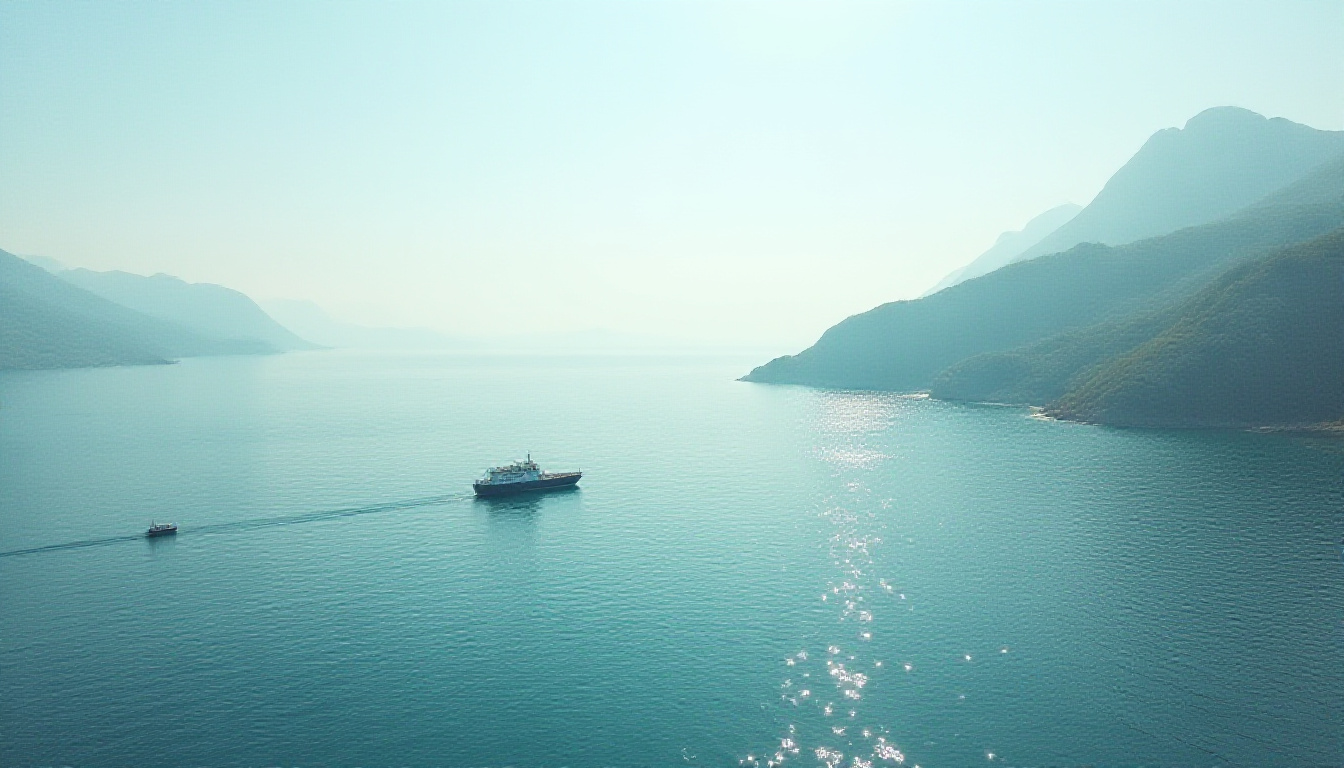
Quick Summary
Why does the Strait of Messina have opposite tides on each side? Explore the real ocean science behind Homer's monsters Scylla and Charybdis.
In This Article
When Mythology Meets Oceanography
Homer's Odyssey is one of the oldest adventure stories in Western literature, and like all great myths, it encodes something real inside its monsters. Odysseus threading his ship through the narrow gap between Charybdis — a colossal whirlpool — and Scylla — a six-headed beast haunting the cliffs — was not pure invention. Scholars and oceanographers have long identified this passage with the Strait of Messina, the narrow channel between Sicily and the Italian mainland. It is a place where the sea genuinely behaves as though something ancient and malevolent lives beneath the surface.

But what actually causes the Strait of Messina's notorious currents, deadly whirlpools, and its stranger claim to fame — having completely opposite tides on either side? The answer draws together gravitational physics, the unique geography of the Mediterranean, and the surprising chemistry of seawater. Far from diminishing the myth, the science makes it even more impressive.
How Tides Actually Work — And Why Most People Get It Wrong
The popular explanation for tides goes something like this: the Moon pulls the oceans toward it, creating a bulge of water on the side of Earth facing the Moon. Simple enough. But that explanation immediately raises an obvious question — why is there also a high tide on the opposite side of the Earth at the same time?
The answer lies in inertia. As the Earth rotates, its spin creates an outward force that generates a second tidal bulge, diametrically opposite the first. Between these two bulges sit two zones of lower sea level — what we experience as low tide. The result, on a hypothetical ocean-covered Earth with no continents, would be a clean, predictable rhythm: two high tides and two low tides every 24 hours.
The Sun matters too. It exerts its own gravitational pull on the oceans, roughly 46% as powerful as the Moon's tidal effect. When the Sun and Moon align — during new and full moons — their forces combine to produce the especially dramatic spring tides. When they pull at right angles during quarter moons, their effects partially cancel, producing the gentler neap tides.
This is the ideal model. Reality, as ever, is messier. The moment you introduce continents, the tidal bulge cannot simply slide around the planet unimpeded. It crashes into coastlines, gets redirected, amplified, or dampened. The shape of a bay or estuary can funnel tidal energy into extraordinary displays — the Bay of Fundy in Canada, for example, sees tidal ranges exceeding 16 metres. Geography, not just gravity, shapes the tides we experience.
Why the Mediterranean Is Almost Tideless
Here is where the Mediterranean becomes genuinely unusual. Look at a map and notice how enclosed it is. The sea connects to the Atlantic through the Strait of Gibraltar, a bottleneck roughly 14 kilometres wide at its narrowest point. There is also a connection to the Red Sea via the Suez Canal, but that is an artificial and relatively minor channel. For all practical purposes, the Mediterranean is a nearly sealed basin.
This creates a tidal paradox. When the gravitational forces of the Moon and Sun act on the Mediterranean, the sea cannot borrow large volumes of water from the Atlantic quickly enough to build a meaningful tidal bulge. The water already inside the basin simply sloshes back and forth — oceanographers call this a seiche effect — without producing the dramatic rises and falls seen on open coastlines. The average tidal range across most of the Mediterranean is around 30 centimetres. In Venice, notorious for its flooding, the tides themselves contribute only modestly; it is storm surges and subsidence doing most of the damage.
For the ancient Greeks and Romans, this near-tidelessness was itself a source of wonder. Aristotle reportedly puzzled over why the seas outside the Pillars of Hercules behaved so differently from the inland sea he knew. The Mediterranean's tidal shallowness is not a flaw in the physics — it is a direct consequence of its geography.
The Strait of Messina's Opposite Tides Explained
The Strait of Messina connects two distinct bodies of water: the Tyrrhenian Sea to the west of Italy's peninsula, and the Ionian Sea beneath the boot. Both are effectively sub-basins of the Mediterranean, each enclosed by their own stretches of coastline. And here is the critical detail — they develop their tidal rhythms semi-independently of each other.
Because both seas are effectively small, enclosed basins with their own sloshing patterns, they arrive at high tide and low tide at different moments. When the Tyrrhenian reaches high tide, the Ionian is at its low, and vice versa. They are permanently out of phase.
The Strait of Messina sits between them like a valve. When the Tyrrhenian is high, water rushes southward through the Strait into the lower Ionian. When the Ionian rises and the Tyrrhenian drops, the current reverses, pushing northward. This cycle repeats roughly twice a day — a semidiurnal pattern — and the resulting currents through the narrow, shallow strait are powerful enough that the region is now being studied as a viable source of tidal energy generation.
This is not a gentle sloshing. The Strait of Messina is approximately three kilometres wide at its narrowest and relatively shallow. Forcing large volumes of water through that constriction, twice a day, in alternating directions, produces current speeds that have historically capsized vessels and confounded navigators for three millennia.
When Chemistry Makes the Sea More Dangerous
The story does not end with opposing tides and strong currents. The Ionian and Tyrrhenian Seas are not just geographically separated — they are chemically distinct. The Ionian Sea is measurably saltier than the Tyrrhenian, a product of differing evaporation rates, river inflows, and connectivity to other water bodies. The Eastern Mediterranean as a whole is saltier than the Western Mediterranean, and the Ionian reflects this pattern.
Salinity determines density. Saltier water is denser and tends to sink beneath fresher water when the two meet. At the Strait of Messina, every tidal cycle forces these two chemically different water masses into contact. The density difference at the interface creates shear layers — zones where water moving at different speeds in different directions generates powerful rotational instabilities. These are the conditions that spawn whirlpools.
The whirlpools of the Strait of Messina are real, documented, and occasionally large enough to threaten small vessels. Historical records from Greek, Roman, Arab, and Norman navigators all describe the Strait with a mixture of awe and terror. Ancient sailors lacked the vocabulary of oceanography, but they were precise observers. A place where the sea seemed to breathe — inhaling and exhaling massive volumes of water twice daily, spinning unpredictably, foaming at the surface — demanded a mythological explanation. Charybdis, the great swallower, is a remarkably accurate metaphorical description of a tidal vortex.
What This Tells Us About Ancient Knowledge
It would be tempting to read Homer's geography as accidental — a lucky guess that happened to coincide with a real dangerous strait. But there is a more interesting interpretation. The ancient Greeks were accomplished seafarers operating in a competitive maritime economy. Sailors accumulate knowledge across generations, embedding warnings about treacherous passages in stories memorable enough to survive retelling. Myth, in this reading, was a technology for storing navigational intelligence.
The detail that is most striking is the binary choice Homer gives Odysseus: hug one side of the strait to avoid the whirlpool, accepting the loss of some crew to Scylla, or risk the whirlpool and potentially lose the entire ship. This is not a bad approximation of the actual tactical calculus a captain faced navigating the Strait. Steer too far east and the currents and whirlpools of the central channel threaten the ship; steer too close to the Calabrian cliffs and the rocky shoreline becomes the danger. The monsters map onto real hazards with uncomfortable precision.
This pattern appears elsewhere in ancient literature. The Symplegades — the clashing rocks of the Argonautica — may encode memories of dangerous passages in the Black Sea. Circe's island has been placed near Monte Circeo on the Italian coast. Ancient geography was not always wrong; it was often metaphorically right.
A Living Laboratory for Tidal Energy
The Strait of Messina's dangerous reputation has not faded. A proposed bridge between Sicily and mainland Italy — debated for decades and periodically revived in Italian political discourse — faces significant engineering challenges partly because of the Strait's currents and seismic activity. The same forces that terrified ancient mariners make modern engineering expensive.
But those same forces are now attracting a different kind of attention. The consistent, predictable, powerful currents flowing back and forth through the Strait twice a day represent a significant renewable energy resource. Unlike wind or solar, tidal currents are entirely predictable — you can schedule them centuries in advance. Pilot projects studying in-stream tidal turbines in the Strait of Messina have assessed current speeds and energy density with the goal of generating electricity for the surrounding region.
Free Weekly Newsletter
Enjoying this guide?
Get the best articles like this one delivered to your inbox every week. No spam.
The irony is elegant. A place so dangerous that it spawned two of antiquity's most enduring sea monsters may eventually become a clean energy source. The Strait of Messina has been terrifying people for roughly three thousand years. It might spend the next three thousand years quietly powering southern Italy.
Conclusion
The Strait of Messina is a place where several layers of science converge: gravitational tidal mechanics, basin geometry, fluid dynamics, and seawater chemistry all interact in a small patch of water between Sicily and Calabria. The result is a set of conditions — opposite tides, powerful bidirectional currents, density-driven whirlpools — that are genuinely unusual even by the Mediterranean's already quirky tidal standards.
Homeric myth did not distort reality here. It preserved it. The monsters Odysseus faced were real in every sense that mattered to a Bronze Age sailor: unpredictable, powerful, and capable of swallowing a ship whole. Understanding the physics behind Scylla and Charybdis does not make the Odyssey less interesting. It makes the ancient Greeks look like very careful observers of a very strange sea.
Frequently Asked Questions
Why does the Strait of Messina have such strong currents? The Strait acts as a narrow connecting channel between the Tyrrhenian and Ionian Seas, which are permanently out of tidal phase with each other. Twice a day, large volumes of water rush through the Strait in alternating directions as water moves from whichever sea is at high tide toward whichever is at low tide. The Strait's relatively narrow width and shallow depth accelerate these flows significantly.
Are the whirlpools in the Strait of Messina actually dangerous today? Yes, though the risk is more acute for small vessels than modern cargo ships or ferries. The whirlpools form at the boundary between the denser Ionian water and the lighter Tyrrhenian water, particularly during strong tidal exchanges. They are well-documented and mariners are advised to time their passage with the tidal cycle.
Why are tides so small in the Mediterranean compared to the Atlantic? The Mediterranean is nearly enclosed, with only the narrow Strait of Gibraltar connecting it to the Atlantic Ocean. This means the sea cannot rapidly import or export large water volumes to build a significant tidal bulge. Instead, the water inside the basin sloshes back and forth in a seiche-like pattern, producing average tidal ranges of around 30 centimetres — far smaller than the multi-metre ranges seen on open Atlantic coastlines.
Why are the Ionian and Tyrrhenian Seas in tidal opposition to each other? Because they are semi-enclosed basins with different shapes and coastline geometries, they develop their tidal rhythms at different phases. When the water in the Tyrrhenian reaches its high point, the Ionian is at its low, and the resulting pressure difference drives water through the Strait of Messina. This seesaw effect is self-reinforcing and means the two seas will remain permanently out of phase with each other.
Could the Strait of Messina realistically generate tidal energy? Researchers believe so. The currents through the Strait are strong, consistent, and entirely predictable — qualities that make tidal energy attractive compared to intermittent renewables like wind and solar. Several feasibility studies and pilot assessments have examined deploying underwater turbines in the Strait. The main challenges are the engineering complexity of operating in such turbulent water and the environmental impact on the local marine ecosystem.
Frequently Asked Questions
When Mythology Meets Oceanography
Homer's Odyssey is one of the oldest adventure stories in Western literature, and like all great myths, it encodes something real inside its monsters. Odysseus threading his ship through the narrow gap between Charybdis — a colossal whirlpool — and Scylla — a six-headed beast haunting the cliffs — was not pure invention. Scholars and oceanographers have long identified this passage with the Strait of Messina, the narrow channel between Sicily and the Italian mainland. It is a place where the sea genuinely behaves as though something ancient and malevolent lives beneath the surface.
But what actually causes the Strait of Messina's notorious currents, deadly whirlpools, and its stranger claim to fame — having completely opposite tides on either side? The answer draws together gravitational physics, the unique geography of the Mediterranean, and the surprising chemistry of seawater. Far from diminishing the myth, the science makes it even more impressive.
How Tides Actually Work — And Why Most People Get It Wrong
The popular explanation for tides goes something like this: the Moon pulls the oceans toward it, creating a bulge of water on the side of Earth facing the Moon. Simple enough. But that explanation immediately raises an obvious question — why is there also a high tide on the opposite side of the Earth at the same time?
The answer lies in inertia. As the Earth rotates, its spin creates an outward force that generates a second tidal bulge, diametrically opposite the first. Between these two bulges sit two zones of lower sea level — what we experience as low tide. The result, on a hypothetical ocean-covered Earth with no continents, would be a clean, predictable rhythm: two high tides and two low tides every 24 hours.
The Sun matters too. It exerts its own gravitational pull on the oceans, roughly 46% as powerful as the Moon's tidal effect. When the Sun and Moon align — during new and full moons — their forces combine to produce the especially dramatic spring tides. When they pull at right angles during quarter moons, their effects partially cancel, producing the gentler neap tides.
This is the ideal model. Reality, as ever, is messier. The moment you introduce continents, the tidal bulge cannot simply slide around the planet unimpeded. It crashes into coastlines, gets redirected, amplified, or dampened. The shape of a bay or estuary can funnel tidal energy into extraordinary displays — the Bay of Fundy in Canada, for example, sees tidal ranges exceeding 16 metres. Geography, not just gravity, shapes the tides we experience.
Why the Mediterranean Is Almost Tideless
Here is where the Mediterranean becomes genuinely unusual. Look at a map and notice how enclosed it is. The sea connects to the Atlantic through the Strait of Gibraltar, a bottleneck roughly 14 kilometres wide at its narrowest point. There is also a connection to the Red Sea via the Suez Canal, but that is an artificial and relatively minor channel. For all practical purposes, the Mediterranean is a nearly sealed basin.
This creates a tidal paradox. When the gravitational forces of the Moon and Sun act on the Mediterranean, the sea cannot borrow large volumes of water from the Atlantic quickly enough to build a meaningful tidal bulge. The water already inside the basin simply sloshes back and forth — oceanographers call this a seiche effect — without producing the dramatic rises and falls seen on open coastlines. The average tidal range across most of the Mediterranean is around 30 centimetres. In Venice, notorious for its flooding, the tides themselves contribute only modestly; it is storm surges and subsidence doing most of the damage.
For the ancient Greeks and Romans, this near-tidelessness was itself a source of wonder. Aristotle reportedly puzzled over why the seas outside the Pillars of Hercules behaved so differently from the inland sea he knew. The Mediterranean's tidal shallowness is not a flaw in the physics — it is a direct consequence of its geography.
The Strait of Messina's Opposite Tides Explained
The Strait of Messina connects two distinct bodies of water: the Tyrrhenian Sea to the west of Italy's peninsula, and the Ionian Sea beneath the boot. Both are effectively sub-basins of the Mediterranean, each enclosed by their own stretches of coastline. And here is the critical detail — they develop their tidal rhythms semi-independently of each other.
Because both seas are effectively small, enclosed basins with their own sloshing patterns, they arrive at high tide and low tide at different moments. When the Tyrrhenian reaches high tide, the Ionian is at its low, and vice versa. They are permanently out of phase.
The Strait of Messina sits between them like a valve. When the Tyrrhenian is high, water rushes southward through the Strait into the lower Ionian. When the Ionian rises and the Tyrrhenian drops, the current reverses, pushing northward. This cycle repeats roughly twice a day — a semidiurnal pattern — and the resulting currents through the narrow, shallow strait are powerful enough that the region is now being studied as a viable source of tidal energy generation.
This is not a gentle sloshing. The Strait of Messina is approximately three kilometres wide at its narrowest and relatively shallow. Forcing large volumes of water through that constriction, twice a day, in alternating directions, produces current speeds that have historically capsized vessels and confounded navigators for three millennia.
When Chemistry Makes the Sea More Dangerous
The story does not end with opposing tides and strong currents. The Ionian and Tyrrhenian Seas are not just geographically separated — they are chemically distinct. The Ionian Sea is measurably saltier than the Tyrrhenian, a product of differing evaporation rates, river inflows, and connectivity to other water bodies. The Eastern Mediterranean as a whole is saltier than the Western Mediterranean, and the Ionian reflects this pattern.
Salinity determines density. Saltier water is denser and tends to sink beneath fresher water when the two meet. At the Strait of Messina, every tidal cycle forces these two chemically different water masses into contact. The density difference at the interface creates shear layers — zones where water moving at different speeds in different directions generates powerful rotational instabilities. These are the conditions that spawn whirlpools.
The whirlpools of the Strait of Messina are real, documented, and occasionally large enough to threaten small vessels. Historical records from Greek, Roman, Arab, and Norman navigators all describe the Strait with a mixture of awe and terror. Ancient sailors lacked the vocabulary of oceanography, but they were precise observers. A place where the sea seemed to breathe — inhaling and exhaling massive volumes of water twice daily, spinning unpredictably, foaming at the surface — demanded a mythological explanation. Charybdis, the great swallower, is a remarkably accurate metaphorical description of a tidal vortex.
What This Tells Us About Ancient Knowledge
It would be tempting to read Homer's geography as accidental — a lucky guess that happened to coincide with a real dangerous strait. But there is a more interesting interpretation. The ancient Greeks were accomplished seafarers operating in a competitive maritime economy. Sailors accumulate knowledge across generations, embedding warnings about treacherous passages in stories memorable enough to survive retelling. Myth, in this reading, was a technology for storing navigational intelligence.
The detail that is most striking is the binary choice Homer gives Odysseus: hug one side of the strait to avoid the whirlpool, accepting the loss of some crew to Scylla, or risk the whirlpool and potentially lose the entire ship. This is not a bad approximation of the actual tactical calculus a captain faced navigating the Strait. Steer too far east and the currents and whirlpools of the central channel threaten the ship; steer too close to the Calabrian cliffs and the rocky shoreline becomes the danger. The monsters map onto real hazards with uncomfortable precision.
This pattern appears elsewhere in ancient literature. The Symplegades — the clashing rocks of the Argonautica — may encode memories of dangerous passages in the Black Sea. Circe's island has been placed near Monte Circeo on the Italian coast. Ancient geography was not always wrong; it was often metaphorically right.
A Living Laboratory for Tidal Energy
The Strait of Messina's dangerous reputation has not faded. A proposed bridge between Sicily and mainland Italy — debated for decades and periodically revived in Italian political discourse — faces significant engineering challenges partly because of the Strait's currents and seismic activity. The same forces that terrified ancient mariners make modern engineering expensive.
But those same forces are now attracting a different kind of attention. The consistent, predictable, powerful currents flowing back and forth through the Strait twice a day represent a significant renewable energy resource. Unlike wind or solar, tidal currents are entirely predictable — you can schedule them centuries in advance. Pilot projects studying in-stream tidal turbines in the Strait of Messina have assessed current speeds and energy density with the goal of generating electricity for the surrounding region.
The irony is elegant. A place so dangerous that it spawned two of antiquity's most enduring sea monsters may eventually become a clean energy source. The Strait of Messina has been terrifying people for roughly three thousand years. It might spend the next three thousand years quietly powering southern Italy.
Conclusion
The Strait of Messina is a place where several layers of science converge: gravitational tidal mechanics, basin geometry, fluid dynamics, and seawater chemistry all interact in a small patch of water between Sicily and Calabria. The result is a set of conditions — opposite tides, powerful bidirectional currents, density-driven whirlpools — that are genuinely unusual even by the Mediterranean's already quirky tidal standards.
Homeric myth did not distort reality here. It preserved it. The monsters Odysseus faced were real in every sense that mattered to a Bronze Age sailor: unpredictable, powerful, and capable of swallowing a ship whole. Understanding the physics behind Scylla and Charybdis does not make the Odyssey less interesting. It makes the ancient Greeks look like very careful observers of a very strange sea.
Frequently Asked Questions
Why does the Strait of Messina have such strong currents? The Strait acts as a narrow connecting channel between the Tyrrhenian and Ionian Seas, which are permanently out of tidal phase with each other. Twice a day, large volumes of water rush through the Strait in alternating directions as water moves from whichever sea is at high tide toward whichever is at low tide. The Strait's relatively narrow width and shallow depth accelerate these flows significantly.
Are the whirlpools in the Strait of Messina actually dangerous today? Yes, though the risk is more acute for small vessels than modern cargo ships or ferries. The whirlpools form at the boundary between the denser Ionian water and the lighter Tyrrhenian water, particularly during strong tidal exchanges. They are well-documented and mariners are advised to time their passage with the tidal cycle.
Why are tides so small in the Mediterranean compared to the Atlantic? The Mediterranean is nearly enclosed, with only the narrow Strait of Gibraltar connecting it to the Atlantic Ocean. This means the sea cannot rapidly import or export large water volumes to build a significant tidal bulge. Instead, the water inside the basin sloshes back and forth in a seiche-like pattern, producing average tidal ranges of around 30 centimetres — far smaller than the multi-metre ranges seen on open Atlantic coastlines.
Why are the Ionian and Tyrrhenian Seas in tidal opposition to each other? Because they are semi-enclosed basins with different shapes and coastline geometries, they develop their tidal rhythms at different phases. When the water in the Tyrrhenian reaches its high point, the Ionian is at its low, and the resulting pressure difference drives water through the Strait of Messina. This seesaw effect is self-reinforcing and means the two seas will remain permanently out of phase with each other.
Could the Strait of Messina realistically generate tidal energy? Researchers believe so. The currents through the Strait are strong, consistent, and entirely predictable — qualities that make tidal energy attractive compared to intermittent renewables like wind and solar. Several feasibility studies and pilot assessments have examined deploying underwater turbines in the Strait. The main challenges are the engineering complexity of operating in such turbulent water and the environmental impact on the local marine ecosystem.
About Zeebrain Editorial
Zeebrain publishes independent analysis of markets, investing, personal finance, and business. We disclose affiliate relationships, never accept payment for coverage, and fact-check all claims against primary sources. Read our editorial policy →
More from Curiosities




Related Guides
Keep exploring this topic
Explore More Categories
Keep browsing by topic and build depth around the subjects you care about most.