Why Spirit Airlines Failed: Ultra-Low-Cost Carrier Collapse
Quick Summary
Spirit Airlines pioneered ultra-low-cost flying then collapsed. Explore the structural forces, operational crises, and market shifts that killed the budget airline.
In This Article
The Airline Everyone Hated — And Then Missed
Spirit Airlines was, by almost every measurable standard, the worst airline in America. It ranked near the bottom of customer satisfaction surveys year after year. It charged you to print your boarding pass. It charged you to put a bag in the overhead bin. It delayed flights with impressive regularity. And yet, when the last Spirit flight touched down in November 2024, something unexpected happened: people were sad about it.

That reaction wasn't nostalgia for cramped seats and surprise fees. It was a quiet acknowledgement that Spirit had been doing something genuinely useful all along — flying cash-strapped Americans to places they couldn't otherwise afford to go. The airline's collapse wasn't simply the market correcting for a bad product. It was the result of a cascade of forces, some external, some self-inflicted, and some rooted in a fundamental misreading of where American consumer culture was heading. Understanding why Spirit Airlines failed tells us a great deal about the economics of aviation, the shifting psychology of modern travelers, and what happens when a niche business model gets squeezed from every direction at once.
From Gambling Junkets to the Seventh Largest US Carrier
Spirit's origins bear almost no resemblance to its eventual identity. The airline grew out of a trucking company that started dabbling in air travel in 1983 under the name Charter One, primarily coordinating gambling trips from Detroit, Boston, and Providence to Atlantic City. It was essentially a tour operator with wings — more travel agency than airline. That leisure-first, budget-conscious DNA, however, would prove remarkably persistent.
By 1992, the company had filed with the Department of Transportation to run scheduled passenger services and rebranded as Spirit Airlines, swapping its turboprops for DC-9s and opening routes from the Midwest and Northeast down to Florida, Myrtle Beach, and eventually Cancun. Throughout the 1990s, it operated as a fairly conventional low-cost carrier — cheap tickets, aging aircraft, unremarkable service, but still inclusive of a drink, a snack, a checked bag, and a seat you actually chose yourself. Budget, but budget in much the same way Southwest was budget.
The problem was that being merely cheap wasn't enough. Legacy carriers like Northwest Airlines could absorb short-term losses to undercut Spirit on price and drive it off routes. A 1999 lawsuit Spirit filed against Northwest — alleging predatory pricing out of Detroit — illustrated the bind clearly: Spirit wasn't cheap enough to be untouchable, and it wasn't premium enough to justify loyalty. It was stuck in an uncomfortable middle ground, and by the early 2000s, it was losing money.
The Unbundling Revolution That Changed American Aviation
The transformation that would define Spirit Airlines — and ultimately doom it — began in 2005 with the appointment of Ben Baldanza as president. Baldanza had long admired the European ultra-low-cost model pioneered by Ryanair and easyJet, carriers that stripped the flying experience down to its bare minimum and charged separately for every additional element. Private equity firm Indigo Partners, which bought a controlling stake in Spirit in 2006, shared that vision and had the global experience to back it.
Together, they executed one of the most radical commercial pivots in US aviation history. The strategy was called unbundling: the listed ticket price would guarantee you nothing more than a seat on the plane. Everything else — checked bags, carry-on bags, seat selection, drinks, food, even printing your boarding pass — would cost extra. The fees rolled out incrementally between 2007 and 2010, each one provoking outrage, op-eds, and occasional congressional hearings. The $45 fee for overhead bin storage, introduced in 2010, was so inflammatory that US senators drafted legislation to block it.
But Spirit didn't blink. And the reason was simple: the base fares were so extraordinarily low that even after paying for a bag and a seat, many travelers were still spending less than they would on any competitor. For the college student flying to Miami for spring break, the cash-strapped family heading to Disney, or the young professional doing a quick weekend trip to New Orleans, Spirit was genuinely the only option that made the trip financially possible.
The model worked. Passengers grew from under 7 million in 2010 to nearly 34 million by 2019. The airline turned a profit every single year in that stretch. By 2011, fees alone accounted for more than 30% of total revenue. Spirit had invented something new: the American ultra-low-cost carrier. And it had done so by betting that a segment of the market existed that wasn't being served — travelers who cared about price above almost everything else.
Why Spirit Airlines Failed: Three Forces That Broke the Ultra-Low-Cost Model
Spirit's collapse wasn't a single event. It was the compounding effect of three distinct pressures that each independently would have been manageable, but together proved fatal.
The premiumisation of air travel. In the years following COVID-19, something unexpected happened to American consumer behaviour. Rather than racing back to the cheapest available option after two years of pandemic austerity, travellers increasingly chose to spend more. Premium economy and business class revenues surged at every major US carrier. United reconfigured its 787s with only 20% of space allocated to standard economy. JetBlue and Frontier launched business class cabins for the first time fleet-wide. The explanation that holds the most weight is generational: millennials and Gen Z, now representing a growing share of travel spending, have always allocated disproportionately to experiences over goods. As their incomes grew, more of them opted to upgrade. Spirit, operating an almost entirely standard economy fleet with no premium offering whatsoever, had no mechanism to capture any of this upside — and actively suffered as some travellers who might once have flown Spirit instead chose to pay a bit more for a full-service carrier.
The rise of basic economy. Perhaps more damaging in the long run was the decision by Delta, American, and United to introduce their own stripped-down fare classes — marketed as 'basic economy' — throughout the late 2010s. These fares offered no bag, no seat selection, no changes, and no refunds, mirroring almost exactly what Spirit had been selling for years. Crucially, the major carriers' pricing algorithms were often able to match or closely undercut Spirit on price. And when the choice is between a bare-bones fare on Spirit and an almost-as-cheap fare on Delta — with its lounges, its loyalty programme, its better on-time record, and its network of upgrade possibilities — many travellers chose Delta. This didn't kill Spirit immediately, but it consistently eroded the financial moat that made the business model defensible. Operating margins that sat in the mid-20% range in 2015 had slid to low double digits by the time COVID arrived.
The Pratt & Whitney engine crisis. On top of the structural erosion, Spirit was hit by a catastrophic operational problem entirely outside its control. In 2023, Pratt & Whitney issued a recall notice for its PW1100G geared turbofan engine — the innovative powerplant that Spirit had been among the first US carriers to adopt when it ordered the A320neo back in 2016. The issue: for six years, a factory in New York had been using contaminated powdered metal to manufacture the engines' core blades. The contamination was subtle enough to pass inspections, but under operating conditions, microscopic cracks were forming far ahead of schedule. Regulators mandated inspections of roughly 1,200 affected engines, a process requiring physical removal, shipment to one of only around 20 qualified facilities worldwide, complete disassembly, ultrasonic blade-by-blade inspection, and replacement of affected components — a process taking upwards of 250 days per engine.
At its peak, Spirit was forced to ground 40 of its A320neo family aircraft while continuing to pay their lease costs. The airline pulled out of Boston and Cleveland entirely and sharply reduced service on major routes. Revenue collapsed further. Pratt & Whitney provided some compensation, but nowhere near enough to cover the losses. The combination of structural market pressures and this operational disaster created a perfect storm from which the airline could not recover.
The Failed Merger: A $3.8 Billion Mistake
With its finances deteriorating, Spirit turned to the aviation industry's favourite remedy: consolidation. In early 2022, it announced a merger with Frontier Airlines — a near-perfect strategic fit. The two carriers flew identical aircraft types, operated nearly identical business models, and had complementary route networks with only 18% overlap. Combined, they would have become the fifth-largest US airline and the only true nationwide ultra-low-cost carrier, potentially commanding real competitive influence over the broader market.
Then JetBlue intervened with a higher bid — $33 per share versus the roughly $25 implied by the Frontier deal. Spirit's board initially resisted, correctly predicting that the Biden administration's Department of Justice, which had already sued to block JetBlue's Northeast Alliance with American Airlines, would view a JetBlue-Spirit tie-up as a clear antitrust violation. Their reasoning was sound: JetBlue planned to absorb Spirit into its own brand and operating model, eliminating the ultra-low-cost competition Spirit provided. The DOJ's own filing would later quote Spirit's own pre-merger analysis back at the airline, noting that when Spirit exits a route, average fares rise by approximately 30%.
But shareholders, drawn by the higher dollar figure, overruled the board. The JetBlue merger was approved. The DOJ sued. And in a legal battle that was, as antitrust cases go, unusually straightforward — there was clear, objective reduction of price competition — the government won. Spirit was left with hundreds of millions of dollars spent, two years wasted, and its financial position materially worse than before the whole saga began.
The Final Years: Shrinking Toward Collapse
In the aftermath of the failed merger, Spirit attempted a series of increasingly desperate restructuring moves. It cut its fleet from over 200 aircraft to fewer than 100. It retreated almost entirely from the western United States, refocusing on short-haul east coast leisure routes to Florida and the Caribbean — the geography it had always known best. It attempted to introduce a premium tier, a slightly more comfortable seat offered at a modest premium, in a belated nod to the premiumisation trend it had spent years ignoring.
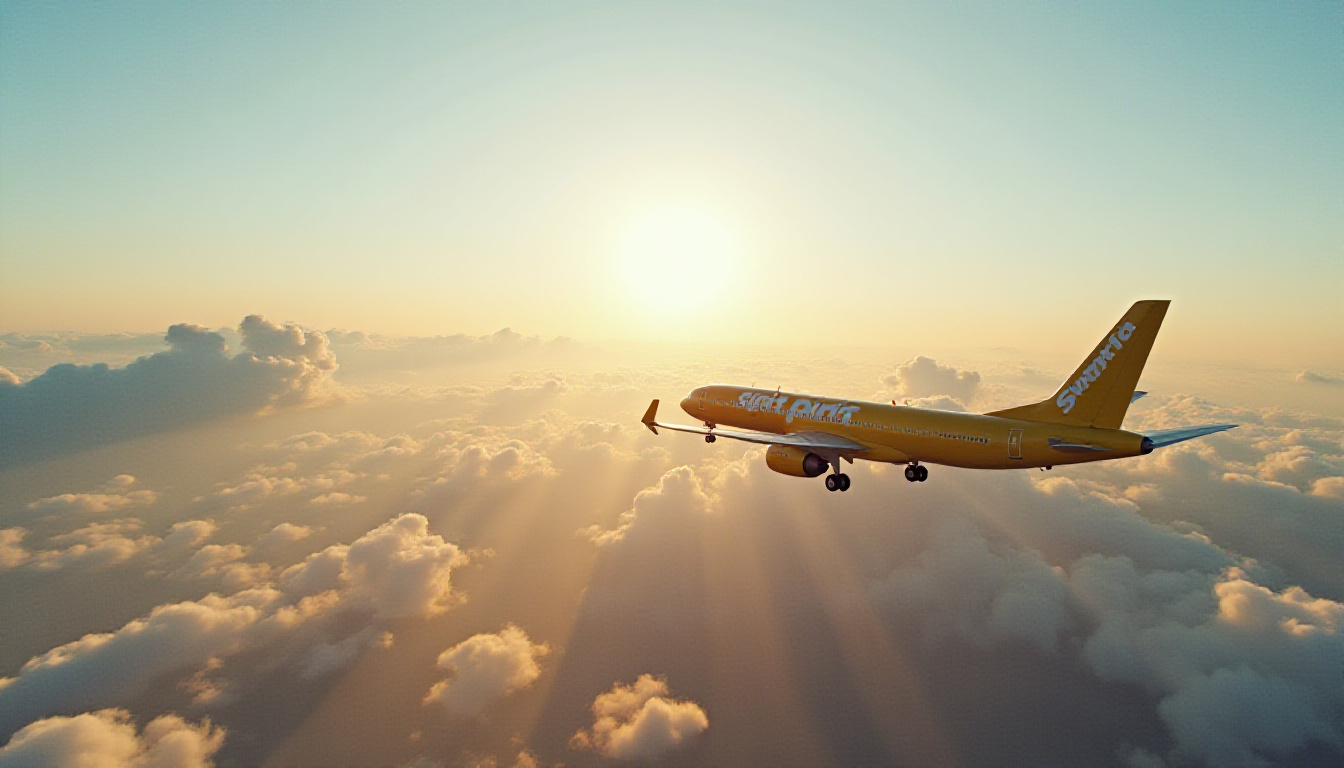
None of it worked. In 2023, Spirit's financial losses were accelerating. By 2024, the airline's situation had become untenable. Multiple restructuring negotiations with creditors failed to produce a viable path forward. The cash burn rate, combined with accumulated debt obligations, unsustainable lease agreements on aircraft it no longer needed, and inability to access capital markets, created an impossible situation. In November 2024, Spirit Airlines ceased operations. The last flights were operated, the website went dark, and the yellow-and-black livery disappeared from gate displays across America.
The end came suddenly for passengers who had planned trips, though insiders saw it coming for months. The airline that had once carried 34 million passengers annually was gone.
Free Weekly Newsletter
Enjoying this guide?
Get the best articles like this one delivered to your inbox every week. No spam.
What Spirit's Collapse Actually Means for Air Travel
The temptation is to read Spirit's failure as a verdict on the ultra-low-cost model itself. That reading is probably too simple. Spirit's underlying niche — price-sensitive leisure travellers who would not fly at all if not for extremely low fares — has not disappeared. If anything, as the cost of living continues to pressure household budgets, that market arguably grows. The question is whether any carrier can serve it sustainably in the current American aviation environment.
Frontier and Allegiant continue to operate variants of the ultra-low-cost model, though both have made strategic adjustments. Internationally, Ryanair and easyJet continue to prove that the model is viable at scale under the right conditions. What Spirit's story illustrates is how fragile a pure price-competition strategy becomes when squeezed simultaneously by premium drift at one end, copycat pricing by larger carriers in the middle, operational crises, and a failed consolidation gambit that consumed capital it couldn't afford to lose.
More broadly, Spirit's trajectory is a case study in what happens when a disruptive business model succeeds well enough to provoke imitation but not well enough to build the financial resilience needed to survive sustained pressure. It found the gap in the market. It served it better than anyone else for a decade. And then, when the gap began to close from all sides, it had nowhere left to go.
The people who flew Spirit — the ones who couldn't have afforded the trip any other way — will feel its absence most acutely. That is, perhaps, the most fitting legacy for an airline that was simultaneously the worst and the most useful in America.
Frequently Asked Questions
Why did Spirit Airlines go out of business? Spirit Airlines failed due to a combination of factors: a long-term erosion of its budget market share as legacy carriers introduced their own stripped-down 'basic economy' fares; a broader shift toward premium air travel that Spirit's all-economy fleet couldn't capitalise on; a major operational crisis caused by the Pratt & Whitney PW1100G engine recall that forced it to ground up to 40 aircraft; and a failed merger attempt with JetBlue that cost the airline hundreds of millions of dollars and critical time. No single cause was fatal on its own — the combination proved unsurvivable.
What was Spirit Airlines' business model? Spirit operated as an ultra-low-cost carrier using a strategy called 'unbundling.' The base ticket price covered only a seat on the plane. All other elements — checked bags, carry-on bags, seat selection, food, drinks, and even boarding pass printing — were charged as separate fees. This allowed Spirit to advertise extremely low headline fares while generating significant ancillary revenue. By 2011, fees accounted for more than 30% of total revenue, demonstrating how effectively the model worked during its peak years.
Why did the JetBlue and Spirit merger fail? The merger was blocked by the US Department of Justice on antitrust grounds. The DOJ argued that JetBlue — a higher-cost, higher-fare carrier — acquiring Spirit would eliminate meaningful price competition on routes Spirit served, ultimately harming consumers. The DOJ cited evidence, including Spirit's own internal analysis, showing that fares on Spirit's routes rose by approximately 30% when Spirit exited them. A federal court sided with the DOJ, killing the deal and significantly damaging Spirit's financial position.
Could another ultra-low-cost carrier replace Spirit Airlines? Frontier and Allegiant continue to operate in the ultra-low-cost space in the United States, though neither serves exactly the same geographic footprint or demographic as Spirit did at its peak. Whether a direct replacement emerges depends on whether investors are willing to back a model that has recently demonstrated significant vulnerability. Internationally, carriers like Ryanair show the model can work at scale, suggesting the demand exists — the challenge is finding the operational and financial structure to meet it sustainably in the US market.
When did Spirit Airlines stop flying? Spirit Airlines ceased operations in November 2024. The airline's financial situation became untenable following years of accumulated pressures, including the failed JetBlue merger, the Pratt & Whitney engine crisis, competition from major carriers' basic economy fares, and traveller preferences shifting toward premium offerings. The combination of these factors left Spirit with no viable path forward.
What routes did Spirit Airlines serve? At its peak, Spirit Airlines operated a network focused primarily on leisure destinations, with particular strength in routes from the Midwest and Northeast to Florida, the Caribbean, and Myrtle Beach. The airline originated from its early roots in gambling junkets to Atlantic City and never fully diversified beyond leisure travel. After facing financial difficulties, Spirit retreated to its core east coast leisure routes before eventually ceasing all operations.
Frequently Asked Questions
The Airline Everyone Hated — And Then Missed
Spirit Airlines was, by almost every measurable standard, the worst airline in America. It ranked near the bottom of customer satisfaction surveys year after year. It charged you to print your boarding pass. It charged you to put a bag in the overhead bin. It delayed flights with impressive regularity. And yet, when the last Spirit flight touched down in November 2024, something unexpected happened: people were sad about it.
That reaction wasn't nostalgia for cramped seats and surprise fees. It was a quiet acknowledgement that Spirit had been doing something genuinely useful all along — flying cash-strapped Americans to places they couldn't otherwise afford to go. The airline's collapse wasn't simply the market correcting for a bad product. It was the result of a cascade of forces, some external, some self-inflicted, and some rooted in a fundamental misreading of where American consumer culture was heading. Understanding why Spirit Airlines failed tells us a great deal about the economics of aviation, the shifting psychology of modern travelers, and what happens when a niche business model gets squeezed from every direction at once.
From Gambling Junkets to the Seventh Largest US Carrier
Spirit's origins bear almost no resemblance to its eventual identity. The airline grew out of a trucking company that started dabbling in air travel in 1983 under the name Charter One, primarily coordinating gambling trips from Detroit, Boston, and Providence to Atlantic City. It was essentially a tour operator with wings — more travel agency than airline. That leisure-first, budget-conscious DNA, however, would prove remarkably persistent.
By 1992, the company had filed with the Department of Transportation to run scheduled passenger services and rebranded as Spirit Airlines, swapping its turboprops for DC-9s and opening routes from the Midwest and Northeast down to Florida, Myrtle Beach, and eventually Cancun. Throughout the 1990s, it operated as a fairly conventional low-cost carrier — cheap tickets, aging aircraft, unremarkable service, but still inclusive of a drink, a snack, a checked bag, and a seat you actually chose yourself. Budget, but budget in much the same way Southwest was budget.
The problem was that being merely cheap wasn't enough. Legacy carriers like Northwest Airlines could absorb short-term losses to undercut Spirit on price and drive it off routes. A 1999 lawsuit Spirit filed against Northwest — alleging predatory pricing out of Detroit — illustrated the bind clearly: Spirit wasn't cheap enough to be untouchable, and it wasn't premium enough to justify loyalty. It was stuck in an uncomfortable middle ground, and by the early 2000s, it was losing money.
The Unbundling Revolution That Changed American Aviation
The transformation that would define Spirit Airlines — and ultimately doom it — began in 2005 with the appointment of Ben Baldanza as president. Baldanza had long admired the European ultra-low-cost model pioneered by Ryanair and easyJet, carriers that stripped the flying experience down to its bare minimum and charged separately for every additional element. Private equity firm Indigo Partners, which bought a controlling stake in Spirit in 2006, shared that vision and had the global experience to back it.
Together, they executed one of the most radical commercial pivots in US aviation history. The strategy was called unbundling: the listed ticket price would guarantee you nothing more than a seat on the plane. Everything else — checked bags, carry-on bags, seat selection, drinks, food, even printing your boarding pass — would cost extra. The fees rolled out incrementally between 2007 and 2010, each one provoking outrage, op-eds, and occasional congressional hearings. The $45 fee for overhead bin storage, introduced in 2010, was so inflammatory that US senators drafted legislation to block it.
But Spirit didn't blink. And the reason was simple: the base fares were so extraordinarily low that even after paying for a bag and a seat, many travelers were still spending less than they would on any competitor. For the college student flying to Miami for spring break, the cash-strapped family heading to Disney, or the young professional doing a quick weekend trip to New Orleans, Spirit was genuinely the only option that made the trip financially possible.
The model worked. Passengers grew from under 7 million in 2010 to nearly 34 million by 2019. The airline turned a profit every single year in that stretch. By 2011, fees alone accounted for more than 30% of total revenue. Spirit had invented something new: the American ultra-low-cost carrier. And it had done so by betting that a segment of the market existed that wasn't being served — travelers who cared about price above almost everything else.
Why Spirit Airlines Failed: Three Forces That Broke the Ultra-Low-Cost Model
Spirit's collapse wasn't a single event. It was the compounding effect of three distinct pressures that each independently would have been manageable, but together proved fatal.
The premiumisation of air travel. In the years following COVID-19, something unexpected happened to American consumer behaviour. Rather than racing back to the cheapest available option after two years of pandemic austerity, travellers increasingly chose to spend more. Premium economy and business class revenues surged at every major US carrier. United reconfigured its 787s with only 20% of space allocated to standard economy. JetBlue and Frontier launched business class cabins for the first time fleet-wide. The explanation that holds the most weight is generational: millennials and Gen Z, now representing a growing share of travel spending, have always allocated disproportionately to experiences over goods. As their incomes grew, more of them opted to upgrade. Spirit, operating an almost entirely standard economy fleet with no premium offering whatsoever, had no mechanism to capture any of this upside — and actively suffered as some travellers who might once have flown Spirit instead chose to pay a bit more for a full-service carrier.
The rise of basic economy. Perhaps more damaging in the long run was the decision by Delta, American, and United to introduce their own stripped-down fare classes — marketed as 'basic economy' — throughout the late 2010s. These fares offered no bag, no seat selection, no changes, and no refunds, mirroring almost exactly what Spirit had been selling for years. Crucially, the major carriers' pricing algorithms were often able to match or closely undercut Spirit on price. And when the choice is between a bare-bones fare on Spirit and an almost-as-cheap fare on Delta — with its lounges, its loyalty programme, its better on-time record, and its network of upgrade possibilities — many travellers chose Delta. This didn't kill Spirit immediately, but it consistently eroded the financial moat that made the business model defensible. Operating margins that sat in the mid-20% range in 2015 had slid to low double digits by the time COVID arrived.
The Pratt & Whitney engine crisis. On top of the structural erosion, Spirit was hit by a catastrophic operational problem entirely outside its control. In 2023, Pratt & Whitney issued a recall notice for its PW1100G geared turbofan engine — the innovative powerplant that Spirit had been among the first US carriers to adopt when it ordered the A320neo back in 2016. The issue: for six years, a factory in New York had been using contaminated powdered metal to manufacture the engines' core blades. The contamination was subtle enough to pass inspections, but under operating conditions, microscopic cracks were forming far ahead of schedule. Regulators mandated inspections of roughly 1,200 affected engines, a process requiring physical removal, shipment to one of only around 20 qualified facilities worldwide, complete disassembly, ultrasonic blade-by-blade inspection, and replacement of affected components — a process taking upwards of 250 days per engine.
At its peak, Spirit was forced to ground 40 of its A320neo family aircraft while continuing to pay their lease costs. The airline pulled out of Boston and Cleveland entirely and sharply reduced service on major routes. Revenue collapsed further. Pratt & Whitney provided some compensation, but nowhere near enough to cover the losses. The combination of structural market pressures and this operational disaster created a perfect storm from which the airline could not recover.
The Failed Merger: A $3.8 Billion Mistake
With its finances deteriorating, Spirit turned to the aviation industry's favourite remedy: consolidation. In early 2022, it announced a merger with Frontier Airlines — a near-perfect strategic fit. The two carriers flew identical aircraft types, operated nearly identical business models, and had complementary route networks with only 18% overlap. Combined, they would have become the fifth-largest US airline and the only true nationwide ultra-low-cost carrier, potentially commanding real competitive influence over the broader market.
Then JetBlue intervened with a higher bid — $33 per share versus the roughly $25 implied by the Frontier deal. Spirit's board initially resisted, correctly predicting that the Biden administration's Department of Justice, which had already sued to block JetBlue's Northeast Alliance with American Airlines, would view a JetBlue-Spirit tie-up as a clear antitrust violation. Their reasoning was sound: JetBlue planned to absorb Spirit into its own brand and operating model, eliminating the ultra-low-cost competition Spirit provided. The DOJ's own filing would later quote Spirit's own pre-merger analysis back at the airline, noting that when Spirit exits a route, average fares rise by approximately 30%.
But shareholders, drawn by the higher dollar figure, overruled the board. The JetBlue merger was approved. The DOJ sued. And in a legal battle that was, as antitrust cases go, unusually straightforward — there was clear, objective reduction of price competition — the government won. Spirit was left with hundreds of millions of dollars spent, two years wasted, and its financial position materially worse than before the whole saga began.
The Final Years: Shrinking Toward Collapse
In the aftermath of the failed merger, Spirit attempted a series of increasingly desperate restructuring moves. It cut its fleet from over 200 aircraft to fewer than 100. It retreated almost entirely from the western United States, refocusing on short-haul east coast leisure routes to Florida and the Caribbean — the geography it had always known best. It attempted to introduce a premium tier, a slightly more comfortable seat offered at a modest premium, in a belated nod to the premiumisation trend it had spent years ignoring.
None of it worked. In 2023, Spirit's financial losses were accelerating. By 2024, the airline's situation had become untenable. Multiple restructuring negotiations with creditors failed to produce a viable path forward. The cash burn rate, combined with accumulated debt obligations, unsustainable lease agreements on aircraft it no longer needed, and inability to access capital markets, created an impossible situation. In November 2024, Spirit Airlines ceased operations. The last flights were operated, the website went dark, and the yellow-and-black livery disappeared from gate displays across America.
The end came suddenly for passengers who had planned trips, though insiders saw it coming for months. The airline that had once carried 34 million passengers annually was gone.
What Spirit's Collapse Actually Means for Air Travel
The temptation is to read Spirit's failure as a verdict on the ultra-low-cost model itself. That reading is probably too simple. Spirit's underlying niche — price-sensitive leisure travellers who would not fly at all if not for extremely low fares — has not disappeared. If anything, as the cost of living continues to pressure household budgets, that market arguably grows. The question is whether any carrier can serve it sustainably in the current American aviation environment.
Frontier and Allegiant continue to operate variants of the ultra-low-cost model, though both have made strategic adjustments. Internationally, Ryanair and easyJet continue to prove that the model is viable at scale under the right conditions. What Spirit's story illustrates is how fragile a pure price-competition strategy becomes when squeezed simultaneously by premium drift at one end, copycat pricing by larger carriers in the middle, operational crises, and a failed consolidation gambit that consumed capital it couldn't afford to lose.
More broadly, Spirit's trajectory is a case study in what happens when a disruptive business model succeeds well enough to provoke imitation but not well enough to build the financial resilience needed to survive sustained pressure. It found the gap in the market. It served it better than anyone else for a decade. And then, when the gap began to close from all sides, it had nowhere left to go.
The people who flew Spirit — the ones who couldn't have afforded the trip any other way — will feel its absence most acutely. That is, perhaps, the most fitting legacy for an airline that was simultaneously the worst and the most useful in America.
Frequently Asked Questions
Why did Spirit Airlines go out of business? Spirit Airlines failed due to a combination of factors: a long-term erosion of its budget market share as legacy carriers introduced their own stripped-down 'basic economy' fares; a broader shift toward premium air travel that Spirit's all-economy fleet couldn't capitalise on; a major operational crisis caused by the Pratt & Whitney PW1100G engine recall that forced it to ground up to 40 aircraft; and a failed merger attempt with JetBlue that cost the airline hundreds of millions of dollars and critical time. No single cause was fatal on its own — the combination proved unsurvivable.
What was Spirit Airlines' business model? Spirit operated as an ultra-low-cost carrier using a strategy called 'unbundling.' The base ticket price covered only a seat on the plane. All other elements — checked bags, carry-on bags, seat selection, food, drinks, and even boarding pass printing — were charged as separate fees. This allowed Spirit to advertise extremely low headline fares while generating significant ancillary revenue. By 2011, fees accounted for more than 30% of total revenue, demonstrating how effectively the model worked during its peak years.
Why did the JetBlue and Spirit merger fail? The merger was blocked by the US Department of Justice on antitrust grounds. The DOJ argued that JetBlue — a higher-cost, higher-fare carrier — acquiring Spirit would eliminate meaningful price competition on routes Spirit served, ultimately harming consumers. The DOJ cited evidence, including Spirit's own internal analysis, showing that fares on Spirit's routes rose by approximately 30% when Spirit exited them. A federal court sided with the DOJ, killing the deal and significantly damaging Spirit's financial position.
Could another ultra-low-cost carrier replace Spirit Airlines? Frontier and Allegiant continue to operate in the ultra-low-cost space in the United States, though neither serves exactly the same geographic footprint or demographic as Spirit did at its peak. Whether a direct replacement emerges depends on whether investors are willing to back a model that has recently demonstrated significant vulnerability. Internationally, carriers like Ryanair show the model can work at scale, suggesting the demand exists — the challenge is finding the operational and financial structure to meet it sustainably in the US market.
When did Spirit Airlines stop flying? Spirit Airlines ceased operations in November 2024. The airline's financial situation became untenable following years of accumulated pressures, including the failed JetBlue merger, the Pratt & Whitney engine crisis, competition from major carriers' basic economy fares, and traveller preferences shifting toward premium offerings. The combination of these factors left Spirit with no viable path forward.
What routes did Spirit Airlines serve? At its peak, Spirit Airlines operated a network focused primarily on leisure destinations, with particular strength in routes from the Midwest and Northeast to Florida, the Caribbean, and Myrtle Beach. The airline originated from its early roots in gambling junkets to Atlantic City and never fully diversified beyond leisure travel. After facing financial difficulties, Spirit retreated to its core east coast leisure routes before eventually ceasing all operations.
About Zeebrain Editorial
Zeebrain publishes independent analysis of markets, investing, personal finance, and business. We disclose affiliate relationships, never accept payment for coverage, and fact-check all claims against primary sources. Read our editorial policy →
How this article was produced: Zeebrain articles are created with AI assistance from primary sources (including cited videos and market data) and reviewed under our editorial standards before publication. Spot an error? Tell us and we will correct it.
More from Curiosities




Related Guides
Keep exploring this topic
Explore More Categories
Keep browsing by topic and build depth around the subjects you care about most.