Neil Armstrong: The Unlikely Hero Who Walked on the Moon
Quick Summary
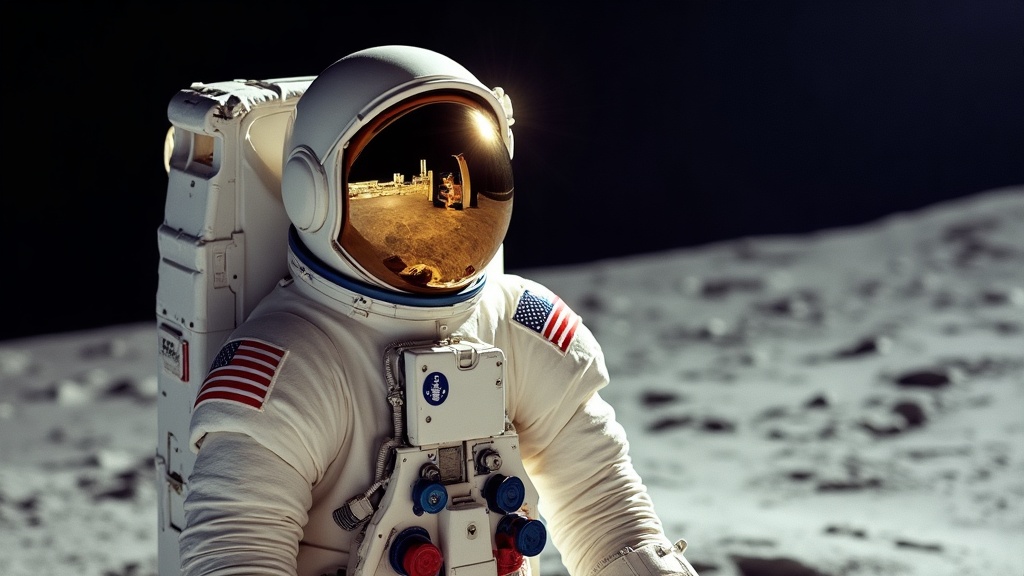
From a late NASA application to the most famous words ever spoken in space, discover the remarkable and surprisingly human story of Neil Armstrong.
In This Article
Neil Armstrong: The Unlikely Hero Who Walked on the Moon
Neil Armstrong's name is etched into human history with the kind of permanence usually reserved for myths. Yet the man himself was, by most accounts, stubbornly ordinary — a quiet engineer from Ohio who happened to be extraordinary at almost everything he tried, and who stumbled into his place in history partly because a colleague secretly slipped his late application into the right pile at the right moment. That single act of administrative sleight of hand changed the course of human exploration. This is the story of how one man became the most famous explorer in history — and why the full picture is far more fascinating than the legend.

The Late Application That Almost Wasn't
Neil Armstrong nearly missed his shot at NASA entirely. When the second round of astronaut selections opened in 1962, Armstrong submitted his application roughly a week past the 1 June deadline — a delay that should have made him ineligible. Whether the tardiness was connected to the devastating loss of his two-year-old daughter Karen, who had died just months earlier from complications related to a brain stem tumour, has never been confirmed. Armstrong never addressed it publicly.
What saved him was Dick Day, a colleague working as assistant head of flight crew operations at NASA. Day quietly inserted Armstrong's paperwork into the candidate folders before the selection panel reviewed them. His reasoning was blunt and difficult to argue with: Armstrong was simply the most qualified person in the pool. By that point, Armstrong had earned his pilot's licence at 16, flown 78 combat missions during the Korean War, and gone on to become a test pilot who flew more than 200 different aircraft models — including rocket-powered variants. During one Korean War mission, a cable booby trap sheared off part of his wing at roughly 500 feet above the ground while he was under heavy fire. He kept the aircraft airborne long enough to reach safety before ejecting.
This is worth sitting with. The man who would eventually be the first human to walk on the moon very nearly never made it into the astronaut programme at all — saved not by the system, but by a single person who believed in him enough to bend the rules.
Why Armstrong — And Not Aldrin — Stepped Out First
Once Armstrong was selected as commander of Apollo 11, alongside Buzz Aldrin and Michael Collins, a surprisingly contentious question emerged: who would be the first person to set foot on the moon? Collins, as command module pilot, was out of the running by default — his role required him to remain in orbit. But between Armstrong and Aldrin, the answer was far from settled.
Early speculation favoured Aldrin. In the Gemini programme, which served as the developmental precursor to Apollo, it had been the pilot — not the commander — who conducted spacewalks. Aldrin was the pilot for Apollo 11, and according to Chris Kraft, head of Mission Control, he was making no secret of his ambition to be first out the hatch.
NASA's official explanation for choosing Armstrong was pragmatic to the point of being almost anticlimactic: the Eagle's hatch opened to the side, and that side happened to face Aldrin. In the cramped confines of the lunar module, Armstrong had a clear path to the exit while Aldrin would have been physically wedged in. Seniority also played a role — Armstrong had joined the programme in 1962, a year before Aldrin.
But several figures close to the programme, including Kraft and astronaut Al Bean, later suggested that the hatch design may have been a convenient justification for a decision NASA had already made on psychological grounds: they believed Armstrong's temperament was better suited to bearing the weight of being first. His ego, they felt, would not be destabilised by the honour in the way Aldrin's might have been. Whether that assessment was fair to Aldrin is another question — but it shaped one of the most significant moments in human history.
The Famous Words: Did Armstrong Actually Say Them Right?
Few lines in human history have been analysed as obsessively as Armstrong's first words on the lunar surface. What he intended to say was: "That's one small step for a man, one giant leap for mankind." What was broadcast — and what most people heard — was: "That's one small step for man, one giant leap for mankind." Without the article a, the sentence becomes logically circular: man and mankind mean the same thing, rendering the contrast meaningless.
For years, Armstrong maintained that static had swallowed the missing syllable. He eventually conceded that he may not have said it, while insisting it was always his intention. NASA's official transcript to this day shows the a in parentheses.
The linguistic and acoustic debate that followed is genuinely fascinating. Australian computer programmer Peter Shann Ford conducted an audio analysis and argued that the a was present but inaudible due to the technological limitations of 1960s transmission equipment. Linguists David Beaver and Mark Liberman pushed back, finding the acoustic evidence unconvincing.
The most compelling research came from a team at Michigan State University and Ohio State University, led by assistant professor Laura Dilley. By studying recordings of 40 native central Ohioans — people from near Armstrong's hometown of Wapakoneta — they analysed the duration of the r sound in the words four and for a in natural speech. Their conclusion: in Armstrong's regional dialect, the word a following for would acoustically blend into the preceding word to such a degree that it would be effectively inaudible. His lunar transmission was statistically compatible with both interpretations, though marginally more likely to be perceived as for without the article.
In short, he probably said it correctly. His accent, not his nerves, may have buried the most important word he ever spoke.
The Note Passed During a Game of Risk
Armstrong maintained until his death in 2012 that his famous line was spontaneous — settled on only in the moments before he stepped outside. A BBC documentary released after his death tells a different story, and it is a more charming one.
In the months leading up to the mission, Armstrong's family gathered at Cape Cod. One evening, after putting the children to bed, Neil and his younger brother Dean sat down for a game of Risk. Midway through, Neil slid a piece of paper across the table. On it were the words: "That's one small step for a man, one giant leap for mankind." He asked Dean what he thought. Dean called it fabulous. Neil said he thought he might like it.
Neither Aldrin nor Collins were ever shown the note. Armstrong apparently kept it close, but quiet. That a man preparing for arguably the most consequential moment in exploration history was sitting up late playing Risk and scribbling draft lines on paper scraps feels both entirely human and oddly perfect.
Armstrong After the Moon: A Quiet Life, Deliberately Chosen
What does a person do after becoming the most famous human being alive? In Armstrong's case, the answer was: as little publicly as possible. After returning from the moon, spending two weeks in quarantine, and completing a global publicity tour, he served briefly as deputy associate administrator for aeronautics before leaving NASA in 1971. He went on to teach aerospace engineering at the University of Cincinnati, contribute to investigations of spaceflight accidents, and serve on various corporate boards.
John Glenn, himself one of the most celebrated figures in American space history, observed that Armstrong simply did not feel he should be out promoting himself. That restraint was not false modesty or performance — it was, by all accounts, entirely consistent with who he was before the moon landing too. He was the same man who had quietly gone about becoming one of the most skilled pilots and engineers in the world without seeking particular recognition for it.
In 1985, he joined Edmund Hillary (first summiteer of Everest), Steve Fossett (first solo non-stop round-the-world balloon flight), and Patrick Morrow (first person to summit the highest peak on every continent) for a trip to the North Pole. A more quietly extraordinary group of explorers is difficult to imagine — four men who had each done something no human had ever done, going somewhere else no one expected them to go.
The Death and Its Aftermath
Free Weekly Newsletter
Enjoying this guide?
Get the best articles like this one delivered to your inbox every week. No spam.
Armstrong underwent cardiac bypass surgery in August 2012 and appeared to be recovering well. Then, reportedly, nursing staff removed temporary wires attached to his pacemaker. Internal bleeding followed. Rather than operating to stop the haemorrhage, doctors chose to drain the blood. Armstrong died at 82.
What followed was a lawsuit brought by members of his family — not including his wife, Carol — against the hospital for alleged malpractice. The hospital eventually settled for $6 million, with a non-disclosure agreement preventing the full details from becoming public. Carol Armstrong was notably vocal in her opposition to the suit, stating clearly that Neil would not have approved and that she had no part in it.
It is a messy, human postscript to a life of uncommon dignity. Armstrong had always seemed to exist slightly above the ordinary friction of fame and ambition. The legal battle that followed his death was a reminder that even legends leave behind the ordinary complications of family, grief, and disagreement.
Conclusion
The story of Neil Armstrong is not simply the story of a man who walked on the moon. It is the story of someone who very nearly never got the chance, who was chosen for the most historic moment of the 20th century partly by accident and partly by temperament, who may or may not have dropped a single syllable at the most-watched moment in television history, and who spent the rest of his life quietly trying not to make too much of any of it. That combination of extraordinary capability and deliberate ordinariness is, perhaps, what makes him genuinely worth remembering — not as a symbol, but as a person.
Frequently Asked Questions
Why was Neil Armstrong chosen to be the first person to walk on the moon instead of Buzz Aldrin? NASA's official explanation was structural: the Eagle's hatch opened toward Aldrin, meaning Armstrong had a clearer exit path in the cramped lunar module. Armstrong also had programme seniority, having joined NASA in 1962 versus Aldrin's 1963 entry. However, several insiders later suggested NASA also believed Armstrong's personality was better suited to handling the psychological weight of the historic honour.
Did Neil Armstrong actually say "one small step for a man" or did he leave out the word "a"? Armstrong always insisted he intended to say "a man" and likely did say it. Research from Michigan State University and Ohio State University suggests that in his central Ohio dialect, the word a following for would acoustically merge with the preceding word and become inaudible. NASA's official transcript still includes the a in parentheses, acknowledging it as the intended — if unverifiable — reading.
How did Neil Armstrong qualify for the NASA astronaut programme? Armstrong had an exceptional aviation background: he earned his pilot's licence at 16, flew 78 combat missions in the Korean War, and became a test pilot flying more than 200 aircraft models. He held a bachelor's degree in aeronautical engineering and later a master's in aerospace engineering. His application to NASA's second astronaut selection in 1962 was, however, submitted a week late — and was only included because a colleague quietly added it to the pile before review.
What happened to Neil Armstrong after he returned from the moon? After a global publicity tour and a brief administrative role at NASA, Armstrong left the agency in 1971 and largely retreated from public life. He taught aerospace engineering at the University of Cincinnati, participated in spaceflight accident investigations, and served on corporate boards. He was, by all accounts, deliberately low-profile — resistant to capitalising on his fame in ways many around him encouraged.
What were the first words spoken on the moon after Armstrong's famous quote? According to the official Apollo 11 air-to-ground voice transcription, Armstrong's second statement was: "And the surface is fine and powdery." He went on to describe how the lunar dust adhered to his boots like powdered charcoal and how his footprints were visible in the fine sandy particles. Practically useful information — but somewhat less quotable.
Frequently Asked Questions
The Late Application That Almost Wasn't
Neil Armstrong nearly missed his shot at NASA entirely. When the second round of astronaut selections opened in 1962, Armstrong submitted his application roughly a week past the 1 June deadline — a delay that should have made him ineligible. Whether the tardiness was connected to the devastating loss of his two-year-old daughter Karen, who had died just months earlier from complications related to a brain stem tumour, has never been confirmed. Armstrong never addressed it publicly.
What saved him was Dick Day, a colleague working as assistant head of flight crew operations at NASA. Day quietly inserted Armstrong's paperwork into the candidate folders before the selection panel reviewed them. His reasoning was blunt and difficult to argue with: Armstrong was simply the most qualified person in the pool. By that point, Armstrong had earned his pilot's licence at 16, flown 78 combat missions during the Korean War, and gone on to become a test pilot who flew more than 200 different aircraft models — including rocket-powered variants. During one Korean War mission, a cable booby trap sheared off part of his wing at roughly 500 feet above the ground while he was under heavy fire. He kept the aircraft airborne long enough to reach safety before ejecting.
This is worth sitting with. The man who would eventually be the first human to walk on the moon very nearly never made it into the astronaut programme at all — saved not by the system, but by a single person who believed in him enough to bend the rules.
Why Armstrong — And Not Aldrin — Stepped Out First
Once Armstrong was selected as commander of Apollo 11, alongside Buzz Aldrin and Michael Collins, a surprisingly contentious question emerged: who would be the first person to set foot on the moon? Collins, as command module pilot, was out of the running by default — his role required him to remain in orbit. But between Armstrong and Aldrin, the answer was far from settled.
Early speculation favoured Aldrin. In the Gemini programme, which served as the developmental precursor to Apollo, it had been the pilot — not the commander — who conducted spacewalks. Aldrin was the pilot for Apollo 11, and according to Chris Kraft, head of Mission Control, he was making no secret of his ambition to be first out the hatch.
NASA's official explanation for choosing Armstrong was pragmatic to the point of being almost anticlimactic: the Eagle's hatch opened to the side, and that side happened to face Aldrin. In the cramped confines of the lunar module, Armstrong had a clear path to the exit while Aldrin would have been physically wedged in. Seniority also played a role — Armstrong had joined the programme in 1962, a year before Aldrin.
But several figures close to the programme, including Kraft and astronaut Al Bean, later suggested that the hatch design may have been a convenient justification for a decision NASA had already made on psychological grounds: they believed Armstrong's temperament was better suited to bearing the weight of being first. His ego, they felt, would not be destabilised by the honour in the way Aldrin's might have been. Whether that assessment was fair to Aldrin is another question — but it shaped one of the most significant moments in human history.
The Famous Words: Did Armstrong Actually Say Them Right?
Few lines in human history have been analysed as obsessively as Armstrong's first words on the lunar surface. What he intended to say was: "That's one small step for a man, one giant leap for mankind." What was broadcast — and what most people heard — was: "That's one small step for man, one giant leap for mankind." Without the article a, the sentence becomes logically circular: man and mankind mean the same thing, rendering the contrast meaningless.
For years, Armstrong maintained that static had swallowed the missing syllable. He eventually conceded that he may not have said it, while insisting it was always his intention. NASA's official transcript to this day shows the a in parentheses.
The linguistic and acoustic debate that followed is genuinely fascinating. Australian computer programmer Peter Shann Ford conducted an audio analysis and argued that the a was present but inaudible due to the technological limitations of 1960s transmission equipment. Linguists David Beaver and Mark Liberman pushed back, finding the acoustic evidence unconvincing.
The most compelling research came from a team at Michigan State University and Ohio State University, led by assistant professor Laura Dilley. By studying recordings of 40 native central Ohioans — people from near Armstrong's hometown of Wapakoneta — they analysed the duration of the r sound in the words four and for a in natural speech. Their conclusion: in Armstrong's regional dialect, the word a following for would acoustically blend into the preceding word to such a degree that it would be effectively inaudible. His lunar transmission was statistically compatible with both interpretations, though marginally more likely to be perceived as for without the article.
In short, he probably said it correctly. His accent, not his nerves, may have buried the most important word he ever spoke.
The Note Passed During a Game of Risk
Armstrong maintained until his death in 2012 that his famous line was spontaneous — settled on only in the moments before he stepped outside. A BBC documentary released after his death tells a different story, and it is a more charming one.
In the months leading up to the mission, Armstrong's family gathered at Cape Cod. One evening, after putting the children to bed, Neil and his younger brother Dean sat down for a game of Risk. Midway through, Neil slid a piece of paper across the table. On it were the words: "That's one small step for a man, one giant leap for mankind." He asked Dean what he thought. Dean called it fabulous. Neil said he thought he might like it.
Neither Aldrin nor Collins were ever shown the note. Armstrong apparently kept it close, but quiet. That a man preparing for arguably the most consequential moment in exploration history was sitting up late playing Risk and scribbling draft lines on paper scraps feels both entirely human and oddly perfect.
Armstrong After the Moon: A Quiet Life, Deliberately Chosen
What does a person do after becoming the most famous human being alive? In Armstrong's case, the answer was: as little publicly as possible. After returning from the moon, spending two weeks in quarantine, and completing a global publicity tour, he served briefly as deputy associate administrator for aeronautics before leaving NASA in 1971. He went on to teach aerospace engineering at the University of Cincinnati, contribute to investigations of spaceflight accidents, and serve on various corporate boards.
John Glenn, himself one of the most celebrated figures in American space history, observed that Armstrong simply did not feel he should be out promoting himself. That restraint was not false modesty or performance — it was, by all accounts, entirely consistent with who he was before the moon landing too. He was the same man who had quietly gone about becoming one of the most skilled pilots and engineers in the world without seeking particular recognition for it.
In 1985, he joined Edmund Hillary (first summiteer of Everest), Steve Fossett (first solo non-stop round-the-world balloon flight), and Patrick Morrow (first person to summit the highest peak on every continent) for a trip to the North Pole. A more quietly extraordinary group of explorers is difficult to imagine — four men who had each done something no human had ever done, going somewhere else no one expected them to go.
The Death and Its Aftermath
Armstrong underwent cardiac bypass surgery in August 2012 and appeared to be recovering well. Then, reportedly, nursing staff removed temporary wires attached to his pacemaker. Internal bleeding followed. Rather than operating to stop the haemorrhage, doctors chose to drain the blood. Armstrong died at 82.
What followed was a lawsuit brought by members of his family — not including his wife, Carol — against the hospital for alleged malpractice. The hospital eventually settled for $6 million, with a non-disclosure agreement preventing the full details from becoming public. Carol Armstrong was notably vocal in her opposition to the suit, stating clearly that Neil would not have approved and that she had no part in it.
It is a messy, human postscript to a life of uncommon dignity. Armstrong had always seemed to exist slightly above the ordinary friction of fame and ambition. The legal battle that followed his death was a reminder that even legends leave behind the ordinary complications of family, grief, and disagreement.
Conclusion
The story of Neil Armstrong is not simply the story of a man who walked on the moon. It is the story of someone who very nearly never got the chance, who was chosen for the most historic moment of the 20th century partly by accident and partly by temperament, who may or may not have dropped a single syllable at the most-watched moment in television history, and who spent the rest of his life quietly trying not to make too much of any of it. That combination of extraordinary capability and deliberate ordinariness is, perhaps, what makes him genuinely worth remembering — not as a symbol, but as a person.
Frequently Asked Questions
Why was Neil Armstrong chosen to be the first person to walk on the moon instead of Buzz Aldrin? NASA's official explanation was structural: the Eagle's hatch opened toward Aldrin, meaning Armstrong had a clearer exit path in the cramped lunar module. Armstrong also had programme seniority, having joined NASA in 1962 versus Aldrin's 1963 entry. However, several insiders later suggested NASA also believed Armstrong's personality was better suited to handling the psychological weight of the historic honour.
Did Neil Armstrong actually say "one small step for a man" or did he leave out the word "a"? Armstrong always insisted he intended to say "a man" and likely did say it. Research from Michigan State University and Ohio State University suggests that in his central Ohio dialect, the word a following for would acoustically merge with the preceding word and become inaudible. NASA's official transcript still includes the a in parentheses, acknowledging it as the intended — if unverifiable — reading.
How did Neil Armstrong qualify for the NASA astronaut programme? Armstrong had an exceptional aviation background: he earned his pilot's licence at 16, flew 78 combat missions in the Korean War, and became a test pilot flying more than 200 aircraft models. He held a bachelor's degree in aeronautical engineering and later a master's in aerospace engineering. His application to NASA's second astronaut selection in 1962 was, however, submitted a week late — and was only included because a colleague quietly added it to the pile before review.
What happened to Neil Armstrong after he returned from the moon? After a global publicity tour and a brief administrative role at NASA, Armstrong left the agency in 1971 and largely retreated from public life. He taught aerospace engineering at the University of Cincinnati, participated in spaceflight accident investigations, and served on corporate boards. He was, by all accounts, deliberately low-profile — resistant to capitalising on his fame in ways many around him encouraged.
What were the first words spoken on the moon after Armstrong's famous quote? According to the official Apollo 11 air-to-ground voice transcription, Armstrong's second statement was: "And the surface is fine and powdery." He went on to describe how the lunar dust adhered to his boots like powdered charcoal and how his footprints were visible in the fine sandy particles. Practically useful information — but somewhat less quotable.
About Zeebrain Editorial
Zeebrain publishes independent analysis of markets, investing, personal finance, and business. We disclose affiliate relationships, never accept payment for coverage, and fact-check all claims against primary sources. Read our editorial policy →
How this article was produced: Zeebrain articles are created with AI assistance from primary sources (including cited videos and market data) and reviewed under our editorial standards before publication. Spot an error? Tell us and we will correct it.
More from Curiosities



Related Guides
Keep exploring this topic
Explore More Categories
Keep browsing by topic and build depth around the subjects you care about most.