How Was William Wallace Captured? The Real Story
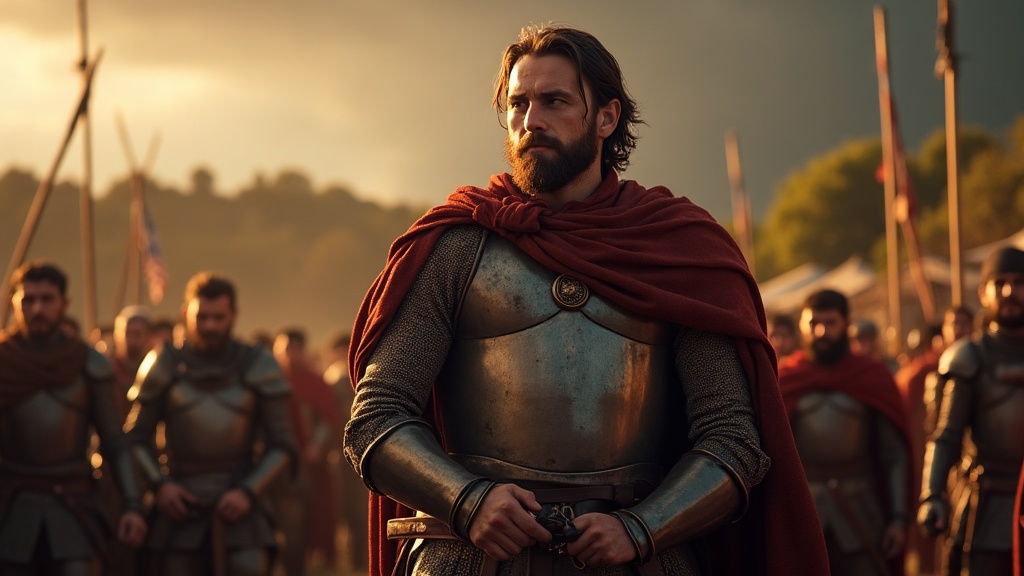
Quick Summary
Discover how William Wallace was really captured in 1305, who betrayed him, and what history gets wrong about Scotland's most famous freedom fighter.
In This Article
How Was William Wallace Captured? The Real Story Behind Scotland's Greatest Hero
William Wallace has been reimagined so many times — through medieval ballads, romantic poetry, and Hollywood blockbusters — that separating the man from the myth has become a discipline in itself. Yet the actual story of how William Wallace was captured, tried, and executed in 1305 is more compelling than anything screenwriters have managed to conjure. It involves political treachery, a servant's betrayal, a defiant final statement, and one of the most brutal executions in medieval history. Here is what the historical record actually tells us.

Scotland Before Wallace: How a Kingdom Unravelled
To understand why William Wallace mattered, you have to understand the particular chaos that swallowed Scotland in the final decades of the 13th century. Under King Alexander III, Scotland had enjoyed unusual stability — a functioning monarchy, relative peace, and a country that was nobody's vassal. Then, in 1286, Alexander died unexpectedly, leaving only a four-year-old granddaughter, Margaret, the Maid of Norway, as heir to the throne.
Margaret's death in 1290, before she ever reached Scotland, was catastrophic. With no clear successor and multiple noble houses pressing competing claims, Scotland teetered on the edge of civil war. In a move that seemed reasonable at the time but proved disastrous in practice, the Scottish nobility invited King Edward I of England to arbitrate between the claimants.
Edward was not a man who let opportunity go to waste. He agreed to arbitrate — but only on the condition that the Scottish nobles acknowledge him as overlord of Scotland. A compromise was brokered: Edward could serve in that capacity until a new king was crowned. In 1292, a feudal court at Berwick upon Tweed ruled that John of Balliol had the strongest claim to the throne and duly crowned him king.
Edward, however, did not relinquish his self-declared authority. He continued to treat Scotland as a subordinate kingdom and eventually demanded Scottish troops to fight his wars in France. King John responded by allying with France instead — the beginning of what would become the Auld Alliance. Edward crushed the Scottish resistance militarily, forced John to abdicate, and installed direct English rule across the country. The stage was set for rebellion.
Who Was William Wallace Before the Rebellion?
This is where the historical record gets frustratingly thin. Wallace was born around 1270 into a family of minor Scottish nobility, but almost everything about his early life is disputed or simply unknown. Even his father's name is uncertain. The 15th-century minstrel Blind Harry — whose epic poem The Wallace is one of the primary narrative sources about his life — names the father as Sir Malcolm of Elderslie. But a letter bearing Wallace's own seal from 1297 names his father as Alan Wallace, possibly a crown tenant.
Blind Harry wrote nearly two centuries after Wallace lived, relying largely on oral tradition and claiming his primary source was a now-lost book by Wallace's chaplain, Father John Blair. The poem is vivid, emotionally powerful, and riddled with historical inaccuracies. It is the medieval equivalent of a dramatised documentary — more concerned with inspiring national feeling than recording facts. The film Braveheart drew heavily from this tradition, compounding the myth further.
What we know with reasonable certainty is that around May 1297, when Wallace was approximately 27 years old, he helped assassinate William Heselrig, the English High Sheriff of Lanark. His motivation remains unclear. Blind Harry claims it was revenge for the sheriff's murder of Wallace's wife, Marian Braidfute of Lamington — a story that cannot be corroborated and may be entirely fictional. Whatever drove him, the killing of a senior English official was a declaration of war.
The Rise of Wallace: From Outlaw to Guardian of Scotland
Following the assassination of the Sheriff of Lanark, Wallace's profile grew rapidly. He joined forces with Andrew Moray and together they orchestrated one of the most tactically audacious victories of the entire Wars of Scottish Independence: the Battle of Stirling Bridge in September 1297.
The English army, under the Earl of Surrey, vastly outnumbered the Scots. The battle hinged on a narrow wooden bridge over the River Forth. Rather than observing the chivalric convention of allowing the enemy to cross fully before engaging — a norm that favoured the stronger force — Wallace and Moray waited until enough English troops had crossed to be manageable, then attacked. The bridge collapsed under the weight of the fighting and panicking soldiers. The English were cut apart. It was a brilliant, ruthless, and entirely effective strategy.
In the aftermath, Wallace was knighted and proclaimed Guardian of Scotland, the de facto military and political leader of the resistance. The title did not last long. On 22 July 1298, Edward I personally led his forces against Wallace at the Battle of Falkirk. The Scots were decisively defeated. Wallace resigned his guardianship almost immediately, handing authority to Robert Bruce, Earl of Carrick — the future King Robert I.
What followed were years of lower-profile resistance. There is credible evidence that Wallace travelled to France in 1299 to lobby for Scottish interests at the French court, seeking to leverage the Franco-Scottish alliance diplomatically. Meanwhile, many of the Scottish nobility — their loyalties always fluid and self-interested — were negotiating terms with Edward. Wallace refused to submit.
How William Wallace Was Actually Captured in 1305
By the summer of 1305, William Wallace had been a fugitive and a resistance fighter for the better part of a decade. The English had placed a significant bounty on his head, and Edward had made clear that Wallace would receive no mercy if taken alive. The net was closing.
On 5 August 1305, Wallace was captured near Robroyston, just outside Glasgow. The man who delivered him to the English was Sir John de Menteith, a Scottish knight who had been appointed governor of Dumbarton Castle by King Edward — one of many Scottish nobles who had made their accommodation with English rule. The exact mechanics of the capture remain murky, but the most widely accepted account holds that Wallace's own servant, Jack Short, informed de Menteith of his master's location.
The nature of Short's betrayal — whether motivated by money, coercion, or personal grievance — is not recorded. De Menteith is still regarded in Scottish tradition as a traitor of the first order, his name synonymous with treachery. Whether he deserves that label any more than the dozens of Scottish nobles who had already submitted to Edward is a question history has answered unfairly but predictably: the man who physically handed over the national hero bears the stain, regardless of context.
Wallace was transported to London under guard, a journey that underscored his symbolic importance to both sides. This was not a routine military capture. It was a statement.
The Trial and Execution: Justice as Theatre
Wallace was put on trial at Westminster Hall on 23 August 1305. The charge was treason — a charge he rejected outright with the argument that has echoed through the centuries: I could not be a traitor to Edward, for I was never his subject. It was legally coherent, historically defensible, and utterly irrelevant to the outcome. The verdict was predetermined. The trial was political theatre.
The sentence handed down was the standard punishment for a male convicted of high treason in medieval England: to be hanged, drawn, and quartered. In practice, this meant being dragged naked through the streets on a hurdle, hanged until nearly dead, then cut down while still alive to be castrated and disembowelled before a public audience, and finally beheaded and dismembered. Wallace's execution took place at Smithfield — coinciding with the Bartholomew Fair, the largest annual market in medieval England, ensuring maximum public visibility.
His head was dipped in tar and displayed on a pike on London Bridge. His limbs were sent to Newcastle upon Tyne, Berwick upon Tweed, Stirling, and Aberdeen — strategic locations across the disputed territory, each one a message to any Scot still considering resistance. Edward intended this as a full stop. It functioned instead as a rallying point.
The Legacy of Wallace and What History Gets Wrong
The historical Wallace is both more interesting and more complicated than the cinematic version. He was not the kilted everyman of Braveheart but a member of the minor nobility who made radical choices. His military career, though relatively brief at the highest level, demonstrated genuine tactical intelligence — Stirling Bridge in particular stands as one of the more elegant victories of medieval warfare. His refusal to submit to Edward, even when most of the Scottish establishment had done so, represented either extraordinary courage or extraordinary stubbornness, depending on your perspective. Probably both.
The nickname Braveheart, incidentally, did not belong to Wallace at all. It was historically associated with Robert the Bruce, who had Wallace's heart buried at Melrose Abbey. Robert's journey from opportunistic noble — switching sides multiple times during the wars — to committed king and military leader culminated in the decisive Scottish victory at Bannockburn in 1314. He had been fighting the English for nearly a decade by that point, not spontaneously as the film implies. He ruled as King of Scots until his death in 1329.
Free Weekly Newsletter
Enjoying this guide?
Get the best articles like this one delivered to your inbox every week. No spam.
The real Wallace leaves us with a paradox that makes him genuinely fascinating: a man about whom we know remarkably little, whose documented career spans roughly eight years, and whose greatest military success came from ignoring the rules of engagement. He lost in the end — captured by treachery, killed as a spectacle — and yet the English crown's attempt to use his execution as a deterrent produced precisely the opposite effect.
Conclusion
The capture and execution of William Wallace in 1305 was engineered through betrayal — first by the servant who revealed his location, then by the Scottish knight who delivered him to English hands. The trial was a formality; the execution was propaganda. Edward I believed that public dismemberment would extinguish the flame of Scottish resistance. Instead, it ensured Wallace's immortality.
Stripping away the myths — Blind Harry's embellishments, Hollywood's liberties, the nationalist hagiography — reveals someone more compelling than the legend: a minor noble who became Scotland's most dangerous military commander through tactical intelligence and sheer refusal to surrender, then became a symbol precisely because of how he died. Not many historical figures manage to be more influential in death than in life. Wallace is one of them.
Frequently Asked Questions
Who betrayed William Wallace and led to his capture?
Wallace was captured near Robroyston, outside Glasgow, on 5 August 1305. The capture was orchestrated by Sir John de Menteith, a Scottish knight loyal to Edward I. The most widely accepted account suggests that Wallace's own servant, Jack Short, revealed his location to de Menteith. De Menteith remains a reviled figure in Scottish historical memory for his role in the betrayal.
Was William Wallace really a commoner as depicted in Braveheart?
No. The film portrays Wallace as a common farmer, but he was in fact from a family of minor Scottish nobility. The precise details of his background are uncertain — even his father's name is disputed — but he was not a peasant. This is one of several significant historical liberties taken by the 1995 film.
Why did Wallace's execution fail to suppress Scottish resistance?
Edward I intended Wallace's gruesome public execution to serve as a deterrent. Instead, it cemented Wallace's status as a martyr. Within a year of his death, Robert the Bruce had launched a renewed campaign for Scottish independence, eventually winning a decisive victory at Bannockburn in 1314 and securing Scottish sovereignty that would last for centuries.
What does 'hanged, drawn, and quartered' actually mean?
It was the standard punishment for men convicted of high treason in medieval England. The condemned was dragged through the streets on a hurdle, hanged until nearly dead, then cut down alive to be castrated and disembowelled. Finally, they were beheaded and their body cut into four parts. The pieces were typically displayed in prominent public locations as a warning. Wallace's head was displayed on London Bridge; his limbs were sent to four Scottish towns.
Did Robert the Bruce actually betray William Wallace?
There is no historical evidence that Robert the Bruce betrayed Wallace, despite what Braveheart depicts. Bruce did switch allegiances multiple times during the Wars of Scottish Independence — as did virtually all Scottish nobles of the period — but no record links him to Wallace's capture. The two men operated in different political spheres after Wallace resigned his guardianship in 1298, and the dramatic betrayal scene in the film appears to be invention.
Frequently Asked Questions
Scotland Before Wallace: How a Kingdom Unravelled
To understand why William Wallace mattered, you have to understand the particular chaos that swallowed Scotland in the final decades of the 13th century. Under King Alexander III, Scotland had enjoyed unusual stability — a functioning monarchy, relative peace, and a country that was nobody's vassal. Then, in 1286, Alexander died unexpectedly, leaving only a four-year-old granddaughter, Margaret, the Maid of Norway, as heir to the throne.
Margaret's death in 1290, before she ever reached Scotland, was catastrophic. With no clear successor and multiple noble houses pressing competing claims, Scotland teetered on the edge of civil war. In a move that seemed reasonable at the time but proved disastrous in practice, the Scottish nobility invited King Edward I of England to arbitrate between the claimants.
Edward was not a man who let opportunity go to waste. He agreed to arbitrate — but only on the condition that the Scottish nobles acknowledge him as overlord of Scotland. A compromise was brokered: Edward could serve in that capacity until a new king was crowned. In 1292, a feudal court at Berwick upon Tweed ruled that John of Balliol had the strongest claim to the throne and duly crowned him king.
Edward, however, did not relinquish his self-declared authority. He continued to treat Scotland as a subordinate kingdom and eventually demanded Scottish troops to fight his wars in France. King John responded by allying with France instead — the beginning of what would become the Auld Alliance. Edward crushed the Scottish resistance militarily, forced John to abdicate, and installed direct English rule across the country. The stage was set for rebellion.
Who Was William Wallace Before the Rebellion?
This is where the historical record gets frustratingly thin. Wallace was born around 1270 into a family of minor Scottish nobility, but almost everything about his early life is disputed or simply unknown. Even his father's name is uncertain. The 15th-century minstrel Blind Harry — whose epic poem The Wallace is one of the primary narrative sources about his life — names the father as Sir Malcolm of Elderslie. But a letter bearing Wallace's own seal from 1297 names his father as Alan Wallace, possibly a crown tenant.
Blind Harry wrote nearly two centuries after Wallace lived, relying largely on oral tradition and claiming his primary source was a now-lost book by Wallace's chaplain, Father John Blair. The poem is vivid, emotionally powerful, and riddled with historical inaccuracies. It is the medieval equivalent of a dramatised documentary — more concerned with inspiring national feeling than recording facts. The film Braveheart drew heavily from this tradition, compounding the myth further.
What we know with reasonable certainty is that around May 1297, when Wallace was approximately 27 years old, he helped assassinate William Heselrig, the English High Sheriff of Lanark. His motivation remains unclear. Blind Harry claims it was revenge for the sheriff's murder of Wallace's wife, Marian Braidfute of Lamington — a story that cannot be corroborated and may be entirely fictional. Whatever drove him, the killing of a senior English official was a declaration of war.
The Rise of Wallace: From Outlaw to Guardian of Scotland
Following the assassination of the Sheriff of Lanark, Wallace's profile grew rapidly. He joined forces with Andrew Moray and together they orchestrated one of the most tactically audacious victories of the entire Wars of Scottish Independence: the Battle of Stirling Bridge in September 1297.
The English army, under the Earl of Surrey, vastly outnumbered the Scots. The battle hinged on a narrow wooden bridge over the River Forth. Rather than observing the chivalric convention of allowing the enemy to cross fully before engaging — a norm that favoured the stronger force — Wallace and Moray waited until enough English troops had crossed to be manageable, then attacked. The bridge collapsed under the weight of the fighting and panicking soldiers. The English were cut apart. It was a brilliant, ruthless, and entirely effective strategy.
In the aftermath, Wallace was knighted and proclaimed Guardian of Scotland, the de facto military and political leader of the resistance. The title did not last long. On 22 July 1298, Edward I personally led his forces against Wallace at the Battle of Falkirk. The Scots were decisively defeated. Wallace resigned his guardianship almost immediately, handing authority to Robert Bruce, Earl of Carrick — the future King Robert I.
What followed were years of lower-profile resistance. There is credible evidence that Wallace travelled to France in 1299 to lobby for Scottish interests at the French court, seeking to leverage the Franco-Scottish alliance diplomatically. Meanwhile, many of the Scottish nobility — their loyalties always fluid and self-interested — were negotiating terms with Edward. Wallace refused to submit.
How William Wallace Was Actually Captured in 1305
By the summer of 1305, William Wallace had been a fugitive and a resistance fighter for the better part of a decade. The English had placed a significant bounty on his head, and Edward had made clear that Wallace would receive no mercy if taken alive. The net was closing.
On 5 August 1305, Wallace was captured near Robroyston, just outside Glasgow. The man who delivered him to the English was Sir John de Menteith, a Scottish knight who had been appointed governor of Dumbarton Castle by King Edward — one of many Scottish nobles who had made their accommodation with English rule. The exact mechanics of the capture remain murky, but the most widely accepted account holds that Wallace's own servant, Jack Short, informed de Menteith of his master's location.
The nature of Short's betrayal — whether motivated by money, coercion, or personal grievance — is not recorded. De Menteith is still regarded in Scottish tradition as a traitor of the first order, his name synonymous with treachery. Whether he deserves that label any more than the dozens of Scottish nobles who had already submitted to Edward is a question history has answered unfairly but predictably: the man who physically handed over the national hero bears the stain, regardless of context.
Wallace was transported to London under guard, a journey that underscored his symbolic importance to both sides. This was not a routine military capture. It was a statement.
The Trial and Execution: Justice as Theatre
Wallace was put on trial at Westminster Hall on 23 August 1305. The charge was treason — a charge he rejected outright with the argument that has echoed through the centuries: I could not be a traitor to Edward, for I was never his subject. It was legally coherent, historically defensible, and utterly irrelevant to the outcome. The verdict was predetermined. The trial was political theatre.
The sentence handed down was the standard punishment for a male convicted of high treason in medieval England: to be hanged, drawn, and quartered. In practice, this meant being dragged naked through the streets on a hurdle, hanged until nearly dead, then cut down while still alive to be castrated and disembowelled before a public audience, and finally beheaded and dismembered. Wallace's execution took place at Smithfield — coinciding with the Bartholomew Fair, the largest annual market in medieval England, ensuring maximum public visibility.
His head was dipped in tar and displayed on a pike on London Bridge. His limbs were sent to Newcastle upon Tyne, Berwick upon Tweed, Stirling, and Aberdeen — strategic locations across the disputed territory, each one a message to any Scot still considering resistance. Edward intended this as a full stop. It functioned instead as a rallying point.
The Legacy of Wallace and What History Gets Wrong
The historical Wallace is both more interesting and more complicated than the cinematic version. He was not the kilted everyman of Braveheart but a member of the minor nobility who made radical choices. His military career, though relatively brief at the highest level, demonstrated genuine tactical intelligence — Stirling Bridge in particular stands as one of the more elegant victories of medieval warfare. His refusal to submit to Edward, even when most of the Scottish establishment had done so, represented either extraordinary courage or extraordinary stubbornness, depending on your perspective. Probably both.
The nickname Braveheart, incidentally, did not belong to Wallace at all. It was historically associated with Robert the Bruce, who had Wallace's heart buried at Melrose Abbey. Robert's journey from opportunistic noble — switching sides multiple times during the wars — to committed king and military leader culminated in the decisive Scottish victory at Bannockburn in 1314. He had been fighting the English for nearly a decade by that point, not spontaneously as the film implies. He ruled as King of Scots until his death in 1329.
The real Wallace leaves us with a paradox that makes him genuinely fascinating: a man about whom we know remarkably little, whose documented career spans roughly eight years, and whose greatest military success came from ignoring the rules of engagement. He lost in the end — captured by treachery, killed as a spectacle — and yet the English crown's attempt to use his execution as a deterrent produced precisely the opposite effect.
Conclusion
The capture and execution of William Wallace in 1305 was engineered through betrayal — first by the servant who revealed his location, then by the Scottish knight who delivered him to English hands. The trial was a formality; the execution was propaganda. Edward I believed that public dismemberment would extinguish the flame of Scottish resistance. Instead, it ensured Wallace's immortality.
Stripping away the myths — Blind Harry's embellishments, Hollywood's liberties, the nationalist hagiography — reveals someone more compelling than the legend: a minor noble who became Scotland's most dangerous military commander through tactical intelligence and sheer refusal to surrender, then became a symbol precisely because of how he died. Not many historical figures manage to be more influential in death than in life. Wallace is one of them.
Frequently Asked Questions
Who betrayed William Wallace and led to his capture?
Wallace was captured near Robroyston, outside Glasgow, on 5 August 1305. The capture was orchestrated by Sir John de Menteith, a Scottish knight loyal to Edward I. The most widely accepted account suggests that Wallace's own servant, Jack Short, revealed his location to de Menteith. De Menteith remains a reviled figure in Scottish historical memory for his role in the betrayal.
Was William Wallace really a commoner as depicted in Braveheart?
No. The film portrays Wallace as a common farmer, but he was in fact from a family of minor Scottish nobility. The precise details of his background are uncertain — even his father's name is disputed — but he was not a peasant. This is one of several significant historical liberties taken by the 1995 film.
Why did Wallace's execution fail to suppress Scottish resistance?
Edward I intended Wallace's gruesome public execution to serve as a deterrent. Instead, it cemented Wallace's status as a martyr. Within a year of his death, Robert the Bruce had launched a renewed campaign for Scottish independence, eventually winning a decisive victory at Bannockburn in 1314 and securing Scottish sovereignty that would last for centuries.
What does 'hanged, drawn, and quartered' actually mean?
It was the standard punishment for men convicted of high treason in medieval England. The condemned was dragged through the streets on a hurdle, hanged until nearly dead, then cut down alive to be castrated and disembowelled. Finally, they were beheaded and their body cut into four parts. The pieces were typically displayed in prominent public locations as a warning. Wallace's head was displayed on London Bridge; his limbs were sent to four Scottish towns.
Did Robert the Bruce actually betray William Wallace?
There is no historical evidence that Robert the Bruce betrayed Wallace, despite what Braveheart depicts. Bruce did switch allegiances multiple times during the Wars of Scottish Independence — as did virtually all Scottish nobles of the period — but no record links him to Wallace's capture. The two men operated in different political spheres after Wallace resigned his guardianship in 1298, and the dramatic betrayal scene in the film appears to be invention.
About Zeebrain Editorial
Zeebrain publishes independent analysis of markets, investing, personal finance, and business. We disclose affiliate relationships, never accept payment for coverage, and fact-check all claims against primary sources. Read our editorial policy →
How this article was produced: Zeebrain articles are created with AI assistance from primary sources (including cited videos and market data) and reviewed under our editorial standards before publication. Spot an error? Tell us and we will correct it.
More from Curiosities



Related Guides
Keep exploring this topic
Explore More Categories
Keep browsing by topic and build depth around the subjects you care about most.