Google Pixel 11 Pro: Great Software, Tough Price
Quick Summary
Is the Google Pixel 11 Pro worth the money? We break down the cameras, battery, specs, and pricing to give you an honest verdict before you buy.
Google Pixel 11 Pro
Check current price and availability on Amazon
In This Article
Google Pixel 11 Pro Review: Great Software, Tough Price to Justify
This article may contain affiliate links. We may earn a commission if you purchase through them, at no extra cost to you.
Related Post

The Google Pixel 11 Pro is a genuinely good phone. Let's get that out of the way immediately. If you buy one, you will not feel cheated by the daily experience — the software is polished, the cameras are capable, and Android 17 on a Pixel is about as clean as Android gets. But "genuinely good" and "worth the money" are two very different questions, and right now, with smartphone prices climbing faster than specifications, the second question is getting harder to answer in Google's favour.
At $1,100 for the base Pixel 11 Pro — and $1,400 for the 512GB Pro XL that actually delivers the RAM and screen size you'd expect at this tier — Google is asking flagship money without delivering flagship hardware. That gap matters, and any honest Pixel 11 Pro review has to confront it head-on.
Pros and Cons of the Google Pixel 11 Pro
Pros
- Clean, polished Android 17 experience with seven years of guaranteed software updates
- Capable dual cameras (primary and 5x telephoto) with excellent computational photography
- All-day battery life is comfortable for most users
- Premium build quality with recognisable visor design and matte rail finish
- Tensor G6 chip delivers roughly 20% CPU improvement over G5
- Dozens of thoughtful software touches that make daily use genuinely enjoyable
Cons
- Starts at $1,100 — hard to justify vs the base Pixel 11 at $900
- Tensor G6 GPU remains far behind Snapdragon 8 Elite in graphics performance
- Charging tops out at ~30–35 watts even in "extreme" mode (Samsung flags charge at 45W; OnePlus 15 hits 80W)
- No 1-inch sensor, no 200MP camera, no 10x optical zoom
- Ultrawide camera is unchanged and beginning to show its age
- Highlight LED feature is borderline useless as a differentiator
- Pro model actually has a smaller battery than the Pro XL to accommodate bigger camera hardware
- Point-light flaring in low light on both photos and video
Bottom line: --
Build Quality and Hardware: Solid Outside, Uneven Inside
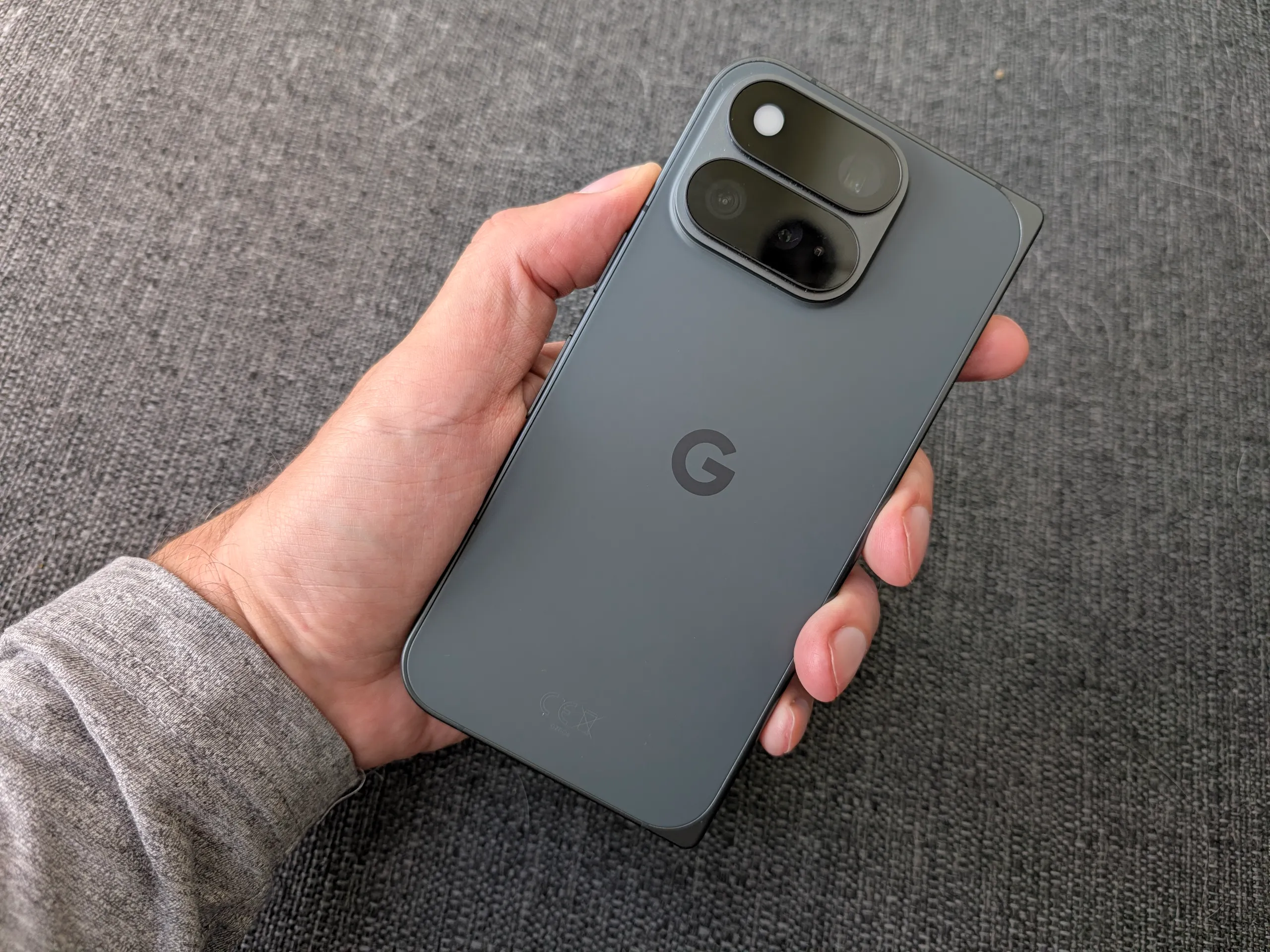
Pick up a Pixel 11 Pro and the physical experience is hard to fault. Google has kept the recognisable visor design — that raised camera bar that runs across the back — giving the phone visual identity at a time when most Android flagships look interchangeable. The matte black Pro now comes with matching matte black rails, a small but satisfying detail that lifts the overall premium feel considerably.
Dust and water resistance is present, in-hand feel is excellent, and the build is genuinely rock-solid. So when we say the hardware is a weakness, we are talking about internals, not construction.
The Tensor G6 chip is Google's latest in-house silicon, co-developed with Samsung. It posts roughly 20% better CPU performance in both single-core and multi-core benchmarks compared to the Tensor G5, which puts it broadly competitive with the Snapdragon 8 Elite in pure CPU workloads. For everyday tasks — messaging, browsing, email, social media scrolling — that is more than sufficient.
The GPU is a different story. Snapdragon's graphics performance is in a completely different league, and if you do any serious mobile gaming, video editing, or graphics-intensive work, you will feel the gap. This is not a new problem for Pixel; it is a recurring one Google has not yet solved.
Battery capacity is also not best-in-class, and the charging situation is frankly embarrassing at this price. The new "extreme charging" mode — which throttles background tasks and thermal limits for a quick burst — maxes out around 30 to 35 watts. Samsung's flagships, widely considered conservative on charging, hit 45 watts. The OnePlus 15 delivers 80 watts. At $1,100, this is not an acceptable position to be in.
Camera Performance: Strong Computational Photography, But Not the Sharpest Tool
The Pixel 11 Pro camera system is where Google's software-first philosophy pays its most visible dividends — and also where the hardware trade-offs are most obvious.
Both the primary and telephoto cameras feature larger sensors versus the Pixel 10 generation. The primary is a new 50MP sensor, and shooting in full 50MP mode (which the camera will remember once you enable it) delivers noticeably sharper results with better detail retention. The 5x telephoto is a genuine highlight — arguably the most enjoyable lens on the phone, producing images with satisfying reach and solid optical quality within its native range.
Night Sight has also benefited directly from those larger sensors. More light entering the sensor means faster processing and less noise in low-light conditions, and the results are measurably better than last year. The signature Pixel look — contrasty, punchy, immediately recognisable — is intact.
However, pushing zoom beyond 5x optical brings in heavy computational processing that produces that dreaded watercolour effect. If ultra-long zoom photography matters to you, the Samsung Galaxy S25 Ultra with its 200MP sensor and 10x optical zoom, or other "Ultra" tier phones, are in a different class. The Pixel 11 Pro is not competing with those.
The ultrawide is unchanged from the previous generation and is showing its age — detail is acceptable but not impressive alongside the primary and telephoto lenses. Point-light flaring (small floating orbs in low-light photos and video) is a recurring issue shared with the latest iPhones but still frustrating to see at this price.
One small but irritating default: Google ships the phone with double-tap-power-button camera launch disabled. Re-enable it in settings — it is the fastest camera access available and should never have been turned off.
Software Experience: Still the Clearest Reason to Buy a Pixel
If Google's hardware story is complicated, the software story is not. Running Android 17 on a Pixel is the best version of Android available anywhere, full stop.
Beyond the headline features — and Google has published plenty of those separately — it is the texture of daily Pixel use that separates these phones from the Android field. The volume slider has a subtle momentum bounce at its limits that sounds trivial but makes the UI feel alive. The My Pixel app icon actually changes colour to match your specific device's colourway — a detail so small most owners will never notice it, but one that speaks to a coherent design philosophy. Quick Share now has a fluid animation when transferring between two Pixels, mirroring the polish Apple users associate with AirDrop.
These are not features you put in a spec sheet. They are features you feel over six months of daily use, and they accumulate into a meaningfully better experience than most Android skins deliver.
The seven years of guaranteed software and security updates is also genuinely significant from a financial planning perspective. If you're thinking about total cost of ownership — not just purchase price — a phone that stays current and secure until 2032 has real value that a cheaper phone with two or three years of support cannot match.
Pixel 11 Pro vs. The Competition
| Feature | Google Pixel 11 Pro | Samsung Galaxy S25+ | iPhone 16 Pro | OnePlus 13 |
|---|---|---|---|---|
| Starting Price | $1,100 | $999 | $999 | $899 |
| Chip | Tensor G6 | Snapdragon 8 Elite | A18 Pro | Snapdragon 8 Elite |
| RAM | 12GB | 12GB | 8GB | 16GB |
| Charging Speed | ~35W peak | 45W | 30W | 80W |
| Primary Camera | 50MP | 50MP | 48MP | 50MP |
| Optical Zoom | 5x | 3x / 10x (Ultra) | 5x | 3x |
| Software Updates | 7 years | 7 years | ~6 years | 4 years |
| Water Resistance | IP68 | IP68 | IP68 | IP65 |
The Samsung Galaxy S25+ lands at $999 with the same Snapdragon 8 Elite that leaves the Tensor G6 GPU in the dust, and it costs $100 less. The OnePlus 13 at $899 brings 16GB of RAM, 80W charging, and flagship-grade performance to a price point below even the base Pixel 11 Pro. These comparisons are uncomfortable for Google, and they are the reason value perception is the central challenge for the Pixel line right now.
Pricing and Value: The Honest Verdict
Here is where things get direct. The base Pixel 11 at $900 is arguably the one Google phone that makes straightforward sense for most buyers right now. It gets the Tensor G6, Android 17, the bright new screen, triple cameras, and seven years of updates. It is a complete, enjoyable phone at a price that, while not cheap, is defensible.
The Pixel 11 Pro at $1,100 is harder to recommend. For the extra $200 over the base model, you get marginally better cameras, a slightly brighter display, and the Highlight LED — a glowing indicator on the back that lights up for incoming calls. In practice, Highlight is a curiosity, not a feature. You also get a smaller battery than the Pro XL because the larger camera hardware had to fit somewhere. That is not a great trade.
To get the larger screen and 16GB of RAM — the spec the previous generation's Pro started with — you need to go all the way to the 512GB Pro XL at $1,400. At that price, the hardware shortcomings relative to Snapdragon-powered competitors become genuinely difficult to dismiss.
Free Weekly Newsletter
Enjoying this guide?
Get the best articles like this one delivered to your inbox every week. No spam.
Trade-ins and monthly payment plans soften the number on paper. But the underlying value proposition is real and worth naming clearly: at $1,200 to $1,400, most buyers should be getting best-in-class hardware. The Pixel 11 Pro line does not provide that. It provides best-in-class software with good-but-not-great hardware, and the market is charging a premium price for that combination in an environment where hardware costs are rising for everyone.
Google has always been a software-first phone maker. That has been the Pixel identity from day one. But as prices climb, the gap between what you pay and what you get in hardware terms is widening, and that gap is getting harder to paper over with clever UI animations and camera algorithms — however good those algorithms genuinely are.
Bottom-Line Verdict
The Google Pixel 11 Pro is a well-made, pleasant, software-rich phone that will serve the majority of mainstream users very well for years. Android 17 is excellent. The 5x telephoto camera is enjoyable. Battery life is comfortable. Seven years of updates is a real-world advantage.
But at $1,100 to $1,400, you are paying premium prices for a phone that cannot compete with similarly priced rivals on GPU performance, charging speed, or camera hardware ceiling. The base Pixel 11 at $900 is the sweet spot in Google's current lineup. The Pro models ask you to pay significantly more for gains that do not match the price jump.
Who should buy it: Pixel loyalists who want the cleanest Android experience available and value long-term software support above raw hardware specs. Light-to-moderate users who will never push the GPU or need ultra-fast charging.
Who should not buy it: Enthusiast users who game, edit video, or need maximum performance for demanding applications. Anyone comparing value-per-dollar against the Samsung Galaxy S25+ or OnePlus 13. Budget-conscious buyers who need to get the most hardware for their money.
Bottom line: --
Where to Buy
Frequently Asked Questions
Is the Google Pixel 11 Pro worth buying at $1,100?
For most buyers, probably not — at least not compared to the base Pixel 11 at $900. The Pro adds slightly better cameras and a glowing LED notification light, but also comes with a smaller battery and no meaningful RAM upgrade over the base model. Unless you specifically want the 5x telephoto over the base phone's camera, the standard Pixel 11 represents better value.
How does the Pixel 11 Pro camera compare to the Samsung Galaxy S25 Ultra?
The Pixel 11 Pro delivers excellent computational photography with punchy, natural-looking results, and the 5x telephoto is genuinely capable. However, the Samsung Galaxy S25 Ultra features a 200MP primary sensor, a 10x optical zoom lens, and a larger 1-inch equivalent sensor format. For pure camera hardware ceiling and extreme zoom photography, the S25 Ultra is in a different class. The Pixel punches above its sensor hardware through software, but it cannot replicate what significantly larger and more complex camera modules deliver.
What is the charging speed on the Pixel 11 Pro, and is it a problem?
Yes, for a phone at this price, charging speed is a genuine weakness. Even in the new "extreme charging" mode — which pauses background tasks to prioritise charging — the Pixel 11 Pro tops out at around 30 to 35 watts. Samsung's Galaxy S25+ charges at 45 watts, and the OnePlus 13 charges at 80 watts. For users who regularly need a fast top-up, this is a real daily frustration that cheaper competitors solve much better.
How long will the Google Pixel 11 Pro receive software updates?
Google has committed to seven years of Android OS updates and security patches for the Pixel 11 series. That means the phone should remain fully supported through approximately 2032. This is one of the strongest software update commitments in the Android market and is a legitimate long-term value argument, particularly for buyers who hold phones for four or more years.
Is the Pixel 11 Pro good for gaming?
Not particularly. The Tensor G6 chip's CPU performance is competitive with Snapdragon 8 Elite in everyday tasks, but its GPU falls significantly behind. Casual games and lighter titles will run fine, but graphically demanding games may see frame drops, thermal throttling, and reduced visual fidelity compared to Snapdragon-powered rivals at the same price. If mobile gaming is a priority, a Snapdragon 8 Elite device like the Samsung Galaxy S25+ or OnePlus 13 is a better choice.
Google Pixel 11 Pro
Considering it? See where the price stands today
Free Investing Tools
Frequently Asked Questions
Pros and Cons of the Google Pixel 11 Pro
Pros
- Clean, polished Android 17 experience with seven years of guaranteed software updates
- Capable dual cameras (primary and 5x telephoto) with excellent computational photography
- All-day battery life is comfortable for most users
- Premium build quality with recognisable visor design and matte rail finish
- Tensor G6 chip delivers roughly 20% CPU improvement over G5
- Dozens of thoughtful software touches that make daily use genuinely enjoyable
Cons
- Starts at $1,100 — hard to justify vs the base Pixel 11 at $900
- Tensor G6 GPU remains far behind Snapdragon 8 Elite in graphics performance
- Charging tops out at ~30–35 watts even in "extreme" mode (Samsung flags charge at 45W; OnePlus 15 hits 80W)
- No 1-inch sensor, no 200MP camera, no 10x optical zoom
- Ultrawide camera is unchanged and beginning to show its age
- Highlight LED feature is borderline useless as a differentiator
- Pro model actually has a smaller battery than the Pro XL to accommodate bigger camera hardware
- Point-light flaring in low light on both photos and video
Bottom line: --
Build Quality and Hardware: Solid Outside, Uneven Inside
Pick up a Pixel 11 Pro and the physical experience is hard to fault. Google has kept the recognisable visor design — that raised camera bar that runs across the back — giving the phone visual identity at a time when most Android flagships look interchangeable. The matte black Pro now comes with matching matte black rails, a small but satisfying detail that lifts the overall premium feel considerably.
Dust and water resistance is present, in-hand feel is excellent, and the build is genuinely rock-solid. So when we say the hardware is a weakness, we are talking about internals, not construction.
The Tensor G6 chip is Google's latest in-house silicon, co-developed with Samsung. It posts roughly 20% better CPU performance in both single-core and multi-core benchmarks compared to the Tensor G5, which puts it broadly competitive with the Snapdragon 8 Elite in pure CPU workloads. For everyday tasks — messaging, browsing, email, social media scrolling — that is more than sufficient.
The GPU is a different story. Snapdragon's graphics performance is in a completely different league, and if you do any serious mobile gaming, video editing, or graphics-intensive work, you will feel the gap. This is not a new problem for Pixel; it is a recurring one Google has not yet solved.
Battery capacity is also not best-in-class, and the charging situation is frankly embarrassing at this price. The new "extreme charging" mode — which throttles background tasks and thermal limits for a quick burst — maxes out around 30 to 35 watts. Samsung's flagships, widely considered conservative on charging, hit 45 watts. The OnePlus 15 delivers 80 watts. At $1,100, this is not an acceptable position to be in.
Camera Performance: Strong Computational Photography, But Not the Sharpest Tool
The Pixel 11 Pro camera system is where Google's software-first philosophy pays its most visible dividends — and also where the hardware trade-offs are most obvious.
Both the primary and telephoto cameras feature larger sensors versus the Pixel 10 generation. The primary is a new 50MP sensor, and shooting in full 50MP mode (which the camera will remember once you enable it) delivers noticeably sharper results with better detail retention. The 5x telephoto is a genuine highlight — arguably the most enjoyable lens on the phone, producing images with satisfying reach and solid optical quality within its native range.
Night Sight has also benefited directly from those larger sensors. More light entering the sensor means faster processing and less noise in low-light conditions, and the results are measurably better than last year. The signature Pixel look — contrasty, punchy, immediately recognisable — is intact.
However, pushing zoom beyond 5x optical brings in heavy computational processing that produces that dreaded watercolour effect. If ultra-long zoom photography matters to you, the Samsung Galaxy S25 Ultra with its 200MP sensor and 10x optical zoom, or other "Ultra" tier phones, are in a different class. The Pixel 11 Pro is not competing with those.
The ultrawide is unchanged from the previous generation and is showing its age — detail is acceptable but not impressive alongside the primary and telephoto lenses. Point-light flaring (small floating orbs in low-light photos and video) is a recurring issue shared with the latest iPhones but still frustrating to see at this price.
One small but irritating default: Google ships the phone with double-tap-power-button camera launch disabled. Re-enable it in settings — it is the fastest camera access available and should never have been turned off.
Software Experience: Still the Clearest Reason to Buy a Pixel
If Google's hardware story is complicated, the software story is not. Running Android 17 on a Pixel is the best version of Android available anywhere, full stop.
Beyond the headline features — and Google has published plenty of those separately — it is the texture of daily Pixel use that separates these phones from the Android field. The volume slider has a subtle momentum bounce at its limits that sounds trivial but makes the UI feel alive. The My Pixel app icon actually changes colour to match your specific device's colourway — a detail so small most owners will never notice it, but one that speaks to a coherent design philosophy. Quick Share now has a fluid animation when transferring between two Pixels, mirroring the polish Apple users associate with AirDrop.
These are not features you put in a spec sheet. They are features you feel over six months of daily use, and they accumulate into a meaningfully better experience than most Android skins deliver.
The seven years of guaranteed software and security updates is also genuinely significant from a financial planning perspective. If you're thinking about total cost of ownership — not just purchase price — a phone that stays current and secure until 2032 has real value that a cheaper phone with two or three years of support cannot match.
Pixel 11 Pro vs. The Competition
| Feature | Google Pixel 11 Pro | Samsung Galaxy S25+ | iPhone 16 Pro | OnePlus 13 |
|---|---|---|---|---|
| Starting Price | $1,100 | $999 | $999 | $899 |
| Chip | Tensor G6 | Snapdragon 8 Elite | A18 Pro | Snapdragon 8 Elite |
| RAM | 12GB | 12GB | 8GB | 16GB |
| Charging Speed | ~35W peak | 45W | 30W | 80W |
| Primary Camera | 50MP | 50MP | 48MP | 50MP |
| Optical Zoom | 5x | 3x / 10x (Ultra) | 5x | 3x |
| Software Updates | 7 years | 7 years | ~6 years | 4 years |
| Water Resistance | IP68 | IP68 | IP68 | IP65 |
The Samsung Galaxy S25+ lands at $999 with the same Snapdragon 8 Elite that leaves the Tensor G6 GPU in the dust, and it costs $100 less. The OnePlus 13 at $899 brings 16GB of RAM, 80W charging, and flagship-grade performance to a price point below even the base Pixel 11 Pro. These comparisons are uncomfortable for Google, and they are the reason value perception is the central challenge for the Pixel line right now.
Pricing and Value: The Honest Verdict
Here is where things get direct. The base Pixel 11 at $900 is arguably the one Google phone that makes straightforward sense for most buyers right now. It gets the Tensor G6, Android 17, the bright new screen, triple cameras, and seven years of updates. It is a complete, enjoyable phone at a price that, while not cheap, is defensible.
The Pixel 11 Pro at $1,100 is harder to recommend. For the extra $200 over the base model, you get marginally better cameras, a slightly brighter display, and the Highlight LED — a glowing indicator on the back that lights up for incoming calls. In practice, Highlight is a curiosity, not a feature. You also get a smaller battery than the Pro XL because the larger camera hardware had to fit somewhere. That is not a great trade.
To get the larger screen and 16GB of RAM — the spec the previous generation's Pro started with — you need to go all the way to the 512GB Pro XL at $1,400. At that price, the hardware shortcomings relative to Snapdragon-powered competitors become genuinely difficult to dismiss.
Trade-ins and monthly payment plans soften the number on paper. But the underlying value proposition is real and worth naming clearly: at $1,200 to $1,400, most buyers should be getting best-in-class hardware. The Pixel 11 Pro line does not provide that. It provides best-in-class software with good-but-not-great hardware, and the market is charging a premium price for that combination in an environment where hardware costs are rising for everyone.
Google has always been a software-first phone maker. That has been the Pixel identity from day one. But as prices climb, the gap between what you pay and what you get in hardware terms is widening, and that gap is getting harder to paper over with clever UI animations and camera algorithms — however good those algorithms genuinely are.
Bottom-Line Verdict
The Google Pixel 11 Pro is a well-made, pleasant, software-rich phone that will serve the majority of mainstream users very well for years. Android 17 is excellent. The 5x telephoto camera is enjoyable. Battery life is comfortable. Seven years of updates is a real-world advantage.
But at $1,100 to $1,400, you are paying premium prices for a phone that cannot compete with similarly priced rivals on GPU performance, charging speed, or camera hardware ceiling. The base Pixel 11 at $900 is the sweet spot in Google's current lineup. The Pro models ask you to pay significantly more for gains that do not match the price jump.
Who should buy it: Pixel loyalists who want the cleanest Android experience available and value long-term software support above raw hardware specs. Light-to-moderate users who will never push the GPU or need ultra-fast charging.
Who should not buy it: Enthusiast users who game, edit video, or need maximum performance for demanding applications. Anyone comparing value-per-dollar against the Samsung Galaxy S25+ or OnePlus 13. Budget-conscious buyers who need to get the most hardware for their money.
Bottom line: --
Where to Buy
Frequently Asked Questions
Is the Google Pixel 11 Pro worth buying at $1,100?
For most buyers, probably not — at least not compared to the base Pixel 11 at $900. The Pro adds slightly better cameras and a glowing LED notification light, but also comes with a smaller battery and no meaningful RAM upgrade over the base model. Unless you specifically want the 5x telephoto over the base phone's camera, the standard Pixel 11 represents better value.
How does the Pixel 11 Pro camera compare to the Samsung Galaxy S25 Ultra?
The Pixel 11 Pro delivers excellent computational photography with punchy, natural-looking results, and the 5x telephoto is genuinely capable. However, the Samsung Galaxy S25 Ultra features a 200MP primary sensor, a 10x optical zoom lens, and a larger 1-inch equivalent sensor format. For pure camera hardware ceiling and extreme zoom photography, the S25 Ultra is in a different class. The Pixel punches above its sensor hardware through software, but it cannot replicate what significantly larger and more complex camera modules deliver.
What is the charging speed on the Pixel 11 Pro, and is it a problem?
Yes, for a phone at this price, charging speed is a genuine weakness. Even in the new "extreme charging" mode — which pauses background tasks to prioritise charging — the Pixel 11 Pro tops out at around 30 to 35 watts. Samsung's Galaxy S25+ charges at 45 watts, and the OnePlus 13 charges at 80 watts. For users who regularly need a fast top-up, this is a real daily frustration that cheaper competitors solve much better.
How long will the Google Pixel 11 Pro receive software updates?
Google has committed to seven years of Android OS updates and security patches for the Pixel 11 series. That means the phone should remain fully supported through approximately 2032. This is one of the strongest software update commitments in the Android market and is a legitimate long-term value argument, particularly for buyers who hold phones for four or more years.
Is the Pixel 11 Pro good for gaming?
Not particularly. The Tensor G6 chip's CPU performance is competitive with Snapdragon 8 Elite in everyday tasks, but its GPU falls significantly behind. Casual games and lighter titles will run fine, but graphically demanding games may see frame drops, thermal throttling, and reduced visual fidelity compared to Snapdragon-powered rivals at the same price. If mobile gaming is a priority, a Snapdragon 8 Elite device like the Samsung Galaxy S25+ or OnePlus 13 is a better choice.
Google Pixel 11 Pro
Ready to decide? Compare the current price before you buy
About Zeebrain Editorial
Zeebrain publishes independent analysis of markets, investing, personal finance, and business. We disclose affiliate relationships, never accept payment for coverage, and fact-check all claims against primary sources. Read our editorial policy →
How this article was produced: Zeebrain articles are created with AI assistance from primary sources (including cited videos and market data) and reviewed under our editorial standards before publication. Spot an error? Tell us and we will correct it.
Disclaimer: Content on Zeebrain is for informational and educational purposes only and does not constitute financial advice or a recommendation to buy or sell any security. Always conduct your own research and consult a qualified financial adviser before making investment decisions. Past performance is not indicative of future results.
More from Reviews



Related Guides
Keep exploring this topic
Explore More on Zeebrain
Keep browsing by topic, or put the numbers to work with our free tools.