Nothing Phone 4A & 4A Pro: Worth It?

Quick Summary
Nothing Phone 4A and 4A Pro: specs, cameras, design, and whether either phone is worth buying in 2026. Honest verdict for budget-conscious buyers.
Nothing Phone 4A & 4A Pro
Check current price and availability on Amazon
In This Article
Nothing Phone 4A and 4A Pro: Two Budget Phones, One Clear Winner
Nothing has done something quietly clever with its 2026 lineup. There is no Nothing Phone 4. Instead, the company launched the Nothing Phone 4A at €349 and the Nothing Phone 4A Pro at $499 — and if you think that naming strategy was accidental, you have not been paying attention to how Carl Pei runs this company. These are not placeholder devices. They are a deliberate pivot, and understanding why tells you almost everything you need to know about whether to buy one.
Related Post

So let us get into it. Specs, design, cameras, software, and the honest bottom line on both phones.
Design and Build: The Best-Looking Nothing Phones Yet
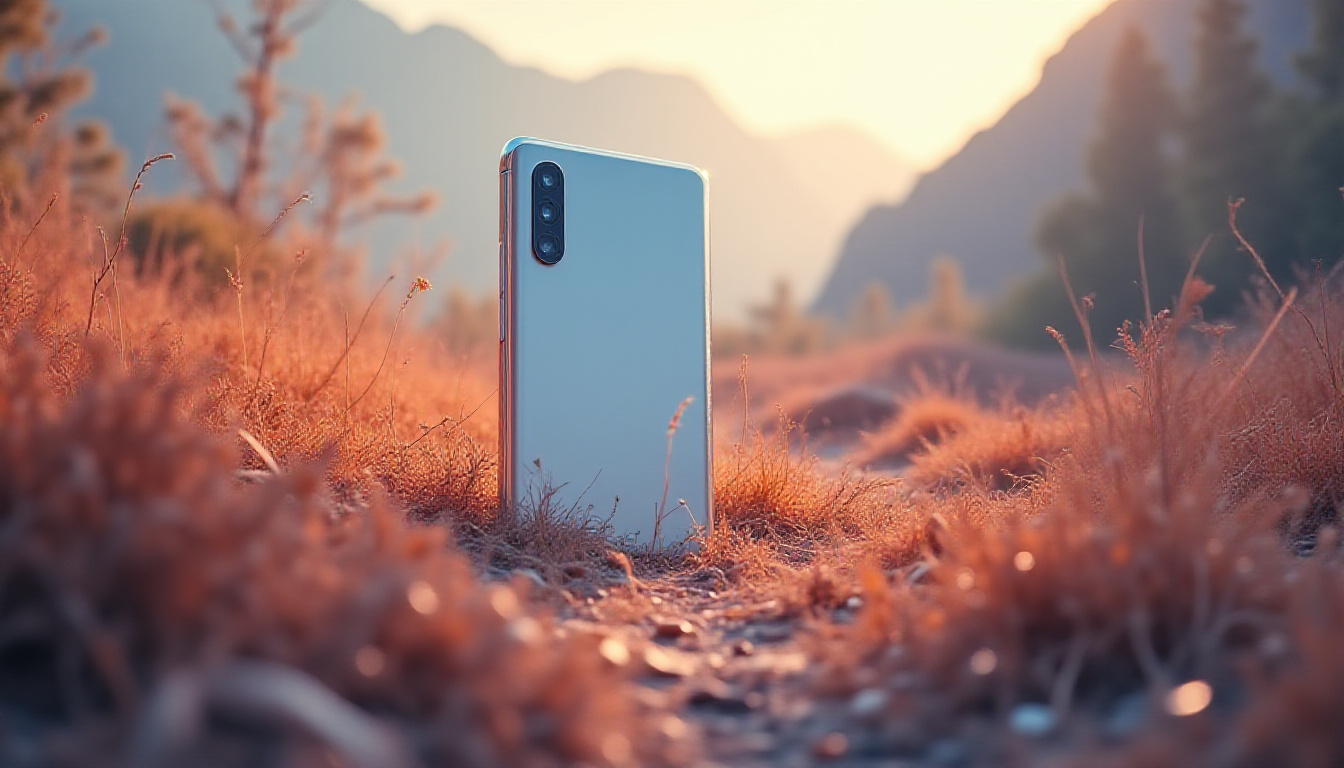
Nothing has always leaned hard on aesthetics, and both the 4A and 4A Pro deliver. The 4A comes in a matte blue finish with semi-transparent plastic back panels that reveal the internal geometry Nothing has made its signature. It looks premium for the price. Triple cameras sit neatly at the top, and when you consider that the iPhone 17e ships with one camera and the Pixel 10a with two, the 4A already wins on visual impact alone.
The 4A Pro steps things up meaningfully in terms of materials. The body is unibody aluminium — the kind of cold, solid feel you associate with phones costing twice as much. There is a clear cutout around the camera array and glyph matrix that gives it a distinctly architectural look. The bezels are slightly thinner, which means a marginally larger display in a slightly smaller footprint. It is a genuinely nice object to hold.
One caveat: the aluminium back on the 4A Pro is a fingerprint magnet. It attracts smudges aggressively and is oddly resistant to being wiped clean. Not a dealbreaker, but worth knowing before you hand over $499.
Both phones carry Gorilla Glass 7i on the front. The 4A is IP64 rated; the 4A Pro bumps that to IP65, which in practical terms means marginally better resistance to water jets. Neither is going to survive a swim, but both handle splashes without drama.
The Glyph Interface: Gimmick or Genuinely Useful?
The glyph system on Nothing phones remains one of the most divisive features in the mid-range market. On the 4A, it is a vertical bar of seven LED dots on the right side of the phone — the bottom one red — capable of acting as a volume indicator, a progress bar for things like incoming Ubers or calendar events, or a countdown timer. The red dot also blinks as a video recording indicator, which is a small feature that more phones arguably should have.
The 4A Pro upgrades this to a full pixel-dot matrix display — a lower resolution but brighter version of what appeared on the Nothing Phone 3. It is fully customisable for notifications. Miss a Slack message with the phone face down? Configure the matrix to display the Slack icon. Expecting a message from someone specific? Set up a custom icon for their contact. You can even use custom images, though the ability to draw freehand on the matrix is not yet available.
The practical argument for the glyph system is stronger than critics give it credit for. The design philosophy is essentially: keep your phone face down, let the glyphs tell you what matters, pick it up only when you need to. In an era of notification overload, that is a reasonable proposition. The timer on the 4A Pro is intricate and well-animated, though it frustratingly does not integrate with the built-in clock app — an oversight that should be fixed in a software update.
Software and Performance: Nothing OS 4.1 on Android 16
Nothing OS 4.1 running on Android 16 continues to be one of the more refined takes on Android available outside of Google's own Pixel line. The animations are smooth, the UI is consistent, and the overall experience feels fast in a way that the underlying chipsets alone do not fully explain. Nothing has always been good at optimisation, and that holds here.
Storage has been upgraded to UFS 3.1 across both phones, which means noticeably faster app launches and snappier file handling. The 4A runs a Snapdragon 7S Gen 4; the 4A Pro steps up to the Snapdragon 7 Gen 4. In day-to-day use — social media, streaming, productivity — most people will not feel a meaningful difference between the two chips. Run a benchmark or play a demanding game and the gap becomes more apparent, but that is not the core use case for either phone.
Home screen customisation has expanded, with more control over folder appearance and widget layouts. The Playground — Nothing's community-driven widget store — is a genuine differentiator. Users have built widgets ranging from arcade games to countdown timers tracking how much of the year remains. It is the kind of personalisation depth that stock Android does not offer and that Samsung's One UI handles very differently.
On AI features: both phones are light. There is an AI wallpaper generator, some ChatGPT widget integrations, and the Essential Space accessible via the shortcut button on the side. That is broadly it. For buyers exhausted by AI feature bloat on Samsung and Google flagships, this restraint may actually be a selling point.
Nothing Phone 4A vs 4A Pro: Cameras and the Spec Sheet Gaps
Both phones offer triple cameras: an 8-megapixel ultrawide, a 50-megapixel main sensor, and a 3.5x telephoto. The 4A Pro has larger sensors and a more prominent camera plateau, but the real-world output from both is best described as competent rather than impressive.
Photos are serviceable. They are frequently a little over-processed in HDR scenes and noisier than expected in lower light. If camera quality is your primary buying criterion, neither of these phones belongs at the top of your shortlist. The Pixel 10a — even with dual cameras — will outshoot both in computational photography despite its other shortcomings.
A notable limitation on both phones: neither can shoot 4K video from the ultrawide. The sensor is 8 megapixels, and 4K requires approximately 12 megapixels. It is a hard ceiling that matters if you shoot video seriously.
The 4A Pro's headline camera differentiator over the 4A is a 140x ultra zoom. In practice, this is a digital crop operation, not optical capability. The results at that range are predictably soft and usable only in the loosest sense. It is a marketing number more than a functional feature.
The display situation deserves a specific callout. The 4A Pro's screen is listed as supporting 144Hz refresh rate, and it says so in the settings. In practice, with the frame rate indicator enabled, the display runs at 120Hz in virtually all real-world use. The 144Hz figure applies to a narrow set of supported games. This is not unique to Nothing — Asus did something similar — but it is the kind of spec sheet puffery that erodes trust.
The Real Reason There Is No Nothing Phone 4
This is where the analysis gets interesting. Nothing's decision to skip the Phone 4 entirely is framed publicly as a commitment to meaningful upgrades — essentially, they will release a new flagship only when they genuinely have something worth releasing. Carl Pei said as much in a video on the Nothing YouTube channel weeks before launch.
That framing is not wrong, but it is also not the complete picture. Nothing is a relatively small player in the global smartphone market. Smaller order volumes from component suppliers mean higher per-unit costs for the same parts. RAM prices have surged industrywide, but larger players like Samsung, Apple, and Xiaomi locked in longer-term supply agreements and are partially insulated from the worst of those increases in the near term. Nothing does not have that buffer.
The Nothing Phone 3, released at $800, demonstrated what happens when the company reaches for flagship positioning without flagship supply chain muscle. It was an interesting phone. It was not a competitive one at that price, and the reception reflected that.
Free Weekly Newsletter
Enjoying this guide?
Get the best articles like this one delivered to your inbox every week. No spam.
So the 4A and 4A Pro are not a creative retreat. They are a strategic acknowledgement that Nothing's competitive advantage lives in the mid-range — in design differentiation, software personality, and the glyph system — not in raw silicon performance. Building around a Snapdragon 7 Gen 4 rather than an 8 Elite is not a failure of ambition. It is an honest read of where Nothing can actually win.
Bottom Line: Which One Should You Buy?
If you are in a market where the Nothing Phone 4A is available — Europe and select other regions — at €349, it is the easier recommendation. You get the distinctive Nothing design, a capable triple-camera setup, solid battery life with a 5,000mAh cell, smooth software, and enough performance for everyday use. The plastic build is appropriate for the price, the IP64 rating is reassuring, and the glyph bar adds genuine personality without being the primary reason to buy.
The Nothing Phone 4A Pro at $499 makes more sense for US buyers who want Nothing's ecosystem and find the 4A unavailable in their market. The aluminium build is a real upgrade in feel, and the glyph matrix is legitimately more useful than the LED bar. But several of its headline upgrades — the 144Hz display, the 140x zoom, the marginal IP rating bump — are thinner in practice than they appear on paper. At $150 more than a €349 phone, you are paying a premium that is partially justified by build quality and partially by geography.
Neither phone will satisfy buyers who prioritise camera performance above all else. Neither has AI depth that rivals what Google or Samsung are shipping. But as daily drivers that look distinctive, run smoothly, and sit well below flagship pricing, both earn their place in the conversation. The 4A is the smarter buy. The 4A Pro is the more enjoyable object. Your priorities should make that decision straightforward.
Frequently Asked Questions
Is the Nothing Phone 4A available in the US?
The Nothing Phone 4A is not officially available in the United States. It is sold primarily in Europe and select other markets at €349. US buyers looking for a Nothing phone in 2026 should consider the Nothing Phone 4A Pro, which is available in the US starting at $499.
How does the Nothing Phone 4A Pro compare to the Pixel 10a?
Both phones sit around the $499 price point. The Pixel 10a has stronger computational photography and deeper Google AI integration. The Nothing Phone 4A Pro offers a more distinctive design, triple cameras versus the Pixel 10a's dual setup, and a more customisable software experience through Nothing OS 4.1. If cameras are your priority, lean Pixel. If design and software personality matter more, the 4A Pro makes a compelling case.
Does the Nothing Phone 4A or 4A Pro support wireless charging?
Neither phone supports wireless charging. The 4A Pro's aluminium unibody construction does not include a wireless charging coil, similar to how some premium metal-bodied phones omit the feature to keep costs in check. Both phones charge via wired connection only.
Is the 144Hz display on the Nothing Phone 4A Pro actually 144Hz?
In practice, no — not in most usage. The 4A Pro's display is listed at a maximum of 144Hz and the setting appears in the phone's display options, but real-world frame rate monitoring shows the display runs at 120Hz the vast majority of the time. The 144Hz rate is only achieved in a small number of specifically supported games. For everyday use, treat it as a 120Hz display.
What is the Playground on Nothing OS?
The Playground is a community-driven widget store accessible through Nothing's web platform. Independent developers and Nothing enthusiasts build custom widgets that users can install on their home screens. Examples range from interactive arcade games in a 1x1 widget box to countdown timers showing exactly how much of the current day, week, month, or year remains. It is one of the more genuinely distinctive features of the Nothing software experience.
Nothing Phone 4A & 4A Pro
Considering it? See where the price stands today
Free Investing Tools
Frequently Asked Questions
Nothing Phone 4A and 4A Pro: Two Budget Phones, One Clear Winner
Nothing has done something quietly clever with its 2026 lineup. There is no Nothing Phone 4. Instead, the company launched the Nothing Phone 4A at €349 and the Nothing Phone 4A Pro at $499 — and if you think that naming strategy was accidental, you have not been paying attention to how Carl Pei runs this company. These are not placeholder devices. They are a deliberate pivot, and understanding why tells you almost everything you need to know about whether to buy one.
So let us get into it. Specs, design, cameras, software, and the honest bottom line on both phones.
Design and Build: The Best-Looking Nothing Phones Yet
Nothing has always leaned hard on aesthetics, and both the 4A and 4A Pro deliver. The 4A comes in a matte blue finish with semi-transparent plastic back panels that reveal the internal geometry Nothing has made its signature. It looks premium for the price. Triple cameras sit neatly at the top, and when you consider that the iPhone 17e ships with one camera and the Pixel 10a with two, the 4A already wins on visual impact alone.
The 4A Pro steps things up meaningfully in terms of materials. The body is unibody aluminium — the kind of cold, solid feel you associate with phones costing twice as much. There is a clear cutout around the camera array and glyph matrix that gives it a distinctly architectural look. The bezels are slightly thinner, which means a marginally larger display in a slightly smaller footprint. It is a genuinely nice object to hold.
One caveat: the aluminium back on the 4A Pro is a fingerprint magnet. It attracts smudges aggressively and is oddly resistant to being wiped clean. Not a dealbreaker, but worth knowing before you hand over $499.
Both phones carry Gorilla Glass 7i on the front. The 4A is IP64 rated; the 4A Pro bumps that to IP65, which in practical terms means marginally better resistance to water jets. Neither is going to survive a swim, but both handle splashes without drama.
The Glyph Interface: Gimmick or Genuinely Useful?
The glyph system on Nothing phones remains one of the most divisive features in the mid-range market. On the 4A, it is a vertical bar of seven LED dots on the right side of the phone — the bottom one red — capable of acting as a volume indicator, a progress bar for things like incoming Ubers or calendar events, or a countdown timer. The red dot also blinks as a video recording indicator, which is a small feature that more phones arguably should have.
The 4A Pro upgrades this to a full pixel-dot matrix display — a lower resolution but brighter version of what appeared on the Nothing Phone 3. It is fully customisable for notifications. Miss a Slack message with the phone face down? Configure the matrix to display the Slack icon. Expecting a message from someone specific? Set up a custom icon for their contact. You can even use custom images, though the ability to draw freehand on the matrix is not yet available.
The practical argument for the glyph system is stronger than critics give it credit for. The design philosophy is essentially: keep your phone face down, let the glyphs tell you what matters, pick it up only when you need to. In an era of notification overload, that is a reasonable proposition. The timer on the 4A Pro is intricate and well-animated, though it frustratingly does not integrate with the built-in clock app — an oversight that should be fixed in a software update.
Software and Performance: Nothing OS 4.1 on Android 16
Nothing OS 4.1 running on Android 16 continues to be one of the more refined takes on Android available outside of Google's own Pixel line. The animations are smooth, the UI is consistent, and the overall experience feels fast in a way that the underlying chipsets alone do not fully explain. Nothing has always been good at optimisation, and that holds here.
Storage has been upgraded to UFS 3.1 across both phones, which means noticeably faster app launches and snappier file handling. The 4A runs a Snapdragon 7S Gen 4; the 4A Pro steps up to the Snapdragon 7 Gen 4. In day-to-day use — social media, streaming, productivity — most people will not feel a meaningful difference between the two chips. Run a benchmark or play a demanding game and the gap becomes more apparent, but that is not the core use case for either phone.
Home screen customisation has expanded, with more control over folder appearance and widget layouts. The Playground — Nothing's community-driven widget store — is a genuine differentiator. Users have built widgets ranging from arcade games to countdown timers tracking how much of the year remains. It is the kind of personalisation depth that stock Android does not offer and that Samsung's One UI handles very differently.
On AI features: both phones are light. There is an AI wallpaper generator, some ChatGPT widget integrations, and the Essential Space accessible via the shortcut button on the side. That is broadly it. For buyers exhausted by AI feature bloat on Samsung and Google flagships, this restraint may actually be a selling point.
Nothing Phone 4A vs 4A Pro: Cameras and the Spec Sheet Gaps
Both phones offer triple cameras: an 8-megapixel ultrawide, a 50-megapixel main sensor, and a 3.5x telephoto. The 4A Pro has larger sensors and a more prominent camera plateau, but the real-world output from both is best described as competent rather than impressive.
Photos are serviceable. They are frequently a little over-processed in HDR scenes and noisier than expected in lower light. If camera quality is your primary buying criterion, neither of these phones belongs at the top of your shortlist. The Pixel 10a — even with dual cameras — will outshoot both in computational photography despite its other shortcomings.
A notable limitation on both phones: neither can shoot 4K video from the ultrawide. The sensor is 8 megapixels, and 4K requires approximately 12 megapixels. It is a hard ceiling that matters if you shoot video seriously.
The 4A Pro's headline camera differentiator over the 4A is a 140x ultra zoom. In practice, this is a digital crop operation, not optical capability. The results at that range are predictably soft and usable only in the loosest sense. It is a marketing number more than a functional feature.
The display situation deserves a specific callout. The 4A Pro's screen is listed as supporting 144Hz refresh rate, and it says so in the settings. In practice, with the frame rate indicator enabled, the display runs at 120Hz in virtually all real-world use. The 144Hz figure applies to a narrow set of supported games. This is not unique to Nothing — Asus did something similar — but it is the kind of spec sheet puffery that erodes trust.
The Real Reason There Is No Nothing Phone 4
This is where the analysis gets interesting. Nothing's decision to skip the Phone 4 entirely is framed publicly as a commitment to meaningful upgrades — essentially, they will release a new flagship only when they genuinely have something worth releasing. Carl Pei said as much in a video on the Nothing YouTube channel weeks before launch.
That framing is not wrong, but it is also not the complete picture. Nothing is a relatively small player in the global smartphone market. Smaller order volumes from component suppliers mean higher per-unit costs for the same parts. RAM prices have surged industrywide, but larger players like Samsung, Apple, and Xiaomi locked in longer-term supply agreements and are partially insulated from the worst of those increases in the near term. Nothing does not have that buffer.
The Nothing Phone 3, released at $800, demonstrated what happens when the company reaches for flagship positioning without flagship supply chain muscle. It was an interesting phone. It was not a competitive one at that price, and the reception reflected that.
So the 4A and 4A Pro are not a creative retreat. They are a strategic acknowledgement that Nothing's competitive advantage lives in the mid-range — in design differentiation, software personality, and the glyph system — not in raw silicon performance. Building around a Snapdragon 7 Gen 4 rather than an 8 Elite is not a failure of ambition. It is an honest read of where Nothing can actually win.
Bottom Line: Which One Should You Buy?
If you are in a market where the Nothing Phone 4A is available — Europe and select other regions — at €349, it is the easier recommendation. You get the distinctive Nothing design, a capable triple-camera setup, solid battery life with a 5,000mAh cell, smooth software, and enough performance for everyday use. The plastic build is appropriate for the price, the IP64 rating is reassuring, and the glyph bar adds genuine personality without being the primary reason to buy.
The Nothing Phone 4A Pro at $499 makes more sense for US buyers who want Nothing's ecosystem and find the 4A unavailable in their market. The aluminium build is a real upgrade in feel, and the glyph matrix is legitimately more useful than the LED bar. But several of its headline upgrades — the 144Hz display, the 140x zoom, the marginal IP rating bump — are thinner in practice than they appear on paper. At $150 more than a €349 phone, you are paying a premium that is partially justified by build quality and partially by geography.
Neither phone will satisfy buyers who prioritise camera performance above all else. Neither has AI depth that rivals what Google or Samsung are shipping. But as daily drivers that look distinctive, run smoothly, and sit well below flagship pricing, both earn their place in the conversation. The 4A is the smarter buy. The 4A Pro is the more enjoyable object. Your priorities should make that decision straightforward.
Frequently Asked Questions
Is the Nothing Phone 4A available in the US?
The Nothing Phone 4A is not officially available in the United States. It is sold primarily in Europe and select other markets at €349. US buyers looking for a Nothing phone in 2026 should consider the Nothing Phone 4A Pro, which is available in the US starting at $499.
How does the Nothing Phone 4A Pro compare to the Pixel 10a?
Both phones sit around the $499 price point. The Pixel 10a has stronger computational photography and deeper Google AI integration. The Nothing Phone 4A Pro offers a more distinctive design, triple cameras versus the Pixel 10a's dual setup, and a more customisable software experience through Nothing OS 4.1. If cameras are your priority, lean Pixel. If design and software personality matter more, the 4A Pro makes a compelling case.
Does the Nothing Phone 4A or 4A Pro support wireless charging?
Neither phone supports wireless charging. The 4A Pro's aluminium unibody construction does not include a wireless charging coil, similar to how some premium metal-bodied phones omit the feature to keep costs in check. Both phones charge via wired connection only.
Is the 144Hz display on the Nothing Phone 4A Pro actually 144Hz?
In practice, no — not in most usage. The 4A Pro's display is listed at a maximum of 144Hz and the setting appears in the phone's display options, but real-world frame rate monitoring shows the display runs at 120Hz the vast majority of the time. The 144Hz rate is only achieved in a small number of specifically supported games. For everyday use, treat it as a 120Hz display.
What is the Playground on Nothing OS?
The Playground is a community-driven widget store accessible through Nothing's web platform. Independent developers and Nothing enthusiasts build custom widgets that users can install on their home screens. Examples range from interactive arcade games in a 1x1 widget box to countdown timers showing exactly how much of the current day, week, month, or year remains. It is one of the more genuinely distinctive features of the Nothing software experience.
Nothing Phone 4A & 4A Pro
Ready to decide? Compare the current price before you buy
About Zeebrain Editorial
Zeebrain publishes independent analysis of markets, investing, personal finance, and business. We disclose affiliate relationships, never accept payment for coverage, and fact-check all claims against primary sources. Read our editorial policy →
How this article was produced: Zeebrain articles are created with AI assistance from primary sources (including cited videos and market data) and reviewed under our editorial standards before publication. Spot an error? Tell us and we will correct it.
Disclaimer: Content on Zeebrain is for informational and educational purposes only and does not constitute financial advice or a recommendation to buy or sell any security. Always conduct your own research and consult a qualified financial adviser before making investment decisions. Past performance is not indicative of future results.
More from Reviews



Related Guides
Keep exploring this topic
Explore More on Zeebrain
Keep browsing by topic, or put the numbers to work with our free tools.