Garmin vs Fitbit: Which Tracker Wins?
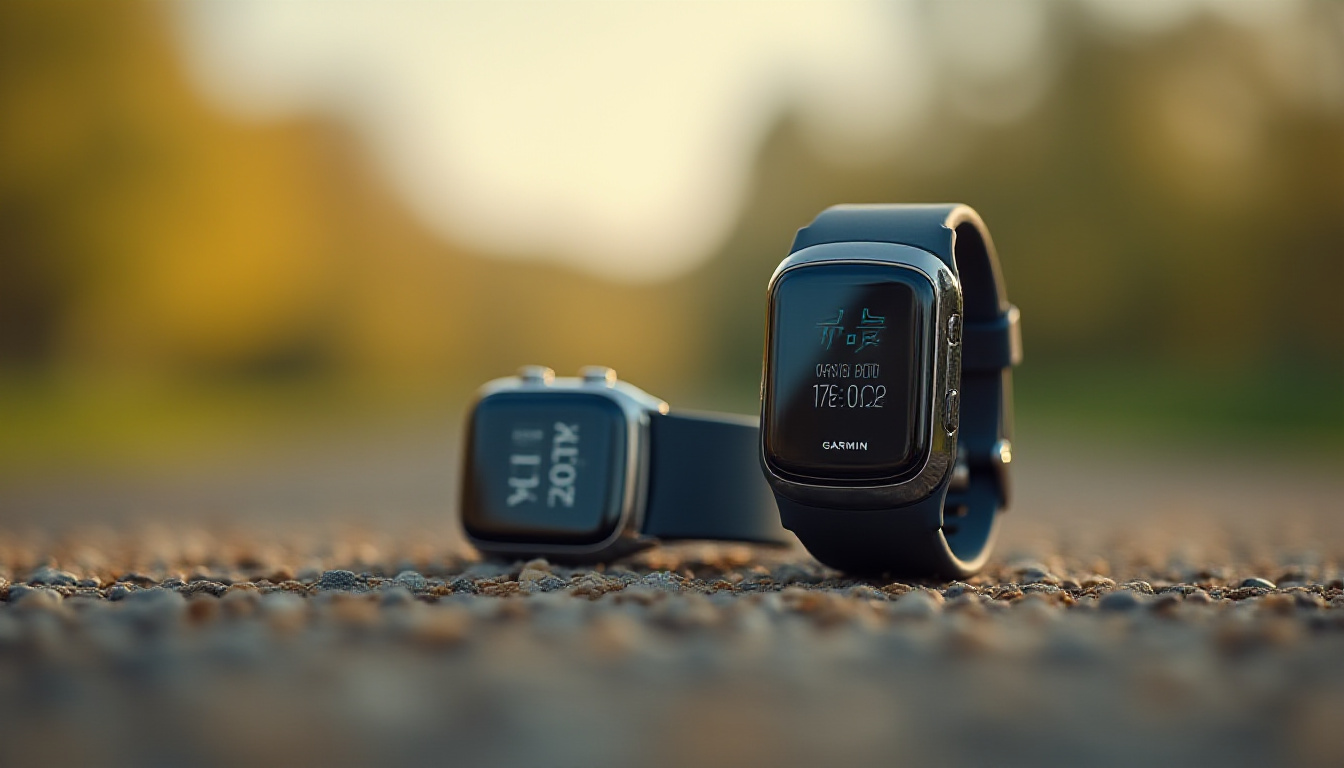
Quick Summary
Garmin vs Fitbit: a deep comparison for serious athletes and casual users. GPS accuracy, battery life, health tracking, and value — all covered.
Garmin vs Fitbit
Check current price and availability on Amazon
In This Article
Garmin vs Fitbit: Which Fitness Tracker Actually Wins?
This article may contain affiliate links. We may earn a commission if you purchase through them, at no extra cost to you.
Related Post

The Garmin vs Fitbit debate is one of the most searched questions in the wearables space — and for good reason. Both brands make genuinely excellent fitness trackers. Both measure your heart rate, log your sleep, count your steps, and sync to a smartphone app. But underneath those shared basics, they are built for fundamentally different people with fundamentally different goals.
Put simply: Fitbit is for people who want to understand their health. Garmin is for people who want to improve their performance. Choosing the wrong one doesn't mean you'll get a bad product — it means you'll pay for features you never use, or miss tools you desperately need. This guide cuts through the marketing noise so you can make the right call.
Design and Comfort: Sleek Band vs Serious Watch
The visual difference between a Fitbit and a Garmin is the first — and most honest — signal about who each product is built for.
The Fitbit Charge 6 is a slim fitness band. Its narrow rectangular AMOLED touchscreen (1.04 inches) sits flush against your wrist, weighing just 30 g. You can wear it to a client meeting in the morning, through a gym session at lunch, and out for dinner in the evening without anyone registering that you're wearing a fitness device. The aluminium body has a low-profile appeal, and the silicone band is soft enough to forget it's there entirely. The trade-off? Fitbit uses a proprietary band attachment system, so you're locked into straps designed specifically for the Charge 6.
The Garmin Forerunner 165, by contrast, announces itself. It's a circular sports watch with a 1.2-inch AMOLED display that's noticeably brighter and larger — genuinely easier to read mid-run when your eyes are bouncing with every stride. At 40 g, it's slightly heavier, but still comfortable enough for all-day wear. The five physical buttons around the bezel are the feature that quietly separates this watch from everything else at its price: you can navigate every menu without touching the screen. Wearing gloves in January? Hands slick with rain at mile 18 of a long run? The buttons still work. The watch uses standard 20 mm quick-release bands, which means you can replace the strap with virtually any third-party option.
For screenless options — the Fitbit Air and Garmin Circa — the dynamic shifts slightly. The Fitbit Air is the smaller and more discreet of the two. The Garmin Circa is bulkier, but it officially supports upper-arm wear, which is a genuine practical advantage for weightlifters, CrossFit athletes, and cyclists where wrist placement interferes with movement or produces less accurate optical readings.
Verdict on design: Fitbit for everyday wearability; Garmin for active functionality.
Health Tracking: Wellness Monitoring vs Performance Analytics
Both devices measure the core metrics: continuous heart rate, sleep stages, SpO2 (blood oxygen), stress levels, step count, and calories burned. For casual users, either device will tell you roughly the same story about your body. The divergence begins when you look at what each device does with that data.
Fitbit's health tracking is built around clarity. Sleep tracking, in particular, is a long-standing Fitbit strength — the app breaks your night into light, deep, and REM stages, assigns a sleep score, and presents it in plain language. There's no need to interpret graphs or cross-reference recovery metrics. The Fitbit app is clean, friendly, and genuinely accessible for people who don't consider themselves data enthusiasts.
Garmin's ecosystem is built around performance interpretation. The Forerunner 165 provides VO2 max estimates, training effect readouts, race time predictions, recovery time recommendations, HRV status, and a daily Body Battery score that models your energy reserves across the day. The morning report gives you a consolidated snapshot of your sleep, recovery, and training readiness before you've had your coffee. None of this is available on Fitbit at a comparable level.
For the screenless comparison, in a manually counted 5,000-step test, the Garmin Circa recorded 5,006 steps while the Fitbit Air recorded 5,009. That difference is negligible — spending twice as much on Garmin does not double your step-tracking accuracy. Where Garmin's optical sensor does pull ahead is heart rate accuracy during intense exercise, particularly when worn on the upper arm, where testing against a Polar H10 chest strap showed very close agreement.
Verdict on health tracking: Fitbit wins on simplicity and sleep readability; Garmin wins on depth and performance analytics.
GPS Performance and Battery Life
For wrist-worn models with built-in GPS, the gap between Garmin and Fitbit is significant and measurable.
The Fitbit Charge 6 supports GPS, GLONASS, and Galileo satellite systems. For casual runners and walkers, it's accurate enough. However, it struggles in challenging environments — dense tree cover, urban canyons — and the battery cost of GPS use is steep: approximately 15% of battery per hour, yielding roughly 7 hours of continuous GPS tracking.
The Garmin Forerunner 165 also uses GPS, GLONASS, and Galileo. It doesn't carry the multi-band GPS found in Garmin's flagship models, but real-world testing confirms it maintains a stronger, more consistent satellite lock than the Charge 6 — logging slightly longer and more accurate distances in head-to-head tests. The more important number: up to 19 hours of continuous GPS tracking. If you're training for a marathon, running ultras, or spending all day hiking in the hills, the Charge 6 runs out of road long before you do.
Neither the Fitbit Air nor the Garmin Circa includes built-in GPS — both rely on your phone's connection for GPS data. This is a legitimate criticism of the Circa at its $200 price point. It is not a running watch replacement; it is a health tracker that plugs into Garmin's ecosystem.
Battery life in smartwatch mode:
- Fitbit Charge 6: ~7 days (drops sharply with always-on display)
- Garmin Forerunner 165: ~11 days
- Fitbit Air: ~7 days
- Garmin Circa: ~10 days
Garmin wins battery life across the board — and for a device meant to stay on your wrist 24/7, longer battery life means fewer data gaps in your sleep and recovery tracking.
Smart Features and Ecosystem: Google vs Garmin
The Fitbit Charge 6 leans into its Google ownership. You get Google Wallet for contactless payments, Google Maps turn-by-turn navigation on the device, and YouTube Music controls. Smartphone notifications, camera control, and Find My Phone round out the smart feature set. For Android users especially, the integration feels cohesive.
The catch: the most useful Fitbit insights — daily readiness score, detailed sleep analysis, advanced health trends — sit behind a Fitbit Premium subscription at approximately $10 per month. Over two years, that's an extra $240 on top of the hardware price. When you factor that in, the Fitbit Charge 6's $160 sticker price starts to look less affordable.
The Garmin Forerunner 165 offers Garmin Pay, music controls for Spotify, Deezer, and Amazon Music, and smartphone notifications. The Music Edition adds offline playback — songs stored directly on the watch, no phone required. Garmin also includes Live Track (real-time location sharing during workouts) and incident detection with emergency contact alerts. Critically, Garmin Connect is free. The core health, sleep, training, and recovery features are accessible without a monthly fee. Garmin Connect Plus exists as an optional upgrade, but the essential experience costs nothing beyond the hardware.
Verdict on ecosystem: Fitbit's Google integration is slicker for casual Android users; Garmin's subscription-free model delivers better long-term value for serious athletes.
Pros, Cons, and Ratings
Fitbit Charge 6
Pros
- Slim, lightweight, and genuinely all-day comfortable
- Excellent sleep tracking with clear, easy-to-read reports
- Google Wallet, Maps, and YouTube Music integration
- Strong everyday health monitoring at a glance
- Lower entry price (~$160)
Cons
- Best features require a $10/month Premium subscription
- GPS battery life is limited (~7 hours)
- Proprietary band system restricts strap options
- GPS accuracy drops in challenging environments
- Always-on display reduces battery to roughly 1 day
Rating: 7.5 / 10 — Outstanding for casual health monitoring and everyday wear. The subscription requirement is a real ongoing cost to factor in.
Garmin Forerunner 165
Pros
- Up to 19 hours of GPS battery life
- Deep performance analytics (VO2 max, Body Battery, training effect, race predictions)
- Physical buttons work in any conditions
- Standard 20 mm bands — swap freely
- No subscription required for full feature access
- Live Track and incident detection for safety
Cons
- $250 price point (~$90 more than the Charge 6)
- Larger, sportier look isn't for everyone
- Garmin Connect app can feel overwhelming for new users
- No multi-band GPS (found only in higher-end Garmins)
Rating: 8.5 / 10 — The strongest choice for anyone serious about training. The higher upfront cost is offset by richer analytics and zero ongoing subscription fees.
Free Weekly Newsletter
Enjoying this guide?
Get the best articles like this one delivered to your inbox every week. No spam.
Comparison Table
| Feature | Fitbit Charge 6 | Garmin Forerunner 165 |
|---|---|---|
| Price | ~$160 | ~$250 |
| Display | 1.04" AMOLED touchscreen | 1.2" AMOLED circular |
| Weight | 30 g | 40 g |
| Built-in GPS | Yes | Yes |
| GPS Battery Life | ~7 hours | ~19 hours |
| Smartwatch Battery | ~7 days | ~11 days |
| Heart Rate Monitoring | Continuous | Continuous |
| Sleep Tracking | Excellent | Very Good |
| VO2 Max / Training Analytics | No | Yes |
| Contactless Payment | Google Wallet | Garmin Pay |
| Band System | Proprietary | Standard 20 mm |
| Subscription Required | Yes (Premium, ~$10/mo) | No |
| Water Resistance | Yes | Yes |
| Physical Buttons | 1 haptic | 5 dedicated |
Who Should Buy Which: The Honest Verdict
If you exercise casually — a few walks per week, the occasional run, some gym classes — and you want a device that tells you clearly whether you're sleeping well and moving enough, buy the Fitbit Charge 6. It's comfortable, stylish enough for any setting, and the app speaks to you in plain language rather than data dumps. Factor in Premium if you want the full experience, but even the free tier covers the essentials.
If you run regularly, cycle seriously, train for races, or are genuinely trying to optimise your athletic performance, buy the Garmin Forerunner 165. The 19-hour GPS battery alone is worth the premium for anyone logging serious miles. The training analytics go several levels deeper than anything Fitbit offers, and you'll never pay a monthly fee to access them. The physical buttons and brighter display are practical advantages every time conditions get difficult.
For screenless trackers specifically, the same logic applies. The Fitbit Air at ~$100 is a strong choice for everyday wellness monitoring — particularly if you're price-conscious. The Garmin Circa at ~$200 makes the most sense if you already own a Garmin sports watch and want continuous ecosystem data without sleeping in a bulky device. For someone starting from zero who doesn't need deep training analytics, the Fitbit Air is very hard to argue against at half the price.
Where to Buy
Garmin Forerunner 165 on Amazon
Frequently Asked Questions
Is Garmin really worth more than Fitbit for the average person?
For the average person — someone walking daily, doing light gym work, and wanting to track sleep — Garmin's extra cost is hard to justify. The Fitbit Charge 6 at ~$160 covers everyday wellness tracking very well. Garmin's premium features (VO2 max, training effect, race predictions, extended GPS battery) are genuinely valuable, but only if you're actually training hard enough to use them. If you're not running regularly or preparing for events, you'll likely ignore most of what Garmin offers.
Which has better GPS accuracy, Garmin or Fitbit?
Garmin's Forerunner 165 maintains a more consistent GPS lock than the Fitbit Charge 6, recording slightly more accurate distances in testing — particularly in challenging environments like forest trails or city centres with tall buildings. More importantly, the Garmin tracks for up to 19 hours on GPS versus roughly 7 hours on the Fitbit. For anything beyond a standard run, Garmin wins clearly. For casual walks and short runs, Fitbit's GPS is accurate enough.
Do you need a subscription for Fitbit or Garmin?
Fitbit does gate some of its most useful features — daily readiness score, advanced sleep insights, stress management tools — behind Fitbit Premium at approximately $10 per month. Garmin Connect, by contrast, gives you access to the full core feature set including training metrics, HRV data, Body Battery, and recovery tools for free. Garmin Connect Plus exists as an optional tier. Over a two-to-three-year period, the subscription difference meaningfully changes the true cost of ownership.
Which fitness tracker is better for running: Garmin or Fitbit?
Garmin is the clear choice for runners. The Forerunner 165 offers pace monitoring, cadence tracking, course creation, GPX file loading for trail navigation, VO2 max estimates, and race time predictions — tools that Fitbit simply doesn't offer at this level. The 19-hour GPS battery means it handles half marathons, marathons, and ultramarathons without running out of charge. Fitbit's GPS is adequate for recreational runners tracking distance, but it lacks the structured training tools and endurance that serious runners need.
Who should NOT buy a Garmin?
Garmin is not the right fit for someone who finds data overwhelming, dislikes complex apps, or primarily wants a lightweight, discreet device for everyday wear. If your main concern is looking stylish, getting a simple sleep score each morning, and checking off your daily step goal, the Garmin app can feel like sitting in a cockpit when all you needed was a speedometer. Fitbit's simpler, warmer presentation is genuinely better for those users.
Garmin vs Fitbit
Considering it? See where the price stands today
Frequently Asked Questions
Design and Comfort: Sleek Band vs Serious Watch
The visual difference between a Fitbit and a Garmin is the first — and most honest — signal about who each product is built for.
The Fitbit Charge 6 is a slim fitness band. Its narrow rectangular AMOLED touchscreen (1.04 inches) sits flush against your wrist, weighing just 30 g. You can wear it to a client meeting in the morning, through a gym session at lunch, and out for dinner in the evening without anyone registering that you're wearing a fitness device. The aluminium body has a low-profile appeal, and the silicone band is soft enough to forget it's there entirely. The trade-off? Fitbit uses a proprietary band attachment system, so you're locked into straps designed specifically for the Charge 6.
The Garmin Forerunner 165, by contrast, announces itself. It's a circular sports watch with a 1.2-inch AMOLED display that's noticeably brighter and larger — genuinely easier to read mid-run when your eyes are bouncing with every stride. At 40 g, it's slightly heavier, but still comfortable enough for all-day wear. The five physical buttons around the bezel are the feature that quietly separates this watch from everything else at its price: you can navigate every menu without touching the screen. Wearing gloves in January? Hands slick with rain at mile 18 of a long run? The buttons still work. The watch uses standard 20 mm quick-release bands, which means you can replace the strap with virtually any third-party option.
For screenless options — the Fitbit Air and Garmin Circa — the dynamic shifts slightly. The Fitbit Air is the smaller and more discreet of the two. The Garmin Circa is bulkier, but it officially supports upper-arm wear, which is a genuine practical advantage for weightlifters, CrossFit athletes, and cyclists where wrist placement interferes with movement or produces less accurate optical readings.
Verdict on design: Fitbit for everyday wearability; Garmin for active functionality.
Health Tracking: Wellness Monitoring vs Performance Analytics
Both devices measure the core metrics: continuous heart rate, sleep stages, SpO2 (blood oxygen), stress levels, step count, and calories burned. For casual users, either device will tell you roughly the same story about your body. The divergence begins when you look at what each device does with that data.
Fitbit's health tracking is built around clarity. Sleep tracking, in particular, is a long-standing Fitbit strength — the app breaks your night into light, deep, and REM stages, assigns a sleep score, and presents it in plain language. There's no need to interpret graphs or cross-reference recovery metrics. The Fitbit app is clean, friendly, and genuinely accessible for people who don't consider themselves data enthusiasts.
Garmin's ecosystem is built around performance interpretation. The Forerunner 165 provides VO2 max estimates, training effect readouts, race time predictions, recovery time recommendations, HRV status, and a daily Body Battery score that models your energy reserves across the day. The morning report gives you a consolidated snapshot of your sleep, recovery, and training readiness before you've had your coffee. None of this is available on Fitbit at a comparable level.
For the screenless comparison, in a manually counted 5,000-step test, the Garmin Circa recorded 5,006 steps while the Fitbit Air recorded 5,009. That difference is negligible — spending twice as much on Garmin does not double your step-tracking accuracy. Where Garmin's optical sensor does pull ahead is heart rate accuracy during intense exercise, particularly when worn on the upper arm, where testing against a Polar H10 chest strap showed very close agreement.
Verdict on health tracking: Fitbit wins on simplicity and sleep readability; Garmin wins on depth and performance analytics.
GPS Performance and Battery Life
For wrist-worn models with built-in GPS, the gap between Garmin and Fitbit is significant and measurable.
The Fitbit Charge 6 supports GPS, GLONASS, and Galileo satellite systems. For casual runners and walkers, it's accurate enough. However, it struggles in challenging environments — dense tree cover, urban canyons — and the battery cost of GPS use is steep: approximately 15% of battery per hour, yielding roughly 7 hours of continuous GPS tracking.
The Garmin Forerunner 165 also uses GPS, GLONASS, and Galileo. It doesn't carry the multi-band GPS found in Garmin's flagship models, but real-world testing confirms it maintains a stronger, more consistent satellite lock than the Charge 6 — logging slightly longer and more accurate distances in head-to-head tests. The more important number: up to 19 hours of continuous GPS tracking. If you're training for a marathon, running ultras, or spending all day hiking in the hills, the Charge 6 runs out of road long before you do.
Neither the Fitbit Air nor the Garmin Circa includes built-in GPS — both rely on your phone's connection for GPS data. This is a legitimate criticism of the Circa at its $200 price point. It is not a running watch replacement; it is a health tracker that plugs into Garmin's ecosystem.
Battery life in smartwatch mode:
- Fitbit Charge 6: ~7 days (drops sharply with always-on display)
- Garmin Forerunner 165: ~11 days
- Fitbit Air: ~7 days
- Garmin Circa: ~10 days
Garmin wins battery life across the board — and for a device meant to stay on your wrist 24/7, longer battery life means fewer data gaps in your sleep and recovery tracking.
Smart Features and Ecosystem: Google vs Garmin
The Fitbit Charge 6 leans into its Google ownership. You get Google Wallet for contactless payments, Google Maps turn-by-turn navigation on the device, and YouTube Music controls. Smartphone notifications, camera control, and Find My Phone round out the smart feature set. For Android users especially, the integration feels cohesive.
The catch: the most useful Fitbit insights — daily readiness score, detailed sleep analysis, advanced health trends — sit behind a Fitbit Premium subscription at approximately $10 per month. Over two years, that's an extra $240 on top of the hardware price. When you factor that in, the Fitbit Charge 6's $160 sticker price starts to look less affordable.
The Garmin Forerunner 165 offers Garmin Pay, music controls for Spotify, Deezer, and Amazon Music, and smartphone notifications. The Music Edition adds offline playback — songs stored directly on the watch, no phone required. Garmin also includes Live Track (real-time location sharing during workouts) and incident detection with emergency contact alerts. Critically, Garmin Connect is free. The core health, sleep, training, and recovery features are accessible without a monthly fee. Garmin Connect Plus exists as an optional upgrade, but the essential experience costs nothing beyond the hardware.
Verdict on ecosystem: Fitbit's Google integration is slicker for casual Android users; Garmin's subscription-free model delivers better long-term value for serious athletes.
Pros, Cons, and Ratings
Fitbit Charge 6
Pros
- Slim, lightweight, and genuinely all-day comfortable
- Excellent sleep tracking with clear, easy-to-read reports
- Google Wallet, Maps, and YouTube Music integration
- Strong everyday health monitoring at a glance
- Lower entry price (~$160)
Cons
- Best features require a $10/month Premium subscription
- GPS battery life is limited (~7 hours)
- Proprietary band system restricts strap options
- GPS accuracy drops in challenging environments
- Always-on display reduces battery to roughly 1 day
Rating: 7.5 / 10 — Outstanding for casual health monitoring and everyday wear. The subscription requirement is a real ongoing cost to factor in.
Garmin Forerunner 165
Pros
- Up to 19 hours of GPS battery life
- Deep performance analytics (VO2 max, Body Battery, training effect, race predictions)
- Physical buttons work in any conditions
- Standard 20 mm bands — swap freely
- No subscription required for full feature access
- Live Track and incident detection for safety
Cons
- $250 price point (~$90 more than the Charge 6)
- Larger, sportier look isn't for everyone
- Garmin Connect app can feel overwhelming for new users
- No multi-band GPS (found only in higher-end Garmins)
Rating: 8.5 / 10 — The strongest choice for anyone serious about training. The higher upfront cost is offset by richer analytics and zero ongoing subscription fees.
Comparison Table
| Feature | Fitbit Charge 6 | Garmin Forerunner 165 |
|---|---|---|
| Price | ~$160 | ~$250 |
| Display | 1.04" AMOLED touchscreen | 1.2" AMOLED circular |
| Weight | 30 g | 40 g |
| Built-in GPS | Yes | Yes |
| GPS Battery Life | ~7 hours | ~19 hours |
| Smartwatch Battery | ~7 days | ~11 days |
| Heart Rate Monitoring | Continuous | Continuous |
| Sleep Tracking | Excellent | Very Good |
| VO2 Max / Training Analytics | No | Yes |
| Contactless Payment | Google Wallet | Garmin Pay |
| Band System | Proprietary | Standard 20 mm |
| Subscription Required | Yes (Premium, ~$10/mo) | No |
| Water Resistance | Yes | Yes |
| Physical Buttons | 1 haptic | 5 dedicated |
Who Should Buy Which: The Honest Verdict
If you exercise casually — a few walks per week, the occasional run, some gym classes — and you want a device that tells you clearly whether you're sleeping well and moving enough, buy the Fitbit Charge 6. It's comfortable, stylish enough for any setting, and the app speaks to you in plain language rather than data dumps. Factor in Premium if you want the full experience, but even the free tier covers the essentials.
If you run regularly, cycle seriously, train for races, or are genuinely trying to optimise your athletic performance, buy the Garmin Forerunner 165. The 19-hour GPS battery alone is worth the premium for anyone logging serious miles. The training analytics go several levels deeper than anything Fitbit offers, and you'll never pay a monthly fee to access them. The physical buttons and brighter display are practical advantages every time conditions get difficult.
For screenless trackers specifically, the same logic applies. The Fitbit Air at ~$100 is a strong choice for everyday wellness monitoring — particularly if you're price-conscious. The Garmin Circa at ~$200 makes the most sense if you already own a Garmin sports watch and want continuous ecosystem data without sleeping in a bulky device. For someone starting from zero who doesn't need deep training analytics, the Fitbit Air is very hard to argue against at half the price.
Where to Buy
Frequently Asked Questions
Is Garmin really worth more than Fitbit for the average person?
For the average person — someone walking daily, doing light gym work, and wanting to track sleep — Garmin's extra cost is hard to justify. The Fitbit Charge 6 at ~$160 covers everyday wellness tracking very well. Garmin's premium features (VO2 max, training effect, race predictions, extended GPS battery) are genuinely valuable, but only if you're actually training hard enough to use them. If you're not running regularly or preparing for events, you'll likely ignore most of what Garmin offers.
Which has better GPS accuracy, Garmin or Fitbit?
Garmin's Forerunner 165 maintains a more consistent GPS lock than the Fitbit Charge 6, recording slightly more accurate distances in testing — particularly in challenging environments like forest trails or city centres with tall buildings. More importantly, the Garmin tracks for up to 19 hours on GPS versus roughly 7 hours on the Fitbit. For anything beyond a standard run, Garmin wins clearly. For casual walks and short runs, Fitbit's GPS is accurate enough.
Do you need a subscription for Fitbit or Garmin?
Fitbit does gate some of its most useful features — daily readiness score, advanced sleep insights, stress management tools — behind Fitbit Premium at approximately $10 per month. Garmin Connect, by contrast, gives you access to the full core feature set including training metrics, HRV data, Body Battery, and recovery tools for free. Garmin Connect Plus exists as an optional tier. Over a two-to-three-year period, the subscription difference meaningfully changes the true cost of ownership.
Which fitness tracker is better for running: Garmin or Fitbit?
Garmin is the clear choice for runners. The Forerunner 165 offers pace monitoring, cadence tracking, course creation, GPX file loading for trail navigation, VO2 max estimates, and race time predictions — tools that Fitbit simply doesn't offer at this level. The 19-hour GPS battery means it handles half marathons, marathons, and ultramarathons without running out of charge. Fitbit's GPS is adequate for recreational runners tracking distance, but it lacks the structured training tools and endurance that serious runners need.
Who should NOT buy a Garmin?
Garmin is not the right fit for someone who finds data overwhelming, dislikes complex apps, or primarily wants a lightweight, discreet device for everyday wear. If your main concern is looking stylish, getting a simple sleep score each morning, and checking off your daily step goal, the Garmin app can feel like sitting in a cockpit when all you needed was a speedometer. Fitbit's simpler, warmer presentation is genuinely better for those users.
Garmin vs Fitbit
Ready to decide? Compare the current price before you buy
About Zeebrain Editorial
Zeebrain publishes independent analysis of markets, investing, personal finance, and business. We disclose affiliate relationships, never accept payment for coverage, and fact-check all claims against primary sources. Read our editorial policy →
How this article was produced: Zeebrain articles are created with AI assistance from primary sources (including cited videos and market data) and reviewed under our editorial standards before publication. Spot an error? Tell us and we will correct it.
Disclaimer: Content on Zeebrain is for informational and educational purposes only and does not constitute financial advice or a recommendation to buy or sell any security. Always conduct your own research and consult a qualified financial adviser before making investment decisions. Past performance is not indicative of future results.
More from Reviews



Related Guides
Keep exploring this topic
Explore More on Zeebrain
Keep browsing by topic, or put the numbers to work with our free tools.