Electro the Moto-Man: The Robot Who Wowed the World
Quick Summary
Meet Electro, Westinghouse's bronze giant who stunned millions at the 1939 World's Fair. The story of robotics' first celebrity is stranger than fiction.
In This Article
The Robot That Made the Future Feel Real
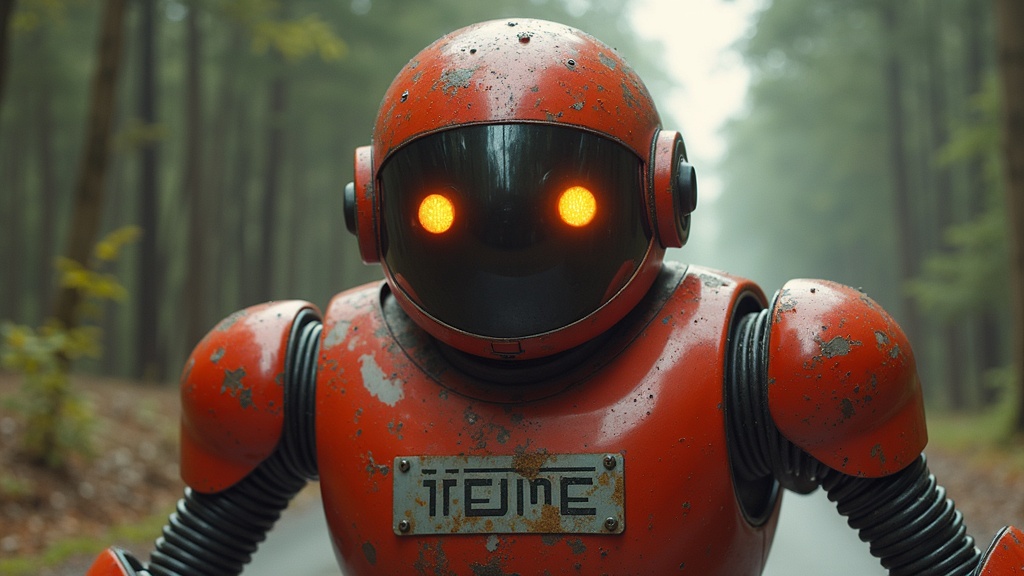
Long before Boston Dynamics posted viral videos of robots doing backflips, and years before Siri started mishearing your grocery orders, there was Electro — a seven-foot bronze-painted aluminum giant who smoked cigarettes, cracked jokes, and moonwalked across a stage at the 1939 New York World's Fair. Built by Westinghouse Corporation and billed as the world's first celebrity robot, Electro the Moto-Man wasn't just a novelty. He was a cultural event — one that quietly helped shape how an entire civilisation imagined its technological future.

The story of Electro sits at the crossroads of engineering ambition, showbiz instinct, and outright theatrical trickery. It's a story worth telling properly, because it reveals something important: the gap between what technology can do and what we believe it can do has always been part of the show.
From Mythology to Mansfield, Ohio: A Brief History of Robots
The human desire to create artificial life is ancient. Greek mythology featured Talos, a giant bronze automaton crafted by Hephaestus to guard the island of Crete, and mechanical handmaidens built to assist the same god in his forge. Medieval and Renaissance craftsmen constructed intricate clockwork figures capable of writing, playing music, and mimicking digestion with unnerving accuracy. These automata weren't toys — they were demonstrations of mastery, proof that human ingenuity could reproduce the movements of life itself.
The word robot, however, only entered the language in 1920, courtesy of Czech playwright Karel Čapek, whose play R.U.R. (Rossum's Universal Robots) introduced the concept of artificial beings created for servitude who eventually rebel against their creators. The word derives from a Slavic root meaning forced labour or drudgery — a loaded etymology that science fiction writers have been exploring ever since. What's striking is how quickly the idea took hold in popular imagination, even as the engineering reality lagged decades behind.
This gap — between the robot of the imagination and the robot of the laboratory — is precisely where Electro thrived.
The Teleox Origins: How a Telephone Gimmick Built a Star
Electro didn't emerge from nowhere. His lineage traces back to a practical industrial problem in the early 1920s, when a utility company approached Westinghouse for a way to control electrical substations remotely, without sending engineers on costly and time-consuming site visits. The solution came from Westinghouse engineer Roy J. Wensley, who invented the Televox — a device that received coded pulses over ordinary telephone lines and used them to trigger switching equipment.
The underlying technology was genuinely significant. The dual-tone multi-frequency (DTMF) system that Wensley helped pioneer would go on to define how telephone networks operated for the better part of half a century. Every time you pressed a button on a touch-tone phone between the 1960s and the smartphone era, you were using a direct descendant of that system.
But Wensley had a flair for promotion that matched his engineering talent. Rather than presenting the Televox as an abstract industrial device, he built it a body out of painted wallboard and took it on tour as Herbert Televox — a crude humanoid capable of simple, scripted tricks. The crowds loved it. Herbert wasn't sophisticated, but he was present, tangible, and just theatrical enough to spark genuine wonder.
Over the following decade, a team of Westinghouse engineers at the company's Mansfield, Ohio headquarters — including J.M. Barnett, Jack Weekes, and Harold Gorsuch — refined and expanded the concept, producing a succession of increasingly elaborate robotic characters. Some, like Mr. Televox and Katrina Van Televox, were straightforward demonstrations of advancing capability. Others reflected the era's uglier cultural assumptions in ways that are uncomfortable to read about today. The robots were always as much about performance as engineering.
How Electro Actually Worked — and Why It Didn't Quite Matter
When Electro debuted at the 1939 World's Fair, Westinghouse promoted him as a voice-activated robot capable of understanding and responding to human speech. The reality was considerably more ingenious — and considerably more theatrical. True voice recognition was decades away from being technically feasible. Instead, Electro responded to the rhythm of spoken phrases rather than their content. His handler would speak commands in carefully structured sequences of one, two, and three syllables, each combination triggering a specific preprogrammed action.
The illusion was well-constructed. Phrases like "Will you come down front, please?" and "You have come far enough" sounded like natural language but were, in fact, precisely coded inputs. Electro's 26 actions were also fixed in linear sequence — he couldn't be made to perform them out of order, because everything was hardwired. His voice, impressively varied to audiences of the time, came from 700 pre-recorded words pressed onto eight 78 RPM records stored in his chest cavity. Even his walking was a sleight of hand: powered rubber rollers hidden inside his feet did the actual locomotion while his knees bent in a way that suggested striding. In effect, Electro moonwalked across every stage he ever appeared on.
Does knowing this make Electro less impressive? Only superficially. The engineering required to make all those systems work together reliably, day after day, in front of large and unpredictable crowds, was genuinely substantial. And the showmanship — the corny jokes, the balloon-inflating contests (Electro had an air compressor for lungs and rarely lost), the cigarette smoking that required staff to clean tar from his internals after every performance — was a masterclass in audience engagement. One Westinghouse engineer reportedly quit smoking after spending too long maintaining that particular feature.
Electro After the Fair: A Robot's Second Act
The 1939 and 1940 World's Fair seasons made Electro a genuine celebrity. During the second season, he was joined by Sparko, a mechanical dog that could walk, sit, lie down, wag its tail, and bark — an early example of the robotic companion concept that engineers and designers are still refining today. When the fair closed and the United States turned its attention to the Second World War, Electro was quietly saved from being melted down for scrap by Westinghouse engineer Jack Weekes, who stored him in his basement.
The postwar years brought a modest renaissance. Electro toured department stores as a product promoter, appeared on the television game show You Asked for It in 1951, and eventually ended up as an exhibit at Pacific Ocean Park near Los Angeles. It was there, in 1958, that a Hollywood talent agent spotted him and secured him a role in the 1960 comedy Sex Kittens Go to College — billed as Thinko and appearing alongside Mamie Van Doren. It was, by any measure, an unlikely late-career pivot.
After that, Electro faded into obscurity. He was crated up, returned to Mansfield, and eventually presumed lost. Then, in 2004, Jack Weekes's brother purchased a house and discovered Electro's head in a box in the basement. The rest of the body turned up in a nearby barn. Following careful restoration, Electro now holds a permanent place at the Mansfield Memorial Museum in Ohio, alongside a replica of Herbert Televox, the painted-wallboard ancestor who started it all.
What Electro's Legacy Actually Tells Us About Technology and Culture
It would be easy to look back at Electro as a charming historical footnote — a primitive toy dressed up as a marvel. That reading misses the point. Electro mattered not because of what he could do, but because of what he made people believe was possible. At the 1939 World's Fair, in an era before computers, before transistors, before anything resembling modern electronics, Electro gave millions of ordinary Americans a visceral, embodied sense that the robotic future was real and coming.
That kind of cultural priming is more powerful than it might seem. The robots of popular imagination — Maria in Fritz Lang's 1927 film Metropolis, Robby the Robot in Forbidden Planet, C-3PO, WALL-E, and eventually the AI assistants and autonomous systems of our own era — didn't emerge in a vacuum. They emerged from a culture that had been taught to find robots plausible, even relatable. Electro was part of that teaching.
There's also a subtler lesson here about the relationship between marketing and engineering. Westinghouse didn't build Electro because they had solved the problem of robotics. They built him because they needed to make their electrical engineering research feel exciting and relevant to the general public. The gap between what Electro appeared to do and what he actually did wasn't a failure of honesty — it was a feature of the medium. Every great demonstration of technology involves some degree of narrative construction. What Westinghouse understood, and what many technology companies still understand today, is that the story of a technology often travels further than the technology itself.
Free Weekly Newsletter
Enjoying this guide?
Get the best articles like this one delivered to your inbox every week. No spam.
Conclusion: Seven Feet of Bronze and a Whole Lot of Vision
Electro the Moto-Man was, in strictly technical terms, a limited machine. Twenty-six hardwired actions. Seven hundred pre-recorded words. Rubber rollers instead of legs. A rhythm-coded illusion in place of genuine voice recognition. By the standards of what we can build today, he was laughably simple.
But Electro also helped write the cultural script that made modern robotics imaginable — and therefore, eventually, fundable, buildable, and real. He demonstrated that a robot could have personality, could entertain, could feel like a presence rather than a machine. That insight turned out to be worth far more than any individual technical achievement.
The next time you ask your phone a question, or watch a robotic arm assemble a car, or marvel at a drone navigating a city street, spare a thought for the bronze giant in Mansfield, Ohio, who moonwalked his way into history on a pair of rubber rollers and left a mark on the future that still hasn't fully faded.
Frequently Asked Questions
Where can you see Electro the Moto-Man today?
Electro is on permanent display at the Mansfield Memorial Museum in Mansfield, Ohio — the same city where he was originally built by Westinghouse engineers. The exhibit also includes a replica of Herbert Televox, the earlier Westinghouse robot that inspired Electro's creation.
Did Electro really understand voice commands?
Not in the modern sense. True voice recognition technology wouldn't become practical for several more decades. Electro responded to the rhythm and syllable patterns of spoken phrases rather than the words themselves. His handler followed a fixed script, and each coded phrase triggered a specific pre-programmed action in a set linear sequence.
Who built Electro and how long did it take?
Electro was developed by a team of engineers at Westinghouse's Mansfield, Ohio facility, including J.M. Barnett, Jack Weekes, and Harold Gorsuch. He was the culmination of roughly two decades of incremental robotics research at Westinghouse, tracing back to Roy Wensley's Televox invention in the early 1920s. Electro debuted publicly at the 1939 New York World's Fair.
What happened to Electro after the 1939 World's Fair?
After the fair closed, Electro was stored in engineer Jack Weekes's basement, toured as a product demonstrator, appeared on television in 1951, and even landed a small film role in the 1960 comedy Sex Kittens Go to College. He was subsequently lost for decades before being rediscovered in 2004 — his head in a basement, his body in a nearby barn — and later restored for museum display.
Why was Electro significant for the history of robotics?
Electro was culturally significant because he gave millions of ordinary people a tangible, emotionally engaging vision of what robots could be — before the engineering to actually build such machines existed. This kind of cultural priming helped shape decades of science fiction, industrial investment, and public appetite for automation, ultimately influencing the robotic and AI technologies we use today.
Frequently Asked Questions
The Robot That Made the Future Feel Real
Long before Boston Dynamics posted viral videos of robots doing backflips, and years before Siri started mishearing your grocery orders, there was Electro — a seven-foot bronze-painted aluminum giant who smoked cigarettes, cracked jokes, and moonwalked across a stage at the 1939 New York World's Fair. Built by Westinghouse Corporation and billed as the world's first celebrity robot, Electro the Moto-Man wasn't just a novelty. He was a cultural event — one that quietly helped shape how an entire civilisation imagined its technological future.
The story of Electro sits at the crossroads of engineering ambition, showbiz instinct, and outright theatrical trickery. It's a story worth telling properly, because it reveals something important: the gap between what technology can do and what we believe it can do has always been part of the show.
From Mythology to Mansfield, Ohio: A Brief History of Robots
The human desire to create artificial life is ancient. Greek mythology featured Talos, a giant bronze automaton crafted by Hephaestus to guard the island of Crete, and mechanical handmaidens built to assist the same god in his forge. Medieval and Renaissance craftsmen constructed intricate clockwork figures capable of writing, playing music, and mimicking digestion with unnerving accuracy. These automata weren't toys — they were demonstrations of mastery, proof that human ingenuity could reproduce the movements of life itself.
The word robot, however, only entered the language in 1920, courtesy of Czech playwright Karel Čapek, whose play R.U.R. (Rossum's Universal Robots) introduced the concept of artificial beings created for servitude who eventually rebel against their creators. The word derives from a Slavic root meaning forced labour or drudgery — a loaded etymology that science fiction writers have been exploring ever since. What's striking is how quickly the idea took hold in popular imagination, even as the engineering reality lagged decades behind.
This gap — between the robot of the imagination and the robot of the laboratory — is precisely where Electro thrived.
The Teleox Origins: How a Telephone Gimmick Built a Star
Electro didn't emerge from nowhere. His lineage traces back to a practical industrial problem in the early 1920s, when a utility company approached Westinghouse for a way to control electrical substations remotely, without sending engineers on costly and time-consuming site visits. The solution came from Westinghouse engineer Roy J. Wensley, who invented the Televox — a device that received coded pulses over ordinary telephone lines and used them to trigger switching equipment.
The underlying technology was genuinely significant. The dual-tone multi-frequency (DTMF) system that Wensley helped pioneer would go on to define how telephone networks operated for the better part of half a century. Every time you pressed a button on a touch-tone phone between the 1960s and the smartphone era, you were using a direct descendant of that system.
But Wensley had a flair for promotion that matched his engineering talent. Rather than presenting the Televox as an abstract industrial device, he built it a body out of painted wallboard and took it on tour as Herbert Televox — a crude humanoid capable of simple, scripted tricks. The crowds loved it. Herbert wasn't sophisticated, but he was present, tangible, and just theatrical enough to spark genuine wonder.
Over the following decade, a team of Westinghouse engineers at the company's Mansfield, Ohio headquarters — including J.M. Barnett, Jack Weekes, and Harold Gorsuch — refined and expanded the concept, producing a succession of increasingly elaborate robotic characters. Some, like Mr. Televox and Katrina Van Televox, were straightforward demonstrations of advancing capability. Others reflected the era's uglier cultural assumptions in ways that are uncomfortable to read about today. The robots were always as much about performance as engineering.
How Electro Actually Worked — and Why It Didn't Quite Matter
When Electro debuted at the 1939 World's Fair, Westinghouse promoted him as a voice-activated robot capable of understanding and responding to human speech. The reality was considerably more ingenious — and considerably more theatrical. True voice recognition was decades away from being technically feasible. Instead, Electro responded to the rhythm of spoken phrases rather than their content. His handler would speak commands in carefully structured sequences of one, two, and three syllables, each combination triggering a specific preprogrammed action.
The illusion was well-constructed. Phrases like "Will you come down front, please?" and "You have come far enough" sounded like natural language but were, in fact, precisely coded inputs. Electro's 26 actions were also fixed in linear sequence — he couldn't be made to perform them out of order, because everything was hardwired. His voice, impressively varied to audiences of the time, came from 700 pre-recorded words pressed onto eight 78 RPM records stored in his chest cavity. Even his walking was a sleight of hand: powered rubber rollers hidden inside his feet did the actual locomotion while his knees bent in a way that suggested striding. In effect, Electro moonwalked across every stage he ever appeared on.
Does knowing this make Electro less impressive? Only superficially. The engineering required to make all those systems work together reliably, day after day, in front of large and unpredictable crowds, was genuinely substantial. And the showmanship — the corny jokes, the balloon-inflating contests (Electro had an air compressor for lungs and rarely lost), the cigarette smoking that required staff to clean tar from his internals after every performance — was a masterclass in audience engagement. One Westinghouse engineer reportedly quit smoking after spending too long maintaining that particular feature.
Electro After the Fair: A Robot's Second Act
The 1939 and 1940 World's Fair seasons made Electro a genuine celebrity. During the second season, he was joined by Sparko, a mechanical dog that could walk, sit, lie down, wag its tail, and bark — an early example of the robotic companion concept that engineers and designers are still refining today. When the fair closed and the United States turned its attention to the Second World War, Electro was quietly saved from being melted down for scrap by Westinghouse engineer Jack Weekes, who stored him in his basement.
The postwar years brought a modest renaissance. Electro toured department stores as a product promoter, appeared on the television game show You Asked for It in 1951, and eventually ended up as an exhibit at Pacific Ocean Park near Los Angeles. It was there, in 1958, that a Hollywood talent agent spotted him and secured him a role in the 1960 comedy Sex Kittens Go to College — billed as Thinko and appearing alongside Mamie Van Doren. It was, by any measure, an unlikely late-career pivot.
After that, Electro faded into obscurity. He was crated up, returned to Mansfield, and eventually presumed lost. Then, in 2004, Jack Weekes's brother purchased a house and discovered Electro's head in a box in the basement. The rest of the body turned up in a nearby barn. Following careful restoration, Electro now holds a permanent place at the Mansfield Memorial Museum in Ohio, alongside a replica of Herbert Televox, the painted-wallboard ancestor who started it all.
What Electro's Legacy Actually Tells Us About Technology and Culture
It would be easy to look back at Electro as a charming historical footnote — a primitive toy dressed up as a marvel. That reading misses the point. Electro mattered not because of what he could do, but because of what he made people believe was possible. At the 1939 World's Fair, in an era before computers, before transistors, before anything resembling modern electronics, Electro gave millions of ordinary Americans a visceral, embodied sense that the robotic future was real and coming.
That kind of cultural priming is more powerful than it might seem. The robots of popular imagination — Maria in Fritz Lang's 1927 film Metropolis, Robby the Robot in Forbidden Planet, C-3PO, WALL-E, and eventually the AI assistants and autonomous systems of our own era — didn't emerge in a vacuum. They emerged from a culture that had been taught to find robots plausible, even relatable. Electro was part of that teaching.
There's also a subtler lesson here about the relationship between marketing and engineering. Westinghouse didn't build Electro because they had solved the problem of robotics. They built him because they needed to make their electrical engineering research feel exciting and relevant to the general public. The gap between what Electro appeared to do and what he actually did wasn't a failure of honesty — it was a feature of the medium. Every great demonstration of technology involves some degree of narrative construction. What Westinghouse understood, and what many technology companies still understand today, is that the story of a technology often travels further than the technology itself.
Conclusion: Seven Feet of Bronze and a Whole Lot of Vision
Electro the Moto-Man was, in strictly technical terms, a limited machine. Twenty-six hardwired actions. Seven hundred pre-recorded words. Rubber rollers instead of legs. A rhythm-coded illusion in place of genuine voice recognition. By the standards of what we can build today, he was laughably simple.
But Electro also helped write the cultural script that made modern robotics imaginable — and therefore, eventually, fundable, buildable, and real. He demonstrated that a robot could have personality, could entertain, could feel like a presence rather than a machine. That insight turned out to be worth far more than any individual technical achievement.
The next time you ask your phone a question, or watch a robotic arm assemble a car, or marvel at a drone navigating a city street, spare a thought for the bronze giant in Mansfield, Ohio, who moonwalked his way into history on a pair of rubber rollers and left a mark on the future that still hasn't fully faded.
Frequently Asked Questions
Where can you see Electro the Moto-Man today?
Electro is on permanent display at the Mansfield Memorial Museum in Mansfield, Ohio — the same city where he was originally built by Westinghouse engineers. The exhibit also includes a replica of Herbert Televox, the earlier Westinghouse robot that inspired Electro's creation.
Did Electro really understand voice commands?
Not in the modern sense. True voice recognition technology wouldn't become practical for several more decades. Electro responded to the rhythm and syllable patterns of spoken phrases rather than the words themselves. His handler followed a fixed script, and each coded phrase triggered a specific pre-programmed action in a set linear sequence.
Who built Electro and how long did it take?
Electro was developed by a team of engineers at Westinghouse's Mansfield, Ohio facility, including J.M. Barnett, Jack Weekes, and Harold Gorsuch. He was the culmination of roughly two decades of incremental robotics research at Westinghouse, tracing back to Roy Wensley's Televox invention in the early 1920s. Electro debuted publicly at the 1939 New York World's Fair.
What happened to Electro after the 1939 World's Fair?
After the fair closed, Electro was stored in engineer Jack Weekes's basement, toured as a product demonstrator, appeared on television in 1951, and even landed a small film role in the 1960 comedy Sex Kittens Go to College. He was subsequently lost for decades before being rediscovered in 2004 — his head in a basement, his body in a nearby barn — and later restored for museum display.
Why was Electro significant for the history of robotics?
Electro was culturally significant because he gave millions of ordinary people a tangible, emotionally engaging vision of what robots could be — before the engineering to actually build such machines existed. This kind of cultural priming helped shape decades of science fiction, industrial investment, and public appetite for automation, ultimately influencing the robotic and AI technologies we use today.
About Zeebrain Editorial
Zeebrain publishes independent analysis of markets, investing, personal finance, and business. We disclose affiliate relationships, never accept payment for coverage, and fact-check all claims against primary sources. Read our editorial policy →
How this article was produced: Zeebrain articles are created with AI assistance from primary sources (including cited videos and market data) and reviewed under our editorial standards before publication. Spot an error? Tell us and we will correct it.
More from Curiosities


Related Guides
Keep exploring this topic
Explore More Categories
Keep browsing by topic and build depth around the subjects you care about most.