Are City Raccoons Slowly Domesticating Themselves?
Quick Summary
Urban raccoons may be showing early signs of domestication syndrome. Here's what the science actually says — and why it matters far beyond trash pandas.
In This Article
Are City Raccoons Slowly Domesticating Themselves?
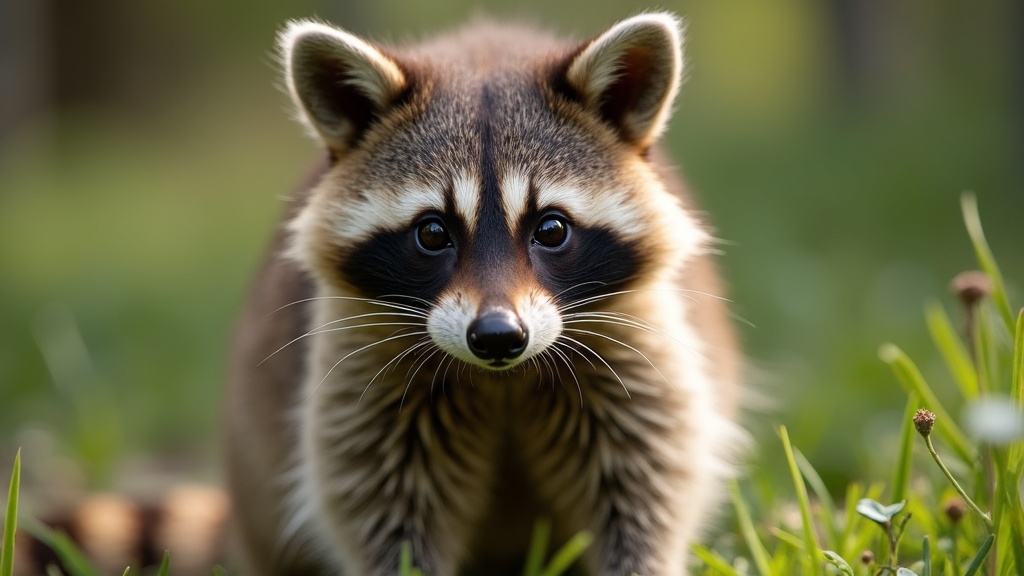
Something quietly strange is happening in the alleyways, suburban gardens, and overflowing bins of North America's cities. Raccoons — those masked, dexterous, thoroughly unbothered opportunists — may be changing. Not because we're breeding them, not because we're training them, but simply because living alongside humans, generation after generation, appears to be leaving a physical mark. A 2025 study found that urban raccoons have measurably shorter snouts than their rural counterparts. It's a small difference, just 3.56%, but in the context of a much larger and genuinely unresolved scientific debate about what domestication actually is, that modest number carries some surprisingly big implications.

To be absolutely clear upfront: raccoons are not becoming pets. They carry diseases, they bite, and no amount of wishful thinking changes the biology. But the raccoon story opens a door into one of evolutionary biology's most contested corners — domestication syndrome — and what's lurking behind that door is far more interesting than a cuter trash panda.
What Domestication Actually Means (It's Messier Than You Think)
Most people treat domestication as a binary: wild or tame, wolf or labrador. The scientific reality is considerably murkier. At its core, domestication describes a mutualistic relationship in which one species — historically Homo sapiens — increases its own survival and reproductive success by exerting some degree of control over another species' survival and reproduction. Dogs guard livestock. Cats suppress rodent populations. Rice and wheat feed billions. Each of these relationships reshaped both parties over time.
But the process itself, and the traits it produces, are where scientists start to disagree sharply. Domestication isn't a single event; it's a slow, generational accumulation of genetic changes reinforced by selective pressure. You cannot domesticate a lion cub by raising it in your living room — the biology doesn't work that way. What you get instead is a dangerous, half-tame big cat with a childhood trauma narrative. True domestication requires multigenerational genetic change, not individual conditioning.
The challenge is that this process looks different across different species, which makes it difficult to define cleanly, let alone measure.
Domestication Syndrome: The Checklist That Isn't Really a Checklist
Charles Darwin was among the first scientists to document systematic patterns in domesticated animals compared to their wild relatives. In his 1868 book The Variation of Animals and Plants Under Domestication, he catalogued differences in coat colour, skull shape, ear morphology, and behaviour across a range of species. He wasn't using the term 'domestication syndrome' — that came from botanists in the early twentieth century — but the observational groundwork he laid still shapes the field today.
Domestication syndrome, broadly speaking, refers to a cluster of traits that tend to appear together in species that have undergone domestication: floppy ears, curly tails, lighter or patchier coats, reduced snout length, smaller brain-to-body ratios in some species, and behavioural shifts toward tameness and reduced stress responses around humans. You can see versions of this across dogs, cats, domesticated foxes, rabbits, goats, and cattle.
The problem is that no domesticated animal expresses all of these traits. Pigs show reduced brain size relative to wild boars, but many domestic animals don't. Some breeds have floppy ears; others have upright, alert ones. The 'checklist' is more of a loose family of tendencies than a definitive diagnostic tool. This ambiguity has led some researchers to argue that domestication syndrome is too vague a concept to be scientifically useful — a criticism worth taking seriously.
The Fox Experiment That Changed the Conversation
In 1959, Russian geneticist Dmitry Belyaev began one of the most ambitious and controversial experiments in the history of animal behaviour research. Starting with silver foxes sourced from fur farms — animals already somewhat habituated to human proximity but far from tame — Belyaev and his team selectively bred only the friendliest individuals across successive generations. The results were dramatic.
Within a relatively small number of generations, the bred-for-tameness foxes began displaying physical traits nobody had explicitly selected for: white patches in their coats, floppier ears, shorter and squatter faces, and even tail-wagging behaviour analogous to domestic dogs. Belyaev interpreted this as evidence that genes governing temperament and stress responses were developmentally linked to the physical traits associated with domestication syndrome — select for calm behaviour, and the body follows.
The experiment's legacy is significant but contested. A 2019 critique argued that while the foxes undoubtedly demonstrate the genetic basis of tameness, they don't cleanly prove domestication syndrome as traditionally defined, partly because the starting population wasn't truly wild and partly because the physical changes observed weren't consistent across all individuals. The debate didn't discredit Belyaev's work — it sharpened the questions that work had raised.
Neural Crest Cells: The Biological Mechanism That Ties It Together
In 2014, a research team proposed a unifying biological explanation for domestication syndrome that has since generated considerable interest: the Neural Crest Domestication Hypothesis. Neural crest cells (NCCs) are a type of stem cell that form early in embryonic development in all vertebrates. They originate near the developing spinal cord and migrate throughout the embryo to form a remarkably diverse range of structures — parts of the skull and face, the tail, and melanocytes, the cells responsible for pigmentation.
The hypothesis proposes that domestication reduces neural crest cell activity in some way: fewer NCCs may form initially, they may migrate less efficiently, or they may develop more slowly once in place. Because NCCs influence the development of so many different structures, a modest reduction in their activity could simultaneously produce shorter snouts, altered coat colouring, modified ear cartilage, and changes in the adrenal glands — which regulate stress responses and, by extension, tameness.
Critically, because all vertebrates have neural crest cells, this framework is testable across a wide range of species. It also provides a plausible explanation for why domestication syndrome traits don't appear uniformly across all domesticated animals: NCC activity may be suppressed to different degrees and in different ways depending on the species, producing a varied but recognisable family of outcomes rather than a rigid checklist.
What the Raccoon Study Actually Found — and What It Didn't
The 2025 raccoon study was specifically designed to test one narrow question: do urban raccoons show one particular trait associated with domestication syndrome — shorter snouts — compared to rural raccoons? The researchers drew on 19,495 photographs uploaded to iNaturalist, a citizen science platform where the public shares wildlife images tagged with location data. After careful screening for image quality and species accuracy, they retained 249 usable images: 211 from urban counties (populations above 20,000) and 38 from rural counties.
The finding — a 3.56% reduction in snout length among urban raccoons — is statistically real but modest. The researchers were careful not to overclaim. The paper does not assert that raccoons are domesticated, nor does it describe a mutualistic relationship between raccoons and humans of the kind that formal domestication requires. What it does suggest is that proximity to human environments may be acting as a selective pressure that nudges raccoon morphology in a direction consistent with one feature of domestication syndrome, possibly through NCC-related mechanisms.
There are important caveats. Climate is known to influence snout length in mammals — animals in warmer environments sometimes have longer snouts to aid heat dissipation — and urban heat islands could confound the results. The sample size of rural raccoons is small. And correlation between urban living and snout length doesn't establish a causal chain through neural crest cells or any other mechanism. What the study offers is a genuinely interesting data point and a compelling argument for further, more controlled research.
For context, similar patterns have been observed in urban foxes and mice, which lends the finding some cross-species credibility. But the raccoon work is preliminary, and the authors said as much.
Free Weekly Newsletter
Enjoying this guide?
Get the best articles like this one delivered to your inbox every week. No spam.
Why This Research Matters Beyond Raccoons
The raccoon study is interesting on its own terms, but its broader significance lies in what it contributes to a much larger scientific project: understanding how domestication works at a mechanistic level, and whether it can happen — or is happening — outside of deliberate human control.
Most of what we know about domestication comes from looking backwards. We study dogs and infer what their wolf ancestors must have been like. We examine archaeological evidence of crop cultivation and reverse-engineer the selection pressures that transformed wild grasses into wheat. We rarely get to watch domestication unfold in something approaching real time.
Urban wildlife — raccoons, foxes, crows, pigeons, and others — offers a rare opportunity to observe animals adapting to human-dominated environments over ecologically short timescales. Whether these adaptations constitute the early stages of domestication, or something else entirely, is a question worth pursuing rigorously. The answer could reshape how we define domestication, how we understand the evolutionary relationships between humans and other species, and how we think about the cities we've built and the creatures that have quietly moved in with us.
We've shared our world with cats for thousands of years and still don't fully understand the mechanics of how they were domesticated. The raccoon, peering over the edge of your bin at midnight, might just be the next piece of that puzzle.
Frequently Asked Questions
Are urban raccoons actually becoming domesticated?
Not in any meaningful scientific sense, no. The 2025 study found that urban raccoons have slightly shorter snouts than rural ones — a single physical trait that appears on a loose domestication syndrome checklist. Domestication requires a multigenerational mutualistic relationship in which humans exert some control over another species' survival and reproduction. That relationship doesn't exist with raccoons. The research is a data point worth investigating, not a declaration of domestication.
What is domestication syndrome?
Domestication syndrome refers to a cluster of physical and behavioural traits that tend to appear in species that have undergone domestication — things like floppy ears, shorter snouts, patchier coats, curly tails, and reduced stress responses around humans. No domesticated animal displays all of these traits, which is one reason the concept remains scientifically contested. The Neural Crest Domestication Hypothesis proposes that reduced neural crest cell activity during embryonic development could explain why these varied traits appear together.
Can you keep a raccoon as a pet?
No, and the science gives you several reasons why. Raccoons carry a wide range of infectious diseases, including rabies and raccoon roundworm, which can cause serious illness in humans. Beyond the health risks, raccoons have not undergone the multigenerational genetic changes that make an animal genuinely safe and compatible with domestic life. Individual raccoons can be habituated to humans, but habituation is not domestication. In many jurisdictions, keeping raccoons as pets is also illegal.
What was the Russian Farm-Fox Experiment and why does it matter?
Beginning in 1959, geneticist Dmitry Belyaev selectively bred silver foxes over many generations, choosing only the tamest individuals for reproduction. Over time, the foxes developed physical traits — patchier coats, floppier ears, shorter faces, wagging tails — that nobody had directly selected for. The experiment suggested that genes governing temperament are developmentally linked to physical traits associated with domestication syndrome. It remains one of the most influential studies in domestication research, though critics note that the foxes were never truly wild to begin with, and that the results may tell us more about tameness specifically than domestication syndrome as a whole.
How do neural crest cells relate to domestication?
Neural crest cells are embryonic stem cells found in all vertebrates. They form early in development and migrate to build a wide range of structures, including parts of the skull and face, the tail, and pigment-producing cells. The Neural Crest Domestication Hypothesis, proposed in 2014, suggests that domestication reduces the activity of these cells, simultaneously producing multiple traits associated with domestication syndrome — shorter snouts, altered colouration, modified ear structure, and calmer temperaments — through a single underlying mechanism. Because all vertebrates have neural crest cells, this hypothesis can be tested across many species, including raccoons.
Frequently Asked Questions
What Domestication Actually Means (It's Messier Than You Think)
Most people treat domestication as a binary: wild or tame, wolf or labrador. The scientific reality is considerably murkier. At its core, domestication describes a mutualistic relationship in which one species — historically Homo sapiens — increases its own survival and reproductive success by exerting some degree of control over another species' survival and reproduction. Dogs guard livestock. Cats suppress rodent populations. Rice and wheat feed billions. Each of these relationships reshaped both parties over time.
But the process itself, and the traits it produces, are where scientists start to disagree sharply. Domestication isn't a single event; it's a slow, generational accumulation of genetic changes reinforced by selective pressure. You cannot domesticate a lion cub by raising it in your living room — the biology doesn't work that way. What you get instead is a dangerous, half-tame big cat with a childhood trauma narrative. True domestication requires multigenerational genetic change, not individual conditioning.
The challenge is that this process looks different across different species, which makes it difficult to define cleanly, let alone measure.
Domestication Syndrome: The Checklist That Isn't Really a Checklist
Charles Darwin was among the first scientists to document systematic patterns in domesticated animals compared to their wild relatives. In his 1868 book The Variation of Animals and Plants Under Domestication, he catalogued differences in coat colour, skull shape, ear morphology, and behaviour across a range of species. He wasn't using the term 'domestication syndrome' — that came from botanists in the early twentieth century — but the observational groundwork he laid still shapes the field today.
Domestication syndrome, broadly speaking, refers to a cluster of traits that tend to appear together in species that have undergone domestication: floppy ears, curly tails, lighter or patchier coats, reduced snout length, smaller brain-to-body ratios in some species, and behavioural shifts toward tameness and reduced stress responses around humans. You can see versions of this across dogs, cats, domesticated foxes, rabbits, goats, and cattle.
The problem is that no domesticated animal expresses all of these traits. Pigs show reduced brain size relative to wild boars, but many domestic animals don't. Some breeds have floppy ears; others have upright, alert ones. The 'checklist' is more of a loose family of tendencies than a definitive diagnostic tool. This ambiguity has led some researchers to argue that domestication syndrome is too vague a concept to be scientifically useful — a criticism worth taking seriously.
The Fox Experiment That Changed the Conversation
In 1959, Russian geneticist Dmitry Belyaev began one of the most ambitious and controversial experiments in the history of animal behaviour research. Starting with silver foxes sourced from fur farms — animals already somewhat habituated to human proximity but far from tame — Belyaev and his team selectively bred only the friendliest individuals across successive generations. The results were dramatic.
Within a relatively small number of generations, the bred-for-tameness foxes began displaying physical traits nobody had explicitly selected for: white patches in their coats, floppier ears, shorter and squatter faces, and even tail-wagging behaviour analogous to domestic dogs. Belyaev interpreted this as evidence that genes governing temperament and stress responses were developmentally linked to the physical traits associated with domestication syndrome — select for calm behaviour, and the body follows.
The experiment's legacy is significant but contested. A 2019 critique argued that while the foxes undoubtedly demonstrate the genetic basis of tameness, they don't cleanly prove domestication syndrome as traditionally defined, partly because the starting population wasn't truly wild and partly because the physical changes observed weren't consistent across all individuals. The debate didn't discredit Belyaev's work — it sharpened the questions that work had raised.
Neural Crest Cells: The Biological Mechanism That Ties It Together
In 2014, a research team proposed a unifying biological explanation for domestication syndrome that has since generated considerable interest: the Neural Crest Domestication Hypothesis. Neural crest cells (NCCs) are a type of stem cell that form early in embryonic development in all vertebrates. They originate near the developing spinal cord and migrate throughout the embryo to form a remarkably diverse range of structures — parts of the skull and face, the tail, and melanocytes, the cells responsible for pigmentation.
The hypothesis proposes that domestication reduces neural crest cell activity in some way: fewer NCCs may form initially, they may migrate less efficiently, or they may develop more slowly once in place. Because NCCs influence the development of so many different structures, a modest reduction in their activity could simultaneously produce shorter snouts, altered coat colouring, modified ear cartilage, and changes in the adrenal glands — which regulate stress responses and, by extension, tameness.
Critically, because all vertebrates have neural crest cells, this framework is testable across a wide range of species. It also provides a plausible explanation for why domestication syndrome traits don't appear uniformly across all domesticated animals: NCC activity may be suppressed to different degrees and in different ways depending on the species, producing a varied but recognisable family of outcomes rather than a rigid checklist.
What the Raccoon Study Actually Found — and What It Didn't
The 2025 raccoon study was specifically designed to test one narrow question: do urban raccoons show one particular trait associated with domestication syndrome — shorter snouts — compared to rural raccoons? The researchers drew on 19,495 photographs uploaded to iNaturalist, a citizen science platform where the public shares wildlife images tagged with location data. After careful screening for image quality and species accuracy, they retained 249 usable images: 211 from urban counties (populations above 20,000) and 38 from rural counties.
The finding — a 3.56% reduction in snout length among urban raccoons — is statistically real but modest. The researchers were careful not to overclaim. The paper does not assert that raccoons are domesticated, nor does it describe a mutualistic relationship between raccoons and humans of the kind that formal domestication requires. What it does suggest is that proximity to human environments may be acting as a selective pressure that nudges raccoon morphology in a direction consistent with one feature of domestication syndrome, possibly through NCC-related mechanisms.
There are important caveats. Climate is known to influence snout length in mammals — animals in warmer environments sometimes have longer snouts to aid heat dissipation — and urban heat islands could confound the results. The sample size of rural raccoons is small. And correlation between urban living and snout length doesn't establish a causal chain through neural crest cells or any other mechanism. What the study offers is a genuinely interesting data point and a compelling argument for further, more controlled research.
For context, similar patterns have been observed in urban foxes and mice, which lends the finding some cross-species credibility. But the raccoon work is preliminary, and the authors said as much.
Why This Research Matters Beyond Raccoons
The raccoon study is interesting on its own terms, but its broader significance lies in what it contributes to a much larger scientific project: understanding how domestication works at a mechanistic level, and whether it can happen — or is happening — outside of deliberate human control.
Most of what we know about domestication comes from looking backwards. We study dogs and infer what their wolf ancestors must have been like. We examine archaeological evidence of crop cultivation and reverse-engineer the selection pressures that transformed wild grasses into wheat. We rarely get to watch domestication unfold in something approaching real time.
Urban wildlife — raccoons, foxes, crows, pigeons, and others — offers a rare opportunity to observe animals adapting to human-dominated environments over ecologically short timescales. Whether these adaptations constitute the early stages of domestication, or something else entirely, is a question worth pursuing rigorously. The answer could reshape how we define domestication, how we understand the evolutionary relationships between humans and other species, and how we think about the cities we've built and the creatures that have quietly moved in with us.
We've shared our world with cats for thousands of years and still don't fully understand the mechanics of how they were domesticated. The raccoon, peering over the edge of your bin at midnight, might just be the next piece of that puzzle.
Frequently Asked Questions
Are urban raccoons actually becoming domesticated?
Not in any meaningful scientific sense, no. The 2025 study found that urban raccoons have slightly shorter snouts than rural ones — a single physical trait that appears on a loose domestication syndrome checklist. Domestication requires a multigenerational mutualistic relationship in which humans exert some control over another species' survival and reproduction. That relationship doesn't exist with raccoons. The research is a data point worth investigating, not a declaration of domestication.
What is domestication syndrome?
Domestication syndrome refers to a cluster of physical and behavioural traits that tend to appear in species that have undergone domestication — things like floppy ears, shorter snouts, patchier coats, curly tails, and reduced stress responses around humans. No domesticated animal displays all of these traits, which is one reason the concept remains scientifically contested. The Neural Crest Domestication Hypothesis proposes that reduced neural crest cell activity during embryonic development could explain why these varied traits appear together.
Can you keep a raccoon as a pet?
No, and the science gives you several reasons why. Raccoons carry a wide range of infectious diseases, including rabies and raccoon roundworm, which can cause serious illness in humans. Beyond the health risks, raccoons have not undergone the multigenerational genetic changes that make an animal genuinely safe and compatible with domestic life. Individual raccoons can be habituated to humans, but habituation is not domestication. In many jurisdictions, keeping raccoons as pets is also illegal.
What was the Russian Farm-Fox Experiment and why does it matter?
Beginning in 1959, geneticist Dmitry Belyaev selectively bred silver foxes over many generations, choosing only the tamest individuals for reproduction. Over time, the foxes developed physical traits — patchier coats, floppier ears, shorter faces, wagging tails — that nobody had directly selected for. The experiment suggested that genes governing temperament are developmentally linked to physical traits associated with domestication syndrome. It remains one of the most influential studies in domestication research, though critics note that the foxes were never truly wild to begin with, and that the results may tell us more about tameness specifically than domestication syndrome as a whole.
How do neural crest cells relate to domestication?
Neural crest cells are embryonic stem cells found in all vertebrates. They form early in development and migrate to build a wide range of structures, including parts of the skull and face, the tail, and pigment-producing cells. The Neural Crest Domestication Hypothesis, proposed in 2014, suggests that domestication reduces the activity of these cells, simultaneously producing multiple traits associated with domestication syndrome — shorter snouts, altered colouration, modified ear structure, and calmer temperaments — through a single underlying mechanism. Because all vertebrates have neural crest cells, this hypothesis can be tested across many species, including raccoons.
About Zeebrain Editorial
Zeebrain publishes independent analysis of markets, investing, personal finance, and business. We disclose affiliate relationships, never accept payment for coverage, and fact-check all claims against primary sources. Read our editorial policy →
More from Curiosities



Related Guides
Keep exploring this topic
Explore More Categories
Keep browsing by topic and build depth around the subjects you care about most.