UAE Yemen STC Strategy: Analyzing Regional Power Dynamics
Quick Summary
Explore UAE's Yemen strategy through the STC, Saudi Arabia's response, and implications for Red Sea geopolitics and Middle East stability.
In This Article
UAE Yemen Strategy: Analyzing Regional Power Dynamics in the Red Sea
Understanding the UAE's Yemen Strategy and STC's Role

The relationship between the United Arab Emirates and Yemen's Southern Transitional Council represents one of the most significant geopolitical dynamics in contemporary Middle East affairs. This analysis examines the strategic interests, motivations, and potential consequences of UAE involvement in southern Yemen, the STC's separatist objectives, and the broader implications for regional stability.
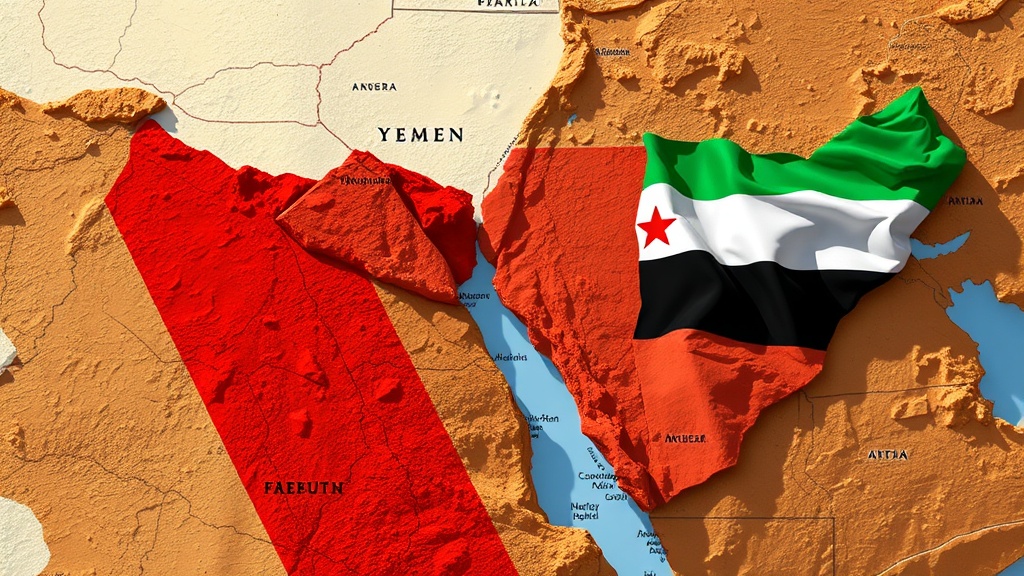
Yemen has long been described as the Arabian Peninsula's most consequential chessboard — not merely a country in crisis, but a territory whose control determines the balance of power among Iran, Saudi Arabia, the UAE, and other regional actors. Understanding the UAE's Yemen strategy requires examining both the historical context of southern Yemeni grievances and the contemporary maritime interests driving great power competition in the Red Sea.
The Southern Transitional Council: Historical Roots and Contemporary Ambitions
The Southern Transitional Council is not simply a rebel group or militia. It represents the political and military expression of genuine historical grievances rooted in Yemen's modern history. South Yemen existed as a separate independent state from 1967 to 1990 — notably, it was the Arab world's only Marxist republic during the Cold War. When North and South Yemen unified in 1990, many southerners felt they received an unfavorable outcome: economic marginalization, political sidelining, and loss of resource control to northern-dominated institutions.
The STC's objective of restoring southern independence is not a fringe aspiration. It has deep historical roots, maintains genuine popular support in southern Yemen, and crucially, has attracted powerful foreign backing from the UAE. This combination of authentic local grievance and external patronage makes the STC a particularly significant actor in Yemen's fractured political landscape.
The STC's long-term vision includes establishing South Arabia as an independent state with control over southern Yemen's substantial oil and gas reserves — reserves that would provide the economic foundation necessary for a viable, independent state capable of functioning without perpetual external subsidy. This economic dimension is critical to understanding both the STC's strategic calculations and the responses it provokes from other regional powers.
UAE's Red Sea Strategy: The Broader Geopolitical Context
The UAE's interest in supporting the STC extends far beyond charitable commitment to southern Yemeni separatism. Abu Dhabi has pursued what regional analysts describe as a "Red Sea arc" strategy — a deliberate effort to build chains of aligned ports, military bases, and friendly governments stretching from Egypt through Sudan, Eritrea, and Somaliland, extending toward the Arabian Peninsula itself.
This strategy reflects a fundamental shift in how the UAE approaches regional power. Rather than relying exclusively on conventional military capabilities, Abu Dhabi has invested in economic partnerships, port development, and proxy force enablement across the maritime chokepoints that control global trade flows. The Red Sea and its southern gateway represent one of the world's most critical commercial passages, with approximately 12% of global maritime trade transiting through these waters.
Control of southern Yemen's coastline would provide the UAE with significant leverage over this crucial waterway. By supporting STC independence aspirations, the UAE seeks to extend its network of allied entities directly onto the Arabian Peninsula, creating a contiguous zone of influence that would give Abu Dhabi unprecedented influence over Red Sea trade flows and regional security architecture.
Israel's recognition of Somaliland in 2024 demonstrated growing diplomatic momentum for the entities within the UAE's Red Sea network. The UAE had already begun accepting Somaliland's documents, signaling acceptance of its de facto independence. This regional repositioning suggested that the architecture Abu Dhabi was assembling — connecting multiple maritime actors in a network of mutual interest — was gaining recognition beyond traditional Middle Eastern actors.
The Abraham Accords Dimension
The STC's leadership has publicly signaled that upon achieving independence, southern Yemen would immediately accede to the Abraham Accords and formally recognize Israel. This represents a calculated diplomatic strategy designed to leverage the Trump administration's investment in expanding the Abraham Accords framework.
The precedent for such arrangements exists. In 2020, during the first Trump administration, the United States formally recognized Morocco's sovereignty over Western Sahara in exchange for Moroccan recognition of Israel. The STC's proposed arrangement follows a similar logic: offering a diplomatic victory to a US administration seeking to expand the Abraham Accords coalition in exchange for recognition of southern Yemen's independence.
This approach reflects sophisticated understanding of contemporary US diplomatic priorities and the incentive structures that drive Trump-era Middle East dealmaking. By offering both Israel recognition and control of strategic hydrocarbon reserves, combined with positioning as a bulwark against Iranian-backed Houthi forces, the STC sought to create a compelling case for US diplomatic support.
Saudi Arabia's Strategic Imperatives in Yemen
For Saudi Arabia, external actors' interference in Yemen's internal affairs represents far more than political inconvenience — it threatens Riyadh's core strategic interests in the most direct manner possible. Saudi Arabia has invested tremendous resources over more than a decade attempting to manage Yemen's crisis through multiple instruments: direct military engagement against Houthi forces, financial support for the internationally recognized government (IRG), and diplomatic efforts toward negotiated settlement.
Riyadh's preferred outcome is a unified Yemen under the IRG that remains free from Iranian influence and capable of maintaining stable governance. This vision depends fundamentally on the IRG retaining control of southern Yemen's oil and gas revenues. Without these economic resources, the IRG becomes an essentially hollow political structure incapable of maintaining credible governance or compelling Houthi participation in meaningful power-sharing arrangements.
If the south were to secede with control of Yemen's hydrocarbon wealth, the logical consequence would be a diminished, impoverished northern rump state potentially dominated by Houthi forces — an outcome Riyadh considers close to the worst conceivable scenario. Such an outcome would create a permanent Iranian client state directly on Saudi Arabia's southern border, with festering grievances, limited economic opportunities, and little incentive to accept Saudi primacy in regional affairs.
For these reasons, Saudi Arabia views external support for STC separatism as a direct threat to fundamental Saudi interests requiring decisive response.
The UAE's Power Projection Limitations
The broader trajectory of UAE activities across the Red Sea region demonstrates both significant capabilities and meaningful limitations. Abu Dhabi has proven extraordinarily effective at funding, arming, and enabling proxy forces across multiple theaters. The UAE's economic resources, technological sophistication, and willingness to operate through proxy arrangements have allowed it to punch above its conventional military weight.
However, this approach has demonstrated clear constraints when regional powers with greater conventional military capabilities and deeper ground networks decide to actively oppose UAE-backed initiatives. While the UAE can supply weapons, funding, and diplomatic cover to proxy forces, it cannot ultimately replace the conventional military dominance that Saudi Arabia maintains over the Arabian Peninsula. Riyadh possesses not only superior military capabilities but also deep tribal networks, historical relationships, and established governance structures across eastern Yemen that Abu Dhabi lacks.
This limitation does not render the UAE's Red Sea strategy obsolete. The port at Berbera in Somaliland continues developing as a strategic asset under UAE influence. Egypt and Eritrea maintain their alignments with Abu Dhabi. Sudan's complex political situation, though involving brutal civil conflict, still includes actors amenable to UAE influence. Nevertheless, the Yemen episode illuminates important constraints on proxy-based power projection when it directly threatens the core interests of a determined regional power with superior conventional capabilities.
UAE-Saudi Arabia Competition and Systemic Rivalry
The dynamics revealed through Yemen's situation reflect a broader competitive relationship between the UAE and Saudi Arabia — two wealthy Gulf monarchies sharing many interests yet increasingly competing for regional influence, alternative economic visions, and positioning for the post-petroleum future.
Free Weekly Newsletter
Enjoying this guide?
Get the best articles like this one delivered to your inbox every week. No spam.
Both nations are investing aggressively in tourism development, technology sectors, and logistics infrastructure. Both seek to ensure that Red Sea trade flows proceed under friendly oversight. However, their conceptions of what constitutes a "friendly" security environment diverge significantly. Riyadh emphasizes unified governance structures and centralized state authority, while Abu Dhabi has become more comfortable with fragmented, proxy-based influence networks.
Yemen has become the primary arena where these divergent visions have produced kinetic conflict rather than merely competitive positioning. The territory's strategic location, resource endowment, and fractured internal politics create conditions where these two powers' differing preferred outcomes come into direct contradiction.
Current Yemen Situation and Outlook
As of 2026, Yemen's political and military landscape remains highly fragmented. The STC continues operating as a political entity advocating for southern autonomy and independence, though its military capabilities and territorial control remain contested. The IRG maintains international recognition as Yemen's legitimate government, though its actual governing capacity remains severely constrained. Houthi forces continue controlling northern Yemen's most populated regions.
Saudi Arabia maintains its military presence and continues funding IRG forces. The UAE continues its investments in Somaliland and other Red Sea entities, though its direct military footprint in Yemen has been reduced. Ongoing tensions persist between the IRG and STC regarding control of southern territories and oil revenues.
The fundamental challenge remains that every equilibrium point achieved in Yemen faces disruption from competing external power interests. Iranian support for Houthis, Saudi Arabia's security concerns, UAE's maritime ambitions, and US strategic priorities create a complex geometry that consistently produces outcomes beneficial to no single party.
For ordinary Yemeni civilians who have endured over a decade of warfare, economic collapse, and humanitarian crisis, these geopolitical competitions represent ongoing tragedy. The prospect for Yemen's stabilization depends not on internal Yemeni actors alone, but on whether external powers can reach sustainable compromises regarding their competing interests — a historically difficult achievement in this region.
Frequently Asked Questions
What is the Southern Transitional Council and what does it seek to accomplish? The STC is a political and military organization representing southern Yemeni separatist interests, advocating for restoration of an independent South Yemen state. Historically, South Yemen existed as a separate nation from 1967 to 1990 before unification with the north. The STC represents southerners' grievances regarding political marginalization and economic disadvantage since unification. The organization seeks to establish an independent southern state with control over southern Yemen's oil and gas reserves, which would provide economic sustainability for such a state. The STC maintains the backing of the United Arab Emirates, which supports southern independence as part of broader regional strategic interests.
Why does the UAE support the STC and southern Yemeni separatism? The UAE's support for the STC reflects Abu Dhabi's broader "Red Sea arc" strategy — building a network of allied ports, military bases, and friendly governments from Egypt through Sudan, Eritrea, and Somaliland toward the Arabian Peninsula. Control of southern Yemen's coastline would extend this network to the Arabian Peninsula itself and provide significant influence over the Red Sea's southern gateway, one of the world's most critical maritime chokepoints. By supporting STC independence, the UAE would establish direct presence on the Arabian Peninsula within a network of UAE-aligned entities controlling both shores of the Red Sea's southern entrance. This positioning would provide Abu Dhabi substantial leverage over global maritime trade flows and regional security architecture.
What are Saudi Arabia's strategic concerns regarding Yemen and the STC? Saudi Arabia views a unified Yemen under the internationally recognized government as essential to Riyadh's security. The IRG requires control of southern oil revenues to maintain credible governance capacity and to negotiate effectively with Houthi forces. If the south secedes with Yemen's hydrocarbon wealth, the likely consequence would be a diminished, impoverished northern state potentially dominated by Iranian-backed Houthis — an outcome Saudi Arabia considers strategically catastrophic. Such a scenario would place a hostile, Iranian-aligned entity directly on Saudi Arabia's southern border, permanently threatening Riyadh's security and regional influence. Saudi Arabia therefore opposes external support for STC separatism as fundamentally threatening core Saudi interests.
What are the implications of UAE-Saudi competition in Yemen for regional stability? The competitive dynamic between the UAE and Saudi Arabia in Yemen reflects broader divergence in their approaches to regional power projection. Saudi Arabia emphasizes unified state structures and centralized authority, while the UAE has become more comfortable with fragmented, proxy-based influence networks. Yemen's strategic location and fractured internal politics create conditions where these two powers' preferred outcomes directly contradict each other. Competition for influence in Yemen has become increasingly kinetic rather than merely political, with military forces supporting different factions. This competition reduces the likelihood of stabilization and increases humanitarian costs for Yemeni civilians caught between these external power struggles.
How does the international dimension affect Yemen's stability prospects? Yemen's stabilization challenges stem fundamentally from competing interests of external powers — Iran, Saudi Arabia, the UAE, and the United States — rather than from internal Yemeni factors alone. Each external power has different preferred outcomes regarding Yemen's political structure, governance, and alignment. These competing interests consistently disrupt nascent equilibrium points before they can consolidate. The complexity of balancing Iranian interests, Saudi security concerns, UAE maritime ambitions, and US strategic priorities creates a situation where sustainable compromises remain historically difficult to achieve. Until external powers reach sustainable understandings regarding their competing interests in Yemen, the territory will likely remain a site of competition rather than stabilization, with Yemeni civilians bearing the humanitarian costs.
Frequently Asked Questions
Understanding the UAE's Yemen Strategy and STC's Role
The relationship between the United Arab Emirates and Yemen's Southern Transitional Council represents one of the most significant geopolitical dynamics in contemporary Middle East affairs. This analysis examines the strategic interests, motivations, and potential consequences of UAE involvement in southern Yemen, the STC's separatist objectives, and the broader implications for regional stability.
Yemen has long been described as the Arabian Peninsula's most consequential chessboard — not merely a country in crisis, but a territory whose control determines the balance of power among Iran, Saudi Arabia, the UAE, and other regional actors. Understanding the UAE's Yemen strategy requires examining both the historical context of southern Yemeni grievances and the contemporary maritime interests driving great power competition in the Red Sea.
The Southern Transitional Council: Historical Roots and Contemporary Ambitions
The Southern Transitional Council is not simply a rebel group or militia. It represents the political and military expression of genuine historical grievances rooted in Yemen's modern history. South Yemen existed as a separate independent state from 1967 to 1990 — notably, it was the Arab world's only Marxist republic during the Cold War. When North and South Yemen unified in 1990, many southerners felt they received an unfavorable outcome: economic marginalization, political sidelining, and loss of resource control to northern-dominated institutions.
The STC's objective of restoring southern independence is not a fringe aspiration. It has deep historical roots, maintains genuine popular support in southern Yemen, and crucially, has attracted powerful foreign backing from the UAE. This combination of authentic local grievance and external patronage makes the STC a particularly significant actor in Yemen's fractured political landscape.
The STC's long-term vision includes establishing South Arabia as an independent state with control over southern Yemen's substantial oil and gas reserves — reserves that would provide the economic foundation necessary for a viable, independent state capable of functioning without perpetual external subsidy. This economic dimension is critical to understanding both the STC's strategic calculations and the responses it provokes from other regional powers.
UAE's Red Sea Strategy: The Broader Geopolitical Context
The UAE's interest in supporting the STC extends far beyond charitable commitment to southern Yemeni separatism. Abu Dhabi has pursued what regional analysts describe as a "Red Sea arc" strategy — a deliberate effort to build chains of aligned ports, military bases, and friendly governments stretching from Egypt through Sudan, Eritrea, and Somaliland, extending toward the Arabian Peninsula itself.
This strategy reflects a fundamental shift in how the UAE approaches regional power. Rather than relying exclusively on conventional military capabilities, Abu Dhabi has invested in economic partnerships, port development, and proxy force enablement across the maritime chokepoints that control global trade flows. The Red Sea and its southern gateway represent one of the world's most critical commercial passages, with approximately 12% of global maritime trade transiting through these waters.
Control of southern Yemen's coastline would provide the UAE with significant leverage over this crucial waterway. By supporting STC independence aspirations, the UAE seeks to extend its network of allied entities directly onto the Arabian Peninsula, creating a contiguous zone of influence that would give Abu Dhabi unprecedented influence over Red Sea trade flows and regional security architecture.
Israel's recognition of Somaliland in 2024 demonstrated growing diplomatic momentum for the entities within the UAE's Red Sea network. The UAE had already begun accepting Somaliland's documents, signaling acceptance of its de facto independence. This regional repositioning suggested that the architecture Abu Dhabi was assembling — connecting multiple maritime actors in a network of mutual interest — was gaining recognition beyond traditional Middle Eastern actors.
The Abraham Accords Dimension
The STC's leadership has publicly signaled that upon achieving independence, southern Yemen would immediately accede to the Abraham Accords and formally recognize Israel. This represents a calculated diplomatic strategy designed to leverage the Trump administration's investment in expanding the Abraham Accords framework.
The precedent for such arrangements exists. In 2020, during the first Trump administration, the United States formally recognized Morocco's sovereignty over Western Sahara in exchange for Moroccan recognition of Israel. The STC's proposed arrangement follows a similar logic: offering a diplomatic victory to a US administration seeking to expand the Abraham Accords coalition in exchange for recognition of southern Yemen's independence.
This approach reflects sophisticated understanding of contemporary US diplomatic priorities and the incentive structures that drive Trump-era Middle East dealmaking. By offering both Israel recognition and control of strategic hydrocarbon reserves, combined with positioning as a bulwark against Iranian-backed Houthi forces, the STC sought to create a compelling case for US diplomatic support.
Saudi Arabia's Strategic Imperatives in Yemen
For Saudi Arabia, external actors' interference in Yemen's internal affairs represents far more than political inconvenience — it threatens Riyadh's core strategic interests in the most direct manner possible. Saudi Arabia has invested tremendous resources over more than a decade attempting to manage Yemen's crisis through multiple instruments: direct military engagement against Houthi forces, financial support for the internationally recognized government (IRG), and diplomatic efforts toward negotiated settlement.
Riyadh's preferred outcome is a unified Yemen under the IRG that remains free from Iranian influence and capable of maintaining stable governance. This vision depends fundamentally on the IRG retaining control of southern Yemen's oil and gas revenues. Without these economic resources, the IRG becomes an essentially hollow political structure incapable of maintaining credible governance or compelling Houthi participation in meaningful power-sharing arrangements.
If the south were to secede with control of Yemen's hydrocarbon wealth, the logical consequence would be a diminished, impoverished northern rump state potentially dominated by Houthi forces — an outcome Riyadh considers close to the worst conceivable scenario. Such an outcome would create a permanent Iranian client state directly on Saudi Arabia's southern border, with festering grievances, limited economic opportunities, and little incentive to accept Saudi primacy in regional affairs.
For these reasons, Saudi Arabia views external support for STC separatism as a direct threat to fundamental Saudi interests requiring decisive response.
The UAE's Power Projection Limitations
The broader trajectory of UAE activities across the Red Sea region demonstrates both significant capabilities and meaningful limitations. Abu Dhabi has proven extraordinarily effective at funding, arming, and enabling proxy forces across multiple theaters. The UAE's economic resources, technological sophistication, and willingness to operate through proxy arrangements have allowed it to punch above its conventional military weight.
However, this approach has demonstrated clear constraints when regional powers with greater conventional military capabilities and deeper ground networks decide to actively oppose UAE-backed initiatives. While the UAE can supply weapons, funding, and diplomatic cover to proxy forces, it cannot ultimately replace the conventional military dominance that Saudi Arabia maintains over the Arabian Peninsula. Riyadh possesses not only superior military capabilities but also deep tribal networks, historical relationships, and established governance structures across eastern Yemen that Abu Dhabi lacks.
This limitation does not render the UAE's Red Sea strategy obsolete. The port at Berbera in Somaliland continues developing as a strategic asset under UAE influence. Egypt and Eritrea maintain their alignments with Abu Dhabi. Sudan's complex political situation, though involving brutal civil conflict, still includes actors amenable to UAE influence. Nevertheless, the Yemen episode illuminates important constraints on proxy-based power projection when it directly threatens the core interests of a determined regional power with superior conventional capabilities.
UAE-Saudi Arabia Competition and Systemic Rivalry
The dynamics revealed through Yemen's situation reflect a broader competitive relationship between the UAE and Saudi Arabia — two wealthy Gulf monarchies sharing many interests yet increasingly competing for regional influence, alternative economic visions, and positioning for the post-petroleum future.
Both nations are investing aggressively in tourism development, technology sectors, and logistics infrastructure. Both seek to ensure that Red Sea trade flows proceed under friendly oversight. However, their conceptions of what constitutes a "friendly" security environment diverge significantly. Riyadh emphasizes unified governance structures and centralized state authority, while Abu Dhabi has become more comfortable with fragmented, proxy-based influence networks.
Yemen has become the primary arena where these divergent visions have produced kinetic conflict rather than merely competitive positioning. The territory's strategic location, resource endowment, and fractured internal politics create conditions where these two powers' differing preferred outcomes come into direct contradiction.
Current Yemen Situation and Outlook
As of 2026, Yemen's political and military landscape remains highly fragmented. The STC continues operating as a political entity advocating for southern autonomy and independence, though its military capabilities and territorial control remain contested. The IRG maintains international recognition as Yemen's legitimate government, though its actual governing capacity remains severely constrained. Houthi forces continue controlling northern Yemen's most populated regions.
Saudi Arabia maintains its military presence and continues funding IRG forces. The UAE continues its investments in Somaliland and other Red Sea entities, though its direct military footprint in Yemen has been reduced. Ongoing tensions persist between the IRG and STC regarding control of southern territories and oil revenues.
The fundamental challenge remains that every equilibrium point achieved in Yemen faces disruption from competing external power interests. Iranian support for Houthis, Saudi Arabia's security concerns, UAE's maritime ambitions, and US strategic priorities create a complex geometry that consistently produces outcomes beneficial to no single party.
For ordinary Yemeni civilians who have endured over a decade of warfare, economic collapse, and humanitarian crisis, these geopolitical competitions represent ongoing tragedy. The prospect for Yemen's stabilization depends not on internal Yemeni actors alone, but on whether external powers can reach sustainable compromises regarding their competing interests — a historically difficult achievement in this region.
Frequently Asked Questions
What is the Southern Transitional Council and what does it seek to accomplish? The STC is a political and military organization representing southern Yemeni separatist interests, advocating for restoration of an independent South Yemen state. Historically, South Yemen existed as a separate nation from 1967 to 1990 before unification with the north. The STC represents southerners' grievances regarding political marginalization and economic disadvantage since unification. The organization seeks to establish an independent southern state with control over southern Yemen's oil and gas reserves, which would provide economic sustainability for such a state. The STC maintains the backing of the United Arab Emirates, which supports southern independence as part of broader regional strategic interests.
Why does the UAE support the STC and southern Yemeni separatism? The UAE's support for the STC reflects Abu Dhabi's broader "Red Sea arc" strategy — building a network of allied ports, military bases, and friendly governments from Egypt through Sudan, Eritrea, and Somaliland toward the Arabian Peninsula. Control of southern Yemen's coastline would extend this network to the Arabian Peninsula itself and provide significant influence over the Red Sea's southern gateway, one of the world's most critical maritime chokepoints. By supporting STC independence, the UAE would establish direct presence on the Arabian Peninsula within a network of UAE-aligned entities controlling both shores of the Red Sea's southern entrance. This positioning would provide Abu Dhabi substantial leverage over global maritime trade flows and regional security architecture.
What are Saudi Arabia's strategic concerns regarding Yemen and the STC? Saudi Arabia views a unified Yemen under the internationally recognized government as essential to Riyadh's security. The IRG requires control of southern oil revenues to maintain credible governance capacity and to negotiate effectively with Houthi forces. If the south secedes with Yemen's hydrocarbon wealth, the likely consequence would be a diminished, impoverished northern state potentially dominated by Iranian-backed Houthis — an outcome Saudi Arabia considers strategically catastrophic. Such a scenario would place a hostile, Iranian-aligned entity directly on Saudi Arabia's southern border, permanently threatening Riyadh's security and regional influence. Saudi Arabia therefore opposes external support for STC separatism as fundamentally threatening core Saudi interests.
What are the implications of UAE-Saudi competition in Yemen for regional stability? The competitive dynamic between the UAE and Saudi Arabia in Yemen reflects broader divergence in their approaches to regional power projection. Saudi Arabia emphasizes unified state structures and centralized authority, while the UAE has become more comfortable with fragmented, proxy-based influence networks. Yemen's strategic location and fractured internal politics create conditions where these two powers' preferred outcomes directly contradict each other. Competition for influence in Yemen has become increasingly kinetic rather than merely political, with military forces supporting different factions. This competition reduces the likelihood of stabilization and increases humanitarian costs for Yemeni civilians caught between these external power struggles.
How does the international dimension affect Yemen's stability prospects? Yemen's stabilization challenges stem fundamentally from competing interests of external powers — Iran, Saudi Arabia, the UAE, and the United States — rather than from internal Yemeni factors alone. Each external power has different preferred outcomes regarding Yemen's political structure, governance, and alignment. These competing interests consistently disrupt nascent equilibrium points before they can consolidate. The complexity of balancing Iranian interests, Saudi security concerns, UAE maritime ambitions, and US strategic priorities creates a situation where sustainable compromises remain historically difficult to achieve. Until external powers reach sustainable understandings regarding their competing interests in Yemen, the territory will likely remain a site of competition rather than stabilization, with Yemeni civilians bearing the humanitarian costs.
About Zeebrain Editorial
Zeebrain publishes independent analysis of markets, investing, personal finance, and business. We disclose affiliate relationships, never accept payment for coverage, and fact-check all claims against primary sources. Read our editorial policy →
More from Curiosities




Related Guides
Keep exploring this topic
Saudi Arabia vs UAE: The Cold War Reshaping the Middle East
Curiosities · Saudi Arabia · UAE
Who Is Pope Francis? Life, Legacy, and His Impact on the Modern Church
Curiosities
How Did J.R.R. Tolkien Die? A Life Beyond Middle-earth
Curiosities
Why Spirit Airlines Failed: Ultra-Low-Cost Carrier Collapse
Curiosities
Explore More Categories
Keep browsing by topic and build depth around the subjects you care about most.