Strait of Hormuz: Why Geography Matters More Than Military Power
Quick Summary
Why the Strait of Hormuz remains America's greatest strategic vulnerability. Geography, not firepower, determines outcomes in modern conflict.
In This Article
Strait of Hormuz: Why Geography Matters More Than Military Power
There is a 54-kilometre stretch of water between the Gulf of Oman and the Persian Gulf that has quietly governed American foreign policy for more than four decades. Every US president since Jimmy Carter has understood one foundational truth: no amount of military superiority changes what Iran can do to the global economy simply by controlling access to one of the world's most critical energy chokepoints. That knowledge bred caution. Caution bred restraint. And restraint, for all its frustrations, kept the world stable by acknowledging a strategic reality that transcends conventional military calculations.

The history of great power competition suggests one enduring lesson: geography is not a target you can bomb. It is a permanent feature of strategy that outlasts administrations, conflicts, and even regimes. Understanding why the Strait of Hormuz represents America's greatest strategic vulnerability requires understanding something that military planners have known for generations but that political leaders have periodically chosen to ignore: controlling narrow geography trumps conventional military supremacy every time.
What the Strait of Hormuz Actually Represents
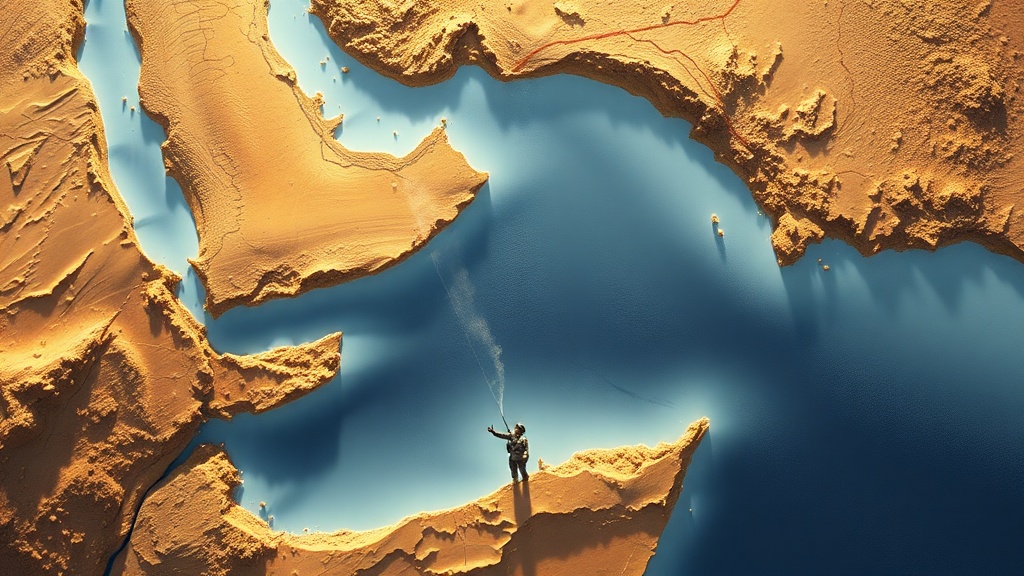
Roughly one-fifth of the entire global supply of oil and liquefied natural gas moves through the Strait of Hormuz on any given day. The countries whose exports depend on it — Iraq, Kuwait, Saudi Arabia, Bahrain, Qatar, and the UAE — collectively represent an energy lifeline for economies across Asia, Europe, and beyond. The strait itself is breathtakingly narrow. At its tightest point, it measures just 54 kilometres across, flanked by rugged mountainous terrain on both sides. The usable shipping lanes in the centre are so constricted that only two exist: one in each direction.
This is not a logistical inconvenience. It is a chokepoint of extraordinary strategic leverage. Any nation controlling or even significantly disrupting the Strait of Hormuz would hold leverage over the global economy that no amount of conventional military force can easily neutralize.
Iran does not need to physically block ships to exploit this advantage. All it needs to do is create enough uncertainty — through periodic missile strikes, drone attacks, and mine-laying operations — that insurance companies refuse to cover vessels transiting the strait and shipping companies refuse to send them. The effect on global supply is identical to a physical blockade, achieved at a fraction of the military cost.
Iran's drone arsenal alone makes this strategy devastatingly viable. The Shahed-136, with an operating range of roughly 1,500 kilometres, means that even if significant portions of Iran's coastal infrastructure were damaged and naval assets destroyed, Tehran could continue launching attacks from deep within its own territory. Geography, in this context, becomes the weapon itself. And it cannot be neutralised from the air.
The Economic Vulnerability of Global Energy Markets
The International Energy Agency has repeatedly identified energy supply disruptions originating from the Strait of Hormuz as the single greatest risk to global economic stability. Even theoretical disruptions cause immediate price volatility. Oil prices spike on rumours of Strait closure, reflecting the market's acute awareness of how exposed global economies are to this geographic vulnerability.
The standard rule of thumb among economists — that every $10 rise in oil prices eventually adds 0.3 to 0.4 percentage points to inflation — suggests that even modest disruptions translate into significant economic consequences. A sustained closure would push oil prices well above $100 per barrel, with cascading effects across developed and developing economies alike.
Research from the International Monetary Fund and various energy analysts suggests that oil prices sustained above $140 per barrel would tip the global economy into recession. That is not speculation about a distant theoretical future. That is a description of where sustained Strait closure leads, based on historical patterns and current economic modeling.
The damage from any disruption is also structural, not just immediate. Recovery from even a brief closure requires months. Global tanker fleets must be repositioned, mothballed Gulf production must be restarted, and Asian refineries must resume normal operations. Every additional week of disruption extends that recovery timeline, compounding economic pressure across multiple continents.
Why Air Power Alone Cannot Solve the Geography Problem
The temptation in modern Western military planning is to assume that sufficient aerial firepower can compel any adversary into submission. The history of the last several decades offers little support for that assumption. Air campaigns have destroyed infrastructure, degraded military capacity, and killed leaders. They have rarely — if ever — broken the political will of a government that has decided to endure.
Moreover, air campaigns directed at geographic chokepoints face a fundamental problem: the geography itself does not change. You can destroy infrastructure around the Strait of Hormuz, but the strait remains 54 kilometres wide. You can neutralise naval assets, but the narrow shipping lanes persist. The fundamental vulnerability that makes the strait so economically significant — its narrowness, its position between major energy exporters and global markets — cannot be altered by military force.
Any potential military action in the region must account for this reality. The commitment of substantial air assets to operations around the Strait of Hormuz also raises broader strategic questions, particularly regarding American military positioning in other regions of the world. Resources devoted to one theater are unavailable for others.
The Strategic Logic of the Carter Doctrine and Its Limits
The Strait of Hormuz has been the central variable in US-Iran strategic calculations since the Carter Doctrine of 1980, which explicitly committed American military power to preventing any hostile power from controlling the Persian Gulf. Every administration since has operated under that doctrine while also quietly acknowledging that Iran's ability to disrupt — not control, just disrupt — the strait represented a deterrent that could not be cleanly neutralised by military force alone.
This deterrent worked, for decades, not because American leaders were timid but because they were clear-eyed. They understood that the costs of confrontation would fall not just on Iran but on the entire global economy, and by extension on American political standing at home and abroad. That clarity, maintained through administrations of both parties across more than four decades, reflected hardheaded strategic realism rather than weakness.
The challenge going forward is maintaining that same clarity about what military force can and cannot accomplish when applied to geographic realities. No amount of military superiority can change the fact that the Strait of Hormuz is 54 kilometres wide, or that disrupting it has immediate global economic consequences.
Why Negotiation Remains the Central Challenge
Any resolution to heightened tensions in the Persian Gulf will almost certainly require negotiation of some form. Yet negotiations over the Strait of Hormuz present unique challenges. The very geography that makes the strait so economically critical also gives any power that can credibly threaten to disrupt it substantial leverage in talks.
This dynamic has historical precedent. During the 1973 Arab oil embargo and throughout the Iran-Iraq War of the 1980s, demonstrated ability to threaten energy supplies translated directly into political leverage in international negotiations. Any Iranian government would recognize this same dynamic and factor it into strategic calculations.
The challenge for any negotiating party is finding an outcome that both sides can characterise as acceptable to domestic audiences. Solutions that require one side to abandon or surrender its greatest source of leverage face substantial domestic political obstacles.
What History Keeps Trying to Teach
The broader lesson from decades of great power strategic thinking is that geography outlasts everything else. Regimes change, leaders die, military equipment becomes obsolete, but geography persists. The powers that succeed in long-term great power competition are those that respect geographic realities rather than attempt to overcome them through superior force.
The Strait of Hormuz will be a central feature of Middle Eastern geopolitics and global energy security for as long as major oil and gas reserves exist in the Persian Gulf with no viable alternative export routes. Acknowledging that reality, planning around it, and accepting its constraints is the foundation of sustainable strategy.
Attempting to reduce geographic vulnerabilities through military force typically produces the opposite effect: it accelerates arms buildups, hardens adversarial resolve, and ultimately increases the costs borne by all parties. Clear-eyed recognition of geography's permanence, by contrast, leads to more durable strategic arrangements.
Conclusion
Free Weekly Newsletter
Enjoying this guide?
Get the best articles like this one delivered to your inbox every week. No spam.
The Strait of Hormuz represents one of the defining geographic vulnerabilities of modern great power competition. No single nation, however militarily powerful, can ignore or overcome through force the reality that roughly one-fifth of global oil supply moves through a 54-kilometre-wide channel with no viable alternatives.
America's approach to this vulnerability over four decades — maintaining military strength while acknowledging its limits, preserving deterrence while practicing restraint — reflected strategic maturity. Sustainable policy toward the Strait of Hormuz must be based on the same recognition: you cannot bomb geography, and attempting to do so typically produces results worse than the problem the military action was meant to solve.
Frequently Asked Questions
Why is the Strait of Hormuz so important to global oil supply?
The Strait of Hormuz is the world's single most critical oil chokepoint. Approximately one-fifth of all globally traded oil and liquefied natural gas passes through its narrow shipping lanes, including exports from Iraq, Kuwait, Saudi Arabia, Bahrain, Qatar, and the UAE. There is no viable alternative route for most of these exports, making the strait's disruption immediately consequential for global energy prices and economic stability. Any sustained closure would trigger immediate spikes in energy prices and cascade through global supply chains.
Can Iran really disrupt the Strait of Hormuz without a massive navy?
Yes. A nation does not need surface warships to effectively disrupt the strait. By deploying mines, drones, and periodic missile strikes against merchant vessels, it can create sufficient risk and uncertainty that insurance companies refuse to cover ships transiting the strait and shipping operators reroute their fleets elsewhere. The effect on global supply is functionally equivalent to a blockade, achieved at minimal military cost and from assets that are extremely difficult to fully eliminate through air strikes alone. This is precisely why geography creates leverage that military force cannot easily overcome.
How long would it take global energy markets to recover from a Strait closure?
Even if the strait reopened immediately, energy analysts estimate it would take at least four months for global oil and gas markets to return to anything resembling normality. This accounts for the time needed to restart mothballed Gulf production, reposition the global tanker fleet, and bring Asian refineries back online. During this recovery period, energy prices would remain elevated and economic pressure would continue accumulating across major economies.
Why does military force struggle to solve the Strait of Hormuz problem?
The fundamental challenge is that military force cannot change geography. You can destroy infrastructure, but the strait remains 54 kilometres wide. You can neutralise military assets, but the narrow shipping lanes persist. The geographic reality that makes the strait economically significant — its narrowness and its position between major energy exporters and global markets — cannot be altered by military strikes. This is why multiple administrations across decades acknowledged that controlling the strait militarily, even if achievable, might cost more than any rational strategic objective justifies.
What is the Carter Doctrine and how does it relate to the Strait of Hormuz?
The Carter Doctrine, announced in 1980, explicitly committed American military power to preventing any hostile power from controlling the Persian Gulf region. This doctrine reflected recognition that American prosperity and security depended on maintaining access to Persian Gulf oil supplies. However, every administration since has also implicitly acknowledged that Iran's ability to disrupt — even without controlling — the strait represented a deterrent that could not be cleanly overcome through military force, leading to a strategy of military strength combined with strategic restraint.
Frequently Asked Questions
What the Strait of Hormuz Actually Represents
Roughly one-fifth of the entire global supply of oil and liquefied natural gas moves through the Strait of Hormuz on any given day. The countries whose exports depend on it — Iraq, Kuwait, Saudi Arabia, Bahrain, Qatar, and the UAE — collectively represent an energy lifeline for economies across Asia, Europe, and beyond. The strait itself is breathtakingly narrow. At its tightest point, it measures just 54 kilometres across, flanked by rugged mountainous terrain on both sides. The usable shipping lanes in the centre are so constricted that only two exist: one in each direction.
This is not a logistical inconvenience. It is a chokepoint of extraordinary strategic leverage. Any nation controlling or even significantly disrupting the Strait of Hormuz would hold leverage over the global economy that no amount of conventional military force can easily neutralize.
Iran does not need to physically block ships to exploit this advantage. All it needs to do is create enough uncertainty — through periodic missile strikes, drone attacks, and mine-laying operations — that insurance companies refuse to cover vessels transiting the strait and shipping companies refuse to send them. The effect on global supply is identical to a physical blockade, achieved at a fraction of the military cost.
Iran's drone arsenal alone makes this strategy devastatingly viable. The Shahed-136, with an operating range of roughly 1,500 kilometres, means that even if significant portions of Iran's coastal infrastructure were damaged and naval assets destroyed, Tehran could continue launching attacks from deep within its own territory. Geography, in this context, becomes the weapon itself. And it cannot be neutralised from the air.
The Economic Vulnerability of Global Energy Markets
The International Energy Agency has repeatedly identified energy supply disruptions originating from the Strait of Hormuz as the single greatest risk to global economic stability. Even theoretical disruptions cause immediate price volatility. Oil prices spike on rumours of Strait closure, reflecting the market's acute awareness of how exposed global economies are to this geographic vulnerability.
The standard rule of thumb among economists — that every $10 rise in oil prices eventually adds 0.3 to 0.4 percentage points to inflation — suggests that even modest disruptions translate into significant economic consequences. A sustained closure would push oil prices well above $100 per barrel, with cascading effects across developed and developing economies alike.
Research from the International Monetary Fund and various energy analysts suggests that oil prices sustained above $140 per barrel would tip the global economy into recession. That is not speculation about a distant theoretical future. That is a description of where sustained Strait closure leads, based on historical patterns and current economic modeling.
The damage from any disruption is also structural, not just immediate. Recovery from even a brief closure requires months. Global tanker fleets must be repositioned, mothballed Gulf production must be restarted, and Asian refineries must resume normal operations. Every additional week of disruption extends that recovery timeline, compounding economic pressure across multiple continents.
Why Air Power Alone Cannot Solve the Geography Problem
The temptation in modern Western military planning is to assume that sufficient aerial firepower can compel any adversary into submission. The history of the last several decades offers little support for that assumption. Air campaigns have destroyed infrastructure, degraded military capacity, and killed leaders. They have rarely — if ever — broken the political will of a government that has decided to endure.
Moreover, air campaigns directed at geographic chokepoints face a fundamental problem: the geography itself does not change. You can destroy infrastructure around the Strait of Hormuz, but the strait remains 54 kilometres wide. You can neutralise naval assets, but the narrow shipping lanes persist. The fundamental vulnerability that makes the strait so economically significant — its narrowness, its position between major energy exporters and global markets — cannot be altered by military force.
Any potential military action in the region must account for this reality. The commitment of substantial air assets to operations around the Strait of Hormuz also raises broader strategic questions, particularly regarding American military positioning in other regions of the world. Resources devoted to one theater are unavailable for others.
The Strategic Logic of the Carter Doctrine and Its Limits
The Strait of Hormuz has been the central variable in US-Iran strategic calculations since the Carter Doctrine of 1980, which explicitly committed American military power to preventing any hostile power from controlling the Persian Gulf. Every administration since has operated under that doctrine while also quietly acknowledging that Iran's ability to disrupt — not control, just disrupt — the strait represented a deterrent that could not be cleanly neutralised by military force alone.
This deterrent worked, for decades, not because American leaders were timid but because they were clear-eyed. They understood that the costs of confrontation would fall not just on Iran but on the entire global economy, and by extension on American political standing at home and abroad. That clarity, maintained through administrations of both parties across more than four decades, reflected hardheaded strategic realism rather than weakness.
The challenge going forward is maintaining that same clarity about what military force can and cannot accomplish when applied to geographic realities. No amount of military superiority can change the fact that the Strait of Hormuz is 54 kilometres wide, or that disrupting it has immediate global economic consequences.
Why Negotiation Remains the Central Challenge
Any resolution to heightened tensions in the Persian Gulf will almost certainly require negotiation of some form. Yet negotiations over the Strait of Hormuz present unique challenges. The very geography that makes the strait so economically critical also gives any power that can credibly threaten to disrupt it substantial leverage in talks.
This dynamic has historical precedent. During the 1973 Arab oil embargo and throughout the Iran-Iraq War of the 1980s, demonstrated ability to threaten energy supplies translated directly into political leverage in international negotiations. Any Iranian government would recognize this same dynamic and factor it into strategic calculations.
The challenge for any negotiating party is finding an outcome that both sides can characterise as acceptable to domestic audiences. Solutions that require one side to abandon or surrender its greatest source of leverage face substantial domestic political obstacles.
What History Keeps Trying to Teach
The broader lesson from decades of great power strategic thinking is that geography outlasts everything else. Regimes change, leaders die, military equipment becomes obsolete, but geography persists. The powers that succeed in long-term great power competition are those that respect geographic realities rather than attempt to overcome them through superior force.
The Strait of Hormuz will be a central feature of Middle Eastern geopolitics and global energy security for as long as major oil and gas reserves exist in the Persian Gulf with no viable alternative export routes. Acknowledging that reality, planning around it, and accepting its constraints is the foundation of sustainable strategy.
Attempting to reduce geographic vulnerabilities through military force typically produces the opposite effect: it accelerates arms buildups, hardens adversarial resolve, and ultimately increases the costs borne by all parties. Clear-eyed recognition of geography's permanence, by contrast, leads to more durable strategic arrangements.
Conclusion
The Strait of Hormuz represents one of the defining geographic vulnerabilities of modern great power competition. No single nation, however militarily powerful, can ignore or overcome through force the reality that roughly one-fifth of global oil supply moves through a 54-kilometre-wide channel with no viable alternatives.
America's approach to this vulnerability over four decades — maintaining military strength while acknowledging its limits, preserving deterrence while practicing restraint — reflected strategic maturity. Sustainable policy toward the Strait of Hormuz must be based on the same recognition: you cannot bomb geography, and attempting to do so typically produces results worse than the problem the military action was meant to solve.
Frequently Asked Questions
Why is the Strait of Hormuz so important to global oil supply?
The Strait of Hormuz is the world's single most critical oil chokepoint. Approximately one-fifth of all globally traded oil and liquefied natural gas passes through its narrow shipping lanes, including exports from Iraq, Kuwait, Saudi Arabia, Bahrain, Qatar, and the UAE. There is no viable alternative route for most of these exports, making the strait's disruption immediately consequential for global energy prices and economic stability. Any sustained closure would trigger immediate spikes in energy prices and cascade through global supply chains.
Can Iran really disrupt the Strait of Hormuz without a massive navy?
Yes. A nation does not need surface warships to effectively disrupt the strait. By deploying mines, drones, and periodic missile strikes against merchant vessels, it can create sufficient risk and uncertainty that insurance companies refuse to cover ships transiting the strait and shipping operators reroute their fleets elsewhere. The effect on global supply is functionally equivalent to a blockade, achieved at minimal military cost and from assets that are extremely difficult to fully eliminate through air strikes alone. This is precisely why geography creates leverage that military force cannot easily overcome.
How long would it take global energy markets to recover from a Strait closure?
Even if the strait reopened immediately, energy analysts estimate it would take at least four months for global oil and gas markets to return to anything resembling normality. This accounts for the time needed to restart mothballed Gulf production, reposition the global tanker fleet, and bring Asian refineries back online. During this recovery period, energy prices would remain elevated and economic pressure would continue accumulating across major economies.
Why does military force struggle to solve the Strait of Hormuz problem?
The fundamental challenge is that military force cannot change geography. You can destroy infrastructure, but the strait remains 54 kilometres wide. You can neutralise military assets, but the narrow shipping lanes persist. The geographic reality that makes the strait economically significant — its narrowness and its position between major energy exporters and global markets — cannot be altered by military strikes. This is why multiple administrations across decades acknowledged that controlling the strait militarily, even if achievable, might cost more than any rational strategic objective justifies.
What is the Carter Doctrine and how does it relate to the Strait of Hormuz?
The Carter Doctrine, announced in 1980, explicitly committed American military power to preventing any hostile power from controlling the Persian Gulf region. This doctrine reflected recognition that American prosperity and security depended on maintaining access to Persian Gulf oil supplies. However, every administration since has also implicitly acknowledged that Iran's ability to disrupt — even without controlling — the strait represented a deterrent that could not be cleanly overcome through military force, leading to a strategy of military strength combined with strategic restraint.
About Zeebrain Editorial
Zeebrain publishes independent analysis of markets, investing, personal finance, and business. We disclose affiliate relationships, never accept payment for coverage, and fact-check all claims against primary sources. Read our editorial policy →
How this article was produced: Zeebrain articles are created with AI assistance from primary sources (including cited videos and market data) and reviewed under our editorial standards before publication. Spot an error? Tell us and we will correct it.
More from Curiosities




Related Guides
Keep exploring this topic
Iran Peace Deal Prospects: Oil, Markets & Treasury Yields
Business & Money · Iran peace deal · Strait of Hormuz
Strait of Hormuz Crisis: The Energy Shock Hiding in Plain Sight
Business & Money · energy markets · Strait of Hormuz
Iran Strikes, Crypto Drops: What Markets Are Telling You
Business & Money · Iran conflict · stock market
How Iran's Strait of Hormuz Toll Could End US World Order
Curiosities · Strait of Hormuz · Iran
Explore More Categories
Keep browsing by topic and build depth around the subjects you care about most.