Trump's Fed Takeover: What Lower Interest Rates Cost You

Quick Summary
Trump's new Fed chair could trigger the second biggest stimulus in US history. Here's what lower interest rates mean for your mortgage, dollar, and wealth.
In This Article
The Quiet Stimulus Nobody Is Talking About
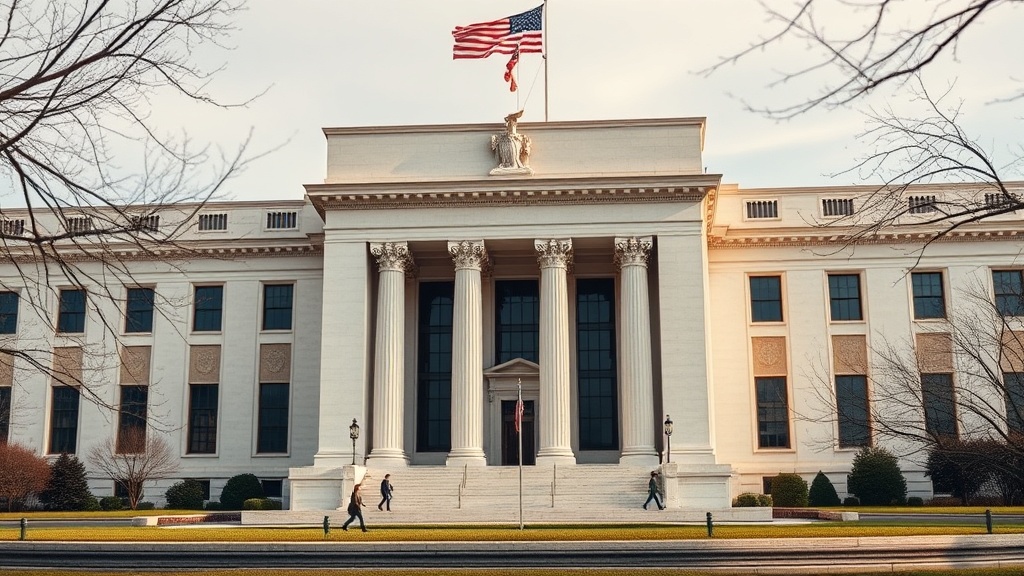
Forget stimulus checks. The second largest economic stimulus in US history may already be in motion — and it's being engineered through the Federal Reserve, your mortgage rate, and $39 trillion in national debt. On May 15th, Kevin Warsh is expected to become the new chairman of the Federal Reserve Bank, replacing Jerome Powell. That transition is not a routine personnel change. It is a deliberate policy pivot, and its effects will ripple through housing prices, consumer spending, inflation, and the purchasing power of every dollar you hold.

To understand what's actually happening — and more importantly, what it means for your money — you need to look past the housing headlines and follow the debt.
What the Federal Reserve Actually Is (And Why It Matters)
Here is something most people never bother to check: the Federal Reserve Bank is not a traditional federal agency. It is not a reserve in the conventional sense — it holds no cash reserves backing its actions. And despite the name, the US government cannot directly order it to do anything. The Fed's own website acknowledges this quasi-independent structure.
So how does President Trump get what he wants from the Fed? He does it through appointments. The Fed chairman serves a fixed term, and when that term expires, the sitting president nominates a replacement. Jerome Powell's term ends May 15th. Trump's pick, Kevin Warsh, is widely understood to align with the administration's preference for significantly lower interest rates.
Trump has been unusually direct about his expectations: he has stated publicly that he would not have appointed Warsh if Warsh had not agreed to pursue lower rates. Whether a Fed chair maintains that independence once confirmed is another question — but the signal to markets is clear.
Key takeaway: The Fed's independence is structural, not absolute. Presidential appointments are the lever, and that lever is being pulled right now.
Lower Mortgage Rates: The Math That Moves Markets
Lower interest rates are popular for an obvious reason — they make borrowing cheaper. On a $400,000 30-year fixed mortgage, the difference between 7% and 4.5% is roughly $635 per month, or more than $7,600 per year. At scale, that kind of payment reduction unlocks demand from millions of buyers who have been priced out of the market.
Consider the current context:
- The average age of a first-time homebuyer in the US has risen to approximately 40 years old
- Mortgage rates have been running between 6.5% and 7.5% for most of 2024 and into 2025
- Home prices in many metros are still 40–50% above their 2019 levels
- Inventory remains constrained in most major markets
Trump has also moved outside the Fed to push rates lower. His administration has reportedly pressured Fannie Mae and Freddie Mac to purchase $200 billion in mortgage-backed securities — a direct intervention designed to increase demand for those securities and suppress yields, which would pull mortgage rates down without waiting for the Fed to act.
But here is the critical tension: lower mortgage rates without a corresponding increase in housing supply do not make homes more affordable in the long run. They make monthly payments cheaper while simultaneously pulling more buyers into the market, which drives prices higher. We have seen this dynamic before. Post-pandemic rate cuts helped push home values up by 40–50% in under four years. A second rate-cut cycle layered on top of still-elevated prices could repeat that pattern.
Key takeaway: Lower mortgage rates reduce your monthly payment but may increase the purchase price you pay. The net benefit depends heavily on timing and local inventory conditions.
The Refinancing Boom and Its Economic Ripple Effect
The housing angle everyone focuses on is new purchases. The more consequential economic story is refinancing.
Between 2020 and 2021, 14 million Americans refinanced their mortgages and pulled approximately $460 billion in cash equity out of their homes. That was not savings or investment — most of it became consumer spending. Home improvement. Cars. Travel. Retail. The economy absorbed that injection and ran hot, contributing directly to the inflation surge that followed.
Fast forward to 2025: housing prices are higher than they were in 2020, millions of homeowners bought or refinanced at rates between 5.5% and 7.5%, and there is a substantial pool of untapped equity sitting dormant. If rates drop meaningfully, that equity becomes accessible again.
Companies like Home Depot and Lowe's have been explicit about this dynamic — they publicly lobbied for rate cuts because they know that cash-out refinancing is one of the primary drivers of home renovation spending. When homeowners feel wealthier on paper and can access cheap credit, discretionary spending on home improvement rises sharply.
This is the mechanism through which a Fed rate cut becomes a de facto economic stimulus — not through government checks, but through consumer balance sheets and home equity conversion.
Key takeaway: A rate cut cycle could release hundreds of billions in home equity into consumer spending within 12–18 months. That is stimulative in the short term and inflationary in the medium term.
The Real Reason Trump Wants Low Rates: The National Debt
The housing market framing is the surface story. The national debt is the structural one.
Here is where the numbers get serious:
- The US government collects approximately $5 trillion in annual tax revenue
- It is projected to spend approximately $7 trillion in 2026
- The $2 trillion annual deficit rolls into a national debt now approaching $39 trillion
- Interest payments on that debt are projected to exceed $1 trillion in 2026 — roughly 20 cents of every tax dollar collected
Interest on the national debt is now the fastest-growing line item in the federal budget. It has surpassed defense spending. It has surpassed Medicare in certain projections. And it compounds with every new dollar of deficit spending.
This is where the Fed strategy and the national debt converge: if the Federal Reserve cuts interest rates by even 1 percentage point, the US government's interest burden on its existing and rolling debt drops by hundreds of billions of dollars annually. That is not a housing policy. That is a debt management strategy disguised as an economic stimulus.
The mechanism works like a government-scale mortgage refinance. When rates fall, the Treasury can issue new debt at lower yields and roll over maturing bonds at cheaper rates. The savings are real — but so are the side effects.
Key takeaway: Every 1% drop in interest rates saves the federal government hundreds of billions in annual debt servicing costs. Lower rates are as much about managing the national debt as they are about housing affordability.
The Inflation Risk Hidden Inside the Stimulus
There is no free lunch in monetary policy, and the plan being assembled here carries significant inflation risk.
The Federal Reserve prints money to fund government borrowing. More money in circulation without a corresponding increase in goods and services means each dollar buys less — that is inflation by definition. The 2020–2021 stimulus cycle demonstrated this with unusual clarity: rates were slashed, money was printed, cash was distributed, and by 2022 the US was running 8–9% inflation for the first time in 40 years.
The current environment is arguably more precarious:
- Inflation has not fully returned to the Fed's 2% target
- Oil prices remain elevated, keeping transportation and energy costs high
- Tariff policies are adding cost pressure across supply chains
- A new rate-cut cycle on top of existing fiscal deficits adds another inflationary layer
There is also the specific risk that lower mortgage rates, absent supply expansion, inflate home prices further — which feeds directly into shelter costs, one of the heaviest components of the Consumer Price Index.
The Fed faces a genuine dilemma: cut rates to relieve debt burden and stimulate the economy, or hold rates to prevent inflation from re-accelerating. The appointment of a Fed chair aligned with the administration's rate-cut preferences suggests the first path is more likely — with all the consequences that implies.
Key takeaway: Rate cuts are stimulative but inflationary. With existing price pressures still elevated, another aggressive easing cycle raises the risk of a second inflation wave.
What This Means for Your Money Right Now
Free Weekly Newsletter
Enjoying this guide?
Get the best articles like this one delivered to your inbox every week. No spam.
Policy shifts at this scale create winners and losers. Here is how to think about positioning:
If you own a home with a high-rate mortgage: A rate cut cycle creates a refinancing window. Model your break-even on refinancing costs versus monthly savings before rates move — lenders will price in expected cuts ahead of time.
If you are waiting to buy: Lower rates may reduce monthly payments but competition for available inventory will increase. In supply-constrained markets, prices could rise faster than rates fall. Waiting for a perfect rate may mean buying a more expensive house.
If you hold US dollars in cash: Aggressive rate cuts combined with continued deficit spending are historically negative for the dollar's purchasing power. Consider the role of hard assets, international equities, or inflation-protected instruments in your portfolio.
If you are an investor: Rate-cut cycles have historically benefited real estate investment trusts (REITs), homebuilders, financial sector stocks, and home improvement retailers. The refinancing boom also benefits mortgage servicers and certain regional banks.
If you are a fixed-income holder: Existing long-duration bonds appreciate in value when rates fall. However, new bonds will offer lower yields — meaning the income stream you lock in today diminishes if rates drop significantly.
The pattern is consistent across modern economic history: policy changes of this magnitude do not hurt everyone equally. Investors who understand the mechanism and act early extract the most value. Those who wait for the headline tend to buy at the peak.
Conclusion: Follow the Debt, Not the Headline
Trump's Fed appointment and the push for lower interest rates is a multi-layered policy maneuver. At the surface, it is about housing affordability and economic stimulation. Underneath, it is about managing a $39 trillion debt load at the lowest possible cost to the Treasury.
The second-largest stimulus in US history will not arrive as a check in your mailbox. It will arrive as lower monthly mortgage statements, a wave of cash-out refinancing, increased consumer spending, and — if history is any guide — another round of inflationary pressure on the goods and assets you buy every day.
Understand the mechanism. Position accordingly. The people who will benefit most from this shift are not the average consumers it is being sold to — they are the investors who see it coming.
Frequently Asked Questions
Who is Kevin Warsh and why does his Fed appointment matter?
Kevin Warsh is a former Federal Reserve governor and investment banker nominated by President Trump to replace Jerome Powell as Fed chairman on May 15th. His appointment matters because the Fed chairman sets the tone for interest rate policy. Trump has publicly stated he expects Warsh to pursue significantly lower interest rates, which would affect everything from mortgage costs to government debt servicing expenses.
Will lower interest rates actually make housing more affordable?
In the short term, lower rates reduce monthly mortgage payments — a drop from 7% to 4.5% on a $400,000 loan saves approximately $635 per month. However, lower rates also increase buyer demand. If housing supply does not keep pace, increased competition drives purchase prices higher, potentially offsetting the payment savings. Affordability depends on both the rate and the price you pay.
How does the national debt connect to Federal Reserve interest rate policy?
The US government borrows approximately $2 trillion per year to cover its spending deficit, contributing to a total national debt near $39 trillion. The government pays roughly $1 trillion annually in interest on that debt. If the Fed cuts rates by 1%, the government saves hundreds of billions in annual interest payments on rolling and new debt. Lower rates are therefore as much a debt management tool as an economic stimulus.
What is the inflation risk of cutting interest rates right now?
Rate cuts increase the money supply and stimulate borrowing and spending. In an economy where inflation has not fully returned to the 2% target — and where tariffs and energy prices are adding cost pressure — another round of aggressive rate cuts risks re-accelerating inflation. The 2020–2021 experience showed how quickly monetary stimulus can translate into price increases across housing, goods, and services.
How can investors benefit from a rate-cut cycle?
Historically, rate-cut cycles have favored real estate investment trusts (REITs), homebuilders, home improvement retailers, mortgage servicers, and certain financial sector stocks. Existing holders of long-duration bonds also see price appreciation. The key is positioning ahead of the official cuts, since markets typically price in expected changes before they are announced.
Free Investing Tools
Frequently Asked Questions
The Quiet Stimulus Nobody Is Talking About
Forget stimulus checks. The second largest economic stimulus in US history may already be in motion — and it's being engineered through the Federal Reserve, your mortgage rate, and $39 trillion in national debt. On May 15th, Kevin Warsh is expected to become the new chairman of the Federal Reserve Bank, replacing Jerome Powell. That transition is not a routine personnel change. It is a deliberate policy pivot, and its effects will ripple through housing prices, consumer spending, inflation, and the purchasing power of every dollar you hold.
To understand what's actually happening — and more importantly, what it means for your money — you need to look past the housing headlines and follow the debt.
What the Federal Reserve Actually Is (And Why It Matters)
Here is something most people never bother to check: the Federal Reserve Bank is not a traditional federal agency. It is not a reserve in the conventional sense — it holds no cash reserves backing its actions. And despite the name, the US government cannot directly order it to do anything. The Fed's own website acknowledges this quasi-independent structure.
So how does President Trump get what he wants from the Fed? He does it through appointments. The Fed chairman serves a fixed term, and when that term expires, the sitting president nominates a replacement. Jerome Powell's term ends May 15th. Trump's pick, Kevin Warsh, is widely understood to align with the administration's preference for significantly lower interest rates.
Trump has been unusually direct about his expectations: he has stated publicly that he would not have appointed Warsh if Warsh had not agreed to pursue lower rates. Whether a Fed chair maintains that independence once confirmed is another question — but the signal to markets is clear.
Key takeaway: The Fed's independence is structural, not absolute. Presidential appointments are the lever, and that lever is being pulled right now.
Lower Mortgage Rates: The Math That Moves Markets
Lower interest rates are popular for an obvious reason — they make borrowing cheaper. On a $400,000 30-year fixed mortgage, the difference between 7% and 4.5% is roughly $635 per month, or more than $7,600 per year. At scale, that kind of payment reduction unlocks demand from millions of buyers who have been priced out of the market.
Consider the current context:
- The average age of a first-time homebuyer in the US has risen to approximately 40 years old
- Mortgage rates have been running between 6.5% and 7.5% for most of 2024 and into 2025
- Home prices in many metros are still 40–50% above their 2019 levels
- Inventory remains constrained in most major markets
Trump has also moved outside the Fed to push rates lower. His administration has reportedly pressured Fannie Mae and Freddie Mac to purchase $200 billion in mortgage-backed securities — a direct intervention designed to increase demand for those securities and suppress yields, which would pull mortgage rates down without waiting for the Fed to act.
But here is the critical tension: lower mortgage rates without a corresponding increase in housing supply do not make homes more affordable in the long run. They make monthly payments cheaper while simultaneously pulling more buyers into the market, which drives prices higher. We have seen this dynamic before. Post-pandemic rate cuts helped push home values up by 40–50% in under four years. A second rate-cut cycle layered on top of still-elevated prices could repeat that pattern.
Key takeaway: Lower mortgage rates reduce your monthly payment but may increase the purchase price you pay. The net benefit depends heavily on timing and local inventory conditions.
The Refinancing Boom and Its Economic Ripple Effect
The housing angle everyone focuses on is new purchases. The more consequential economic story is refinancing.
Between 2020 and 2021, 14 million Americans refinanced their mortgages and pulled approximately $460 billion in cash equity out of their homes. That was not savings or investment — most of it became consumer spending. Home improvement. Cars. Travel. Retail. The economy absorbed that injection and ran hot, contributing directly to the inflation surge that followed.
Fast forward to 2025: housing prices are higher than they were in 2020, millions of homeowners bought or refinanced at rates between 5.5% and 7.5%, and there is a substantial pool of untapped equity sitting dormant. If rates drop meaningfully, that equity becomes accessible again.
Companies like Home Depot and Lowe's have been explicit about this dynamic — they publicly lobbied for rate cuts because they know that cash-out refinancing is one of the primary drivers of home renovation spending. When homeowners feel wealthier on paper and can access cheap credit, discretionary spending on home improvement rises sharply.
This is the mechanism through which a Fed rate cut becomes a de facto economic stimulus — not through government checks, but through consumer balance sheets and home equity conversion.
Key takeaway: A rate cut cycle could release hundreds of billions in home equity into consumer spending within 12–18 months. That is stimulative in the short term and inflationary in the medium term.
The Real Reason Trump Wants Low Rates: The National Debt
The housing market framing is the surface story. The national debt is the structural one.
Here is where the numbers get serious:
- The US government collects approximately $5 trillion in annual tax revenue
- It is projected to spend approximately $7 trillion in 2026
- The $2 trillion annual deficit rolls into a national debt now approaching $39 trillion
- Interest payments on that debt are projected to exceed $1 trillion in 2026 — roughly 20 cents of every tax dollar collected
Interest on the national debt is now the fastest-growing line item in the federal budget. It has surpassed defense spending. It has surpassed Medicare in certain projections. And it compounds with every new dollar of deficit spending.
This is where the Fed strategy and the national debt converge: if the Federal Reserve cuts interest rates by even 1 percentage point, the US government's interest burden on its existing and rolling debt drops by hundreds of billions of dollars annually. That is not a housing policy. That is a debt management strategy disguised as an economic stimulus.
The mechanism works like a government-scale mortgage refinance. When rates fall, the Treasury can issue new debt at lower yields and roll over maturing bonds at cheaper rates. The savings are real — but so are the side effects.
Key takeaway: Every 1% drop in interest rates saves the federal government hundreds of billions in annual debt servicing costs. Lower rates are as much about managing the national debt as they are about housing affordability.
The Inflation Risk Hidden Inside the Stimulus
There is no free lunch in monetary policy, and the plan being assembled here carries significant inflation risk.
The Federal Reserve prints money to fund government borrowing. More money in circulation without a corresponding increase in goods and services means each dollar buys less — that is inflation by definition. The 2020–2021 stimulus cycle demonstrated this with unusual clarity: rates were slashed, money was printed, cash was distributed, and by 2022 the US was running 8–9% inflation for the first time in 40 years.
The current environment is arguably more precarious:
- Inflation has not fully returned to the Fed's 2% target
- Oil prices remain elevated, keeping transportation and energy costs high
- Tariff policies are adding cost pressure across supply chains
- A new rate-cut cycle on top of existing fiscal deficits adds another inflationary layer
There is also the specific risk that lower mortgage rates, absent supply expansion, inflate home prices further — which feeds directly into shelter costs, one of the heaviest components of the Consumer Price Index.
The Fed faces a genuine dilemma: cut rates to relieve debt burden and stimulate the economy, or hold rates to prevent inflation from re-accelerating. The appointment of a Fed chair aligned with the administration's rate-cut preferences suggests the first path is more likely — with all the consequences that implies.
Key takeaway: Rate cuts are stimulative but inflationary. With existing price pressures still elevated, another aggressive easing cycle raises the risk of a second inflation wave.
What This Means for Your Money Right Now
Policy shifts at this scale create winners and losers. Here is how to think about positioning:
If you own a home with a high-rate mortgage: A rate cut cycle creates a refinancing window. Model your break-even on refinancing costs versus monthly savings before rates move — lenders will price in expected cuts ahead of time.
If you are waiting to buy: Lower rates may reduce monthly payments but competition for available inventory will increase. In supply-constrained markets, prices could rise faster than rates fall. Waiting for a perfect rate may mean buying a more expensive house.
If you hold US dollars in cash: Aggressive rate cuts combined with continued deficit spending are historically negative for the dollar's purchasing power. Consider the role of hard assets, international equities, or inflation-protected instruments in your portfolio.
If you are an investor: Rate-cut cycles have historically benefited real estate investment trusts (REITs), homebuilders, financial sector stocks, and home improvement retailers. The refinancing boom also benefits mortgage servicers and certain regional banks.
If you are a fixed-income holder: Existing long-duration bonds appreciate in value when rates fall. However, new bonds will offer lower yields — meaning the income stream you lock in today diminishes if rates drop significantly.
The pattern is consistent across modern economic history: policy changes of this magnitude do not hurt everyone equally. Investors who understand the mechanism and act early extract the most value. Those who wait for the headline tend to buy at the peak.
Conclusion: Follow the Debt, Not the Headline
Trump's Fed appointment and the push for lower interest rates is a multi-layered policy maneuver. At the surface, it is about housing affordability and economic stimulation. Underneath, it is about managing a $39 trillion debt load at the lowest possible cost to the Treasury.
The second-largest stimulus in US history will not arrive as a check in your mailbox. It will arrive as lower monthly mortgage statements, a wave of cash-out refinancing, increased consumer spending, and — if history is any guide — another round of inflationary pressure on the goods and assets you buy every day.
Understand the mechanism. Position accordingly. The people who will benefit most from this shift are not the average consumers it is being sold to — they are the investors who see it coming.
Frequently Asked Questions
Who is Kevin Warsh and why does his Fed appointment matter?
Kevin Warsh is a former Federal Reserve governor and investment banker nominated by President Trump to replace Jerome Powell as Fed chairman on May 15th. His appointment matters because the Fed chairman sets the tone for interest rate policy. Trump has publicly stated he expects Warsh to pursue significantly lower interest rates, which would affect everything from mortgage costs to government debt servicing expenses.
Will lower interest rates actually make housing more affordable?
In the short term, lower rates reduce monthly mortgage payments — a drop from 7% to 4.5% on a $400,000 loan saves approximately $635 per month. However, lower rates also increase buyer demand. If housing supply does not keep pace, increased competition drives purchase prices higher, potentially offsetting the payment savings. Affordability depends on both the rate and the price you pay.
How does the national debt connect to Federal Reserve interest rate policy?
The US government borrows approximately $2 trillion per year to cover its spending deficit, contributing to a total national debt near $39 trillion. The government pays roughly $1 trillion annually in interest on that debt. If the Fed cuts rates by 1%, the government saves hundreds of billions in annual interest payments on rolling and new debt. Lower rates are therefore as much a debt management tool as an economic stimulus.
What is the inflation risk of cutting interest rates right now?
Rate cuts increase the money supply and stimulate borrowing and spending. In an economy where inflation has not fully returned to the 2% target — and where tariffs and energy prices are adding cost pressure — another round of aggressive rate cuts risks re-accelerating inflation. The 2020–2021 experience showed how quickly monetary stimulus can translate into price increases across housing, goods, and services.
How can investors benefit from a rate-cut cycle?
Historically, rate-cut cycles have favored real estate investment trusts (REITs), homebuilders, home improvement retailers, mortgage servicers, and certain financial sector stocks. Existing holders of long-duration bonds also see price appreciation. The key is positioning ahead of the official cuts, since markets typically price in expected changes before they are announced.
About Zeebrain Editorial
Zeebrain publishes independent analysis of markets, investing, personal finance, and business. We disclose affiliate relationships, never accept payment for coverage, and fact-check all claims against primary sources. Read our editorial policy →
How this article was produced: Zeebrain articles are created with AI assistance from primary sources (including cited videos and market data) and reviewed under our editorial standards before publication. Spot an error? Tell us and we will correct it.
Disclaimer: Content on Zeebrain is for informational and educational purposes only and does not constitute financial advice or a recommendation to buy or sell any security. Always conduct your own research and consult a qualified financial adviser before making investment decisions. Past performance is not indicative of future results.
More from Business & Money


Related Guides
Keep exploring this topic
Fed Rate Hikes: What Rising Interest Rates Mean for Stocks and Housing
Business & Money · Federal Reserve · Interest Rates
Housing Market Affordability: What's Really Driving Mortgage Rates
Business & Money · housing market · mortgage rates
Federal Reserve interest rates: Impact on businesses and investments
Business & Money · federal reserve · interest rates
The Trump Macro Super Cycle: What It Means for Markets
Business & Money · macro investing · US-China trade
Explore More Categories
Keep browsing by topic and build depth around the subjects you care about most.