Federal Reserve Interest Rate Hike: What It Means for Your Business and Wallet

Quick Summary
The air crackles with anticipation. Each Federal Reserve meeting, particularly those concerning interest rates, now holds the American economy in its grip. Just recently, the Federal Open Market Commi
In This Article
Federal Reserve Interest Rate Hike: What It Means for Your Business and Wallet
Introduction
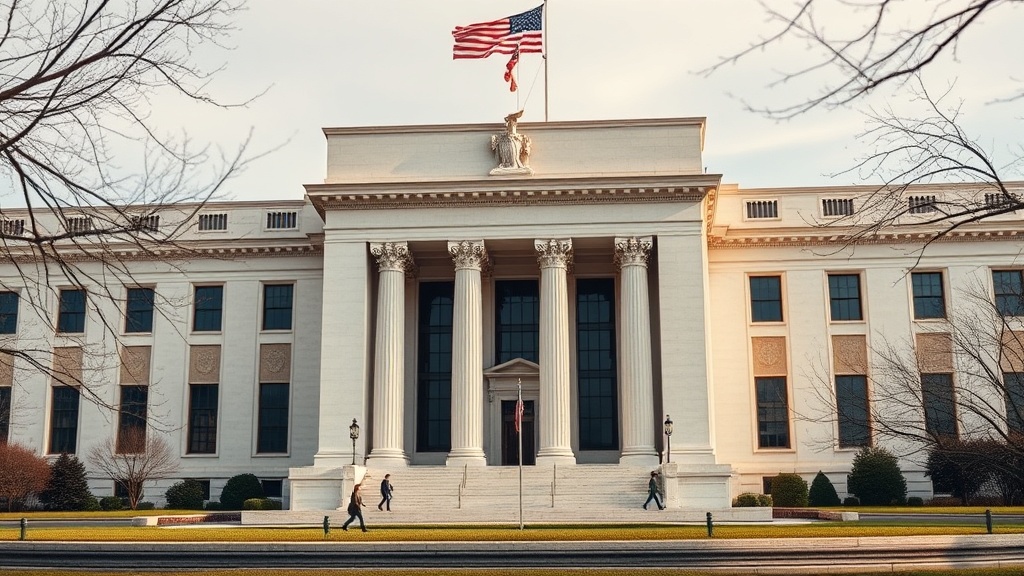
The air crackles with anticipation. Each Federal Reserve meeting, particularly those concerning interest rates, now holds the American economy in its grip. Just recently, the Federal Open Market Committee (FOMC) convened, and the widely expected (or perhaps, dreaded) outcome was another interest rate hike. For many, this news might feel like a distant pronouncement from Washington, an abstract concept discussed by economists on financial news channels. But make no mistake: this isn't just Wall Street chatter. This latest move by the Fed sends ripples directly into your pocketbook, influencing everything from the cost of your morning coffee to the viability of your business's next expansion. Understanding the "why" and, more importantly, the "what now" of these hikes is no longer a niche financial pursuit; it's a vital exercise for every American business owner and consumer navigating today's complex economic landscape.
Related Post

The Fed's Tightrope Walk: Taming Inflation Without Crushing Growth
The primary driver behind the Fed's aggressive rate-hiking cycle has been persistent, elevated inflation. For months, the Consumer Price Index (CPI) has hovered well above the Fed's long-term target of 2%. In June 2022, CPI peaked at a staggering 9.1% year-over-year, a level not seen since the early 1980s. While subsequent months have shown some deceleration, with the most recent CPI reading still above 3%, the Fed remains resolute in its mission to restore price stability.
How do interest rate hikes help? The theory is straightforward: by increasing the federal funds rate – the target rate for overnight borrowing between banks – the Fed makes it more expensive for banks to borrow money. This, in turn, translates to higher interest rates for consumers and businesses on loans like mortgages, car loans, and business lines of credit. Higher borrowing costs are designed to cool demand across the economy. When money is more expensive to borrow, people and companies are less likely to take out loans for big purchases, investment, or expansion. This reduction in demand helps to bring down prices by alleviating pressure on supply chains and reducing the overall money supply circulating in the economy.
However, this is a delicate balancing act, often referred to as the "soft landing" challenge. Raise rates too quickly or too high, and the Fed risks tipping the economy into a recession, leading to job losses and reduced economic activity. Raise them too slowly, and inflation could become entrenched, leading to prolonged economic instability. Federal Reserve Chair Jerome Powell has repeatedly emphasized the Fed's commitment to tackling inflation, even acknowledging the potential for some "pain" in the economy. This stance underscores the gravity of the situation and the Fed's determination to achieve its dual mandate of maximum employment and price stability.
Decoding the Ripple Effect: From the Fed Funds Rate to Your Wallet
The federal funds rate is a benchmark, not a direct consumer rate. The real impact is felt as this rate transmits through the financial system. Here’s a deeper dive into how it affects various aspects of your financial life:
For Your Business:
- Cost of Capital Soars: If your business relies on credit lines, term loans, or other forms of debt financing, prepare for higher interest payments. The prime rate, which many commercial loans are tied to, directly tracks the federal funds rate. For example, if your business has a variable-rate loan of $500,000 at Prime + 1%, and the Fed raises rates by 0.25%, your annual interest cost could jump by an additional $1,250. This erodes profit margins, particularly for businesses with tight operational budgets.
- Reduced Investment & Expansion: Higher borrowing costs make capital expenditures, like purchasing new equipment, expanding facilities, or investing in R&D, less attractive. Startups and growth-stage companies heavily reliant on debt financing for scaling will find it harder and more expensive to raise capital, potentially slowing innovation and job creation.
- Consumer Demand Slowdown: As interest rates climb for consumers (on mortgages, credit cards, etc.), discretionary spending tends to decrease. Businesses selling non-essential goods and services, or those with significant big-ticket items, may see a noticeable dip in sales volume. Retailers, auto dealers, and home improvement companies are often among the first to feel this pinch.
- Inventory Management Challenges: If sales slow down, businesses can find themselves with excess inventory. The cost of holding that inventory (storage, insurance, obsolescence) becomes more burdensome when borrowing costs are high, forcing businesses to potentially offer steeper discounts to clear stock, further impacting profitability.
For Your Wallet:
- Mortgage Rates Spike: This is perhaps the most visible impact. While the federal funds rate doesn't directly dictate fixed-rate mortgage rates (which are more closely tied to the 10-year Treasury yield), it still exerts significant upward pressure. According to Freddie Mac data, the average 30-year fixed-rate mortgage soared from around 3% in late 2021 to over 7% by late 2022. For someone looking to buy a $400,000 home with a 20% down payment, a jump from 3% to 7% means their monthly payment could rise from approximately $1,347 to $2,129 (excluding taxes and insurance) – a staggering increase of over $780 per month.
- Credit Card Debt Becomes More Expensive: Most credit cards have variable annual percentage rates (APRs) tied to the prime rate. Each Fed hike directly translates to a higher interest rate on your outstanding credit card balances. For consumers carrying a balance, this means a larger portion of their monthly payment goes towards interest, making it harder to pay down debt.
- Auto Loans and Personal Loans Cost More: Similar to mortgages and credit cards, interest rates on car loans, student loans (private, variable-rate), and personal loans also increase. This makes big-ticket purchases more expensive and reduces the amount of disposable income available for other spending.
- Savings Accounts & CDs See Modest Gains: On the brighter side, higher interest rates mean banks can offer slightly better returns on savings accounts, money market accounts, and certificates of deposit (CDs). While these gains often lag behind loan rate increases, they do offer some respite for savers, particularly those with substantial emergency funds. However, these gains are often still outpaced by inflation, meaning the real return on savings might still be negative.
Navigating the Headwinds: Practical Strategies for Businesses and Individuals
Understanding the impact is the first step; taking action is the next. Here’s what you can do:
For Your Business:
- Review and Refinance Debt: If your business has variable-rate loans, consider discussing options with your lender. Can you lock in a fixed rate? Explore opportunities to refinance existing debt to more favorable terms if available, or at least understand the ceiling of your variable rate. Prioritize paying down high-interest debt aggressively.
- Optimize Cash Flow and Working Capital: In a high-interest environment, cash is king. Focus on efficient accounts receivable management to speed up payments, optimize inventory levels to avoid tying up capital, and scrutinize expenses to cut unnecessary costs.
- Scenario Planning: Develop multiple financial scenarios for your business based on different interest rate and economic outlooks. This will help you identify potential vulnerabilities and proactive strategies to mitigate risks.
- Communicate with Customers: If higher input costs necessitate price adjustments, communicate transparently with your customers. Explain the reasons and emphasize the value you continue to provide.
- Explore Alternative Financing: For future growth, investigate non-debt financing options like equity financing, government grants, or revenue-based financing, which might be more attractive in a high-rate environment.
For Your Wallet:
- Prioritize High-Interest Debt Repayment: Focus intensely on paying down credit card balances and other high-interest personal loans. Even an extra $50 a month can make a significant difference over time due to compounding interest.
- Assess Your Mortgage Situation: If you have a variable-rate mortgage, understand how often your rate adjusts and by how much. For those looking to buy, higher rates mean re-evaluating affordability and potentially adjusting your home search criteria.
- Build Your Emergency Fund: While savings rates are better, the increased cost of living and potential economic uncertainty make a robust emergency fund (3-6 months of living expenses) more crucial than ever.
- Review Your Budget: Scrutinize your monthly spending. Where can you cut back? Even small, consistent reductions can free up capital to address rising interest costs or save for future goals.
- Shop Around for Loans and Savings: Don't assume your current bank offers the best rates. For new loans (car, personal), compare offers from multiple lenders. For savings, look at online banks and credit unions, which often offer higher yields on savings accounts and CDs than traditional brick-and-mortar banks.
Free Weekly Newsletter
Enjoying this guide?
Get the best articles like this one delivered to your inbox every week. No spam.
The Road Ahead: What to Expect Next
The Fed's actions are driven by data, and the path forward remains highly contingent on evolving economic indicators. While inflation has cooled from its peak, the labor market remains remarkably resilient, with unemployment rates near historical lows and wage growth still strong. This strength, while positive for workers, can also fuel inflationary pressures, complicating the Fed's job.
Most economists predict that the Fed is nearing the end of its aggressive hiking cycle, with the possibility of one or two more modest hikes before a pause. The focus will then shift to how long rates will remain elevated. Federal Reserve officials have repeatedly indicated that they plan to keep rates high "for some time" to ensure inflation is firmly on a path back to 2%. This means that even if hikes cease, relief in the form of rate cuts is unlikely to come swiftly.
The biggest unknown is the timing and magnitude of a potential economic slowdown or recession. While the Fed hopes for a "soft landing," many analysts remain skeptical, given the historical difficulty of taming inflation without triggering a downturn. Businesses and individuals should prepare for continued economic volatility, potential market fluctuations, and a persistent focus on fiscal prudence. Monitoring economic data points like CPI, PCE (Personal Consumption Expenditures – the Fed's preferred inflation gauge), unemployment figures, and GDP growth will be crucial for anticipating the Fed's next moves and adjusting financial strategies accordingly.
Conclusion
The Federal Reserve's interest rate hikes are not abstract economic policy; they are a powerful force reshaping the financial landscape for every American business and household. From the higher cost of borrowing for your business expansion to the increased monthly payment on your mortgage, these adjustments demand attention and proactive planning. While the economic headwinds are real, understanding their mechanics and implementing strategic responses can empower you to navigate this challenging period more effectively. The current economic climate demands vigilance, adaptability, and sound financial decision-making. By taking control of your financial present, you can better prepare for the future, regardless of what the next FOMC meeting brings.
Frequently Asked Questions
Introduction
The air crackles with anticipation. Each Federal Reserve meeting, particularly those concerning interest rates, now holds the American economy in its grip. Just recently, the Federal Open Market Committee (FOMC) convened, and the widely expected (or perhaps, dreaded) outcome was another interest rate hike. For many, this news might feel like a distant pronouncement from Washington, an abstract concept discussed by economists on financial news channels. But make no mistake: this isn't just Wall Street chatter. This latest move by the Fed sends ripples directly into your pocketbook, influencing everything from the cost of your morning coffee to the viability of your business's next expansion. Understanding the "why" and, more importantly, the "what now" of these hikes is no longer a niche financial pursuit; it's a vital exercise for every American business owner and consumer navigating today's complex economic landscape.
The Fed's Tightrope Walk: Taming Inflation Without Crushing Growth
The primary driver behind the Fed's aggressive rate-hiking cycle has been persistent, elevated inflation. For months, the Consumer Price Index (CPI) has hovered well above the Fed's long-term target of 2%. In June 2022, CPI peaked at a staggering 9.1% year-over-year, a level not seen since the early 1980s. While subsequent months have shown some deceleration, with the most recent CPI reading still above 3%, the Fed remains resolute in its mission to restore price stability.
How do interest rate hikes help? The theory is straightforward: by increasing the federal funds rate – the target rate for overnight borrowing between banks – the Fed makes it more expensive for banks to borrow money. This, in turn, translates to higher interest rates for consumers and businesses on loans like mortgages, car loans, and business lines of credit. Higher borrowing costs are designed to cool demand across the economy. When money is more expensive to borrow, people and companies are less likely to take out loans for big purchases, investment, or expansion. This reduction in demand helps to bring down prices by alleviating pressure on supply chains and reducing the overall money supply circulating in the economy.
However, this is a delicate balancing act, often referred to as the "soft landing" challenge. Raise rates too quickly or too high, and the Fed risks tipping the economy into a recession, leading to job losses and reduced economic activity. Raise them too slowly, and inflation could become entrenched, leading to prolonged economic instability. Federal Reserve Chair Jerome Powell has repeatedly emphasized the Fed's commitment to tackling inflation, even acknowledging the potential for some "pain" in the economy. This stance underscores the gravity of the situation and the Fed's determination to achieve its dual mandate of maximum employment and price stability.
Decoding the Ripple Effect: From the Fed Funds Rate to Your Wallet
The federal funds rate is a benchmark, not a direct consumer rate. The real impact is felt as this rate transmits through the financial system. Here’s a deeper dive into how it affects various aspects of your financial life:
For Your Business:
- Cost of Capital Soars: If your business relies on credit lines, term loans, or other forms of debt financing, prepare for higher interest payments. The prime rate, which many commercial loans are tied to, directly tracks the federal funds rate. For example, if your business has a variable-rate loan of $500,000 at Prime + 1%, and the Fed raises rates by 0.25%, your annual interest cost could jump by an additional $1,250. This erodes profit margins, particularly for businesses with tight operational budgets.
- Reduced Investment & Expansion: Higher borrowing costs make capital expenditures, like purchasing new equipment, expanding facilities, or investing in R&D, less attractive. Startups and growth-stage companies heavily reliant on debt financing for scaling will find it harder and more expensive to raise capital, potentially slowing innovation and job creation.
- Consumer Demand Slowdown: As interest rates climb for consumers (on mortgages, credit cards, etc.), discretionary spending tends to decrease. Businesses selling non-essential goods and services, or those with significant big-ticket items, may see a noticeable dip in sales volume. Retailers, auto dealers, and home improvement companies are often among the first to feel this pinch.
- Inventory Management Challenges: If sales slow down, businesses can find themselves with excess inventory. The cost of holding that inventory (storage, insurance, obsolescence) becomes more burdensome when borrowing costs are high, forcing businesses to potentially offer steeper discounts to clear stock, further impacting profitability.
For Your Wallet:
- Mortgage Rates Spike: This is perhaps the most visible impact. While the federal funds rate doesn't directly dictate fixed-rate mortgage rates (which are more closely tied to the 10-year Treasury yield), it still exerts significant upward pressure. According to Freddie Mac data, the average 30-year fixed-rate mortgage soared from around 3% in late 2021 to over 7% by late 2022. For someone looking to buy a $400,000 home with a 20% down payment, a jump from 3% to 7% means their monthly payment could rise from approximately $1,347 to $2,129 (excluding taxes and insurance) – a staggering increase of over $780 per month.
- Credit Card Debt Becomes More Expensive: Most credit cards have variable annual percentage rates (APRs) tied to the prime rate. Each Fed hike directly translates to a higher interest rate on your outstanding credit card balances. For consumers carrying a balance, this means a larger portion of their monthly payment goes towards interest, making it harder to pay down debt.
- Auto Loans and Personal Loans Cost More: Similar to mortgages and credit cards, interest rates on car loans, student loans (private, variable-rate), and personal loans also increase. This makes big-ticket purchases more expensive and reduces the amount of disposable income available for other spending.
- Savings Accounts & CDs See Modest Gains: On the brighter side, higher interest rates mean banks can offer slightly better returns on savings accounts, money market accounts, and certificates of deposit (CDs). While these gains often lag behind loan rate increases, they do offer some respite for savers, particularly those with substantial emergency funds. However, these gains are often still outpaced by inflation, meaning the real return on savings might still be negative.
Navigating the Headwinds: Practical Strategies for Businesses and Individuals
Understanding the impact is the first step; taking action is the next. Here’s what you can do:
For Your Business:
- Review and Refinance Debt: If your business has variable-rate loans, consider discussing options with your lender. Can you lock in a fixed rate? Explore opportunities to refinance existing debt to more favorable terms if available, or at least understand the ceiling of your variable rate. Prioritize paying down high-interest debt aggressively.
- Optimize Cash Flow and Working Capital: In a high-interest environment, cash is king. Focus on efficient accounts receivable management to speed up payments, optimize inventory levels to avoid tying up capital, and scrutinize expenses to cut unnecessary costs.
- Scenario Planning: Develop multiple financial scenarios for your business based on different interest rate and economic outlooks. This will help you identify potential vulnerabilities and proactive strategies to mitigate risks.
- Communicate with Customers: If higher input costs necessitate price adjustments, communicate transparently with your customers. Explain the reasons and emphasize the value you continue to provide.
- Explore Alternative Financing: For future growth, investigate non-debt financing options like equity financing, government grants, or revenue-based financing, which might be more attractive in a high-rate environment.
For Your Wallet:
- Prioritize High-Interest Debt Repayment: Focus intensely on paying down credit card balances and other high-interest personal loans. Even an extra $50 a month can make a significant difference over time due to compounding interest.
- Assess Your Mortgage Situation: If you have a variable-rate mortgage, understand how often your rate adjusts and by how much. For those looking to buy, higher rates mean re-evaluating affordability and potentially adjusting your home search criteria.
- Build Your Emergency Fund: While savings rates are better, the increased cost of living and potential economic uncertainty make a robust emergency fund (3-6 months of living expenses) more crucial than ever.
- Review Your Budget: Scrutinize your monthly spending. Where can you cut back? Even small, consistent reductions can free up capital to address rising interest costs or save for future goals.
- Shop Around for Loans and Savings: Don't assume your current bank offers the best rates. For new loans (car, personal), compare offers from multiple lenders. For savings, look at online banks and credit unions, which often offer higher yields on savings accounts and CDs than traditional brick-and-mortar banks.
The Road Ahead: What to Expect Next
The Fed's actions are driven by data, and the path forward remains highly contingent on evolving economic indicators. While inflation has cooled from its peak, the labor market remains remarkably resilient, with unemployment rates near historical lows and wage growth still strong. This strength, while positive for workers, can also fuel inflationary pressures, complicating the Fed's job.
Most economists predict that the Fed is nearing the end of its aggressive hiking cycle, with the possibility of one or two more modest hikes before a pause. The focus will then shift to how long rates will remain elevated. Federal Reserve officials have repeatedly indicated that they plan to keep rates high "for some time" to ensure inflation is firmly on a path back to 2%. This means that even if hikes cease, relief in the form of rate cuts is unlikely to come swiftly.
The biggest unknown is the timing and magnitude of a potential economic slowdown or recession. While the Fed hopes for a "soft landing," many analysts remain skeptical, given the historical difficulty of taming inflation without triggering a downturn. Businesses and individuals should prepare for continued economic volatility, potential market fluctuations, and a persistent focus on fiscal prudence. Monitoring economic data points like CPI, PCE (Personal Consumption Expenditures – the Fed's preferred inflation gauge), unemployment figures, and GDP growth will be crucial for anticipating the Fed's next moves and adjusting financial strategies accordingly.
Conclusion
The Federal Reserve's interest rate hikes are not abstract economic policy; they are a powerful force reshaping the financial landscape for every American business and household. From the higher cost of borrowing for your business expansion to the increased monthly payment on your mortgage, these adjustments demand attention and proactive planning. While the economic headwinds are real, understanding their mechanics and implementing strategic responses can empower you to navigate this challenging period more effectively. The current economic climate demands vigilance, adaptability, and sound financial decision-making. By taking control of your financial present, you can better prepare for the future, regardless of what the next FOMC meeting brings.
About Zeebrain Editorial
Zeebrain publishes independent analysis of markets, investing, personal finance, and business. We disclose affiliate relationships, never accept payment for coverage, and fact-check all claims against primary sources. Read our editorial policy →
Disclaimer: Content on Zeebrain is for informational and educational purposes only and does not constitute financial advice or a recommendation to buy or sell any security. Always conduct your own research and consult a qualified financial adviser before making investment decisions. Past performance is not indicative of future results.
More from Business & Money


Related Guides
Keep exploring this topic
Stock Market Outlook: 5 Bullish Signals Driving the Rally
Business & Money · stock market outlook · yield curve
The Trump Macro Super Cycle: What It Means for Markets
Business & Money · macro investing · US-China trade
Japan's Yen Crisis and Its Impact on US Markets
Business & Money · Japanese Yen · US Treasury Yields
Fed Rate Hikes Are Back: What It Means for Your Money
Business & Money · Federal Reserve · Interest Rates
Explore More Categories
Keep browsing by topic and build depth around the subjects you care about most.