Super Shoes: The Tech Behind Sub-2-Hour Marathons
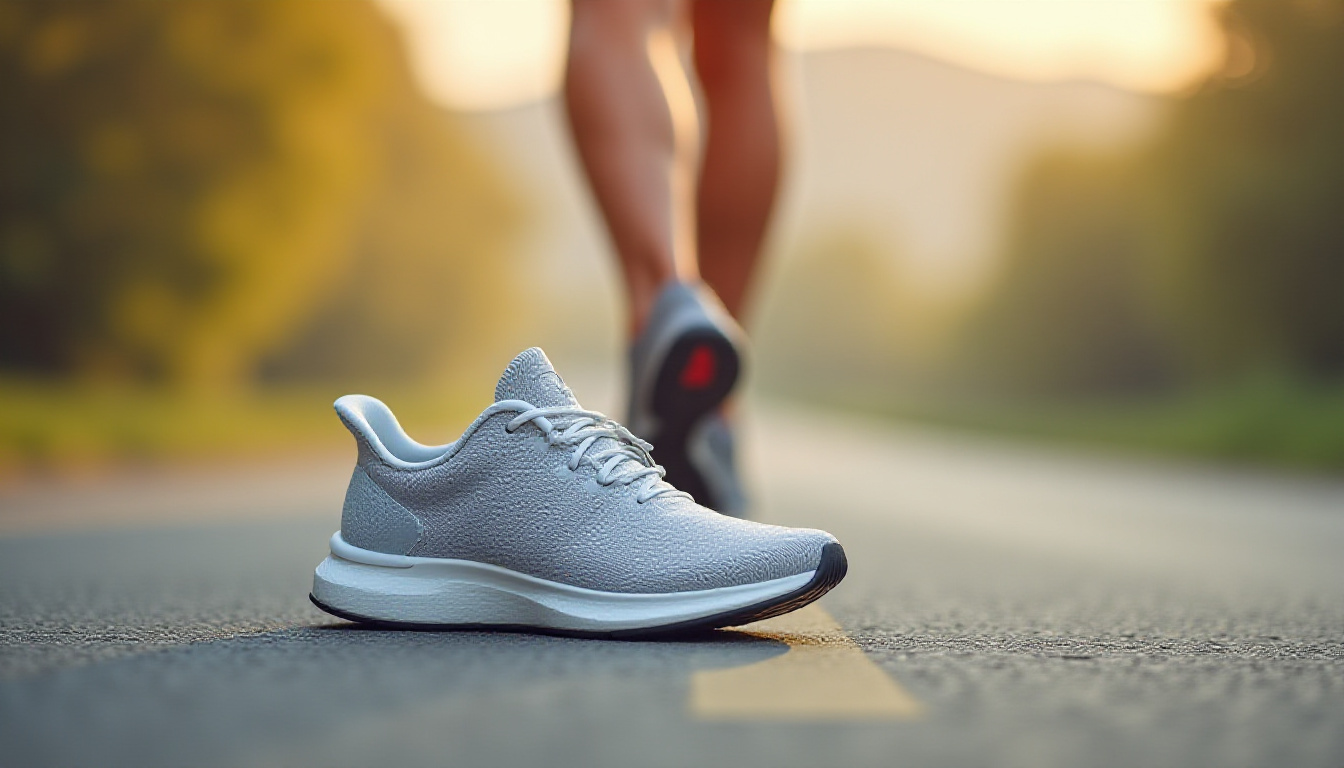
Quick Summary
A deep dive into marathon super shoes — carbon plates, foam tech, and real performance gains. Are they worth it for everyday runners?
Super Shoes
Check current price and availability on Amazon
In This Article
Super Shoes: The Tech Behind Sub-2-Hour Marathons
This article may contain affiliate links. We may earn a commission if you purchase through them, at no extra cost to you.
Related Post

Running a marathon in under two hours means covering 26.2 miles at a pace faster than 4 minutes and 35 seconds per mile — without stopping, without slowing, without mercy. For most of human history, sports scientists treated this as a biological ceiling. Then the shoes changed everything.
The super shoe revolution — built on thick foam midsoles, carbon fibre plates, and relentless materials engineering — didn't just shave seconds off elite times. It rewrote what human beings are capable of on a race course. And whether you're chasing a Boston qualifier or a first 5K, understanding this technology matters, because versions of it are now sitting on the shelves of every major running retailer at prices ranging from £180 to £280.
This is a structured review of super shoe technology: what it does, how well it works, who it's built for, and whether the average runner should spend serious money on it.
What Are Super Shoes? A Plain-English Breakdown
The term "super shoe" — or "advanced footwear technology" in governing body language — refers to a specific combination of three engineering features:
- A thick midsole stack (up to the regulated maximum of 40mm) made from ultra-light, ultra-resilient foam
- A stiff carbon fibre plate embedded within that midsole
- A curved or rockered geometry that affects how force is loaded and released through each stride
The foam is the headline act. Traditional running shoe foam (EVA, used since the 1980s) returns roughly 65–70% of the energy you put into it when your foot strikes the ground. Adidas Boost, which arrived around 2013, pushed that figure to around 85%. Nike's Pebax-based foams — used in the Vaporfly and Alphafly lines — now return over 90% of energy. That gap sounds small. At marathon pace over 26.2 miles, it is not small.
The carbon fibre plate's role is more contested. Shoe scientists debate whether it functions as a spring, a stability element, or simply a structural scaffold that allows the foam to do its job more efficiently. What the research consistently shows is that removing the plate reduces the shoe's performance benefit — regardless of which explanation you subscribe to. It works. The mechanism is still, a decade after launch, not fully agreed upon.
World Athletics capped midsole stack height at 40mm in 2020 precisely because the technology was advancing so fast that governing bodies feared a new record-breaking shoe every racing season. Within that 40mm envelope, innovation has continued: plate geometry, foam layering, plate curvature, and material sourcing remain active battlegrounds between Nike, Adidas, ASICS, New Balance, and Saucony.
Performance Gains: Real Numbers, Not Marketing Copy
Nike's original Vaporfly 4% wasn't named arbitrarily. Independent testing at the University of Colorado found that runners were, on average, 4% more economical — meaning they used 4% less oxygen to run at any given pace. For context, a 4% efficiency gain in a sport where elite athletes are separated by fractions of a percent is seismic.
To put that in marathon terms: a runner finishing in 3 hours 30 minutes with standard shoes might finish in approximately 3 hours 22 minutes in a well-matched super shoe. For a 4-hour marathoner, that's potentially a 9–10 minute improvement from footwear alone.
The breaking two attempts demonstrate what happens when you stack these gains on top of elite physiology. Eliud Kipchoge's 2017 attempt — run on a flat Formula 1 circuit in Monza, with a precisely timed start, an arrowhead formation of pacemakers blocking wind drag, and prototype Vaporfly shoes — yielded 2:00:25. Twenty-five seconds outside the target.
By 2019, in Vienna, computational fluid dynamics modelling had refined the pacemaker formation (the arrowhead was reversed to direct airflow away from Kipchoge rather than toward him). The shoes had been personally optimised through lab testing of different plate stiffnesses. He ran 1:59:40. Officially unofficial — but the barrier was gone.
Earlier this year, two elite athletes broke the two-hour mark on a fully certified course under legal race conditions — a result that, as recently as 2014, sports journalists were forecasting wouldn't arrive until 2075.
Super Shoes Head-to-Head: The Major Competitors
| Shoe | Foam Technology | Plate | Stack Height | RRP (approx.) | Best For |
|---|---|---|---|---|---|
| Nike Vaporfly 3 | ZoomX (Pebax) | Carbon | 40mm | £250 | Tempo runs, half/full marathon |
| Nike Alphafly 3 | ZoomX + Air Pods | Carbon | 40mm | £285 | Full marathon, max cushioning |
| Adidas Adizero Adios Pro 4 | Lightstrike Pro | Carbon rods | 39.5mm | £250 | Marathon racing, heel strikers |
| ASICS Metaspeed Sky+ | FF Turbo+ | Carbon | 40mm | £230 | Long-distance, efficiency-focused |
| New Balance SC Elite v4 | FuelCell | Carbon | 40mm | £220 | Versatile racer, wider fit |
| Saucony Endorphin Pro 4 | PWRRUN HG | Carbon | 39mm | £200 | Value-conscious racer |
Nike remains the benchmark — the Vaporfly line is the most independently studied shoe in running history. Adidas has closed the gap significantly, particularly for heel-strike runners. ASICS and New Balance offer compelling alternatives for runners who find Nike's narrow last uncomfortable.
Pros and Cons of Super Shoes
Pros
- Measurable, documented performance gains — 2–4% efficiency improvements are consistent across multiple independent studies
- Available to all runners, not just elites — the same shoes Kipchoge tested are on general sale
- Improved cushioning alongside speed — the thick foam stack is protective on long runs
- Continuous innovation — each generation genuinely improves on the last, unlike fashion-driven updates in many categories
- Multiple brands competing — price competition is real, and budget-tier super shoes (£150–200) now deliver genuine gains
Cons
- Durability is poor — most carbon racers are rated for 300–500 miles; the foam compresses and the plate fatigues
- Not suitable for daily training — the instability of a 40mm stack increases injury risk on repetitive mileage
- Cost is significant — £200–285 per pair, replaced every 6–8 months for serious runners, is a real budget consideration
- Fit can be narrow — Nike's last doesn't work for wide feet; this limits access for a meaningful portion of the market
- Ethical controversy persists — the technology creates a financial barrier in a sport historically defined by its accessibility
- Not a substitute for fitness — a 4% efficiency gain won't rescue undertrained legs in the final miles
Who Should Actually Buy Super Shoes?
Here's where the no-nonsense verdict matters. Super shoes are not for everyone, and spending £250 on the wrong use case is a waste of money.
Buy them if: You race seriously (half marathon or longer), you're within 6–8 weeks of a goal race, and you have a pair of standard trainers for your daily mileage. The performance gain is real and repeatable. If you're targeting a specific time goal where minutes matter, this is the most legal, most impactful single purchase you can make.
Do not buy them if: You're a beginner building your base, you run primarily on trails, or you're looking for a single shoe to do everything. The durability is insufficient for high-mileage training use, and the instability of the platform can accelerate injury risk if your running mechanics aren't already solid.
Budget-conscious alternative: Second-generation super shoes (Vaporfly 2, Adizero Pro 3, Endorphin Pro 3) are regularly discounted to £120–160 as newer models launch. The performance gap between generations is real but modest — perhaps 0.5–1%. For non-elite runners, the previous generation at a significant discount is almost always the smarter purchase.
The Personalisation Gap: Elite vs. Consumer
One aspect the marketing materials don't tell you: the shoes elite athletes race in are not the same as the ones you buy off the shelf — not quite.
Nike's lab process for breaking two involved rapid prototyping: building a shoe, putting it on a runner's foot, measuring oxygen consumption on a treadmill, adjusting plate stiffness or geometry, and iterating within 24 hours. Each athlete received a shoe tuned to their individual weight, gait, and biomechanics. Plate stiffness, in particular, varies significantly by bodyweight — heavier runners need a stiffer plate to get the same rebound effect.
Consumer versions use a standardised plate stiffness. It's an excellent standard, but it's a compromise. If your bodyweight sits significantly above or below the average the shoe is tuned for, you may be leaving gains on the table — or, in the case of a plate that's too stiff for a lighter runner, potentially adding injury risk.
Free Weekly Newsletter
Enjoying this guide?
Get the best articles like this one delivered to your inbox every week. No spam.
This is the personalisation gap that separates what's commercially available from what's physiologically optimal. It will likely remain a gap for years, unless custom rapid-prototyping becomes economically viable at consumer scale.
Bottom Line
Verdict: Super shoes are one of the rare categories in consumer sports gear where the marketing performance claims are backed by genuine, peer-reviewed science. The 4% efficiency gain is not a number Nike invented — it came from an independent university lab, and it has been replicated across multiple studies and brands. For competitive runners targeting time goals at the half marathon distance or longer, this technology is worth the investment.
The deductions come from durability (300–500 miles is expensive), fit limitations (narrow lasts exclude a portion of the market), and the real-world caveat that gains diminish for beginners whose form and fitness haven't yet been optimised. This is a precision tool, not a universal solution. Used correctly, it's the most impactful legal performance upgrade available to any runner.
Where to Buy
Adidas Adizero Adios Pro on Amazon
Saucony Endorphin Pro on Amazon
Frequently Asked Questions
Are super shoes worth the money for recreational runners?
For runners who race seriously at the half marathon or marathon distance and have a genuine time goal, yes. The 2–4% efficiency gain is real and consistent. For beginners or those running primarily for fitness without race targets, the cost-to-benefit ratio is poor — invest in consistent training first.
How long do super shoes last before the performance benefit degrades?
Most carbon-plate racing shoes are rated for 300–500 miles. Beyond that, the foam compresses and loses resilience, and the plate fatigues. Serious racers typically replace them every season. To preserve them, use a separate shoe for daily training and reserve your super shoes for races and key workouts.
Do super shoes work for all running paces, or only elites?
They work across a range of paces, but efficiency gains are somewhat pace-dependent. Most testing has been conducted at faster paces. That said, recreational runners in the 9–11 minute per mile range have still recorded measurable improvements. The shoe doesn't require elite speed to deliver a benefit, but the absolute time saved will be proportionally smaller at slower paces.
Is there a cheaper alternative that still delivers some of the super shoe benefit?
Yes. Previous-generation super shoes — one or two product cycles old — regularly sell at 30–50% discounts once newer models launch. A Vaporfly 2 or Endorphin Pro 3 at £130 delivers the vast majority of the performance gain of the current generation. For budget-conscious buyers, this is almost always the better value play. Alternatively, "super trainer" shoes from Saucony (Endorphin Speed) and Adidas (Adizero SL) incorporate similar foam technology without a carbon plate, at £100–140, and offer meaningful (if smaller) gains over standard trainers.
Super Shoes
Considering it? See where the price stands today
Frequently Asked Questions
What Are Super Shoes? A Plain-English Breakdown
The term "super shoe" — or "advanced footwear technology" in governing body language — refers to a specific combination of three engineering features:
- A thick midsole stack (up to the regulated maximum of 40mm) made from ultra-light, ultra-resilient foam
- A stiff carbon fibre plate embedded within that midsole
- A curved or rockered geometry that affects how force is loaded and released through each stride
The foam is the headline act. Traditional running shoe foam (EVA, used since the 1980s) returns roughly 65–70% of the energy you put into it when your foot strikes the ground. Adidas Boost, which arrived around 2013, pushed that figure to around 85%. Nike's Pebax-based foams — used in the Vaporfly and Alphafly lines — now return over 90% of energy. That gap sounds small. At marathon pace over 26.2 miles, it is not small.
The carbon fibre plate's role is more contested. Shoe scientists debate whether it functions as a spring, a stability element, or simply a structural scaffold that allows the foam to do its job more efficiently. What the research consistently shows is that removing the plate reduces the shoe's performance benefit — regardless of which explanation you subscribe to. It works. The mechanism is still, a decade after launch, not fully agreed upon.
World Athletics capped midsole stack height at 40mm in 2020 precisely because the technology was advancing so fast that governing bodies feared a new record-breaking shoe every racing season. Within that 40mm envelope, innovation has continued: plate geometry, foam layering, plate curvature, and material sourcing remain active battlegrounds between Nike, Adidas, ASICS, New Balance, and Saucony.
Performance Gains: Real Numbers, Not Marketing Copy
Nike's original Vaporfly 4% wasn't named arbitrarily. Independent testing at the University of Colorado found that runners were, on average, 4% more economical — meaning they used 4% less oxygen to run at any given pace. For context, a 4% efficiency gain in a sport where elite athletes are separated by fractions of a percent is seismic.
To put that in marathon terms: a runner finishing in 3 hours 30 minutes with standard shoes might finish in approximately 3 hours 22 minutes in a well-matched super shoe. For a 4-hour marathoner, that's potentially a 9–10 minute improvement from footwear alone.
The breaking two attempts demonstrate what happens when you stack these gains on top of elite physiology. Eliud Kipchoge's 2017 attempt — run on a flat Formula 1 circuit in Monza, with a precisely timed start, an arrowhead formation of pacemakers blocking wind drag, and prototype Vaporfly shoes — yielded 2:00:25. Twenty-five seconds outside the target.
By 2019, in Vienna, computational fluid dynamics modelling had refined the pacemaker formation (the arrowhead was reversed to direct airflow away from Kipchoge rather than toward him). The shoes had been personally optimised through lab testing of different plate stiffnesses. He ran 1:59:40. Officially unofficial — but the barrier was gone.
Earlier this year, two elite athletes broke the two-hour mark on a fully certified course under legal race conditions — a result that, as recently as 2014, sports journalists were forecasting wouldn't arrive until 2075.
Super Shoes Head-to-Head: The Major Competitors
| Shoe | Foam Technology | Plate | Stack Height | RRP (approx.) | Best For |
|---|---|---|---|---|---|
| Nike Vaporfly 3 | ZoomX (Pebax) | Carbon | 40mm | £250 | Tempo runs, half/full marathon |
| Nike Alphafly 3 | ZoomX + Air Pods | Carbon | 40mm | £285 | Full marathon, max cushioning |
| Adidas Adizero Adios Pro 4 | Lightstrike Pro | Carbon rods | 39.5mm | £250 | Marathon racing, heel strikers |
| ASICS Metaspeed Sky+ | FF Turbo+ | Carbon | 40mm | £230 | Long-distance, efficiency-focused |
| New Balance SC Elite v4 | FuelCell | Carbon | 40mm | £220 | Versatile racer, wider fit |
| Saucony Endorphin Pro 4 | PWRRUN HG | Carbon | 39mm | £200 | Value-conscious racer |
Nike remains the benchmark — the Vaporfly line is the most independently studied shoe in running history. Adidas has closed the gap significantly, particularly for heel-strike runners. ASICS and New Balance offer compelling alternatives for runners who find Nike's narrow last uncomfortable.
Pros and Cons of Super Shoes
Pros
- Measurable, documented performance gains — 2–4% efficiency improvements are consistent across multiple independent studies
- Available to all runners, not just elites — the same shoes Kipchoge tested are on general sale
- Improved cushioning alongside speed — the thick foam stack is protective on long runs
- Continuous innovation — each generation genuinely improves on the last, unlike fashion-driven updates in many categories
- Multiple brands competing — price competition is real, and budget-tier super shoes (£150–200) now deliver genuine gains
Cons
- Durability is poor — most carbon racers are rated for 300–500 miles; the foam compresses and the plate fatigues
- Not suitable for daily training — the instability of a 40mm stack increases injury risk on repetitive mileage
- Cost is significant — £200–285 per pair, replaced every 6–8 months for serious runners, is a real budget consideration
- Fit can be narrow — Nike's last doesn't work for wide feet; this limits access for a meaningful portion of the market
- Ethical controversy persists — the technology creates a financial barrier in a sport historically defined by its accessibility
- Not a substitute for fitness — a 4% efficiency gain won't rescue undertrained legs in the final miles
Who Should Actually Buy Super Shoes?
Here's where the no-nonsense verdict matters. Super shoes are not for everyone, and spending £250 on the wrong use case is a waste of money.
Buy them if: You race seriously (half marathon or longer), you're within 6–8 weeks of a goal race, and you have a pair of standard trainers for your daily mileage. The performance gain is real and repeatable. If you're targeting a specific time goal where minutes matter, this is the most legal, most impactful single purchase you can make.
Do not buy them if: You're a beginner building your base, you run primarily on trails, or you're looking for a single shoe to do everything. The durability is insufficient for high-mileage training use, and the instability of the platform can accelerate injury risk if your running mechanics aren't already solid.
Budget-conscious alternative: Second-generation super shoes (Vaporfly 2, Adizero Pro 3, Endorphin Pro 3) are regularly discounted to £120–160 as newer models launch. The performance gap between generations is real but modest — perhaps 0.5–1%. For non-elite runners, the previous generation at a significant discount is almost always the smarter purchase.
The Personalisation Gap: Elite vs. Consumer
One aspect the marketing materials don't tell you: the shoes elite athletes race in are not the same as the ones you buy off the shelf — not quite.
Nike's lab process for breaking two involved rapid prototyping: building a shoe, putting it on a runner's foot, measuring oxygen consumption on a treadmill, adjusting plate stiffness or geometry, and iterating within 24 hours. Each athlete received a shoe tuned to their individual weight, gait, and biomechanics. Plate stiffness, in particular, varies significantly by bodyweight — heavier runners need a stiffer plate to get the same rebound effect.
Consumer versions use a standardised plate stiffness. It's an excellent standard, but it's a compromise. If your bodyweight sits significantly above or below the average the shoe is tuned for, you may be leaving gains on the table — or, in the case of a plate that's too stiff for a lighter runner, potentially adding injury risk.
This is the personalisation gap that separates what's commercially available from what's physiologically optimal. It will likely remain a gap for years, unless custom rapid-prototyping becomes economically viable at consumer scale.
Bottom Line
Verdict: Super shoes are one of the rare categories in consumer sports gear where the marketing performance claims are backed by genuine, peer-reviewed science. The 4% efficiency gain is not a number Nike invented — it came from an independent university lab, and it has been replicated across multiple studies and brands. For competitive runners targeting time goals at the half marathon distance or longer, this technology is worth the investment.
The deductions come from durability (300–500 miles is expensive), fit limitations (narrow lasts exclude a portion of the market), and the real-world caveat that gains diminish for beginners whose form and fitness haven't yet been optimised. This is a precision tool, not a universal solution. Used correctly, it's the most impactful legal performance upgrade available to any runner.
Where to Buy
Frequently Asked Questions
Are super shoes worth the money for recreational runners?
For runners who race seriously at the half marathon or marathon distance and have a genuine time goal, yes. The 2–4% efficiency gain is real and consistent. For beginners or those running primarily for fitness without race targets, the cost-to-benefit ratio is poor — invest in consistent training first.
How long do super shoes last before the performance benefit degrades?
Most carbon-plate racing shoes are rated for 300–500 miles. Beyond that, the foam compresses and loses resilience, and the plate fatigues. Serious racers typically replace them every season. To preserve them, use a separate shoe for daily training and reserve your super shoes for races and key workouts.
Do super shoes work for all running paces, or only elites?
They work across a range of paces, but efficiency gains are somewhat pace-dependent. Most testing has been conducted at faster paces. That said, recreational runners in the 9–11 minute per mile range have still recorded measurable improvements. The shoe doesn't require elite speed to deliver a benefit, but the absolute time saved will be proportionally smaller at slower paces.
Is there a cheaper alternative that still delivers some of the super shoe benefit?
Yes. Previous-generation super shoes — one or two product cycles old — regularly sell at 30–50% discounts once newer models launch. A Vaporfly 2 or Endorphin Pro 3 at £130 delivers the vast majority of the performance gain of the current generation. For budget-conscious buyers, this is almost always the better value play. Alternatively, "super trainer" shoes from Saucony (Endorphin Speed) and Adidas (Adizero SL) incorporate similar foam technology without a carbon plate, at £100–140, and offer meaningful (if smaller) gains over standard trainers.
Super Shoes
Ready to decide? Compare the current price before you buy
About Zeebrain Editorial
Zeebrain publishes independent analysis of markets, investing, personal finance, and business. We disclose affiliate relationships, never accept payment for coverage, and fact-check all claims against primary sources. Read our editorial policy →
How this article was produced: Zeebrain articles are created with AI assistance from primary sources (including cited videos and market data) and reviewed under our editorial standards before publication. Spot an error? Tell us and we will correct it.
Disclaimer: Content on Zeebrain is for informational and educational purposes only and does not constitute financial advice or a recommendation to buy or sell any security. Always conduct your own research and consult a qualified financial adviser before making investment decisions. Past performance is not indicative of future results.
More from Reviews




Related Guides
Keep exploring this topic
Explore More on Zeebrain
Keep browsing by topic, or put the numbers to work with our free tools.