Nvidia CMP 170HX Unlocked: Is It Worth Buying for AI?
Quick Summary
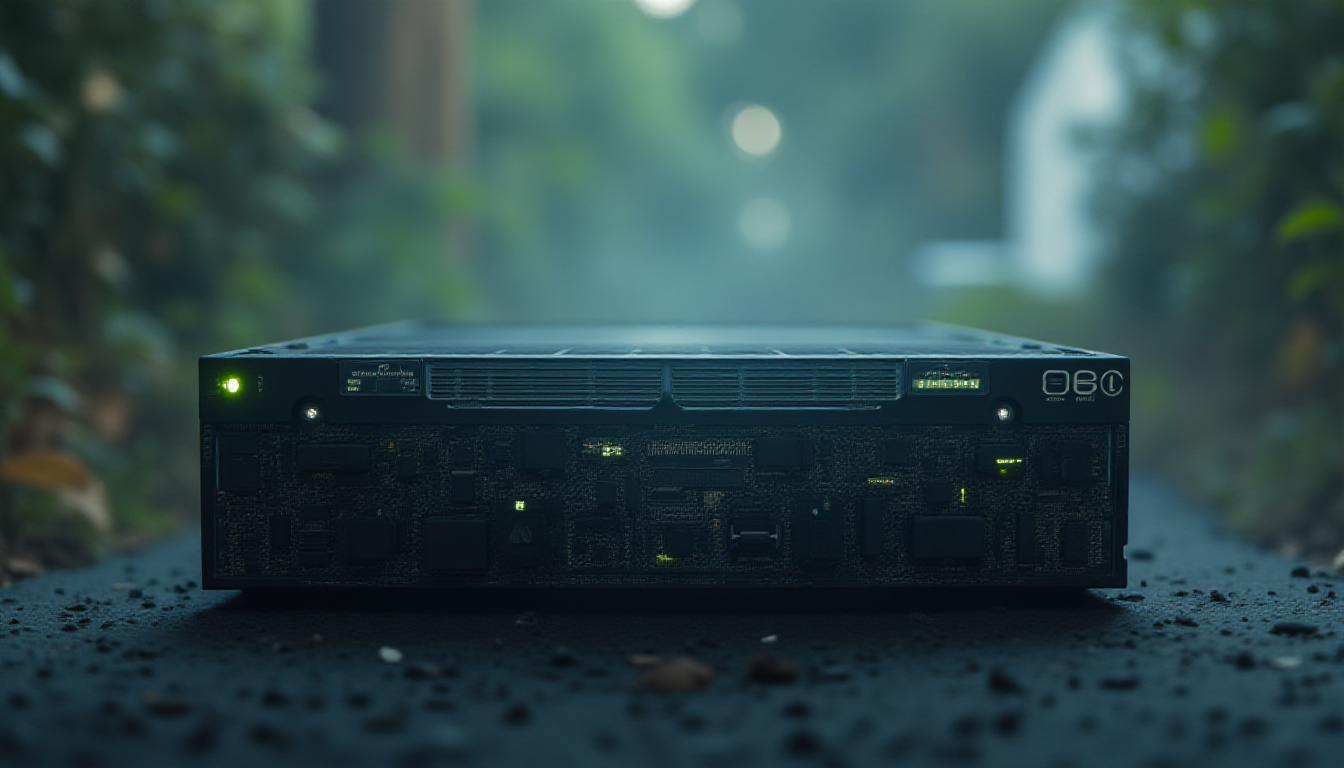
Can a hacked mining GPU become a powerful AI workstation card? We review the unlocked Nvidia CMP 170HX — real numbers, honest verdict, full pros and cons.
Nvidia CMP 170HX Unlocked
Check current price and availability on Amazon
In This Article
Nvidia CMP 170HX Unlocked for AI: Full Review
This article may contain affiliate links. We may earn a commission if you purchase through them, at no extra cost to you.

What if 64 GB of HBM2E memory — the same ultra-fast stack used in Nvidia's A100 data centre cards — was sitting on a piece of hardware you could buy second-hand for the price of a mid-range gaming GPU? That is the premise behind the unlocked Nvidia CMP 170HX, a former crypto-mining card that a community of determined hardware modders has transformed into a surprisingly capable local AI inference machine. Whether it actually delivers is a different question — one that depends heavily on which unit you buy, how comfortable you are with Linux driver surgery, and whether you own a soldering iron.
This review cuts through the hype. We look at real benchmark comparisons, walk through exactly what the unlock process involves, flag the very real risks, and give you a straight answer on whether this card belongs in your home AI lab.
What Is the Nvidia CMP 170HX — and Why Was It Worthless?
The CMP 170HX was purpose-built during the 2021–2022 crypto mining boom. Nvidia deliberately stripped it of display outputs and any conventional graphics pipeline, making it useless for gaming or creative work. But the damage ran deeper than that.
Nvidia took the same silicon used in its A100 compute GPU — a chip that today commands thousands of dollars and sits at the heart of most enterprise AI infrastructure — and systematically lobotomised it:
- Memory locked to 8 GB from a physical 64 GB HBM2E stack
- Floating-point performance artificially capped in firmware
- PCI Express interface crippled to a fraction of its rated bandwidth
The result was a card that could only crunch proof-of-work numbers and nothing else. The moment crypto mining became unprofitable, it became landfill. That was the plan. Nvidia had protected its premium A100 market by ensuring there was no back door.
Except, as it turns out, there was.
The Unlock: What It Does and How Difficult It Is
A community of researchers and modders — with documentation available on the GitHub repository colloquially called "170th Street" — discovered that the restrictions were enforced through software and driver-level fusing rather than permanent physical destruction. That changes everything.
The unlock process involves:
- Disabling Secure Boot on your Linux system
- Purging all existing Nvidia drivers cleanly
- Blacklisting the Nouveau open-source drivers to prevent them from interfering
- Installing specific Nvidia driver versions that the unlock patch is built for
- Rebuilding the RAM filesystem with a modified driver that acts on any card plugged into the system
- Running the unlock script, which then persists system-wide — not card-specific
Difficulty rating: roughly a 6 out of 10. It is not plug-and-play, but it is documented well enough that anyone comfortable with a Linux terminal can follow it. The trickier part, reportedly, is the re-lock process if you ever need to reverse it.
One important caveat: the unlock is system-bound, not card-bound. Slot the card into a different machine and it reverts to its lobotomised state. You would need to run the unlock on that system too.
For those willing to go further, a hardware modification — soldering 24 small capacitors above the PCIe slot using leaked schematics — restores full PCIe Gen 3 x16 bandwidth. Without it, you are limited to Gen 2 x4, which measurably slows model loading and prompt processing, particularly when running large models that must transfer data across the bus.
Benchmark Results: Unlocked CMP 170HX vs Nvidia RTX 3090 Ti
Using Llama.cpp's built-in benchmark tool (llama-bench) and real inference tasks via Ollama with Granite 4.1 8B and Qwen 3 (~28–29 GB) models, the performance picture looks like this:
Small model (8B parameter, fits in 8 GB):
- Locked CMP 170HX: extremely slow; capped floating-point meant near-zero useful throughput
- Unlocked CMP 170HX (PCIe Gen 2 x4): noticeably slower than the 3090 Ti on token generation, but functional
- RTX 3090 Ti (24 GB GDDR6X): faster token generation due to significantly higher compute throughput
Large model (Qwen 3, ~29 GB):
- RTX 3090 Ti single card: fails to load — 24 GB VRAM is insufficient
- Two RTX 3090 Ti in NVLink (48 GB combined): loads and runs, ~30 tokens/second generation, ~164 tokens/second prompt processing on short prompts
- Unlocked CMP 170HX single card (64 GB HBM2E): loads and runs the full model in one card with acceptable generation speed for interactive and agentic use
- Two unlocked CMP 170HX: similar generation speed with slower loading limited by PCIe Gen 2 x4 bandwidth
- Two capacitor-modded CMP 170HX (PCIe Gen 3 x16): substantially faster model loading, generation broadly similar
The headline finding: A single unlocked CMP 170HX can run models that require two RTX 3090 Ti cards strapped together, while leaving room for context windows of 250,000 to 500,000 tokens or for running multiple models simultaneously. For agentic pipelines — where a primary chat model, an embedding model, and an image generation model might all need to be resident at once — that headroom is genuinely valuable.
The card is not fast in absolute terms. It will not outrun a modern RTX 4090 or a dual 3090 Ti setup on raw token throughput. But at its price point and with its memory capacity, the value-per-gigabyte story is compelling — if you get a working unit.
Pros and Cons
Pros
- 64 GB of HBM2E memory — among the highest VRAM available outside enterprise hardware
- HBM2E bandwidth is competitive with GDDR7; on par with what you'd find in an RTX 5090
- Runs 29–40 GB models on a single card, where rivals need two
- Supports very large context windows (250K–500K tokens) for agentic workloads
- Can run multiple models concurrently without swapping
- Active modding community with ongoing optimisation
- Unlock is reversible and software-based (no permanent hardware changes needed for basic unlock)
Cons
- PCIe Gen 2 x4 without the capacitor mod — slow model loading, bandwidth bottleneck
- Capacitor mod requires precision soldering and access to leaked schematics — not for beginners
- No display output whatsoever — requires a separate GPU for video (even a $50 card will do)
- Unlock is Linux-only and requires specific driver versions; not Windows compatible
- Defective units are common — HBM2E failures are hidden in stock form and only surface post-unlock
- Prices have risen sharply since the unlock was publicised, reducing value margins
- No official support; Nvidia actively works to prevent this kind of modification
- Inconsistent behaviour under sustained load on defective units — bad for production environments
The Defect Problem: This Is the Real Risk
This is the section that the excitement around the unlock tends to gloss over, and it deserves direct attention.
The reason Nvidia created the CMP 170HX in the first place was to monetise silicon that failed quality control for the A100. HBM2E memory is soldered directly onto the package — it cannot be removed or replaced. When memory cells fail during manufacturing, Nvidia's solution was to fuse off the failed regions and sell the chip at a lower grade. That is where many CMP 170HX units came from.
In locked form, you would never know. The card only used 8 GB and avoided the damaged memory regions entirely. Unlock it to use all 64 GB, and you are suddenly reading from cells that were fused off for a reason.
A standard memory test (running something like cuda-memtest or equivalent) will typically surface errors within five minutes. Bad sectors mean that at some point during a long inference run, the card will produce garbage output or crash entirely.
Worse, the market has caught up to this. As prices have risen, sellers have begun buying CMP 170HX cards in bulk, testing and keeping the clean ones, and offloading the defective units to unsuspecting buyers. Always run a full memory test before trusting any workload on these cards.
For production use — running AI assistants or agentic pipelines that need to be reliable — a defective unit is a non-starter.
Comparison Table: Unlocked CMP 170HX vs Key Alternatives
| Feature | CMP 170HX (Unlocked) | RTX 3090 Ti | RTX 4090 | A100 80GB (PCIe) |
|---|---|---|---|---|
| VRAM | 64 GB HBM2E | 24 GB GDDR6X | 24 GB GDDR6X | 80 GB HBM2e |
| Memory Bandwidth | ~2 TB/s | ~1.01 TB/s | ~1.01 TB/s | ~2 TB/s |
| FP16 Compute | ~77 TFLOPS (unlocked) | ~160 TFLOPS | ~330 TFLOPS | ~312 TFLOPS |
| Display Output | None | Yes | Yes | None |
| Typical Street Price | $1,600–$1,900 | $600–$900 | $1,800–$2,200 | $8,000–$15,000 |
| Linux AI Use | Yes (with unlock) | Yes | Yes | Yes |
| Defect Risk | High | Low | Low | Very Low |
| Soldering Required for Full Speed | Yes (optional) | No | No | No |
Prices are approximate market rates and will vary.
Free Weekly Newsletter
Enjoying this guide?
Get the best articles like this one delivered to your inbox every week. No spam.
Verdict: Who Should Buy This — and Who Absolutely Should Not
Overall Rating: 6.5 / 10
The unlocked Nvidia CMP 170HX is one of the most interesting pieces of hardware in the local AI space right now. For the right buyer, it offers a memory capacity that nothing else at its price point can touch, and 64 GB of HBM2E is not a gimmick — it genuinely changes what models you can run and how much context you can maintain.
But "the right buyer" is a narrow category. You need to be comfortable with Linux, willing to spend time on driver management, prepared to test every card thoroughly before trusting it, and ideally handy with a soldering iron if you want full PCIe performance. You also need to accept that the market has already partially priced in the unlock's value, so the arbitrage window that made these cards extraordinary bargains has narrowed.
Buy it if: You run local LLMs on Linux, want to run 30–40 GB models on a single card, have an agentic pipeline that benefits from massive context windows, and you can thoroughly validate the unit before committing to it.
Avoid it if: You need reliability for production workloads, you are not experienced with Linux driver management, you want plug-and-play simplicity, or you are buying from unknown resellers without the ability to return a defective unit.
Where to Buy
The CMP 170HX is not a retail product and is not sold new. Your best options are secondary markets. Search carefully, ask sellers for memory test results, and be prepared to test yourself on arrival.
Frequently Asked Questions
Is the Nvidia CMP 170HX unlock legal?
The unlock modifies software drivers to re-enable hardware capabilities that Nvidia deliberately suppressed. It does not circumvent copy protection or digital rights management in the traditional sense. It sits in a legal grey area — Nvidia could argue terms-of-service violations, but there is no precedent for consumer-level legal action against individuals who unlock hardware they own. That said, you lose any warranty (not that mining cards typically carry meaningful warranty coverage on the second-hand market).
Does the unlock work on Windows?
No. The current unlock process is Linux-only and requires specific Nvidia driver versions, the ability to disable Secure Boot, and direct control over which drivers load at boot. Windows does not provide the same level of driver-level access required. If you are a Windows-only user, this card is not for you.
Is the CMP 170HX actually worth the current price of $1,600–$1,900?
It depends entirely on your use case. For running a 30–40 GB model on a single card with substantial context headroom, there is almost nothing else at this price. The closest consumer alternative — two RTX 3090 Ti cards in NVLink — costs roughly the same but adds complexity and still gives you less raw memory bandwidth. However, if you need raw token-generation speed rather than memory capacity, a single RTX 4090 is faster and far simpler to operate. The CMP 170HX is a specialist tool, not a general-purpose AI GPU.
How do I know if my CMP 170HX has defective memory?
Run a full GPU memory test immediately after unlocking — tools like cuda-memtest or the memory testing utilities linked in the 170th Street GitHub repository are recommended. Errors typically surface within the first five minutes on badly defective units, though a full extended test is advisable before trusting the card with long inference runs. Units that show no errors in a 30-minute test are generally considered reliable, though the community recommends monitoring temperatures during sustained load, as some borderline units only show issues above 85°C.
Nvidia CMP 170HX Unlocked
Considering it? See where the price stands today
Free Investing Tools
Frequently Asked Questions
What Is the Nvidia CMP 170HX — and Why Was It Worthless?
The CMP 170HX was purpose-built during the 2021–2022 crypto mining boom. Nvidia deliberately stripped it of display outputs and any conventional graphics pipeline, making it useless for gaming or creative work. But the damage ran deeper than that.
Nvidia took the same silicon used in its A100 compute GPU — a chip that today commands thousands of dollars and sits at the heart of most enterprise AI infrastructure — and systematically lobotomised it:
- Memory locked to 8 GB from a physical 64 GB HBM2E stack
- Floating-point performance artificially capped in firmware
- PCI Express interface crippled to a fraction of its rated bandwidth
The result was a card that could only crunch proof-of-work numbers and nothing else. The moment crypto mining became unprofitable, it became landfill. That was the plan. Nvidia had protected its premium A100 market by ensuring there was no back door.
Except, as it turns out, there was.
The Unlock: What It Does and How Difficult It Is
A community of researchers and modders — with documentation available on the GitHub repository colloquially called "170th Street" — discovered that the restrictions were enforced through software and driver-level fusing rather than permanent physical destruction. That changes everything.
The unlock process involves:
- Disabling Secure Boot on your Linux system
- Purging all existing Nvidia drivers cleanly
- Blacklisting the Nouveau open-source drivers to prevent them from interfering
- Installing specific Nvidia driver versions that the unlock patch is built for
- Rebuilding the RAM filesystem with a modified driver that acts on any card plugged into the system
- Running the unlock script, which then persists system-wide — not card-specific
Difficulty rating: roughly a 6 out of 10. It is not plug-and-play, but it is documented well enough that anyone comfortable with a Linux terminal can follow it. The trickier part, reportedly, is the re-lock process if you ever need to reverse it.
One important caveat: the unlock is system-bound, not card-bound. Slot the card into a different machine and it reverts to its lobotomised state. You would need to run the unlock on that system too.
For those willing to go further, a hardware modification — soldering 24 small capacitors above the PCIe slot using leaked schematics — restores full PCIe Gen 3 x16 bandwidth. Without it, you are limited to Gen 2 x4, which measurably slows model loading and prompt processing, particularly when running large models that must transfer data across the bus.
Benchmark Results: Unlocked CMP 170HX vs Nvidia RTX 3090 Ti
Using Llama.cpp's built-in benchmark tool (llama-bench) and real inference tasks via Ollama with Granite 4.1 8B and Qwen 3 (~28–29 GB) models, the performance picture looks like this:
Small model (8B parameter, fits in 8 GB):
- Locked CMP 170HX: extremely slow; capped floating-point meant near-zero useful throughput
- Unlocked CMP 170HX (PCIe Gen 2 x4): noticeably slower than the 3090 Ti on token generation, but functional
- RTX 3090 Ti (24 GB GDDR6X): faster token generation due to significantly higher compute throughput
Large model (Qwen 3, ~29 GB):
- RTX 3090 Ti single card: fails to load — 24 GB VRAM is insufficient
- Two RTX 3090 Ti in NVLink (48 GB combined): loads and runs, ~30 tokens/second generation, ~164 tokens/second prompt processing on short prompts
- Unlocked CMP 170HX single card (64 GB HBM2E): loads and runs the full model in one card with acceptable generation speed for interactive and agentic use
- Two unlocked CMP 170HX: similar generation speed with slower loading limited by PCIe Gen 2 x4 bandwidth
- Two capacitor-modded CMP 170HX (PCIe Gen 3 x16): substantially faster model loading, generation broadly similar
The headline finding: A single unlocked CMP 170HX can run models that require two RTX 3090 Ti cards strapped together, while leaving room for context windows of 250,000 to 500,000 tokens or for running multiple models simultaneously. For agentic pipelines — where a primary chat model, an embedding model, and an image generation model might all need to be resident at once — that headroom is genuinely valuable.
The card is not fast in absolute terms. It will not outrun a modern RTX 4090 or a dual 3090 Ti setup on raw token throughput. But at its price point and with its memory capacity, the value-per-gigabyte story is compelling — if you get a working unit.
Pros and Cons
Pros
- 64 GB of HBM2E memory — among the highest VRAM available outside enterprise hardware
- HBM2E bandwidth is competitive with GDDR7; on par with what you'd find in an RTX 5090
- Runs 29–40 GB models on a single card, where rivals need two
- Supports very large context windows (250K–500K tokens) for agentic workloads
- Can run multiple models concurrently without swapping
- Active modding community with ongoing optimisation
- Unlock is reversible and software-based (no permanent hardware changes needed for basic unlock)
Cons
- PCIe Gen 2 x4 without the capacitor mod — slow model loading, bandwidth bottleneck
- Capacitor mod requires precision soldering and access to leaked schematics — not for beginners
- No display output whatsoever — requires a separate GPU for video (even a $50 card will do)
- Unlock is Linux-only and requires specific driver versions; not Windows compatible
- Defective units are common — HBM2E failures are hidden in stock form and only surface post-unlock
- Prices have risen sharply since the unlock was publicised, reducing value margins
- No official support; Nvidia actively works to prevent this kind of modification
- Inconsistent behaviour under sustained load on defective units — bad for production environments
The Defect Problem: This Is the Real Risk
This is the section that the excitement around the unlock tends to gloss over, and it deserves direct attention.
The reason Nvidia created the CMP 170HX in the first place was to monetise silicon that failed quality control for the A100. HBM2E memory is soldered directly onto the package — it cannot be removed or replaced. When memory cells fail during manufacturing, Nvidia's solution was to fuse off the failed regions and sell the chip at a lower grade. That is where many CMP 170HX units came from.
In locked form, you would never know. The card only used 8 GB and avoided the damaged memory regions entirely. Unlock it to use all 64 GB, and you are suddenly reading from cells that were fused off for a reason.
A standard memory test (running something like cuda-memtest or equivalent) will typically surface errors within five minutes. Bad sectors mean that at some point during a long inference run, the card will produce garbage output or crash entirely.
Worse, the market has caught up to this. As prices have risen, sellers have begun buying CMP 170HX cards in bulk, testing and keeping the clean ones, and offloading the defective units to unsuspecting buyers. Always run a full memory test before trusting any workload on these cards.
For production use — running AI assistants or agentic pipelines that need to be reliable — a defective unit is a non-starter.
Comparison Table: Unlocked CMP 170HX vs Key Alternatives
| Feature | CMP 170HX (Unlocked) | RTX 3090 Ti | RTX 4090 | A100 80GB (PCIe) |
|---|---|---|---|---|
| VRAM | 64 GB HBM2E | 24 GB GDDR6X | 24 GB GDDR6X | 80 GB HBM2e |
| Memory Bandwidth | ~2 TB/s | ~1.01 TB/s | ~1.01 TB/s | ~2 TB/s |
| FP16 Compute | ~77 TFLOPS (unlocked) | ~160 TFLOPS | ~330 TFLOPS | ~312 TFLOPS |
| Display Output | None | Yes | Yes | None |
| Typical Street Price | $1,600–$1,900 | $600–$900 | $1,800–$2,200 | $8,000–$15,000 |
| Linux AI Use | Yes (with unlock) | Yes | Yes | Yes |
| Defect Risk | High | Low | Low | Very Low |
| Soldering Required for Full Speed | Yes (optional) | No | No | No |
Prices are approximate market rates and will vary.
Verdict: Who Should Buy This — and Who Absolutely Should Not
Overall Rating: 6.5 / 10
The unlocked Nvidia CMP 170HX is one of the most interesting pieces of hardware in the local AI space right now. For the right buyer, it offers a memory capacity that nothing else at its price point can touch, and 64 GB of HBM2E is not a gimmick — it genuinely changes what models you can run and how much context you can maintain.
But "the right buyer" is a narrow category. You need to be comfortable with Linux, willing to spend time on driver management, prepared to test every card thoroughly before trusting it, and ideally handy with a soldering iron if you want full PCIe performance. You also need to accept that the market has already partially priced in the unlock's value, so the arbitrage window that made these cards extraordinary bargains has narrowed.
Buy it if: You run local LLMs on Linux, want to run 30–40 GB models on a single card, have an agentic pipeline that benefits from massive context windows, and you can thoroughly validate the unit before committing to it.
Avoid it if: You need reliability for production workloads, you are not experienced with Linux driver management, you want plug-and-play simplicity, or you are buying from unknown resellers without the ability to return a defective unit.
Where to Buy
The CMP 170HX is not a retail product and is not sold new. Your best options are secondary markets. Search carefully, ask sellers for memory test results, and be prepared to test yourself on arrival.
Frequently Asked Questions
Is the Nvidia CMP 170HX unlock legal?
The unlock modifies software drivers to re-enable hardware capabilities that Nvidia deliberately suppressed. It does not circumvent copy protection or digital rights management in the traditional sense. It sits in a legal grey area — Nvidia could argue terms-of-service violations, but there is no precedent for consumer-level legal action against individuals who unlock hardware they own. That said, you lose any warranty (not that mining cards typically carry meaningful warranty coverage on the second-hand market).
Does the unlock work on Windows?
No. The current unlock process is Linux-only and requires specific Nvidia driver versions, the ability to disable Secure Boot, and direct control over which drivers load at boot. Windows does not provide the same level of driver-level access required. If you are a Windows-only user, this card is not for you.
Is the CMP 170HX actually worth the current price of $1,600–$1,900?
It depends entirely on your use case. For running a 30–40 GB model on a single card with substantial context headroom, there is almost nothing else at this price. The closest consumer alternative — two RTX 3090 Ti cards in NVLink — costs roughly the same but adds complexity and still gives you less raw memory bandwidth. However, if you need raw token-generation speed rather than memory capacity, a single RTX 4090 is faster and far simpler to operate. The CMP 170HX is a specialist tool, not a general-purpose AI GPU.
How do I know if my CMP 170HX has defective memory?
Run a full GPU memory test immediately after unlocking — tools like cuda-memtest or the memory testing utilities linked in the 170th Street GitHub repository are recommended. Errors typically surface within the first five minutes on badly defective units, though a full extended test is advisable before trusting the card with long inference runs. Units that show no errors in a 30-minute test are generally considered reliable, though the community recommends monitoring temperatures during sustained load, as some borderline units only show issues above 85°C.
Nvidia CMP 170HX Unlocked
Ready to decide? Compare the current price before you buy
About Zeebrain Editorial
Zeebrain publishes independent analysis of markets, investing, personal finance, and business. We disclose affiliate relationships, never accept payment for coverage, and fact-check all claims against primary sources. Read our editorial policy →
How this article was produced: Zeebrain articles are created with AI assistance from primary sources (including cited videos and market data) and reviewed under our editorial standards before publication. Spot an error? Tell us and we will correct it.
Disclaimer: Content on Zeebrain is for informational and educational purposes only and does not constitute financial advice or a recommendation to buy or sell any security. Always conduct your own research and consult a qualified financial adviser before making investment decisions. Past performance is not indicative of future results.
More from Review




Related Guides
Keep exploring this topic
Explore More Categories
Keep browsing by topic and build depth around the subjects you care about most.