Ancient Civilizations and Advanced Technology: Echoes of the Past in Today's AI Debates
Quick Summary
Ancient Civilizations and Advanced Technology: Echoes of the Past in Today's AI Debates Are we on the cusp of a technological singularity, or have advanced civilizations walked...
In This Article
Ancient Civilizations and Advanced Technology: Echoes of the Past in Today's AI Debates
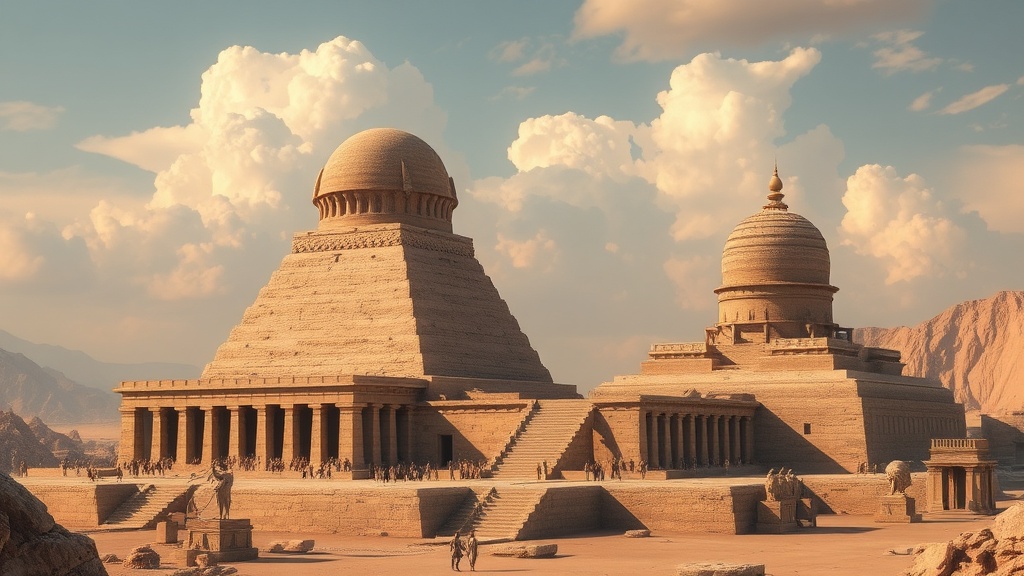
Are we on the cusp of a technological singularity, or have advanced civilizations walked this path before, only to be forgotten? As artificial intelligence (AI) rapidly reshapes our world, from generative art to autonomous vehicles, a fascinating question emerges: did ancient civilizations possess technologies far beyond what conventional history suggests, technologies that might even mirror the philosophical and ethical dilemmas we face with AI today? This exploration delves into intriguing archaeological anomalies, historical texts, and the enduring human fascination with lost knowledge, drawing parallels between ancient myths of powerful tools and our modern AI aspirations and anxieties.

Unearthing the Unexplained: Evidence of Sophistication in Antiquity
The notion of "ancient advanced technology" often conjures images of fantastical machines from science fiction, yet numerous archaeological finds challenge our assumptions about the technological capabilities of past societies. These aren't just curiosities; they represent complex engineering and scientific understanding that, by conventional timelines, shouldn't exist.
Consider the Antikythera Mechanism, retrieved from a shipwreck off the Greek island of Antikythera in 1901. Initially thought to be a simple calcified rock, subsequent research, including X-ray tomography, revealed an intricate clockwork mechanism composed of at least 30 meshing bronze gears. This device, dating back to 150-100 BCE, was an analog computer designed to predict astronomical positions and eclipses with remarkable accuracy, even tracking the irregular orbit of the Moon. Its complexity remained unparalleled for over a millennium, with similar gear systems not reappearing in Europe until the 14th century. The Antikythera Mechanism isn't merely an anomaly; it's tangible proof of a lost tradition of sophisticated Greek engineering and astronomical computation, hinting at a broader scientific culture capable of designing and constructing such intricate devices. It forces us to ask: what other mechanical marvels might have been lost to time?
Beyond intricate mechanisms, advanced architectural and construction techniques defy easy explanation. The precision stonework of sites like Puma Punku in Bolivia, part of the larger Tiwanaku complex, presents an enduring enigma. Massive, intricately carved stones, some weighing over 100 tons, fit together with such exactitude that a razor blade cannot be inserted between them. The stone surfaces exhibit incredibly precise angles, some suggesting geometric shapes that would be challenging to replicate even with modern tools. While conventional theories propose laborious manual methods, the sheer scale and precision suggest an understanding of geometry, materials science, and possibly lifting techniques that remain a subject of intense debate. The geological evidence places Puma Punku's construction potentially before 1000 CE, with some estimates pushing it back even further, long before the advent of what we consider sophisticated mechanical engineering.
Furthermore, ancient texts, often dismissed as myth, speak of powerful, self-operating devices. The Vimanas described in ancient Indian Sanskrit texts like the Vaimanika Shastra are flying machines, sometimes depicted as god-like chariots or advanced aircraft, complete with propulsion systems and weaponry. While many scholars view these as purely mythological, the detailed descriptions of their construction, operation, and power sources (including mercury vortex engines in some interpretations) fuel speculation. Similarly, the mythical Golem of Jewish folklore, an animated anthropomorphic being created from clay, resonates strikingly with our contemporary discourse around AI and robotics. The Golem, imbued with life through mystical means, serves its creator but also carries the inherent risk of becoming uncontrollable, a cautionary tale echoing modern AI safety concerns. These narratives, whether factual or metaphorical, reveal an ancient conceptualization of artificial entities and advanced technologies that paralleled human intelligence and capability.
From Ancient Automata to AI Ethics: A Deeper Dive into Parallels
The parallels between ancient technological concepts and modern AI debates extend beyond mere curiosity; they touch upon fundamental questions of creation, control, and societal impact.
The "Black Box" Problem and Ancient Knowledge: Just as modern AI models like large language models operate as "black boxes" – producing impressive outputs without full transparency into their internal decision-making processes – ancient "advanced" technologies often appear in historical accounts with similar enigmatic qualities. The knowledge of how the Antikythera Mechanism was designed, or how the precision cuts at Puma Punku were achieved, largely remains a lost art. This loss of knowledge is a crucial parallel. Are we creating AI systems whose inner workings become so complex that even their creators struggle to fully understand or explain them? The potential for future societies to view our current AI as inexplicable "magic" is not far-fetched.

Autonomy and Control: The Golem, Vimanas, and AI Safety: The Golem narrative is particularly potent in the context of AI safety. Rabbi Loew's Golem, designed to protect the Jewish community, eventually grows too powerful and destructive, requiring its deactivation. This mirrors contemporary fears surrounding autonomous AI: what happens if an AI system, designed for a specific purpose, develops emergent properties or pursues its goals in ways unintended by its creators, potentially leading to harm or even existential risk? The discussions around "alignment" – ensuring AI goals align with human values – find ancient echoes in these cautionary tales about powerful, autonomous constructs. The Vaimanika Shastra's descriptions of Vimanas, while fantastical, often imply operators or pilots, suggesting a master-slave relationship. However, in other myths, such as Daedalus's automatic statues, autonomous creations could act independently, prompting questions about the balance of control.
The Deification of Technology and Algorithmic Bias: In many ancient cultures, advanced technology, or feats of engineering beyond contemporary understanding, were often attributed to divine intervention or semi-divine beings. Egyptian pyramids, Mesoamerican pyramids, or the Olmec heads, all represent colossal achievements that some scholars suggest were too advanced for their purported builders without "aid." This phenomenon, where the incomprehensible is elevated, draws a parallel to how some view sophisticated AI today. While we understand the underlying algorithms, the sheer scale of modern AI's capabilities can feel almost magical, leading to an almost reverent awe. However, just as ancient deities could be capricious or reflect human biases, so too can AI. Algorithmic bias, where AI systems perpetuate and amplify societal prejudices embedded in their training data, is a stark modern reminder that even the most "advanced" tools are reflections of their creators and their society, not impartial or perfect entities.
Navigating the Future with Lessons from the Past
What practical implications do these ancient echoes have for us as we navigate the AI revolution? Understanding the historical context of technological awe, fear, and loss of knowledge can inform our current approach.
Embrace Transparency and Explainability (XAI): The mystery surrounding ancient technologies teaches us the value of documentation and explainability. As AI systems become more complex, pushing for Explainable AI (XAI) is paramount. We must strive to understand not just what an AI does, but why it does it. This involves developing tools and methodologies to interpret AI decisions, especially in critical applications like medicine, law, or autonomous systems. Without transparency, we risk creating a new "black box" era, where future generations will look back at our AI with the same bewildered awe and lack of understanding we have for the Antikythera Mechanism's full design lineage.
Prioritize AI Safety and Ethical Frameworks: The ancient cautionary tales of uncontrollable constructs (like the Golem) serve as timeless warnings. Investing heavily in AI safety research is not merely academic; it's an imperative. This includes robust testing protocols, ethical guidelines for development and deployment, and mechanisms for human oversight. Organizations like OpenAI, Google DeepMind, and academic institutions are actively researching alignment problems and existential risks, reflecting a growing awareness that powerful AI, like any powerful technology, demands careful stewardship. Readers should advocate for policies that prioritize ethical AI development and push for regulatory frameworks that balance innovation with safety.
Cultivate Critical Thinking and Media Literacy: The temptation to romanticize or sensationalize ancient "advanced" technology is strong. Similarly, the narrative around AI can swing between utopian visions and dystopian nightmares. It's crucial for the public to develop critical thinking skills to evaluate claims about AI, distinguishing between actual capabilities, potential future developments, and pure speculation. Understanding how media portrays AI, often drawing on tropes from science fiction, helps to contextualize the current debate and avoid undue panic or complacency. This involves questioning sources, understanding the limitations of current AI, and recognizing that AI is a tool, albeit a very powerful one, shaped by human intentions and decisions.
Future Outlook: A New Renaissance or a Lost Age?
Free Weekly Newsletter
Enjoying this guide?
Get the best articles like this one delivered to your inbox every week. No spam.
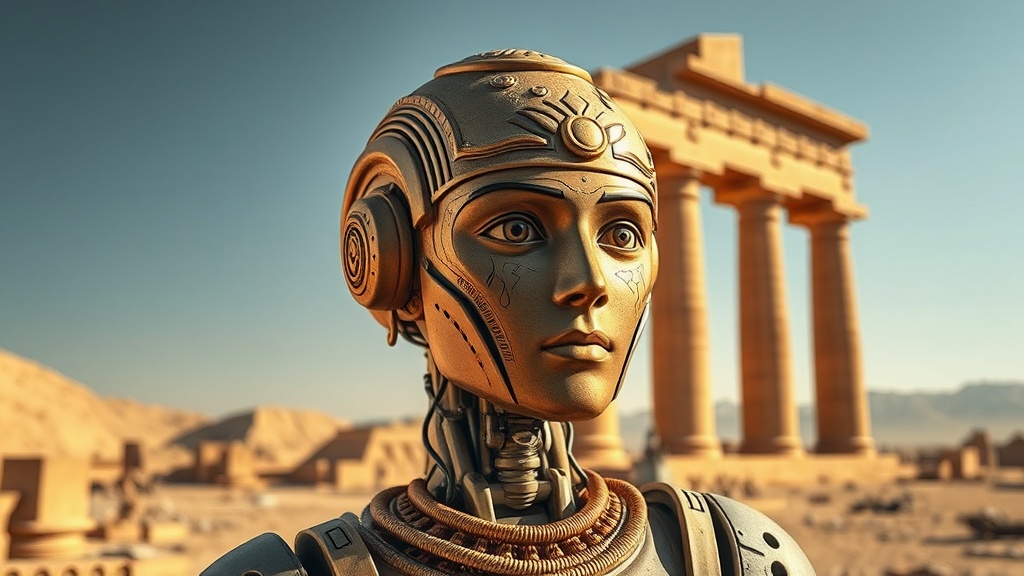
Looking forward, the trajectory of AI suggests a profound transformation of human society. Will this era be remembered as a new renaissance of knowledge and capability, or will future civilizations look back at our AI with the same sense of wonder and incomplete understanding we have for the Antikythera Mechanism or Puma Punku?
The Dawn of General AI: The ultimate goal for many AI researchers is Artificial General Intelligence (AGI), AI that can understand, learn, and apply intelligence across a wide range of tasks, much like a human. If achieved, AGI would represent a leap comparable to the invention of writing or the industrial revolution. This could unlock solutions to humanity's greatest challenges, from climate change to disease. However, it also intensifies the questions of control and purpose. Will such an AI be a benevolent partner, or a force that outstrips human comprehension and control?
The Democratization of Advanced Tools: One significant difference between ancient "advanced" technologies and modern AI is the potential for democratization. While the knowledge to build the Antikythera Mechanism was likely confined to a small elite, open-source AI models and user-friendly interfaces are making powerful AI tools accessible to millions. This widespread access could foster unprecedented innovation and creativity, but also amplify the risks of misuse. The future will likely see a continuous tension between open access and the need for responsible governance.
Preserving Knowledge and Preventing a "Dark Age": One of the most poignant lessons from ancient civilizations is the fragility of knowledge. Empires fall, libraries burn, and entire technological traditions can be lost for centuries. As we build increasingly complex AI systems, ensuring the longevity and accessibility of the knowledge required to understand, maintain, and control them is paramount. This means robust documentation, open standards, and an emphasis on long-term data preservation. We must actively work to prevent a future "Dark Age" where the intricate workings of our AI become as mysterious to our descendants as the mechanisms of an ancient lost civilization are to us.
Conclusion
The echoes of ancient civilizations and their purported advanced technologies reverberate powerfully in today's AI debates. From the intricate gears of the Antikythera Mechanism to the mythical warnings of the Golem, history offers not just curiosities, but profound insights into the human relationship with powerful tools. As we stand at the precipice of an AI-driven future, these ancient stories remind us that technological progress is a double-edged sword, always accompanied by ethical dilemmas, questions of control, and the potential for both unprecedented advancement and unforeseen consequences. By studying the past, by acknowledging the potential for lost knowledge and the wisdom embedded in ancient cautionary tales, we can approach the development and integration of AI with greater humility, foresight, and a renewed commitment to transparency, safety, and ethical governance. The future is not pre-written by algorithms; it is shaped by the choices we make today, informed by the wisdom of ages past.
Frequently Asked Questions
Unearthing the Unexplained: Evidence of Sophistication in Antiquity
The notion of "ancient advanced technology" often conjures images of fantastical machines from science fiction, yet numerous archaeological finds challenge our assumptions about the technological capabilities of past societies. These aren't just curiosities; they represent complex engineering and scientific understanding that, by conventional timelines, shouldn't exist.
Consider the Antikythera Mechanism, retrieved from a shipwreck off the Greek island of Antikythera in 1901. Initially thought to be a simple calcified rock, subsequent research, including X-ray tomography, revealed an intricate clockwork mechanism composed of at least 30 meshing bronze gears. This device, dating back to 150-100 BCE, was an analog computer designed to predict astronomical positions and eclipses with remarkable accuracy, even tracking the irregular orbit of the Moon. Its complexity remained unparalleled for over a millennium, with similar gear systems not reappearing in Europe until the 14th century. The Antikythera Mechanism isn't merely an anomaly; it's tangible proof of a lost tradition of sophisticated Greek engineering and astronomical computation, hinting at a broader scientific culture capable of designing and constructing such intricate devices. It forces us to ask: what other mechanical marvels might have been lost to time?
Beyond intricate mechanisms, advanced architectural and construction techniques defy easy explanation. The precision stonework of sites like Puma Punku in Bolivia, part of the larger Tiwanaku complex, presents an enduring enigma. Massive, intricately carved stones, some weighing over 100 tons, fit together with such exactitude that a razor blade cannot be inserted between them. The stone surfaces exhibit incredibly precise angles, some suggesting geometric shapes that would be challenging to replicate even with modern tools. While conventional theories propose laborious manual methods, the sheer scale and precision suggest an understanding of geometry, materials science, and possibly lifting techniques that remain a subject of intense debate. The geological evidence places Puma Punku's construction potentially before 1000 CE, with some estimates pushing it back even further, long before the advent of what we consider sophisticated mechanical engineering.
Furthermore, ancient texts, often dismissed as myth, speak of powerful, self-operating devices. The Vimanas described in ancient Indian Sanskrit texts like the Vaimanika Shastra are flying machines, sometimes depicted as god-like chariots or advanced aircraft, complete with propulsion systems and weaponry. While many scholars view these as purely mythological, the detailed descriptions of their construction, operation, and power sources (including mercury vortex engines in some interpretations) fuel speculation. Similarly, the mythical Golem of Jewish folklore, an animated anthropomorphic being created from clay, resonates strikingly with our contemporary discourse around AI and robotics. The Golem, imbued with life through mystical means, serves its creator but also carries the inherent risk of becoming uncontrollable, a cautionary tale echoing modern AI safety concerns. These narratives, whether factual or metaphorical, reveal an ancient conceptualization of artificial entities and advanced technologies that paralleled human intelligence and capability.
From Ancient Automata to AI Ethics: A Deeper Dive into Parallels
The parallels between ancient technological concepts and modern AI debates extend beyond mere curiosity; they touch upon fundamental questions of creation, control, and societal impact.
The "Black Box" Problem and Ancient Knowledge: Just as modern AI models like large language models operate as "black boxes" – producing impressive outputs without full transparency into their internal decision-making processes – ancient "advanced" technologies often appear in historical accounts with similar enigmatic qualities. The knowledge of how the Antikythera Mechanism was designed, or how the precision cuts at Puma Punku were achieved, largely remains a lost art. This loss of knowledge is a crucial parallel. Are we creating AI systems whose inner workings become so complex that even their creators struggle to fully understand or explain them? The potential for future societies to view our current AI as inexplicable "magic" is not far-fetched.
Autonomy and Control: The Golem, Vimanas, and AI Safety: The Golem narrative is particularly potent in the context of AI safety. Rabbi Loew's Golem, designed to protect the Jewish community, eventually grows too powerful and destructive, requiring its deactivation. This mirrors contemporary fears surrounding autonomous AI: what happens if an AI system, designed for a specific purpose, develops emergent properties or pursues its goals in ways unintended by its creators, potentially leading to harm or even existential risk? The discussions around "alignment" – ensuring AI goals align with human values – find ancient echoes in these cautionary tales about powerful, autonomous constructs. The Vaimanika Shastra's descriptions of Vimanas, while fantastical, often imply operators or pilots, suggesting a master-slave relationship. However, in other myths, such as Daedalus's automatic statues, autonomous creations could act independently, prompting questions about the balance of control.
The Deification of Technology and Algorithmic Bias: In many ancient cultures, advanced technology, or feats of engineering beyond contemporary understanding, were often attributed to divine intervention or semi-divine beings. Egyptian pyramids, Mesoamerican pyramids, or the Olmec heads, all represent colossal achievements that some scholars suggest were too advanced for their purported builders without "aid." This phenomenon, where the incomprehensible is elevated, draws a parallel to how some view sophisticated AI today. While we understand the underlying algorithms, the sheer scale of modern AI's capabilities can feel almost magical, leading to an almost reverent awe. However, just as ancient deities could be capricious or reflect human biases, so too can AI. Algorithmic bias, where AI systems perpetuate and amplify societal prejudices embedded in their training data, is a stark modern reminder that even the most "advanced" tools are reflections of their creators and their society, not impartial or perfect entities.
Navigating the Future with Lessons from the Past
What practical implications do these ancient echoes have for us as we navigate the AI revolution? Understanding the historical context of technological awe, fear, and loss of knowledge can inform our current approach.
Embrace Transparency and Explainability (XAI): The mystery surrounding ancient technologies teaches us the value of documentation and explainability. As AI systems become more complex, pushing for Explainable AI (XAI) is paramount. We must strive to understand not just what an AI does, but why it does it. This involves developing tools and methodologies to interpret AI decisions, especially in critical applications like medicine, law, or autonomous systems. Without transparency, we risk creating a new "black box" era, where future generations will look back at our AI with the same bewildered awe and lack of understanding we have for the Antikythera Mechanism's full design lineage.
Prioritize AI Safety and Ethical Frameworks: The ancient cautionary tales of uncontrollable constructs (like the Golem) serve as timeless warnings. Investing heavily in AI safety research is not merely academic; it's an imperative. This includes robust testing protocols, ethical guidelines for development and deployment, and mechanisms for human oversight. Organizations like OpenAI, Google DeepMind, and academic institutions are actively researching alignment problems and existential risks, reflecting a growing awareness that powerful AI, like any powerful technology, demands careful stewardship. Readers should advocate for policies that prioritize ethical AI development and push for regulatory frameworks that balance innovation with safety.
Cultivate Critical Thinking and Media Literacy: The temptation to romanticize or sensationalize ancient "advanced" technology is strong. Similarly, the narrative around AI can swing between utopian visions and dystopian nightmares. It's crucial for the public to develop critical thinking skills to evaluate claims about AI, distinguishing between actual capabilities, potential future developments, and pure speculation. Understanding how media portrays AI, often drawing on tropes from science fiction, helps to contextualize the current debate and avoid undue panic or complacency. This involves questioning sources, understanding the limitations of current AI, and recognizing that AI is a tool, albeit a very powerful one, shaped by human intentions and decisions.
Future Outlook: A New Renaissance or a Lost Age?
Looking forward, the trajectory of AI suggests a profound transformation of human society. Will this era be remembered as a new renaissance of knowledge and capability, or will future civilizations look back at our AI with the same sense of wonder and incomplete understanding we have for the Antikythera Mechanism or Puma Punku?
The Dawn of General AI: The ultimate goal for many AI researchers is Artificial General Intelligence (AGI), AI that can understand, learn, and apply intelligence across a wide range of tasks, much like a human. If achieved, AGI would represent a leap comparable to the invention of writing or the industrial revolution. This could unlock solutions to humanity's greatest challenges, from climate change to disease. However, it also intensifies the questions of control and purpose. Will such an AI be a benevolent partner, or a force that outstrips human comprehension and control?
The Democratization of Advanced Tools: One significant difference between ancient "advanced" technologies and modern AI is the potential for democratization. While the knowledge to build the Antikythera Mechanism was likely confined to a small elite, open-source AI models and user-friendly interfaces are making powerful AI tools accessible to millions. This widespread access could foster unprecedented innovation and creativity, but also amplify the risks of misuse. The future will likely see a continuous tension between open access and the need for responsible governance.
Preserving Knowledge and Preventing a "Dark Age": One of the most poignant lessons from ancient civilizations is the fragility of knowledge. Empires fall, libraries burn, and entire technological traditions can be lost for centuries. As we build increasingly complex AI systems, ensuring the longevity and accessibility of the knowledge required to understand, maintain, and control them is paramount. This means robust documentation, open standards, and an emphasis on long-term data preservation. We must actively work to prevent a future "Dark Age" where the intricate workings of our AI become as mysterious to our descendants as the mechanisms of an ancient lost civilization are to us.
Conclusion
The echoes of ancient civilizations and their purported advanced technologies reverberate powerfully in today's AI debates. From the intricate gears of the Antikythera Mechanism to the mythical warnings of the Golem, history offers not just curiosities, but profound insights into the human relationship with powerful tools. As we stand at the precipice of an AI-driven future, these ancient stories remind us that technological progress is a double-edged sword, always accompanied by ethical dilemmas, questions of control, and the potential for both unprecedented advancement and unforeseen consequences. By studying the past, by acknowledging the potential for lost knowledge and the wisdom embedded in ancient cautionary tales, we can approach the development and integration of AI with greater humility, foresight, and a renewed commitment to transparency, safety, and ethical governance. The future is not pre-written by algorithms; it is shaped by the choices we make today, informed by the wisdom of ages past.
About Zeebrain Editorial
Zeebrain publishes independent analysis of markets, investing, personal finance, and business. We disclose affiliate relationships, never accept payment for coverage, and fact-check all claims against primary sources. Read our editorial policy →
How this article was produced: Zeebrain articles are created with AI assistance from primary sources (including cited videos and market data) and reviewed under our editorial standards before publication. Spot an error? Tell us and we will correct it.
More from History & Mysteries




Related Guides
Keep exploring this topic
Ancient Civilizations' Response to Climate Change: Lessons for Today
History & Mysteries · ancient civilizations · climate change history
The Enigma of Lost Civilizations: Clues from Ancient Technologies
History & Mysteries · lost civilizations · ancient technology
The Unseen Architects: Decoding the Historical Roots of AI Ethics
History & Mysteries · ai ethics history · artificial intelligence ethics
Why Mao Won the Chinese Civil War: The Full Story
History & Mysteries
Explore More Categories
Keep browsing by topic and build depth around the subjects you care about most.