The Enigma of Lost Civilizations: Clues from Ancient Technologies
Quick Summary
The Enigma of Lost Civilizations: Clues from Ancient Technologies The whispers of forgotten empires echo through time, not just in crumbling ruins but in astonishing technological...
In This Article
The Enigma of Lost Civilizations: Clues from Ancient Technologies
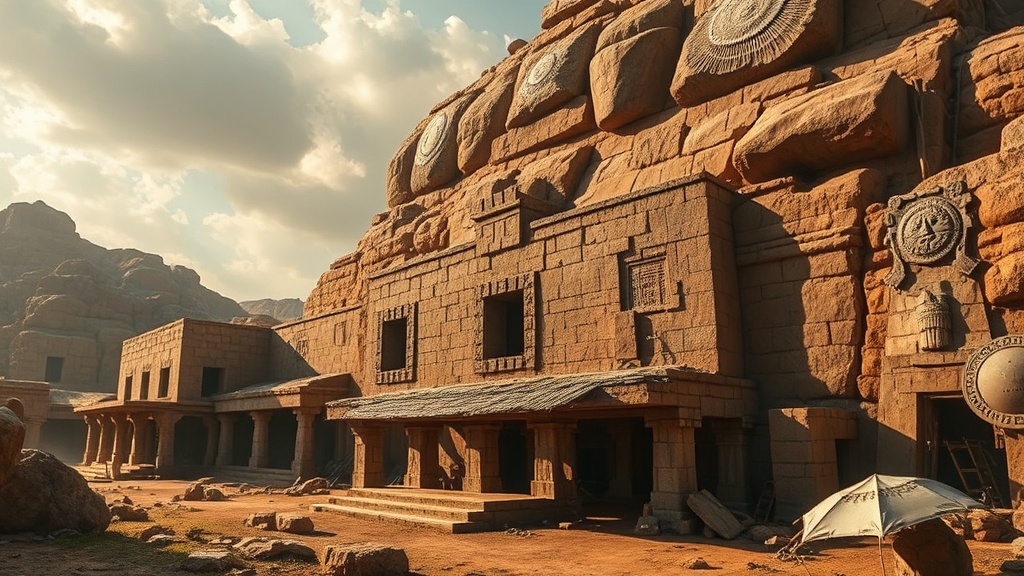
The whispers of forgotten empires echo through time, not just in crumbling ruins but in astonishing technological feats that defy our modern assumptions. From the precision-cut megaliths of Puma Punku to the intricate gears of the Antikythera Mechanism, ancient technologies offer compelling clues that challenge conventional narratives of human progress, hinting at knowledge lost and rediscovered, or perhaps, civilizations far more advanced than history textbooks suggest. This article explores how these enigmatic artifacts and structures provide a fascinating lens into the intellectual prowess of our ancestors, prompting us to reconsider what we truly know about the origins of innovation and the rise and fall of sophisticated societies.

Unearthing the Engineering Marvels of Antiquity
The notion that ancient peoples were primitive is rapidly being dismantled by archaeological discoveries that showcase astonishing engineering and scientific understanding. Consider the Great Pyramid of Giza, built around 2580–2560 BC. Its sheer scale—over 2.3 million stone blocks, each weighing an average of 2.5 tons—is mind-boggling. But beyond the weight, it's the precision: the pyramid's base is level to within an astonishing 15 millimeters, and its sides are aligned to true north with an error of less than one-tenth of a degree. Modern engineers struggle to replicate this accuracy even with advanced tools. How did the Egyptians achieve such feats without iron tools, cranes, or even the wheel in its fully developed form? Theories range from elaborate ramp systems to highly organized labor, but the exact methods remain debated, pointing to an advanced understanding of geometry, astronomy, and material science.
Another compelling example is Puma Punku in Bolivia, part of the Tiwanaku site, dating to roughly 500-1000 AD. What sets Puma Punku apart are the incredibly intricate "H-blocks" and "I-blocks" made of diorite and andesite, some of the hardest stones on Earth. These blocks exhibit astonishingly precise cuts, often with sharp internal angles and flat surfaces that suggest the use of techniques far beyond simple chiseling and hammering. The interlocking nature of these blocks, like a giant ancient jigsaw puzzle, indicates a sophisticated understanding of architectural design and earthquake resistance. Dr. Protzen and Stella Nair's research at the site has highlighted the incredible precision of these stone fittings, often leaving no space for even a razor blade between blocks. This level of craftsmanship, particularly with the tools believed to be available at the time, continues to baffle archaeologists and engineers alike, suggesting either a lost technology for stone cutting or a much earlier development of such tools than traditionally recognized.
Further afield, the Water Temples of Bali, known as Subak, represent an intricate and ecologically sustainable irrigation system developed over a thousand years ago. These systems, recognized as a UNESCO World Heritage site, are not merely canals but a complex socio-religious network that regulates water distribution through a democratic and spiritual framework. Using gravity and an intricate understanding of hydrology, Balinese farmers managed to cultivate rice paddies across vast mountainous terrains, often creating stunning terrace landscapes. The efficiency and resilience of the Subak system, which prevented conflict over water resources and maximized yields for centuries, demonstrate an advanced understanding of agricultural engineering and resource management that far predates modern ecological planning. This wasn't just about moving water; it was about balancing human needs with environmental sustainability, a concept many modern societies are still struggling to master.
Decoding Lost Knowledge: The Mechanisms Behind Ancient Genius
The remarkable achievements of ancient civilizations were not always about colossal structures; sometimes, they were about incredibly sophisticated machines. The Antikythera Mechanism, discovered in a shipwreck off the coast of Greece in 1901 and dated to the 2nd century BC, is perhaps the most famous example. Initially thought to be a simple piece of corroded bronze, subsequent research, including X-ray tomography by researchers like Dr. Tony Freeth and Professor Alexander Jones, revealed a complex astronomical calculator. This hand-powered device featured at least 30 precisely machined bronze gears, allowing it to predict astronomical positions, eclipses, and even the dates of athletic games like the Olympics. Its complexity rivals 18th-century clockwork, pushing back the known origins of such intricate gearing by over a millennium. The Antikythera Mechanism isn't just a testament to ancient Greek ingenuity; it's a profound "missing link" in the history of technology, suggesting a level of mechanical sophistication that was largely lost until the Renaissance.
Beyond individual artifacts, the very concept of sacred geometry embedded in ancient architecture suggests a deep understanding of mathematical principles. Structures like the Pantheon in Rome, built around 126 AD, exhibit perfect proportions and a spherical interior that harmonizes space and light. Its massive concrete dome, the largest unreinforced concrete dome in the world, remains a feat of engineering, with progressively lighter aggregates used higher up to reduce stress. The precise proportions, often incorporating the Golden Ratio and other mathematical constants, imply that aesthetic beauty was deeply intertwined with advanced mathematical and architectural knowledge, far beyond simple intuition. Dr. John F. Pile's work on architectural history often highlights how these underlying mathematical principles contributed to the enduring stability and aesthetic appeal of ancient structures.
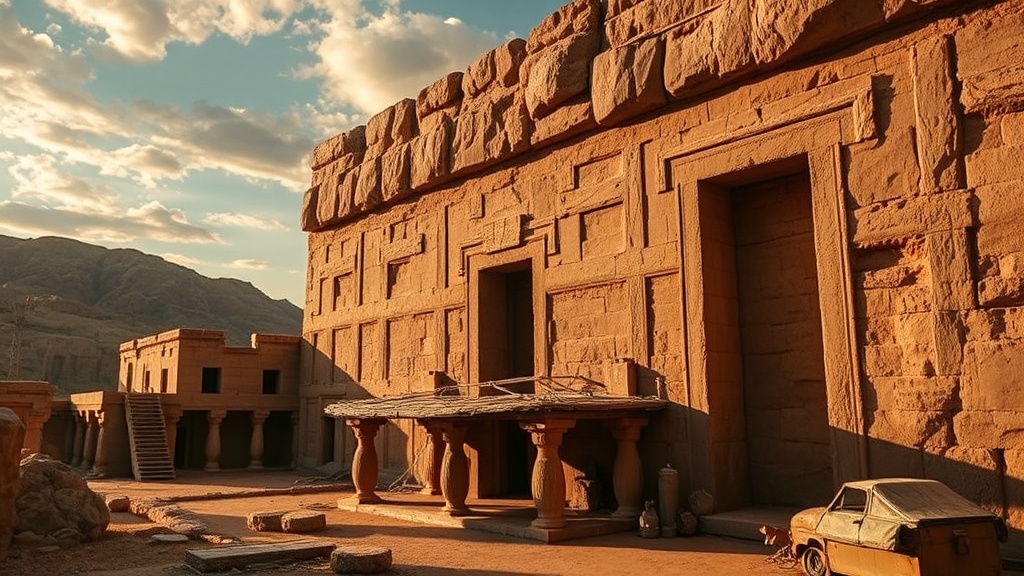
Even something as fundamental as ancient metallurgy holds clues. The Delhi Iron Pillar, standing since the 4th century AD, is a wrought iron pillar nearly 7 meters tall and weighing over 6 tons. What makes it remarkable is its extraordinary resistance to corrosion, despite being exposed to Delhi's harsh climate for over 1,600 years. Modern metallurgical analysis has revealed a high phosphorus content and the formation of a passive protective film of "misawite" (an iron hydrogen phosphate hydrate) on its surface, a sophisticated rust-inhibiting process that was not fully understood in Western science until the 20th century. This suggests an advanced understanding of material science by ancient Indian artisans, who likely developed this knowledge through generations of empirical observation and refinement, a testament to practical, applied scientific knowledge.
Echoes in Modern Life: Lessons from Lost Technologies
The study of ancient technologies is far from a purely academic pursuit; it has tangible implications for our understanding of innovation, sustainability, and even modern engineering challenges. For example, the Roman concrete (opus caementicium) used in structures like the Pantheon and harbors at Pozzuoli has demonstrated remarkable durability, often outperforming modern concrete. Recent research by Professor Marie Jackson at the University of Utah has revealed that Roman concrete, especially marine concrete, used volcanic ash (pozzolana) and a unique hydration process involving trace minerals. This created a crystalline structure that actually strengthened over time when exposed to seawater, unlike modern concrete which degrades. This discovery has inspired researchers to develop more sustainable and durable concrete mixes for modern infrastructure, particularly for coastal defense and offshore construction, offering a "green" alternative with a lifespan potentially measured in millennia rather than decades.
Furthermore, the principles of biomimicry, where engineers draw inspiration from natural designs, often find parallels in ancient innovations. The terraced farming systems of the Incas, like those at Moray, which created microclimates at different levels, demonstrate an advanced understanding of agricultural diversity and adaptation to challenging environments. While not a "lost technology" in the sense of a machine, the Incas' sophisticated agricultural engineering allowed them to cultivate a vast array of crops across diverse altitudes, ensuring food security. Modern permaculture and vertical farming initiatives draw similar inspiration, seeking to maximize yield and resilience in innovative ways. The adaptive strategies of ancient farming offer valuable lessons for addressing current climate change and food security challenges.
The very concept of resilient design is also illuminated by ancient structures. The earthquake-resistant architecture of the Incas, with their precisely cut, interlocking stones and trapezoidal doors and windows, allowed their buildings to sway during seismic events rather than collapse. Similar principles are seen in Japanese pagoda construction, where flexible, multi-story structures absorb seismic energy. As modern cities grapple with increasing natural disasters, looking back at these time-tested methods provides critical insights for building safer, more enduring infrastructure. Understanding the "how" behind ancient engineering often reveals solutions that are both elegant and profoundly practical.
The Future of Discovery: Unveiling More Ancient Secrets
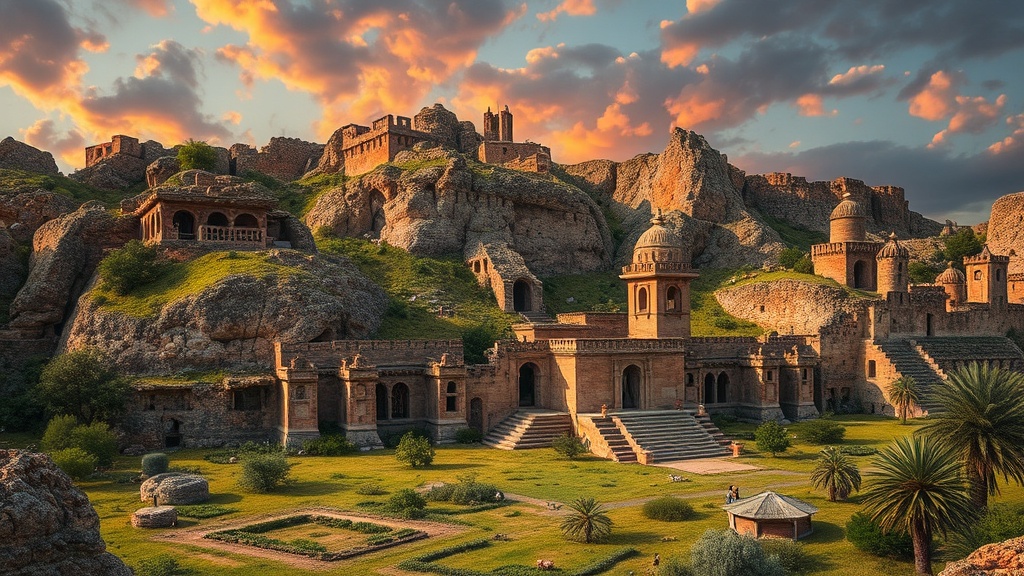
The quest to understand lost civilizations and their technologies is ongoing, with exciting developments on the horizon. Advanced imaging techniques such as Lidar (Light Detection and Ranging) are revolutionizing archaeology, allowing researchers to "see through" dense jungle canopy to reveal previously unknown cities and infrastructure. For instance, Lidar surveys in the Maya lowlands have uncovered vast networks of ancient Maya cities, agricultural fields, and defensive structures, suggesting a population and societal complexity far greater than previously estimated. These discoveries, often published in journals like Science and Nature, continually redefine the scale of ancient societies and their technological impact on landscapes.
Free Weekly Newsletter
Enjoying this guide?
Get the best articles like this one delivered to your inbox every week. No spam.
AI and machine learning are also beginning to play a crucial role, not only in processing vast amounts of Lidar data but also in deciphering ancient texts and predicting archaeological hot spots. Algorithms can analyze patterns in settlement distribution, resource availability, and even linguistic data to offer new hypotheses about lost trade routes, migrations, and the spread of technological knowledge. The ability of AI to analyze and cross-reference diverse datasets promises to accelerate our understanding of complex ancient societies.
Furthermore, the growing field of experimental archaeology will continue to provide invaluable insights. By attempting to replicate ancient construction techniques with period-appropriate tools, researchers gain firsthand understanding of the challenges and ingenuity involved. Projects replicating megalithic moving techniques or bronze casting processes are not merely academic exercises; they offer practical data that can debunk myths and refine our understanding of ancient capabilities. These hands-on approaches, often involving collaborations between archaeologists, engineers, and artisans, are crucial for bridging the gap between theory and practice.
The exploration of underwater sites and shipwrecks, facilitated by advanced submersible technology, also promises to uncover more "Antikythera Mechanisms" – artifacts that challenge our understanding of historical timelines. As our technological tools evolve, so too does our ability to peer deeper into the past, revealing more about the truly remarkable technological achievements of lost civilizations.
Conclusion: Reclaiming Our Shared Legacy of Innovation
The enigma of lost civilizations, far from being a purely academic curiosity, is a vibrant field that profoundly impacts our understanding of human ingenuity and resilience. From the unparalleled precision of ancient stonework to the mind-boggling complexity of early mechanical computers and the ecological wisdom embedded in irrigation systems, ancient technologies provide compelling evidence that our ancestors were far from primitive. They mastered principles of engineering, material science, and astronomy that were often lost to subsequent ages, only to be painstakingly rediscovered millennia later.
By studying these incredible feats, we don't just fill gaps in history; we gain critical insights into sustainable design, robust engineering, and the cyclical nature of knowledge. These ancient clues challenge us to reconsider the linearity of progress and appreciate the diverse paths human innovation has taken. As we face global challenges today, perhaps the solutions lie not only in future breakthroughs but also in rediscovering the profound wisdom embedded in the ingenuity of those who came before us. Explore these mysteries, visit historical sites, and support archaeological research – for in unlocking the secrets of the past, we may well illuminate the path to a more innovative and sustainable future.
Frequently Asked Questions
Unearthing the Engineering Marvels of Antiquity
The notion that ancient peoples were primitive is rapidly being dismantled by archaeological discoveries that showcase astonishing engineering and scientific understanding. Consider the Great Pyramid of Giza, built around 2580–2560 BC. Its sheer scale—over 2.3 million stone blocks, each weighing an average of 2.5 tons—is mind-boggling. But beyond the weight, it's the precision: the pyramid's base is level to within an astonishing 15 millimeters, and its sides are aligned to true north with an error of less than one-tenth of a degree. Modern engineers struggle to replicate this accuracy even with advanced tools. How did the Egyptians achieve such feats without iron tools, cranes, or even the wheel in its fully developed form? Theories range from elaborate ramp systems to highly organized labor, but the exact methods remain debated, pointing to an advanced understanding of geometry, astronomy, and material science.
Another compelling example is Puma Punku in Bolivia, part of the Tiwanaku site, dating to roughly 500-1000 AD. What sets Puma Punku apart are the incredibly intricate "H-blocks" and "I-blocks" made of diorite and andesite, some of the hardest stones on Earth. These blocks exhibit astonishingly precise cuts, often with sharp internal angles and flat surfaces that suggest the use of techniques far beyond simple chiseling and hammering. The interlocking nature of these blocks, like a giant ancient jigsaw puzzle, indicates a sophisticated understanding of architectural design and earthquake resistance. Dr. Protzen and Stella Nair's research at the site has highlighted the incredible precision of these stone fittings, often leaving no space for even a razor blade between blocks. This level of craftsmanship, particularly with the tools believed to be available at the time, continues to baffle archaeologists and engineers alike, suggesting either a lost technology for stone cutting or a much earlier development of such tools than traditionally recognized.
Further afield, the Water Temples of Bali, known as Subak, represent an intricate and ecologically sustainable irrigation system developed over a thousand years ago. These systems, recognized as a UNESCO World Heritage site, are not merely canals but a complex socio-religious network that regulates water distribution through a democratic and spiritual framework. Using gravity and an intricate understanding of hydrology, Balinese farmers managed to cultivate rice paddies across vast mountainous terrains, often creating stunning terrace landscapes. The efficiency and resilience of the Subak system, which prevented conflict over water resources and maximized yields for centuries, demonstrate an advanced understanding of agricultural engineering and resource management that far predates modern ecological planning. This wasn't just about moving water; it was about balancing human needs with environmental sustainability, a concept many modern societies are still struggling to master.
Decoding Lost Knowledge: The Mechanisms Behind Ancient Genius
The remarkable achievements of ancient civilizations were not always about colossal structures; sometimes, they were about incredibly sophisticated machines. The Antikythera Mechanism, discovered in a shipwreck off the coast of Greece in 1901 and dated to the 2nd century BC, is perhaps the most famous example. Initially thought to be a simple piece of corroded bronze, subsequent research, including X-ray tomography by researchers like Dr. Tony Freeth and Professor Alexander Jones, revealed a complex astronomical calculator. This hand-powered device featured at least 30 precisely machined bronze gears, allowing it to predict astronomical positions, eclipses, and even the dates of athletic games like the Olympics. Its complexity rivals 18th-century clockwork, pushing back the known origins of such intricate gearing by over a millennium. The Antikythera Mechanism isn't just a testament to ancient Greek ingenuity; it's a profound "missing link" in the history of technology, suggesting a level of mechanical sophistication that was largely lost until the Renaissance.
Beyond individual artifacts, the very concept of sacred geometry embedded in ancient architecture suggests a deep understanding of mathematical principles. Structures like the Pantheon in Rome, built around 126 AD, exhibit perfect proportions and a spherical interior that harmonizes space and light. Its massive concrete dome, the largest unreinforced concrete dome in the world, remains a feat of engineering, with progressively lighter aggregates used higher up to reduce stress. The precise proportions, often incorporating the Golden Ratio and other mathematical constants, imply that aesthetic beauty was deeply intertwined with advanced mathematical and architectural knowledge, far beyond simple intuition. Dr. John F. Pile's work on architectural history often highlights how these underlying mathematical principles contributed to the enduring stability and aesthetic appeal of ancient structures.
Even something as fundamental as ancient metallurgy holds clues. The Delhi Iron Pillar, standing since the 4th century AD, is a wrought iron pillar nearly 7 meters tall and weighing over 6 tons. What makes it remarkable is its extraordinary resistance to corrosion, despite being exposed to Delhi's harsh climate for over 1,600 years. Modern metallurgical analysis has revealed a high phosphorus content and the formation of a passive protective film of "misawite" (an iron hydrogen phosphate hydrate) on its surface, a sophisticated rust-inhibiting process that was not fully understood in Western science until the 20th century. This suggests an advanced understanding of material science by ancient Indian artisans, who likely developed this knowledge through generations of empirical observation and refinement, a testament to practical, applied scientific knowledge.
Echoes in Modern Life: Lessons from Lost Technologies
The study of ancient technologies is far from a purely academic pursuit; it has tangible implications for our understanding of innovation, sustainability, and even modern engineering challenges. For example, the Roman concrete (opus caementicium) used in structures like the Pantheon and harbors at Pozzuoli has demonstrated remarkable durability, often outperforming modern concrete. Recent research by Professor Marie Jackson at the University of Utah has revealed that Roman concrete, especially marine concrete, used volcanic ash (pozzolana) and a unique hydration process involving trace minerals. This created a crystalline structure that actually strengthened over time when exposed to seawater, unlike modern concrete which degrades. This discovery has inspired researchers to develop more sustainable and durable concrete mixes for modern infrastructure, particularly for coastal defense and offshore construction, offering a "green" alternative with a lifespan potentially measured in millennia rather than decades.
Furthermore, the principles of biomimicry, where engineers draw inspiration from natural designs, often find parallels in ancient innovations. The terraced farming systems of the Incas, like those at Moray, which created microclimates at different levels, demonstrate an advanced understanding of agricultural diversity and adaptation to challenging environments. While not a "lost technology" in the sense of a machine, the Incas' sophisticated agricultural engineering allowed them to cultivate a vast array of crops across diverse altitudes, ensuring food security. Modern permaculture and vertical farming initiatives draw similar inspiration, seeking to maximize yield and resilience in innovative ways. The adaptive strategies of ancient farming offer valuable lessons for addressing current climate change and food security challenges.
The very concept of resilient design is also illuminated by ancient structures. The earthquake-resistant architecture of the Incas, with their precisely cut, interlocking stones and trapezoidal doors and windows, allowed their buildings to sway during seismic events rather than collapse. Similar principles are seen in Japanese pagoda construction, where flexible, multi-story structures absorb seismic energy. As modern cities grapple with increasing natural disasters, looking back at these time-tested methods provides critical insights for building safer, more enduring infrastructure. Understanding the "how" behind ancient engineering often reveals solutions that are both elegant and profoundly practical.
The Future of Discovery: Unveiling More Ancient Secrets
The quest to understand lost civilizations and their technologies is ongoing, with exciting developments on the horizon. Advanced imaging techniques such as Lidar (Light Detection and Ranging) are revolutionizing archaeology, allowing researchers to "see through" dense jungle canopy to reveal previously unknown cities and infrastructure. For instance, Lidar surveys in the Maya lowlands have uncovered vast networks of ancient Maya cities, agricultural fields, and defensive structures, suggesting a population and societal complexity far greater than previously estimated. These discoveries, often published in journals like Science and Nature, continually redefine the scale of ancient societies and their technological impact on landscapes.
AI and machine learning are also beginning to play a crucial role, not only in processing vast amounts of Lidar data but also in deciphering ancient texts and predicting archaeological hot spots. Algorithms can analyze patterns in settlement distribution, resource availability, and even linguistic data to offer new hypotheses about lost trade routes, migrations, and the spread of technological knowledge. The ability of AI to analyze and cross-reference diverse datasets promises to accelerate our understanding of complex ancient societies.
Furthermore, the growing field of experimental archaeology will continue to provide invaluable insights. By attempting to replicate ancient construction techniques with period-appropriate tools, researchers gain firsthand understanding of the challenges and ingenuity involved. Projects replicating megalithic moving techniques or bronze casting processes are not merely academic exercises; they offer practical data that can debunk myths and refine our understanding of ancient capabilities. These hands-on approaches, often involving collaborations between archaeologists, engineers, and artisans, are crucial for bridging the gap between theory and practice.
The exploration of underwater sites and shipwrecks, facilitated by advanced submersible technology, also promises to uncover more "Antikythera Mechanisms" – artifacts that challenge our understanding of historical timelines. As our technological tools evolve, so too does our ability to peer deeper into the past, revealing more about the truly remarkable technological achievements of lost civilizations.
Conclusion: Reclaiming Our Shared Legacy of Innovation
The enigma of lost civilizations, far from being a purely academic curiosity, is a vibrant field that profoundly impacts our understanding of human ingenuity and resilience. From the unparalleled precision of ancient stonework to the mind-boggling complexity of early mechanical computers and the ecological wisdom embedded in irrigation systems, ancient technologies provide compelling evidence that our ancestors were far from primitive. They mastered principles of engineering, material science, and astronomy that were often lost to subsequent ages, only to be painstakingly rediscovered millennia later.
By studying these incredible feats, we don't just fill gaps in history; we gain critical insights into sustainable design, robust engineering, and the cyclical nature of knowledge. These ancient clues challenge us to reconsider the linearity of progress and appreciate the diverse paths human innovation has taken. As we face global challenges today, perhaps the solutions lie not only in future breakthroughs but also in rediscovering the profound wisdom embedded in the ingenuity of those who came before us. Explore these mysteries, visit historical sites, and support archaeological research – for in unlocking the secrets of the past, we may well illuminate the path to a more innovative and sustainable future.
About Zeebrain Editorial
Zeebrain publishes independent analysis of markets, investing, personal finance, and business. We disclose affiliate relationships, never accept payment for coverage, and fact-check all claims against primary sources. Read our editorial policy →
How this article was produced: Zeebrain articles are created with AI assistance from primary sources (including cited videos and market data) and reviewed under our editorial standards before publication. Spot an error? Tell us and we will correct it.
More from History & Mysteries




Related Guides
Keep exploring this topic
The Enigma of Ancient Civilizations and Their Sustainable Practices
History & Mysteries · ancient civilizations · sustainable practices
Why Mao Won the Chinese Civil War: The Full Story
History & Mysteries
Why Only Germany Paid WWI Reparations: The Full Story
History & Mysteries
Why Taiwan Wasn't Returned to Japan After World War II
History & Mysteries
Explore More Categories
Keep browsing by topic and build depth around the subjects you care about most.