The American Civil War: How the Union Turned the Tide
Quick Summary
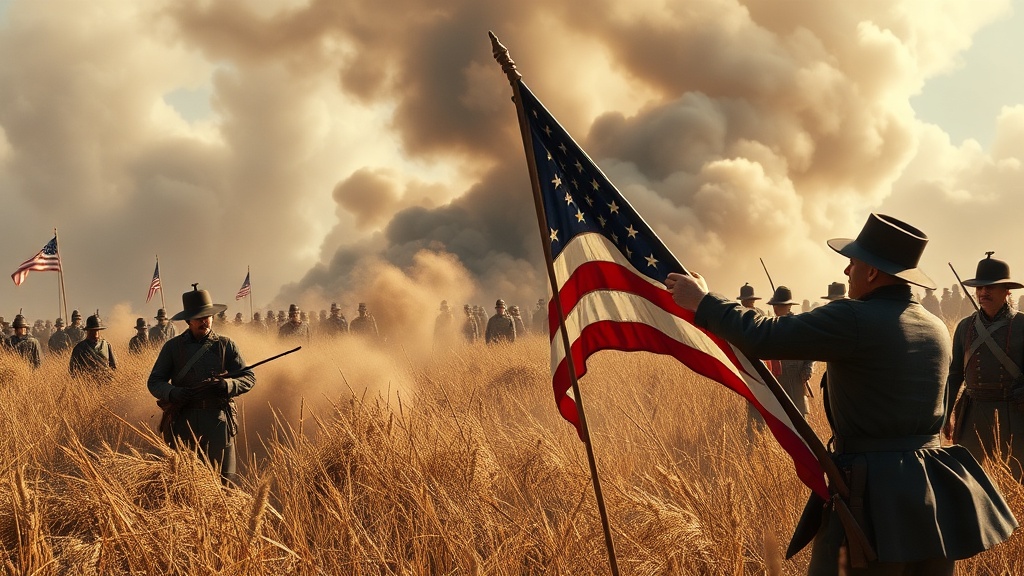
From Gettysburg to Atlanta, explore how the American Civil War shifted in favour of the Union through bold generals, brutal sieges, and historic battles.
In This Article
When Wars Are Won Before the Last Shot Is Fired
There is a particular kind of agony that comes with winning every battle and still losing the war. The Confederacy understood this better than any military force in American history. By late 1862, Confederate General Robert E. Lee had humiliated Union commanders at Fredericksburg and Chancellorsville, outmanoeuvred larger armies with smaller ones, and watched the North grow weary, fractious, and desperate. On paper, the South was alive. In reality, it was running a clock it could not wind back.
The American Civil War's second half is not simply a story of Union triumph. It is a story of institutional collapse meeting individual brilliance — of what happens when one side finds the right general at the right moment, and the other side bets everything on an opponent's political calendar. From the muddy banks of the Mississippi to the blood-soaked ridgelines of Gettysburg, the war's decisive chapter reshaped not just a nation, but the very idea of what that nation was supposed to be.
Fredericksburg and the Price of Poor Leadership
Before the Union found its footing, it had to endure one final, catastrophic lesson in what mediocre leadership costs in wartime. General Ambrose Burnside, appointed to lead the Army of the Potomac after Abraham Lincoln finally lost patience with the perpetually hesitant George McClellan, arrived at Fredericksburg in December 1862 with over 100,000 men and every intention of sweeping south toward Richmond.
What followed was not a battle so much as a prolonged tragedy. Delayed pontoon bridges gave Lee time to fortify his positions on the heights above the city. When Burnside's forces finally crossed and advanced, wave after wave of Union soldiers marched into a killing ground that Confederate artillerists reportedly described as offering them a target almost too easy to bear. Even hardened Confederate soldiers were moved by the courage — and the futility — of what they witnessed. The story of a Confederate sergeant emerging from cover to tend to wounded Union men in no man's land, prompting Union troops to hold their fire, says something profound about the humanity that persisted beneath the war's machinery of death.
Burnside retreated. Lincoln's approval ratings sank further. And the brutal winter of 1862–63 did nothing to lift morale on either side, with disease ripping through camps and desertion becoming epidemic. Lincoln, known for his moral seriousness and deep empathy, spent considerable time personally reviewing and pardoning the death sentences of young deserters — a quiet act of mercy that history rarely amplifies loudly enough.
Gettysburg: The Battle That Broke the Confederacy's Dream
No engagement in the American Civil War carries more historical weight than Gettysburg, and for good reason. By the summer of 1863, Lee understood something with cold clarity: the longer the war continued, the worse the South's odds became. The Confederate economy was deteriorating. Bread riots had broken out in Richmond. Jefferson Davis wanted to redirect forces west to relieve the siege at Vicksburg. Lee, however, argued for a different gamble — march north, threaten Washington, and shatter Northern morale so completely that the public would demand peace.
It was bold. It was logical. It nearly worked.
In late June 1863, Lee's Army of Northern Virginia swept into Pennsylvania, drawing the newly appointed Union General George Meade northward to intercept him. The two armies collided at a crossroads town neither had chosen — Gettysburg — in a battle that would span three days and consume more than 50,000 casualties combined.
The second day's fighting around Little Round Top has become legendary. Union Colonel Joshua Chamberlain, commanding the 20th Maine Infantry on the extreme left flank of the Union line, faced an impossible situation: his men were nearly out of ammunition, and Confederate forces were preparing another charge that would have rolled up the entire Union position. His decision to fix bayonets and charge downhill into the advancing Confederates — an act of desperate audacity — has been studied in military academies ever since. It held the line.
On the third day, Lee made a decision that still prompts debate among historians. Convinced the Union flanks had been tested and that the centre must be weak, he ordered what became known as Pickett's Charge — a massive assault across nearly a mile of open ground directly into the heart of the Union position. Meade had anticipated it. The result was devastating. The Confederate assault crumbled under concentrated fire, and Lee, watching his men stream back across the field, rode among them in anguish, telling them it was his fault, and his alone.
Gettysburg did not end the war. But it ended the Confederacy's capacity to win it on its own terms.
Grant, Sherman, and the Strategy That Suffocated the South
While the Eastern theater consumed headlines, the American Civil War's outcome was arguably being decided along the Mississippi River by a general who cared very little for headlines. Ulysses S. Grant had earned the nickname "Unconditional Surrender" after his victories at Fort Donelson, and he continued to demonstrate the quality that distinguished him from almost every other Union commander: he did not stop moving.
Grant's Vicksburg campaign, completed in July 1863, was a masterpiece of operational creativity. He feinted, deceived, and manoeuvred a Confederate garrison into a siege it could not survive. When Vicksburg fell on the 4th of July 1863 — the same day Lee began his retreat from Gettysburg — the Union held the entire length of the Mississippi, effectively cutting the Confederacy in two. It was the kind of strategic double blow that changes wars.
Lincoln promoted Grant to general-in-chief, and Grant's subsequent strategy was as simple as it was brutal: press the Confederates on every front simultaneously, giving them no opportunity to shift forces and recover. While Grant advanced through Virginia against Lee, Sherman moved south toward Atlanta, understanding — as Grant did — that destroying the Confederacy's capacity to wage war meant targeting not just armies but infrastructure, supply lines, and will.
The human cost was staggering. In under six weeks of fighting through Virginia's wilderness and farmland, Union forces suffered roughly 80,000 casualties. Grant was called a butcher in the Northern press, and not without reason. But Grant grasped something his critics did not: Lee was bleeding too, and Lee had no reservoir of replacements. Every casualty Grant absorbed, he could replace. Every casualty Lee absorbed brought the Confederacy one step closer to collapse.
The 1864 Election: When Politics Became Part of the Battlefield
Perhaps the most underappreciated dimension of the American Civil War's final phase is how explicitly the Confederacy integrated the 1864 United States presidential election into its military strategy. With Lincoln increasingly unpopular, with Northern cities tired of casualty lists, and with Grant locked in a stalemate siege outside Petersburg, Confederate leaders calculated that a Democratic victory in November could produce a negotiated peace — and with it, de facto Confederate independence.
Their chosen instrument, almost improbably, was the same general Lincoln had previously sacked: George B. McClellan, now the Democratic nominee, whose platform flirted openly with armistice. The irony was exquisite. McClellan had once commanded the Union's largest army. Now the Confederacy's best hope rested on his electoral success.
Lincoln himself privately doubted he would win. In August 1864, he wrote a memo predicting his own defeat and sealed it, asking his cabinet members to sign the outside without reading it. He intended to honour the result whatever happened.
What saved him was Sherman. Atlanta fell in September 1864, shattering the narrative that the war had become a hopeless stalemate. The psychological effect was immediate and enormous. The North remembered why it was fighting, and it voted accordingly. Lincoln won the Electoral College in a landslide. The Confederate gamble had failed at every level.
The 13th Amendment and the Beginning of a Longer Struggle
With re-election secured and the war clearly nearing its end, Lincoln turned his attention to ensuring that the peace would mean something. In January 1865, he threw the full weight of his presidency behind the 13th Amendment, working the congressional floor in ways that would strike modern observers as remarkably direct. The amendment abolishing slavery passed in a narrow, historic vote.
In the gallery above, Black men and women watched the tally unfold — people who had navigated an entire war in which their humanity had been simultaneously invoked as the war's moral purpose and dismissed as politically inconvenient. Nearly 200,000 Black soldiers had served in the Union Army by the war's end, comprising roughly 10% of its total force. Their courage had silenced many critics. Their sacrifice had helped win the war. The amendment was a legal milestone. It was not, as those watching from the gallery understood acutely, an endpoint.
Lincoln's second inaugural address, delivered in March 1865, remains one of the most remarkable political speeches in the English language. At a moment when gloating would have been almost irresistible, Lincoln chose grace. He spoke of binding up the nation's wounds, of malice toward none, of a shared obligation to care for those who had borne the battle. It was a vision of reconstruction rooted in reconciliation rather than retribution.
In the audience that day was an actor named John Wilkes Booth, who had a very different vision for what came next.
What the Civil War's Final Years Teach Us About Endurance
Free Weekly Newsletter
Enjoying this guide?
Get the best articles like this one delivered to your inbox every week. No spam.
The American Civil War's second half offers a series of lessons that extend well beyond military history. It demonstrates that wars of attrition are ultimately won by economies, not armies — and that the Confederacy, whatever its tactical brilliance, was always fighting against structural forces it could not overcome. It shows that political will and military strategy are not separate domains; Lee and Davis understood that Northern voters were as important a battlefield as any ridge in Pennsylvania.
It also shows, more quietly, what leadership under pressure genuinely looks like. Lincoln pardoning frightened teenagers. Grant weeping after the Wilderness, then ordering the advance to continue. Chamberlain calling a bayonet charge with empty rifles. Sherman understanding that winning meant making war so terrible no one would want to repeat it.
History rarely delivers clean endings. The Civil War ended. Reconstruction followed. The questions the war raised — about equality, about citizenship, about the nation's fundamental obligations to all its people — would outlast every general, every president, and every battlefield named in this telling. They outlast us still.
Frequently Asked Questions
Why did the Confederacy invade the North at Gettysburg instead of staying on the defensive?
Lee's invasion of Pennsylvania in 1863 was driven by a combination of strategic logic and economic desperation. The Confederate economy was deteriorating rapidly, with supply shortages and inflation crippling the home front. By carrying the war into Northern territory, Lee hoped to live off Northern farmland, relieve pressure on Virginia, and — crucially — inflict enough psychological damage on the North that war-weary citizens would press for a negotiated peace. It was a high-stakes offensive gamble by a general who understood he was running out of time.
What made Ulysses S. Grant different from earlier Union commanders in the East?
Most of Grant's predecessors operated under what military historians sometimes call a "Napoleonic" instinct — the idea that one decisive battle could end the conflict, combined with an acute sensitivity to the political cost of heavy casualties. Grant rejected both assumptions. He understood the war as a problem of resources and will: the Union had more of both, and his job was to apply continuous, relentless pressure until Confederate resources ran out. He could absorb losses Lee could not replace, and he refused to let setbacks — even catastrophic ones like Cold Harbor — interrupt his strategic momentum.
How significant was the fall of Atlanta to Lincoln's re-election in 1864?
It was arguably decisive. By August 1864, Lincoln himself doubted he would win. The war appeared stalemated, Grant's campaign had produced horrific casualties without a visible breakthrough, and the Democratic platform was edging toward peace negotiations. Atlanta's fall in September 1864 punctured the stalemate narrative completely. It demonstrated that the Union was winning, that the sacrifice had not been wasted, and that Confederate defeat was a matter of time rather than possibility. Sherman delivered Lincoln the political victory he needed at almost the last possible moment.
What was the strategic importance of Vicksburg in the American Civil War?
Vicksburg was the last major Confederate stronghold on the Mississippi River. Its location on high bluffs gave Confederate artillery control over river traffic, effectively blocking Union use of the entire waterway. When Grant's siege forced its surrender on 4 July 1863, the Union gained full control of the Mississippi from source to sea, splitting the Confederacy geographically. Texas, Louisiana, and Arkansas were cut off from the eastern Confederate states, severing supply lines and fragmenting Confederate military coordination. Combined with the simultaneous Union victory at Gettysburg, Vicksburg's fall marked the strategic turning point of the entire war.
Frequently Asked Questions
When Wars Are Won Before the Last Shot Is Fired
There is a particular kind of agony that comes with winning every battle and still losing the war. The Confederacy understood this better than any military force in American history. By late 1862, Confederate General Robert E. Lee had humiliated Union commanders at Fredericksburg and Chancellorsville, outmanoeuvred larger armies with smaller ones, and watched the North grow weary, fractious, and desperate. On paper, the South was alive. In reality, it was running a clock it could not wind back.
The American Civil War's second half is not simply a story of Union triumph. It is a story of institutional collapse meeting individual brilliance — of what happens when one side finds the right general at the right moment, and the other side bets everything on an opponent's political calendar. From the muddy banks of the Mississippi to the blood-soaked ridgelines of Gettysburg, the war's decisive chapter reshaped not just a nation, but the very idea of what that nation was supposed to be.
Fredericksburg and the Price of Poor Leadership
Before the Union found its footing, it had to endure one final, catastrophic lesson in what mediocre leadership costs in wartime. General Ambrose Burnside, appointed to lead the Army of the Potomac after Abraham Lincoln finally lost patience with the perpetually hesitant George McClellan, arrived at Fredericksburg in December 1862 with over 100,000 men and every intention of sweeping south toward Richmond.
What followed was not a battle so much as a prolonged tragedy. Delayed pontoon bridges gave Lee time to fortify his positions on the heights above the city. When Burnside's forces finally crossed and advanced, wave after wave of Union soldiers marched into a killing ground that Confederate artillerists reportedly described as offering them a target almost too easy to bear. Even hardened Confederate soldiers were moved by the courage — and the futility — of what they witnessed. The story of a Confederate sergeant emerging from cover to tend to wounded Union men in no man's land, prompting Union troops to hold their fire, says something profound about the humanity that persisted beneath the war's machinery of death.
Burnside retreated. Lincoln's approval ratings sank further. And the brutal winter of 1862–63 did nothing to lift morale on either side, with disease ripping through camps and desertion becoming epidemic. Lincoln, known for his moral seriousness and deep empathy, spent considerable time personally reviewing and pardoning the death sentences of young deserters — a quiet act of mercy that history rarely amplifies loudly enough.
Gettysburg: The Battle That Broke the Confederacy's Dream
No engagement in the American Civil War carries more historical weight than Gettysburg, and for good reason. By the summer of 1863, Lee understood something with cold clarity: the longer the war continued, the worse the South's odds became. The Confederate economy was deteriorating. Bread riots had broken out in Richmond. Jefferson Davis wanted to redirect forces west to relieve the siege at Vicksburg. Lee, however, argued for a different gamble — march north, threaten Washington, and shatter Northern morale so completely that the public would demand peace.
It was bold. It was logical. It nearly worked.
In late June 1863, Lee's Army of Northern Virginia swept into Pennsylvania, drawing the newly appointed Union General George Meade northward to intercept him. The two armies collided at a crossroads town neither had chosen — Gettysburg — in a battle that would span three days and consume more than 50,000 casualties combined.
The second day's fighting around Little Round Top has become legendary. Union Colonel Joshua Chamberlain, commanding the 20th Maine Infantry on the extreme left flank of the Union line, faced an impossible situation: his men were nearly out of ammunition, and Confederate forces were preparing another charge that would have rolled up the entire Union position. His decision to fix bayonets and charge downhill into the advancing Confederates — an act of desperate audacity — has been studied in military academies ever since. It held the line.
On the third day, Lee made a decision that still prompts debate among historians. Convinced the Union flanks had been tested and that the centre must be weak, he ordered what became known as Pickett's Charge — a massive assault across nearly a mile of open ground directly into the heart of the Union position. Meade had anticipated it. The result was devastating. The Confederate assault crumbled under concentrated fire, and Lee, watching his men stream back across the field, rode among them in anguish, telling them it was his fault, and his alone.
Gettysburg did not end the war. But it ended the Confederacy's capacity to win it on its own terms.
Grant, Sherman, and the Strategy That Suffocated the South
While the Eastern theater consumed headlines, the American Civil War's outcome was arguably being decided along the Mississippi River by a general who cared very little for headlines. Ulysses S. Grant had earned the nickname "Unconditional Surrender" after his victories at Fort Donelson, and he continued to demonstrate the quality that distinguished him from almost every other Union commander: he did not stop moving.
Grant's Vicksburg campaign, completed in July 1863, was a masterpiece of operational creativity. He feinted, deceived, and manoeuvred a Confederate garrison into a siege it could not survive. When Vicksburg fell on the 4th of July 1863 — the same day Lee began his retreat from Gettysburg — the Union held the entire length of the Mississippi, effectively cutting the Confederacy in two. It was the kind of strategic double blow that changes wars.
Lincoln promoted Grant to general-in-chief, and Grant's subsequent strategy was as simple as it was brutal: press the Confederates on every front simultaneously, giving them no opportunity to shift forces and recover. While Grant advanced through Virginia against Lee, Sherman moved south toward Atlanta, understanding — as Grant did — that destroying the Confederacy's capacity to wage war meant targeting not just armies but infrastructure, supply lines, and will.
The human cost was staggering. In under six weeks of fighting through Virginia's wilderness and farmland, Union forces suffered roughly 80,000 casualties. Grant was called a butcher in the Northern press, and not without reason. But Grant grasped something his critics did not: Lee was bleeding too, and Lee had no reservoir of replacements. Every casualty Grant absorbed, he could replace. Every casualty Lee absorbed brought the Confederacy one step closer to collapse.
The 1864 Election: When Politics Became Part of the Battlefield
Perhaps the most underappreciated dimension of the American Civil War's final phase is how explicitly the Confederacy integrated the 1864 United States presidential election into its military strategy. With Lincoln increasingly unpopular, with Northern cities tired of casualty lists, and with Grant locked in a stalemate siege outside Petersburg, Confederate leaders calculated that a Democratic victory in November could produce a negotiated peace — and with it, de facto Confederate independence.
Their chosen instrument, almost improbably, was the same general Lincoln had previously sacked: George B. McClellan, now the Democratic nominee, whose platform flirted openly with armistice. The irony was exquisite. McClellan had once commanded the Union's largest army. Now the Confederacy's best hope rested on his electoral success.
Lincoln himself privately doubted he would win. In August 1864, he wrote a memo predicting his own defeat and sealed it, asking his cabinet members to sign the outside without reading it. He intended to honour the result whatever happened.
What saved him was Sherman. Atlanta fell in September 1864, shattering the narrative that the war had become a hopeless stalemate. The psychological effect was immediate and enormous. The North remembered why it was fighting, and it voted accordingly. Lincoln won the Electoral College in a landslide. The Confederate gamble had failed at every level.
The 13th Amendment and the Beginning of a Longer Struggle
With re-election secured and the war clearly nearing its end, Lincoln turned his attention to ensuring that the peace would mean something. In January 1865, he threw the full weight of his presidency behind the 13th Amendment, working the congressional floor in ways that would strike modern observers as remarkably direct. The amendment abolishing slavery passed in a narrow, historic vote.
In the gallery above, Black men and women watched the tally unfold — people who had navigated an entire war in which their humanity had been simultaneously invoked as the war's moral purpose and dismissed as politically inconvenient. Nearly 200,000 Black soldiers had served in the Union Army by the war's end, comprising roughly 10% of its total force. Their courage had silenced many critics. Their sacrifice had helped win the war. The amendment was a legal milestone. It was not, as those watching from the gallery understood acutely, an endpoint.
Lincoln's second inaugural address, delivered in March 1865, remains one of the most remarkable political speeches in the English language. At a moment when gloating would have been almost irresistible, Lincoln chose grace. He spoke of binding up the nation's wounds, of malice toward none, of a shared obligation to care for those who had borne the battle. It was a vision of reconstruction rooted in reconciliation rather than retribution.
In the audience that day was an actor named John Wilkes Booth, who had a very different vision for what came next.
What the Civil War's Final Years Teach Us About Endurance
The American Civil War's second half offers a series of lessons that extend well beyond military history. It demonstrates that wars of attrition are ultimately won by economies, not armies — and that the Confederacy, whatever its tactical brilliance, was always fighting against structural forces it could not overcome. It shows that political will and military strategy are not separate domains; Lee and Davis understood that Northern voters were as important a battlefield as any ridge in Pennsylvania.
It also shows, more quietly, what leadership under pressure genuinely looks like. Lincoln pardoning frightened teenagers. Grant weeping after the Wilderness, then ordering the advance to continue. Chamberlain calling a bayonet charge with empty rifles. Sherman understanding that winning meant making war so terrible no one would want to repeat it.
History rarely delivers clean endings. The Civil War ended. Reconstruction followed. The questions the war raised — about equality, about citizenship, about the nation's fundamental obligations to all its people — would outlast every general, every president, and every battlefield named in this telling. They outlast us still.
Frequently Asked Questions
Why did the Confederacy invade the North at Gettysburg instead of staying on the defensive?
Lee's invasion of Pennsylvania in 1863 was driven by a combination of strategic logic and economic desperation. The Confederate economy was deteriorating rapidly, with supply shortages and inflation crippling the home front. By carrying the war into Northern territory, Lee hoped to live off Northern farmland, relieve pressure on Virginia, and — crucially — inflict enough psychological damage on the North that war-weary citizens would press for a negotiated peace. It was a high-stakes offensive gamble by a general who understood he was running out of time.
What made Ulysses S. Grant different from earlier Union commanders in the East?
Most of Grant's predecessors operated under what military historians sometimes call a "Napoleonic" instinct — the idea that one decisive battle could end the conflict, combined with an acute sensitivity to the political cost of heavy casualties. Grant rejected both assumptions. He understood the war as a problem of resources and will: the Union had more of both, and his job was to apply continuous, relentless pressure until Confederate resources ran out. He could absorb losses Lee could not replace, and he refused to let setbacks — even catastrophic ones like Cold Harbor — interrupt his strategic momentum.
How significant was the fall of Atlanta to Lincoln's re-election in 1864?
It was arguably decisive. By August 1864, Lincoln himself doubted he would win. The war appeared stalemated, Grant's campaign had produced horrific casualties without a visible breakthrough, and the Democratic platform was edging toward peace negotiations. Atlanta's fall in September 1864 punctured the stalemate narrative completely. It demonstrated that the Union was winning, that the sacrifice had not been wasted, and that Confederate defeat was a matter of time rather than possibility. Sherman delivered Lincoln the political victory he needed at almost the last possible moment.
What was the strategic importance of Vicksburg in the American Civil War?
Vicksburg was the last major Confederate stronghold on the Mississippi River. Its location on high bluffs gave Confederate artillery control over river traffic, effectively blocking Union use of the entire waterway. When Grant's siege forced its surrender on 4 July 1863, the Union gained full control of the Mississippi from source to sea, splitting the Confederacy geographically. Texas, Louisiana, and Arkansas were cut off from the eastern Confederate states, severing supply lines and fragmenting Confederate military coordination. Combined with the simultaneous Union victory at Gettysburg, Vicksburg's fall marked the strategic turning point of the entire war.
About Zeebrain Editorial
Zeebrain publishes independent analysis of markets, investing, personal finance, and business. We disclose affiliate relationships, never accept payment for coverage, and fact-check all claims against primary sources. Read our editorial policy →
How this article was produced: Zeebrain articles are created with AI assistance from primary sources (including cited videos and market data) and reviewed under our editorial standards before publication. Spot an error? Tell us and we will correct it.
More from History & Mysteries

Related Guides
Keep exploring this topic
The American Civil War: How a Nation Tore Itself Apart
History & Mysteries · American Civil War · Abraham Lincoln
How the 1876 Election Almost Triggered a Second Civil War
History & Mysteries · 1876 election · American Civil War
Why Mao Won the Chinese Civil War: The Full Story
History & Mysteries
Why Only Germany Paid WWI Reparations: The Full Story
History & Mysteries
Explore More Categories
Keep browsing by topic and build depth around the subjects you care about most.