Why the Mongols Could Never Conquer Japan
Quick Summary
Twice the Mongols tried to conquer Japan. Twice they failed. Here's the full story of storms, samurai, and strategic blunders that saved a nation.
In This Article
Why the Mongols Could Never Conquer Japan
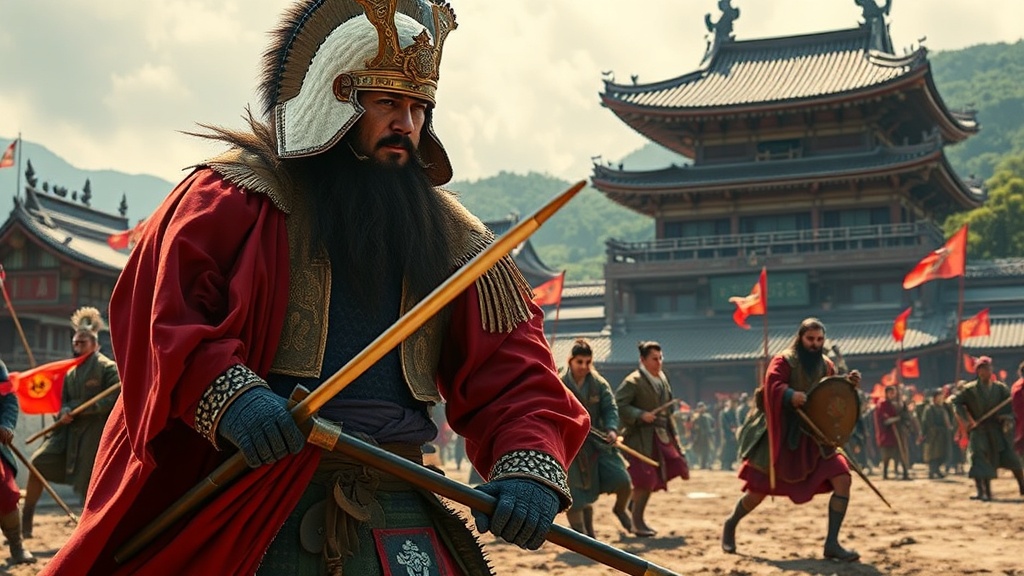
At the height of their power, the Mongols had carved out the largest contiguous land empire in human history. They had shattered the Kievan Rus, obliterated the Khwarazmian Empire, and absorbed the mighty Jin and Song dynasties of China like stones swallowed by a river. Entire civilisations bent to their will. And yet, sitting just off the eastern coast of their greatest prize — China itself — was a cluster of islands that refused, twice, to fall. Japan did not simply survive the Mongol invasions. It repelled them. And the story of how that happened is one of the most dramatic and consequential episodes in medieval military history, shaped by political fractures, samurai defiance, catastrophic storms, and the limits of the greatest war machine the ancient world had ever seen.
The Empire Behind the Invasion
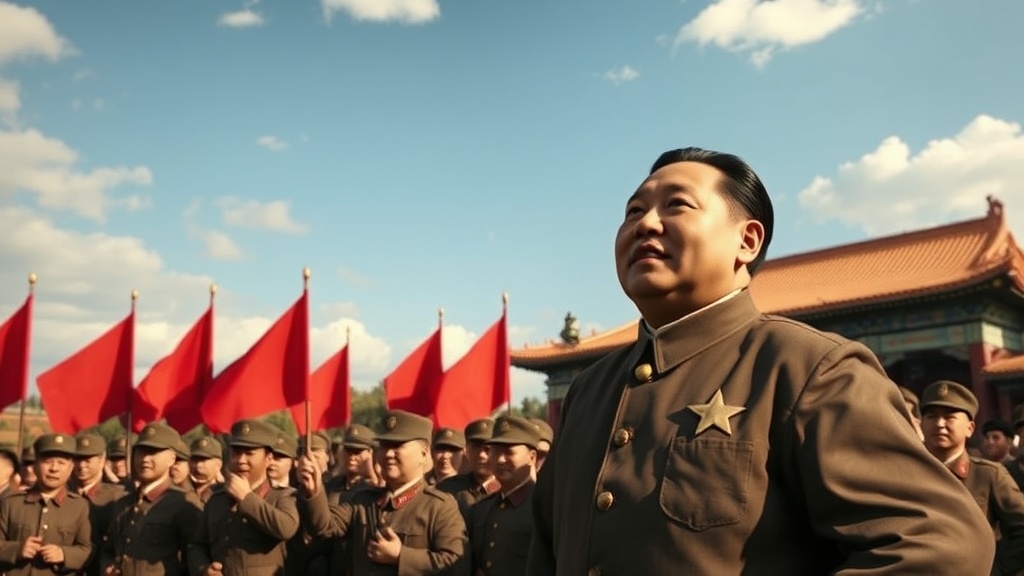
To understand why Kublai Khan turned his gaze toward Japan, you first have to understand the world he had built — and the fragile position he occupied within it. When the Great Khan Möngke died in 1259, the Mongol Empire did not pass smoothly to his successor. Kublai Khan, Möngke's younger brother, was viewed with deep suspicion by many of the Mongol nobility, who considered him too enamoured with Chinese culture and governance. A rival faction backed another brother, Ariq Böke, and the Mongols settled the dispute the way they so often did: with war.
Kublai won. But the victory came at a price. The great unified empire fragmented into separate khanates — the Golden Horde in the west, the Ilkhanate in Persia, the Chagatai Khanate in Central Asia — each increasingly autonomous. Kublai remained the nominal supreme ruler, the Grand Khan, but in practice he ruled the Yuan dynasty of China and little else. His legitimacy rested on conquest and expansion. Consolidating Korea under his dominion and finishing off the Southern Song dynasty in China were achievements, but they were not enough. An empire that stops expanding begins to look weak. And so, Japan entered the crosshairs.
The Diplomatic Prelude and a Fatal Insult
Before the first arrow was fired or the first ship launched, Kublai Khan tried the diplomatic route — though "diplomacy" in this context was little more than a formal demand dressed in polite language. His envoys arrived at the court of the Kamakura Shogunate bearing a message that was elegant in its simplicity: acknowledge Mongol suzerainty, pay tribute, or face the consequences.
The Kamakura Shogunate was itself a layered political structure of remarkable complexity. Japan's emperors, though revered, were largely ceremonial figures. Real power rested with the shogun. And at this particular moment, even the shogun was something of a figurehead — the true authority belonged to the shikken, or regent, a man named Hojo Tokimune. He had only just assumed the regency when Kublai's messengers arrived. Young, untested, and under enormous pressure, Tokimune made a decision that would define his legacy: he sent the envoys back to China without a reply.
A second embassy followed. This time, Tokimune agreed to receive the envoys — in the capital, Kamakura — whereupon he had them beheaded. It was a declaration as clear as any battle cry. Japan had just joined the distinguished and short-lived club of states that murdered Mongol messengers. The consequences, as any student of Mongol history could predict, were inevitable.
The First Invasion: Gunpowder, Panic, and a Timely Storm
In 1274, the Yuan fleet set sail. Built largely by Korean shipwrights — who, it should be noted, had little choice in the matter — the armada carried a combined force of Mongol, Chinese, and Korean soldiers. They moved efficiently, first seizing the island of Tsushima, then pushing toward the Japanese mainland and landing at Hakata Bay in northern Kyushu.
What followed was a collision of two entirely different military traditions. The samurai of Japan were formidable warriors, but their battlefield culture had evolved around individual combat — the identification of a worthy opponent, the formal challenge, the duel. They were not remotely prepared for what the Yuan army brought with it: disciplined infantry formations, coordinated cavalry tactics honed across a continent, and — most alarmingly — gunpowder weapons. When massed ranks of Yuan soldiers unleashed volleys of fire arrows, explosive projectiles, and hand cannons, the Japanese lines buckled. There was no cultural or tactical framework for responding to weapons that killed from a distance without ceremony or warning. Retreat, and the adoption of hit-and-run guerrilla tactics, became the only rational response.
The Yuan forces advanced and established a beachhead. But here, the first cracks in the invasion plan appeared. The army lacked the resources and supply lines needed for a sustained inland campaign. And then the sailors brought news that would save Japan: a storm was coming. The Yuan commanders, unwilling to risk their fleet, ordered a withdrawal. They made it back to their ships — and sailed directly into the tempest. Roughly a third of the invasion force drowned. The first attempt to conquer Japan ended not with a decisive defeat on the battlefield, but with the sea claiming what the samurai could not.
Preparing for Round Two: Walls, Militias, and a Bold Counter-Plan
The Japanese did not celebrate and relax. Hojo Tokimune, understanding with cold clarity that Kublai Khan would return, immediately set Japan on a war footing. Stone defensive walls were ordered built along the coastline at Hakata Bay — a formidable barrier designed to deny any future invasion force an easy landing. Militias were raised to supplement the warrior class. The entire Kyushu coastline became a fortified theatre of preparation.
Perhaps the most audacious element of Japanese strategic thinking in this period was the brief consideration of a pre-emptive strike against Korea. The logic was sound: destroy the Yuan's primary staging ground and shipbuilding capacity, seize the offshore islands, and reward loyal vassals with land. It was bold, it was aggressive, and it was ultimately abandoned. The Kamakura Shogunate was a politically volatile institution, and its leaders feared that dispatching large numbers of troops overseas would create the conditions for internal rebellion. The coastal walls took priority. It was the right call.
The Second Invasion: Scale, Chaos, and the Divine Wind
By 1281, Kublai Khan had assembled what contemporary sources described as somewhere between 135,000 and 150,000 men — a figure almost certainly inflated by medieval chroniclers, but which points to a force dramatically larger than the first. Two fleets departed from different points: a Korean-based fleet and a larger armada sailing from China. The plan was for both to rendezvous near the Japanese coast before launching a coordinated assault.
The plan fell apart almost immediately. The Korean fleet arrived early, its commanders impatient. They attempted to establish a beachhead before the main force arrived, but the stone walls that Japanese labourers had spent years building changed everything. Where in 1274 the Yuan had landed with relative ease, they now faced a hard coastal barrier defended by determined samurai. The beachhead failed. The Korean fleet was pushed back to offshore islands, harried constantly by Japanese raiding parties — small boats slipping through the darkness to attack Yuan ships at anchor, cutting down soldiers on deck, and vanishing before a response could be organised. These raids were tactically minor but psychologically devastating, keeping the invasion force off-balance and exhausted.
When the main Chinese fleet finally arrived, the two forces merged, but the coordination that should have made them invincible never materialised. And then, in August of 1281, the sky changed. A typhoon of extraordinary power — what the Japanese would call kamikaze, the Divine Wind — tore through the assembled Yuan fleet with apocalyptic force. Ships were smashed against each other and driven onto rocks. Men drowned by the tens of thousands. The army that had made it ashore was suddenly stranded, leaderless, and abandoned. The samurai fell upon the survivors with devastating efficiency. The second Mongol invasion of Japan was over.
Why Japan Won — And Why the Mongols Never Tried Again
It is tempting to attribute Japan's survival entirely to the typhoons, and the Japanese themselves certainly saw the storms as divine intervention — a narrative that would carry profound cultural weight for centuries and would be tragically echoed in the name given to the suicide pilots of the Second World War. But this reading does a disservice to the Japanese defence.
Free Weekly Newsletter
Enjoying this guide?
Get the best articles like this one delivered to your inbox every week. No spam.
The stone walls at Hakata Bay fundamentally altered the tactical calculus of the invasion. The samurai's adaptation — abandoning formal duelling in favour of flexible, aggressive raiding — showed a military culture capable of learning under pressure. The Kamakura government's mobilisation of resources, its construction of fortifications, and its maintenance of large reserve forces meant that even if the typhoons had not come, the Yuan army would have faced a grinding, costly campaign with increasingly stretched supply lines against an enemy fighting on home soil. History suggests the outcome, storm or no storm, would have been far from certain.
For Kublai Khan, the double catastrophe was a humiliation that his court could barely absorb. He reportedly began planning a third invasion almost immediately, only to be talked out of it by advisors who pointed to the rebellions spreading across China, the depletion of resources, and the sheer logistical madness of the proposition. Kublai spent his remaining years invading Burma, Vietnam, and Java — campaigns that ranged from costly to disastrous. Japan was left alone.
After Kublai's death, neither the remaining Yuan emperors nor the Ming dynasty that replaced them made any serious attempt to conquer Japan. The Ming nominally maintained that Japan owed them fealty — a claim the Japanese shogunate found alternately amusing and irritating — but the memory of Kublai's failures was a standing deterrent. When the Ming attempted to interfere in a Japanese succession dispute, the shogun's response was characteristically blunt: China, he pointed out, was in no position to enforce anything. He was right. The relationship defaulted to trade and cautious diplomacy — until Japan launched its own invasion of Korea in the late sixteenth century and set the entire region ablaze again, but that is another story entirely.
The Mongol failure to conquer Japan is ultimately a story about the limits of even the most powerful empires. Geography matters. Preparation matters. The willingness of a people to fight for their own land, on their own terms, with their own methods, matters enormously. The Mongols rewrote the rules of warfare across a continent. Japan, in two brutal confrontations, refused to play by those rules — and survived.
Frequently Asked Questions
Did the Mongols ever successfully invade an island nation?
The Mongols had mixed results with maritime campaigns. They successfully subjugated parts of coastal Southeast Asia and compelled the submission of various island territories, but large-scale amphibious invasions against defended island nations proved consistently difficult. Japan was the most dramatic failure, but costly campaigns against Java and the Vietnamese coast also demonstrated the limits of Mongol naval power when applied against prepared coastal defenders.
Was the kamikaze typhoon the only reason Japan survived?
No. While the 1281 typhoon was catastrophic for the Yuan fleet, Japan's survival rested on multiple factors: the coastal fortifications built after the first invasion, the tactical adaptation of the samurai to face Yuan gunpowder weapons, aggressive naval raiding that kept the invasion force destabilised, and the logistical impossibility of sustaining such a large army deep into Japanese territory. The storms accelerated and sealed the Mongol defeat, but the Japanese defence had already significantly blunted the invasion before the typhoon struck.
Why did Kublai Khan want to conquer Japan specifically?
Japan's geographic position — sitting just off the coast of China, the wealthiest and most powerful part of the Mongol empire — made it a natural target. Beyond that, Kublai's political legitimacy depended partly on continuous expansion. Japan's refusal to pay tribute was also a direct challenge to Mongol prestige that could not go unanswered without appearing weak to both foreign powers and domestic rivals.
How did the Mongol invasions change Japan politically and culturally?
The invasions had profound and largely destabilising effects on the Kamakura Shogunate. While the government successfully defended Japan, it struggled to reward the warriors who had fought — the traditional system of distributing conquered land as payment was impossible when there was no new land to distribute. This financial and political strain contributed to the eventual collapse of the Kamakura Shogunate in 1333. Culturally, the concept of kamikaze — divine winds sent to protect Japan — became deeply embedded in national identity, resurfacing with dark resonance in the twentieth century.
Frequently Asked Questions
The Empire Behind the Invasion
To understand why Kublai Khan turned his gaze toward Japan, you first have to understand the world he had built — and the fragile position he occupied within it. When the Great Khan Möngke died in 1259, the Mongol Empire did not pass smoothly to his successor. Kublai Khan, Möngke's younger brother, was viewed with deep suspicion by many of the Mongol nobility, who considered him too enamoured with Chinese culture and governance. A rival faction backed another brother, Ariq Böke, and the Mongols settled the dispute the way they so often did: with war.
Kublai won. But the victory came at a price. The great unified empire fragmented into separate khanates — the Golden Horde in the west, the Ilkhanate in Persia, the Chagatai Khanate in Central Asia — each increasingly autonomous. Kublai remained the nominal supreme ruler, the Grand Khan, but in practice he ruled the Yuan dynasty of China and little else. His legitimacy rested on conquest and expansion. Consolidating Korea under his dominion and finishing off the Southern Song dynasty in China were achievements, but they were not enough. An empire that stops expanding begins to look weak. And so, Japan entered the crosshairs.
The Diplomatic Prelude and a Fatal Insult
Before the first arrow was fired or the first ship launched, Kublai Khan tried the diplomatic route — though "diplomacy" in this context was little more than a formal demand dressed in polite language. His envoys arrived at the court of the Kamakura Shogunate bearing a message that was elegant in its simplicity: acknowledge Mongol suzerainty, pay tribute, or face the consequences.
The Kamakura Shogunate was itself a layered political structure of remarkable complexity. Japan's emperors, though revered, were largely ceremonial figures. Real power rested with the shogun. And at this particular moment, even the shogun was something of a figurehead — the true authority belonged to the shikken, or regent, a man named Hojo Tokimune. He had only just assumed the regency when Kublai's messengers arrived. Young, untested, and under enormous pressure, Tokimune made a decision that would define his legacy: he sent the envoys back to China without a reply.
A second embassy followed. This time, Tokimune agreed to receive the envoys — in the capital, Kamakura — whereupon he had them beheaded. It was a declaration as clear as any battle cry. Japan had just joined the distinguished and short-lived club of states that murdered Mongol messengers. The consequences, as any student of Mongol history could predict, were inevitable.
The First Invasion: Gunpowder, Panic, and a Timely Storm
In 1274, the Yuan fleet set sail. Built largely by Korean shipwrights — who, it should be noted, had little choice in the matter — the armada carried a combined force of Mongol, Chinese, and Korean soldiers. They moved efficiently, first seizing the island of Tsushima, then pushing toward the Japanese mainland and landing at Hakata Bay in northern Kyushu.
What followed was a collision of two entirely different military traditions. The samurai of Japan were formidable warriors, but their battlefield culture had evolved around individual combat — the identification of a worthy opponent, the formal challenge, the duel. They were not remotely prepared for what the Yuan army brought with it: disciplined infantry formations, coordinated cavalry tactics honed across a continent, and — most alarmingly — gunpowder weapons. When massed ranks of Yuan soldiers unleashed volleys of fire arrows, explosive projectiles, and hand cannons, the Japanese lines buckled. There was no cultural or tactical framework for responding to weapons that killed from a distance without ceremony or warning. Retreat, and the adoption of hit-and-run guerrilla tactics, became the only rational response.
The Yuan forces advanced and established a beachhead. But here, the first cracks in the invasion plan appeared. The army lacked the resources and supply lines needed for a sustained inland campaign. And then the sailors brought news that would save Japan: a storm was coming. The Yuan commanders, unwilling to risk their fleet, ordered a withdrawal. They made it back to their ships — and sailed directly into the tempest. Roughly a third of the invasion force drowned. The first attempt to conquer Japan ended not with a decisive defeat on the battlefield, but with the sea claiming what the samurai could not.
Preparing for Round Two: Walls, Militias, and a Bold Counter-Plan
The Japanese did not celebrate and relax. Hojo Tokimune, understanding with cold clarity that Kublai Khan would return, immediately set Japan on a war footing. Stone defensive walls were ordered built along the coastline at Hakata Bay — a formidable barrier designed to deny any future invasion force an easy landing. Militias were raised to supplement the warrior class. The entire Kyushu coastline became a fortified theatre of preparation.
Perhaps the most audacious element of Japanese strategic thinking in this period was the brief consideration of a pre-emptive strike against Korea. The logic was sound: destroy the Yuan's primary staging ground and shipbuilding capacity, seize the offshore islands, and reward loyal vassals with land. It was bold, it was aggressive, and it was ultimately abandoned. The Kamakura Shogunate was a politically volatile institution, and its leaders feared that dispatching large numbers of troops overseas would create the conditions for internal rebellion. The coastal walls took priority. It was the right call.
The Second Invasion: Scale, Chaos, and the Divine Wind
By 1281, Kublai Khan had assembled what contemporary sources described as somewhere between 135,000 and 150,000 men — a figure almost certainly inflated by medieval chroniclers, but which points to a force dramatically larger than the first. Two fleets departed from different points: a Korean-based fleet and a larger armada sailing from China. The plan was for both to rendezvous near the Japanese coast before launching a coordinated assault.
The plan fell apart almost immediately. The Korean fleet arrived early, its commanders impatient. They attempted to establish a beachhead before the main force arrived, but the stone walls that Japanese labourers had spent years building changed everything. Where in 1274 the Yuan had landed with relative ease, they now faced a hard coastal barrier defended by determined samurai. The beachhead failed. The Korean fleet was pushed back to offshore islands, harried constantly by Japanese raiding parties — small boats slipping through the darkness to attack Yuan ships at anchor, cutting down soldiers on deck, and vanishing before a response could be organised. These raids were tactically minor but psychologically devastating, keeping the invasion force off-balance and exhausted.
When the main Chinese fleet finally arrived, the two forces merged, but the coordination that should have made them invincible never materialised. And then, in August of 1281, the sky changed. A typhoon of extraordinary power — what the Japanese would call kamikaze, the Divine Wind — tore through the assembled Yuan fleet with apocalyptic force. Ships were smashed against each other and driven onto rocks. Men drowned by the tens of thousands. The army that had made it ashore was suddenly stranded, leaderless, and abandoned. The samurai fell upon the survivors with devastating efficiency. The second Mongol invasion of Japan was over.
Why Japan Won — And Why the Mongols Never Tried Again
It is tempting to attribute Japan's survival entirely to the typhoons, and the Japanese themselves certainly saw the storms as divine intervention — a narrative that would carry profound cultural weight for centuries and would be tragically echoed in the name given to the suicide pilots of the Second World War. But this reading does a disservice to the Japanese defence.
The stone walls at Hakata Bay fundamentally altered the tactical calculus of the invasion. The samurai's adaptation — abandoning formal duelling in favour of flexible, aggressive raiding — showed a military culture capable of learning under pressure. The Kamakura government's mobilisation of resources, its construction of fortifications, and its maintenance of large reserve forces meant that even if the typhoons had not come, the Yuan army would have faced a grinding, costly campaign with increasingly stretched supply lines against an enemy fighting on home soil. History suggests the outcome, storm or no storm, would have been far from certain.
For Kublai Khan, the double catastrophe was a humiliation that his court could barely absorb. He reportedly began planning a third invasion almost immediately, only to be talked out of it by advisors who pointed to the rebellions spreading across China, the depletion of resources, and the sheer logistical madness of the proposition. Kublai spent his remaining years invading Burma, Vietnam, and Java — campaigns that ranged from costly to disastrous. Japan was left alone.
After Kublai's death, neither the remaining Yuan emperors nor the Ming dynasty that replaced them made any serious attempt to conquer Japan. The Ming nominally maintained that Japan owed them fealty — a claim the Japanese shogunate found alternately amusing and irritating — but the memory of Kublai's failures was a standing deterrent. When the Ming attempted to interfere in a Japanese succession dispute, the shogun's response was characteristically blunt: China, he pointed out, was in no position to enforce anything. He was right. The relationship defaulted to trade and cautious diplomacy — until Japan launched its own invasion of Korea in the late sixteenth century and set the entire region ablaze again, but that is another story entirely.
The Mongol failure to conquer Japan is ultimately a story about the limits of even the most powerful empires. Geography matters. Preparation matters. The willingness of a people to fight for their own land, on their own terms, with their own methods, matters enormously. The Mongols rewrote the rules of warfare across a continent. Japan, in two brutal confrontations, refused to play by those rules — and survived.
Frequently Asked Questions
Did the Mongols ever successfully invade an island nation?
The Mongols had mixed results with maritime campaigns. They successfully subjugated parts of coastal Southeast Asia and compelled the submission of various island territories, but large-scale amphibious invasions against defended island nations proved consistently difficult. Japan was the most dramatic failure, but costly campaigns against Java and the Vietnamese coast also demonstrated the limits of Mongol naval power when applied against prepared coastal defenders.
Was the kamikaze typhoon the only reason Japan survived?
No. While the 1281 typhoon was catastrophic for the Yuan fleet, Japan's survival rested on multiple factors: the coastal fortifications built after the first invasion, the tactical adaptation of the samurai to face Yuan gunpowder weapons, aggressive naval raiding that kept the invasion force destabilised, and the logistical impossibility of sustaining such a large army deep into Japanese territory. The storms accelerated and sealed the Mongol defeat, but the Japanese defence had already significantly blunted the invasion before the typhoon struck.
Why did Kublai Khan want to conquer Japan specifically?
Japan's geographic position — sitting just off the coast of China, the wealthiest and most powerful part of the Mongol empire — made it a natural target. Beyond that, Kublai's political legitimacy depended partly on continuous expansion. Japan's refusal to pay tribute was also a direct challenge to Mongol prestige that could not go unanswered without appearing weak to both foreign powers and domestic rivals.
How did the Mongol invasions change Japan politically and culturally?
The invasions had profound and largely destabilising effects on the Kamakura Shogunate. While the government successfully defended Japan, it struggled to reward the warriors who had fought — the traditional system of distributing conquered land as payment was impossible when there was no new land to distribute. This financial and political strain contributed to the eventual collapse of the Kamakura Shogunate in 1333. Culturally, the concept of kamikaze — divine winds sent to protect Japan — became deeply embedded in national identity, resurfacing with dark resonance in the twentieth century.
About Zeebrain Editorial
Zeebrain publishes independent analysis of markets, investing, personal finance, and business. We disclose affiliate relationships, never accept payment for coverage, and fact-check all claims against primary sources. Read our editorial policy →
How this article was produced: Zeebrain articles are created with AI assistance from primary sources (including cited videos and market data) and reviewed under our editorial standards before publication. Spot an error? Tell us and we will correct it.
More from History & Mysteries



Related Guides
Keep exploring this topic
Why Japan's 1945 Army Coup Against the Emperor Failed
History & Mysteries · World War II · Japanese History
The Samurai Who Became a Roman Citizen in 1615
Entertainment · Japanese History · Samurai
Why Mao Won the Chinese Civil War: The Full Story
History & Mysteries
Why Only Germany Paid WWI Reparations: The Full Story
History & Mysteries
Explore More Categories
Keep browsing by topic and build depth around the subjects you care about most.