Why Minimalism Still Matters After 14 Years of Living It
Quick Summary
Minimalism isn't just about owning less. After 14 years of living it through every life stage, here's what it really means to live simply in a noisy world.
In This Article
The World Got Louder. Minimalism Got More Important.
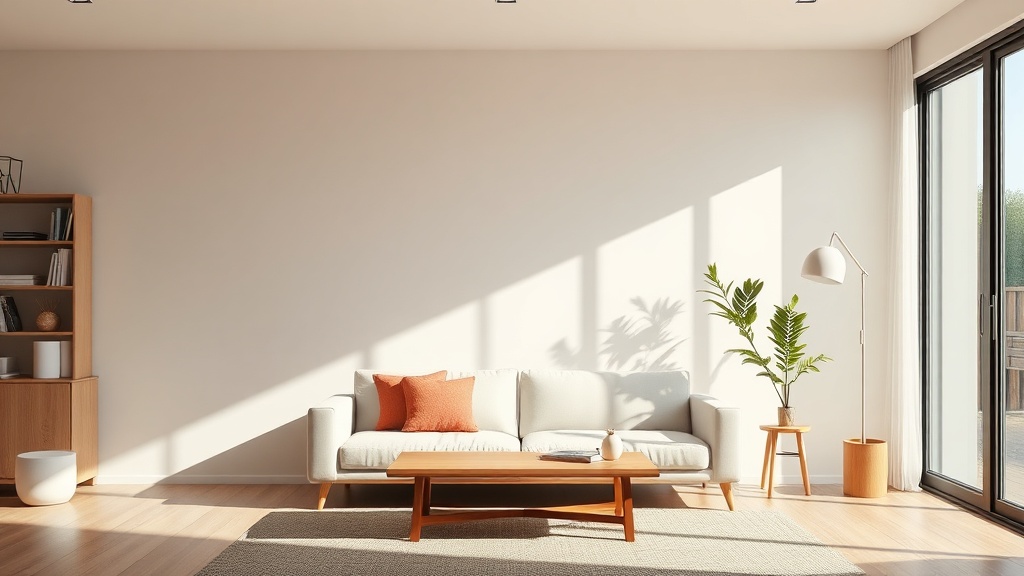
When most people hear the word minimalism, they picture a stark white apartment, a capsule wardrobe, and a person who owns exactly one mug. That's the aesthetic version — the Instagram version — and it misses the point almost entirely. Real minimalism isn't a design choice. It's a decision-making framework. And in a world where algorithms are engineered to manufacture desire, where AI-powered advertising adapts to your insecurities in real time, and where the sheer volume of choices, content, and commitments competing for your attention has never been higher, that framework has never been more valuable.
Filmmaker and creator Matt D'Avella has been living as a minimalist for over 14 years. Not as a trend, not as a brand — as a genuine operating philosophy that he's carried through radically different seasons of life: single and broke, newly partnered, internationally relocated, homeowner, and now father. What he's found, and what the broader research on behaviour and identity supports, is that minimalism works not because it tells you what to own, but because it consistently forces the question: what actually matters here?
This article goes deeper than the basics. If you've ever wondered whether minimalism is still a relevant idea or just a relic of the 2010s decluttering boom, here's your answer.
Why Minimalism Is Harder Now Than It's Ever Been
There's a tempting narrative that minimalism is getting easier — that people are waking up to overconsumption, that sustainability is trending, that slow living is having a cultural moment. And while those things are partially true, they exist alongside something far more powerful pulling in the opposite direction.
Modern advertising has evolved from billboards and TV spots into a sophisticated psychological operation. Brands no longer just show you products. They identify your values, your fears, your aspirations, and your self-image — and they sell you an identity. Buy this truck and you're the kind of man who doesn't back down. Buy this skincare line and you're the kind of woman who prioritises herself. The product is almost incidental. The real transaction is in the story being told about who you are and who you could be.
AI has accelerated this dramatically. Personalisation engines can now microtarget messaging at a level of specificity that would have been impossible even five years ago. Your feed isn't showing you random ads — it's showing you ads that have been calibrated to the specific version of you that is most likely to spend money. That's not speculation; that's the business model.
Against this backdrop, having a clear, consistent identity — one that you've consciously chosen rather than had sold to you — is genuinely protective. Calling yourself a minimalist isn't virtue signalling. It's inoculation.
The Identity Trick That Actually Works
Behavioural science has known for years that identity-based habit formation is more durable than goal-based motivation. James Clear articulated this well in Atomic Habits: if you want to stop smoking, telling yourself "I'm trying to quit" is weaker than telling yourself "I'm not a smoker." The former is a struggle; the latter is just who you are.
Minimalism works the same way. When you internalise the label — not as a rigid set of rules but as a loose but meaningful self-concept — it shifts the default. Instead of asking "should I buy this?" and weighing it against nothing, you're asking "does a minimalist need this?" or better yet, "does this version of me need this?" That's a much easier question to answer honestly.
This is precisely the mechanism advertisers have used against consumers for decades. They sell identity. The insight is that you can appropriate the same mechanism for yourself. Choose your identity deliberately, and let it do the heavy lifting when temptation or social pressure shows up.
The practical upshot: you don't need to justify every decision from first principles if you've already decided, at a foundational level, what kind of person you are. Minimalism as identity removes a huge amount of cognitive friction from daily life.
The Simplicity Filter: One Question That Changes Everything
One of the most transferable ideas from long-term minimalist practice isn't about physical possessions at all. It's a single evaluative question applied to any major decision: will this make my life simpler or more complicated?
This is not the same as asking whether something is a good idea, or whether it's profitable, or whether other people think you should do it. It's a direct audit of complexity — a recognition that almost every appealing opportunity comes with hidden costs in time, attention, energy, and stress that rarely appear in the initial pitch.
Consider a common scenario: should you invest in a rental property? On paper, the case is straightforward — passive income, equity growth, asset diversification. But the actual experience of property ownership involves tenant management, maintenance coordination, legal compliance, insurance, periods of vacancy, and the ongoing cognitive load of being a landlord. For someone who values simplicity and mental space, the index fund alternative — lower friction, comparable long-term return, zero management overhead — might be the smarter choice even if it's less exciting to talk about at dinner.
The same filter applies to professional decisions. Should you take on a business partner? Scale your team? Launch a new product line? All of these can be genuinely worthwhile, but they all add layers. The question isn't whether the reward is real — it's whether the added complexity is something you're consciously choosing, with full awareness of the trade-offs, rather than just saying yes because the opportunity sounds impressive.
Applying this filter consistently over time creates a life that is, by design, more aligned with your actual values rather than a series of accumulated obligations you never quite intended to take on.
Minimalism Across Life Stages: It Changes Shape, Not Function
One of the most honest and underexplored aspects of minimalism is how dramatically its expression changes as life circumstances shift. The version of minimalism available to a 24-year-old living alone bears almost no resemblance to the version available to a 38-year-old with a mortgage, a business, and a toddler — and expecting otherwise is a fast route to either abandoning the philosophy or feeling like a failure at it.
The core questions remain the same: what do I actually need? How do I want to spend my time? What can I let go of? But the answers transform completely depending on where you are. In early adulthood, minimalism might mean owning less stuff and spending less money. In a relationship, it might mean simplifying shared decision-making and reducing domestic overwhelm. As a parent, it might mean radically scaling back professional ambitions to create the kind of presence that actually matters in childhood — and making peace with the output and income that choice costs you.
Ryan Holiday, the author and Stoic philosophy advocate, frames this well: the metric for parental success isn't productivity. It's presence. Being genuinely there — for school runs, for slow mornings, for the unremarkable moments that accumulate into a childhood — is itself a radical act of subtraction in a culture that relentlessly rewards optimisation and output.
For anyone navigating a major life transition, this reframe is worth sitting with. Minimalism doesn't demand that you perform simplicity according to some fixed standard. It asks that you keep returning to the same honest questions, even as the answers keep changing.
What Minimalism Is Not (And Why That Matters)
Minimalism has an image problem, largely self-inflicted. The aesthetic wing of the movement — white walls, 33-item wardrobes, people photographing their single bookshelf on Instagram — has created the impression that minimalism is a privilege available only to those who can afford beautiful empty space and artisanal objects. That's a fair critique of the aesthetic. It's not a fair critique of the philosophy.
At its core, minimalism is simply intentionality about what you allow into your life: your home, your schedule, your relationships, your attention, your identity. It's not about owning less to feel superior. It's about owning enough — and spending your finite time and energy on what you've genuinely decided matters, rather than on what the market has decided you should want.
This distinction matters because it opens the philosophy up to a much wider range of people and circumstances. You don't need to own nothing. You don't need a particular income level. You don't need to live in a particular kind of space. You need to be honest with yourself about what's adding value to your life and what's just adding weight — and to make choices accordingly.
That's a practice. And like any practice, it doesn't end. It just deepens.
How to Actually Start (Or Restart) Living More Simply
If you've read this far and feel the pull towards a simpler life, the entry point doesn't have to be dramatic. You don't need to sell your possessions or delete social media tomorrow. Here are five practical starting points that work across different life stages:
Free Weekly Newsletter
Enjoying this guide?
Get the best articles like this one delivered to your inbox every week. No spam.
1. Audit your commitments, not just your cupboards. Most people find their schedule is more cluttered than their home. List every regular obligation — professional, social, personal — and ask whether each one is something you actively chose or something you drifted into. The ones you can't justify keeping deserve a serious look.
2. Install the simplicity filter. Before your next significant decision, ask the single question: will this make my life simpler or more complicated? You don't have to always choose simple — sometimes complexity is worth it — but you should always choose consciously.
3. Reduce decision fatigue at the margins. Minimalism isn't just about big decisions. Standardising small ones — a consistent morning routine, a simple weekly meal structure, a default answer to low-stakes requests — preserves cognitive bandwidth for the things that actually matter.
4. Choose an identity, not just a goal. Instead of saying "I want to spend less time on my phone," try "I'm someone who keeps my phone out of the bedroom." Identity statements are stickier than resolutions because they shift the default rather than requiring repeated acts of willpower.
5. Give the philosophy room to evolve. Your version of minimalism at 25 should look different from your version at 45. If it doesn't, you're not updating. Revisit the core questions regularly — what do I need, how do I want to spend my time, what can I release — and be willing to let the answers surprise you.
Conclusion
Minimalism, properly understood, is not a trend that peaked around 2016 and faded. It's a response to a permanent condition of modern life: the relentless pressure to want more, do more, and be more than you currently are. That pressure isn't going away. If anything, it's accelerating.
What minimalism offers isn't an escape from the noise. It's a framework for maintaining clarity inside it — a way of returning, again and again, to the questions that actually matter. It changes shape as life changes. It doesn't solve everything. But after 14 years of living it through every conceivable disruption, the evidence is fairly compelling: it works.
Not because it tells you what to own. But because it keeps reminding you what to value.
Frequently Asked Questions
Is minimalism just for people who can afford to own less?
This is one of the most common misconceptions about minimalism. The aesthetic version — expensive furniture, deliberately empty rooms — does carry a class dimension worth acknowledging. But the philosophical core of minimalism has nothing to do with wealth. Intentional living, reducing unnecessary commitments, and being deliberate about what you allow into your life are practices available regardless of income. In fact, for people with limited financial resources, minimalism's emphasis on contentment with what you have and resistance to manufactured desire can be particularly liberating.
Can you be a minimalist if you have kids?
Absolutely — though it looks very different than minimalism without children. Parenting adds irreducible complexity to life, and no philosophy can change that. What minimalism offers parents is a framework for making peace with the trade-offs. Choosing presence over productivity, letting go of the identity you had before children, and releasing the pressure to optimise every moment are all expressions of minimalist thinking that are not only compatible with parenting but arguably more important because of it.
What's the difference between minimalism and just being frugal?
Frugality is primarily about money — spending less, saving more, getting value for what you pay. Minimalism is broader. It's about reducing unnecessary complexity across all areas of life: possessions, yes, but also commitments, relationships, mental load, and digital consumption. You can be frugal without being a minimalist, and you can be a minimalist who spends freely on things that genuinely matter to you. The overlap is real but the motivations and scope are different.
How do you use minimalism as a decision-making tool rather than just a lifestyle label?
The most practical application is the simplicity filter: before any significant decision, ask whether it will make your life simpler or more complicated. This single question cuts through the noise of excitement, social pressure, and FOMO that tends to drive poor decisions. It doesn't mean always choosing simple — some of the best decisions in life add complexity — but it ensures that when you choose complexity, you're doing it consciously and with full awareness of the real costs involved in terms of time, energy, and mental bandwidth.
Does minimalism require getting rid of everything you own?
No. The popular image of minimalism — a person who owns 100 things and can fit their life into a backpack — is one expression of the philosophy, not a definition of it. Minimalism asks you to be intentional about what you keep, not to reach a particular numerical threshold. The useful question isn't "how little can I own?" but "does this add genuine value to my life, or is it just taking up space — physical, mental, or otherwise?" The answer will be different for everyone, and that's entirely the point.
Free Investing Tools
Frequently Asked Questions
The World Got Louder. Minimalism Got More Important.
When most people hear the word minimalism, they picture a stark white apartment, a capsule wardrobe, and a person who owns exactly one mug. That's the aesthetic version — the Instagram version — and it misses the point almost entirely. Real minimalism isn't a design choice. It's a decision-making framework. And in a world where algorithms are engineered to manufacture desire, where AI-powered advertising adapts to your insecurities in real time, and where the sheer volume of choices, content, and commitments competing for your attention has never been higher, that framework has never been more valuable.
Filmmaker and creator Matt D'Avella has been living as a minimalist for over 14 years. Not as a trend, not as a brand — as a genuine operating philosophy that he's carried through radically different seasons of life: single and broke, newly partnered, internationally relocated, homeowner, and now father. What he's found, and what the broader research on behaviour and identity supports, is that minimalism works not because it tells you what to own, but because it consistently forces the question: what actually matters here?
This article goes deeper than the basics. If you've ever wondered whether minimalism is still a relevant idea or just a relic of the 2010s decluttering boom, here's your answer.
Why Minimalism Is Harder Now Than It's Ever Been
There's a tempting narrative that minimalism is getting easier — that people are waking up to overconsumption, that sustainability is trending, that slow living is having a cultural moment. And while those things are partially true, they exist alongside something far more powerful pulling in the opposite direction.
Modern advertising has evolved from billboards and TV spots into a sophisticated psychological operation. Brands no longer just show you products. They identify your values, your fears, your aspirations, and your self-image — and they sell you an identity. Buy this truck and you're the kind of man who doesn't back down. Buy this skincare line and you're the kind of woman who prioritises herself. The product is almost incidental. The real transaction is in the story being told about who you are and who you could be.
AI has accelerated this dramatically. Personalisation engines can now microtarget messaging at a level of specificity that would have been impossible even five years ago. Your feed isn't showing you random ads — it's showing you ads that have been calibrated to the specific version of you that is most likely to spend money. That's not speculation; that's the business model.
Against this backdrop, having a clear, consistent identity — one that you've consciously chosen rather than had sold to you — is genuinely protective. Calling yourself a minimalist isn't virtue signalling. It's inoculation.
The Identity Trick That Actually Works
Behavioural science has known for years that identity-based habit formation is more durable than goal-based motivation. James Clear articulated this well in Atomic Habits: if you want to stop smoking, telling yourself "I'm trying to quit" is weaker than telling yourself "I'm not a smoker." The former is a struggle; the latter is just who you are.
Minimalism works the same way. When you internalise the label — not as a rigid set of rules but as a loose but meaningful self-concept — it shifts the default. Instead of asking "should I buy this?" and weighing it against nothing, you're asking "does a minimalist need this?" or better yet, "does this version of me need this?" That's a much easier question to answer honestly.
This is precisely the mechanism advertisers have used against consumers for decades. They sell identity. The insight is that you can appropriate the same mechanism for yourself. Choose your identity deliberately, and let it do the heavy lifting when temptation or social pressure shows up.
The practical upshot: you don't need to justify every decision from first principles if you've already decided, at a foundational level, what kind of person you are. Minimalism as identity removes a huge amount of cognitive friction from daily life.
The Simplicity Filter: One Question That Changes Everything
One of the most transferable ideas from long-term minimalist practice isn't about physical possessions at all. It's a single evaluative question applied to any major decision: will this make my life simpler or more complicated?
This is not the same as asking whether something is a good idea, or whether it's profitable, or whether other people think you should do it. It's a direct audit of complexity — a recognition that almost every appealing opportunity comes with hidden costs in time, attention, energy, and stress that rarely appear in the initial pitch.
Consider a common scenario: should you invest in a rental property? On paper, the case is straightforward — passive income, equity growth, asset diversification. But the actual experience of property ownership involves tenant management, maintenance coordination, legal compliance, insurance, periods of vacancy, and the ongoing cognitive load of being a landlord. For someone who values simplicity and mental space, the index fund alternative — lower friction, comparable long-term return, zero management overhead — might be the smarter choice even if it's less exciting to talk about at dinner.
The same filter applies to professional decisions. Should you take on a business partner? Scale your team? Launch a new product line? All of these can be genuinely worthwhile, but they all add layers. The question isn't whether the reward is real — it's whether the added complexity is something you're consciously choosing, with full awareness of the trade-offs, rather than just saying yes because the opportunity sounds impressive.
Applying this filter consistently over time creates a life that is, by design, more aligned with your actual values rather than a series of accumulated obligations you never quite intended to take on.
Minimalism Across Life Stages: It Changes Shape, Not Function
One of the most honest and underexplored aspects of minimalism is how dramatically its expression changes as life circumstances shift. The version of minimalism available to a 24-year-old living alone bears almost no resemblance to the version available to a 38-year-old with a mortgage, a business, and a toddler — and expecting otherwise is a fast route to either abandoning the philosophy or feeling like a failure at it.
The core questions remain the same: what do I actually need? How do I want to spend my time? What can I let go of? But the answers transform completely depending on where you are. In early adulthood, minimalism might mean owning less stuff and spending less money. In a relationship, it might mean simplifying shared decision-making and reducing domestic overwhelm. As a parent, it might mean radically scaling back professional ambitions to create the kind of presence that actually matters in childhood — and making peace with the output and income that choice costs you.
Ryan Holiday, the author and Stoic philosophy advocate, frames this well: the metric for parental success isn't productivity. It's presence. Being genuinely there — for school runs, for slow mornings, for the unremarkable moments that accumulate into a childhood — is itself a radical act of subtraction in a culture that relentlessly rewards optimisation and output.
For anyone navigating a major life transition, this reframe is worth sitting with. Minimalism doesn't demand that you perform simplicity according to some fixed standard. It asks that you keep returning to the same honest questions, even as the answers keep changing.
What Minimalism Is Not (And Why That Matters)
Minimalism has an image problem, largely self-inflicted. The aesthetic wing of the movement — white walls, 33-item wardrobes, people photographing their single bookshelf on Instagram — has created the impression that minimalism is a privilege available only to those who can afford beautiful empty space and artisanal objects. That's a fair critique of the aesthetic. It's not a fair critique of the philosophy.
At its core, minimalism is simply intentionality about what you allow into your life: your home, your schedule, your relationships, your attention, your identity. It's not about owning less to feel superior. It's about owning enough — and spending your finite time and energy on what you've genuinely decided matters, rather than on what the market has decided you should want.
This distinction matters because it opens the philosophy up to a much wider range of people and circumstances. You don't need to own nothing. You don't need a particular income level. You don't need to live in a particular kind of space. You need to be honest with yourself about what's adding value to your life and what's just adding weight — and to make choices accordingly.
That's a practice. And like any practice, it doesn't end. It just deepens.
How to Actually Start (Or Restart) Living More Simply
If you've read this far and feel the pull towards a simpler life, the entry point doesn't have to be dramatic. You don't need to sell your possessions or delete social media tomorrow. Here are five practical starting points that work across different life stages:
1. Audit your commitments, not just your cupboards. Most people find their schedule is more cluttered than their home. List every regular obligation — professional, social, personal — and ask whether each one is something you actively chose or something you drifted into. The ones you can't justify keeping deserve a serious look.
2. Install the simplicity filter. Before your next significant decision, ask the single question: will this make my life simpler or more complicated? You don't have to always choose simple — sometimes complexity is worth it — but you should always choose consciously.
3. Reduce decision fatigue at the margins. Minimalism isn't just about big decisions. Standardising small ones — a consistent morning routine, a simple weekly meal structure, a default answer to low-stakes requests — preserves cognitive bandwidth for the things that actually matter.
4. Choose an identity, not just a goal. Instead of saying "I want to spend less time on my phone," try "I'm someone who keeps my phone out of the bedroom." Identity statements are stickier than resolutions because they shift the default rather than requiring repeated acts of willpower.
5. Give the philosophy room to evolve. Your version of minimalism at 25 should look different from your version at 45. If it doesn't, you're not updating. Revisit the core questions regularly — what do I need, how do I want to spend my time, what can I release — and be willing to let the answers surprise you.
Conclusion
Minimalism, properly understood, is not a trend that peaked around 2016 and faded. It's a response to a permanent condition of modern life: the relentless pressure to want more, do more, and be more than you currently are. That pressure isn't going away. If anything, it's accelerating.
What minimalism offers isn't an escape from the noise. It's a framework for maintaining clarity inside it — a way of returning, again and again, to the questions that actually matter. It changes shape as life changes. It doesn't solve everything. But after 14 years of living it through every conceivable disruption, the evidence is fairly compelling: it works.
Not because it tells you what to own. But because it keeps reminding you what to value.
Frequently Asked Questions
Is minimalism just for people who can afford to own less?
This is one of the most common misconceptions about minimalism. The aesthetic version — expensive furniture, deliberately empty rooms — does carry a class dimension worth acknowledging. But the philosophical core of minimalism has nothing to do with wealth. Intentional living, reducing unnecessary commitments, and being deliberate about what you allow into your life are practices available regardless of income. In fact, for people with limited financial resources, minimalism's emphasis on contentment with what you have and resistance to manufactured desire can be particularly liberating.
Can you be a minimalist if you have kids?
Absolutely — though it looks very different than minimalism without children. Parenting adds irreducible complexity to life, and no philosophy can change that. What minimalism offers parents is a framework for making peace with the trade-offs. Choosing presence over productivity, letting go of the identity you had before children, and releasing the pressure to optimise every moment are all expressions of minimalist thinking that are not only compatible with parenting but arguably more important because of it.
What's the difference between minimalism and just being frugal?
Frugality is primarily about money — spending less, saving more, getting value for what you pay. Minimalism is broader. It's about reducing unnecessary complexity across all areas of life: possessions, yes, but also commitments, relationships, mental load, and digital consumption. You can be frugal without being a minimalist, and you can be a minimalist who spends freely on things that genuinely matter to you. The overlap is real but the motivations and scope are different.
How do you use minimalism as a decision-making tool rather than just a lifestyle label?
The most practical application is the simplicity filter: before any significant decision, ask whether it will make your life simpler or more complicated. This single question cuts through the noise of excitement, social pressure, and FOMO that tends to drive poor decisions. It doesn't mean always choosing simple — some of the best decisions in life add complexity — but it ensures that when you choose complexity, you're doing it consciously and with full awareness of the real costs involved in terms of time, energy, and mental bandwidth.
Does minimalism require getting rid of everything you own?
No. The popular image of minimalism — a person who owns 100 things and can fit their life into a backpack — is one expression of the philosophy, not a definition of it. Minimalism asks you to be intentional about what you keep, not to reach a particular numerical threshold. The useful question isn't "how little can I own?" but "does this add genuine value to my life, or is it just taking up space — physical, mental, or otherwise?" The answer will be different for everyone, and that's entirely the point.
About Zeebrain Editorial
Zeebrain publishes independent analysis of markets, investing, personal finance, and business. We disclose affiliate relationships, never accept payment for coverage, and fact-check all claims against primary sources. Read our editorial policy →
How this article was produced: Zeebrain articles are created with AI assistance from primary sources (including cited videos and market data) and reviewed under our editorial standards before publication. Spot an error? Tell us and we will correct it.
More from Lifestyle & Hacks



Related Guides
Keep exploring this topic
How Minimalism Was Hijacked by the Wealthy
Lifestyle & Hacks · minimalism · quiet luxury
The Water Bottle Trend: When Hydration Became a Status Symbol
Lifestyle & Hacks · water bottle trend · consumerism
Beyond the Buzz: Real-Life Benefits of Intermittent Fasting for a Healthier You
Lifestyle & Hacks
What Is “Decision Fatigue” and How Do You Beat It?
Lifestyle & Hacks
Explore More Categories
Keep browsing by topic and build depth around the subjects you care about most.