What's Hidden Under New Guinea's Jungles?
Quick Summary
New Guinea hides glaciers, lost species, and millions of uncounted people. Discover why the world's most mysterious island keeps defying what we think we know.
In This Article
The World's Most Mysterious Island Is Not Where You Think It Is
Most people, if pressed, would struggle to point to New Guinea on a map — let alone describe what's inside it. That's not entirely their fault. Standard world maps based on the Mercator projection distort the island into something that looks like a mid-sized afterthought somewhere north of Australia. In reality, New Guinea is the second largest island on Earth, trailing only Greenland, and not by much. Stretched over Europe, it would run from the English Channel nearly to the Black Sea. Laid over the United States, it would span from Long Island all the way to the outskirts of Dallas.

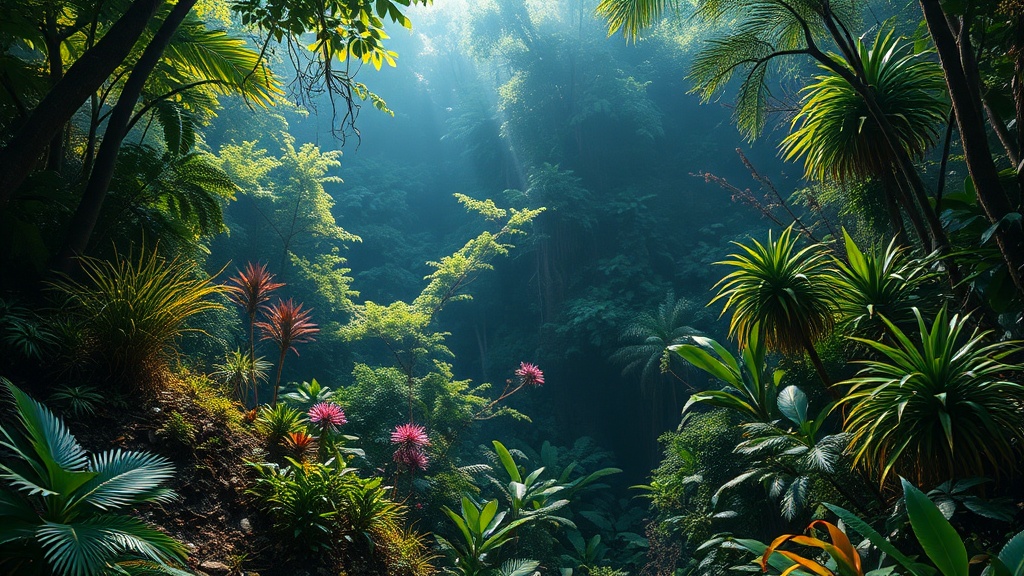
Size alone, though, doesn't explain why New Guinea deserves far more attention than it gets. What makes it genuinely extraordinary is the combination of what lies beneath its canopy — glaciers near the equator, species science thought were gone forever, millions of people who may not be counted by any government, and over a thousand languages spoken across terrain so fractured that neighbouring communities were sometimes unaware the other existed. New Guinea isn't just underexplored. It is, in many meaningful ways, still unknown.
Tropical Glaciers: Ice at the Equator, Disappearing Fast
The first thing that surprises most people about New Guinea is the one thing least associated with tropical rainforests: glaciers. On the western, Indonesian-controlled side of the island, ancient glaciers cling to the flanks of the New Guinea Highlands — a mountain chain comparable in scale and elevation to the Rocky Mountains, and home to the highest peaks found anywhere between the Himalayas and the Andes. The summit of Puncak Jaya reaches 4,884 metres, making it the highest point on any island in the world.
At that altitude, New Guinea's abundant rainfall compacts into snow and eventually ice. These are among the world's few remaining tropical glaciers, a category so rare and counterintuitive that when Dutch explorer Jan Carstensz reported seeing snow and ice near the equator in 1623, his contemporaries dismissed him as a fantasist. It took nearly 300 years for Western science to formally verify what he had seen, when Dutch expeditions between 1909 and 1913 finally confirmed the glaciers' existence.
The vindication, unfortunately, came too late to matter much. By 1850, the glacier field covered around 19.3 square kilometres. By 1972, that area had already shrunk by nearly two-thirds. By 2018, more than 97% of the original glacier mass had vanished. A peer-reviewed study published in March 2025, drawing on 2024 satellite data, found just 0.165 square kilometres remaining — a 67% drop from the already-diminished 2018 figure. At the current rate of decline, these glaciers are expected to disappear entirely by around 2030. When they go, New Guinea and Indonesia will lose glacial ice for the first time in tens of thousands of years. They are, in every practical sense, a vanishing archive of climate history.
Lost Species and Living Ghosts: The Rediscovery Frontier
New Guinea ranks second only to the Amazon in the rate at which new species are still being formally described by science. Since 2010, researchers have catalogued literally thousands of previously unknown organisms across the island — the majority being plants, insects, and spiders. But it's the larger, more unexpected finds that capture the imagination.
In 2025, a biologist from the Czech Academy of Sciences photographed the subalpine woolly rat in its natural highland habitat for the first time. The animal — a massive, fluffy rodent over two and a half feet long and weighing more than four pounds — had previously existed in scientific records only as a handful of museum specimens. That a creature this size had evaded live documentation for so long says everything about the density and inaccessibility of New Guinea's interior.
Even more dramatic is the story of Attenborough's long-beaked echidna. First described from a single dead specimen collected in 1961 and held in a Dutch museum, the species was eventually classified as extinct after no further examples were ever found. Then, in 2023, a research team captured the first confirmed video footage of a living individual in the Cyclops Mountains of northern New Guinea — removing it from the extinct species list in a single expedition. The same team endured conditions that illustrate precisely why the island keeps its secrets so well: one researcher fell through a moss pit into a previously unknown cave system, broke his arm in two places, and still managed to document half a dozen new species of blind spiders, scorpions, and harvestmen while down there. Another had a leech attached to his eyeball for three days.
Also worth noting: the Wondiwoi tree kangaroo, a large marsupial declared extinct after its discovery in the 1930s, was photographed alive in 2018. The pattern is consistent enough to raise a genuinely serious question — what else is out there?
The Thylacine Question: Could the Tasmanian Tiger Still Exist in New Guinea?
The thylacine — commonly known as the Tasmanian tiger — was a large, striped, carnivorous marsupial that once ranged across the ancient supercontinent of Sahul, the landmass that encompassed both Australia and New Guinea before rising sea levels separated them 8,000 to 10,000 years ago. Ecologically, it filled the niche that wolves and wild dogs occupy elsewhere, despite being entirely unrelated to them. Its capacity to open its jaws to around 80 degrees remains one of the more unsettling facts in zoological history.
The thylacine is thought to have vanished from mainland Australia and New Guinea approximately 3,200 years ago, likely due to competition from the introduced dingo. On Tasmania, where the dingo never reached, it survived into the modern era — until European settlers classified it as a livestock threat and the colonial government introduced a bounty hunting programme that drove the population to zero. The last confirmed thylacine died at Hobart Zoo in 1936. The species was formally declared extinct in 1982.
And yet. Given that New Guinea was part of the thylacine's original range, given the island's vast unmapped interior, and given the now-documented pattern of species being rediscovered there decades after being written off, researchers and wildlife biologists occasionally raise the question: could a remnant population have persisted somewhere in New Guinea's highland forests? The probability is low. But it is not zero — and in an island this large and this impenetrable, that distinction matters.
A Country That Doesn't Know Its Own Population
The eastern half of New Guinea forms Papua New Guinea, an independent nation and one of the most logistically challenging countries to govern anywhere on Earth. Only around 13% of its population lives in cities — the lowest urbanisation rate of any country in the world. The rest are spread across steep mountain valleys, dense forest, and coastal mangrove systems that can often only be reached by light aircraft or helicopter.
This geography creates a bureaucratic problem with no easy solution: Papua New Guinea genuinely does not know how many people live within its borders. The country's most recent census, conducted in 2024, put the official population at 10.18 million. But the census was immediately criticised for incomplete coverage, missing documentation, logistical failures in remote areas, and at least one warehouse fire that destroyed census materials mid-process. A 2022 study commissioned by the UN and funded by Australia, which used satellite imagery and demographic modelling rather than door-to-door counting, estimated the actual population at closer to 17 million — a discrepancy of nearly seven million people.
To put that in perspective: Papua New Guinea may be unaware of the existence of approximately 40% of its own population. The last census considered reliably accurate was conducted in 2000. That is an extraordinary situation for a 21st-century nation-state, and it has real consequences for infrastructure planning, healthcare delivery, and political representation.
Over a Thousand Languages: The World's Most Linguistically Diverse Place
New Guinea's fractured geography did more than isolate animal species from one another. It did the same to human communities — for thousands of years. The result is the most concentrated linguistic diversity found anywhere on Earth. Across the whole island, more than 1,000 distinct languages are believed to be spoken today, representing roughly one in every seven of the world's languages. In Papua New Guinea alone, over 840 languages are active, nearly double the number spoken across the entirety of India, a country with more than 70 times the population.
Critically, most of these languages are not related to each other. They did not diverge from a common ancestor the way Romance languages did from Latin. Many developed in near-total isolation, in valleys sealed off by ridgelines or rivers, in communities where the next group was close in distance but worlds apart in communication. Some highland communities were reportedly unaware of neighbouring groups living only a few kilometres away until well into the 20th century.
Papua New Guinea recognises two lingua francas — Tok Pisin, an English-based creole, and Hiri Motu, an indigenous trade language — but fewer than half the population speaks either fluently. Tok Pisin itself has a vocabulary that reflects its origins in contact between English speakers and communities with very different conceptual frameworks. The word for winter, for instance, is taim bilong kol — literally 'time belong cold.' A moustache is gras bilong maus — 'grass belong mouth.' These constructions are not simplistic adaptations; they are logical, precise, and reveal how language gets built from scratch when necessity demands it.
Free Weekly Newsletter
Enjoying this guide?
Get the best articles like this one delivered to your inbox every week. No spam.
New Guinea Is Still Being Written
What makes New Guinea remarkable is not any single fact about it — not the glaciers, not the echidnas, not the census gaps, not the thousand languages. It's the cumulative picture those facts paint: an island the size of a continent, largely unmapped in its interior, still yielding new species and rediscovered ones, home to millions of people whose existence is not fully acknowledged by any government, and spoken across in hundreds of mutually unintelligible languages that evolved in isolation over millennia.
The instinct in the modern age is to assume that everything significant has been found, counted, and filed. New Guinea is a standing argument against that assumption. The jungle is not just dense — it is genuinely, demonstrably hiding things. And whatever is down there, we are only beginning to look.
Frequently Asked Questions
How large is New Guinea compared to other islands?
New Guinea is the second largest island in the world, behind only Greenland. It is significantly larger than most maps suggest due to Mercator projection distortion. Overlaid on Europe, it would stretch from the English Channel to the Black Sea; overlaid on the US, from New York to Texas.
Are the New Guinea glaciers really disappearing?
Yes. In 1850, the glaciers covered approximately 19.3 square kilometres. By 2024, just 0.165 square kilometres remained — a decline of over 99% in under 200 years. Scientists expect them to disappear entirely by around 2030, which would mark the first time in tens of thousands of years that New Guinea has had no glacial ice.
Why doesn't Papua New Guinea know its own population?
The country has extremely low urbanisation — only around 13% of people live in cities. The majority of the population is scattered across remote highland valleys and forest regions accessible only by air. Multiple national censuses have been criticised for incomplete coverage and logistical failures. A 2022 UN-backed satellite study estimated the real population at around 17 million, compared to the official 2024 census figure of 10.18 million.
Could the thylacine still be alive in New Guinea?
It's considered unlikely but not impossible. The thylacine's prehistoric range included New Guinea, and its extinction there is dated to roughly 3,200 years ago. Given the island's vast unmapped interior and the recent rediscovery of species previously declared extinct — including Attenborough's long-beaked echidna in 2023 and the Wondiwoi tree kangaroo in 2018 — some researchers consider New Guinea the most plausible location for a potential thylacine rediscovery, however remote that possibility remains.
Why does Papua New Guinea have so many languages?
Over 840 languages are spoken in Papua New Guinea, more than any other country on Earth. The island's extreme topography — steep mountain ranges, dense rainforests, and river systems — created thousands of years of community isolation. Without a centralised political authority to impose a dominant language, each isolated group developed its own. Many of these languages are unrelated to each other, having evolved entirely independently.
Frequently Asked Questions
The World's Most Mysterious Island Is Not Where You Think It Is
Most people, if pressed, would struggle to point to New Guinea on a map — let alone describe what's inside it. That's not entirely their fault. Standard world maps based on the Mercator projection distort the island into something that looks like a mid-sized afterthought somewhere north of Australia. In reality, New Guinea is the second largest island on Earth, trailing only Greenland, and not by much. Stretched over Europe, it would run from the English Channel nearly to the Black Sea. Laid over the United States, it would span from Long Island all the way to the outskirts of Dallas.
Size alone, though, doesn't explain why New Guinea deserves far more attention than it gets. What makes it genuinely extraordinary is the combination of what lies beneath its canopy — glaciers near the equator, species science thought were gone forever, millions of people who may not be counted by any government, and over a thousand languages spoken across terrain so fractured that neighbouring communities were sometimes unaware the other existed. New Guinea isn't just underexplored. It is, in many meaningful ways, still unknown.
Tropical Glaciers: Ice at the Equator, Disappearing Fast
The first thing that surprises most people about New Guinea is the one thing least associated with tropical rainforests: glaciers. On the western, Indonesian-controlled side of the island, ancient glaciers cling to the flanks of the New Guinea Highlands — a mountain chain comparable in scale and elevation to the Rocky Mountains, and home to the highest peaks found anywhere between the Himalayas and the Andes. The summit of Puncak Jaya reaches 4,884 metres, making it the highest point on any island in the world.
At that altitude, New Guinea's abundant rainfall compacts into snow and eventually ice. These are among the world's few remaining tropical glaciers, a category so rare and counterintuitive that when Dutch explorer Jan Carstensz reported seeing snow and ice near the equator in 1623, his contemporaries dismissed him as a fantasist. It took nearly 300 years for Western science to formally verify what he had seen, when Dutch expeditions between 1909 and 1913 finally confirmed the glaciers' existence.
The vindication, unfortunately, came too late to matter much. By 1850, the glacier field covered around 19.3 square kilometres. By 1972, that area had already shrunk by nearly two-thirds. By 2018, more than 97% of the original glacier mass had vanished. A peer-reviewed study published in March 2025, drawing on 2024 satellite data, found just 0.165 square kilometres remaining — a 67% drop from the already-diminished 2018 figure. At the current rate of decline, these glaciers are expected to disappear entirely by around 2030. When they go, New Guinea and Indonesia will lose glacial ice for the first time in tens of thousands of years. They are, in every practical sense, a vanishing archive of climate history.
Lost Species and Living Ghosts: The Rediscovery Frontier
New Guinea ranks second only to the Amazon in the rate at which new species are still being formally described by science. Since 2010, researchers have catalogued literally thousands of previously unknown organisms across the island — the majority being plants, insects, and spiders. But it's the larger, more unexpected finds that capture the imagination.
In 2025, a biologist from the Czech Academy of Sciences photographed the subalpine woolly rat in its natural highland habitat for the first time. The animal — a massive, fluffy rodent over two and a half feet long and weighing more than four pounds — had previously existed in scientific records only as a handful of museum specimens. That a creature this size had evaded live documentation for so long says everything about the density and inaccessibility of New Guinea's interior.
Even more dramatic is the story of Attenborough's long-beaked echidna. First described from a single dead specimen collected in 1961 and held in a Dutch museum, the species was eventually classified as extinct after no further examples were ever found. Then, in 2023, a research team captured the first confirmed video footage of a living individual in the Cyclops Mountains of northern New Guinea — removing it from the extinct species list in a single expedition. The same team endured conditions that illustrate precisely why the island keeps its secrets so well: one researcher fell through a moss pit into a previously unknown cave system, broke his arm in two places, and still managed to document half a dozen new species of blind spiders, scorpions, and harvestmen while down there. Another had a leech attached to his eyeball for three days.
Also worth noting: the Wondiwoi tree kangaroo, a large marsupial declared extinct after its discovery in the 1930s, was photographed alive in 2018. The pattern is consistent enough to raise a genuinely serious question — what else is out there?
The Thylacine Question: Could the Tasmanian Tiger Still Exist in New Guinea?
The thylacine — commonly known as the Tasmanian tiger — was a large, striped, carnivorous marsupial that once ranged across the ancient supercontinent of Sahul, the landmass that encompassed both Australia and New Guinea before rising sea levels separated them 8,000 to 10,000 years ago. Ecologically, it filled the niche that wolves and wild dogs occupy elsewhere, despite being entirely unrelated to them. Its capacity to open its jaws to around 80 degrees remains one of the more unsettling facts in zoological history.
The thylacine is thought to have vanished from mainland Australia and New Guinea approximately 3,200 years ago, likely due to competition from the introduced dingo. On Tasmania, where the dingo never reached, it survived into the modern era — until European settlers classified it as a livestock threat and the colonial government introduced a bounty hunting programme that drove the population to zero. The last confirmed thylacine died at Hobart Zoo in 1936. The species was formally declared extinct in 1982.
And yet. Given that New Guinea was part of the thylacine's original range, given the island's vast unmapped interior, and given the now-documented pattern of species being rediscovered there decades after being written off, researchers and wildlife biologists occasionally raise the question: could a remnant population have persisted somewhere in New Guinea's highland forests? The probability is low. But it is not zero — and in an island this large and this impenetrable, that distinction matters.
A Country That Doesn't Know Its Own Population
The eastern half of New Guinea forms Papua New Guinea, an independent nation and one of the most logistically challenging countries to govern anywhere on Earth. Only around 13% of its population lives in cities — the lowest urbanisation rate of any country in the world. The rest are spread across steep mountain valleys, dense forest, and coastal mangrove systems that can often only be reached by light aircraft or helicopter.
This geography creates a bureaucratic problem with no easy solution: Papua New Guinea genuinely does not know how many people live within its borders. The country's most recent census, conducted in 2024, put the official population at 10.18 million. But the census was immediately criticised for incomplete coverage, missing documentation, logistical failures in remote areas, and at least one warehouse fire that destroyed census materials mid-process. A 2022 study commissioned by the UN and funded by Australia, which used satellite imagery and demographic modelling rather than door-to-door counting, estimated the actual population at closer to 17 million — a discrepancy of nearly seven million people.
To put that in perspective: Papua New Guinea may be unaware of the existence of approximately 40% of its own population. The last census considered reliably accurate was conducted in 2000. That is an extraordinary situation for a 21st-century nation-state, and it has real consequences for infrastructure planning, healthcare delivery, and political representation.
Over a Thousand Languages: The World's Most Linguistically Diverse Place
New Guinea's fractured geography did more than isolate animal species from one another. It did the same to human communities — for thousands of years. The result is the most concentrated linguistic diversity found anywhere on Earth. Across the whole island, more than 1,000 distinct languages are believed to be spoken today, representing roughly one in every seven of the world's languages. In Papua New Guinea alone, over 840 languages are active, nearly double the number spoken across the entirety of India, a country with more than 70 times the population.
Critically, most of these languages are not related to each other. They did not diverge from a common ancestor the way Romance languages did from Latin. Many developed in near-total isolation, in valleys sealed off by ridgelines or rivers, in communities where the next group was close in distance but worlds apart in communication. Some highland communities were reportedly unaware of neighbouring groups living only a few kilometres away until well into the 20th century.
Papua New Guinea recognises two lingua francas — Tok Pisin, an English-based creole, and Hiri Motu, an indigenous trade language — but fewer than half the population speaks either fluently. Tok Pisin itself has a vocabulary that reflects its origins in contact between English speakers and communities with very different conceptual frameworks. The word for winter, for instance, is taim bilong kol — literally 'time belong cold.' A moustache is gras bilong maus — 'grass belong mouth.' These constructions are not simplistic adaptations; they are logical, precise, and reveal how language gets built from scratch when necessity demands it.
New Guinea Is Still Being Written
What makes New Guinea remarkable is not any single fact about it — not the glaciers, not the echidnas, not the census gaps, not the thousand languages. It's the cumulative picture those facts paint: an island the size of a continent, largely unmapped in its interior, still yielding new species and rediscovered ones, home to millions of people whose existence is not fully acknowledged by any government, and spoken across in hundreds of mutually unintelligible languages that evolved in isolation over millennia.
The instinct in the modern age is to assume that everything significant has been found, counted, and filed. New Guinea is a standing argument against that assumption. The jungle is not just dense — it is genuinely, demonstrably hiding things. And whatever is down there, we are only beginning to look.
Frequently Asked Questions
How large is New Guinea compared to other islands?
New Guinea is the second largest island in the world, behind only Greenland. It is significantly larger than most maps suggest due to Mercator projection distortion. Overlaid on Europe, it would stretch from the English Channel to the Black Sea; overlaid on the US, from New York to Texas.
Are the New Guinea glaciers really disappearing?
Yes. In 1850, the glaciers covered approximately 19.3 square kilometres. By 2024, just 0.165 square kilometres remained — a decline of over 99% in under 200 years. Scientists expect them to disappear entirely by around 2030, which would mark the first time in tens of thousands of years that New Guinea has had no glacial ice.
Why doesn't Papua New Guinea know its own population?
The country has extremely low urbanisation — only around 13% of people live in cities. The majority of the population is scattered across remote highland valleys and forest regions accessible only by air. Multiple national censuses have been criticised for incomplete coverage and logistical failures. A 2022 UN-backed satellite study estimated the real population at around 17 million, compared to the official 2024 census figure of 10.18 million.
Could the thylacine still be alive in New Guinea?
It's considered unlikely but not impossible. The thylacine's prehistoric range included New Guinea, and its extinction there is dated to roughly 3,200 years ago. Given the island's vast unmapped interior and the recent rediscovery of species previously declared extinct — including Attenborough's long-beaked echidna in 2023 and the Wondiwoi tree kangaroo in 2018 — some researchers consider New Guinea the most plausible location for a potential thylacine rediscovery, however remote that possibility remains.
Why does Papua New Guinea have so many languages?
Over 840 languages are spoken in Papua New Guinea, more than any other country on Earth. The island's extreme topography — steep mountain ranges, dense rainforests, and river systems — created thousands of years of community isolation. Without a centralised political authority to impose a dominant language, each isolated group developed its own. Many of these languages are unrelated to each other, having evolved entirely independently.
About Zeebrain Editorial
Zeebrain publishes independent analysis of markets, investing, personal finance, and business. We disclose affiliate relationships, never accept payment for coverage, and fact-check all claims against primary sources. Read our editorial policy →
How this article was produced: Zeebrain articles are created with AI assistance from primary sources (including cited videos and market data) and reviewed under our editorial standards before publication. Spot an error? Tell us and we will correct it.
More from Curiosities



Related Guides
Keep exploring this topic
Explore More Categories
Keep browsing by topic and build depth around the subjects you care about most.