Survival Experts vs Amateurs: Who Really Wins Outdoors?
Quick Summary
What happens when 50 survival experts face 50 prepared amateurs in the wilderness? The results reveal surprising truths about skill, gear, and human nature.
In This Article
When Expertise Meets the Wild — and Loses First
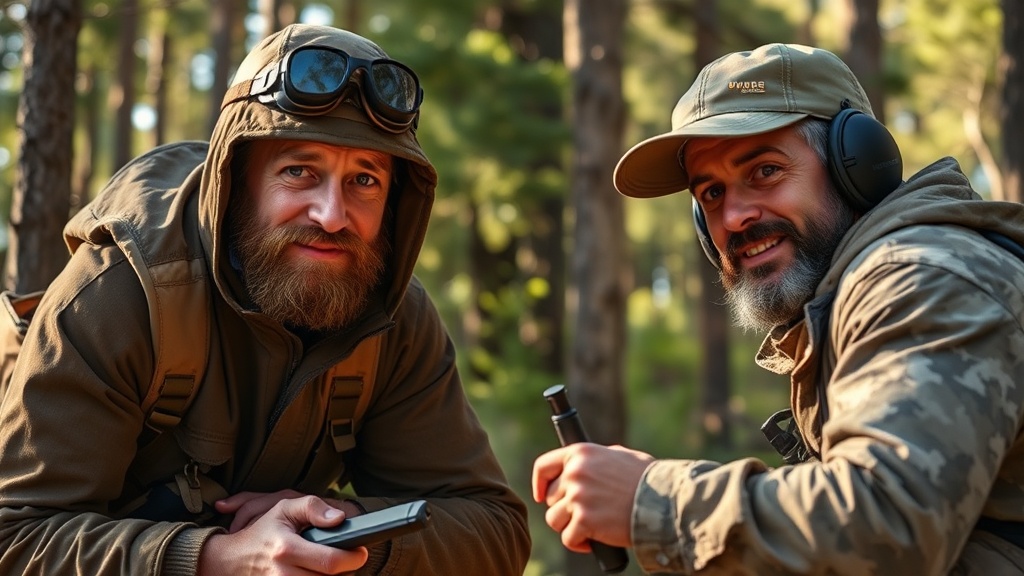
Put 100 people in the wilderness, split them into survival experts and total amateurs, dangle $250,000 over their heads, and watch what happens. It sounds like a straightforward win for the professionals. Spoiler: it is not. The dynamic that unfolds when genuine outdoor skill collides with consumer-grade preparation is more complicated — and more instructive — than most people expect.

MrBeast's wilderness challenge, in which 50 blue-clad survival experts competed against 50 red-clad amateurs for a share of a quarter-million dollars, produced a result that anyone who has studied human performance under pressure will recognise immediately. Knowledge matters enormously. But knowledge without adequate rest, calories, and morale is surprisingly fragile — at least in the early stages. Here is what the challenge really teaches us about wilderness survival, and why those lessons apply far beyond the treeline.
The Gear Advantage Is Real, But It Has an Expiry Date
The Red Team — the amateurs — were given a significant head start. They were told the rules in advance and taken to a shop to buy whatever they needed. They showed up with tents, sleeping bags, lighters, tarps, rope, and enough snack food to stock a petrol station forecourt. One participant even hauled in a 24-pack of bottled water. On day one, this was an almost unfair advantage.
The experts, by contrast, were told only that they were competing in a MrBeast video. They packed blind, some preparing for Arctic conditions, others unsure whether they were heading to a forest or a desert. Their gear was uneven. Their shelters on night one were, by their own admission, not much more than sticks.
And yet the first two people to quit were both experts from the Blue Team — one aged 66 with a double knee replacement, another simply too cold and exhausted to continue after a sleepless night on frozen, wet ground. The Red Team woke up warm, rested, and cheerful. The lesson here is not that gear beats skill. It is that gear buys time, and time is the currency of survival.
The critical error the amateurs made was treating that time like an unlimited resource. They burned through their food supply within the first two days. What began as a well-stocked advantage became an empty larder before the challenge had really begun.
Wilderness Survival Skills: What the Experts Did Differently
Once the Blue Team recovered from their rough first night, the gap in capability became stark. Their lead survivalist, Seth, immediately diagnosed the shelter problem: debris huts need insulation, not just structure. A foot of packed leaves turns a stick frame into something that genuinely retains body heat. Within a day, experts who had slept badly were reporting that their rebuilt shelters felt better than a hotel room.
More impressively, Seth ran a foraging class and built a fish trap from sticks — a primitive weir designed to funnel fish from a nearby river into a containment area. Meanwhile, the amateurs tried fishing with conventional gear and caught, by their own cheerful admission, nothing but rubbish.
This contrast illustrates one of the most consistent findings in wilderness survival research: improvisation from knowledge beats equipment without knowledge every single time, given sufficient duration. In a 24-hour emergency, a well-stocked bag wins. In a multi-day scenario, the person who understands how ecosystems work — where water collects, which plants are edible, how to read weather in the canopy — outlasts the person with the bigger rucksack.
The Blue Team's approach also demonstrated strong resource psychology. They conserved energy deliberately. They prioritised sleep as a survival resource, not a luxury. They worked collectively, assigning roles rather than letting individuals exhaust themselves on redundant tasks.
The Psychology of Quitting — and Why It Is More Complex Than It Looks
One of the most revealing aspects of any wilderness endurance challenge is the quit pattern. People rarely quit because of a single catastrophic event. They quit because of accumulated discomfort — cold plus hunger plus sleeplessness plus the quiet voice asking why they are doing this.
The first expert to tap out cited exhaustion and dehydration. The second cited age and a medical history that made the physical strain genuinely dangerous. Both are entirely legitimate reasons, and it would be reductive to frame either as a failure of willpower. What they reveal, however, is that survival skill does not automatically confer physical resilience, particularly when the body is not properly fuelled or rested.
For the amateurs, the psychological trajectory ran in the opposite direction. Early comfort bred confidence, sometimes overconfidence. Wasting food supplies in the first 48 hours was not ignorance so much as optimism — a failure to model the future accurately. By day four, that optimism had curdled into hunger, and hunger is one of the most effective dismantlers of group morale ever identified by psychologists studying isolation and endurance.
Research into survival psychology consistently highlights what John Leach, a leading expert in the field, calls the '10-80-10 rule': in any disaster, roughly 10% of people respond calmly and effectively, 80% are stunned and require direction, and 10% react dangerously or counterproductively. In a structured challenge with no genuine life-or-death stakes, those percentages shift — but the underlying pattern of performance under cumulative stress remains instructive.
What Proper Wilderness Preparation Actually Looks Like
The Red Team's shopping trip was a useful natural experiment in what untrained people prioritise when told to prepare for survival. Water (in heavy, inconvenient bulk), food (snack-heavy, calorie-dense but rapidly depleted), and comfort items dominated. Almost nobody on the amateur team appeared to invest in navigation tools, water purification beyond the bottled supply, or any means of signalling beyond the challenge-issued flare.
Experienced wilderness practitioners and search-and-rescue professionals consistently advise a different priority hierarchy, sometimes remembered as the Rule of Threes: you can survive three minutes without air, three hours without shelter in harsh conditions, three days without water, and three weeks without food. The amateur team inverted this almost perfectly — prioritising food and comfort while leaving shelter and water sourcing to chance.
A genuinely well-prepared amateur pack for a multi-day woodland survival scenario would include: a high-quality tarp and cordage for flexible shelter construction, a water filter or purification tablets capable of processing natural water sources, a fire-starting kit with multiple redundant methods, high-calorie but compact food with realistic rationing built in from day one, a basic first-aid kit, and a map and compass as backup to any electronic navigation.
Notably absent from most amateur packs in uncontrolled scenarios: anything to do with mental engagement. Boredom and psychological drift are underrated threats in survival situations. Cards, a notebook, or a simple task-based goal can sustain morale through the middle days of an endurance challenge when the novelty has worn off but rescue has not yet arrived.
The Bigger Lesson: Skill Compounds, Comfort Degrades
Perhaps the most transferable insight from this kind of challenge is about the shape of performance over time. At the starting line, the amateurs had more immediate comfort. But comfort, without the skills to replenish it, is a depleting asset. The experts' discomfort on day one was an investment — in shelter quality, in foraging knowledge, in group organisation — that paid compounding returns as the days progressed.
This pattern appears in fields well beyond wilderness survival. In any domain where resources are finite and conditions are uncertain, the person who builds systems — even uncomfortable ones, even slow ones — tends to outlast the person who consumes their advantage quickly. The experts were not just surviving the wilderness. They were engineering a sustainable position within it.
The amateurs who lasted the longest were, tellingly, the ones who adapted quickest — those who stopped treating the experience like a camping holiday and started treating it like a logistics problem. Confidence and good humour helped. Willingness to forage, to ration, to learn from the environment rather than fight it, helped more.
Practical Takeaways for Anyone Heading Into the Wild
You do not need to be a trained survivalist to significantly improve your odds in an unplanned wilderness scenario. A few evidence-backed habits make a substantial difference:
Learn one skill deeply before you need it. Fire-starting with a lighter is easy. Fire-starting when your lighter is wet, lost, or broken requires practice. Know at least one reliable backup method.
Ration from day one. The amateur mistake of treating food supplies as abundant until they suddenly are not is almost universal among untrained groups. Divide supplies by the number of expected days and stick to the daily allowance from the start.
Invest in sleep. A bad shelter is not a minor inconvenience in cold conditions — it is a direct threat to decision-making capacity the following day. Spend the first hours building well, and every subsequent hour benefits.
Free Weekly Newsletter
Enjoying this guide?
Get the best articles like this one delivered to your inbox every week. No spam.
Understand your water sources. Running water is generally safer than still water, but neither is safe without treatment in most wilderness environments. A lightweight filter weighs almost nothing and is among the highest-value items in any survival kit.
Know when to stay put. In genuine emergencies, movement often makes things worse. Search-and-rescue teams find stationary casualties faster than mobile ones. The challenge's flare mechanic was a smart analogue for this principle: signal, then wait.
The wilderness does not care whether you watched survival videos or spent three months camping for fun. It responds to preparation, adaptation, and patience. The experts understood that. The amateurs learned it — some of them, at significant personal discomfort.
Frequently Asked Questions
Do survival experts always outperform amateurs in wilderness challenges?
Not always, and especially not at the start. Experts tend to outperform over longer durations because their skills compound — they can source food, maintain shelter, and conserve energy more effectively. But in the early stages, well-equipped amateurs with sufficient food and shelter supplies can be just as comfortable or more so. The crossover point typically comes when amateur resources run out and foraging and improvisation skills become essential.
What is the single most important wilderness survival skill?
Most survival instructors and search-and-rescue professionals point to fire-starting as the highest-value single skill, because fire addresses multiple survival priorities simultaneously: warmth, water purification, food preparation, morale, and signalling. Close behind it is the ability to build effective shelter, since exposure is the most common cause of wilderness fatalities in temperate climates.
How long can a person realistically survive in the wilderness without specialist training?
This depends heavily on climate, terrain, and available resources, but the general consensus among survival experts is that an untrained adult with no equipment in a temperate woodland setting can typically survive three to five days without significant injury or illness if they stay calm, find water, and avoid exposure. With basic equipment and some preparation — even just a tarp, a lighter, and rationed food — that window extends considerably. The psychological dimension is often the limiting factor before the physical one.
What should you actually buy if you are preparing a survival kit?
Prioritise shelter (a quality tarp and paracord), fire (lighter plus waterproof matches plus a ferro rod), water (a filter straw or purification tablets), a basic first-aid kit, and high-calorie compact food like nut bars or freeze-dried meals. Navigation tools — even a basic compass — are valuable. Avoid bulky or heavy items that slow movement. A 72-hour kit should be portable enough to carry comfortably for several miles, because an emergency kit you cannot carry with you is an emergency kit you may not have when you need it.
Why do people in wilderness challenges so often quit earlier than expected?
The combination of cold, disrupted sleep, reduced calories, and sustained uncertainty is more psychologically taxing than most people anticipate. Research in survival psychology identifies cumulative fatigue — not single dramatic events — as the primary driver of early withdrawal. People who have never experienced sustained discomfort without an obvious exit often underestimate how quickly minor irritants compound into an overwhelming desire to leave.
Free Investing Tools
Frequently Asked Questions
When Expertise Meets the Wild — and Loses First
Put 100 people in the wilderness, split them into survival experts and total amateurs, dangle $250,000 over their heads, and watch what happens. It sounds like a straightforward win for the professionals. Spoiler: it is not. The dynamic that unfolds when genuine outdoor skill collides with consumer-grade preparation is more complicated — and more instructive — than most people expect.
MrBeast's wilderness challenge, in which 50 blue-clad survival experts competed against 50 red-clad amateurs for a share of a quarter-million dollars, produced a result that anyone who has studied human performance under pressure will recognise immediately. Knowledge matters enormously. But knowledge without adequate rest, calories, and morale is surprisingly fragile — at least in the early stages. Here is what the challenge really teaches us about wilderness survival, and why those lessons apply far beyond the treeline.
The Gear Advantage Is Real, But It Has an Expiry Date
The Red Team — the amateurs — were given a significant head start. They were told the rules in advance and taken to a shop to buy whatever they needed. They showed up with tents, sleeping bags, lighters, tarps, rope, and enough snack food to stock a petrol station forecourt. One participant even hauled in a 24-pack of bottled water. On day one, this was an almost unfair advantage.
The experts, by contrast, were told only that they were competing in a MrBeast video. They packed blind, some preparing for Arctic conditions, others unsure whether they were heading to a forest or a desert. Their gear was uneven. Their shelters on night one were, by their own admission, not much more than sticks.
And yet the first two people to quit were both experts from the Blue Team — one aged 66 with a double knee replacement, another simply too cold and exhausted to continue after a sleepless night on frozen, wet ground. The Red Team woke up warm, rested, and cheerful. The lesson here is not that gear beats skill. It is that gear buys time, and time is the currency of survival.
The critical error the amateurs made was treating that time like an unlimited resource. They burned through their food supply within the first two days. What began as a well-stocked advantage became an empty larder before the challenge had really begun.
Wilderness Survival Skills: What the Experts Did Differently
Once the Blue Team recovered from their rough first night, the gap in capability became stark. Their lead survivalist, Seth, immediately diagnosed the shelter problem: debris huts need insulation, not just structure. A foot of packed leaves turns a stick frame into something that genuinely retains body heat. Within a day, experts who had slept badly were reporting that their rebuilt shelters felt better than a hotel room.
More impressively, Seth ran a foraging class and built a fish trap from sticks — a primitive weir designed to funnel fish from a nearby river into a containment area. Meanwhile, the amateurs tried fishing with conventional gear and caught, by their own cheerful admission, nothing but rubbish.
This contrast illustrates one of the most consistent findings in wilderness survival research: improvisation from knowledge beats equipment without knowledge every single time, given sufficient duration. In a 24-hour emergency, a well-stocked bag wins. In a multi-day scenario, the person who understands how ecosystems work — where water collects, which plants are edible, how to read weather in the canopy — outlasts the person with the bigger rucksack.
The Blue Team's approach also demonstrated strong resource psychology. They conserved energy deliberately. They prioritised sleep as a survival resource, not a luxury. They worked collectively, assigning roles rather than letting individuals exhaust themselves on redundant tasks.
The Psychology of Quitting — and Why It Is More Complex Than It Looks
One of the most revealing aspects of any wilderness endurance challenge is the quit pattern. People rarely quit because of a single catastrophic event. They quit because of accumulated discomfort — cold plus hunger plus sleeplessness plus the quiet voice asking why they are doing this.
The first expert to tap out cited exhaustion and dehydration. The second cited age and a medical history that made the physical strain genuinely dangerous. Both are entirely legitimate reasons, and it would be reductive to frame either as a failure of willpower. What they reveal, however, is that survival skill does not automatically confer physical resilience, particularly when the body is not properly fuelled or rested.
For the amateurs, the psychological trajectory ran in the opposite direction. Early comfort bred confidence, sometimes overconfidence. Wasting food supplies in the first 48 hours was not ignorance so much as optimism — a failure to model the future accurately. By day four, that optimism had curdled into hunger, and hunger is one of the most effective dismantlers of group morale ever identified by psychologists studying isolation and endurance.
Research into survival psychology consistently highlights what John Leach, a leading expert in the field, calls the '10-80-10 rule': in any disaster, roughly 10% of people respond calmly and effectively, 80% are stunned and require direction, and 10% react dangerously or counterproductively. In a structured challenge with no genuine life-or-death stakes, those percentages shift — but the underlying pattern of performance under cumulative stress remains instructive.
What Proper Wilderness Preparation Actually Looks Like
The Red Team's shopping trip was a useful natural experiment in what untrained people prioritise when told to prepare for survival. Water (in heavy, inconvenient bulk), food (snack-heavy, calorie-dense but rapidly depleted), and comfort items dominated. Almost nobody on the amateur team appeared to invest in navigation tools, water purification beyond the bottled supply, or any means of signalling beyond the challenge-issued flare.
Experienced wilderness practitioners and search-and-rescue professionals consistently advise a different priority hierarchy, sometimes remembered as the Rule of Threes: you can survive three minutes without air, three hours without shelter in harsh conditions, three days without water, and three weeks without food. The amateur team inverted this almost perfectly — prioritising food and comfort while leaving shelter and water sourcing to chance.
A genuinely well-prepared amateur pack for a multi-day woodland survival scenario would include: a high-quality tarp and cordage for flexible shelter construction, a water filter or purification tablets capable of processing natural water sources, a fire-starting kit with multiple redundant methods, high-calorie but compact food with realistic rationing built in from day one, a basic first-aid kit, and a map and compass as backup to any electronic navigation.
Notably absent from most amateur packs in uncontrolled scenarios: anything to do with mental engagement. Boredom and psychological drift are underrated threats in survival situations. Cards, a notebook, or a simple task-based goal can sustain morale through the middle days of an endurance challenge when the novelty has worn off but rescue has not yet arrived.
The Bigger Lesson: Skill Compounds, Comfort Degrades
Perhaps the most transferable insight from this kind of challenge is about the shape of performance over time. At the starting line, the amateurs had more immediate comfort. But comfort, without the skills to replenish it, is a depleting asset. The experts' discomfort on day one was an investment — in shelter quality, in foraging knowledge, in group organisation — that paid compounding returns as the days progressed.
This pattern appears in fields well beyond wilderness survival. In any domain where resources are finite and conditions are uncertain, the person who builds systems — even uncomfortable ones, even slow ones — tends to outlast the person who consumes their advantage quickly. The experts were not just surviving the wilderness. They were engineering a sustainable position within it.
The amateurs who lasted the longest were, tellingly, the ones who adapted quickest — those who stopped treating the experience like a camping holiday and started treating it like a logistics problem. Confidence and good humour helped. Willingness to forage, to ration, to learn from the environment rather than fight it, helped more.
Practical Takeaways for Anyone Heading Into the Wild
You do not need to be a trained survivalist to significantly improve your odds in an unplanned wilderness scenario. A few evidence-backed habits make a substantial difference:
Learn one skill deeply before you need it. Fire-starting with a lighter is easy. Fire-starting when your lighter is wet, lost, or broken requires practice. Know at least one reliable backup method.
Ration from day one. The amateur mistake of treating food supplies as abundant until they suddenly are not is almost universal among untrained groups. Divide supplies by the number of expected days and stick to the daily allowance from the start.
Invest in sleep. A bad shelter is not a minor inconvenience in cold conditions — it is a direct threat to decision-making capacity the following day. Spend the first hours building well, and every subsequent hour benefits.
Understand your water sources. Running water is generally safer than still water, but neither is safe without treatment in most wilderness environments. A lightweight filter weighs almost nothing and is among the highest-value items in any survival kit.
Know when to stay put. In genuine emergencies, movement often makes things worse. Search-and-rescue teams find stationary casualties faster than mobile ones. The challenge's flare mechanic was a smart analogue for this principle: signal, then wait.
The wilderness does not care whether you watched survival videos or spent three months camping for fun. It responds to preparation, adaptation, and patience. The experts understood that. The amateurs learned it — some of them, at significant personal discomfort.
Frequently Asked Questions
Do survival experts always outperform amateurs in wilderness challenges?
Not always, and especially not at the start. Experts tend to outperform over longer durations because their skills compound — they can source food, maintain shelter, and conserve energy more effectively. But in the early stages, well-equipped amateurs with sufficient food and shelter supplies can be just as comfortable or more so. The crossover point typically comes when amateur resources run out and foraging and improvisation skills become essential.
What is the single most important wilderness survival skill?
Most survival instructors and search-and-rescue professionals point to fire-starting as the highest-value single skill, because fire addresses multiple survival priorities simultaneously: warmth, water purification, food preparation, morale, and signalling. Close behind it is the ability to build effective shelter, since exposure is the most common cause of wilderness fatalities in temperate climates.
How long can a person realistically survive in the wilderness without specialist training?
This depends heavily on climate, terrain, and available resources, but the general consensus among survival experts is that an untrained adult with no equipment in a temperate woodland setting can typically survive three to five days without significant injury or illness if they stay calm, find water, and avoid exposure. With basic equipment and some preparation — even just a tarp, a lighter, and rationed food — that window extends considerably. The psychological dimension is often the limiting factor before the physical one.
What should you actually buy if you are preparing a survival kit?
Prioritise shelter (a quality tarp and paracord), fire (lighter plus waterproof matches plus a ferro rod), water (a filter straw or purification tablets), a basic first-aid kit, and high-calorie compact food like nut bars or freeze-dried meals. Navigation tools — even a basic compass — are valuable. Avoid bulky or heavy items that slow movement. A 72-hour kit should be portable enough to carry comfortably for several miles, because an emergency kit you cannot carry with you is an emergency kit you may not have when you need it.
Why do people in wilderness challenges so often quit earlier than expected?
The combination of cold, disrupted sleep, reduced calories, and sustained uncertainty is more psychologically taxing than most people anticipate. Research in survival psychology identifies cumulative fatigue — not single dramatic events — as the primary driver of early withdrawal. People who have never experienced sustained discomfort without an obvious exit often underestimate how quickly minor irritants compound into an overwhelming desire to leave.
About Zeebrain Editorial
Zeebrain publishes independent analysis of markets, investing, personal finance, and business. We disclose affiliate relationships, never accept payment for coverage, and fact-check all claims against primary sources. Read our editorial policy →
How this article was produced: Zeebrain articles are created with AI assistance from primary sources (including cited videos and market data) and reviewed under our editorial standards before publication. Spot an error? Tell us and we will correct it.
More from Entertainment



Related Guides
Keep exploring this topic
Trapped on an Island: What It Really Takes to Build a Boat
Entertainment · MrBeast · survival challenge
50 Streamers Fight for $1,000,000: Inside MrBeast's Cube
Entertainment · MrBeast · streaming
The Rise of the Machines… and Entertainers: AI-Generated Content Reshapes the Entertainment Landscap...
Entertainment
The Math Behind Why Movie Franchises Keep Failing
Entertainment
Explore More Categories
Keep browsing by topic and build depth around the subjects you care about most.