Super-Earth Science: What Would a Perfect Planet Look Like?
Quick Summary
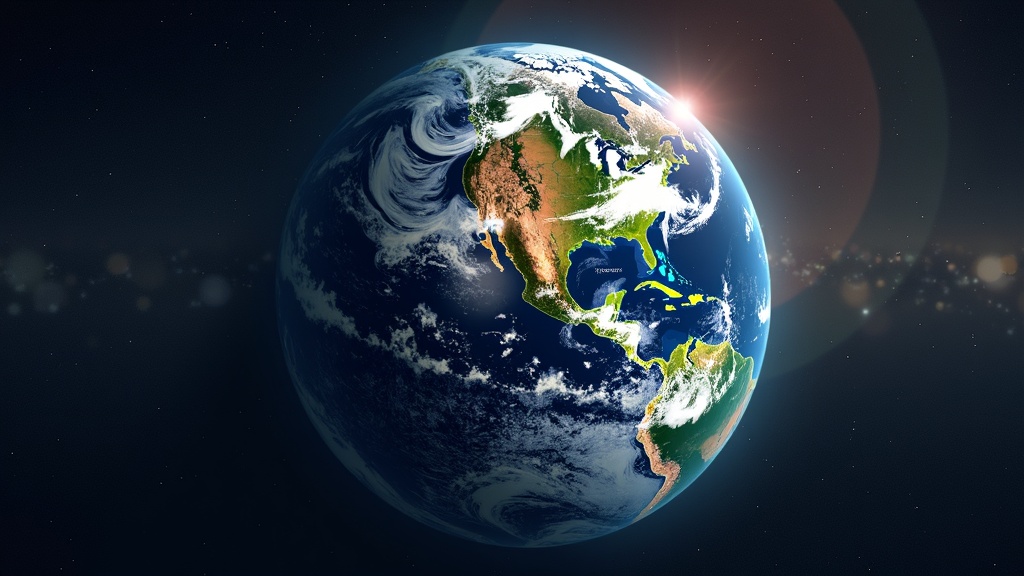
What would a truly perfect planet for life look like? Science points to super-Earths around orange dwarf stars — and the results are mind-bending.
In This Article
Earth Is Good. But It's Not Great.
For all the poetry written about our pale blue dot, Earth is, by cosmic standards, a middling host for life. More than a quarter of its surface is desert. Its polar regions are locked under ice for much of the year. Its oceans plunge to an average depth of 3,700 metres — yet sunlight only penetrates the top 200. The vast majority of Earth's ocean floor is a cold, lightless abyss where almost nothing lives. If you were designing a planet from scratch to maximise biodiversity and biomass, you probably wouldn't build Earth.

So what would you build? That question sits at the intersection of exoplanet science, astrobiology, and planetary physics — and researchers have been working on the answer. The concept of a superhabitable world, a planet more suitable for complex life than Earth, was formally proposed by astrobiologists René Heller and John Armstrong in 2014. Their paper identified specific physical and stellar properties that could, in theory, produce a planet far richer in life than our own. Let's dig into the science and construct that world, piece by piece.
Why Your Star Choice Matters More Than Your Planet
When most people imagine a life-supporting star, they picture something like our sun — a yellow G-type dwarf sitting at the centre of a familiar solar system. But from a superhabitability standpoint, our sun has real problems.
For one, it's on a timer. Yellow dwarf stars like the sun have lifespans of roughly 10 billion years. Earth is about 4.5 billion years old, meaning we've already burned through nearly half our solar budget. Complex, multicellular life only appeared in the last 600 million years or so — a relatively thin slice of Earth's total history. That's not a lot of runway.
Red dwarfs seem like an obvious alternative. They make up about 70% of all stars in the Milky Way and can burn for trillions of years. But they come with serious baggage. Their habitable zones — the orbital bands where liquid water can exist — sit extremely close to the star, making tidal locking almost inevitable. One hemisphere faces the star in permanent scorching daylight; the other is locked in permanent frozen night. Young red dwarfs are also prolific producers of intense stellar flares that can strip planetary atmospheres and sterilise surfaces before life ever gets started.
The sweet spot, according to current astrobiology research, is orange dwarf stars — K-type stars with surface temperatures between roughly 3,900 and 5,200 Kelvin. They're less luminous than the sun but far more stable than red dwarfs. Their habitable zones sit at comfortable orbital distances, reducing the risk of tidal locking. Critically, they live up to 70 billion years — nearly five times longer than our sun. For a civilisation trying to engineer the ideal cradle for life, an orange dwarf isn't a compromise. It's the target.
The Physics of a Superhabitable Super-Earth
Once you have the right star, you need the right planet. And here the data gets genuinely surprising: bigger is probably better, up to a point.
A planet about 1.3 to 1.5 times Earth's radius — a true super-Earth — offers roughly 60–70% more surface area. More surface means more ecological niches, more habitat diversity, and more opportunities for speciation. But size alone isn't the whole story. A more massive planet also holds onto its atmosphere more effectively, runs hotter internally for longer, and is more likely to sustain both a strong magnetic field and active plate tectonics — two features that are, arguably, the most important non-biological prerequisites for complex life.
Earth's magnetic field deflects solar wind and cosmic radiation that would otherwise strip the atmosphere and bombard the surface with ionising radiation. Mars lost its magnetic field billions of years ago, and its atmosphere followed — leaving a thin, radiation-soaked husk. A larger planetary core, spinning in a liquid mantle, generates a more powerful and more durable magnetosphere. For a superhabitable world, that's a fundamental requirement, not a nice-to-have.
Plate tectonics adds another layer of complexity. Venus is almost Earth-sized but has no active plate tectonics. The result is a 465°C pressure cooker with a crushing CO₂ atmosphere, periodically resurfaced by catastrophic volcanic events. Active tectonics regulate atmospheric CO₂ by subducting carbon-rich rock, cycle minerals and nutrients to the surface, and drive the geological dynamism that keeps a planet chemically active. Without it, even a well-positioned planet can become a dead world.
Land, Sea, and the Architecture of Biodiversity
Here's a counterintuitive insight from biogeography: coastlines matter more than total land area. The most biodiverse ecosystems on Earth — coral reefs, mangroves, intertidal zones, river deltas — all occur at the boundaries between land and water. These edge environments, where nutrient cycles from two different systems overlap, consistently support more species per square kilometre than either pure land or open ocean.
Earth's large, consolidated continents have a fundamental flaw: their interiors are far from water. The Sahara, the Gobi, the Australian Outback — these continental hearts become deserts precisely because moisture from the ocean can't reach them. A planet engineered for maximum biodiversity would fragment those continents into archipelagos — thousands of islands of varying sizes, orientations, and elevations, each surrounded by shallow coastal water.
Shallow oceans are another key variable. Earth's deep ocean basins are ecological wastelands relative to their size. A planet with most of its ocean sitting on continental shelves — between 100 and 200 metres deep — would have its entire seafloor bathed in sunlight. That transforms the ocean from a mostly dark, barren volume into a continuous productive ecosystem. Coral systems, kelp forests, and phytoplankton blooms could stretch across the entire ocean floor rather than being confined to a narrow sunlit fringe.
A warmer baseline temperature — perhaps 5°C above Earth's average — would push tropical forest conditions poleward, eliminating the ice caps and expanding the most productive biome on Earth across the entire surface. Tropical rainforests cover just 6% of Earth's land but contain over 50% of its species. Scale that across a whole planet and the biodiversity implications are staggering.
Atmosphere, Flight, and the Physics of a Richer Sky
One of the most striking predictions of superhabitable planet science involves the sky itself. On Earth, powered flight is energetically expensive — which is why it has evolved independently only four times in vertebrates (pterosaurs, birds, bats, and some dinosaur lineages) and tends to produce relatively small, light animals.
In a thicker atmosphere — say, 1.4 to 1.5 times Earth's surface pressure — the aerodynamic lift available to a given wing area increases substantially. The energy cost of flight drops. This single change could trigger a dramatic diversification of aerial life. Studies of Cretaceous Earth, when atmospheric oxygen levels were higher and forests were denser, hint at what's possible: pterosaurs with 10-metre wingspans, giant insects, and ecosystems where the air was a fully occupied ecological tier rather than an occasional transit route.
Higher oxygen concentrations also accelerate metabolic rates in animals that rely on diffusion-based respiration — insects and their analogues — allowing them to grow far larger than Earth's atmosphere currently permits. The Carboniferous period, when oxygen spiked to around 35% (versus today's 21%), produced dragonflies with 70-centimetre wingspans. A superhabitable atmosphere could sustain body plans that Earth's physics simply rules out.
The trade-off is fire risk. Higher oxygen makes wildfires more intense and harder to extinguish. But a warmer, wetter planet with higher evaporation rates and more frequent rainfall could naturally suppress fire spread — turning what looks like a catastrophic flaw into a manageable constraint.
Could a Planet Like This Actually Exist?
This isn't purely speculative. Exoplanet catalogues from missions like Kepler and TESS have already identified dozens of super-Earth candidates orbiting in the habitable zones of K-type orange dwarf stars. The star 61 Virginis, just 28 light-years away, is an orange dwarf. Tau Ceti, about 12 light-years out, is another. Neither has a confirmed superhabitable planet yet — but the architecture exists.
Heller and Armstrong's 2014 analysis suggested that statistically, superhabitable planets should exist, and that we might actually have better odds of finding complex life on them than on Earth-analogues. Our search strategies have been biased toward Earth twins because that's what we know — but that bias may be causing us to overlook worlds far richer in life than our own.
The Drake Equation variables start looking very different if the universe contains planets hosting hundreds of millions of species rather than the 8–9 million estimated on Earth. Intelligence might emerge more often, or more quickly, or in multiple lineages simultaneously, on a world with that many ecological opportunities and that much evolutionary pressure.
Building Hestia: A Thought Experiment with Real Science
Let's put it all together. An ideal superhabitable world — call it Hestia, after the Greek goddess of the hearth — orbits an orange dwarf star born roughly 3 billion years ago. It has a radius 1.3 times Earth's, a metallic core generating a robust magnetic field, and active plate tectonics stabilising its climate and mineral cycles. Its surface is an archipelago of fragmented continents and millions of islands, all surrounded by shallow, sunlit seas. Its atmosphere is 40% denser than Earth's, oxygen-rich, warm and humid. Its axis is tilted slightly, creating mild seasons. Four small moons stabilise its rotational dynamics.
The result: an estimated carrying capacity for complex species in the hundreds of millions, versus Earth's 8–9 million. Every ecological niche filled, every body plan explored, every evolutionary strategy tested across billions of years of stable stellar output.
Free Weekly Newsletter
Enjoying this guide?
Get the best articles like this one delivered to your inbox every week. No spam.
Is Hestia guaranteed to produce intelligence? No. But a planet that biodiverse, that stable, and that old gives natural selection an extraordinary number of rolls of the dice. The emergence of tool use, language, and abstract reasoning somewhere on such a world seems not just plausible but likely.
The more interesting question is what intelligent life on Hestia would make of the universe around it — and of a sparse, cold, mostly barren rock like Earth.
Conclusion: Rethinking What a Habitable Planet Means
The science of superhabitable worlds forces a recalibration of how we think about life in the cosmos. Earth isn't the gold standard — it's a data point of one. When we examine the planetary physics, stellar dynamics, and ecology rigorously, a clearer picture emerges: larger planets, around longer-lived stars, with more coastline, shallower oceans, warmer temperatures, and thicker atmospheres could routinely outperform Earth as cradles for life.
That has real implications for the search for extraterrestrial life. It means our telescopes might be better aimed at K-type stars than G-type ones. It means 'Earth-like' is probably the wrong target criterion. And it means the universe may be stranger, richer, and more thoroughly inhabited than our geocentric intuitions suggest.
The next generation of space telescopes — including the James Webb Space Telescope and future missions like LIFE and HabEx — will begin characterising exoplanet atmospheres in meaningful detail. If we find one with the right combination of oxygen, water vapour, CO₂, and temperature signatures, orbiting a stable orange dwarf, we should pay very close attention.
It might not be Earth-like at all. It might be something far more interesting.
Frequently Asked Questions
What is a superhabitable planet?
A superhabitable planet is a world that offers better conditions for the emergence and sustaining of complex life than Earth does. The concept, introduced by astrobiologists René Heller and John Armstrong in 2014, identifies specific physical features — including larger size, warmer temperatures, shallower oceans, and longer-lived host stars — that could produce significantly greater biodiversity and biomass than Earth currently supports.
Why are orange dwarf stars better for life than our sun?
Orange dwarf (K-type) stars strike a balance that neither yellow nor red dwarfs achieve. They live up to 70 billion years, giving life far more time to evolve than our sun's ~10 billion year lifespan allows. Their habitable zones sit at orbital distances that don't force tidal locking, unlike red dwarfs. And their radiation output is stable and relatively gentle, reducing the risk of atmospheric stripping or surface sterilisation that plagues planets around younger red dwarfs.
Do superhabitable planets actually exist, or is this just theory?
The theoretical framework is grounded in real planetary science, and the stellar candidates are well-documented — orange dwarf stars like 61 Virginis and Tau Ceti are nearby and well-studied. While no confirmed superhabitable planet has been identified yet, the Kepler and TESS missions have found numerous super-Earth candidates in habitable zones. The primary limitation is atmospheric characterisation, which upcoming telescopes like JWST and proposed future missions will increasingly be able to provide.
How would a thicker atmosphere change animal life on another planet?
A denser atmosphere increases aerodynamic lift, dramatically reducing the energy cost of flight. This would likely allow flight to evolve far more frequently and support much larger flying animals than Earth's atmosphere permits. Higher oxygen concentrations in such an atmosphere would also allow diffusion-based respiratory systems — like those of insects — to support much larger body sizes, potentially producing animal groups with no Earth equivalent in size or form. The Carboniferous period on Earth, with its elevated oxygen and giant insects, offers a partial analogue.
Why do coastlines matter so much for biodiversity?
Coastlines are ecological edge environments where marine and terrestrial nutrient cycles overlap. They consistently support disproportionately high species density relative to their area — coral reefs, mangroves, and estuaries are among the most biodiverse ecosystems on Earth despite occupying a fraction of its surface. A planet engineered as a global archipelago rather than a few large continents would have vastly more total coastline, creating orders of magnitude more of these high-productivity boundary zones.
Frequently Asked Questions
Earth Is Good. But It's Not Great.
For all the poetry written about our pale blue dot, Earth is, by cosmic standards, a middling host for life. More than a quarter of its surface is desert. Its polar regions are locked under ice for much of the year. Its oceans plunge to an average depth of 3,700 metres — yet sunlight only penetrates the top 200. The vast majority of Earth's ocean floor is a cold, lightless abyss where almost nothing lives. If you were designing a planet from scratch to maximise biodiversity and biomass, you probably wouldn't build Earth.
So what would you build? That question sits at the intersection of exoplanet science, astrobiology, and planetary physics — and researchers have been working on the answer. The concept of a superhabitable world, a planet more suitable for complex life than Earth, was formally proposed by astrobiologists René Heller and John Armstrong in 2014. Their paper identified specific physical and stellar properties that could, in theory, produce a planet far richer in life than our own. Let's dig into the science and construct that world, piece by piece.
Why Your Star Choice Matters More Than Your Planet
When most people imagine a life-supporting star, they picture something like our sun — a yellow G-type dwarf sitting at the centre of a familiar solar system. But from a superhabitability standpoint, our sun has real problems.
For one, it's on a timer. Yellow dwarf stars like the sun have lifespans of roughly 10 billion years. Earth is about 4.5 billion years old, meaning we've already burned through nearly half our solar budget. Complex, multicellular life only appeared in the last 600 million years or so — a relatively thin slice of Earth's total history. That's not a lot of runway.
Red dwarfs seem like an obvious alternative. They make up about 70% of all stars in the Milky Way and can burn for trillions of years. But they come with serious baggage. Their habitable zones — the orbital bands where liquid water can exist — sit extremely close to the star, making tidal locking almost inevitable. One hemisphere faces the star in permanent scorching daylight; the other is locked in permanent frozen night. Young red dwarfs are also prolific producers of intense stellar flares that can strip planetary atmospheres and sterilise surfaces before life ever gets started.
The sweet spot, according to current astrobiology research, is orange dwarf stars — K-type stars with surface temperatures between roughly 3,900 and 5,200 Kelvin. They're less luminous than the sun but far more stable than red dwarfs. Their habitable zones sit at comfortable orbital distances, reducing the risk of tidal locking. Critically, they live up to 70 billion years — nearly five times longer than our sun. For a civilisation trying to engineer the ideal cradle for life, an orange dwarf isn't a compromise. It's the target.
The Physics of a Superhabitable Super-Earth
Once you have the right star, you need the right planet. And here the data gets genuinely surprising: bigger is probably better, up to a point.
A planet about 1.3 to 1.5 times Earth's radius — a true super-Earth — offers roughly 60–70% more surface area. More surface means more ecological niches, more habitat diversity, and more opportunities for speciation. But size alone isn't the whole story. A more massive planet also holds onto its atmosphere more effectively, runs hotter internally for longer, and is more likely to sustain both a strong magnetic field and active plate tectonics — two features that are, arguably, the most important non-biological prerequisites for complex life.
Earth's magnetic field deflects solar wind and cosmic radiation that would otherwise strip the atmosphere and bombard the surface with ionising radiation. Mars lost its magnetic field billions of years ago, and its atmosphere followed — leaving a thin, radiation-soaked husk. A larger planetary core, spinning in a liquid mantle, generates a more powerful and more durable magnetosphere. For a superhabitable world, that's a fundamental requirement, not a nice-to-have.
Plate tectonics adds another layer of complexity. Venus is almost Earth-sized but has no active plate tectonics. The result is a 465°C pressure cooker with a crushing CO₂ atmosphere, periodically resurfaced by catastrophic volcanic events. Active tectonics regulate atmospheric CO₂ by subducting carbon-rich rock, cycle minerals and nutrients to the surface, and drive the geological dynamism that keeps a planet chemically active. Without it, even a well-positioned planet can become a dead world.
Land, Sea, and the Architecture of Biodiversity
Here's a counterintuitive insight from biogeography: coastlines matter more than total land area. The most biodiverse ecosystems on Earth — coral reefs, mangroves, intertidal zones, river deltas — all occur at the boundaries between land and water. These edge environments, where nutrient cycles from two different systems overlap, consistently support more species per square kilometre than either pure land or open ocean.
Earth's large, consolidated continents have a fundamental flaw: their interiors are far from water. The Sahara, the Gobi, the Australian Outback — these continental hearts become deserts precisely because moisture from the ocean can't reach them. A planet engineered for maximum biodiversity would fragment those continents into archipelagos — thousands of islands of varying sizes, orientations, and elevations, each surrounded by shallow coastal water.
Shallow oceans are another key variable. Earth's deep ocean basins are ecological wastelands relative to their size. A planet with most of its ocean sitting on continental shelves — between 100 and 200 metres deep — would have its entire seafloor bathed in sunlight. That transforms the ocean from a mostly dark, barren volume into a continuous productive ecosystem. Coral systems, kelp forests, and phytoplankton blooms could stretch across the entire ocean floor rather than being confined to a narrow sunlit fringe.
A warmer baseline temperature — perhaps 5°C above Earth's average — would push tropical forest conditions poleward, eliminating the ice caps and expanding the most productive biome on Earth across the entire surface. Tropical rainforests cover just 6% of Earth's land but contain over 50% of its species. Scale that across a whole planet and the biodiversity implications are staggering.
Atmosphere, Flight, and the Physics of a Richer Sky
One of the most striking predictions of superhabitable planet science involves the sky itself. On Earth, powered flight is energetically expensive — which is why it has evolved independently only four times in vertebrates (pterosaurs, birds, bats, and some dinosaur lineages) and tends to produce relatively small, light animals.
In a thicker atmosphere — say, 1.4 to 1.5 times Earth's surface pressure — the aerodynamic lift available to a given wing area increases substantially. The energy cost of flight drops. This single change could trigger a dramatic diversification of aerial life. Studies of Cretaceous Earth, when atmospheric oxygen levels were higher and forests were denser, hint at what's possible: pterosaurs with 10-metre wingspans, giant insects, and ecosystems where the air was a fully occupied ecological tier rather than an occasional transit route.
Higher oxygen concentrations also accelerate metabolic rates in animals that rely on diffusion-based respiration — insects and their analogues — allowing them to grow far larger than Earth's atmosphere currently permits. The Carboniferous period, when oxygen spiked to around 35% (versus today's 21%), produced dragonflies with 70-centimetre wingspans. A superhabitable atmosphere could sustain body plans that Earth's physics simply rules out.
The trade-off is fire risk. Higher oxygen makes wildfires more intense and harder to extinguish. But a warmer, wetter planet with higher evaporation rates and more frequent rainfall could naturally suppress fire spread — turning what looks like a catastrophic flaw into a manageable constraint.
Could a Planet Like This Actually Exist?
This isn't purely speculative. Exoplanet catalogues from missions like Kepler and TESS have already identified dozens of super-Earth candidates orbiting in the habitable zones of K-type orange dwarf stars. The star 61 Virginis, just 28 light-years away, is an orange dwarf. Tau Ceti, about 12 light-years out, is another. Neither has a confirmed superhabitable planet yet — but the architecture exists.
Heller and Armstrong's 2014 analysis suggested that statistically, superhabitable planets should exist, and that we might actually have better odds of finding complex life on them than on Earth-analogues. Our search strategies have been biased toward Earth twins because that's what we know — but that bias may be causing us to overlook worlds far richer in life than our own.
The Drake Equation variables start looking very different if the universe contains planets hosting hundreds of millions of species rather than the 8–9 million estimated on Earth. Intelligence might emerge more often, or more quickly, or in multiple lineages simultaneously, on a world with that many ecological opportunities and that much evolutionary pressure.
Building Hestia: A Thought Experiment with Real Science
Let's put it all together. An ideal superhabitable world — call it Hestia, after the Greek goddess of the hearth — orbits an orange dwarf star born roughly 3 billion years ago. It has a radius 1.3 times Earth's, a metallic core generating a robust magnetic field, and active plate tectonics stabilising its climate and mineral cycles. Its surface is an archipelago of fragmented continents and millions of islands, all surrounded by shallow, sunlit seas. Its atmosphere is 40% denser than Earth's, oxygen-rich, warm and humid. Its axis is tilted slightly, creating mild seasons. Four small moons stabilise its rotational dynamics.
The result: an estimated carrying capacity for complex species in the hundreds of millions, versus Earth's 8–9 million. Every ecological niche filled, every body plan explored, every evolutionary strategy tested across billions of years of stable stellar output.
Is Hestia guaranteed to produce intelligence? No. But a planet that biodiverse, that stable, and that old gives natural selection an extraordinary number of rolls of the dice. The emergence of tool use, language, and abstract reasoning somewhere on such a world seems not just plausible but likely.
The more interesting question is what intelligent life on Hestia would make of the universe around it — and of a sparse, cold, mostly barren rock like Earth.
Conclusion: Rethinking What a Habitable Planet Means
The science of superhabitable worlds forces a recalibration of how we think about life in the cosmos. Earth isn't the gold standard — it's a data point of one. When we examine the planetary physics, stellar dynamics, and ecology rigorously, a clearer picture emerges: larger planets, around longer-lived stars, with more coastline, shallower oceans, warmer temperatures, and thicker atmospheres could routinely outperform Earth as cradles for life.
That has real implications for the search for extraterrestrial life. It means our telescopes might be better aimed at K-type stars than G-type ones. It means 'Earth-like' is probably the wrong target criterion. And it means the universe may be stranger, richer, and more thoroughly inhabited than our geocentric intuitions suggest.
The next generation of space telescopes — including the James Webb Space Telescope and future missions like LIFE and HabEx — will begin characterising exoplanet atmospheres in meaningful detail. If we find one with the right combination of oxygen, water vapour, CO₂, and temperature signatures, orbiting a stable orange dwarf, we should pay very close attention.
It might not be Earth-like at all. It might be something far more interesting.
Frequently Asked Questions
What is a superhabitable planet?
A superhabitable planet is a world that offers better conditions for the emergence and sustaining of complex life than Earth does. The concept, introduced by astrobiologists René Heller and John Armstrong in 2014, identifies specific physical features — including larger size, warmer temperatures, shallower oceans, and longer-lived host stars — that could produce significantly greater biodiversity and biomass than Earth currently supports.
Why are orange dwarf stars better for life than our sun?
Orange dwarf (K-type) stars strike a balance that neither yellow nor red dwarfs achieve. They live up to 70 billion years, giving life far more time to evolve than our sun's ~10 billion year lifespan allows. Their habitable zones sit at orbital distances that don't force tidal locking, unlike red dwarfs. And their radiation output is stable and relatively gentle, reducing the risk of atmospheric stripping or surface sterilisation that plagues planets around younger red dwarfs.
Do superhabitable planets actually exist, or is this just theory?
The theoretical framework is grounded in real planetary science, and the stellar candidates are well-documented — orange dwarf stars like 61 Virginis and Tau Ceti are nearby and well-studied. While no confirmed superhabitable planet has been identified yet, the Kepler and TESS missions have found numerous super-Earth candidates in habitable zones. The primary limitation is atmospheric characterisation, which upcoming telescopes like JWST and proposed future missions will increasingly be able to provide.
How would a thicker atmosphere change animal life on another planet?
A denser atmosphere increases aerodynamic lift, dramatically reducing the energy cost of flight. This would likely allow flight to evolve far more frequently and support much larger flying animals than Earth's atmosphere permits. Higher oxygen concentrations in such an atmosphere would also allow diffusion-based respiratory systems — like those of insects — to support much larger body sizes, potentially producing animal groups with no Earth equivalent in size or form. The Carboniferous period on Earth, with its elevated oxygen and giant insects, offers a partial analogue.
Why do coastlines matter so much for biodiversity?
Coastlines are ecological edge environments where marine and terrestrial nutrient cycles overlap. They consistently support disproportionately high species density relative to their area — coral reefs, mangroves, and estuaries are among the most biodiverse ecosystems on Earth despite occupying a fraction of its surface. A planet engineered as a global archipelago rather than a few large continents would have vastly more total coastline, creating orders of magnitude more of these high-productivity boundary zones.
About Zeebrain Editorial
Zeebrain publishes independent analysis of markets, investing, personal finance, and business. We disclose affiliate relationships, never accept payment for coverage, and fact-check all claims against primary sources. Read our editorial policy →
How this article was produced: Zeebrain articles are created with AI assistance from primary sources (including cited videos and market data) and reviewed under our editorial standards before publication. Spot an error? Tell us and we will correct it.
More from Science & Tech



Related Guides
Keep exploring this topic
Explore More Categories
Keep browsing by topic and build depth around the subjects you care about most.