Strait of Hormuz Crisis: The Energy Shock Hiding in Plain Sight
Quick Summary
The Strait of Hormuz blockade is reshaping global energy, food, and financial markets. Here's what the data says — and why equity markets are getting it wrong.
In This Article
The Gap Between Stock Prices and Physical Reality
Equity markets have a remarkable talent for pricing in the best-case scenario. The S&P 500 has climbed back past pre-conflict highs, and casual observers might reasonably conclude that the global energy crisis is already in the rearview mirror. It isn't.
Related Post

The people who actually move physical barrels of oil — the trading desks at Trafigura, Vitol, Mercuria, and Louis Dreyfus — are telling a very different story. There is a widening, measurable gap between futures prices (which reflect diplomatic optimism) and the cost of a physical barrel sitting on a tanker in Northwest Europe (which reflects operational reality). That gap is not a rounding error. It is a signal.
Understanding what is actually happening in the Strait of Hormuz — and why it matters well beyond energy prices — is one of the more important analytical exercises any financially literate professional can do right now.
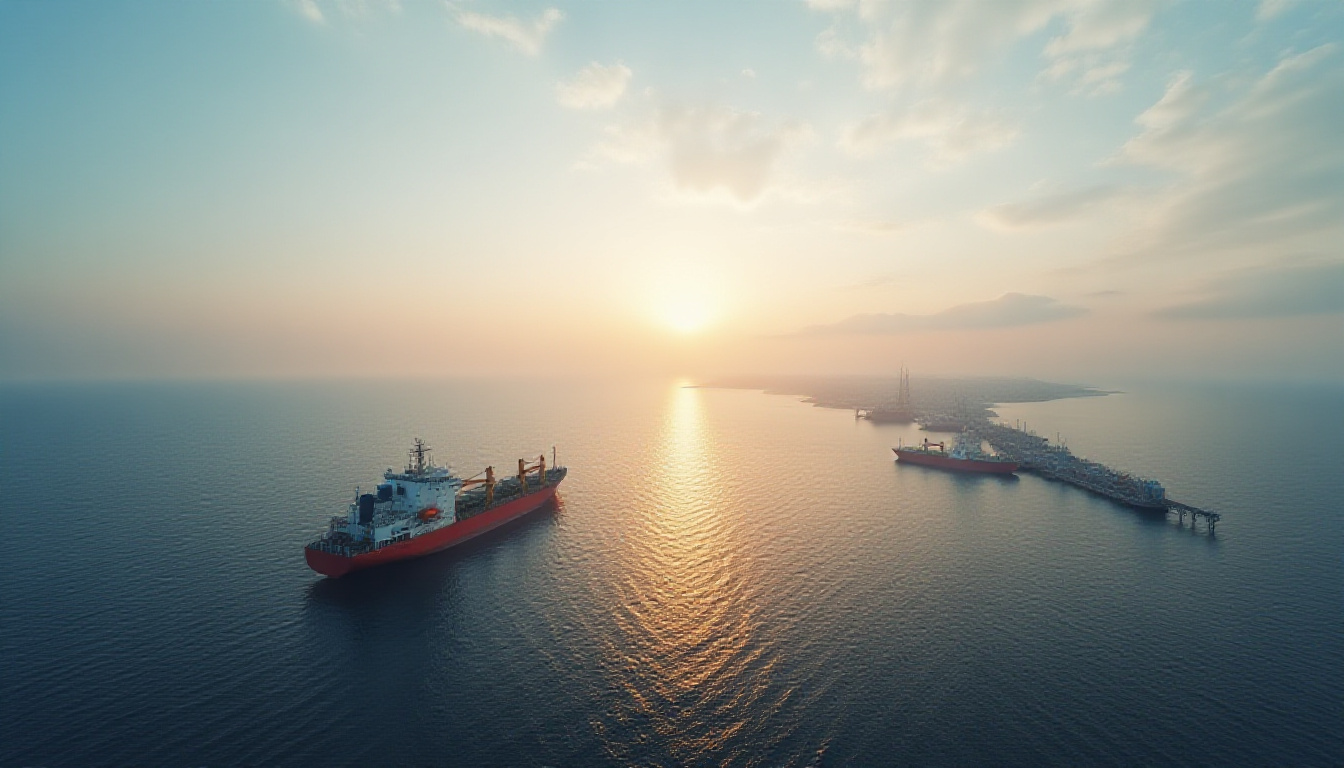
What the Strait of Hormuz Blockade Actually Looks Like on the Water
The Strait of Hormuz is, by any measure, the most consequential choke point in global energy logistics. Roughly 21 million barrels of oil pass through it every day — approximately 20% of global petroleum liquids consumption. There is no viable short-term alternative.
What has developed is effectively a dual blockade. Iran has restricted passage to vessels it classifies as hostile or linked to unfriendly nations. The US Navy launched a counter-blockade on April 13th, intercepting ships bound for or departing from Iranian ports. The result is a maritime standoff that has reduced daily transits to a fraction of normal volume. Where dozens of vessels previously moved through the strait each day, recent 24-hour periods have seen as few as five make it through.
The operational picture on the water is striking:
- Roughly 45 ships have entered or exited the strait since a temporary ceasefire was first agreed in early April — a fraction of pre-conflict traffic.
- At least 22 ships have been attacked, and several have been seized by the Iranian Revolutionary Guard Corps.
- A backlog of 300 to 400 vessels is reported to be waiting in the region, described by one industry executive as a floating car park.
- Captains are turning off AIS transponders and navigating in darkness to avoid targeting. Some are paying safe passage tolls in cryptocurrency — a practice that, if confirmed, would breach US sanctions.
- Six cruise ships were trapped in the Gulf before eventually escaping with skeleton crews and no passengers.
This is not a supply chain disruption. It is a maritime siege.
The Buffer Is Gone — and the Numbers Are Alarming
In the opening weeks of the conflict, the global oil market was cushioned by a near-record volume of crude already at sea when hostilities began. That buffer has now been fully consumed. The last tankers that loaded before the blockade intensified reached their destinations in Asia and North America by late April. The market is now running on current supply alone — and current supply is severely constrained.
Saad Rahim, chief economist at Trafigura, has warned that a cumulative loss of 1.5 billion barrels of Gulf crude — roughly 5% of annual global output — is nearly unavoidable at this point. Even if a ceasefire holds today, physical commodity traders estimate the market may not return to equilibrium until 2030, due to the compounding effects of delayed shipments, contract disruptions, and the slow rebuilding of inventory buffers.
The instinct among equity investors is to expect a "TACO moment" — the thesis that political pressure from rising gasoline prices will force a swift diplomatic resolution. That logic has merit in a trade war, where tariffs can be reversed with a social media post. It is far less applicable to a shooting war in a critical waterway, where the opposing side has its own strategic incentives and has demonstrated the ability to seize vessels and fire on tankers. The asymmetry between how fast a conflict starts and how fast it ends is not being adequately priced into equity valuations.
Beyond Crude: Jet Fuel, Helium, and the Hidden Supply Chains at Risk
Crude oil prices are the headline number, but the downstream effects of a sustained Hormuz blockade are considerably more complex — and in some cases, more immediately damaging.
Jet fuel: Europe's refining capacity covers at most 70% of its aviation fuel demand. The continent currently holds roughly 50 days of jet fuel reserves — a normal operating buffer that becomes a hard deadline if flows through Hormuz do not normalize. Airlines facing a supply crunch cannot simply reroute to alternative suppliers quickly. Lead times for refined products are measured in weeks, not days.
Helium: Qatar accounts for approximately one-third of global helium supply. Helium is a byproduct of natural gas extraction and cannot be transported by air at scale — it moves by sea. A sustained blockade effectively cuts off a third of the world's supply of a gas that has no synthetic substitute and is irreplaceable in:
- MRI machine cooling systems (superconducting magnets)
- Semiconductor chip manufacturing (chemical vapor deposition processes)
- Clean room purging in advanced fabrication plants
Hospitals and chip fabs cannot swap helium for another element. There is no Plan B. The downstream consequences of a prolonged helium shortage — from delayed medical imaging to constrained chip production — would ripple through healthcare and technology supply chains in ways that have nothing to do with energy.
Fertilizer and food security: Natural gas is the primary feedstock for nitrogen-based fertilizers. The Strait of Hormuz handles roughly a third of the world's seaborne fertilizer trade. Anhydrous ammonia — a critical agricultural input — has risen from approximately $800 per ton before hostilities began to over $1,050 per ton. A recent American Farm Bureau Federation survey found that around 70% of farmers report being unable to afford all the fertilizer they need for the current crop cycle. Combined with diesel price spikes affecting farm equipment and haulage costs, the agricultural sector — already operating on thin margins — is facing a severe unbudgeted cost shock.
Pablo Escobar (yes, that is the actual name of Vitol's head of LNG) has publicly warned that the energy crisis is rapidly becoming a global food crisis. That is not hyperbole. It is a supply chain analysis.
The Shipping Detour Effect: Panama Canal and Global Grain Routes
Because ships can no longer safely transit the Strait of Hormuz, global shipping is being rerouted around the Cape of Good Hope — adding weeks to journey times and effectively removing a substantial portion of global shipping capacity from the market.
The knock-on effects extend well beyond energy:
- Panama Canal congestion has intensified sharply. Asian buyers replacing Middle Eastern crude with Gulf of Mexico supply have flooded the canal with tanker traffic. Combined with existing drought-related transit restrictions, wait times have stretched to approximately 40 days.
- Grain shipping rates have increased by 50 to 60% on some routes, as oil tankers outbid bulk carriers for scarce Panama Canal slots. Grain cargoes are being pushed to the back of the queue.
- Lower-value commodities — fertilizers, grains, industrial inputs — are losing access to cost-efficient shipping lanes that global food pricing models were built around.
The interaction between energy logistics and food logistics is one of the least-discussed but most consequential dimensions of this crisis.
Why US Shale Cannot Simply Fill the Gap
The conventional playbook for an American president facing an energy shock is straightforward: encourage domestic oil producers to drill more, increase supply, and bring gasoline prices down. The current administration has pursued exactly this strategy. It has not worked — and for structurally rational reasons.
US shale executives, surveyed recently by the Dallas Federal Reserve, are actively resisting calls to significantly increase production. Their reasoning is defensible from a capital allocation standpoint:
- Price signal chaos. When the price of crude swings by 10% in a single session based on diplomatic announcements that are reversed within hours, it is impossible to responsibly plan long-term capital expenditure or rig deployment schedules.
- Burn memory. The US shale industry has been through multiple cycles of overproduction followed by market collapses. Executives who authorised aggressive spending during previous boom phases and were then left holding stranded assets are not eager to repeat the experience.
- The peace deal risk. If producers spend billions ramping up output and a sudden diplomatic resolution collapses oil prices, the financial damage would be severe. The rational strategy, in a deeply uncertain environment, is capital preservation.
The oil intensity of the global economy has fallen by more than 70% since the 1970s — our cars are more fuel-efficient, our factories use less energy per unit of output, and our power grids are more diversified. This structural resilience means the physical economy can absorb an oil shock better than it could 50 years ago. But financial markets are a different matter. The S&P 500's price-to-earnings ratio today sits near historic highs — a stark contrast to the historic lows that prevailed in 1978. A complex, interconnected private credit market that did not exist in the 1970s amplifies the potential transmission of an inflation shock through the financial system. The economy needs less oil. The financial system has less margin for error.
Key Takeaways for Investors and Business Decision-Makers
The divergence between equity market optimism and physical commodity market stress creates real analytical and strategic challenges. A few observations grounded in the data:
- The futures-physical spread is a leading indicator, not noise. When futures markets price in a swift resolution and physical markets price in prolonged disruption, history suggests physical traders — who bear direct financial consequences for being wrong — are the more reliable signal.
- Sector exposure is not limited to energy stocks. Airlines (jet fuel), semiconductor manufacturers (helium), agricultural businesses (fertilizer and diesel), and consumer staples companies with complex supply chains all carry meaningful indirect exposure to a sustained Hormuz blockade.
- The 2030 equilibrium estimate changes the investment horizon. If commodity traders are correct that market normalisation takes years rather than months, strategies built on a swift resolution assumption carry significant duration risk.
- Green energy's investment thesis has shifted. For two decades, the case for renewables was primarily environmental. The Hormuz crisis has reframed energy independence as a matter of national security — a far more durable and politically bipartisan investment driver.
- Food and agricultural commodity exposure deserves reassessment. A 70% fertilizer affordability gap among US farmers, combined with shipping cost increases of 50-60% on grain routes, suggests agricultural input and commodity prices have further structural pressure ahead.
Free Weekly Newsletter
Enjoying this guide?
Get the best articles like this one delivered to your inbox every week. No spam.
None of this constitutes a forecast. Markets are complex, diplomatic situations evolve, and analysts have been wrong about geopolitical timelines before. But the gap between the story equity markets are telling and the story physical commodity markets are telling is wide enough — and well-documented enough — to warrant serious analytical attention.
This article is for informational purposes only and does not constitute financial advice. Always consult a qualified financial professional before making investment decisions.
Frequently Asked Questions
Why does the Strait of Hormuz matter so much to global energy markets?
The Strait of Hormuz is the world's single most critical energy chokepoint. Approximately 21 million barrels of oil pass through it daily — around 20% of global petroleum liquids consumption. It also handles a significant share of global liquefied natural gas exports, primarily from Qatar. There is no short-term alternative transit route for this volume of energy. The next-best option — rerouting tankers around the Cape of Good Hope — adds weeks to journey times and dramatically reduces the effective capacity of the global tanker fleet.
How does a Hormuz blockade affect food prices?
The connection runs through two channels. First, natural gas — heavily routed through the strait — is the primary feedstock for nitrogen-based fertilizers like ammonia. Supply disruptions push fertilizer costs sharply higher, directly increasing agricultural production costs. Second, the shipping detour effect drives up freight rates globally, including on grain routes. When oil tankers outbid bulk carriers for scarce Panama Canal slots, grain shipments slow and become more expensive. Both effects hit food producers simultaneously, compressing margins and, ultimately, raising consumer prices.
Why aren't US shale producers simply increasing output to compensate?
US shale executives are making a rational capital allocation decision under conditions of extreme uncertainty. The price of crude is swinging wildly based on diplomatic news cycles, making long-term capital planning nearly impossible. The industry also carries institutional memory of previous overproduction cycles that ended in financial losses when prices collapsed. Additionally, producers face the specific risk that a sudden peace deal could crash oil prices precisely when they have committed billions to ramping up supply. In the absence of durable price signals, the rational strategy is capital preservation and operational flexibility.
Is this energy crisis worse than the 1973 oil embargo?
In absolute volume terms, the current disruption is arguably larger than any previous energy shock in history — global oil production and consumption are roughly twice what they were during the 1973 Arab oil embargo, so the same percentage disruption represents far more barrels. However, major economies are structurally more resilient today. The oil intensity of global GDP — how many barrels it takes to produce one inflation-adjusted dollar of economic output — has fallen by more than 70% since the 1970s. The key vulnerability today is financial rather than physical: equity valuations are at near-record highs, and the private credit market is far more complex and interconnected than anything that existed during the stagflation era.
What sectors beyond energy carry indirect exposure to the Hormuz crisis?
Several sectors carry significant indirect exposure that is not always reflected in headline commentary. Aviation is exposed through jet fuel supply constraints, particularly in Europe where domestic refining covers at most 70% of demand. Semiconductor manufacturing and healthcare are exposed through helium supply disruption — Qatar supplies roughly a third of global helium, which is irreplaceable in chip fabrication and MRI systems. Agriculture is exposed through fertilizer and diesel cost spikes. Any business with complex global supply chains is exposed through the broader shipping capacity crunch caused by the Cape of Good Hope rerouting and Panama Canal congestion.
Free Investing Tools
Frequently Asked Questions
The Gap Between Stock Prices and Physical Reality
Equity markets have a remarkable talent for pricing in the best-case scenario. The S&P 500 has climbed back past pre-conflict highs, and casual observers might reasonably conclude that the global energy crisis is already in the rearview mirror. It isn't.
The people who actually move physical barrels of oil — the trading desks at Trafigura, Vitol, Mercuria, and Louis Dreyfus — are telling a very different story. There is a widening, measurable gap between futures prices (which reflect diplomatic optimism) and the cost of a physical barrel sitting on a tanker in Northwest Europe (which reflects operational reality). That gap is not a rounding error. It is a signal.
Understanding what is actually happening in the Strait of Hormuz — and why it matters well beyond energy prices — is one of the more important analytical exercises any financially literate professional can do right now.
What the Strait of Hormuz Blockade Actually Looks Like on the Water
The Strait of Hormuz is, by any measure, the most consequential choke point in global energy logistics. Roughly 21 million barrels of oil pass through it every day — approximately 20% of global petroleum liquids consumption. There is no viable short-term alternative.
What has developed is effectively a dual blockade. Iran has restricted passage to vessels it classifies as hostile or linked to unfriendly nations. The US Navy launched a counter-blockade on April 13th, intercepting ships bound for or departing from Iranian ports. The result is a maritime standoff that has reduced daily transits to a fraction of normal volume. Where dozens of vessels previously moved through the strait each day, recent 24-hour periods have seen as few as five make it through.
The operational picture on the water is striking:
- Roughly 45 ships have entered or exited the strait since a temporary ceasefire was first agreed in early April — a fraction of pre-conflict traffic.
- At least 22 ships have been attacked, and several have been seized by the Iranian Revolutionary Guard Corps.
- A backlog of 300 to 400 vessels is reported to be waiting in the region, described by one industry executive as a floating car park.
- Captains are turning off AIS transponders and navigating in darkness to avoid targeting. Some are paying safe passage tolls in cryptocurrency — a practice that, if confirmed, would breach US sanctions.
- Six cruise ships were trapped in the Gulf before eventually escaping with skeleton crews and no passengers.
This is not a supply chain disruption. It is a maritime siege.
The Buffer Is Gone — and the Numbers Are Alarming
In the opening weeks of the conflict, the global oil market was cushioned by a near-record volume of crude already at sea when hostilities began. That buffer has now been fully consumed. The last tankers that loaded before the blockade intensified reached their destinations in Asia and North America by late April. The market is now running on current supply alone — and current supply is severely constrained.
Saad Rahim, chief economist at Trafigura, has warned that a cumulative loss of 1.5 billion barrels of Gulf crude — roughly 5% of annual global output — is nearly unavoidable at this point. Even if a ceasefire holds today, physical commodity traders estimate the market may not return to equilibrium until 2030, due to the compounding effects of delayed shipments, contract disruptions, and the slow rebuilding of inventory buffers.
The instinct among equity investors is to expect a "TACO moment" — the thesis that political pressure from rising gasoline prices will force a swift diplomatic resolution. That logic has merit in a trade war, where tariffs can be reversed with a social media post. It is far less applicable to a shooting war in a critical waterway, where the opposing side has its own strategic incentives and has demonstrated the ability to seize vessels and fire on tankers. The asymmetry between how fast a conflict starts and how fast it ends is not being adequately priced into equity valuations.
Beyond Crude: Jet Fuel, Helium, and the Hidden Supply Chains at Risk
Crude oil prices are the headline number, but the downstream effects of a sustained Hormuz blockade are considerably more complex — and in some cases, more immediately damaging.
Jet fuel: Europe's refining capacity covers at most 70% of its aviation fuel demand. The continent currently holds roughly 50 days of jet fuel reserves — a normal operating buffer that becomes a hard deadline if flows through Hormuz do not normalize. Airlines facing a supply crunch cannot simply reroute to alternative suppliers quickly. Lead times for refined products are measured in weeks, not days.
Helium: Qatar accounts for approximately one-third of global helium supply. Helium is a byproduct of natural gas extraction and cannot be transported by air at scale — it moves by sea. A sustained blockade effectively cuts off a third of the world's supply of a gas that has no synthetic substitute and is irreplaceable in:
- MRI machine cooling systems (superconducting magnets)
- Semiconductor chip manufacturing (chemical vapor deposition processes)
- Clean room purging in advanced fabrication plants
Hospitals and chip fabs cannot swap helium for another element. There is no Plan B. The downstream consequences of a prolonged helium shortage — from delayed medical imaging to constrained chip production — would ripple through healthcare and technology supply chains in ways that have nothing to do with energy.
Fertilizer and food security: Natural gas is the primary feedstock for nitrogen-based fertilizers. The Strait of Hormuz handles roughly a third of the world's seaborne fertilizer trade. Anhydrous ammonia — a critical agricultural input — has risen from approximately $800 per ton before hostilities began to over $1,050 per ton. A recent American Farm Bureau Federation survey found that around 70% of farmers report being unable to afford all the fertilizer they need for the current crop cycle. Combined with diesel price spikes affecting farm equipment and haulage costs, the agricultural sector — already operating on thin margins — is facing a severe unbudgeted cost shock.
Pablo Escobar (yes, that is the actual name of Vitol's head of LNG) has publicly warned that the energy crisis is rapidly becoming a global food crisis. That is not hyperbole. It is a supply chain analysis.
The Shipping Detour Effect: Panama Canal and Global Grain Routes
Because ships can no longer safely transit the Strait of Hormuz, global shipping is being rerouted around the Cape of Good Hope — adding weeks to journey times and effectively removing a substantial portion of global shipping capacity from the market.
The knock-on effects extend well beyond energy:
- Panama Canal congestion has intensified sharply. Asian buyers replacing Middle Eastern crude with Gulf of Mexico supply have flooded the canal with tanker traffic. Combined with existing drought-related transit restrictions, wait times have stretched to approximately 40 days.
- Grain shipping rates have increased by 50 to 60% on some routes, as oil tankers outbid bulk carriers for scarce Panama Canal slots. Grain cargoes are being pushed to the back of the queue.
- Lower-value commodities — fertilizers, grains, industrial inputs — are losing access to cost-efficient shipping lanes that global food pricing models were built around.
The interaction between energy logistics and food logistics is one of the least-discussed but most consequential dimensions of this crisis.
Why US Shale Cannot Simply Fill the Gap
The conventional playbook for an American president facing an energy shock is straightforward: encourage domestic oil producers to drill more, increase supply, and bring gasoline prices down. The current administration has pursued exactly this strategy. It has not worked — and for structurally rational reasons.
US shale executives, surveyed recently by the Dallas Federal Reserve, are actively resisting calls to significantly increase production. Their reasoning is defensible from a capital allocation standpoint:
- Price signal chaos. When the price of crude swings by 10% in a single session based on diplomatic announcements that are reversed within hours, it is impossible to responsibly plan long-term capital expenditure or rig deployment schedules.
- Burn memory. The US shale industry has been through multiple cycles of overproduction followed by market collapses. Executives who authorised aggressive spending during previous boom phases and were then left holding stranded assets are not eager to repeat the experience.
- The peace deal risk. If producers spend billions ramping up output and a sudden diplomatic resolution collapses oil prices, the financial damage would be severe. The rational strategy, in a deeply uncertain environment, is capital preservation.
The oil intensity of the global economy has fallen by more than 70% since the 1970s — our cars are more fuel-efficient, our factories use less energy per unit of output, and our power grids are more diversified. This structural resilience means the physical economy can absorb an oil shock better than it could 50 years ago. But financial markets are a different matter. The S&P 500's price-to-earnings ratio today sits near historic highs — a stark contrast to the historic lows that prevailed in 1978. A complex, interconnected private credit market that did not exist in the 1970s amplifies the potential transmission of an inflation shock through the financial system. The economy needs less oil. The financial system has less margin for error.
Key Takeaways for Investors and Business Decision-Makers
The divergence between equity market optimism and physical commodity market stress creates real analytical and strategic challenges. A few observations grounded in the data:
- The futures-physical spread is a leading indicator, not noise. When futures markets price in a swift resolution and physical markets price in prolonged disruption, history suggests physical traders — who bear direct financial consequences for being wrong — are the more reliable signal.
- Sector exposure is not limited to energy stocks. Airlines (jet fuel), semiconductor manufacturers (helium), agricultural businesses (fertilizer and diesel), and consumer staples companies with complex supply chains all carry meaningful indirect exposure to a sustained Hormuz blockade.
- The 2030 equilibrium estimate changes the investment horizon. If commodity traders are correct that market normalisation takes years rather than months, strategies built on a swift resolution assumption carry significant duration risk.
- Green energy's investment thesis has shifted. For two decades, the case for renewables was primarily environmental. The Hormuz crisis has reframed energy independence as a matter of national security — a far more durable and politically bipartisan investment driver.
- Food and agricultural commodity exposure deserves reassessment. A 70% fertilizer affordability gap among US farmers, combined with shipping cost increases of 50-60% on grain routes, suggests agricultural input and commodity prices have further structural pressure ahead.
None of this constitutes a forecast. Markets are complex, diplomatic situations evolve, and analysts have been wrong about geopolitical timelines before. But the gap between the story equity markets are telling and the story physical commodity markets are telling is wide enough — and well-documented enough — to warrant serious analytical attention.
This article is for informational purposes only and does not constitute financial advice. Always consult a qualified financial professional before making investment decisions.
Frequently Asked Questions
Why does the Strait of Hormuz matter so much to global energy markets?
The Strait of Hormuz is the world's single most critical energy chokepoint. Approximately 21 million barrels of oil pass through it daily — around 20% of global petroleum liquids consumption. It also handles a significant share of global liquefied natural gas exports, primarily from Qatar. There is no short-term alternative transit route for this volume of energy. The next-best option — rerouting tankers around the Cape of Good Hope — adds weeks to journey times and dramatically reduces the effective capacity of the global tanker fleet.
How does a Hormuz blockade affect food prices?
The connection runs through two channels. First, natural gas — heavily routed through the strait — is the primary feedstock for nitrogen-based fertilizers like ammonia. Supply disruptions push fertilizer costs sharply higher, directly increasing agricultural production costs. Second, the shipping detour effect drives up freight rates globally, including on grain routes. When oil tankers outbid bulk carriers for scarce Panama Canal slots, grain shipments slow and become more expensive. Both effects hit food producers simultaneously, compressing margins and, ultimately, raising consumer prices.
Why aren't US shale producers simply increasing output to compensate?
US shale executives are making a rational capital allocation decision under conditions of extreme uncertainty. The price of crude is swinging wildly based on diplomatic news cycles, making long-term capital planning nearly impossible. The industry also carries institutional memory of previous overproduction cycles that ended in financial losses when prices collapsed. Additionally, producers face the specific risk that a sudden peace deal could crash oil prices precisely when they have committed billions to ramping up supply. In the absence of durable price signals, the rational strategy is capital preservation and operational flexibility.
Is this energy crisis worse than the 1973 oil embargo?
In absolute volume terms, the current disruption is arguably larger than any previous energy shock in history — global oil production and consumption are roughly twice what they were during the 1973 Arab oil embargo, so the same percentage disruption represents far more barrels. However, major economies are structurally more resilient today. The oil intensity of global GDP — how many barrels it takes to produce one inflation-adjusted dollar of economic output — has fallen by more than 70% since the 1970s. The key vulnerability today is financial rather than physical: equity valuations are at near-record highs, and the private credit market is far more complex and interconnected than anything that existed during the stagflation era.
What sectors beyond energy carry indirect exposure to the Hormuz crisis?
Several sectors carry significant indirect exposure that is not always reflected in headline commentary. Aviation is exposed through jet fuel supply constraints, particularly in Europe where domestic refining covers at most 70% of demand. Semiconductor manufacturing and healthcare are exposed through helium supply disruption — Qatar supplies roughly a third of global helium, which is irreplaceable in chip fabrication and MRI systems. Agriculture is exposed through fertilizer and diesel cost spikes. Any business with complex global supply chains is exposed through the broader shipping capacity crunch caused by the Cape of Good Hope rerouting and Panama Canal congestion.
About Zeebrain Editorial
Zeebrain publishes independent analysis of markets, investing, personal finance, and business. We disclose affiliate relationships, never accept payment for coverage, and fact-check all claims against primary sources. Read our editorial policy →
How this article was produced: Zeebrain articles are created with AI assistance from primary sources (including cited videos and market data) and reviewed under our editorial standards before publication. Spot an error? Tell us and we will correct it.
Disclaimer: Content on Zeebrain is for informational and educational purposes only and does not constitute financial advice or a recommendation to buy or sell any security. Always conduct your own research and consult a qualified financial adviser before making investment decisions. Past performance is not indicative of future results.
More from Business & Money


Related Guides
Keep exploring this topic
Russia's War Economy: How Long Can the Numbers Hold?
Business & Money · Russia war economy · sanctions impact
Oil Price Spike Risk: Understanding Paper vs Physical Markets
Business & Money · oil prices · energy markets
Iran-US Conflict: Could War Reshape Global Order?
Curiosities · Iran-US Conflict · Middle East Geopolitics
Iran Peace Deal Prospects: Oil, Markets & Treasury Yields
Business & Money · Iran peace deal · Strait of Hormuz
Explore More Categories
Keep browsing by topic and build depth around the subjects you care about most.