Why Israel Wants to Occupy Southern Lebanon Permanently
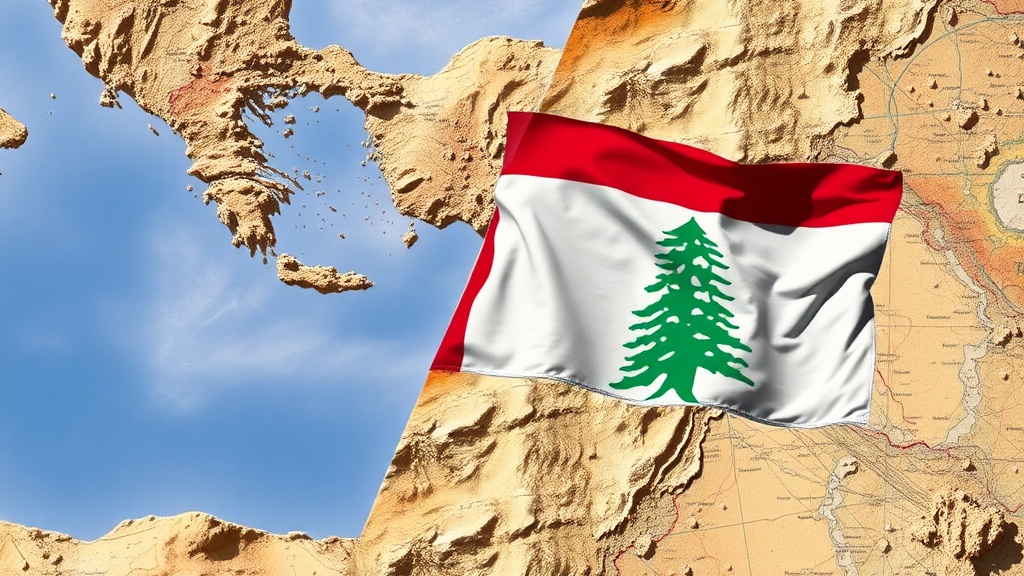
Quick Summary
Israel is pushing to occupy 10% of Lebanon up to the Litani River. Here's what's driving it, what history tells us, and what comes next.
In This Article
The Litani River Line That Could Redraw the Middle East
There is a river in southern Lebanon that has quietly sat at the centre of one of the most intractable border disputes in the modern Middle East for decades. The Litani River runs roughly 30 kilometres north of the Israeli border, and right now it marks the edge of what Israel has openly declared it intends to permanently occupy. That declaration — made not by a fringe politician but by Israel's own Defence Minister — has set off alarm bells from Beirut to the United Nations. If it holds, it would represent the most significant forced territorial change in the region since Israel annexed the Golan Heights from Syria in 1981.

The territory in question — everything south of the Litani — amounts to roughly 10% of Lebanon's sovereign land. Around 600,000 Lebanese citizens have already been displaced from it. Israeli officials have said they will not be permitted to return until an open-ended security mission is complete. And Israel's Finance Minister has gone further still, arguing the border simply needs to be redrawn to make the Litani the new permanent frontier. Understanding why this is happening, and why it matters far beyond Lebanon, requires looking at the whole picture — not just the latest round of fighting.
A Country That Was Already Broken Before the Bombs Fell
To grasp the severity of what Lebanon is now facing, you have to understand just how precarious its situation already was before any of this escalated. Lebanon entered this period of renewed conflict not as a functioning, stable state, but as one already on its knees.
In 2019, Lebanon experienced one of the worst financial collapses of any country since the 19th century. Its currency lost around 90% of its value. The country defaulted on its sovereign debt for the first time in 2020. GDP contracted by more than 40%. Then, in August 2020, the port of Beirut was destroyed in a catastrophic explosion that killed over 200 people and wiped out nearly a third of what remained of the country's GDP in a single day. The World Bank estimated damages at over $8 billion.
Onto this already devastated foundation, Hezbollah's decision to enter the war in support of Hamas after October 7th, 2023 — without any mandate from the Lebanese government or its people — dragged the entire country into yet another catastrophic conflict with Israel. By the time the November 2024 ceasefire arrived, an estimated $11 billion in additional damages had been inflicted across Lebanon. Hezbollah had lost around 5,000 fighters killed and 13,000 wounded. Its longtime leader Hassan Nasrallah had been killed. Its communications network had been famously sabotaged in the pager attack. It was weakened — but it was not gone.
Why the Lebanese Government Has Never Been Able to Rein In Hezbollah
One of the most persistent misunderstandings about Lebanon in Western coverage is the assumption that the Lebanese government has simply chosen not to disarm Hezbollah. The reality is considerably more complicated and more troubling.
Lebanon is one of the most religiously diverse countries in the world, and its entire political system is built around a fragile sectarian power-sharing arrangement forged at the end of a brutal 15-year civil war that killed over 100,000 people between 1975 and 1990. The presidency must be held by a Maronite Christian. The prime minister must be a Sunni Muslim. The Speaker of Parliament must be a Shia Muslim. Parliamentary seats are divided strictly along religious lines. The entire architecture of the state is designed to prevent any one community from dominating the others.
Hezbollah draws its support almost entirely from Lebanon's Shia community — roughly 27% of the population — which forms the majority in South Lebanon, the Bekaa Valley, and the southern suburbs of Beirut. Any serious attempt by the Lebanese Armed Forces to physically confront and disarm Hezbollah risks triggering a full Shia revolt and reigniting civil war. Making matters worse, Hezbollah is by most measurable metrics more powerful than the national army itself. It commands an annual budget of around $1 billion — $700 to $800 million of which comes directly from Iran — compared to the Lebanese Armed Forces' $635 million budget. Its fighters are better paid, better trained, and have far more real-world combat experience.
This is the trap Lebanon has been caught in for decades. The will to act has increasingly existed among Christians, Sunnis, and Druze who have watched Hezbollah drag their country into repeated wars. The capability to act, against a better-funded and battle-hardened armed force embedded within a large domestic community, has not.
That said, meaningful change was beginning to emerge. A new government led by President Joseph Aoun and Prime Minister Nawaf Salam, which came to office in early 2025, took the most assertive stance any Lebanese government has taken in two decades. It declared the state's exclusive right to control all weapons within its territory — effectively labelling Hezbollah's arsenal illegal — and began developing plans to enforce UN Resolution 1701, which has sat unimplemented since 2006. Progress was slow and incomplete, but it was real. That context matters enormously when assessing Israel's justification for the current invasion.
The Golan Heights Precedent and Why Lebanon Is Terrified of It
Israel's stated goal — seizing and holding all territory south of the Litani River as an open-ended buffer zone — follows a template that Lebanese officials and international observers recognise immediately: the Golan Heights.
In 1967, Israel occupied the Golan Heights from Syria under almost identical language. It was described as a necessary temporary buffer to protect Israeli communities in the north from attack. Israeli settlers gradually moved in. Fourteen years later, in 1981, Israel formally annexed the territory. It was widely condemned internationally. The annexation was not recognised by the vast majority of the world for decades — until the United States formally recognised Israeli sovereignty over the Golan in 2019.
The parallels to what is now being proposed for southern Lebanon are not subtle. Israel's Defence Minister has said forces will remain until the threat is ended for good — with no timeline. Israel's Finance Minister has said plainly that the border should be redrawn to the Litani. The Israeli military has said it will demolish Lebanese villages along the border — ostensibly to remove structures Hezbollah could use — in the same way it levelled neighbourhoods in Gaza. The United Nations has already warned that the world should prepare for a new addition to the list of Israeli-occupied territories.
Annexation may not be the immediate or even the certain outcome. But the conditions being created on the ground look disturbingly familiar to anyone who has studied how the Golan situation unfolded.
What the Displacement of One Million People Actually Means
The human cost of what is happening in southern Lebanon deserves more direct attention than it typically receives in geopolitical analysis. More than one million people have been displaced — 600,000 from south of the Litani and at least 400,000 more from the zone between the Litani and the Zaharani rivers, as well as from the southern suburbs of Beirut. The overwhelming majority are Shia Lebanese civilians.
This represents the largest forced displacement in Lebanon's modern history. Approximately one in six people in the entire country has been driven from their home. Many of those south of the Litani have been told explicitly they cannot return until Israel's open-ended mission is complete — and given that no timeline exists, that could mean years, or indefinitely.
Israel's stated intention to demolish border villages adds another layer of severity. Even if residents were eventually permitted to return, in many cases there would be nothing to return to. The practical effect of destroying physical infrastructure, combined with a prolonged occupation, is to make displacement permanent by other means — regardless of what formal legal status the territory holds.
For a country that is already home to more than one million Palestinian refugees who have lived in camps since 1948, the prospect of a second large displaced population with no path home is not merely a humanitarian crisis. It is a political and demographic earthquake.
What Comes Next — and Why the Rest of the World Should Be Paying Attention
The situation in Lebanon is not a peripheral conflict. It sits at the intersection of several of the most consequential fault lines in global politics: the Iran-Israel confrontation, the broader question of Palestinian statehood, the fragility of Arab state structures, and the credibility of international law and UN resolutions.
For Hezbollah, the group faces an existential reckoning. Significantly weakened, it is now openly refusing to disarm while trying to portray its resistance as a national liberation struggle — an argument that resonates within the Shia community but has worn thin with much of the rest of Lebanon, which has paid an enormous price for wars it did not choose.
Free Weekly Newsletter
Enjoying this guide?
Get the best articles like this one delivered to your inbox every week. No spam.
For Lebanon's new government, the situation is both a crisis and a strange opportunity. If Israel's actions push Hezbollah's domestic support to collapse — something years of Lebanese political pressure could never achieve — it might finally create the conditions for the state to assert genuine monopoly over force. But that depends on whether a state shattered by financial collapse, explosion, and renewed war has anything left with which to actually build.
For the wider international community, the core question is whether the precedents being set — occupying sovereign territory with an open-ended mandate, expelling a civilian population with no clear right of return, and openly discussing annexation — will be actively opposed or passively absorbed. The Golan Heights showed that the world's initial condemnation does not necessarily translate into lasting consequences.
What happens in southern Lebanon over the next few years will not just determine the future of Lebanon. It will signal what the international rules-based order is actually worth when a militarily powerful state decides those rules no longer apply.
Conclusion
The push to occupy southern Lebanon up to the Litani River is not simply another chapter in the long Israel-Hezbollah conflict. It is a potential turning point with consequences that could echo for generations — for Lebanon's sovereignty, for the one million people displaced from their homes, and for the broader principle that borders cannot simply be redrawn by force and occupation. The historical precedent of the Golan Heights is not reassuring. Neither is the absence of any serious international mechanism to stop it. What is clear is that the Litani River has become the most important line on the map in the Middle East right now — and what happens on either side of it will matter far beyond the region.
Frequently Asked Questions
Why does Israel want to occupy territory up to the Litani River in Lebanon?
Israel argues that occupying the territory south of the Litani River — roughly 30 kilometres deep into Lebanon — is necessary to create a buffer zone that prevents Hezbollah from using the area to fire rockets into northern Israel. Israeli officials say they will maintain the occupation until the threat from Hezbollah is permanently resolved, though no timeline has been defined. Critics and Lebanese officials fear this is laying the groundwork for formal annexation, similar to what happened with the Golan Heights.
Has Israel occupied southern Lebanon before?
Yes. Israel occupied a large swath of southern Lebanon from 1982 to 2000 — also justified as a temporary buffer zone against militant attacks. Hezbollah was actually formed in part as a resistance movement against that occupation. Israel eventually withdrew in 2000, but the two sides fought another war in 2006, after which a UN ceasefire resolution called for Hezbollah to disarm and withdraw north of the Litani. That resolution was never fully implemented.
Why hasn't the Lebanese government disarmed Hezbollah?
Lebanon's government operates under a fragile sectarian power-sharing system designed to prevent civil war among its many religious communities. Hezbollah draws support from the Shia community — about 27% of Lebanon's population — and is militarily stronger than the Lebanese Armed Forces by several measures, including budget, training, and combat experience. Any direct confrontation risks triggering a Shia revolt and reigniting civil war. While Lebanon's new government (formed in early 2025) made the most assertive moves in two decades toward asserting state control over weapons, it was not able to fully confront Hezbollah before the current war resumed.
What is the Golan Heights precedent and why does it matter for Lebanon?
In 1967, Israel occupied the Golan Heights from Syria, describing it as a temporary security buffer. Israeli settlers moved in over the following years, and in 1981 Israel formally annexed the territory — a move condemned internationally but eventually recognised by the United States in 2019. Lebanese officials and UN observers fear the same pattern is now being applied to southern Lebanon: occupation justified as temporary security, followed by settlement, followed by annexation. Israel's Finance Minister has explicitly called for redrawing the border to the Litani, reinforcing those fears.
How many people have been displaced from southern Lebanon?
More than one million people have been displaced in total — over 600,000 from south of the Litani River and at least 400,000 more from the zone between the Litani and Zaharani rivers, as well as from southern Beirut suburbs. This is the largest forced displacement in Lebanon's modern history, affecting roughly one in six people in the entire country. Israeli officials have stated that those south of the Litani will not be permitted to return until an undefined security mission is complete.
Frequently Asked Questions
The Litani River Line That Could Redraw the Middle East
There is a river in southern Lebanon that has quietly sat at the centre of one of the most intractable border disputes in the modern Middle East for decades. The Litani River runs roughly 30 kilometres north of the Israeli border, and right now it marks the edge of what Israel has openly declared it intends to permanently occupy. That declaration — made not by a fringe politician but by Israel's own Defence Minister — has set off alarm bells from Beirut to the United Nations. If it holds, it would represent the most significant forced territorial change in the region since Israel annexed the Golan Heights from Syria in 1981.
The territory in question — everything south of the Litani — amounts to roughly 10% of Lebanon's sovereign land. Around 600,000 Lebanese citizens have already been displaced from it. Israeli officials have said they will not be permitted to return until an open-ended security mission is complete. And Israel's Finance Minister has gone further still, arguing the border simply needs to be redrawn to make the Litani the new permanent frontier. Understanding why this is happening, and why it matters far beyond Lebanon, requires looking at the whole picture — not just the latest round of fighting.
A Country That Was Already Broken Before the Bombs Fell
To grasp the severity of what Lebanon is now facing, you have to understand just how precarious its situation already was before any of this escalated. Lebanon entered this period of renewed conflict not as a functioning, stable state, but as one already on its knees.
In 2019, Lebanon experienced one of the worst financial collapses of any country since the 19th century. Its currency lost around 90% of its value. The country defaulted on its sovereign debt for the first time in 2020. GDP contracted by more than 40%. Then, in August 2020, the port of Beirut was destroyed in a catastrophic explosion that killed over 200 people and wiped out nearly a third of what remained of the country's GDP in a single day. The World Bank estimated damages at over $8 billion.
Onto this already devastated foundation, Hezbollah's decision to enter the war in support of Hamas after October 7th, 2023 — without any mandate from the Lebanese government or its people — dragged the entire country into yet another catastrophic conflict with Israel. By the time the November 2024 ceasefire arrived, an estimated $11 billion in additional damages had been inflicted across Lebanon. Hezbollah had lost around 5,000 fighters killed and 13,000 wounded. Its longtime leader Hassan Nasrallah had been killed. Its communications network had been famously sabotaged in the pager attack. It was weakened — but it was not gone.
Why the Lebanese Government Has Never Been Able to Rein In Hezbollah
One of the most persistent misunderstandings about Lebanon in Western coverage is the assumption that the Lebanese government has simply chosen not to disarm Hezbollah. The reality is considerably more complicated and more troubling.
Lebanon is one of the most religiously diverse countries in the world, and its entire political system is built around a fragile sectarian power-sharing arrangement forged at the end of a brutal 15-year civil war that killed over 100,000 people between 1975 and 1990. The presidency must be held by a Maronite Christian. The prime minister must be a Sunni Muslim. The Speaker of Parliament must be a Shia Muslim. Parliamentary seats are divided strictly along religious lines. The entire architecture of the state is designed to prevent any one community from dominating the others.
Hezbollah draws its support almost entirely from Lebanon's Shia community — roughly 27% of the population — which forms the majority in South Lebanon, the Bekaa Valley, and the southern suburbs of Beirut. Any serious attempt by the Lebanese Armed Forces to physically confront and disarm Hezbollah risks triggering a full Shia revolt and reigniting civil war. Making matters worse, Hezbollah is by most measurable metrics more powerful than the national army itself. It commands an annual budget of around $1 billion — $700 to $800 million of which comes directly from Iran — compared to the Lebanese Armed Forces' $635 million budget. Its fighters are better paid, better trained, and have far more real-world combat experience.
This is the trap Lebanon has been caught in for decades. The will to act has increasingly existed among Christians, Sunnis, and Druze who have watched Hezbollah drag their country into repeated wars. The capability to act, against a better-funded and battle-hardened armed force embedded within a large domestic community, has not.
That said, meaningful change was beginning to emerge. A new government led by President Joseph Aoun and Prime Minister Nawaf Salam, which came to office in early 2025, took the most assertive stance any Lebanese government has taken in two decades. It declared the state's exclusive right to control all weapons within its territory — effectively labelling Hezbollah's arsenal illegal — and began developing plans to enforce UN Resolution 1701, which has sat unimplemented since 2006. Progress was slow and incomplete, but it was real. That context matters enormously when assessing Israel's justification for the current invasion.
The Golan Heights Precedent and Why Lebanon Is Terrified of It
Israel's stated goal — seizing and holding all territory south of the Litani River as an open-ended buffer zone — follows a template that Lebanese officials and international observers recognise immediately: the Golan Heights.
In 1967, Israel occupied the Golan Heights from Syria under almost identical language. It was described as a necessary temporary buffer to protect Israeli communities in the north from attack. Israeli settlers gradually moved in. Fourteen years later, in 1981, Israel formally annexed the territory. It was widely condemned internationally. The annexation was not recognised by the vast majority of the world for decades — until the United States formally recognised Israeli sovereignty over the Golan in 2019.
The parallels to what is now being proposed for southern Lebanon are not subtle. Israel's Defence Minister has said forces will remain until the threat is ended for good — with no timeline. Israel's Finance Minister has said plainly that the border should be redrawn to the Litani. The Israeli military has said it will demolish Lebanese villages along the border — ostensibly to remove structures Hezbollah could use — in the same way it levelled neighbourhoods in Gaza. The United Nations has already warned that the world should prepare for a new addition to the list of Israeli-occupied territories.
Annexation may not be the immediate or even the certain outcome. But the conditions being created on the ground look disturbingly familiar to anyone who has studied how the Golan situation unfolded.
What the Displacement of One Million People Actually Means
The human cost of what is happening in southern Lebanon deserves more direct attention than it typically receives in geopolitical analysis. More than one million people have been displaced — 600,000 from south of the Litani and at least 400,000 more from the zone between the Litani and the Zaharani rivers, as well as from the southern suburbs of Beirut. The overwhelming majority are Shia Lebanese civilians.
This represents the largest forced displacement in Lebanon's modern history. Approximately one in six people in the entire country has been driven from their home. Many of those south of the Litani have been told explicitly they cannot return until Israel's open-ended mission is complete — and given that no timeline exists, that could mean years, or indefinitely.
Israel's stated intention to demolish border villages adds another layer of severity. Even if residents were eventually permitted to return, in many cases there would be nothing to return to. The practical effect of destroying physical infrastructure, combined with a prolonged occupation, is to make displacement permanent by other means — regardless of what formal legal status the territory holds.
For a country that is already home to more than one million Palestinian refugees who have lived in camps since 1948, the prospect of a second large displaced population with no path home is not merely a humanitarian crisis. It is a political and demographic earthquake.
What Comes Next — and Why the Rest of the World Should Be Paying Attention
The situation in Lebanon is not a peripheral conflict. It sits at the intersection of several of the most consequential fault lines in global politics: the Iran-Israel confrontation, the broader question of Palestinian statehood, the fragility of Arab state structures, and the credibility of international law and UN resolutions.
For Hezbollah, the group faces an existential reckoning. Significantly weakened, it is now openly refusing to disarm while trying to portray its resistance as a national liberation struggle — an argument that resonates within the Shia community but has worn thin with much of the rest of Lebanon, which has paid an enormous price for wars it did not choose.
For Lebanon's new government, the situation is both a crisis and a strange opportunity. If Israel's actions push Hezbollah's domestic support to collapse — something years of Lebanese political pressure could never achieve — it might finally create the conditions for the state to assert genuine monopoly over force. But that depends on whether a state shattered by financial collapse, explosion, and renewed war has anything left with which to actually build.
For the wider international community, the core question is whether the precedents being set — occupying sovereign territory with an open-ended mandate, expelling a civilian population with no clear right of return, and openly discussing annexation — will be actively opposed or passively absorbed. The Golan Heights showed that the world's initial condemnation does not necessarily translate into lasting consequences.
What happens in southern Lebanon over the next few years will not just determine the future of Lebanon. It will signal what the international rules-based order is actually worth when a militarily powerful state decides those rules no longer apply.
Conclusion
The push to occupy southern Lebanon up to the Litani River is not simply another chapter in the long Israel-Hezbollah conflict. It is a potential turning point with consequences that could echo for generations — for Lebanon's sovereignty, for the one million people displaced from their homes, and for the broader principle that borders cannot simply be redrawn by force and occupation. The historical precedent of the Golan Heights is not reassuring. Neither is the absence of any serious international mechanism to stop it. What is clear is that the Litani River has become the most important line on the map in the Middle East right now — and what happens on either side of it will matter far beyond the region.
Frequently Asked Questions
Why does Israel want to occupy territory up to the Litani River in Lebanon?
Israel argues that occupying the territory south of the Litani River — roughly 30 kilometres deep into Lebanon — is necessary to create a buffer zone that prevents Hezbollah from using the area to fire rockets into northern Israel. Israeli officials say they will maintain the occupation until the threat from Hezbollah is permanently resolved, though no timeline has been defined. Critics and Lebanese officials fear this is laying the groundwork for formal annexation, similar to what happened with the Golan Heights.
Has Israel occupied southern Lebanon before?
Yes. Israel occupied a large swath of southern Lebanon from 1982 to 2000 — also justified as a temporary buffer zone against militant attacks. Hezbollah was actually formed in part as a resistance movement against that occupation. Israel eventually withdrew in 2000, but the two sides fought another war in 2006, after which a UN ceasefire resolution called for Hezbollah to disarm and withdraw north of the Litani. That resolution was never fully implemented.
Why hasn't the Lebanese government disarmed Hezbollah?
Lebanon's government operates under a fragile sectarian power-sharing system designed to prevent civil war among its many religious communities. Hezbollah draws support from the Shia community — about 27% of Lebanon's population — and is militarily stronger than the Lebanese Armed Forces by several measures, including budget, training, and combat experience. Any direct confrontation risks triggering a Shia revolt and reigniting civil war. While Lebanon's new government (formed in early 2025) made the most assertive moves in two decades toward asserting state control over weapons, it was not able to fully confront Hezbollah before the current war resumed.
What is the Golan Heights precedent and why does it matter for Lebanon?
In 1967, Israel occupied the Golan Heights from Syria, describing it as a temporary security buffer. Israeli settlers moved in over the following years, and in 1981 Israel formally annexed the territory — a move condemned internationally but eventually recognised by the United States in 2019. Lebanese officials and UN observers fear the same pattern is now being applied to southern Lebanon: occupation justified as temporary security, followed by settlement, followed by annexation. Israel's Finance Minister has explicitly called for redrawing the border to the Litani, reinforcing those fears.
How many people have been displaced from southern Lebanon?
More than one million people have been displaced in total — over 600,000 from south of the Litani River and at least 400,000 more from the zone between the Litani and Zaharani rivers, as well as from southern Beirut suburbs. This is the largest forced displacement in Lebanon's modern history, affecting roughly one in six people in the entire country. Israeli officials have stated that those south of the Litani will not be permitted to return until an undefined security mission is complete.
About Zeebrain Editorial
Zeebrain publishes independent analysis of markets, investing, personal finance, and business. We disclose affiliate relationships, never accept payment for coverage, and fact-check all claims against primary sources. Read our editorial policy →
More from Curiosities




Related Guides
Keep exploring this topic
Explore More Categories
Keep browsing by topic and build depth around the subjects you care about most.