SpaceX Starship Flight 14 Review: Hit or Hype?
Quick Summary
SpaceX Starship Flight 14 achieved orbital insertion, Starlink deployment, and controlled splashdown. Here's our honest review of what worked, what didn't, and what it means.
SpaceX Starship Flight 14
Check current price and availability on Amazon
In This Article
SpaceX Starship Flight 14 Review: Hit or Hype?
This article may contain affiliate links. We may earn a commission if you purchase through them, at no extra cost to you.
Related Post

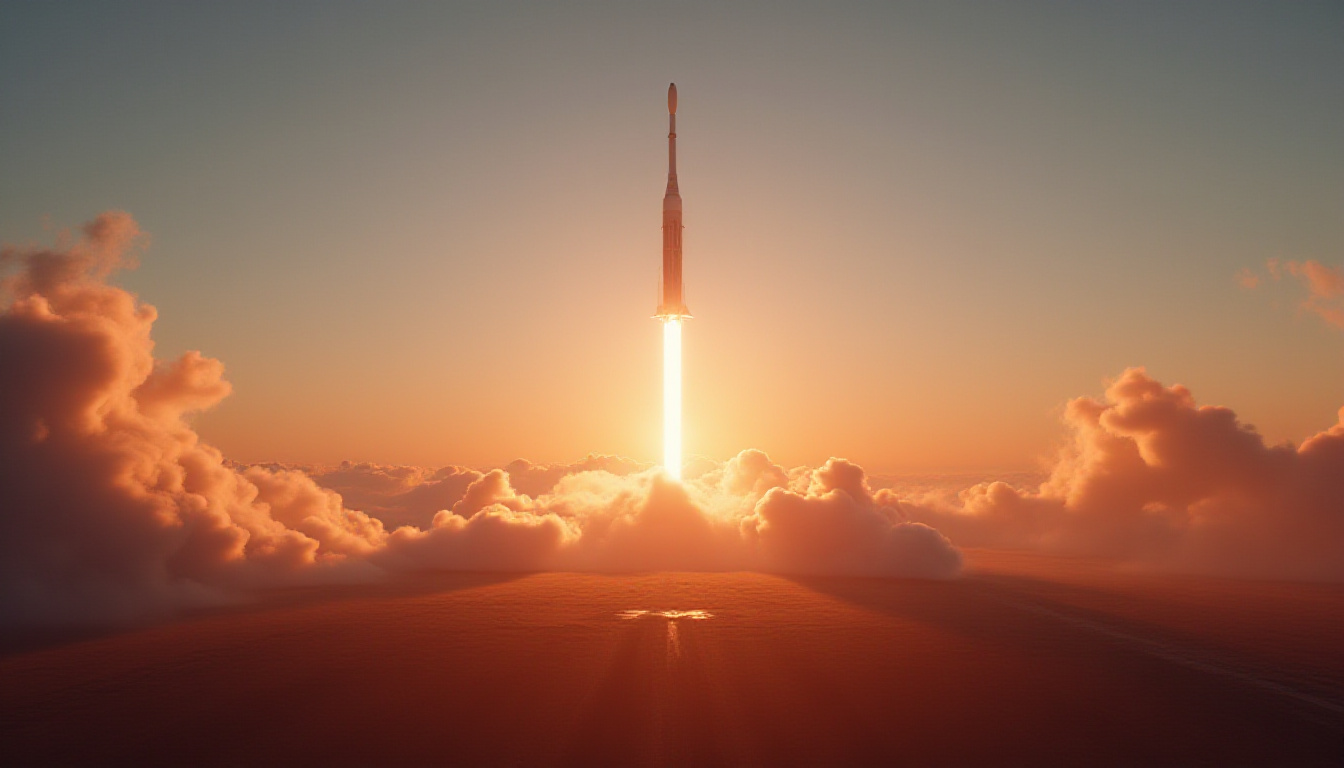
SpaceX Starship Flight 14 was, by almost any measurable standard, the most successful Starship test flight to date. In roughly 15 minutes of powered flight — bookended by hours of coast, orbital operations, and re-entry — the fully integrated Starship stack achieved orbital insertion, deployed 26 operational Starlink V3 satellites, completed six orbits of Earth, executed a de-orbit burn, and brought the ship down to a controlled splashdown in the northern Pacific Ocean. The Super Heavy booster, meanwhile, executed a textbook-simulated tower catch sequence and made a soft splashdown off the coast of Starbase in Texas.
That is a lot to unpack. So let's do what we always do here: look at the numbers, identify the gaps, weigh the pros and cons, and give you a straight verdict on where Starship Flight 14 actually stands — not where SpaceX's hype machine says it stands.
What Actually Happened on SpaceX Starship Flight 14
The mission launched with all 33 Raptor engines on the Super Heavy booster igniting cleanly — a 33-for-33 start that is no small feat given the complexity of methane-fuelled full-flow staged combustion engines at that scale. The vehicle pushed through Max Q (maximum aerodynamic pressure) without incident, and hot staging — the process of lighting Starship's six Raptor engines while still attached to the booster — went smoothly.
After stage separation, the booster completed its boostback burn on 31 of its 33 engines before transitioning to a landing burn sequence: 13 engines, then five, then three, simulating the same profile it would use for a tower catch at Starbase. The result was a soft ocean splashdown — controlled, deliberate, and a proof point for SpaceX's reusability architecture.
On the ship side, things got more interesting. One of the six Raptor Vacuum (RVac) engines — Engine 6 — shut down early during the ascent burn, roughly 30 seconds ahead of schedule. The ship compensated automatically, continuing on five engines. The mission team then faced a genuine go/no-go decision on whether to commit to orbit. After a rapid assessment, the call came: go for orbit.
A single sea-level Raptor fired for approximately 19 seconds to complete the orbital insertion burn. Starship reached orbit. It then deployed all 26 Starlink V3 satellites, completed six full orbits, fired a de-orbit burn, survived re-entry heating through the atmosphere, and executed a three-engine landing burn (transitioning to two, then one) before splashdown in the Pacific.
SpaceX Starship Flight 14: Pros and Cons
✅ Pros
- First successful orbital insertion in Starship's test history — a milestone years in the making
- 26 Starlink V3 satellites deployed operationally, meaning this wasn't just a test payload; it generated real commercial value
- Six full Earth orbits completed, validating the vehicle's on-orbit thermal and power management systems
- Booster soft splashdown demonstrated the landing burn sequence works end-to-end, setting up future tower catch attempts
- Engine-out capability proven in practice: losing one RVac mid-ascent did not abort the mission
- Methane/LOX (methylox) propulsion performance: the purple Raptor engine plume isn't just photogenic — it confirms efficient combustion across ascent and vacuum conditions
- No major anomalies on orbit, with all telemetry described as nominal through the coast phase
❌ Cons
- Engine 6 (RVac) shut down 30 seconds early during ascent — echoing a similar failure on Flight 12. A pattern of RVac reliability issues warrants scrutiny
- No tower catch attempted for the booster, meaning the full reusability loop — launch, catch, refly — has not yet been closed
- Ship splashdown, not landing: while controlled, the ship was not recovered. Rapid reusability of the upper stage remains unproven at scale
- Go/no-go drama mid-flight added operational uncertainty; a fully mature launch system should not be making orbital commitment calls in real time based on engine health
- Limited public data on re-entry heating performance — SpaceX confirmed nominal descent but has not released detailed tile integrity or thermal data post-splashdown
How Flight 14 Compares to Previous Starship Missions
| Mission | Outcome | Booster Recovery | Ship Recovery | Orbit Achieved | Payload Deployed |
|---|---|---|---|---|---|
| Flight 1 | Explosion at launch | ❌ | ❌ | ❌ | ❌ |
| Flight 2 | Explosion during ascent | ❌ | ❌ | ❌ | ❌ |
| Flight 3 | Ship lost on re-entry | ❌ | ❌ | ❌ | ❌ |
| Flight 4 | Splashdown (both) | ❌ (splashdown) | ❌ (splashdown) | ❌ | ❌ |
| Flight 5 | First tower catch | ✅ (caught) | ❌ (splashdown) | ❌ | ❌ |
| Flight 6 | Second tower catch | ✅ (caught) | ❌ (splashdown) | ❌ | ❌ |
| Flight 12 | RVac anomaly noted | ✅ (caught) | ❌ (splashdown) | ❌ | ❌ |
| Flight 14 | Full mission success | ✅ (splashdown) | ✅ (splashdown) | ✅ | ✅ (26 Starlinks) |
The progression is undeniable. From a vehicle that exploded on the pad to one that reached orbit, deployed commercial satellites, and returned in controlled fashion — the development curve is steep and real. But the table also shows how far the reusability architecture still has to go before Starship becomes the cost-competitive workhorse SpaceX needs it to be.
What the Starlink Deployment Actually Means for the Business Case
This is where Flight 14 stops being a pure engineering story and becomes a financial one — which is why it matters to readers of this magazine.
SpaceX's entire financial model for Starship is built on one premise: dramatically lower the cost per kilogram to orbit. The current Falcon 9, already the most cost-efficient rocket in commercial history, gets to orbit for roughly $2,700 per kilogram. Starship, at full reusability, is designed to bring that closer to $100 per kilogram — a reduction of more than 95%.
Deploying 26 operational Starlink V3 satellites on Flight 14 is significant because it means Starship is no longer purely a test programme cost centre. It is beginning to generate revenue-relevant output. Each Starlink satellite weighs approximately 800 kilograms; 26 of them represent roughly 20,800 kilograms of payload delivered to orbit in a single launch. On a Falcon 9, that would require multiple launches at considerably higher per-kilogram cost.
For SpaceX investors and watchers, the shift from "test flights" to "test flights that also do real work" is meaningful. It compresses the timeline to commercial viability and puts pressure on competitors — United Launch Alliance's Vulcan Centaur, Blue Origin's New Glenn, and ESA's Ariane 6 — who are all targeting portions of the heavy-lift market Starship is designed to dominate.
The RVac Problem: Should You Be Worried?
Honestly? Yes — but in a proportionate way.
The Raptor Vacuum engine (RVac) is the enlarged, high-expansion-ratio variant of the Raptor designed specifically for vacuum operation. It produces higher specific impulse in space than the sea-level Raptors, making it critical for orbital efficiency. An early shutdown on Flight 14, described by mission commentators as similar to what occurred on Flight 12, suggests a recurring fault mode that has not been fully resolved.
Free Weekly Newsletter
Enjoying this guide?
Get the best articles like this one delivered to your inbox every week. No spam.
SpaceX's engineering culture is iterative and failure-tolerant by design — the company openly describes test flights as learning opportunities, and the vehicle's engine-out capability is a deliberate redundancy feature. On Flight 14, losing one RVac did not prevent orbital insertion. But a pattern of failures in the same engine variant, across multiple flights, is a quality and reliability signal that the team needs to address before Starship can operate commercially at the cadence SpaceX has projected (potentially 25+ flights per year at full build-out).
The financial implication: if RVac reliability is not resolved, it constrains how aggressively SpaceX can price Starship launches, because customers — particularly government and institutional clients — will demand reliability margins that a single-engine-out scenario does not yet consistently provide.
Overall Rating
SpaceX Starship Flight 14: 8.5 / 10
Flight 14 is the most complete and commercially meaningful Starship mission to date, and it's not particularly close. Orbital insertion, live satellite deployment, six Earth orbits, controlled re-entry, and a booster splashdown that mirrors the catch sequence — this is a system beginning to mature. The deductions come from the recurring RVac anomaly, the absence of a booster tower catch, and the fact that the ship still ended up in the ocean rather than on a pad ready to refly. These are not minor footnotes — they represent the gap between a successful test programme and a commercially operational launch system.
Bottom line: Flight 14 is the proof of concept investors and space agency customers have been waiting for. It is not yet the proof of scale. Watch the RVac reliability data and the timeline to the first ship tower catch. Those two data points will tell you more about Starship's financial future than any single launch highlight reel.
Frequently Asked Questions
What was the main achievement of SpaceX Starship Flight 14?
Flight 14 was the first Starship mission to achieve a complete operational mission profile: orbital insertion, deployment of 26 live Starlink V3 satellites, six Earth orbits, a de-orbit burn, atmospheric re-entry, and a controlled splashdown. It was the first time Starship delivered a real commercial payload to orbit.
Why didn't SpaceX catch the booster during Flight 14?
SpaceX chose to simulate the tower catch sequence rather than execute it, opting for a controlled ocean splashdown instead. The decision is likely a deliberate risk management call — the primary mission objective was orbital insertion and satellite deployment, and introducing a tower catch on the same flight would add operational complexity. Booster catching has been demonstrated successfully on earlier flights.
Is Starship a competitor to Falcon 9?
Not directly — at least not yet. Falcon 9 is an operational, proven launch vehicle with a strong commercial manifest. Starship is designed to complement and eventually supersede it for heavy-lift and high-frequency missions. SpaceX has indicated Falcon 9 will continue flying for years while Starship matures. For smaller satellite operators, Falcon 9 remains the more reliable near-term choice.
What does Starship Flight 14 mean for Starlink's business?
It accelerates Starlink's satellite deployment cadence significantly. Starship can carry far more Starlink satellites per launch than Falcon 9, reducing cost per satellite delivered to orbit. Flight 14's successful deployment of 26 operational V3 satellites suggests Starship is becoming a viable — not just theoretical — logistics backbone for the Starlink constellation's continued expansion and upgrade cycle.
Who benefits most from Starship becoming operational?
Three groups stand to benefit most: SpaceX itself (lower launch costs, faster payload cadence, stronger competitive moat), NASA (SpaceX holds a Human Landing System contract to use Starship for Artemis lunar missions), and large-volume satellite operators like Starlink and potentially Amazon's Kuiper constellation. Budget-conscious smaller satellite companies will need to watch pricing closely — Starship's economies of scale only help if SpaceX passes the savings on through competitive pricing rather than capturing all the margin internally.
SpaceX Starship Flight 14
Considering it? See where the price stands today
Frequently Asked Questions
What Actually Happened on SpaceX Starship Flight 14
The mission launched with all 33 Raptor engines on the Super Heavy booster igniting cleanly — a 33-for-33 start that is no small feat given the complexity of methane-fuelled full-flow staged combustion engines at that scale. The vehicle pushed through Max Q (maximum aerodynamic pressure) without incident, and hot staging — the process of lighting Starship's six Raptor engines while still attached to the booster — went smoothly.
After stage separation, the booster completed its boostback burn on 31 of its 33 engines before transitioning to a landing burn sequence: 13 engines, then five, then three, simulating the same profile it would use for a tower catch at Starbase. The result was a soft ocean splashdown — controlled, deliberate, and a proof point for SpaceX's reusability architecture.
On the ship side, things got more interesting. One of the six Raptor Vacuum (RVac) engines — Engine 6 — shut down early during the ascent burn, roughly 30 seconds ahead of schedule. The ship compensated automatically, continuing on five engines. The mission team then faced a genuine go/no-go decision on whether to commit to orbit. After a rapid assessment, the call came: go for orbit.
A single sea-level Raptor fired for approximately 19 seconds to complete the orbital insertion burn. Starship reached orbit. It then deployed all 26 Starlink V3 satellites, completed six full orbits, fired a de-orbit burn, survived re-entry heating through the atmosphere, and executed a three-engine landing burn (transitioning to two, then one) before splashdown in the Pacific.
SpaceX Starship Flight 14: Pros and Cons
✅ Pros
- First successful orbital insertion in Starship's test history — a milestone years in the making
- 26 Starlink V3 satellites deployed operationally, meaning this wasn't just a test payload; it generated real commercial value
- Six full Earth orbits completed, validating the vehicle's on-orbit thermal and power management systems
- Booster soft splashdown demonstrated the landing burn sequence works end-to-end, setting up future tower catch attempts
- Engine-out capability proven in practice: losing one RVac mid-ascent did not abort the mission
- Methane/LOX (methylox) propulsion performance: the purple Raptor engine plume isn't just photogenic — it confirms efficient combustion across ascent and vacuum conditions
- No major anomalies on orbit, with all telemetry described as nominal through the coast phase
❌ Cons
- Engine 6 (RVac) shut down 30 seconds early during ascent — echoing a similar failure on Flight 12. A pattern of RVac reliability issues warrants scrutiny
- No tower catch attempted for the booster, meaning the full reusability loop — launch, catch, refly — has not yet been closed
- Ship splashdown, not landing: while controlled, the ship was not recovered. Rapid reusability of the upper stage remains unproven at scale
- Go/no-go drama mid-flight added operational uncertainty; a fully mature launch system should not be making orbital commitment calls in real time based on engine health
- Limited public data on re-entry heating performance — SpaceX confirmed nominal descent but has not released detailed tile integrity or thermal data post-splashdown
How Flight 14 Compares to Previous Starship Missions
| Mission | Outcome | Booster Recovery | Ship Recovery | Orbit Achieved | Payload Deployed |
|---|---|---|---|---|---|
| Flight 1 | Explosion at launch | ❌ | ❌ | ❌ | ❌ |
| Flight 2 | Explosion during ascent | ❌ | ❌ | ❌ | ❌ |
| Flight 3 | Ship lost on re-entry | ❌ | ❌ | ❌ | ❌ |
| Flight 4 | Splashdown (both) | ❌ (splashdown) | ❌ (splashdown) | ❌ | ❌ |
| Flight 5 | First tower catch | ✅ (caught) | ❌ (splashdown) | ❌ | ❌ |
| Flight 6 | Second tower catch | ✅ (caught) | ❌ (splashdown) | ❌ | ❌ |
| Flight 12 | RVac anomaly noted | ✅ (caught) | ❌ (splashdown) | ❌ | ❌ |
| Flight 14 | Full mission success | ✅ (splashdown) | ✅ (splashdown) | ✅ | ✅ (26 Starlinks) |
The progression is undeniable. From a vehicle that exploded on the pad to one that reached orbit, deployed commercial satellites, and returned in controlled fashion — the development curve is steep and real. But the table also shows how far the reusability architecture still has to go before Starship becomes the cost-competitive workhorse SpaceX needs it to be.
What the Starlink Deployment Actually Means for the Business Case
This is where Flight 14 stops being a pure engineering story and becomes a financial one — which is why it matters to readers of this magazine.
SpaceX's entire financial model for Starship is built on one premise: dramatically lower the cost per kilogram to orbit. The current Falcon 9, already the most cost-efficient rocket in commercial history, gets to orbit for roughly $2,700 per kilogram. Starship, at full reusability, is designed to bring that closer to $100 per kilogram — a reduction of more than 95%.
Deploying 26 operational Starlink V3 satellites on Flight 14 is significant because it means Starship is no longer purely a test programme cost centre. It is beginning to generate revenue-relevant output. Each Starlink satellite weighs approximately 800 kilograms; 26 of them represent roughly 20,800 kilograms of payload delivered to orbit in a single launch. On a Falcon 9, that would require multiple launches at considerably higher per-kilogram cost.
For SpaceX investors and watchers, the shift from "test flights" to "test flights that also do real work" is meaningful. It compresses the timeline to commercial viability and puts pressure on competitors — United Launch Alliance's Vulcan Centaur, Blue Origin's New Glenn, and ESA's Ariane 6 — who are all targeting portions of the heavy-lift market Starship is designed to dominate.
The RVac Problem: Should You Be Worried?
Honestly? Yes — but in a proportionate way.
The Raptor Vacuum engine (RVac) is the enlarged, high-expansion-ratio variant of the Raptor designed specifically for vacuum operation. It produces higher specific impulse in space than the sea-level Raptors, making it critical for orbital efficiency. An early shutdown on Flight 14, described by mission commentators as similar to what occurred on Flight 12, suggests a recurring fault mode that has not been fully resolved.
SpaceX's engineering culture is iterative and failure-tolerant by design — the company openly describes test flights as learning opportunities, and the vehicle's engine-out capability is a deliberate redundancy feature. On Flight 14, losing one RVac did not prevent orbital insertion. But a pattern of failures in the same engine variant, across multiple flights, is a quality and reliability signal that the team needs to address before Starship can operate commercially at the cadence SpaceX has projected (potentially 25+ flights per year at full build-out).
The financial implication: if RVac reliability is not resolved, it constrains how aggressively SpaceX can price Starship launches, because customers — particularly government and institutional clients — will demand reliability margins that a single-engine-out scenario does not yet consistently provide.
Overall Rating
SpaceX Starship Flight 14: 8.5 / 10
Flight 14 is the most complete and commercially meaningful Starship mission to date, and it's not particularly close. Orbital insertion, live satellite deployment, six Earth orbits, controlled re-entry, and a booster splashdown that mirrors the catch sequence — this is a system beginning to mature. The deductions come from the recurring RVac anomaly, the absence of a booster tower catch, and the fact that the ship still ended up in the ocean rather than on a pad ready to refly. These are not minor footnotes — they represent the gap between a successful test programme and a commercially operational launch system.
Bottom line: Flight 14 is the proof of concept investors and space agency customers have been waiting for. It is not yet the proof of scale. Watch the RVac reliability data and the timeline to the first ship tower catch. Those two data points will tell you more about Starship's financial future than any single launch highlight reel.
Frequently Asked Questions
What was the main achievement of SpaceX Starship Flight 14?
Flight 14 was the first Starship mission to achieve a complete operational mission profile: orbital insertion, deployment of 26 live Starlink V3 satellites, six Earth orbits, a de-orbit burn, atmospheric re-entry, and a controlled splashdown. It was the first time Starship delivered a real commercial payload to orbit.
Why didn't SpaceX catch the booster during Flight 14?
SpaceX chose to simulate the tower catch sequence rather than execute it, opting for a controlled ocean splashdown instead. The decision is likely a deliberate risk management call — the primary mission objective was orbital insertion and satellite deployment, and introducing a tower catch on the same flight would add operational complexity. Booster catching has been demonstrated successfully on earlier flights.
Is Starship a competitor to Falcon 9?
Not directly — at least not yet. Falcon 9 is an operational, proven launch vehicle with a strong commercial manifest. Starship is designed to complement and eventually supersede it for heavy-lift and high-frequency missions. SpaceX has indicated Falcon 9 will continue flying for years while Starship matures. For smaller satellite operators, Falcon 9 remains the more reliable near-term choice.
What does Starship Flight 14 mean for Starlink's business?
It accelerates Starlink's satellite deployment cadence significantly. Starship can carry far more Starlink satellites per launch than Falcon 9, reducing cost per satellite delivered to orbit. Flight 14's successful deployment of 26 operational V3 satellites suggests Starship is becoming a viable — not just theoretical — logistics backbone for the Starlink constellation's continued expansion and upgrade cycle.
Who benefits most from Starship becoming operational?
Three groups stand to benefit most: SpaceX itself (lower launch costs, faster payload cadence, stronger competitive moat), NASA (SpaceX holds a Human Landing System contract to use Starship for Artemis lunar missions), and large-volume satellite operators like Starlink and potentially Amazon's Kuiper constellation. Budget-conscious smaller satellite companies will need to watch pricing closely — Starship's economies of scale only help if SpaceX passes the savings on through competitive pricing rather than capturing all the margin internally.
SpaceX Starship Flight 14
Ready to decide? Compare the current price before you buy
About Zeebrain Editorial
Zeebrain publishes independent analysis of markets, investing, personal finance, and business. We disclose affiliate relationships, never accept payment for coverage, and fact-check all claims against primary sources. Read our editorial policy →
How this article was produced: Zeebrain articles are created with AI assistance from primary sources (including cited videos and market data) and reviewed under our editorial standards before publication. Spot an error? Tell us and we will correct it.
Disclaimer: Content on Zeebrain is for informational and educational purposes only and does not constitute financial advice or a recommendation to buy or sell any security. Always conduct your own research and consult a qualified financial adviser before making investment decisions. Past performance is not indicative of future results.
More from Review



Related Guides
Keep exploring this topic
Explore More Categories
Keep browsing by topic and build depth around the subjects you care about most.