Solar Eclipse 2026 Path US
Quick Summary
Solar Eclipse 2026 Path US: A Rare Glimpse for North American Viewers Get ready, North America! While the buzz of the Great North American Eclipse of April 8, 2024, is still fresh...
In This Article
Solar Eclipse 2026 Path US: A Rare Glimpse for North American Viewers
Get ready, North America! While the buzz of the Great North American Eclipse of April 8, 2024, is still fresh in our minds, a significant celestial event is already on the horizon: the total solar eclipse of August 12, 2026. Though its path of totality will primarily grace the skies over Europe, a unique and dramatic partial solar eclipse, nearing totality for some, will be observable across large swathes of the United States and Canada. This isn't just another partial eclipse; it's a profound astronomical spectacle that will offer North American sky-watchers a truly memorable experience, distinct from the recent total eclipse, and a compelling reason to mark your calendars.

Understanding the 2026 Solar Eclipse for North America
The August 12, 2026, solar eclipse is renowned for its spectacular path of totality, which begins over the Arctic, sweeps across Greenland and Iceland, and then makes a dramatic landfall in Spain, culminating over the Balearic Islands. For those on the European continent, this will be an awe-inspiring total eclipse, offering up to 2 minutes and 18 seconds of totality. However, the geographic orientation and timing of this eclipse mean that as the Moon casts its main shadow across the Atlantic, the sun will be setting for most of North America. This convergence creates a unique opportunity: a very deep partial solar eclipse, particularly in the northeastern United States and eastern Canada, where the sun will be low on the horizon, creating stunning visual effects.
To put this into perspective, consider cities like St. John's, Newfoundland, which will experience an astounding 87% obscuration of the sun at sunset. In Boston, Massachusetts, observers will witness approximately 57% of the sun obscured, while New York City will see around 49%. Even as far west as Chicago, a noticeable 20% partial eclipse will be visible. The beauty of this specific event lies in its timing: the eclipse will unfold as the sun dips towards the horizon. This low-angle celestial show will interact dramatically with atmospheric conditions, potentially creating vibrant, unusual sky colors and a surreal twilight experience. Unlike a midday partial eclipse where the reduction in light might be subtle, a partial eclipse at sunset amplifies the visual impact, making the diminishing sun appear almost alien. The moon will take a substantial bite out of the sun, transforming it into a crescent even before it reaches the horizon.
The Science Behind a Sunset Partial Eclipse
The mechanics of the 2026 eclipse's visibility in North America are fascinating. Solar eclipses occur when the Moon passes between the Sun and Earth, casting a shadow. The path of totality is where the darkest part of this shadow (the umbra) falls. Outside the path of totality, a lighter shadow (the penumbra) produces a partial eclipse. For North America in 2026, we'll be squarely in the penumbra. What makes this particular event special, however, is the concept of "eclipse at sunset."
As the Earth rotates, and the Moon's shadow sweeps across the globe, the timing for North American viewers aligns perfectly with sunset. The sun's angle in the sky affects how much atmospheric filtering occurs, and at sunset, the light travels through more of Earth's atmosphere. This atmospheric scattering preferentially removes blue light, allowing reds and oranges to dominate, which is why sunsets are often fiery. When a partial eclipse is superimposed on this phenomenon, the results can be breathtaking. Imagine a sliver of an orange-red sun descending, potentially surrounded by an unusually muted, deep twilight.
Furthermore, the percentage of obscuration plays a critical role. A 50% partial eclipse at noon might simply make the day feel slightly overcast. But a 50-80% partial eclipse at sunset transforms the entire horizon. The remaining crescent of the sun, filtered by atmospheric aerosols and dust, will appear dramatically reduced and distorted. This isn't merely an academic distinction; it's an experiential one. Data from past sunset eclipses, though rare and often localized, suggests that public interest in these events is high due to their unique aesthetic appeal. For instance, observations from previous partial eclipses near the horizon, even those with lower percentages, describe remarkable photographic opportunities and a palpable shift in ambient light and color that is distinct from a typical sunset. The 2026 event offers a much deeper obscuration than many of these historical precedents, promising an even more profound visual spectacle.
Preparing for the 2026 Sunset Spectacle: Safety and Viewing Tips
While a partial eclipse might not offer the dramatic total darkness of totality, proper preparation is absolutely crucial. Never look directly at the sun without approved solar filters. Even when the sun is heavily obscured and low on the horizon, its remaining visible surface is intensely bright and can cause permanent eye damage. The temptation to gaze directly at a deeply eclipsed, low-hanging sun will be strong, but it's vital to resist.
Here’s what North American viewers should know and do:
- Obtain Certified Solar Eclipse Glasses: This is the most important step. Ensure they are ISO 12312-2 international safety standard compliant. Do not use regular sunglasses, smoked glass, or homemade filters. Many reputable vendors will likely have stock available again following the 2024 eclipse, but it's wise to plan ahead.
- Use Pinhole Projectors: A safe and fun way to view the crescent sun indirectly. Simply poke a small hole in a piece of cardstock, hold it up to the sun, and project the image onto another surface. Tree leaves can also act as natural pinhole cameras, casting crescent shadows on the ground during a partial eclipse.
- Solar Filters for Telescopes/Binoculars: If you plan to use optical aids, they must have professional-grade solar filters attached to their front aperture. Never look through unfiltered binoculars or telescopes at the sun.
- Find a Clear Western Horizon: Given the sunset timing, having an unobstructed view to the west will be paramount. Look for elevated viewpoints, open fields, or coastlines. Check local weather forecasts for cloud cover in the days leading up to the event.
- Photography Considerations: Capturing a partial eclipse at sunset requires specific photographic techniques. You'll need a camera with manual controls, a telephoto lens, and a solar filter designed for photography. Given the low light at sunset and the reduced solar brightness, bracketing exposures will be key. Experiment with settings in advance if possible. Remember, the foreground can be as dramatic as the sun itself, so consider incorporating landscapes.
- Check Local Timing: The exact start, maximum obscuration, and end times will vary significantly across North America. NASA and other astronomical organizations will release detailed local timing maps and data closer to the event. For example, in Boston, the partial eclipse might begin around 6:30 PM EDT, reaching maximum obscuration around 7:30 PM EDT, as the sun nears the horizon. Compare this to St. John's, NL, where the eclipse will unfold earlier and with a higher percentage, perhaps peaking around 8:00 PM NDT (Newfoundland Daylight Time). Plan to be at your viewing location well in advance.
This eclipse offers a distinct viewing experience from the 2024 total eclipse. It's not about the darkness of totality but the dramatic reshaping of the setting sun and the surreal ambient light it will create.
The Future of Eclipses: Beyond 2026 for North America
While the 2026 eclipse offers a partial but profound show for North America, the continent won't experience another total solar eclipse until the 2040s. The next major total solar eclipse to cross North America after 2024 will be on March 30, 2033, but its path of totality is confined to Alaska and parts of Russia. This will be a remote and challenging eclipse to view for most of the U.S. population.
Free Weekly Newsletter
Enjoying this guide?
Get the best articles like this one delivered to your inbox every week. No spam.
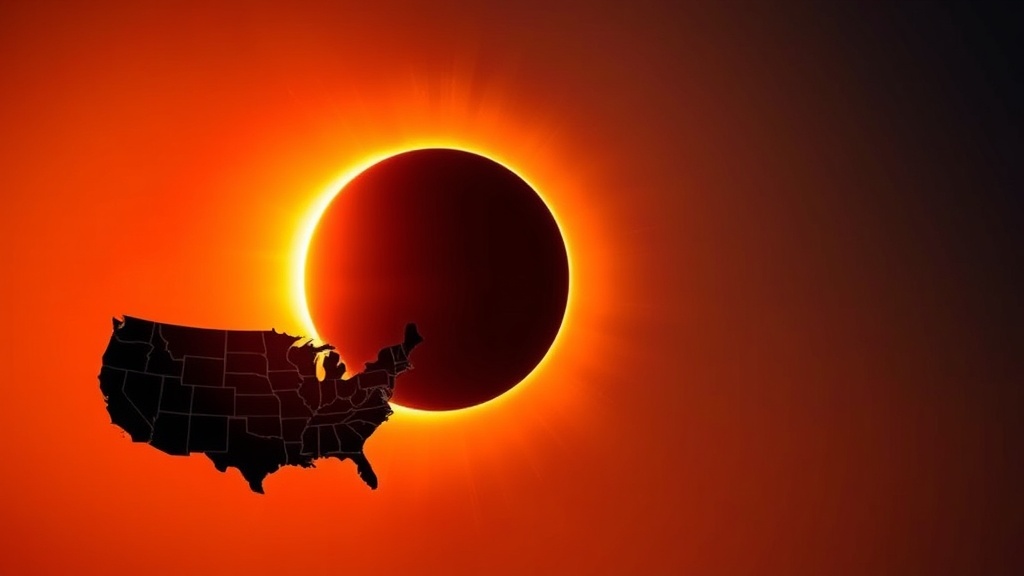
The truly widespread total solar eclipse for the contiguous United States will occur on August 23, 2044. This eclipse's path of totality will begin in Greenland and eastern Canada, sweeping across Montana, North Dakota, and South Dakota. While not as expansive as the 2017 or 2024 events, it will still offer a significant spectacle for a portion of the U.S. population. Following this, the contiguous U.S. will again be graced by a total solar eclipse on August 12, 2045, with an impressive path stretching from California to Florida, offering up to 6 minutes and 6 seconds of totality – potentially one of the longest and most spectacular total eclipses of the century for the U.S. This is followed by another total solar eclipse on January 26, 2079, whose path of totality will primarily affect the southeastern U.S. and the Atlantic coast.
These future events highlight the cyclical yet infrequent nature of total solar eclipses in any given location. The 2026 partial eclipse, therefore, serves as a crucial bridge, a significant astronomical event that keeps the interest alive between major totalities. It reinforces the dynamic nature of our solar system and the ever-present celestial ballet. For those captivated by the 2024 total eclipse, the 2026 sunset partial eclipse offers a unique photographic and visual challenge, a chance to see the sun transformed in a distinctly different manner, setting the stage for the next generation of total eclipse chasers.
Conclusion: Don't Miss the Sunset Spectacle
The solar eclipse of August 12, 2026, while not a total eclipse for North America, presents a remarkably compelling and unique astronomical event: a deep partial solar eclipse occurring dramatically at sunset. This fusion of celestial mechanics and atmospheric optics promises a truly memorable visual experience for millions across the United States and Canada, particularly in the northeastern regions. From the glowing crescent sun dipping below the horizon to the surreal twilight colors, it's an opportunity for curious sky-watchers, amateur astronomers, and photographers to witness a celestial phenomenon that is distinct from the recent total eclipse.
Remember to prioritize eye safety above all else, using certified solar eclipse glasses for direct viewing. Start planning your viewing location now, aiming for a clear western horizon. As we eagerly anticipate the next total solar eclipses in the decades to come, the 2026 sunset partial eclipse offers an immediate and accessible reason to look up and marvel at the intricate dance of our solar system. Don't let this unique astronomical curiosity pass you by. Mark your calendars and prepare to witness a truly spectacular sunset.
Free Investing Tools
Frequently Asked Questions
Understanding the 2026 Solar Eclipse for North America
The August 12, 2026, solar eclipse is renowned for its spectacular path of totality, which begins over the Arctic, sweeps across Greenland and Iceland, and then makes a dramatic landfall in Spain, culminating over the Balearic Islands. For those on the European continent, this will be an awe-inspiring total eclipse, offering up to 2 minutes and 18 seconds of totality. However, the geographic orientation and timing of this eclipse mean that as the Moon casts its main shadow across the Atlantic, the sun will be setting for most of North America. This convergence creates a unique opportunity: a very deep partial solar eclipse, particularly in the northeastern United States and eastern Canada, where the sun will be low on the horizon, creating stunning visual effects.
To put this into perspective, consider cities like St. John's, Newfoundland, which will experience an astounding 87% obscuration of the sun at sunset. In Boston, Massachusetts, observers will witness approximately 57% of the sun obscured, while New York City will see around 49%. Even as far west as Chicago, a noticeable 20% partial eclipse will be visible. The beauty of this specific event lies in its timing: the eclipse will unfold as the sun dips towards the horizon. This low-angle celestial show will interact dramatically with atmospheric conditions, potentially creating vibrant, unusual sky colors and a surreal twilight experience. Unlike a midday partial eclipse where the reduction in light might be subtle, a partial eclipse at sunset amplifies the visual impact, making the diminishing sun appear almost alien. The moon will take a substantial bite out of the sun, transforming it into a crescent even before it reaches the horizon.
The Science Behind a Sunset Partial Eclipse
The mechanics of the 2026 eclipse's visibility in North America are fascinating. Solar eclipses occur when the Moon passes between the Sun and Earth, casting a shadow. The path of totality is where the darkest part of this shadow (the umbra) falls. Outside the path of totality, a lighter shadow (the penumbra) produces a partial eclipse. For North America in 2026, we'll be squarely in the penumbra. What makes this particular event special, however, is the concept of "eclipse at sunset."
As the Earth rotates, and the Moon's shadow sweeps across the globe, the timing for North American viewers aligns perfectly with sunset. The sun's angle in the sky affects how much atmospheric filtering occurs, and at sunset, the light travels through more of Earth's atmosphere. This atmospheric scattering preferentially removes blue light, allowing reds and oranges to dominate, which is why sunsets are often fiery. When a partial eclipse is superimposed on this phenomenon, the results can be breathtaking. Imagine a sliver of an orange-red sun descending, potentially surrounded by an unusually muted, deep twilight.
Furthermore, the percentage of obscuration plays a critical role. A 50% partial eclipse at noon might simply make the day feel slightly overcast. But a 50-80% partial eclipse at sunset transforms the entire horizon. The remaining crescent of the sun, filtered by atmospheric aerosols and dust, will appear dramatically reduced and distorted. This isn't merely an academic distinction; it's an experiential one. Data from past sunset eclipses, though rare and often localized, suggests that public interest in these events is high due to their unique aesthetic appeal. For instance, observations from previous partial eclipses near the horizon, even those with lower percentages, describe remarkable photographic opportunities and a palpable shift in ambient light and color that is distinct from a typical sunset. The 2026 event offers a much deeper obscuration than many of these historical precedents, promising an even more profound visual spectacle.
Preparing for the 2026 Sunset Spectacle: Safety and Viewing Tips
While a partial eclipse might not offer the dramatic total darkness of totality, proper preparation is absolutely crucial. Never look directly at the sun without approved solar filters. Even when the sun is heavily obscured and low on the horizon, its remaining visible surface is intensely bright and can cause permanent eye damage. The temptation to gaze directly at a deeply eclipsed, low-hanging sun will be strong, but it's vital to resist.
Here’s what North American viewers should know and do:
- Obtain Certified Solar Eclipse Glasses: This is the most important step. Ensure they are ISO 12312-2 international safety standard compliant. Do not use regular sunglasses, smoked glass, or homemade filters. Many reputable vendors will likely have stock available again following the 2024 eclipse, but it's wise to plan ahead.
- Use Pinhole Projectors: A safe and fun way to view the crescent sun indirectly. Simply poke a small hole in a piece of cardstock, hold it up to the sun, and project the image onto another surface. Tree leaves can also act as natural pinhole cameras, casting crescent shadows on the ground during a partial eclipse.
- Solar Filters for Telescopes/Binoculars: If you plan to use optical aids, they must have professional-grade solar filters attached to their front aperture. Never look through unfiltered binoculars or telescopes at the sun.
- Find a Clear Western Horizon: Given the sunset timing, having an unobstructed view to the west will be paramount. Look for elevated viewpoints, open fields, or coastlines. Check local weather forecasts for cloud cover in the days leading up to the event.
- Photography Considerations: Capturing a partial eclipse at sunset requires specific photographic techniques. You'll need a camera with manual controls, a telephoto lens, and a solar filter designed for photography. Given the low light at sunset and the reduced solar brightness, bracketing exposures will be key. Experiment with settings in advance if possible. Remember, the foreground can be as dramatic as the sun itself, so consider incorporating landscapes.
- Check Local Timing: The exact start, maximum obscuration, and end times will vary significantly across North America. NASA and other astronomical organizations will release detailed local timing maps and data closer to the event. For example, in Boston, the partial eclipse might begin around 6:30 PM EDT, reaching maximum obscuration around 7:30 PM EDT, as the sun nears the horizon. Compare this to St. John's, NL, where the eclipse will unfold earlier and with a higher percentage, perhaps peaking around 8:00 PM NDT (Newfoundland Daylight Time). Plan to be at your viewing location well in advance.
This eclipse offers a distinct viewing experience from the 2024 total eclipse. It's not about the darkness of totality but the dramatic reshaping of the setting sun and the surreal ambient light it will create.
The Future of Eclipses: Beyond 2026 for North America
While the 2026 eclipse offers a partial but profound show for North America, the continent won't experience another total solar eclipse until the 2040s. The next major total solar eclipse to cross North America after 2024 will be on March 30, 2033, but its path of totality is confined to Alaska and parts of Russia. This will be a remote and challenging eclipse to view for most of the U.S. population.
The truly widespread total solar eclipse for the contiguous United States will occur on August 23, 2044. This eclipse's path of totality will begin in Greenland and eastern Canada, sweeping across Montana, North Dakota, and South Dakota. While not as expansive as the 2017 or 2024 events, it will still offer a significant spectacle for a portion of the U.S. population. Following this, the contiguous U.S. will again be graced by a total solar eclipse on August 12, 2045, with an impressive path stretching from California to Florida, offering up to 6 minutes and 6 seconds of totality – potentially one of the longest and most spectacular total eclipses of the century for the U.S. This is followed by another total solar eclipse on January 26, 2079, whose path of totality will primarily affect the southeastern U.S. and the Atlantic coast.
These future events highlight the cyclical yet infrequent nature of total solar eclipses in any given location. The 2026 partial eclipse, therefore, serves as a crucial bridge, a significant astronomical event that keeps the interest alive between major totalities. It reinforces the dynamic nature of our solar system and the ever-present celestial ballet. For those captivated by the 2024 total eclipse, the 2026 sunset partial eclipse offers a unique photographic and visual challenge, a chance to see the sun transformed in a distinctly different manner, setting the stage for the next generation of total eclipse chasers.
Conclusion: Don't Miss the Sunset Spectacle
The solar eclipse of August 12, 2026, while not a total eclipse for North America, presents a remarkably compelling and unique astronomical event: a deep partial solar eclipse occurring dramatically at sunset. This fusion of celestial mechanics and atmospheric optics promises a truly memorable visual experience for millions across the United States and Canada, particularly in the northeastern regions. From the glowing crescent sun dipping below the horizon to the surreal twilight colors, it's an opportunity for curious sky-watchers, amateur astronomers, and photographers to witness a celestial phenomenon that is distinct from the recent total eclipse.
Remember to prioritize eye safety above all else, using certified solar eclipse glasses for direct viewing. Start planning your viewing location now, aiming for a clear western horizon. As we eagerly anticipate the next total solar eclipses in the decades to come, the 2026 sunset partial eclipse offers an immediate and accessible reason to look up and marvel at the intricate dance of our solar system. Don't let this unique astronomical curiosity pass you by. Mark your calendars and prepare to witness a truly spectacular sunset.
About Zeebrain Editorial
Zeebrain publishes independent analysis of markets, investing, personal finance, and business. We disclose affiliate relationships, never accept payment for coverage, and fact-check all claims against primary sources. Read our editorial policy →
How this article was produced: Zeebrain articles are created with AI assistance from primary sources (including cited videos and market data) and reviewed under our editorial standards before publication. Spot an error? Tell us and we will correct it.
More from Curiosities




Related Guides
Keep exploring this topic
Solar Eclipse Path & Best Viewing Locations Around the World
Travel & Places · solar eclipse 2026 · eclipse travel
Who Is Pope Francis? Life, Legacy, and His Impact on the Modern Church
Curiosities
How Was William Wallace Captured? The Real Story
Curiosities
The US Military's Real Zombie Apocalypse Plan Explained
Curiosities
Explore More Categories
Keep browsing by topic and build depth around the subjects you care about most.