Oppo Find N6 Review: Is This Peak Foldable Phone?
Quick Summary
The Oppo Find N6 may be the first foldable phone with zero real compromises. Here's an honest breakdown of whether it's finally worth your money.
In This Article
The Foldable Phone Nobody Asked For — And Everyone Needed
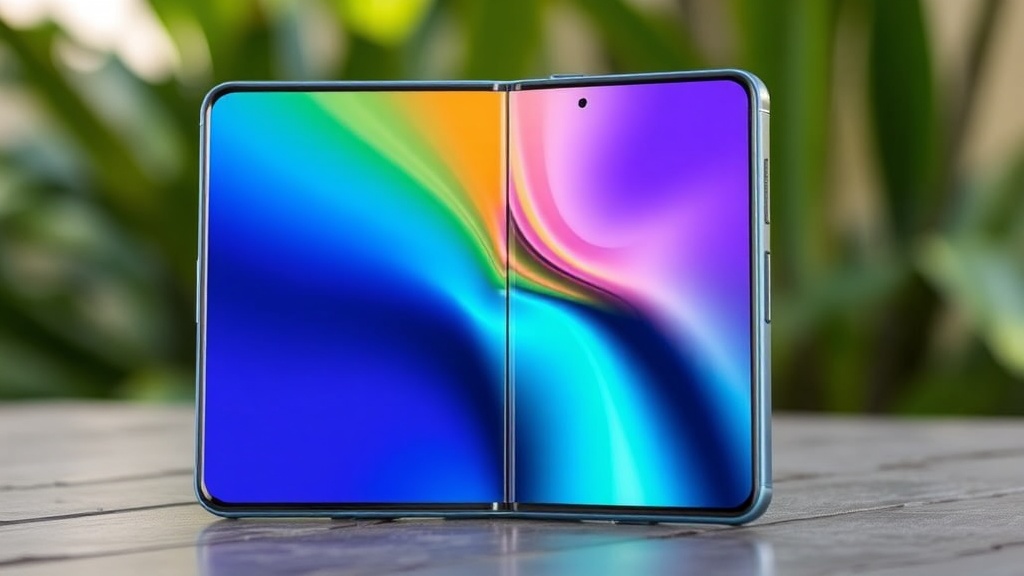
For most people, foldable phones have existed in a weird purgatory. Technically impressive, genuinely exciting, but never quite good enough to replace a regular smartphone without making you feel like you'd settled for something half-finished. Too thick, too fragile, too creased, too expensive, too compromised on cameras — pick your poison. The Oppo Find N6, launched in 2026, is the first foldable phone that forces you to ask a different question entirely: if a phone folds in half and has no meaningful drawbacks compared to a slab phone, is the fold even the point anymore?
The honest answer is yes — but probably not in the way you'd expect. The fold is now a bonus, not a trade-off. And that distinction matters enormously for anyone deciding whether a foldable phone is actually worth the premium price tag.
What Seven Years of Foldable Evolution Actually Produced
The original Samsung Galaxy Fold landed in 2019 and caused a collective intake of breath across the tech world. It folded! In half! And then, almost immediately, the problems mounted: a fragile display, a deeply visible crease, chunky proportions, mediocre cameras, and a battery that struggled to keep up with the large interior screen. Early adopters paid a significant premium to beta-test a product category.
Every generation since has chipped away at that list of compromises. Hinges improved. Creases shrank. Batteries grew. Cameras caught up, slowly. Durability ratings improved from borderline negligible to genuinely usable IP ratings. But until now, there was always something. Some version of the foldable phone that reminded you, just often enough, that you had made a compromise.
The Oppo Find N6 is the cumulative result of that seven-year grind. It measures under 9mm thin and weighs around 230 grams — numbers that are essentially identical to the iPhone 17 Pro Max. To put that in plain terms: the folded, closed Find N6 is dimensionally competitive with one of the most refined smartphones currently on the market. That is a genuinely remarkable engineering achievement, and it changes the entire conversation around foldables.
The Specs Sheet: No More Asterisks
For years, reviewing a foldable phone meant hedging every spec with a caveat. The cameras are good for a foldable. The battery life is decent considering it has to power two displays. The chip is capable but runs a little warmer than a standard flagship. The Find N6 removes most of those asterisks.
Display: The 6.6-inch cover screen is a proper flagship panel — 3,600 nits peak brightness, 1-120Hz LTPO adaptive refresh, high-frequency PWM dimming. You can use this phone one-handed outdoors without squinting. That used to be a rarity on foldables, where cover screens were often treated as an afterthought.
Battery: A 6,000mAh silicon-carbon battery, split around a hinge, in a phone under 9mm thin. That number beats many standard slab phones. Add 80W wired charging and 50W wireless charging, and you have a battery setup that's competitive with anything on the market, foldable or otherwise.
Cameras: The primary sensor is the Samsung ISOCELL HP5 — a 200-megapixel, 1/1.56-inch sensor with optical stabilisation. This is the same sensor used in the Samsung Galaxy S25 Edge. Alongside it: a 50-megapixel ultrawide and a 50-megapixel 3x telephoto. The physical sensor size still can't match the very top-tier slab flagships due to space constraints, but we're talking marginal differences now, not the significant gap that existed even two or three years ago.
Processor: Snapdragon 8 Elite Gen 5 — a binned variant with one fewer core, plus a dedicated S1 chip for network performance. Flagship-tier in every meaningful sense.
Durability: IP59 water and dust resistance. On a foldable phone. In 2026, this feels almost mundane — which is exactly the point.
The No-Feel Crease: Engineering's Last Foldable Frontier
If there is a single headline feature of the Find N6, it is the interior display and what Oppo is calling the No-Feel Crease. The 8.1-inch square inner screen has always been the reason to buy a book-style foldable — more screen real estate, better for reading, productivity, multitasking, and media. The crease running down the middle has always been the tax you paid for that real estate.
Most experienced foldable users will tell you the crease is tolerable most of the time. But most of the time is doing a lot of work in that sentence. You notice it in direct light. You feel it under your fingertip. It's a persistent, low-level reminder of compromise.
Oppo's solution is legitimately clever engineering rather than marketing spin. The process involves laser-scanning each individual titanium hinge to map micro-surface variations, then 3D-printing a liquid polymer into those micro-gaps, and hardening it with ultraviolet light. The result: surface-level variation across the hinge reduced from 0.2mm to 0.05mm — reportedly less than half the thickness of a human hair. A slightly thicker top glass layer compounds the improvement.
Oppo claims this process holds up through 600,000 folds without significant crease degradation. That figure, if accurate, represents a lifespan far beyond typical smartphone usage patterns. The practical upshot is simple: in regular use, the crease is essentially imperceptible. For people who have avoided foldables specifically because of the crease, this is a meaningful development.
Pen Support, Practicality, and the Premium Question
The Find N6 also supports a stylus — a feature Samsung has long offered on its Galaxy Z Fold line, but which remains genuinely useful rather than gimmicky when implemented well. The pen attaches magnetically to a snap-on rear case and wirelessly charges from the phone's own battery. It works on both the cover screen and the interior display with over 4,000 levels of pressure sensitivity and low latency. For note-takers, sketchers, or anyone who works across a mix of handwritten and typed content, this adds real utility.
None of this comes cheap. Premium foldable phones command premium prices, and the Find N6 is no exception. Budget-conscious buyers should be clear-eyed about what they're paying for: they are paying for the engineering that eliminates compromise, not just for the folding mechanism itself. Whether that premium is justified depends entirely on how much value you place on the larger interior display and the form factor flexibility.
If you primarily use your phone for calls, social media, and basic photography, a well-specced mid-range slab phone will serve you better financially. But if you regularly consume long-form content, work in productivity apps, take handwritten notes, or simply want more screen without carrying a tablet, the Find N6's value proposition is stronger than any previous foldable has managed to make it.
What the Find N6 Means for the Folding iPhone
The timing of the Find N6 arriving at what credibly feels like peak foldable is not coincidental from a wider industry perspective. Apple is widely expected to enter the foldable category before the end of 2026 with a folding iPhone. Apple's pattern with emerging technology categories is consistent and well-documented: wait for the category to mature, watch competitors absorb the cost of early-stage development and user frustration, then enter with a refined, ecosystem-integrated product built on accumulated learnings.
Vision Pro followed years of VR development by other manufacturers. HomePod arrived after smart speakers had become mainstream. The original iPhone itself entered a mobile phone market that already existed and transformed it. The folding iPhone will almost certainly follow the same logic — and the Find N6 is a useful benchmark for what Apple will need to match or exceed to justify its entry.
Rumours point to an unconventional aspect ratio choice: a shorter, squarer cover screen around 5.5 inches that opens to a near-8-inch widescreen display — closer to a portable iPad mini than the square inner screens most book-style foldables currently use. If accurate, that would be a deliberate differentiation from the Find N6's approach and an implicit acknowledgement that Apple sees an opportunity in widescreen media consumption that the current foldable mainstream hasn't fully captured.
Whether the folding iPhone will match the Find N6's no-feel crease, silicon-carbon battery performance, and sub-9mm profile at launch remains to be seen. Apple's manufacturing relationships and chip advantage give it tools others lack — but so does seven years of foldable development from companies like Oppo, Samsung, and Huawei. The Find N6 has set a high bar.
Bottom Line: Should You Buy the Oppo Find N6?
The Oppo Find N6 is the first foldable phone that doesn't require you to lower your expectations before you open the box. It matches a flagship slab phone on dimensions, battery, display quality, processor performance, and durability — and then gives you an 8.1-inch crease-free interior screen on top of that.
Free Weekly Newsletter
Enjoying this guide?
Get the best articles like this one delivered to your inbox every week. No spam.
For buyers who have been waiting for foldables to grow up: this is the phone you were waiting for. The compromises are gone. What remains is a genuinely excellent smartphone that happens to expand into a small tablet when you need it to.
For budget-conscious buyers: the premium price is real, and it is substantial. If the extra screen real estate doesn't align with how you actually use your phone, the Find N6 will be an expensive way to own a very good phone. Know what you're buying it for.
For everyone else: the foldable phone has finally crossed the threshold from enthusiast toy to legitimate daily driver. The Find N6 didn't just get close to that line — it walked past it without looking back.
Frequently Asked Questions
Is the Oppo Find N6 suitable as a daily driver for non-tech-enthusiasts?
Yes, more so than any previous foldable phone. The closed form factor is dimensionally comparable to a standard flagship like the iPhone 17 Pro Max, so using it one-handed, carrying it in a pocket, or navigating it without opening it feels entirely normal. The compromises that used to make foldables feel like enthusiast products — excessive thickness, small cover screens, mediocre cameras — have been substantially addressed in the Find N6.
How significant is the No-Feel Crease improvement in practice?
It is the most meaningful single-generation improvement in foldable display technology in several years. Previous foldables had creases that were tolerable most of the time but noticeable in certain lighting conditions and under touch. The Find N6's laser-scanned, polymer-filled hinge process reduces surface variation to below 0.05mm, which translates to a crease that is essentially imperceptible in normal use. For people who have specifically avoided foldables because of the crease, this is worth paying attention to.
How does the Find N6 camera compare to top non-foldable flagships?
It is very competitive, though not quite at the absolute peak of smartphone photography. The 200-megapixel ISOCELL HP5 primary sensor is the same used in the Samsung Galaxy S25 Edge, and the supporting ultrawide and telephoto lenses are strong. The physical Z-axis constraint of a foldable means sensor sizes cannot fully match the very largest sensors in dedicated camera phones, but the gap is now marginal rather than significant for most shooting scenarios.
Should I wait for the folding iPhone instead of buying the Find N6?
If you are already within the Apple ecosystem and rely heavily on seamless integration between your iPhone, Mac, iPad, and other Apple devices, waiting for the folding iPhone is a reasonable decision. Apple will likely bring strong software optimisation and ecosystem integration that Android foldables cannot replicate. However, if you are open to Android or already use it, the Find N6 is available now and sets a benchmark the folding iPhone will need to match. There is no guarantee Apple's first folding iPhone will match the Find N6's crease performance, battery size, or camera specs at launch.
Frequently Asked Questions
The Foldable Phone Nobody Asked For — And Everyone Needed
For most people, foldable phones have existed in a weird purgatory. Technically impressive, genuinely exciting, but never quite good enough to replace a regular smartphone without making you feel like you'd settled for something half-finished. Too thick, too fragile, too creased, too expensive, too compromised on cameras — pick your poison. The Oppo Find N6, launched in 2026, is the first foldable phone that forces you to ask a different question entirely: if a phone folds in half and has no meaningful drawbacks compared to a slab phone, is the fold even the point anymore?
The honest answer is yes — but probably not in the way you'd expect. The fold is now a bonus, not a trade-off. And that distinction matters enormously for anyone deciding whether a foldable phone is actually worth the premium price tag.
What Seven Years of Foldable Evolution Actually Produced
The original Samsung Galaxy Fold landed in 2019 and caused a collective intake of breath across the tech world. It folded! In half! And then, almost immediately, the problems mounted: a fragile display, a deeply visible crease, chunky proportions, mediocre cameras, and a battery that struggled to keep up with the large interior screen. Early adopters paid a significant premium to beta-test a product category.
Every generation since has chipped away at that list of compromises. Hinges improved. Creases shrank. Batteries grew. Cameras caught up, slowly. Durability ratings improved from borderline negligible to genuinely usable IP ratings. But until now, there was always something. Some version of the foldable phone that reminded you, just often enough, that you had made a compromise.
The Oppo Find N6 is the cumulative result of that seven-year grind. It measures under 9mm thin and weighs around 230 grams — numbers that are essentially identical to the iPhone 17 Pro Max. To put that in plain terms: the folded, closed Find N6 is dimensionally competitive with one of the most refined smartphones currently on the market. That is a genuinely remarkable engineering achievement, and it changes the entire conversation around foldables.
The Specs Sheet: No More Asterisks
For years, reviewing a foldable phone meant hedging every spec with a caveat. The cameras are good for a foldable. The battery life is decent considering it has to power two displays. The chip is capable but runs a little warmer than a standard flagship. The Find N6 removes most of those asterisks.
Display: The 6.6-inch cover screen is a proper flagship panel — 3,600 nits peak brightness, 1-120Hz LTPO adaptive refresh, high-frequency PWM dimming. You can use this phone one-handed outdoors without squinting. That used to be a rarity on foldables, where cover screens were often treated as an afterthought.
Battery: A 6,000mAh silicon-carbon battery, split around a hinge, in a phone under 9mm thin. That number beats many standard slab phones. Add 80W wired charging and 50W wireless charging, and you have a battery setup that's competitive with anything on the market, foldable or otherwise.
Cameras: The primary sensor is the Samsung ISOCELL HP5 — a 200-megapixel, 1/1.56-inch sensor with optical stabilisation. This is the same sensor used in the Samsung Galaxy S25 Edge. Alongside it: a 50-megapixel ultrawide and a 50-megapixel 3x telephoto. The physical sensor size still can't match the very top-tier slab flagships due to space constraints, but we're talking marginal differences now, not the significant gap that existed even two or three years ago.
Processor: Snapdragon 8 Elite Gen 5 — a binned variant with one fewer core, plus a dedicated S1 chip for network performance. Flagship-tier in every meaningful sense.
Durability: IP59 water and dust resistance. On a foldable phone. In 2026, this feels almost mundane — which is exactly the point.
The No-Feel Crease: Engineering's Last Foldable Frontier
If there is a single headline feature of the Find N6, it is the interior display and what Oppo is calling the No-Feel Crease. The 8.1-inch square inner screen has always been the reason to buy a book-style foldable — more screen real estate, better for reading, productivity, multitasking, and media. The crease running down the middle has always been the tax you paid for that real estate.
Most experienced foldable users will tell you the crease is tolerable most of the time. But most of the time is doing a lot of work in that sentence. You notice it in direct light. You feel it under your fingertip. It's a persistent, low-level reminder of compromise.
Oppo's solution is legitimately clever engineering rather than marketing spin. The process involves laser-scanning each individual titanium hinge to map micro-surface variations, then 3D-printing a liquid polymer into those micro-gaps, and hardening it with ultraviolet light. The result: surface-level variation across the hinge reduced from 0.2mm to 0.05mm — reportedly less than half the thickness of a human hair. A slightly thicker top glass layer compounds the improvement.
Oppo claims this process holds up through 600,000 folds without significant crease degradation. That figure, if accurate, represents a lifespan far beyond typical smartphone usage patterns. The practical upshot is simple: in regular use, the crease is essentially imperceptible. For people who have avoided foldables specifically because of the crease, this is a meaningful development.
Pen Support, Practicality, and the Premium Question
The Find N6 also supports a stylus — a feature Samsung has long offered on its Galaxy Z Fold line, but which remains genuinely useful rather than gimmicky when implemented well. The pen attaches magnetically to a snap-on rear case and wirelessly charges from the phone's own battery. It works on both the cover screen and the interior display with over 4,000 levels of pressure sensitivity and low latency. For note-takers, sketchers, or anyone who works across a mix of handwritten and typed content, this adds real utility.
None of this comes cheap. Premium foldable phones command premium prices, and the Find N6 is no exception. Budget-conscious buyers should be clear-eyed about what they're paying for: they are paying for the engineering that eliminates compromise, not just for the folding mechanism itself. Whether that premium is justified depends entirely on how much value you place on the larger interior display and the form factor flexibility.
If you primarily use your phone for calls, social media, and basic photography, a well-specced mid-range slab phone will serve you better financially. But if you regularly consume long-form content, work in productivity apps, take handwritten notes, or simply want more screen without carrying a tablet, the Find N6's value proposition is stronger than any previous foldable has managed to make it.
What the Find N6 Means for the Folding iPhone
The timing of the Find N6 arriving at what credibly feels like peak foldable is not coincidental from a wider industry perspective. Apple is widely expected to enter the foldable category before the end of 2026 with a folding iPhone. Apple's pattern with emerging technology categories is consistent and well-documented: wait for the category to mature, watch competitors absorb the cost of early-stage development and user frustration, then enter with a refined, ecosystem-integrated product built on accumulated learnings.
Vision Pro followed years of VR development by other manufacturers. HomePod arrived after smart speakers had become mainstream. The original iPhone itself entered a mobile phone market that already existed and transformed it. The folding iPhone will almost certainly follow the same logic — and the Find N6 is a useful benchmark for what Apple will need to match or exceed to justify its entry.
Rumours point to an unconventional aspect ratio choice: a shorter, squarer cover screen around 5.5 inches that opens to a near-8-inch widescreen display — closer to a portable iPad mini than the square inner screens most book-style foldables currently use. If accurate, that would be a deliberate differentiation from the Find N6's approach and an implicit acknowledgement that Apple sees an opportunity in widescreen media consumption that the current foldable mainstream hasn't fully captured.
Whether the folding iPhone will match the Find N6's no-feel crease, silicon-carbon battery performance, and sub-9mm profile at launch remains to be seen. Apple's manufacturing relationships and chip advantage give it tools others lack — but so does seven years of foldable development from companies like Oppo, Samsung, and Huawei. The Find N6 has set a high bar.
Bottom Line: Should You Buy the Oppo Find N6?
The Oppo Find N6 is the first foldable phone that doesn't require you to lower your expectations before you open the box. It matches a flagship slab phone on dimensions, battery, display quality, processor performance, and durability — and then gives you an 8.1-inch crease-free interior screen on top of that.
For buyers who have been waiting for foldables to grow up: this is the phone you were waiting for. The compromises are gone. What remains is a genuinely excellent smartphone that happens to expand into a small tablet when you need it to.
For budget-conscious buyers: the premium price is real, and it is substantial. If the extra screen real estate doesn't align with how you actually use your phone, the Find N6 will be an expensive way to own a very good phone. Know what you're buying it for.
For everyone else: the foldable phone has finally crossed the threshold from enthusiast toy to legitimate daily driver. The Find N6 didn't just get close to that line — it walked past it without looking back.
Frequently Asked Questions
Is the Oppo Find N6 suitable as a daily driver for non-tech-enthusiasts?
Yes, more so than any previous foldable phone. The closed form factor is dimensionally comparable to a standard flagship like the iPhone 17 Pro Max, so using it one-handed, carrying it in a pocket, or navigating it without opening it feels entirely normal. The compromises that used to make foldables feel like enthusiast products — excessive thickness, small cover screens, mediocre cameras — have been substantially addressed in the Find N6.
How significant is the No-Feel Crease improvement in practice?
It is the most meaningful single-generation improvement in foldable display technology in several years. Previous foldables had creases that were tolerable most of the time but noticeable in certain lighting conditions and under touch. The Find N6's laser-scanned, polymer-filled hinge process reduces surface variation to below 0.05mm, which translates to a crease that is essentially imperceptible in normal use. For people who have specifically avoided foldables because of the crease, this is worth paying attention to.
How does the Find N6 camera compare to top non-foldable flagships?
It is very competitive, though not quite at the absolute peak of smartphone photography. The 200-megapixel ISOCELL HP5 primary sensor is the same used in the Samsung Galaxy S25 Edge, and the supporting ultrawide and telephoto lenses are strong. The physical Z-axis constraint of a foldable means sensor sizes cannot fully match the very largest sensors in dedicated camera phones, but the gap is now marginal rather than significant for most shooting scenarios.
Should I wait for the folding iPhone instead of buying the Find N6?
If you are already within the Apple ecosystem and rely heavily on seamless integration between your iPhone, Mac, iPad, and other Apple devices, waiting for the folding iPhone is a reasonable decision. Apple will likely bring strong software optimisation and ecosystem integration that Android foldables cannot replicate. However, if you are open to Android or already use it, the Find N6 is available now and sets a benchmark the folding iPhone will need to match. There is no guarantee Apple's first folding iPhone will match the Find N6's crease performance, battery size, or camera specs at launch.
About Zeebrain Editorial
Zeebrain publishes independent analysis of markets, investing, personal finance, and business. We disclose affiliate relationships, never accept payment for coverage, and fact-check all claims against primary sources. Read our editorial policy →
How this article was produced: Zeebrain articles are created with AI assistance from primary sources (including cited videos and market data) and reviewed under our editorial standards before publication. Spot an error? Tell us and we will correct it.
Disclaimer: Content on Zeebrain is for informational and educational purposes only and does not constitute financial advice or a recommendation to buy or sell any security. Always conduct your own research and consult a qualified financial adviser before making investment decisions. Past performance is not indicative of future results.
More from Review



Related Guides
Keep exploring this topic
Oppo Find N6 Review: The Foldable That Solved the Crease
Review · Oppo Find N6 · foldable phones
Samsung Galaxy S26 Ultra Review: Brilliant Feature, Real Cost
Review · Samsung Galaxy S26 Ultra · Samsung flagship 2025
RedMagic 11S Pro Review: Most Powerful Gaming Phone of 2026
Review
Chewy Dog Food Review: Is It Worth the Hype in 2025?
Review
Explore More Categories
Keep browsing by topic and build depth around the subjects you care about most.