Nvidia RTX Spark Laptop: Specs & Benchmarks
Quick Summary
Nvidia's RTX Spark laptop chip packs serious hardware — but does the AI agent vision hold up? A no-nonsense breakdown of what it means for buyers.
Nvidia RTX Spark Laptop
Check current price and availability on Amazon
In This Article
Nvidia Just Made a Laptop Chip. Here's Why You Should Pay Attention — and Stay Cautious
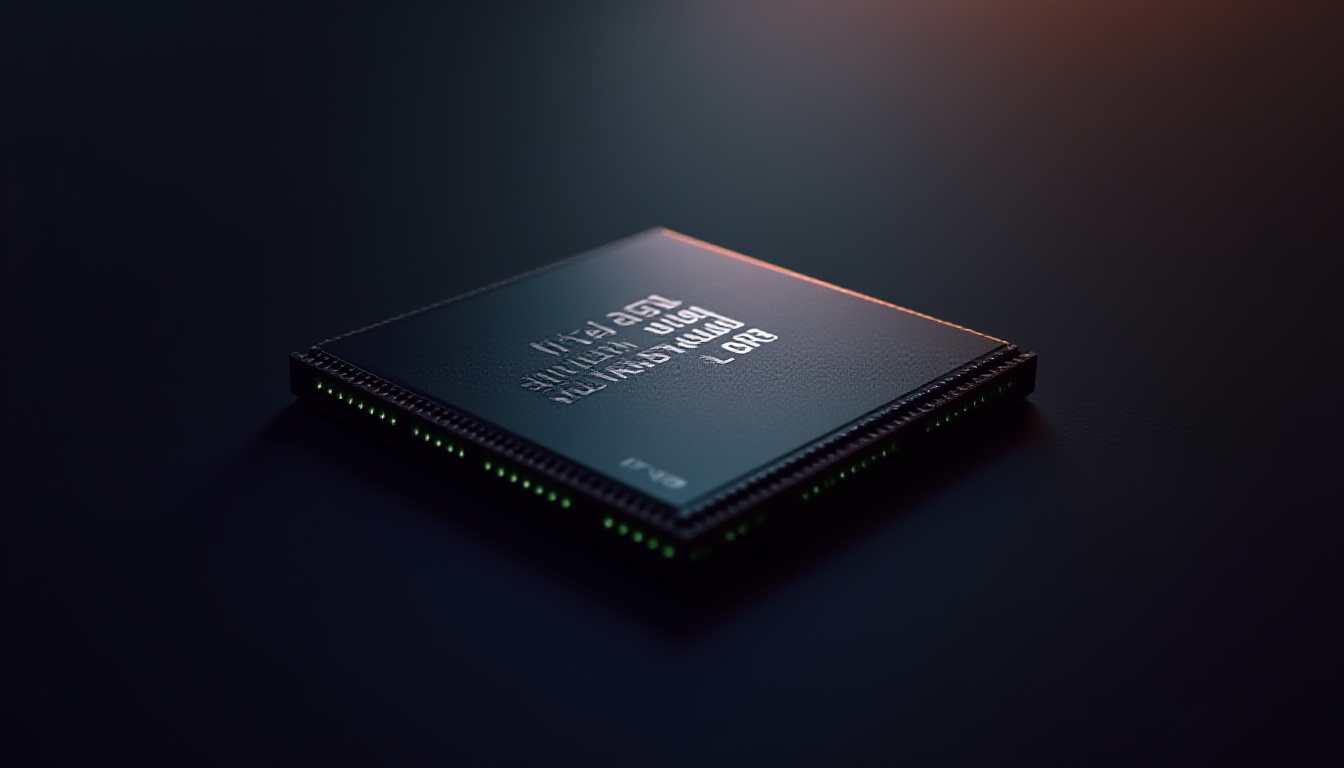
Nvidia's RTX Spark is not just another laptop GPU refresh. It's a full system-on-chip designed from the ground up to redefine what a thin, portable laptop can actually do. A 20-core ARM-based CPU, an RTX 5070 GPU with desktop-class core counts, up to 128GB of unified RAM, and an all-day battery tucked into a chassis as slim as 14mm — on paper, those numbers are genuinely impressive. But Nvidia isn't just selling hardware here. They're selling a vision of a new era of computing built around AI agents, and that vision deserves a lot more scrutiny than the spec sheet does.
Related Post

Let's break it all down — the hardware, the pitch, the realistic concerns, and ultimately whether this is something worth your money.
What the RTX Spark Actually Is (And Why the Specs Matter)
The RTX Spark is Nvidia's first foray into the integrated laptop chip space, competing directly with Apple's M-series silicon and AMD's Strix Halo platform. The chip pairs a 20-core ARM CPU with an RTX 5070 GPU that doesn't cut corners — it runs the same core count as the desktop variant, which is a significant departure from how laptop GPUs have traditionally worked.
The headline feature, however, is the unified memory pool. At up to 128GB, this isn't just a marketing number. Unified memory means the CPU and GPU share the same high-bandwidth RAM pool, which dramatically accelerates workloads that need to shuttle large amounts of data between processor types — most notably, large AI models and high-resolution creative projects.
For context, a typical gaming laptop maxes out at 32GB of standard DDR5 RAM, none of which is shared efficiently with the GPU. The RTX Spark's architecture changes that equation entirely. Add in full support for Nvidia's CUDA stack — the software ecosystem that underpins virtually every AI framework, from PyTorch to TensorRT — and you have a machine that is genuinely purpose-built for the next wave of compute-intensive tasks.
The form factor is worth noting too. At 14mm thin with claimed all-day battery life, Nvidia is targeting the premium ultrabook segment — devices like the Lenovo Yoga, Dell XPS, and ASUS ProArt. These are productivity-first machines, not gaming rigs. That positioning matters when you start thinking about who this chip is actually for.
The AI Agent Pitch: Ambitious, Exciting, and Complicated
Nvidia's launch presentation spent a significant chunk of its time on AI agents, and that's the crux of the RTX Spark story. So what exactly is an AI agent? If you're familiar with tools like ChatGPT or Claude, think of those as reactive — you ask, they answer. An AI agent is proactive. You give it a goal, and it executes a sequence of actions across your apps and files to complete it, checking its own work along the way.
The example Nvidia used — asking an agent to animate an owl while adjusting camera angles — is simple enough to sound trivial. But the underlying capability is anything but. A genuinely useful agent would need to understand your filesystem, interact with your applications, manage multi-step workflows, and do all of this locally on-device rather than sending your data to a cloud server. For that, you need a large language model running in fast, accessible memory. That's where the 128GB unified RAM becomes the key differentiator.
Neither a standard gaming laptop nor a MacBook Pro running Apple Silicon can tick every box here. The MacBook Pro can match the memory, but it lacks access to CUDA — and nearly every serious AI tool is optimised for CUDA first. AMD's Strix Halo platform offers competitive unified memory but faces the same CUDA gap. The RTX Spark is, at least on a hardware level, the most complete package for this specific use case.
The Microsoft Problem Nobody Is Talking About
Here's where the honest analysis gets uncomfortable. The hardware is Nvidia's. The vision is partly Nvidia's. But the execution is Microsoft's problem to solve — and Microsoft's track record with ambient, system-level AI features is not reassuring.
For AI agents to work as described, they need deep operating system integration. We're talking taskbar-level access, hooks into your file system, the ability to interact with third-party apps, and persistent background processes. Microsoft's existing attempt at something adjacent to this — Copilot — has been met with widespread frustration. Users have gone out of their way to disable or remove it, citing intrusiveness, unreliability, and privacy concerns.
Now imagine a version of Copilot with significantly more capability, more access, and more autonomy. That's what the RTX Spark's agent vision requires. The technical lift is enormous. The social and trust lift may be even greater. In an era where data privacy concerns are mainstream — not just niche tech community grievances — asking users to hand a Microsoft-built AI agent broad control over their system is a significant ask.
This isn't a reason to dismiss the technology. But it is a reason to temper expectations about how quickly or smoothly this vision materialises in practice.
Creative Work and Gaming: The More Grounded Use Cases
Step back from the agent narrative, and the RTX Spark still makes a compelling case for two more immediate audiences: creative professionals and serious gamers who want a thin machine.
On the creative side, Adobe has reportedly developed new architecture for both Premiere Pro and Photoshop specifically optimised for the RTX Spark chip. That kind of software-hardware co-development is exactly how Apple built its reputation for creative performance. If Nvidia and Adobe deliver on that promise, video editors and photographers working in demanding projects could see meaningful real-world gains — faster exports, smoother previews, better AI-assisted editing tools like content-aware fill and neural filters running locally rather than via cloud processing.
For gaming, the numbers Nvidia is quoting are eye-catching, though unverified until independent testing confirms them. An RTX 5070 in a 14mm laptop is a different proposition from the thermally compromised mobile GPUs we've seen historically. If the thermal solution holds up under sustained gaming loads — a big if in that chassis thickness — you could have a legitimately capable gaming machine that doesn't look like one. The target buyer here isn't the RGB-keyboard crowd. It's the professional who wants to decompress with a game after work without carrying a separate device.
Pricing Reality: Brace Yourself
Nvidia hasn't confirmed pricing yet, and that silence is telling. When a manufacturer delays price announcements for a premium product, it's rarely because the number is going to be pleasantly surprising.
For reference, Apple's MacBook Pro with M4 Max and 128GB of unified memory starts at around $3,999. AMD Strix Halo laptops with high memory configurations are landing in similar territory. An RTX Spark laptop offering comparable specs, plus the CUDA advantage and Nvidia's ecosystem premium, is unlikely to undercut those figures. Budget-conscious buyers should realistically plan for north of $2,500 at entry level, with fully configured models potentially pushing $4,000 or beyond.
Free Weekly Newsletter
Enjoying this guide?
Get the best articles like this one delivered to your inbox every week. No spam.
That's not a dealbreaker for the right buyer. A creative professional who bills hourly on video projects, or an AI researcher who needs local inference capability, can justify the spend. For the average consumer, it's a harder pill to swallow — especially when the headline AI features are dependent on software that doesn't fully exist yet.
Bottom Line: Strong Hardware, Unfinished Vision
The Nvidia RTX Spark is one of the most technically interesting laptop chips to arrive in years. The combination of ARM efficiency, desktop-class GPU cores, massive unified memory, and full CUDA support creates a platform that genuinely has no direct equivalent. If the pricing lands in a reasonable range and the thin chassis can handle sustained workloads, this is a serious machine for creative professionals and AI-forward developers.
The AI agent vision is real in concept and intriguing in potential. But it's dependent on Microsoft building something far more polished and trustworthy than anything they've shipped in the AI space so far. Don't buy an RTX Spark laptop today for the agents. Buy it for what it can do right now — and consider the agent future a bonus that may or may not arrive.
Watch the thermal performance benchmarks closely when independent reviews land. Watch the pricing announcements even more closely. And if you're not a creative professional or AI developer, wait six months before pulling the trigger. The first wave of any new platform always has rough edges, and patience tends to reward the budget-conscious buyer.
Frequently Asked Questions
What is the Nvidia RTX Spark and how is it different from a regular laptop GPU?
The RTX Spark is Nvidia's first integrated laptop chip, combining a 20-core ARM CPU with an RTX 5070 GPU and up to 128GB of unified memory in a single platform. Unlike a conventional laptop GPU, which operates with its own separate VRAM pool and is thermally limited by shared chassis space, the RTX Spark integrates CPU and GPU memory into one high-bandwidth pool — enabling faster AI inference, smoother creative workflows, and more efficient power usage across the entire system.
Can the Nvidia RTX Spark run AI models locally without an internet connection?
Yes, and that's one of its primary design goals. The 128GB unified memory pool is large enough to load and run substantial large language models entirely on-device, without sending data to a cloud server. Full CUDA support means compatibility with the vast majority of AI frameworks and tools. In practice, the quality of local AI performance will depend on the specific models and software being used, but the hardware foundation is there.
How does the RTX Spark compare to Apple M4 Max for creative professionals?
Both platforms offer up to 128GB of unified memory and are targeting creative professionals with thin, premium laptops. Apple's advantage lies in its mature, tightly integrated software ecosystem and proven thermal management. Nvidia's advantage is CUDA compatibility — the software stack that most professional AI tools, video processing pipelines, and rendering engines are optimised for first. For workflows that are CUDA-dependent, the RTX Spark may outperform M4 Max. For pure Apple ecosystem work, the MacBook Pro remains hard to beat.
Are RTX Spark laptops good for gaming?
They can be, though gaming is positioned as a secondary use case. The RTX 5070 GPU is capable hardware, but these are thin productivity laptops — not gaming rigs with advanced cooling systems. Sustained gaming performance will depend heavily on how well individual manufacturers implement thermal management in their specific chassis. Expect solid 1080p and 1440p gaming performance, but wait for independent thermal benchmarks before assuming it can sustain peak GPU loads for extended sessions.
When will RTX Spark laptops be available and what will they cost?
Nvidia has not confirmed pricing or exact availability windows as of the announcement. Based on comparable platforms — Apple M4 Max and AMD Strix Halo — expect entry configurations to start around $2,500, with higher memory and storage options pushing toward $4,000 or more. Budget-conscious buyers are advised to wait for full retail pricing and independent reviews before committing.
Nvidia RTX Spark Laptop
Considering it? See where the price stands today
Frequently Asked Questions
Nvidia Just Made a Laptop Chip. Here's Why You Should Pay Attention — and Stay Cautious
Nvidia's RTX Spark is not just another laptop GPU refresh. It's a full system-on-chip designed from the ground up to redefine what a thin, portable laptop can actually do. A 20-core ARM-based CPU, an RTX 5070 GPU with desktop-class core counts, up to 128GB of unified RAM, and an all-day battery tucked into a chassis as slim as 14mm — on paper, those numbers are genuinely impressive. But Nvidia isn't just selling hardware here. They're selling a vision of a new era of computing built around AI agents, and that vision deserves a lot more scrutiny than the spec sheet does.
Let's break it all down — the hardware, the pitch, the realistic concerns, and ultimately whether this is something worth your money.
What the RTX Spark Actually Is (And Why the Specs Matter)
The RTX Spark is Nvidia's first foray into the integrated laptop chip space, competing directly with Apple's M-series silicon and AMD's Strix Halo platform. The chip pairs a 20-core ARM CPU with an RTX 5070 GPU that doesn't cut corners — it runs the same core count as the desktop variant, which is a significant departure from how laptop GPUs have traditionally worked.
The headline feature, however, is the unified memory pool. At up to 128GB, this isn't just a marketing number. Unified memory means the CPU and GPU share the same high-bandwidth RAM pool, which dramatically accelerates workloads that need to shuttle large amounts of data between processor types — most notably, large AI models and high-resolution creative projects.
For context, a typical gaming laptop maxes out at 32GB of standard DDR5 RAM, none of which is shared efficiently with the GPU. The RTX Spark's architecture changes that equation entirely. Add in full support for Nvidia's CUDA stack — the software ecosystem that underpins virtually every AI framework, from PyTorch to TensorRT — and you have a machine that is genuinely purpose-built for the next wave of compute-intensive tasks.
The form factor is worth noting too. At 14mm thin with claimed all-day battery life, Nvidia is targeting the premium ultrabook segment — devices like the Lenovo Yoga, Dell XPS, and ASUS ProArt. These are productivity-first machines, not gaming rigs. That positioning matters when you start thinking about who this chip is actually for.
The AI Agent Pitch: Ambitious, Exciting, and Complicated
Nvidia's launch presentation spent a significant chunk of its time on AI agents, and that's the crux of the RTX Spark story. So what exactly is an AI agent? If you're familiar with tools like ChatGPT or Claude, think of those as reactive — you ask, they answer. An AI agent is proactive. You give it a goal, and it executes a sequence of actions across your apps and files to complete it, checking its own work along the way.
The example Nvidia used — asking an agent to animate an owl while adjusting camera angles — is simple enough to sound trivial. But the underlying capability is anything but. A genuinely useful agent would need to understand your filesystem, interact with your applications, manage multi-step workflows, and do all of this locally on-device rather than sending your data to a cloud server. For that, you need a large language model running in fast, accessible memory. That's where the 128GB unified RAM becomes the key differentiator.
Neither a standard gaming laptop nor a MacBook Pro running Apple Silicon can tick every box here. The MacBook Pro can match the memory, but it lacks access to CUDA — and nearly every serious AI tool is optimised for CUDA first. AMD's Strix Halo platform offers competitive unified memory but faces the same CUDA gap. The RTX Spark is, at least on a hardware level, the most complete package for this specific use case.
The Microsoft Problem Nobody Is Talking About
Here's where the honest analysis gets uncomfortable. The hardware is Nvidia's. The vision is partly Nvidia's. But the execution is Microsoft's problem to solve — and Microsoft's track record with ambient, system-level AI features is not reassuring.
For AI agents to work as described, they need deep operating system integration. We're talking taskbar-level access, hooks into your file system, the ability to interact with third-party apps, and persistent background processes. Microsoft's existing attempt at something adjacent to this — Copilot — has been met with widespread frustration. Users have gone out of their way to disable or remove it, citing intrusiveness, unreliability, and privacy concerns.
Now imagine a version of Copilot with significantly more capability, more access, and more autonomy. That's what the RTX Spark's agent vision requires. The technical lift is enormous. The social and trust lift may be even greater. In an era where data privacy concerns are mainstream — not just niche tech community grievances — asking users to hand a Microsoft-built AI agent broad control over their system is a significant ask.
This isn't a reason to dismiss the technology. But it is a reason to temper expectations about how quickly or smoothly this vision materialises in practice.
Creative Work and Gaming: The More Grounded Use Cases
Step back from the agent narrative, and the RTX Spark still makes a compelling case for two more immediate audiences: creative professionals and serious gamers who want a thin machine.
On the creative side, Adobe has reportedly developed new architecture for both Premiere Pro and Photoshop specifically optimised for the RTX Spark chip. That kind of software-hardware co-development is exactly how Apple built its reputation for creative performance. If Nvidia and Adobe deliver on that promise, video editors and photographers working in demanding projects could see meaningful real-world gains — faster exports, smoother previews, better AI-assisted editing tools like content-aware fill and neural filters running locally rather than via cloud processing.
For gaming, the numbers Nvidia is quoting are eye-catching, though unverified until independent testing confirms them. An RTX 5070 in a 14mm laptop is a different proposition from the thermally compromised mobile GPUs we've seen historically. If the thermal solution holds up under sustained gaming loads — a big if in that chassis thickness — you could have a legitimately capable gaming machine that doesn't look like one. The target buyer here isn't the RGB-keyboard crowd. It's the professional who wants to decompress with a game after work without carrying a separate device.
Pricing Reality: Brace Yourself
Nvidia hasn't confirmed pricing yet, and that silence is telling. When a manufacturer delays price announcements for a premium product, it's rarely because the number is going to be pleasantly surprising.
For reference, Apple's MacBook Pro with M4 Max and 128GB of unified memory starts at around $3,999. AMD Strix Halo laptops with high memory configurations are landing in similar territory. An RTX Spark laptop offering comparable specs, plus the CUDA advantage and Nvidia's ecosystem premium, is unlikely to undercut those figures. Budget-conscious buyers should realistically plan for north of $2,500 at entry level, with fully configured models potentially pushing $4,000 or beyond.
That's not a dealbreaker for the right buyer. A creative professional who bills hourly on video projects, or an AI researcher who needs local inference capability, can justify the spend. For the average consumer, it's a harder pill to swallow — especially when the headline AI features are dependent on software that doesn't fully exist yet.
Bottom Line: Strong Hardware, Unfinished Vision
The Nvidia RTX Spark is one of the most technically interesting laptop chips to arrive in years. The combination of ARM efficiency, desktop-class GPU cores, massive unified memory, and full CUDA support creates a platform that genuinely has no direct equivalent. If the pricing lands in a reasonable range and the thin chassis can handle sustained workloads, this is a serious machine for creative professionals and AI-forward developers.
The AI agent vision is real in concept and intriguing in potential. But it's dependent on Microsoft building something far more polished and trustworthy than anything they've shipped in the AI space so far. Don't buy an RTX Spark laptop today for the agents. Buy it for what it can do right now — and consider the agent future a bonus that may or may not arrive.
Watch the thermal performance benchmarks closely when independent reviews land. Watch the pricing announcements even more closely. And if you're not a creative professional or AI developer, wait six months before pulling the trigger. The first wave of any new platform always has rough edges, and patience tends to reward the budget-conscious buyer.
Frequently Asked Questions
What is the Nvidia RTX Spark and how is it different from a regular laptop GPU?
The RTX Spark is Nvidia's first integrated laptop chip, combining a 20-core ARM CPU with an RTX 5070 GPU and up to 128GB of unified memory in a single platform. Unlike a conventional laptop GPU, which operates with its own separate VRAM pool and is thermally limited by shared chassis space, the RTX Spark integrates CPU and GPU memory into one high-bandwidth pool — enabling faster AI inference, smoother creative workflows, and more efficient power usage across the entire system.
Can the Nvidia RTX Spark run AI models locally without an internet connection?
Yes, and that's one of its primary design goals. The 128GB unified memory pool is large enough to load and run substantial large language models entirely on-device, without sending data to a cloud server. Full CUDA support means compatibility with the vast majority of AI frameworks and tools. In practice, the quality of local AI performance will depend on the specific models and software being used, but the hardware foundation is there.
How does the RTX Spark compare to Apple M4 Max for creative professionals?
Both platforms offer up to 128GB of unified memory and are targeting creative professionals with thin, premium laptops. Apple's advantage lies in its mature, tightly integrated software ecosystem and proven thermal management. Nvidia's advantage is CUDA compatibility — the software stack that most professional AI tools, video processing pipelines, and rendering engines are optimised for first. For workflows that are CUDA-dependent, the RTX Spark may outperform M4 Max. For pure Apple ecosystem work, the MacBook Pro remains hard to beat.
Are RTX Spark laptops good for gaming?
They can be, though gaming is positioned as a secondary use case. The RTX 5070 GPU is capable hardware, but these are thin productivity laptops — not gaming rigs with advanced cooling systems. Sustained gaming performance will depend heavily on how well individual manufacturers implement thermal management in their specific chassis. Expect solid 1080p and 1440p gaming performance, but wait for independent thermal benchmarks before assuming it can sustain peak GPU loads for extended sessions.
When will RTX Spark laptops be available and what will they cost?
Nvidia has not confirmed pricing or exact availability windows as of the announcement. Based on comparable platforms — Apple M4 Max and AMD Strix Halo — expect entry configurations to start around $2,500, with higher memory and storage options pushing toward $4,000 or more. Budget-conscious buyers are advised to wait for full retail pricing and independent reviews before committing.
Nvidia RTX Spark Laptop
Ready to decide? Compare the current price before you buy
About Zeebrain Editorial
Zeebrain publishes independent analysis of markets, investing, personal finance, and business. We disclose affiliate relationships, never accept payment for coverage, and fact-check all claims against primary sources. Read our editorial policy →
How this article was produced: Zeebrain articles are created with AI assistance from primary sources (including cited videos and market data) and reviewed under our editorial standards before publication. Spot an error? Tell us and we will correct it.
Disclaimer: Content on Zeebrain is for informational and educational purposes only and does not constitute financial advice or a recommendation to buy or sell any security. Always conduct your own research and consult a qualified financial adviser before making investment decisions. Past performance is not indicative of future results.
More from Reviews




Related Guides
Keep exploring this topic
Explore More on Zeebrain
Keep browsing by topic, or put the numbers to work with our free tools.