Nothing Headphone 1 Pro Review: Worth $400?
Quick Summary
Nothing Headphone 1 Pro reviewed: sound quality, ANC, the flat switch, and that case. Is it worth $400 against Sony XM6 and Bose? Full verdict inside.
Nothing Headphone 1 Pro
Check current price and availability on Amazon
In This Article
Nothing Headphone 1 Pro Review: Worth $400?
This article may contain affiliate links. We may earn a commission if you purchase through them, at no extra cost to you.
Related Post
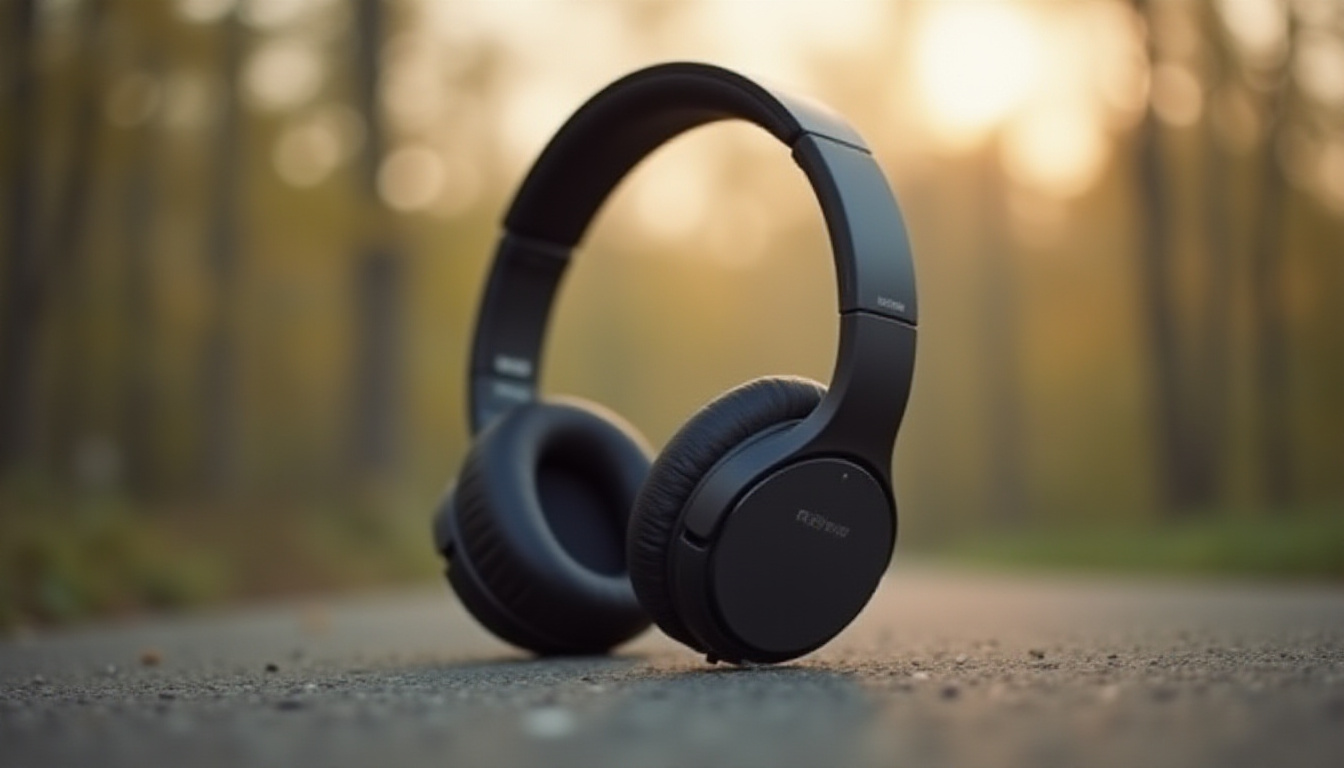
Nothing has always been a design-first company. Transparent backs, cassette-tape aesthetics, angular shapes that look like they belong in a design museum rather than on the subway. That approach has earned the brand a loyal following — but it has also meant that critics could always say the same thing: looks great, sounds decent, just not quite serious enough.
The Nothing Headphone 1 Pro is the company's answer to that criticism. At $400, it goes head-to-head with the Sony WH-1000XM6, the Bose QuietComfort Ultra, and the AirPods Max. That is not a soft league. These are headphones built by audio giants with years of tuning data, dedicated acoustic engineering teams, and brand equity earned over decades. Stepping into that arena at $400 with "Pro" in your name means every flaw gets magnified.
So do the Nothing Headphone 1 Pros earn their price tag — or is this a case of a brand punching above its weight and taking the hit on points?
Let's break it down properly.
Design and Build Quality: Still the Best in Class
If there is one area where Nothing has always led, it is design — and the Headphone 1 Pro continues that tradition with genuine conviction.
The transparent aesthetic has been refined rather than reinvented. You still get the cassette-tape-inspired square shape, but now wrapped in aluminum frames, titanium arms, and 9H Panda glass panels on the outer cups. The cushioning — both on the ear cups and the headband — is genuinely plush. Premium in every touch point.
The weight sits between fully plastic competitors and the notoriously heavy AirPods Max, which tip the scales at 385g. That is not a particularly high bar to clear, but the Nothing Headphone 1 Pro does feel balanced during extended wear sessions.
The controls deserve special mention. The right ear cup features a roller (volume up/down, press to play/pause, long press to toggle ANC) and a paddle (track skip, with scrub functionality in supported apps). These are tactile, distinct, and easy to find without looking — which matters enormously when a product lives on your ears. Add the voice assistant button and you have a complete control suite that is arguably the best physical interface in the over-ear headphone market right now.
The one cosmetic gripe: the Panda glass is a fingerprint magnet. For $400, that is an irritating oversight.
The Flat Switch: Genuinely Useful or Just a Gimmick?
The standout feature of the Nothing Headphone 1 Pro — and the one that most clearly justifies the "Pro" branding — is the physical flat switch on the inside of the left ear cup.
Here is the idea: most consumer headphones are tuned for enjoyment. They boost bass, brighten highs, and create a V-shaped frequency response that makes music sound exciting and immersive. That is great for a long-haul flight. It is less great if you are a content creator, music producer, or audio engineer who needs to hear a track as it actually is — without enhancement or coloration.
The flat switch disables all audio processing and EQ shaping, delivering a significantly more neutral, reference-grade sound signature. Transparency mode is disabled in flat mode (the seal becomes your passive isolation), but ANC remains functional — a sensible compromise.
In practice, flipping between the two modes mid-session is genuinely revealing. The V-shaped default sounds full and punchy; the flat mode strips away the excitement and replaces it with clarity and evenness. For anyone who edits video or audio on the go, the appeal is real. One pair of headphones that functions as both a travel companion and a rough reference monitor is a compelling proposition.
Is it a perfect reference tool? No. Dedicated studio headphones like the Sennheiser HD 600 or Beyerdynamic DT 990 Pro still offer more accurate flat response at comparable or lower price points. But for a traveller who does not want to carry two sets of cans, this is a genuinely thoughtful solution.
The upgraded EQ in the Nothing app also deserves credit. Eight fully parametric bands — with user-adjustable frequency centre points and bandwidth (Q factor) control — give audio enthusiasts real flexibility. A growing library of genre-specific presets rounds out a suite that is well above average for a consumer headphone app.
Sound Quality: Solid, But Not Class-Leading
Here is where the honest assessment gets uncomfortable.
The Nothing Headphone 1 Pro uses a triple-driver setup per ear — a large bass driver covering 10Hz–10kHz, a mid-range precision driver from 5kHz–15kHz, and a treble driver reaching up to 40kHz. More drivers do not automatically equal better sound (the analogy to megapixel counts in cameras is apt), but the intent is for each driver to specialise in its frequency range rather than one driver doing everything imperfectly.
The result, in default mode, is a fun, energetic sound. Bass is present and the highs are bright. If you enjoy a colourful, dynamic listen, these deliver that.
But two weaknesses are hard to ignore at this price point:
Bass punch and precision. There is plenty of bass quantity, but the transient response — the snap and impact of a drum hit or bass pluck — feels softened. Not muddy exactly, but not tight either. Think of hitting a snare drum through a thick blanket versus with a bare stick.
Instrument separation. Back-to-back comparisons with the Sony WH-1000XM6 and AirPods Max reveal that the Nothing Headphone 1 Pro blends its soundstage more than either competitor. Individual instruments are harder to isolate in complex passages. For casual listening, this is barely noticeable. For critical listening or anyone spending $400 because they genuinely care about fidelity, it matters.
On a rough scale where the Sony XM6 sits at a 9/10 for sound quality at this tier, the Nothing Headphone 1 Pro lands around 7/10. Respectable. Not best-in-class.
Active Noise Cancellation and Transparency: Better Than Expected
The ANC performance is arguably the most pleasant surprise in the Nothing Headphone 1 Pro package.
With ten microphones distributed across the headphones, the ANC system is particularly effective at handling mid-frequency ambient sounds — keyboard clatter, office chatter, furniture scraping. These are precisely the sounds that make open-plan offices and coffee shops difficult to work in, and the Nothing Headphone 1 Pro handles them with less harshness than many competitors that can feel physically uncomfortable at maximum ANC intensity.
Part of the credit goes to the ear cup seal itself. The cushions create excellent passive isolation, which takes significant load off the active processing and allows the software to handle what remains more gracefully.
Are the Sony WH-1000XM6s still the ANC benchmark? Yes. But if the Sonys are a 9/10, these land around an 8/10 — which puts them genuinely ahead of where previous Nothing headphones sat and competitive with Bose at similar price points.
Transparency mode has also improved substantially over the previous generation. Earlier Nothing headphones produced a muffled, artificial-sounding passthrough. The Headphone 1 Pro's transparency mode sounds significantly more natural — not quite as seamless as the AirPods Max's industry-leading implementation, but no longer embarrassing. You can hold a conversation without yanking the headphones off, which is the minimum viable standard.
Call quality, using the built-in microphones, is perfectly average — functional, clear enough, but nothing that will make you sound like you are in a professional recording environment.
The Case: An Inexcusable Failure
Everything above adds up to a respectable, even impressive product. Then there is the case.
The Nothing Headphone 1 Pro ships with a hard-shell plastic clam case that ranks as one of the worst headphone cases at any price point, let alone $400. The problems stack up quickly:
- The headphones do not fold. You flip them over and drop them into the case flat, which means the headband is partially exposed and vulnerable to snagging in a bag.
- The case is cheap. The plastic shell feels flimsy. After a week of normal use, visible play in the hinge is already developing. This is not a durable long-term solution for a premium product.
- No charge-through port. To charge the headphones, you must open the case. Apple's AirPods Max case — itself widely mocked — at least includes a Lightning flap for charging without removal. This does not.
- Fingerprint surface. The shiny plastic exterior attracts smudges as aggressively as the glass panels on the headphones themselves.
The previous Nothing headphone case was a fully enclosed soft pouch — not glamorous, but functional and protective. This is a step backwards in every measurable way. It is the one decision on this product that is genuinely difficult to defend, and it is the kind of oversight that can sour an otherwise strong product experience.
Pros and Cons
Pros
- Exceptional build quality — aluminum, titanium, Panda glass
- Best physical controls in the over-ear headphone category
- Flat switch is a genuinely useful dual-purpose feature
- ANC performs above expectations, especially for mid-frequency noise
- Improved transparency mode — natural and usable
- Highly configurable parametric EQ in the Nothing app
- 30+ hours battery life with ANC active
- IP52 sweat and splash resistance
- Bluetooth 6.1 with multipoint (two devices simultaneously)
Cons
- Sound quality trails Sony XM6 and AirPods Max at the same price point
- Bass lacks punch and precision compared to top-tier competition
- Instrument separation is the weakest in its class
- The case is genuinely terrible — flimsy, no charge-through, partial headband exposure
- Fingerprint-prone glass panels and case exterior
- Headphones do not fold, complicating portability
- Flat mode disables transparency (minor but worth noting)
Competitor Comparison
| Feature | Nothing Headphone 1 Pro | Sony WH-1000XM6 | Bose QC Ultra | Apple AirPods Max |
|---|---|---|---|---|
| Price | $400 | ~$300–350 | $429 | $549 |
| Sound Quality | 7/10 | 9/10 | 8/10 | 8.5/10 |
| ANC | 8/10 | 9/10 | 9/10 | 9/10 |
| Transparency Mode | 7/10 | 8/10 | 8.5/10 | 10/10 |
| Build Quality | 9/10 | 7/10 | 7/10 | 9/10 |
| Controls | 10/10 | 7/10 | 6/10 | 7/10 |
| Case Quality | 2/10 | 8/10 | 9/10 | 4/10 |
| Folds | No | Yes | Yes | No |
| Flat/Reference Mode | Yes | No | No | No |
| Battery (ANC on) | 30+ hrs | 30 hrs | 24 hrs | 20 hrs |
| Multipoint | Yes | Yes | Yes | No |
Free Weekly Newsletter
Enjoying this guide?
Get the best articles like this one delivered to your inbox every week. No spam.
Verdict: Who Should Buy the Nothing Headphone 1 Pro?
Overall Rating: 7.5 / 10
The Nothing Headphone 1 Pro is a genuinely interesting headphone that earns most of its $400 price tag — just not all of it.
The flat switch is the defining feature, and it works. If you are a content creator, podcaster, or audio editor who travels regularly and hates carrying two sets of headphones, the dual-mode functionality is a real, practical benefit that no competitor offers at this price. The controls are best-in-class. The ANC overperforms relative to expectations. The build quality is premium.
But the sound quality, while enjoyable, does not beat the Sony WH-1000XM6 — which costs less and folds into a better case. If pure audio performance and ANC are your priorities and you have no professional monitoring needs, the Sonys are objectively the better buy right now.
The case is indefensible. A $400 headphone deserves a case that does not wobble after seven days of use. This one does. Nothing needs to fix this.
Buy it if: You need a single pair of headphones that switches between consumer and reference listening modes, you value physical controls and premium materials, and you are an Android/multi-device user who wants multipoint Bluetooth.
Skip it if: Pure sound quality and ANC performance are your only criteria, or if you need a compact travel setup (they do not fold).
Where to Buy
Nothing Headphone 1 Pro on Amazon
Frequently Asked Questions
Is the Nothing Headphone 1 Pro worth $400 compared to the Sony WH-1000XM6?
For most buyers, no — the Sony WH-1000XM6 offers superior sound quality, comparable or better ANC, foldable design, and a better case at a lower price (frequently found around $300). The Nothing Headphone 1 Pro is worth $400 specifically if the flat reference mode, physical controls, or design are priorities that the Sony does not address for you.
What does the flat switch actually do on the Nothing Headphone 1 Pro?
The flat switch is a physical toggle that disables all audio processing and EQ shaping, producing a significantly more neutral, uncoloured sound signature. It is designed for critical listening — audio editing, mixing reference, or anyone who wants to hear a track without consumer-oriented bass boost and brightness enhancement. ANC remains functional in flat mode; transparency mode does not.
Who is the Nothing Headphone 1 Pro NOT for?
It is not the right buy for listeners who prioritise instrument separation and bass precision above all else — the Sony and AirPods Max both outperform it in those areas. It is also a poor fit for anyone who needs compact, foldable travel headphones, or who expects a premium carrying case to match the premium price tag.
How does the Nothing Headphone 1 Pro handle calls and microphone quality?
Call quality is functional but unremarkable. The ten-microphone array is primarily optimised for ANC performance rather than voice capture. Callers will hear you clearly in quiet environments, but do not expect broadcast-quality voice reproduction. For professional podcasting or voice work, a dedicated microphone remains necessary.
Does the Nothing Headphone 1 Pro work well with Android and non-Apple devices?
Yes — and this is arguably where it has a real advantage over the AirPods Max. Bluetooth 6.1 enables fast pairing across platforms, and multipoint connectivity allows simultaneous connection to two devices (e.g. an Android phone and a Windows or Mac laptop). The Nothing app is available on both Android and iOS for full EQ and settings access.
Nothing Headphone 1 Pro
Considering it? See where the price stands today
Frequently Asked Questions
Design and Build Quality: Still the Best in Class
If there is one area where Nothing has always led, it is design — and the Headphone 1 Pro continues that tradition with genuine conviction.
The transparent aesthetic has been refined rather than reinvented. You still get the cassette-tape-inspired square shape, but now wrapped in aluminum frames, titanium arms, and 9H Panda glass panels on the outer cups. The cushioning — both on the ear cups and the headband — is genuinely plush. Premium in every touch point.
The weight sits between fully plastic competitors and the notoriously heavy AirPods Max, which tip the scales at 385g. That is not a particularly high bar to clear, but the Nothing Headphone 1 Pro does feel balanced during extended wear sessions.
The controls deserve special mention. The right ear cup features a roller (volume up/down, press to play/pause, long press to toggle ANC) and a paddle (track skip, with scrub functionality in supported apps). These are tactile, distinct, and easy to find without looking — which matters enormously when a product lives on your ears. Add the voice assistant button and you have a complete control suite that is arguably the best physical interface in the over-ear headphone market right now.
The one cosmetic gripe: the Panda glass is a fingerprint magnet. For $400, that is an irritating oversight.
The Flat Switch: Genuinely Useful or Just a Gimmick?
The standout feature of the Nothing Headphone 1 Pro — and the one that most clearly justifies the "Pro" branding — is the physical flat switch on the inside of the left ear cup.
Here is the idea: most consumer headphones are tuned for enjoyment. They boost bass, brighten highs, and create a V-shaped frequency response that makes music sound exciting and immersive. That is great for a long-haul flight. It is less great if you are a content creator, music producer, or audio engineer who needs to hear a track as it actually is — without enhancement or coloration.
The flat switch disables all audio processing and EQ shaping, delivering a significantly more neutral, reference-grade sound signature. Transparency mode is disabled in flat mode (the seal becomes your passive isolation), but ANC remains functional — a sensible compromise.
In practice, flipping between the two modes mid-session is genuinely revealing. The V-shaped default sounds full and punchy; the flat mode strips away the excitement and replaces it with clarity and evenness. For anyone who edits video or audio on the go, the appeal is real. One pair of headphones that functions as both a travel companion and a rough reference monitor is a compelling proposition.
Is it a perfect reference tool? No. Dedicated studio headphones like the Sennheiser HD 600 or Beyerdynamic DT 990 Pro still offer more accurate flat response at comparable or lower price points. But for a traveller who does not want to carry two sets of cans, this is a genuinely thoughtful solution.
The upgraded EQ in the Nothing app also deserves credit. Eight fully parametric bands — with user-adjustable frequency centre points and bandwidth (Q factor) control — give audio enthusiasts real flexibility. A growing library of genre-specific presets rounds out a suite that is well above average for a consumer headphone app.
Sound Quality: Solid, But Not Class-Leading
Here is where the honest assessment gets uncomfortable.
The Nothing Headphone 1 Pro uses a triple-driver setup per ear — a large bass driver covering 10Hz–10kHz, a mid-range precision driver from 5kHz–15kHz, and a treble driver reaching up to 40kHz. More drivers do not automatically equal better sound (the analogy to megapixel counts in cameras is apt), but the intent is for each driver to specialise in its frequency range rather than one driver doing everything imperfectly.
The result, in default mode, is a fun, energetic sound. Bass is present and the highs are bright. If you enjoy a colourful, dynamic listen, these deliver that.
But two weaknesses are hard to ignore at this price point:
Bass punch and precision. There is plenty of bass quantity, but the transient response — the snap and impact of a drum hit or bass pluck — feels softened. Not muddy exactly, but not tight either. Think of hitting a snare drum through a thick blanket versus with a bare stick.
Instrument separation. Back-to-back comparisons with the Sony WH-1000XM6 and AirPods Max reveal that the Nothing Headphone 1 Pro blends its soundstage more than either competitor. Individual instruments are harder to isolate in complex passages. For casual listening, this is barely noticeable. For critical listening or anyone spending $400 because they genuinely care about fidelity, it matters.
On a rough scale where the Sony XM6 sits at a 9/10 for sound quality at this tier, the Nothing Headphone 1 Pro lands around 7/10. Respectable. Not best-in-class.
Active Noise Cancellation and Transparency: Better Than Expected
The ANC performance is arguably the most pleasant surprise in the Nothing Headphone 1 Pro package.
With ten microphones distributed across the headphones, the ANC system is particularly effective at handling mid-frequency ambient sounds — keyboard clatter, office chatter, furniture scraping. These are precisely the sounds that make open-plan offices and coffee shops difficult to work in, and the Nothing Headphone 1 Pro handles them with less harshness than many competitors that can feel physically uncomfortable at maximum ANC intensity.
Part of the credit goes to the ear cup seal itself. The cushions create excellent passive isolation, which takes significant load off the active processing and allows the software to handle what remains more gracefully.
Are the Sony WH-1000XM6s still the ANC benchmark? Yes. But if the Sonys are a 9/10, these land around an 8/10 — which puts them genuinely ahead of where previous Nothing headphones sat and competitive with Bose at similar price points.
Transparency mode has also improved substantially over the previous generation. Earlier Nothing headphones produced a muffled, artificial-sounding passthrough. The Headphone 1 Pro's transparency mode sounds significantly more natural — not quite as seamless as the AirPods Max's industry-leading implementation, but no longer embarrassing. You can hold a conversation without yanking the headphones off, which is the minimum viable standard.
Call quality, using the built-in microphones, is perfectly average — functional, clear enough, but nothing that will make you sound like you are in a professional recording environment.
The Case: An Inexcusable Failure
Everything above adds up to a respectable, even impressive product. Then there is the case.
The Nothing Headphone 1 Pro ships with a hard-shell plastic clam case that ranks as one of the worst headphone cases at any price point, let alone $400. The problems stack up quickly:
- The headphones do not fold. You flip them over and drop them into the case flat, which means the headband is partially exposed and vulnerable to snagging in a bag.
- The case is cheap. The plastic shell feels flimsy. After a week of normal use, visible play in the hinge is already developing. This is not a durable long-term solution for a premium product.
- No charge-through port. To charge the headphones, you must open the case. Apple's AirPods Max case — itself widely mocked — at least includes a Lightning flap for charging without removal. This does not.
- Fingerprint surface. The shiny plastic exterior attracts smudges as aggressively as the glass panels on the headphones themselves.
The previous Nothing headphone case was a fully enclosed soft pouch — not glamorous, but functional and protective. This is a step backwards in every measurable way. It is the one decision on this product that is genuinely difficult to defend, and it is the kind of oversight that can sour an otherwise strong product experience.
Pros and Cons
Pros
- Exceptional build quality — aluminum, titanium, Panda glass
- Best physical controls in the over-ear headphone category
- Flat switch is a genuinely useful dual-purpose feature
- ANC performs above expectations, especially for mid-frequency noise
- Improved transparency mode — natural and usable
- Highly configurable parametric EQ in the Nothing app
- 30+ hours battery life with ANC active
- IP52 sweat and splash resistance
- Bluetooth 6.1 with multipoint (two devices simultaneously)
Cons
- Sound quality trails Sony XM6 and AirPods Max at the same price point
- Bass lacks punch and precision compared to top-tier competition
- Instrument separation is the weakest in its class
- The case is genuinely terrible — flimsy, no charge-through, partial headband exposure
- Fingerprint-prone glass panels and case exterior
- Headphones do not fold, complicating portability
- Flat mode disables transparency (minor but worth noting)
Competitor Comparison
| Feature | Nothing Headphone 1 Pro | Sony WH-1000XM6 | Bose QC Ultra | Apple AirPods Max |
|---|---|---|---|---|
| Price | $400 | ~$300–350 | $429 | $549 |
| Sound Quality | 7/10 | 9/10 | 8/10 | 8.5/10 |
| ANC | 8/10 | 9/10 | 9/10 | 9/10 |
| Transparency Mode | 7/10 | 8/10 | 8.5/10 | 10/10 |
| Build Quality | 9/10 | 7/10 | 7/10 | 9/10 |
| Controls | 10/10 | 7/10 | 6/10 | 7/10 |
| Case Quality | 2/10 | 8/10 | 9/10 | 4/10 |
| Folds | No | Yes | Yes | No |
| Flat/Reference Mode | Yes | No | No | No |
| Battery (ANC on) | 30+ hrs | 30 hrs | 24 hrs | 20 hrs |
| Multipoint | Yes | Yes | Yes | No |
Verdict: Who Should Buy the Nothing Headphone 1 Pro?
Overall Rating: 7.5 / 10
The Nothing Headphone 1 Pro is a genuinely interesting headphone that earns most of its $400 price tag — just not all of it.
The flat switch is the defining feature, and it works. If you are a content creator, podcaster, or audio editor who travels regularly and hates carrying two sets of headphones, the dual-mode functionality is a real, practical benefit that no competitor offers at this price. The controls are best-in-class. The ANC overperforms relative to expectations. The build quality is premium.
But the sound quality, while enjoyable, does not beat the Sony WH-1000XM6 — which costs less and folds into a better case. If pure audio performance and ANC are your priorities and you have no professional monitoring needs, the Sonys are objectively the better buy right now.
The case is indefensible. A $400 headphone deserves a case that does not wobble after seven days of use. This one does. Nothing needs to fix this.
Buy it if: You need a single pair of headphones that switches between consumer and reference listening modes, you value physical controls and premium materials, and you are an Android/multi-device user who wants multipoint Bluetooth.
Skip it if: Pure sound quality and ANC performance are your only criteria, or if you need a compact travel setup (they do not fold).
Where to Buy
Frequently Asked Questions
Is the Nothing Headphone 1 Pro worth $400 compared to the Sony WH-1000XM6?
For most buyers, no — the Sony WH-1000XM6 offers superior sound quality, comparable or better ANC, foldable design, and a better case at a lower price (frequently found around $300). The Nothing Headphone 1 Pro is worth $400 specifically if the flat reference mode, physical controls, or design are priorities that the Sony does not address for you.
What does the flat switch actually do on the Nothing Headphone 1 Pro?
The flat switch is a physical toggle that disables all audio processing and EQ shaping, producing a significantly more neutral, uncoloured sound signature. It is designed for critical listening — audio editing, mixing reference, or anyone who wants to hear a track without consumer-oriented bass boost and brightness enhancement. ANC remains functional in flat mode; transparency mode does not.
Who is the Nothing Headphone 1 Pro NOT for?
It is not the right buy for listeners who prioritise instrument separation and bass precision above all else — the Sony and AirPods Max both outperform it in those areas. It is also a poor fit for anyone who needs compact, foldable travel headphones, or who expects a premium carrying case to match the premium price tag.
How does the Nothing Headphone 1 Pro handle calls and microphone quality?
Call quality is functional but unremarkable. The ten-microphone array is primarily optimised for ANC performance rather than voice capture. Callers will hear you clearly in quiet environments, but do not expect broadcast-quality voice reproduction. For professional podcasting or voice work, a dedicated microphone remains necessary.
Does the Nothing Headphone 1 Pro work well with Android and non-Apple devices?
Yes — and this is arguably where it has a real advantage over the AirPods Max. Bluetooth 6.1 enables fast pairing across platforms, and multipoint connectivity allows simultaneous connection to two devices (e.g. an Android phone and a Windows or Mac laptop). The Nothing app is available on both Android and iOS for full EQ and settings access.
Nothing Headphone 1 Pro
Ready to decide? Compare the current price before you buy
About Zeebrain Editorial
Zeebrain publishes independent analysis of markets, investing, personal finance, and business. We disclose affiliate relationships, never accept payment for coverage, and fact-check all claims against primary sources. Read our editorial policy →
How this article was produced: Zeebrain articles are created with AI assistance from primary sources (including cited videos and market data) and reviewed under our editorial standards before publication. Spot an error? Tell us and we will correct it.
Disclaimer: Content on Zeebrain is for informational and educational purposes only and does not constitute financial advice or a recommendation to buy or sell any security. Always conduct your own research and consult a qualified financial adviser before making investment decisions. Past performance is not indicative of future results.
More from Review



Related Guides
Keep exploring this topic
Explore More Categories
Keep browsing by topic and build depth around the subjects you care about most.