

Navigating the Information Overload: Psychological Impact of Constant News Cycles (Inspired by multiple trends pointing to a future-focused, fast-paced information environment)
In This Article
Navigating the Information Overload: Psychological Impact of Constant News Cycles
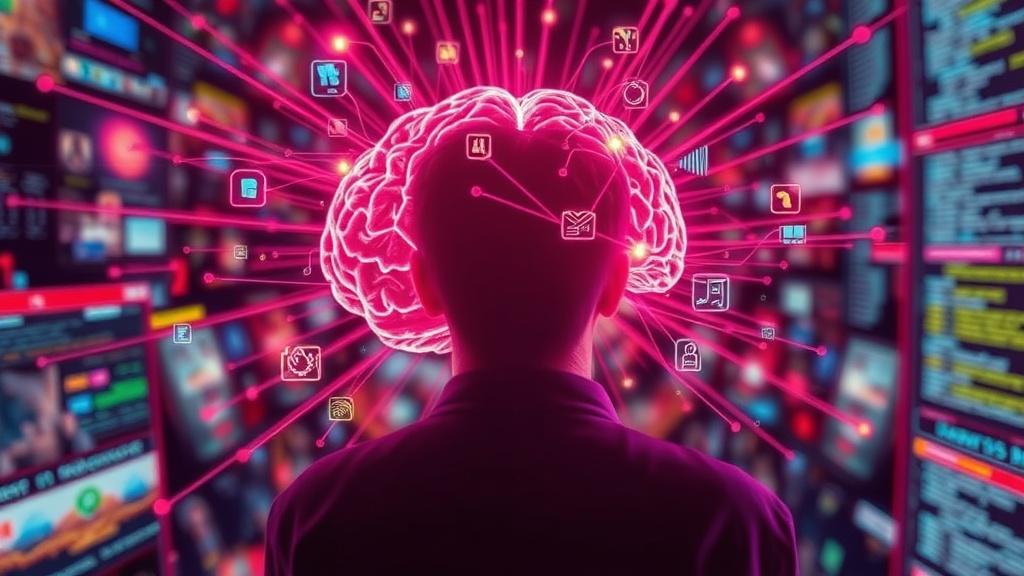
The relentless deluge of digital information, particularly through 24/7 news cycles, is fundamentally reshaping our mental landscape. From the moment we wake up to a pinging notification to the last scroll before bed, our brains are in a perpetual state of processing, often leading to a profound psychological toll that many are only just beginning to recognize. This constant connectivity, while offering unparalleled access to information, also traps us in a cycle of anxiety, cognitive fatigue, and a distorted perception of reality, demanding a deeper understanding of its long-term effects on our well-being.

The Unending News Stream: A New Normal for Our Brains
For millennia, human brains evolved to process information at a relatively slow pace, focusing on immediate surroundings and pressing survival needs. Today, that evolutionary design is confronted with an unprecedented volume and velocity of data. The modern news cycle, amplified by social media algorithms and hyper-connectivity, means a catastrophic event halfway across the globe can be instantly beamed into our pockets, accompanied by a cascade of reactions, analyses, and often, misinformation. This isn't just about knowing more; it's about being constantly aware of everything, all the time.
Consider the "CNN effect," a term originally coined to describe how live, global news coverage could influence foreign policy. Now, with platforms like X (formerly Twitter), TikTok, and a myriad of news apps, this effect is democratized and amplified, reaching every individual directly. A 2021 Pew Research Center study found that 86% of U.S. adults get news from a smartphone, computer, or tablet, and a significant portion (72%) use social media for news. This constant access means we are perpetually "on call" for news, whether it's breaking political developments, natural disasters, or global crises. The fear of missing out (FOMO) has morphed into "fear of being uninformed" (FOBI), compelling individuals to constantly check their feeds, even when they know it's detrimental. This behavioral loop is reinforced by the variable reward system inherent in digital platforms, akin to a slot machine, making it incredibly difficult to disengage.
Cognitive Overload and News Fatigue: Deeper Psychological Impacts
The sheer volume of information doesn't just inform us; it exhausts us. This phenomenon, known as cognitive overload, occurs when the demands placed on our working memory exceed its capacity. When constantly exposed to a barrage of news — especially negative or alarming news — our brains struggle to filter, prioritize, and process it effectively. Dr. Glenn D. Wilson, a psychologist at Gresham College, highlights how chronic exposure to news can elevate stress hormones like cortisol, leading to heightened anxiety, impaired concentration, and even physical symptoms like headaches and muscle tension.
Beyond general stress, the constant news cycle is a significant contributor to news fatigue and compassion fatigue. News fatigue is characterized by a feeling of being overwhelmed and worn out by the news, leading to avoidance behaviors. Individuals might intentionally tune out or become numb to distressing events, not out of indifference, but as a coping mechanism to protect their mental health. Compassion fatigue, particularly prevalent among those in helping professions but increasingly seen in the general public, results from prolonged exposure to traumatic events and suffering, leading to emotional exhaustion, reduced empathy, and a sense of hopelessness. The 2022 American Psychological Association's "Stress in America" survey noted that concerns about inflation, global conflict, and climate change were significant stressors for a majority of Americans, with a considerable portion reporting that these issues caused them to feel overwhelmed.
Furthermore, the fast-paced news environment often prioritizes sensationalism and urgency over nuanced understanding. This can lead to what psychologists call "catastrophizing," where individuals tend to assume the worst-case scenario, exaggerating the severity of problems. When every headline screams "crisis" or "imminent danger," it's challenging for the brain to differentiate genuine threats from exaggerated ones, keeping us in a perpetual state of low-grade fight-or-flight.
Continue Reading
Related Guides
Keep exploring this topic
High Protein Meal Prep Ideas for Busy Weeks: Easy and Delicious Recipes
Psychology
The ADHD Sleep Hack: What 2025’s Brain Research Reveals About Better Rest
Psychology
Why Is Canola Oil Banned in Europe? The Truth Behind the Controversy
Psychology
Men’s Mental Health Month: Why It Matters and How to Support It
Psychology
How Constant News Affects Mental Well-being: Practical Steps
The psychological toll of constant news cycles manifests in several tangible ways that impact daily life. Recognizing these effects is the first step toward mitigation.
- Increased Anxiety and Stress: This is perhaps the most immediate and common impact. Studies have consistently linked heavy news consumption, especially of negative news, to higher levels of anxiety and symptoms of depression. For instance, a 2017 study published in Health Communication found a direct correlation between exposure to negative news and increased anxiety levels, particularly for individuals already prone to worry.
- Impaired Sleep Quality: The brain needs time to wind down and process the day's events before sleep. Consuming intense or alarming news right before bed can activate the sympathetic nervous system, making it harder to fall asleep and reducing sleep quality. The blue light emitted from devices further disrupts melatonin production, compounding the issue.
- Decreased Productivity and Focus: Constant notifications and the urge to "just check" the news can shatter concentration, leading to fragmented work sessions and reduced efficiency. The brain is constantly context-switching, a process known to deplete cognitive resources.
- Distorted Worldview: The news often focuses on anomalies, conflicts, and problems because they are, by definition, "newsworthy." This can create a skewed perception that the world is more dangerous, chaotic, or negative than it actually is, fostering cynicism and a sense of powerlessness.
To counteract these effects, individuals can adopt several strategies:
- Mindful Consumption: Instead of passive scrolling, actively choose when and how you consume news. Allocate specific times of day for news updates and stick to them. Avoid news consumption first thing in the morning and right before bed.
- Curate Your Sources: Diversify your news sources to avoid echo chambers and gain a more balanced perspective. Prioritize reputable, fact-checked journalism over sensationalist or opinion-driven content.
- Digital Detoxes: Regularly scheduled breaks from all digital devices, even for short periods, can significantly reduce cognitive load. This could be an hour before bed, a news-free weekend, or even a designated "no news" day.
- Focus on Solutions, Not Just Problems: Seek out "solutions journalism," which reports on responses to social problems, providing a more balanced view and fostering a sense of agency rather than despair.
- Engage in Offline Activities: Prioritize hobbies, exercise, social interactions, and time in nature. These activities provide a crucial counterbalance to the digital world and are proven stress-reducers.
- Practice Self-Compassion: Acknowledge that it's okay not to be perfectly informed about every single global event. Protect your mental health as a priority.
The Future of News Consumption: Predictions and Next Steps
Looking ahead, the information landscape is poised for even more rapid evolution. The integration of Artificial Intelligence (AI) in news generation, personalization, and dissemination will bring new challenges and opportunities. While AI could theoretically offer more curated, less overwhelming news feeds, there's also the risk of deeper algorithmic echo chambers and the proliferation of sophisticated deepfakes and misinformation.

We can expect to see an increasing emphasis on "well-being journalism" and "slow news" movements. These trends prioritize depth, accuracy, and constructive analysis over speed and sensationalism, offering a counter-narrative to the relentless cycle. Subscription models that emphasize quality and trust over ad-driven quantity may become more prevalent as consumers seek refuge from the noise.
Furthermore, education around media literacy will become even more critical. Teaching individuals, especially younger generations, how to critically evaluate sources, identify bias, and understand the psychological mechanisms of news consumption will be essential tools for navigating the future information environment. Technology itself might offer solutions, with apps and tools designed to help manage information intake, monitor screen time, and even flag potentially overwhelming content. The challenge will be to leverage technology for our well-being rather than allowing it to dictate our mental state.
Conclusion: Reclaiming Our Mental Space in a Connected World
The constant news cycle, an undeniable feature of our modern lives, exerts a significant and often detrimental psychological impact, ranging from heightened anxiety and cognitive overload to diminished focus and a distorted perception of reality. Understanding these effects is not about advocating for ignorance, but about fostering a healthier, more intentional relationship with information.
By adopting mindful consumption habits, diversifying our news sources, prioritizing digital detoxes, and actively seeking out solutions-oriented content, we can reclaim agency over our mental well-being. The future demands not just technological advancement, but also a parallel evolution in our capacity for critical thinking and self-care in the face of relentless information. It's time to remember that being informed doesn't mean being overwhelmed; it means making conscious choices about what we let into our minds.
Frequently Asked Questions
The Unending News Stream: A New Normal for Our Brains
For millennia, human brains evolved to process information at a relatively slow pace, focusing on immediate surroundings and pressing survival needs. Today, that evolutionary design is confronted with an unprecedented volume and velocity of data. The modern news cycle, amplified by social media algorithms and hyper-connectivity, means a catastrophic event halfway across the globe can be instantly beamed into our pockets, accompanied by a cascade of reactions, analyses, and often, misinformation. This isn't just about knowing more; it's about being constantly aware of everything, all the time.
Consider the "CNN effect," a term originally coined to describe how live, global news coverage could influence foreign policy. Now, with platforms like X (formerly Twitter), TikTok, and a myriad of news apps, this effect is democratized and amplified, reaching every individual directly. A 2021 Pew Research Center study found that 86% of U.S. adults get news from a smartphone, computer, or tablet, and a significant portion (72%) use social media for news. This constant access means we are perpetually "on call" for news, whether it's breaking political developments, natural disasters, or global crises. The fear of missing out (FOMO) has morphed into "fear of being uninformed" (FOBI), compelling individuals to constantly check their feeds, even when they know it's detrimental. This behavioral loop is reinforced by the variable reward system inherent in digital platforms, akin to a slot machine, making it incredibly difficult to disengage.
Cognitive Overload and News Fatigue: Deeper Psychological Impacts
The sheer volume of information doesn't just inform us; it exhausts us. This phenomenon, known as cognitive overload, occurs when the demands placed on our working memory exceed its capacity. When constantly exposed to a barrage of news — especially negative or alarming news — our brains struggle to filter, prioritize, and process it effectively. Dr. Glenn D. Wilson, a psychologist at Gresham College, highlights how chronic exposure to news can elevate stress hormones like cortisol, leading to heightened anxiety, impaired concentration, and even physical symptoms like headaches and muscle tension.
Beyond general stress, the constant news cycle is a significant contributor to news fatigue and compassion fatigue. News fatigue is characterized by a feeling of being overwhelmed and worn out by the news, leading to avoidance behaviors. Individuals might intentionally tune out or become numb to distressing events, not out of indifference, but as a coping mechanism to protect their mental health. Compassion fatigue, particularly prevalent among those in helping professions but increasingly seen in the general public, results from prolonged exposure to traumatic events and suffering, leading to emotional exhaustion, reduced empathy, and a sense of hopelessness. The 2022 American Psychological Association's "Stress in America" survey noted that concerns about inflation, global conflict, and climate change were significant stressors for a majority of Americans, with a considerable portion reporting that these issues caused them to feel overwhelmed.
Furthermore, the fast-paced news environment often prioritizes sensationalism and urgency over nuanced understanding. This can lead to what psychologists call "catastrophizing," where individuals tend to assume the worst-case scenario, exaggerating the severity of problems. When every headline screams "crisis" or "imminent danger," it's challenging for the brain to differentiate genuine threats from exaggerated ones, keeping us in a perpetual state of low-grade fight-or-flight.
How Constant News Affects Mental Well-being: Practical Steps
The psychological toll of constant news cycles manifests in several tangible ways that impact daily life. Recognizing these effects is the first step toward mitigation.
- Increased Anxiety and Stress: This is perhaps the most immediate and common impact. Studies have consistently linked heavy news consumption, especially of negative news, to higher levels of anxiety and symptoms of depression. For instance, a 2017 study published in Health Communication found a direct correlation between exposure to negative news and increased anxiety levels, particularly for individuals already prone to worry.
- Impaired Sleep Quality: The brain needs time to wind down and process the day's events before sleep. Consuming intense or alarming news right before bed can activate the sympathetic nervous system, making it harder to fall asleep and reducing sleep quality. The blue light emitted from devices further disrupts melatonin production, compounding the issue.
- Decreased Productivity and Focus: Constant notifications and the urge to "just check" the news can shatter concentration, leading to fragmented work sessions and reduced efficiency. The brain is constantly context-switching, a process known to deplete cognitive resources.
- Distorted Worldview: The news often focuses on anomalies, conflicts, and problems because they are, by definition, "newsworthy." This can create a skewed perception that the world is more dangerous, chaotic, or negative than it actually is, fostering cynicism and a sense of powerlessness.
To counteract these effects, individuals can adopt several strategies:
- Mindful Consumption: Instead of passive scrolling, actively choose when and how you consume news. Allocate specific times of day for news updates and stick to them. Avoid news consumption first thing in the morning and right before bed.
- Curate Your Sources: Diversify your news sources to avoid echo chambers and gain a more balanced perspective. Prioritize reputable, fact-checked journalism over sensationalist or opinion-driven content.
- Digital Detoxes: Regularly scheduled breaks from all digital devices, even for short periods, can significantly reduce cognitive load. This could be an hour before bed, a news-free weekend, or even a designated "no news" day.
- Focus on Solutions, Not Just Problems: Seek out "solutions journalism," which reports on responses to social problems, providing a more balanced view and fostering a sense of agency rather than despair.
- Engage in Offline Activities: Prioritize hobbies, exercise, social interactions, and time in nature. These activities provide a crucial counterbalance to the digital world and are proven stress-reducers.
- Practice Self-Compassion: Acknowledge that it's okay not to be perfectly informed about every single global event. Protect your mental health as a priority.
The Future of News Consumption: Predictions and Next Steps
Looking ahead, the information landscape is poised for even more rapid evolution. The integration of Artificial Intelligence (AI) in news generation, personalization, and dissemination will bring new challenges and opportunities. While AI could theoretically offer more curated, less overwhelming news feeds, there's also the risk of deeper algorithmic echo chambers and the proliferation of sophisticated deepfakes and misinformation.
We can expect to see an increasing emphasis on "well-being journalism" and "slow news" movements. These trends prioritize depth, accuracy, and constructive analysis over speed and sensationalism, offering a counter-narrative to the relentless cycle. Subscription models that emphasize quality and trust over ad-driven quantity may become more prevalent as consumers seek refuge from the noise.
Furthermore, education around media literacy will become even more critical. Teaching individuals, especially younger generations, how to critically evaluate sources, identify bias, and understand the psychological mechanisms of news consumption will be essential tools for navigating the future information environment. Technology itself might offer solutions, with apps and tools designed to help manage information intake, monitor screen time, and even flag potentially overwhelming content. The challenge will be to leverage technology for our well-being rather than allowing it to dictate our mental state.
Conclusion: Reclaiming Our Mental Space in a Connected World
The constant news cycle, an undeniable feature of our modern lives, exerts a significant and often detrimental psychological impact, ranging from heightened anxiety and cognitive overload to diminished focus and a distorted perception of reality. Understanding these effects is not about advocating for ignorance, but about fostering a healthier, more intentional relationship with information.
By adopting mindful consumption habits, diversifying our news sources, prioritizing digital detoxes, and actively seeking out solutions-oriented content, we can reclaim agency over our mental well-being. The future demands not just technological advancement, but also a parallel evolution in our capacity for critical thinking and self-care in the face of relentless information. It's time to remember that being informed doesn't mean being overwhelmed; it means making conscious choices about what we let into our minds.
More from Psychology


Explore More Categories
Keep browsing by topic and build depth around the subjects you care about most.