Navigating the 'Future of Work': The Psychological Impact of Remote vs. Office Environments
Quick Summary
Navigating the 'Future of Work': The Psychological Impact of Remote vs. Office Environments The seismic shift in how and where Americans work, catapulted by the pandemic, has...
In This Article
Navigating the 'Future of Work': The Psychological Impact of Remote vs. Office Environments
The seismic shift in how and where Americans work, catapulted by the pandemic, has profoundly reshaped our professional and personal lives, creating a persistent, often unacknowledged, psychological ripple effect. While companies grapple with hybrid models and employees weigh flexibility against collaboration, understanding the deep-seated psychological impacts of remote versus office environments is no longer a luxury, but a necessity for individual well-being and organizational success. This article delves into the nuanced psychological landscape of modern work, exploring the mental health implications, cognitive advantages, and social dynamics at play, offering insights for both employees and employers navigating this evolving terrain.

The Mental Health Tug-of-War: Flexibility vs. Boundaries
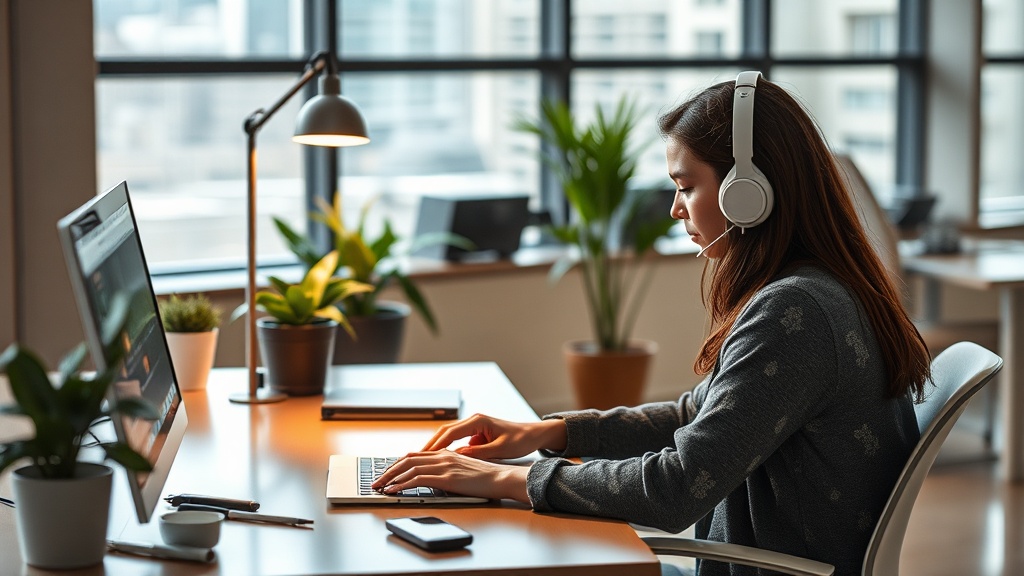
The initial rush to remote work brought with it a sense of liberation for many, offering unprecedented flexibility and a reprieve from grueling commutes. Data from a 2023 Gallup poll revealed that 50% of full-time employees in the U.S. work remotely or in a hybrid arrangement, with 85% of those remote-capable employees preferring a hybrid or entirely remote schedule. This preference is often rooted in perceived mental health benefits. For instance, studies by Stanford University''s Institute for Economic Policy Research have highlighted how remote work can reduce stress related to daily commutes, offering more time for personal activities and family, which are crucial buffers against burnout.
However, the psychological landscape isn't uniformly rosy. The blurring of lines between work and home, often lauded as a perk, has become a significant stressor for others. Without the physical separation of an office, many remote workers find themselves "always on," struggling to mentally disengage. A 2022 survey by Buffer found that 27% of remote workers cited "difficulty unplugging" as their biggest struggle, a significant increase from pre-pandemic figures. This constant connectivity can lead to chronic stress, sleep disturbances, and an elevated risk of burnout. Dr. Mary C. Watzin, a clinical psychologist specializing in occupational health, notes, "While the commute disappears, the 'mental commute' to switch off can become far more taxing. The absence of natural transition points, like leaving an office building, means individuals must actively construct these boundaries, which can be mentally exhausting."
For those in traditional office environments, the psychological pressures have also evolved. Post-pandemic, offices are often seen as hubs for collaboration and social connection, but they can also be sources of social anxiety or performance pressure, especially for individuals who thrived in the quieter, more controlled setting of their home office. The open-plan office, once lauded for fostering collaboration, is now recognized by researchers like Dr. Ethan Bernstein from Harvard Business School for its potential to decrease face-to-face interaction and increase feelings of surveillance, leading to reduced concentration and increased stress levels for some. The shift back to the office can trigger a sense of loss for the autonomy gained during remote work, impacting job satisfaction and, consequently, mental well-being.
Cognitive Performance and Focus: The Distraction Dilemma
The debate over which environment fosters greater cognitive performance and focus is complex, with both remote and office settings presenting unique advantages and disadvantages. For many, the home office offers an unparalleled opportunity for deep work. Free from the constant interruptions of an open-plan office – impromptu meetings, colleagues' conversations, phone calls – remote workers often report higher levels of concentration for tasks requiring sustained attention. A 2020 study published in the Journal of Organizational Behavior indicated that remote workers often report fewer interruptions and higher perceived productivity during individual, focused tasks. This aligns with neuroscientific understanding that context-switching, even for brief moments, can carry a significant "cost" in terms of cognitive load and time lost regaining focus.

However, this advantage isn't universal. The home environment itself can be a minefield of distractions, particularly for those with young children, shared living spaces, or inadequate home office setups. The blurred lines of personal and professional life can lead to frequent interruptions from family members, household chores, or even the allure of non-work-related activities. Moreover, the lack of informal knowledge sharing and serendipitous encounters in an office can hinder creative problem-solving and innovation, which often thrive on spontaneous interaction and diverse perspectives. Research by MIT's Human Dynamics Laboratory, for instance, has repeatedly highlighted the critical role of informal communication in fostering innovation and team cohesion.
Conversely, the office environment, while often seen as a hub for collaboration, can be a major source of cognitive overload and distraction. The constant noise, visual stimuli, and potential for interruptions can significantly impair focus and deep work for many individuals. A study by the University of Sydney found that employee satisfaction with sound privacy in open-plan offices was as low as 11%, directly impacting concentration. Yet, for tasks requiring brainstorming, rapid feedback, or complex problem-solving that benefits from immediate, non-verbal cues, the in-person office environment often proves superior. The ability to quickly iterate, read body language, and engage in dynamic group discussions can accelerate decision-making and enhance collective intelligence. Dr. Christina Maslach, a leading expert on burnout, emphasizes that "the social facilitation aspect of working alongside others, even if only for mutual support rather than direct collaboration, can be a powerful motivator and buffer against isolation-induced cognitive decline."
Rebuilding Social Connections and Team Cohesion
One of the most significant psychological impacts of the remote work revolution has been on social connection and team cohesion. Humans are inherently social creatures, and the workplace has traditionally served as a primary site for forming friendships, establishing professional networks, and fostering a sense of belonging. The abrupt shift to remote work during the pandemic led to a dramatic decrease in casual social interactions, with a 2021 Microsoft Work Trend Index reporting that 40% of employees felt less connected to their colleagues. This reduction in social capital can have profound psychological consequences, including increased feelings of isolation, loneliness, and decreased job satisfaction. Loneliness, in particular, has been identified by the U.S. Surgeon General as an epidemic, with workplace isolation contributing significantly.
In office environments, the "water cooler moments," shared lunches, and impromptu hallway conversations are crucial for building rapport, trust, and a shared sense of purpose. These informal interactions facilitate knowledge transfer, strengthen organizational culture, and provide vital emotional support. For extroverts, in particular, the office can be an energizing environment that fuels their social needs. However, the return to office isn't always a panacea for social connection. If the office is sparsely populated due to hybrid schedules, or if the "return" is mandated without a clear purpose for in-person collaboration, it can exacerbate feelings of isolation, making the office feel emptier than working from home.
To combat the erosion of social ties in a hybrid world, organizations are increasingly adopting strategies to intentionally foster connection. This includes dedicated "connection days" for in-person team building, virtual social events, and implementing communication technologies that encourage informal chat. Dr. Amy Edmondson, a Harvard Business School professor known for her work on psychological safety, stresses that "trust and psychological safety are built through consistent, positive interpersonal interactions. In a remote or hybrid setting, these interactions must be deliberately designed, not left to chance." Companies like Shopify have invested heavily in virtual team-building events and robust internal communication platforms to ensure employees feel connected, regardless of their physical location. The psychological imperative is to recognize that social connection isn't merely a nice-to-have, but a fundamental human need that directly impacts well-being, engagement, and productivity in any work setting.
Free Weekly Newsletter
Enjoying this guide?
Get the best articles like this one delivered to your inbox every week. No spam.

Navigating the Future of Work: Empowering Employees and Organizations
The ongoing evolution of work necessitates a proactive approach to psychological well-being. For employees, understanding your personal working style and needs is paramount. Are you an introvert who thrives on deep, uninterrupted work, or an extrovert who gains energy from social interaction? Recognizing these preferences can help you advocate for the work arrangement that best supports your mental health and productivity. If working remotely, establishing strict boundaries between work and personal life – such as a dedicated workspace, clear "start" and "end" times, and engaging in non-work activities – is crucial. For those in the office, actively seeking out opportunities for connection, utilizing collaborative spaces effectively, and managing distractions through noise-canceling headphones or focused work blocks can make a significant difference. Don't hesitate to communicate your needs to your manager or HR; many organizations are genuinely seeking feedback to optimize their work models.
For organizations, the "future of work" isn't about choosing one model over the other, but about intelligently integrating the best of both worlds while prioritizing employee well-being. This means moving beyond blanket mandates and adopting a more nuanced, empathetic approach. Companies should invest in training for managers to lead hybrid teams effectively, focusing on outcomes rather than just presence. Implementing regular pulse surveys to gauge employee sentiment regarding work arrangements, mental health, and connection levels can provide invaluable data. Providing resources for mental health support, such as Employee Assistance Programs (EAPs) and resilience training, is no longer optional. Furthermore, designing office spaces that genuinely facilitate collaboration and connection – moving away from sterile cubicle farms to dynamic, multi-purpose hubs – can make the return to office more appealing and purposeful. Companies like Dell and Salesforce, pioneers in flexible work, consistently emphasize employee choice and a culture of trust as foundational to their success. The key is to empower employees with agency over where and how they work, within strategic parameters that support organizational goals and foster a thriving, connected workforce.
Conclusion: Adapting to a Psychologically Informed Workplace
The 'future of work' is not a fixed destination but a continuous journey of adaptation, driven by technological innovation and, crucially, by our evolving understanding of human psychology. The psychological impacts of remote versus office environments are profound and multifaceted, touching on mental health, cognitive performance, and our fundamental need for social connection. There is no one-size-fits-all solution; what constitutes an optimal work environment depends heavily on individual preferences, job roles, and organizational culture.
Moving forward, success in this new era will hinge on organizations and individuals alike adopting a psychologically informed approach. This means prioritizing well-being, fostering intentional connection, and empowering employees with flexibility and autonomy. By actively listening, experimenting with hybrid models, and investing in resources that support mental health and effective collaboration, we can navigate this complex landscape not just to survive, but to truly thrive in the evolving world of work. The call to action is clear: let us build workplaces that are not only productive but also profoundly human.
Frequently Asked Questions
The Mental Health Tug-of-War: Flexibility vs. Boundaries
The initial rush to remote work brought with it a sense of liberation for many, offering unprecedented flexibility and a reprieve from grueling commutes. Data from a 2023 Gallup poll revealed that 50% of full-time employees in the U.S. work remotely or in a hybrid arrangement, with 85% of those remote-capable employees preferring a hybrid or entirely remote schedule. This preference is often rooted in perceived mental health benefits. For instance, studies by Stanford University''s Institute for Economic Policy Research have highlighted how remote work can reduce stress related to daily commutes, offering more time for personal activities and family, which are crucial buffers against burnout.
However, the psychological landscape isn't uniformly rosy. The blurring of lines between work and home, often lauded as a perk, has become a significant stressor for others. Without the physical separation of an office, many remote workers find themselves "always on," struggling to mentally disengage. A 2022 survey by Buffer found that 27% of remote workers cited "difficulty unplugging" as their biggest struggle, a significant increase from pre-pandemic figures. This constant connectivity can lead to chronic stress, sleep disturbances, and an elevated risk of burnout. Dr. Mary C. Watzin, a clinical psychologist specializing in occupational health, notes, "While the commute disappears, the 'mental commute' to switch off can become far more taxing. The absence of natural transition points, like leaving an office building, means individuals must actively construct these boundaries, which can be mentally exhausting."
For those in traditional office environments, the psychological pressures have also evolved. Post-pandemic, offices are often seen as hubs for collaboration and social connection, but they can also be sources of social anxiety or performance pressure, especially for individuals who thrived in the quieter, more controlled setting of their home office. The open-plan office, once lauded for fostering collaboration, is now recognized by researchers like Dr. Ethan Bernstein from Harvard Business School for its potential to decrease face-to-face interaction and increase feelings of surveillance, leading to reduced concentration and increased stress levels for some. The shift back to the office can trigger a sense of loss for the autonomy gained during remote work, impacting job satisfaction and, consequently, mental well-being.
Cognitive Performance and Focus: The Distraction Dilemma
The debate over which environment fosters greater cognitive performance and focus is complex, with both remote and office settings presenting unique advantages and disadvantages. For many, the home office offers an unparalleled opportunity for deep work. Free from the constant interruptions of an open-plan office – impromptu meetings, colleagues' conversations, phone calls – remote workers often report higher levels of concentration for tasks requiring sustained attention. A 2020 study published in the Journal of Organizational Behavior indicated that remote workers often report fewer interruptions and higher perceived productivity during individual, focused tasks. This aligns with neuroscientific understanding that context-switching, even for brief moments, can carry a significant "cost" in terms of cognitive load and time lost regaining focus.
However, this advantage isn't universal. The home environment itself can be a minefield of distractions, particularly for those with young children, shared living spaces, or inadequate home office setups. The blurred lines of personal and professional life can lead to frequent interruptions from family members, household chores, or even the allure of non-work-related activities. Moreover, the lack of informal knowledge sharing and serendipitous encounters in an office can hinder creative problem-solving and innovation, which often thrive on spontaneous interaction and diverse perspectives. Research by MIT's Human Dynamics Laboratory, for instance, has repeatedly highlighted the critical role of informal communication in fostering innovation and team cohesion.
Conversely, the office environment, while often seen as a hub for collaboration, can be a major source of cognitive overload and distraction. The constant noise, visual stimuli, and potential for interruptions can significantly impair focus and deep work for many individuals. A study by the University of Sydney found that employee satisfaction with sound privacy in open-plan offices was as low as 11%, directly impacting concentration. Yet, for tasks requiring brainstorming, rapid feedback, or complex problem-solving that benefits from immediate, non-verbal cues, the in-person office environment often proves superior. The ability to quickly iterate, read body language, and engage in dynamic group discussions can accelerate decision-making and enhance collective intelligence. Dr. Christina Maslach, a leading expert on burnout, emphasizes that "the social facilitation aspect of working alongside others, even if only for mutual support rather than direct collaboration, can be a powerful motivator and buffer against isolation-induced cognitive decline."
Rebuilding Social Connections and Team Cohesion
One of the most significant psychological impacts of the remote work revolution has been on social connection and team cohesion. Humans are inherently social creatures, and the workplace has traditionally served as a primary site for forming friendships, establishing professional networks, and fostering a sense of belonging. The abrupt shift to remote work during the pandemic led to a dramatic decrease in casual social interactions, with a 2021 Microsoft Work Trend Index reporting that 40% of employees felt less connected to their colleagues. This reduction in social capital can have profound psychological consequences, including increased feelings of isolation, loneliness, and decreased job satisfaction. Loneliness, in particular, has been identified by the U.S. Surgeon General as an epidemic, with workplace isolation contributing significantly.
In office environments, the "water cooler moments," shared lunches, and impromptu hallway conversations are crucial for building rapport, trust, and a shared sense of purpose. These informal interactions facilitate knowledge transfer, strengthen organizational culture, and provide vital emotional support. For extroverts, in particular, the office can be an energizing environment that fuels their social needs. However, the return to office isn't always a panacea for social connection. If the office is sparsely populated due to hybrid schedules, or if the "return" is mandated without a clear purpose for in-person collaboration, it can exacerbate feelings of isolation, making the office feel emptier than working from home.
To combat the erosion of social ties in a hybrid world, organizations are increasingly adopting strategies to intentionally foster connection. This includes dedicated "connection days" for in-person team building, virtual social events, and implementing communication technologies that encourage informal chat. Dr. Amy Edmondson, a Harvard Business School professor known for her work on psychological safety, stresses that "trust and psychological safety are built through consistent, positive interpersonal interactions. In a remote or hybrid setting, these interactions must be deliberately designed, not left to chance." Companies like Shopify have invested heavily in virtual team-building events and robust internal communication platforms to ensure employees feel connected, regardless of their physical location. The psychological imperative is to recognize that social connection isn't merely a nice-to-have, but a fundamental human need that directly impacts well-being, engagement, and productivity in any work setting.
Navigating the Future of Work: Empowering Employees and Organizations
The ongoing evolution of work necessitates a proactive approach to psychological well-being. For employees, understanding your personal working style and needs is paramount. Are you an introvert who thrives on deep, uninterrupted work, or an extrovert who gains energy from social interaction? Recognizing these preferences can help you advocate for the work arrangement that best supports your mental health and productivity. If working remotely, establishing strict boundaries between work and personal life – such as a dedicated workspace, clear "start" and "end" times, and engaging in non-work activities – is crucial. For those in the office, actively seeking out opportunities for connection, utilizing collaborative spaces effectively, and managing distractions through noise-canceling headphones or focused work blocks can make a significant difference. Don't hesitate to communicate your needs to your manager or HR; many organizations are genuinely seeking feedback to optimize their work models.
For organizations, the "future of work" isn't about choosing one model over the other, but about intelligently integrating the best of both worlds while prioritizing employee well-being. This means moving beyond blanket mandates and adopting a more nuanced, empathetic approach. Companies should invest in training for managers to lead hybrid teams effectively, focusing on outcomes rather than just presence. Implementing regular pulse surveys to gauge employee sentiment regarding work arrangements, mental health, and connection levels can provide invaluable data. Providing resources for mental health support, such as Employee Assistance Programs (EAPs) and resilience training, is no longer optional. Furthermore, designing office spaces that genuinely facilitate collaboration and connection – moving away from sterile cubicle farms to dynamic, multi-purpose hubs – can make the return to office more appealing and purposeful. Companies like Dell and Salesforce, pioneers in flexible work, consistently emphasize employee choice and a culture of trust as foundational to their success. The key is to empower employees with agency over where and how they work, within strategic parameters that support organizational goals and foster a thriving, connected workforce.
Conclusion: Adapting to a Psychologically Informed Workplace
The 'future of work' is not a fixed destination but a continuous journey of adaptation, driven by technological innovation and, crucially, by our evolving understanding of human psychology. The psychological impacts of remote versus office environments are profound and multifaceted, touching on mental health, cognitive performance, and our fundamental need for social connection. There is no one-size-fits-all solution; what constitutes an optimal work environment depends heavily on individual preferences, job roles, and organizational culture.
Moving forward, success in this new era will hinge on organizations and individuals alike adopting a psychologically informed approach. This means prioritizing well-being, fostering intentional connection, and empowering employees with flexibility and autonomy. By actively listening, experimenting with hybrid models, and investing in resources that support mental health and effective collaboration, we can navigate this complex landscape not just to survive, but to truly thrive in the evolving world of work. The call to action is clear: let us build workplaces that are not only productive but also profoundly human.
About Zeebrain Editorial
Zeebrain publishes independent analysis of markets, investing, personal finance, and business. We disclose affiliate relationships, never accept payment for coverage, and fact-check all claims against primary sources. Read our editorial policy →
More from Psychology



Related Guides
Keep exploring this topic
Explore More Categories
Keep browsing by topic and build depth around the subjects you care about most.