The Napoleonic Wars: How a Nobody Conquered Europe
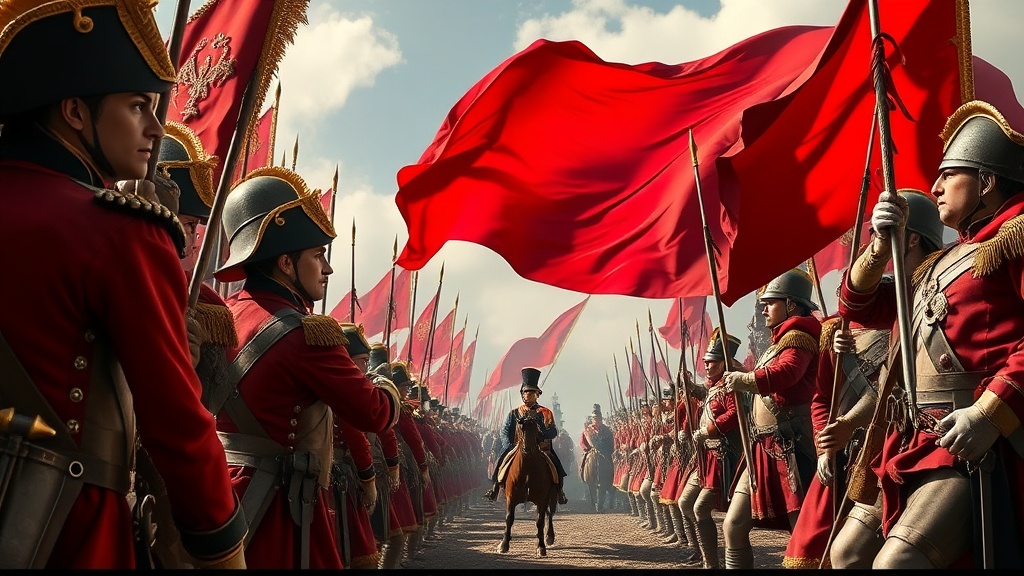
Quick Summary
How did a poor Corsican outsider become master of Europe? Discover the Napoleonic Wars origins, Napoleon's genius, and the forces that reshaped a continent.
In This Article
The Unlikely Beginning of the World's Most Dangerous Ambition
History has a habit of producing its greatest disruptors from the most improbable corners of the earth. Alexander the Great had Macedonia. Julius Caesar had Rome. But Napoleon Bonaparte had Corsica — a small, impoverished island that wasn't even officially French until the year before he was born. If you were designing the ideal backstory for a world conqueror, you would not start here. And yet, here is precisely where the Napoleonic Wars were quietly seeded, long before a single cannon was fired.
In 1768, the Republic of Genoa — strapped for resources and patience — sold the island of Corsica to France as casually as one might offload unwanted furniture. A year later, on August 15, 1769, Napoleon Buonaparte entered a world that was, technically and barely, French. Many Corsicans resented their new overlords fiercely. Napoleon, shaped by that resentment, would grow up with a complicated, combustible relationship with the nation he would one day rule absolutely.
This is the story of how one man's volcanic ambition — forged in poverty, sharpened by humiliation, and unleashed by revolution — ignited the Napoleonic Wars and redrew the map of the Western world.
A Chip on His Shoulder the Size of the Alps
When Napoleon was sent to military school in mainland France, he arrived as an outsider in every measurable sense. His Corsican accent marked him as foreign. His family's minor nobility afforded him status just high enough to attend, but not high enough to be respected. He was mocked, isolated, and perpetually underestimated — a combination that, in lesser men, breeds bitterness. In Napoleon, it bred ferocity.
He threw himself into mathematics, geography, and military history with the singular intensity of someone who has something to prove. He read voraciously about the great conquerors of antiquity — men who had bent the world to their will. He wasn't simply studying; he was apprenticing at the altar of conquest. By the time he graduated at sixteen and received his commission as a Second Lieutenant in an artillery regiment, the intellectual foundation of one of history's most formidable military minds was already in place.
But France in the 1780s was a society sealed shut. Promotions were the inheritance of noble blood, not military talent. A brilliant outsider like Napoleon could refine his gifts for a lifetime and still be outranked by some aristocratic fool who had never once faced a battlefield. It was a system designed to keep men like Napoleon exactly where the ruling class wanted them — below.
He wouldn't stay there long.
Revolution as Personal Liberation: Napoleon and the Fall of the Old Order
When the French Revolution erupted in 1789, it tore down the very walls that had imprisoned Napoleon's ambitions. The Bastille fell. The old social hierarchy, which had choked meritocracy for centuries, was suddenly declared the enemy. For the masses, the revolution meant liberty, equality, and fraternity. For Napoleon, it meant something more precisely personal — an open door.
He aligned himself with the revolutionary cause, not out of any deep ideological passion for democratic ideals, but because the revolution offered what he craved most: a system where talent could be rewarded. He moved quickly. He suppressed a British-backed counter-revolution in Toulon and was promoted. He crushed a royalist uprising in Paris and was promoted again. Each act of military brilliance accelerated his rise in a way the old France never would have permitted.
This is one of history's great ironies. The French Revolution, which claimed to liberate the common people from tyranny, ultimately served as the launching pad for one of the most powerful one-man rulers Europe had ever seen. The revolution didn't just make Napoleon possible — it made him inevitable.
The Italian Campaign: Where Napoleon Became Napoleon
In 1796, the French Directory handed Napoleon command of the Army of Italy. It was, by most estimations, an afterthought assignment — a southern diversion to complement the real campaigns being waged by two larger armies in the north. The army he received was underpaid, demoralized, and poorly equipped. The plan assigned to him was modest. Napoleon's response to modest plans was to ignore them entirely.
What followed over the next year was a masterclass in military improvisation and psychological warfare that military historians still study today. Napoleon galvanized his troops with speeches that bordered on theatre. He led from the front — aiming cannons himself at the Battle of Lodi, standing in the mud alongside the men who would die for him — and in doing so, earned something that cannot be manufactured by rank alone: genuine loyalty.
His tactical signature became clear almost immediately. Faced with enemies who outnumbered him, he refused to engage them as a combined force. Instead, he split opposing armies — using speed, deception, and terrain — and destroyed them separately. He knocked Sardinia out of the war. He sent the Austrians running. He then turned toward Vienna itself, forcing an exhausted Austria to sue for peace. He was twenty-eight years old.
The Italian campaign didn't just demonstrate Napoleon's genius. It announced the strategic doctrine that would define the Napoleonic Wars for the next two decades: strike fast, divide, and overwhelm before the enemy can recover. Europe would spend years learning, catastrophically and repeatedly, that it had no adequate answer to it.
The Road to Absolute Power: Coup, Consulate, and Control
Napoleon's return from Egypt in 1799 is one of history's more audacious PR operations. His Egyptian expedition had, by any objective measure, gone badly. The British Admiral Nelson had destroyed his fleet at the Battle of the Nile. An Anglo-Ottoman force had stopped him at Acre. He had abandoned his army and slipped back to France alone. A lesser man would have returned in disgrace.
Napoleon returned to a hero's welcome.
He had cultivated his public image with the same strategic intelligence he applied to warfare — commissioning flattering paintings, publishing his own newspapers, and carefully controlling the narrative of his campaigns. Defeat, in the Napoleonic press, had a way of reading like victory. It was proto-propaganda of a remarkably modern sophistication, and it worked.
With his popularity intact and the French Directory deeply unpopular, Napoleon was approached by the conspirators of what would become the Coup of 18 Brumaire in November 1799. The plan was elegant in its cynicism: manufacture a fake Jacobin threat, lure the government into an isolated palace, and surround them with soldiers until they agreed to dissolve themselves. It was, in practice, messier and more chaotic than the plan suggested. But Napoleon's brother Lucien, president of the lower legislative house, held the operation together long enough for a new constitution to be drafted.
The result was a government of three Consuls. Napoleon, never a man for shared power, rewrote the constitutional arrangements until there was, functionally, one Consul — himself. By thirty, he was the dictator of France. He had not been born into power. He had not inherited it or married into it. He had seized it through a combination of military brilliance, political cunning, and an absolutely unrelenting will.
The Napoleonic Wars Take Shape: France Against the Continent
The wars that would bear Napoleon's name did not begin with a single declaration. They grew, organically and almost inevitably, from the collision between a revolutionary France determined to export its ideas and a conservative European order terrified of what those ideas might inspire at home. The War of the First Coalition and the War of the Second Coalition were, in many ways, the opening movements of a much longer symphony.
What made the Napoleonic Wars distinctive was not merely the scale of the conflict — though the scale was extraordinary — but the speed at which Napoleon could concentrate force, move armies, and exploit the hesitation of his enemies. At Marengo in 1800, his forces were initially routed by the Austrians, who celebrated prematurely. Napoleon regrouped, reinforced, and returned within hours to deliver a crushing counter-blow that reversed the entire engagement. It was a pattern his enemies would encounter again and again: the assumption of victory, followed by catastrophe.
By 1802, with Britain signing the Treaty of Amiens and Europe briefly exhaling, France had emerged from years of conflict in a position of extraordinary continental dominance. Sister republics had been established across Italy, Switzerland, and the Netherlands. Revolutionary ideals — or at least the political structures Napoleon preferred — had been exported across borders at swordpoint.
Free Weekly Newsletter
Enjoying this guide?
Get the best articles like this one delivered to your inbox every week. No spam.
Europe was at peace. But as Napoleon himself understood, it was the peace of a held breath.
What Made Napoleon Truly Dangerous — And What History Owes Him
It is tempting, looking back at the Napoleonic Wars, to reduce Napoleon to a military prodigy and leave it there. But the full picture is more complex, and more instructive. Napoleon was simultaneously a brilliant general, an able administrator, a skilled propagandist, and a ruthless political operator. He rewrote legal codes, reorganized governments in conquered territories, oversaw the drafting of constitutions, and managed the economic affairs of France with considerable attention. The Napoleonic Code, which he introduced in 1804, became one of the most influential legal documents in modern history, forming the basis of civil law systems across Europe, Latin America, and beyond.
He was also deeply contradictory. A man who rose on the promise of revolution and meritocracy eventually crowned himself Emperor. A general who inspired fierce personal loyalty in his men also abandoned entire armies when it suited him. A lover of grand gestures who wept at opera and wrote breathless love letters to Josephine also conducted calculated, cold-blooded political marriages when affection no longer served his ambitions.
The Napoleonic Wars were, in the end, the product of a singular personality colliding with a world that wasn't built to contain him. Europe would spend the better part of fifteen years discovering the full implications of that collision — and the reverberations are still felt in the political architecture of the modern world.
Napoleon didn't just conquer territory. He broke the assumptions upon which the old European order rested and forced an entire civilization to reckon with questions of nationalism, sovereignty, and the nature of legitimate power that are still very much alive today.
The wars were named for him. So was an era. That is a very particular kind of immortality.
Frequently Asked Questions
Why did the Napoleonic Wars start?
The Napoleonic Wars grew out of the broader conflict between revolutionary France and the conservative monarchies of Europe that began with the French Revolution in 1789. European powers feared the spread of revolutionary ideas to their own populations. As France grew more aggressive in exporting its revolutionary principles — and as Napoleon consolidated personal power — successive coalitions formed to check French expansion. The wars were both ideological and geopolitical, driven by fear, ambition, and a fundamental clash over what kind of order should govern Europe.
Was Napoleon really short?
No — this is one of history's most persistent myths. Napoleon stood approximately 5 feet 6 or 7 inches tall (around 1.68–1.70 metres), which was average or even slightly above average for a French man of his era. The confusion arose partly from a misunderstanding of the difference between French and English measurement units, and partly from British wartime propaganda that deliberately caricatured him as a small, petty tyrant. The nickname 'le petit caporal' — the little corporal — was an affectionate term used by his troops, referring to his camaraderie with common soldiers, not his physical stature.
What was Napoleon's greatest military achievement?
Most military historians point to the Austerlitz campaign of 1805 as Napoleon's tactical masterpiece, though his Italian campaign of 1796–97 deserves equal recognition for what it revealed about his methods. In Italy, outnumbered and under-resourced, he defeated multiple opposing forces through speed, deception, and the ability to concentrate force at decisive points. At twenty-eight, he had knocked Austria — one of Europe's great powers — out of the war entirely. It was arguably the campaign that proved his genius was not circumstantial.
How did Napoleon come to power in France?
Napoleon came to power through the Coup of 18 Brumaire in November 1799, a carefully orchestrated conspiracy that overthrew the French Directory — the five-man executive government that had grown deeply unpopular. Collaborating with influential politicians, Napoleon used his military reputation and public popularity to intimidate the legislative councils into dissolving themselves and creating a new constitution. This established the Consulate, a government nominally led by three Consuls, though Napoleon — as First Consul — quickly centralised all real authority in his own hands. By 1802 he was Consul for Life, and by 1804, Emperor of the French.
Frequently Asked Questions
The Unlikely Beginning of the World's Most Dangerous Ambition
History has a habit of producing its greatest disruptors from the most improbable corners of the earth. Alexander the Great had Macedonia. Julius Caesar had Rome. But Napoleon Bonaparte had Corsica — a small, impoverished island that wasn't even officially French until the year before he was born. If you were designing the ideal backstory for a world conqueror, you would not start here. And yet, here is precisely where the Napoleonic Wars were quietly seeded, long before a single cannon was fired.
In 1768, the Republic of Genoa — strapped for resources and patience — sold the island of Corsica to France as casually as one might offload unwanted furniture. A year later, on August 15, 1769, Napoleon Buonaparte entered a world that was, technically and barely, French. Many Corsicans resented their new overlords fiercely. Napoleon, shaped by that resentment, would grow up with a complicated, combustible relationship with the nation he would one day rule absolutely.
This is the story of how one man's volcanic ambition — forged in poverty, sharpened by humiliation, and unleashed by revolution — ignited the Napoleonic Wars and redrew the map of the Western world.
A Chip on His Shoulder the Size of the Alps
When Napoleon was sent to military school in mainland France, he arrived as an outsider in every measurable sense. His Corsican accent marked him as foreign. His family's minor nobility afforded him status just high enough to attend, but not high enough to be respected. He was mocked, isolated, and perpetually underestimated — a combination that, in lesser men, breeds bitterness. In Napoleon, it bred ferocity.
He threw himself into mathematics, geography, and military history with the singular intensity of someone who has something to prove. He read voraciously about the great conquerors of antiquity — men who had bent the world to their will. He wasn't simply studying; he was apprenticing at the altar of conquest. By the time he graduated at sixteen and received his commission as a Second Lieutenant in an artillery regiment, the intellectual foundation of one of history's most formidable military minds was already in place.
But France in the 1780s was a society sealed shut. Promotions were the inheritance of noble blood, not military talent. A brilliant outsider like Napoleon could refine his gifts for a lifetime and still be outranked by some aristocratic fool who had never once faced a battlefield. It was a system designed to keep men like Napoleon exactly where the ruling class wanted them — below.
He wouldn't stay there long.
Revolution as Personal Liberation: Napoleon and the Fall of the Old Order
When the French Revolution erupted in 1789, it tore down the very walls that had imprisoned Napoleon's ambitions. The Bastille fell. The old social hierarchy, which had choked meritocracy for centuries, was suddenly declared the enemy. For the masses, the revolution meant liberty, equality, and fraternity. For Napoleon, it meant something more precisely personal — an open door.
He aligned himself with the revolutionary cause, not out of any deep ideological passion for democratic ideals, but because the revolution offered what he craved most: a system where talent could be rewarded. He moved quickly. He suppressed a British-backed counter-revolution in Toulon and was promoted. He crushed a royalist uprising in Paris and was promoted again. Each act of military brilliance accelerated his rise in a way the old France never would have permitted.
This is one of history's great ironies. The French Revolution, which claimed to liberate the common people from tyranny, ultimately served as the launching pad for one of the most powerful one-man rulers Europe had ever seen. The revolution didn't just make Napoleon possible — it made him inevitable.
The Italian Campaign: Where Napoleon Became Napoleon
In 1796, the French Directory handed Napoleon command of the Army of Italy. It was, by most estimations, an afterthought assignment — a southern diversion to complement the real campaigns being waged by two larger armies in the north. The army he received was underpaid, demoralized, and poorly equipped. The plan assigned to him was modest. Napoleon's response to modest plans was to ignore them entirely.
What followed over the next year was a masterclass in military improvisation and psychological warfare that military historians still study today. Napoleon galvanized his troops with speeches that bordered on theatre. He led from the front — aiming cannons himself at the Battle of Lodi, standing in the mud alongside the men who would die for him — and in doing so, earned something that cannot be manufactured by rank alone: genuine loyalty.
His tactical signature became clear almost immediately. Faced with enemies who outnumbered him, he refused to engage them as a combined force. Instead, he split opposing armies — using speed, deception, and terrain — and destroyed them separately. He knocked Sardinia out of the war. He sent the Austrians running. He then turned toward Vienna itself, forcing an exhausted Austria to sue for peace. He was twenty-eight years old.
The Italian campaign didn't just demonstrate Napoleon's genius. It announced the strategic doctrine that would define the Napoleonic Wars for the next two decades: strike fast, divide, and overwhelm before the enemy can recover. Europe would spend years learning, catastrophically and repeatedly, that it had no adequate answer to it.
The Road to Absolute Power: Coup, Consulate, and Control
Napoleon's return from Egypt in 1799 is one of history's more audacious PR operations. His Egyptian expedition had, by any objective measure, gone badly. The British Admiral Nelson had destroyed his fleet at the Battle of the Nile. An Anglo-Ottoman force had stopped him at Acre. He had abandoned his army and slipped back to France alone. A lesser man would have returned in disgrace.
Napoleon returned to a hero's welcome.
He had cultivated his public image with the same strategic intelligence he applied to warfare — commissioning flattering paintings, publishing his own newspapers, and carefully controlling the narrative of his campaigns. Defeat, in the Napoleonic press, had a way of reading like victory. It was proto-propaganda of a remarkably modern sophistication, and it worked.
With his popularity intact and the French Directory deeply unpopular, Napoleon was approached by the conspirators of what would become the Coup of 18 Brumaire in November 1799. The plan was elegant in its cynicism: manufacture a fake Jacobin threat, lure the government into an isolated palace, and surround them with soldiers until they agreed to dissolve themselves. It was, in practice, messier and more chaotic than the plan suggested. But Napoleon's brother Lucien, president of the lower legislative house, held the operation together long enough for a new constitution to be drafted.
The result was a government of three Consuls. Napoleon, never a man for shared power, rewrote the constitutional arrangements until there was, functionally, one Consul — himself. By thirty, he was the dictator of France. He had not been born into power. He had not inherited it or married into it. He had seized it through a combination of military brilliance, political cunning, and an absolutely unrelenting will.
The Napoleonic Wars Take Shape: France Against the Continent
The wars that would bear Napoleon's name did not begin with a single declaration. They grew, organically and almost inevitably, from the collision between a revolutionary France determined to export its ideas and a conservative European order terrified of what those ideas might inspire at home. The War of the First Coalition and the War of the Second Coalition were, in many ways, the opening movements of a much longer symphony.
What made the Napoleonic Wars distinctive was not merely the scale of the conflict — though the scale was extraordinary — but the speed at which Napoleon could concentrate force, move armies, and exploit the hesitation of his enemies. At Marengo in 1800, his forces were initially routed by the Austrians, who celebrated prematurely. Napoleon regrouped, reinforced, and returned within hours to deliver a crushing counter-blow that reversed the entire engagement. It was a pattern his enemies would encounter again and again: the assumption of victory, followed by catastrophe.
By 1802, with Britain signing the Treaty of Amiens and Europe briefly exhaling, France had emerged from years of conflict in a position of extraordinary continental dominance. Sister republics had been established across Italy, Switzerland, and the Netherlands. Revolutionary ideals — or at least the political structures Napoleon preferred — had been exported across borders at swordpoint.
Europe was at peace. But as Napoleon himself understood, it was the peace of a held breath.
What Made Napoleon Truly Dangerous — And What History Owes Him
It is tempting, looking back at the Napoleonic Wars, to reduce Napoleon to a military prodigy and leave it there. But the full picture is more complex, and more instructive. Napoleon was simultaneously a brilliant general, an able administrator, a skilled propagandist, and a ruthless political operator. He rewrote legal codes, reorganized governments in conquered territories, oversaw the drafting of constitutions, and managed the economic affairs of France with considerable attention. The Napoleonic Code, which he introduced in 1804, became one of the most influential legal documents in modern history, forming the basis of civil law systems across Europe, Latin America, and beyond.
He was also deeply contradictory. A man who rose on the promise of revolution and meritocracy eventually crowned himself Emperor. A general who inspired fierce personal loyalty in his men also abandoned entire armies when it suited him. A lover of grand gestures who wept at opera and wrote breathless love letters to Josephine also conducted calculated, cold-blooded political marriages when affection no longer served his ambitions.
The Napoleonic Wars were, in the end, the product of a singular personality colliding with a world that wasn't built to contain him. Europe would spend the better part of fifteen years discovering the full implications of that collision — and the reverberations are still felt in the political architecture of the modern world.
Napoleon didn't just conquer territory. He broke the assumptions upon which the old European order rested and forced an entire civilization to reckon with questions of nationalism, sovereignty, and the nature of legitimate power that are still very much alive today.
The wars were named for him. So was an era. That is a very particular kind of immortality.
Frequently Asked Questions
Why did the Napoleonic Wars start?
The Napoleonic Wars grew out of the broader conflict between revolutionary France and the conservative monarchies of Europe that began with the French Revolution in 1789. European powers feared the spread of revolutionary ideas to their own populations. As France grew more aggressive in exporting its revolutionary principles — and as Napoleon consolidated personal power — successive coalitions formed to check French expansion. The wars were both ideological and geopolitical, driven by fear, ambition, and a fundamental clash over what kind of order should govern Europe.
Was Napoleon really short?
No — this is one of history's most persistent myths. Napoleon stood approximately 5 feet 6 or 7 inches tall (around 1.68–1.70 metres), which was average or even slightly above average for a French man of his era. The confusion arose partly from a misunderstanding of the difference between French and English measurement units, and partly from British wartime propaganda that deliberately caricatured him as a small, petty tyrant. The nickname 'le petit caporal' — the little corporal — was an affectionate term used by his troops, referring to his camaraderie with common soldiers, not his physical stature.
What was Napoleon's greatest military achievement?
Most military historians point to the Austerlitz campaign of 1805 as Napoleon's tactical masterpiece, though his Italian campaign of 1796–97 deserves equal recognition for what it revealed about his methods. In Italy, outnumbered and under-resourced, he defeated multiple opposing forces through speed, deception, and the ability to concentrate force at decisive points. At twenty-eight, he had knocked Austria — one of Europe's great powers — out of the war entirely. It was arguably the campaign that proved his genius was not circumstantial.
How did Napoleon come to power in France?
Napoleon came to power through the Coup of 18 Brumaire in November 1799, a carefully orchestrated conspiracy that overthrew the French Directory — the five-man executive government that had grown deeply unpopular. Collaborating with influential politicians, Napoleon used his military reputation and public popularity to intimidate the legislative councils into dissolving themselves and creating a new constitution. This established the Consulate, a government nominally led by three Consuls, though Napoleon — as First Consul — quickly centralised all real authority in his own hands. By 1802 he was Consul for Life, and by 1804, Emperor of the French.
About Zeebrain Editorial
Zeebrain publishes independent analysis of markets, investing, personal finance, and business. We disclose affiliate relationships, never accept payment for coverage, and fact-check all claims against primary sources. Read our editorial policy →
How this article was produced: Zeebrain articles are created with AI assistance from primary sources (including cited videos and market data) and reviewed under our editorial standards before publication. Spot an error? Tell us and we will correct it.
More from History & Mysteries

Related Guides
Keep exploring this topic
Napoleon's Downfall: The Mistakes That Ended an Empire
History & Mysteries · Napoleonic Wars · Napoleon Bonaparte
Why Mao Won the Chinese Civil War: The Full Story
History & Mysteries
Why Only Germany Paid WWI Reparations: The Full Story
History & Mysteries
Why Taiwan Wasn't Returned to Japan After World War II
History & Mysteries
Explore More Categories
Keep browsing by topic and build depth around the subjects you care about most.