Napoleon's Downfall: The Mistakes That Ended an Empire
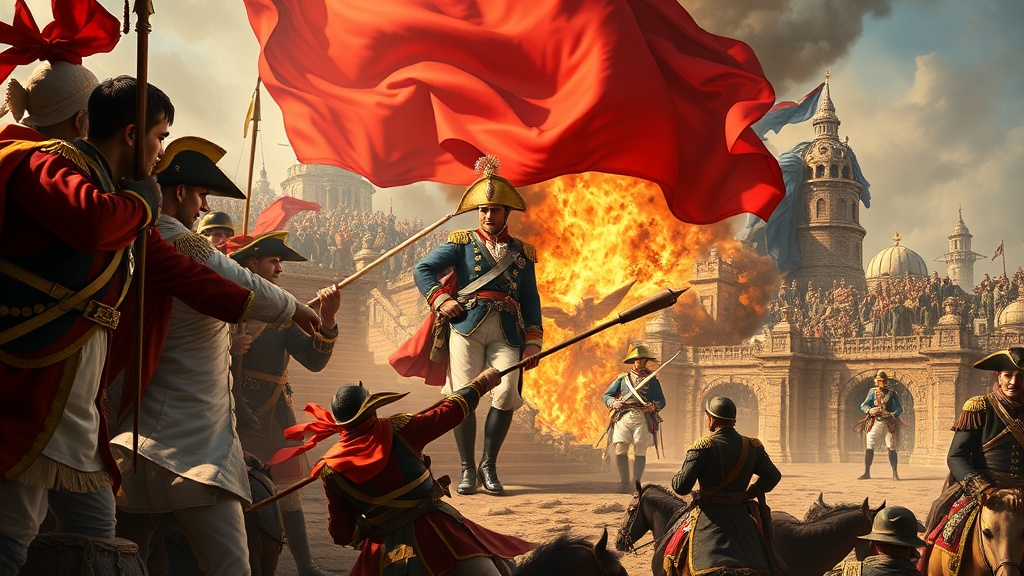
Quick Summary
From the Spanish quagmire to the catastrophic Russian invasion, discover the decisions that unravelled Napoleon's empire and changed European history forever.
In This Article
When Invincibility Becomes a Liability
There is a particular kind of tragedy reserved for the brilliant. Not the tragedy of failure through weakness, but the far more devastating collapse of a man undone by the very qualities that made him great. The Napoleonic Wars, in their later chapters, are precisely that story. By 1807, Napoleon Bonaparte stood astride Europe like no conqueror since Caesar. His enemies had been humbled, his maps redrawn, and his name had become something between a title and a force of nature. Yet within a decade, it would all be ash and exile. The question history keeps asking is not whether Napoleon fell, but why — and the answers are far more instructive than the victories that preceded them.
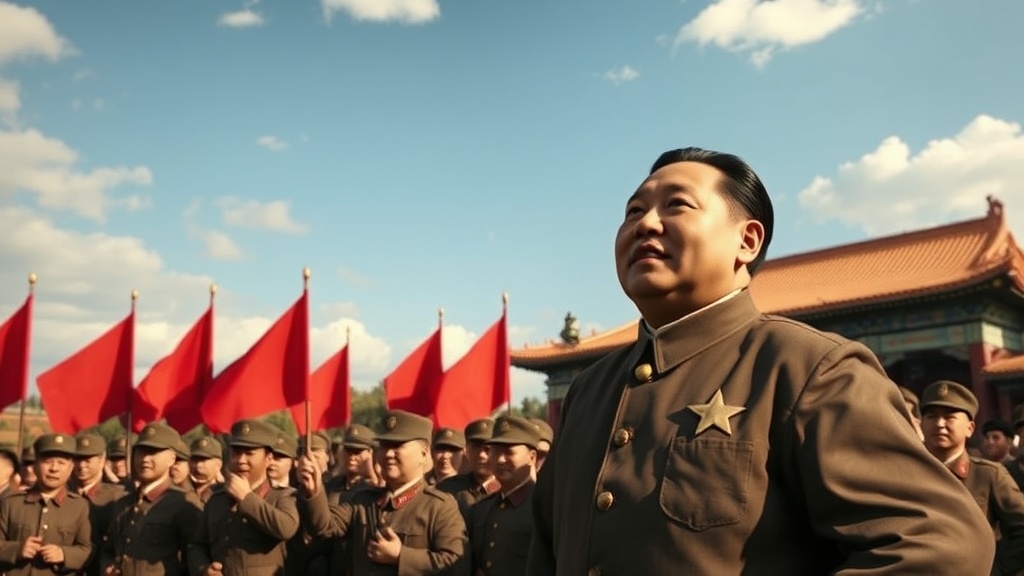
This is not a story of bad luck. It is a story of overreach, miscalculation, and the oldest trap in the book: confusing the absence of opposition with the presence of loyalty.
The Continental System: Napoleon's War by Other Means
With Britain sitting comfortably behind the English Channel, its Royal Navy choking French trade and financing every coalition that dared take the field against him, Napoleon faced a strategic puzzle with no clean military solution. His answer was the Continental System — a sweeping economic blockade announced in 1806, designed to strangle Britain commercially by shutting it out of every European port.
On paper, the logic was sound. Britain was a trading empire. Cut the trade, and you cut the empire. In practice, the system was one of Napoleon's most consequential blunders, not because the idea was wrong, but because enforcing it required a degree of compliance he simply could not command.
Britain, pragmatic and maritime to its core, simply redirected its trade to the Americas, its colonies, and the wider world. Its economy wobbled but did not break. Meanwhile, the Continental System inflicted genuine pain on the very nations Napoleon needed as allies. Merchants across Europe watched their livelihoods erode. Neutral powers found themselves squeezed between French demands and British naval pressure. Even Napoleon's closest allies began to quietly cheat — trading through back channels, looking the other way at smugglers, and resenting the emperor who had appointed himself arbiter of their economic lives.
The blockade didn't defeat Britain. What it did was plant seeds of resentment across the continent that would eventually bloom into open defiance. Portugal refused outright. Russia eventually abandoned it. And Napoleon's response to each act of non-compliance would drag him deeper into conflicts he could ill afford.
The Spanish Ulcer: Napoleon's Vietnam
If the Continental System was a slow bleed, Spain was a haemorrhage.
The Iberian Peninsula had long been a weak link in Napoleon's European order. Portugal's historic alliance with Britain made it an obvious target, and by 1807 French troops were already marching through Spain to reach it. But Napoleon's ambitions didn't stop at Lisbon. Watching the Spanish royal family — a spectacularly dysfunctional cast of characters involving a king obsessed with hunting, a queen conducting a very public affair, and a scheming prime minister — Napoleon convinced himself that Spain needed new management. His management.
He lured the Spanish royals to France under the pretext of mediation, stripped them of their throne, and installed his brother Joseph as king. He expected gratitude, or at least passive acceptance. What he got was one of the most ferocious popular insurgencies in European history.
The Spanish people, fiercely Catholic and fiercely proud, rose up not in organised formations that Napoleon's battlefield genius could destroy, but in scattered, relentless guerrilla warfare. The word guerrilla itself — meaning 'little war' in Spanish — entered the modern military lexicon during this conflict, and for good reason. Bands of armed civilians ambushed French columns in mountain passes, assassinated officers in their billets, and disappeared into landscapes that swallowed entire regiments. Atrocities multiplied on both sides, immortalised in Francisco Goya's harrowing prints, The Disasters of War.
Britain, sensing opportunity, landed an expeditionary force under a then-relatively unknown general named Arthur Wellesley — the future Duke of Wellington. For the first time in the Napoleonic Wars, British soldiers were defeating French ones on land with consistency. Wellington's methodical, defensive brilliance was almost the perfect antidote to Napoleonic aggression.
The Peninsular War, as it came to be known, would consume hundreds of thousands of French soldiers and vast material resources for six grinding years. Napoleon himself called Spain his 'ulcer'. It was a wound that never closed, and it bled his empire white.
The Austrian Marriage and the Illusion of Security
Amid the chaos in Spain and the strains of the blockade, Napoleon made a move that looked like diplomatic mastery but carried the quiet seeds of future trouble. After defeating Austria for the third time in the War of the Fifth Coalition — a conflict bloodier than its predecessors, hinting that Europe was learning how to fight him — Napoleon divorced his wife Josephine and married Marie Louise, the eighteen-year-old daughter of Austrian Emperor Francis I.
The calculation was dynastic. Napoleon needed an heir to legitimise his imperial line, and a Habsburg bride would anchor his empire to Europe's oldest royal house. It worked, after a fashion. Marie Louise bore him a son, Napoleon II, the so-called King of Rome. Austria, pragmatically concluding that alignment was preferable to repeated defeat, became a French ally through the marriage.
But alliances built on matrimony and military exhaustion are fragile things. Austria had not been converted — it had been temporarily neutralised. The moment Napoleon's fortunes reversed, Vienna would act in Vienna's interest. That moment came sooner than anyone predicted.
1812: The Catastrophe That Changed Everything
Of all Napoleon's decisions, the invasion of Russia stands as the most studied, the most debated, and the most catastrophic. It is the pivot on which his entire career turns — the moment genius crossed the border into hubris and didn't come back.
The immediate cause was Russia's abandonment of the Continental System. Tsar Alexander I, watching his country's economy deteriorate under the blockade and bristling at the presence of Napoleon's Duchy of Warsaw on his western border, had begun quietly reopening trade with Britain. For Napoleon, this was both a strategic threat and a personal affront from a man he had once called his closest ally.
In June 1812, he assembled the Grande Armée — an extraordinary multinational force of approximately 600,000 men drawn from across his empire — and crossed into Russia. It was the largest military force Europe had ever seen, a logistical and organisational marvel. It was also walking into a trap that would not be sprung by Russian generals, but by Russian geography, Russian weather, and Russian patience.
The Russian commanders, deliberately or not, adopted a strategy of strategic withdrawal and scorched earth. They retreated, burning crops and villages as they went, offering Napoleon no decisive battle while his army exhausted itself chasing shadows across the vast steppe. The brutal summer heat killed horses and men alike. Supply lines stretched to breaking point. Desertion hollowed out regiments.
Napoleon finally forced a major engagement at Borodino in September 1812 — one of the bloodiest single days in military history, with combined casualties estimated above 70,000. The Russians retreated again. Moscow fell. And then the city burned — set ablaze, almost certainly on Russian orders, to deny the French its shelter and resources.
Napoleon waited in the smouldering ruins for a peace overture that never came. Tsar Alexander, safe in St. Petersburg, simply refused to negotiate. When winter arrived — and it arrived early and viciously — the retreat began. What followed was not a military withdrawal. It was a death march. Men froze in their thousands. Horses collapsed and were eaten. The dreaded Cossack cavalry harried the bleeding column without mercy. Of the 600,000 who had crossed into Russia, fewer than 100,000 returned fit for duty. It remains one of the most complete military disasters in recorded history.
The Coalition Closes In: Leipzig and the End of Dominance
The smell of blood travels fast in European politics. Napoleon returned to Paris to find his empire's foundations cracking under the weight of his losses. Prussia, which had been ground under the French heel for years, broke its alliance and joined the Coalition. Austria abandoned its uneasy neutrality. Even Sweden — now led, through one of history's stranger ironies, by Napoleon's own former marshal Jean-Baptiste Bernadotte, who had reinvented himself as Crown Prince Karl Johan — threw in with the allies.
The War of the Sixth Coalition that followed was different from its predecessors. The allied commanders had spent years studying Napoleon, and they had arrived at an almost elegant solution: don't fight him directly. When Napoleon advanced on any one army, that army would retreat and refuse battle, while the others manoeuvred to strike his flanks and subordinate marshals. It was a strategy born of hard experience and considerable humility — an acknowledgement that no single allied commander could match Napoleon in open battle, and that collective patience might succeed where individual brilliance had failed.
Free Weekly Newsletter
Enjoying this guide?
Get the best articles like this one delivered to your inbox every week. No spam.
The strategy worked. Napoleon won tactical engagements but found himself unable to deliver the knockout blows his campaigns had always depended upon. Without sufficient cavalry — a deficiency that haunted him after the Russian disaster — he couldn't pursue broken enemies and turn retreats into routs. Each victory was incomplete. Each incomplete victory left his enemies intact to regroup.
The campaign culminated at Leipzig in October 1813 — the Battle of the Nations — where allied armies converging from multiple directions outnumbered Napoleon's forces by nearly two to one. It was the largest battle of the Napoleonic Wars, involving over half a million soldiers. Napoleon fought brilliantly in the circumstances, but the mathematics of coalition warfare had finally caught up with him. He was forced to retreat westward, and Europe, for the first time in nearly a decade, began to breathe.
What Napoleon's Collapse Teaches Us About Power
The fall of Napoleon is not simply a military story. It is a masterclass in how power, wielded without strategic humility, tends to manufacture the conditions of its own destruction.
His Continental System, meant to strangle Britain, instead alienated allies and gave wavering nations a reason to resist. His intervention in Spain, meant to tighten his grip on the peninsula, created an insurgency that bled his army for years and gave Britain a permanent foothold on the continent. His invasion of Russia, meant to enforce compliance, destroyed the finest army in European history and handed his enemies the momentum they needed to unite. Each decision followed a certain imperial logic. Each one compounded the last.
What makes Napoleon's story so enduringly compelling is not that he was foolish — he was anything but. It is that his brilliance at one scale, the battlefield, blinded him to vulnerabilities at another. He could outmanoeuvre armies, but he could not outmanoeuvre the resentment of millions, the patience of a Russian winter, or the stubborn refusal of a British trading empire to simply stop existing.
The Napoleonic Wars remind us that empires don't fall because they run out of victories. They fall when they run out of the legitimacy, resilience, and alliances that victories alone cannot purchase.
Frequently Asked Questions
Why did the Continental System fail to defeat Britain?
The Continental System depended on total European compliance, which Napoleon could never fully enforce. Britain responded by expanding trade with its colonies, the Americas, and neutral nations, effectively routing around the blockade. Meanwhile, the system damaged the economies of Napoleon's own allies and subject states, breeding resentment and non-compliance. Portugal refused to participate at all, Spain was unreliable, and Russia eventually abandoned it entirely — each act of defiance drawing Napoleon into new, costly military commitments.
What made the Peninsular War so difficult for Napoleon?
Unlike conventional European warfare, the Peninsular War combined a hostile civilian population, brutal terrain, and an effective British expeditionary force under Wellington. French armies were expert at defeating organised enemies in open battle, but guerrilla warfare negated those advantages. Spanish fighters melted into mountains and villages after attacks, impossible to pin down or decisively defeat. The conflict required enormous French troop commitments for six years, draining resources and morale that Napoleon desperately needed elsewhere.
Could Napoleon have won the Russian campaign of 1812?
Most historians conclude that the structural obstacles — the vast distances, the scorched-earth strategy, the brutal climate, and the overextended supply lines — made a successful outcome extremely unlikely. Napoleon needed a quick, decisive battle near the Russian border to force a peace. Instead, the Russians denied him that battle until Borodino, deep in Russian territory, by which point his army was already degraded. Even had he secured Moscow and a peace agreement, holding compliance from a hostile Russia across such distances would have been nearly impossible.
Who were the main members of the Sixth Coalition against Napoleon?
The Sixth Coalition, formed in 1813 following Napoleon's catastrophic Russian defeat, included Russia, Prussia, Austria, Sweden, Britain, and several German states that had previously been under French influence. It was notably more unified and better coordinated than previous coalitions, and its commanders adopted a deliberate strategy of avoiding direct confrontation with Napoleon while attacking his subordinate marshals — a plan that proved far more effective than earlier attempts to defeat him in pitched battle.
How did Napoleon's divorce from Josephine affect his political standing?
The divorce, while personally painful, was primarily a dynastic calculation. Napoleon needed a male heir to secure his imperial line's legitimacy. Marrying Marie Louise of Austria appeared to solve two problems simultaneously — securing an heir and cementing an alliance with Europe's oldest imperial house. In the short term, it succeeded on both counts. However, it demonstrated to European courts that Napoleon's power rested on military force rather than traditional dynastic legitimacy, a perception that made alliances transactional and easily reversed when his military fortunes changed.
Frequently Asked Questions
When Invincibility Becomes a Liability
There is a particular kind of tragedy reserved for the brilliant. Not the tragedy of failure through weakness, but the far more devastating collapse of a man undone by the very qualities that made him great. The Napoleonic Wars, in their later chapters, are precisely that story. By 1807, Napoleon Bonaparte stood astride Europe like no conqueror since Caesar. His enemies had been humbled, his maps redrawn, and his name had become something between a title and a force of nature. Yet within a decade, it would all be ash and exile. The question history keeps asking is not whether Napoleon fell, but why — and the answers are far more instructive than the victories that preceded them.
This is not a story of bad luck. It is a story of overreach, miscalculation, and the oldest trap in the book: confusing the absence of opposition with the presence of loyalty.
The Continental System: Napoleon's War by Other Means
With Britain sitting comfortably behind the English Channel, its Royal Navy choking French trade and financing every coalition that dared take the field against him, Napoleon faced a strategic puzzle with no clean military solution. His answer was the Continental System — a sweeping economic blockade announced in 1806, designed to strangle Britain commercially by shutting it out of every European port.
On paper, the logic was sound. Britain was a trading empire. Cut the trade, and you cut the empire. In practice, the system was one of Napoleon's most consequential blunders, not because the idea was wrong, but because enforcing it required a degree of compliance he simply could not command.
Britain, pragmatic and maritime to its core, simply redirected its trade to the Americas, its colonies, and the wider world. Its economy wobbled but did not break. Meanwhile, the Continental System inflicted genuine pain on the very nations Napoleon needed as allies. Merchants across Europe watched their livelihoods erode. Neutral powers found themselves squeezed between French demands and British naval pressure. Even Napoleon's closest allies began to quietly cheat — trading through back channels, looking the other way at smugglers, and resenting the emperor who had appointed himself arbiter of their economic lives.
The blockade didn't defeat Britain. What it did was plant seeds of resentment across the continent that would eventually bloom into open defiance. Portugal refused outright. Russia eventually abandoned it. And Napoleon's response to each act of non-compliance would drag him deeper into conflicts he could ill afford.
The Spanish Ulcer: Napoleon's Vietnam
If the Continental System was a slow bleed, Spain was a haemorrhage.
The Iberian Peninsula had long been a weak link in Napoleon's European order. Portugal's historic alliance with Britain made it an obvious target, and by 1807 French troops were already marching through Spain to reach it. But Napoleon's ambitions didn't stop at Lisbon. Watching the Spanish royal family — a spectacularly dysfunctional cast of characters involving a king obsessed with hunting, a queen conducting a very public affair, and a scheming prime minister — Napoleon convinced himself that Spain needed new management. His management.
He lured the Spanish royals to France under the pretext of mediation, stripped them of their throne, and installed his brother Joseph as king. He expected gratitude, or at least passive acceptance. What he got was one of the most ferocious popular insurgencies in European history.
The Spanish people, fiercely Catholic and fiercely proud, rose up not in organised formations that Napoleon's battlefield genius could destroy, but in scattered, relentless guerrilla warfare. The word guerrilla itself — meaning 'little war' in Spanish — entered the modern military lexicon during this conflict, and for good reason. Bands of armed civilians ambushed French columns in mountain passes, assassinated officers in their billets, and disappeared into landscapes that swallowed entire regiments. Atrocities multiplied on both sides, immortalised in Francisco Goya's harrowing prints, The Disasters of War.
Britain, sensing opportunity, landed an expeditionary force under a then-relatively unknown general named Arthur Wellesley — the future Duke of Wellington. For the first time in the Napoleonic Wars, British soldiers were defeating French ones on land with consistency. Wellington's methodical, defensive brilliance was almost the perfect antidote to Napoleonic aggression.
The Peninsular War, as it came to be known, would consume hundreds of thousands of French soldiers and vast material resources for six grinding years. Napoleon himself called Spain his 'ulcer'. It was a wound that never closed, and it bled his empire white.
The Austrian Marriage and the Illusion of Security
Amid the chaos in Spain and the strains of the blockade, Napoleon made a move that looked like diplomatic mastery but carried the quiet seeds of future trouble. After defeating Austria for the third time in the War of the Fifth Coalition — a conflict bloodier than its predecessors, hinting that Europe was learning how to fight him — Napoleon divorced his wife Josephine and married Marie Louise, the eighteen-year-old daughter of Austrian Emperor Francis I.
The calculation was dynastic. Napoleon needed an heir to legitimise his imperial line, and a Habsburg bride would anchor his empire to Europe's oldest royal house. It worked, after a fashion. Marie Louise bore him a son, Napoleon II, the so-called King of Rome. Austria, pragmatically concluding that alignment was preferable to repeated defeat, became a French ally through the marriage.
But alliances built on matrimony and military exhaustion are fragile things. Austria had not been converted — it had been temporarily neutralised. The moment Napoleon's fortunes reversed, Vienna would act in Vienna's interest. That moment came sooner than anyone predicted.
1812: The Catastrophe That Changed Everything
Of all Napoleon's decisions, the invasion of Russia stands as the most studied, the most debated, and the most catastrophic. It is the pivot on which his entire career turns — the moment genius crossed the border into hubris and didn't come back.
The immediate cause was Russia's abandonment of the Continental System. Tsar Alexander I, watching his country's economy deteriorate under the blockade and bristling at the presence of Napoleon's Duchy of Warsaw on his western border, had begun quietly reopening trade with Britain. For Napoleon, this was both a strategic threat and a personal affront from a man he had once called his closest ally.
In June 1812, he assembled the Grande Armée — an extraordinary multinational force of approximately 600,000 men drawn from across his empire — and crossed into Russia. It was the largest military force Europe had ever seen, a logistical and organisational marvel. It was also walking into a trap that would not be sprung by Russian generals, but by Russian geography, Russian weather, and Russian patience.
The Russian commanders, deliberately or not, adopted a strategy of strategic withdrawal and scorched earth. They retreated, burning crops and villages as they went, offering Napoleon no decisive battle while his army exhausted itself chasing shadows across the vast steppe. The brutal summer heat killed horses and men alike. Supply lines stretched to breaking point. Desertion hollowed out regiments.
Napoleon finally forced a major engagement at Borodino in September 1812 — one of the bloodiest single days in military history, with combined casualties estimated above 70,000. The Russians retreated again. Moscow fell. And then the city burned — set ablaze, almost certainly on Russian orders, to deny the French its shelter and resources.
Napoleon waited in the smouldering ruins for a peace overture that never came. Tsar Alexander, safe in St. Petersburg, simply refused to negotiate. When winter arrived — and it arrived early and viciously — the retreat began. What followed was not a military withdrawal. It was a death march. Men froze in their thousands. Horses collapsed and were eaten. The dreaded Cossack cavalry harried the bleeding column without mercy. Of the 600,000 who had crossed into Russia, fewer than 100,000 returned fit for duty. It remains one of the most complete military disasters in recorded history.
The Coalition Closes In: Leipzig and the End of Dominance
The smell of blood travels fast in European politics. Napoleon returned to Paris to find his empire's foundations cracking under the weight of his losses. Prussia, which had been ground under the French heel for years, broke its alliance and joined the Coalition. Austria abandoned its uneasy neutrality. Even Sweden — now led, through one of history's stranger ironies, by Napoleon's own former marshal Jean-Baptiste Bernadotte, who had reinvented himself as Crown Prince Karl Johan — threw in with the allies.
The War of the Sixth Coalition that followed was different from its predecessors. The allied commanders had spent years studying Napoleon, and they had arrived at an almost elegant solution: don't fight him directly. When Napoleon advanced on any one army, that army would retreat and refuse battle, while the others manoeuvred to strike his flanks and subordinate marshals. It was a strategy born of hard experience and considerable humility — an acknowledgement that no single allied commander could match Napoleon in open battle, and that collective patience might succeed where individual brilliance had failed.
The strategy worked. Napoleon won tactical engagements but found himself unable to deliver the knockout blows his campaigns had always depended upon. Without sufficient cavalry — a deficiency that haunted him after the Russian disaster — he couldn't pursue broken enemies and turn retreats into routs. Each victory was incomplete. Each incomplete victory left his enemies intact to regroup.
The campaign culminated at Leipzig in October 1813 — the Battle of the Nations — where allied armies converging from multiple directions outnumbered Napoleon's forces by nearly two to one. It was the largest battle of the Napoleonic Wars, involving over half a million soldiers. Napoleon fought brilliantly in the circumstances, but the mathematics of coalition warfare had finally caught up with him. He was forced to retreat westward, and Europe, for the first time in nearly a decade, began to breathe.
What Napoleon's Collapse Teaches Us About Power
The fall of Napoleon is not simply a military story. It is a masterclass in how power, wielded without strategic humility, tends to manufacture the conditions of its own destruction.
His Continental System, meant to strangle Britain, instead alienated allies and gave wavering nations a reason to resist. His intervention in Spain, meant to tighten his grip on the peninsula, created an insurgency that bled his army for years and gave Britain a permanent foothold on the continent. His invasion of Russia, meant to enforce compliance, destroyed the finest army in European history and handed his enemies the momentum they needed to unite. Each decision followed a certain imperial logic. Each one compounded the last.
What makes Napoleon's story so enduringly compelling is not that he was foolish — he was anything but. It is that his brilliance at one scale, the battlefield, blinded him to vulnerabilities at another. He could outmanoeuvre armies, but he could not outmanoeuvre the resentment of millions, the patience of a Russian winter, or the stubborn refusal of a British trading empire to simply stop existing.
The Napoleonic Wars remind us that empires don't fall because they run out of victories. They fall when they run out of the legitimacy, resilience, and alliances that victories alone cannot purchase.
Frequently Asked Questions
Why did the Continental System fail to defeat Britain?
The Continental System depended on total European compliance, which Napoleon could never fully enforce. Britain responded by expanding trade with its colonies, the Americas, and neutral nations, effectively routing around the blockade. Meanwhile, the system damaged the economies of Napoleon's own allies and subject states, breeding resentment and non-compliance. Portugal refused to participate at all, Spain was unreliable, and Russia eventually abandoned it entirely — each act of defiance drawing Napoleon into new, costly military commitments.
What made the Peninsular War so difficult for Napoleon?
Unlike conventional European warfare, the Peninsular War combined a hostile civilian population, brutal terrain, and an effective British expeditionary force under Wellington. French armies were expert at defeating organised enemies in open battle, but guerrilla warfare negated those advantages. Spanish fighters melted into mountains and villages after attacks, impossible to pin down or decisively defeat. The conflict required enormous French troop commitments for six years, draining resources and morale that Napoleon desperately needed elsewhere.
Could Napoleon have won the Russian campaign of 1812?
Most historians conclude that the structural obstacles — the vast distances, the scorched-earth strategy, the brutal climate, and the overextended supply lines — made a successful outcome extremely unlikely. Napoleon needed a quick, decisive battle near the Russian border to force a peace. Instead, the Russians denied him that battle until Borodino, deep in Russian territory, by which point his army was already degraded. Even had he secured Moscow and a peace agreement, holding compliance from a hostile Russia across such distances would have been nearly impossible.
Who were the main members of the Sixth Coalition against Napoleon?
The Sixth Coalition, formed in 1813 following Napoleon's catastrophic Russian defeat, included Russia, Prussia, Austria, Sweden, Britain, and several German states that had previously been under French influence. It was notably more unified and better coordinated than previous coalitions, and its commanders adopted a deliberate strategy of avoiding direct confrontation with Napoleon while attacking his subordinate marshals — a plan that proved far more effective than earlier attempts to defeat him in pitched battle.
How did Napoleon's divorce from Josephine affect his political standing?
The divorce, while personally painful, was primarily a dynastic calculation. Napoleon needed a male heir to secure his imperial line's legitimacy. Marrying Marie Louise of Austria appeared to solve two problems simultaneously — securing an heir and cementing an alliance with Europe's oldest imperial house. In the short term, it succeeded on both counts. However, it demonstrated to European courts that Napoleon's power rested on military force rather than traditional dynastic legitimacy, a perception that made alliances transactional and easily reversed when his military fortunes changed.
About Zeebrain Editorial
Zeebrain publishes independent analysis of markets, investing, personal finance, and business. We disclose affiliate relationships, never accept payment for coverage, and fact-check all claims against primary sources. Read our editorial policy →
How this article was produced: Zeebrain articles are created with AI assistance from primary sources (including cited videos and market data) and reviewed under our editorial standards before publication. Spot an error? Tell us and we will correct it.
More from History & Mysteries

Related Guides
Keep exploring this topic
The Napoleonic Wars: How a Nobody Conquered Europe
History & Mysteries · Napoleonic Wars · Napoleon Bonaparte
Why Mao Won the Chinese Civil War: The Full Story
History & Mysteries
Why Only Germany Paid WWI Reparations: The Full Story
History & Mysteries
Why Taiwan Wasn't Returned to Japan After World War II
History & Mysteries
Explore More Categories
Keep browsing by topic and build depth around the subjects you care about most.