Mount Washington: The World's Most Dangerous Small Mountain
Quick Summary
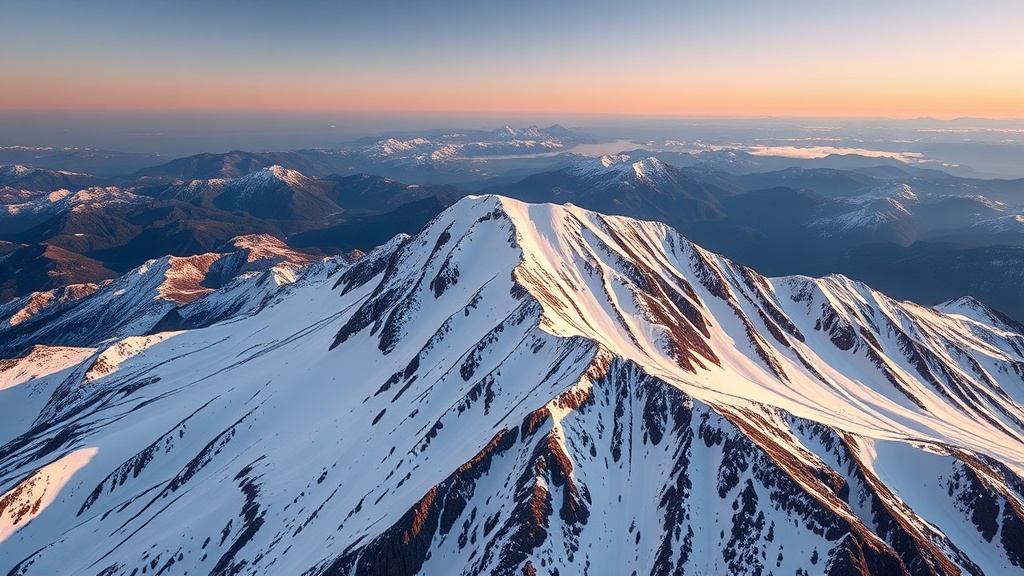
Mount Washington in New Hampshire looks harmless but kills more people per foot climbed than anywhere on Earth. Here's the geography glitch that makes it so deadly.
In This Article
Mount Washington: The World's Most Dangerous Small Mountain
There is a mountain in New Hampshire that you can drive a car to the top of. It sits roughly three and a half hours from Boston, welcomes millions of visitors, and ranks as the sixth most visited mountain summit on the planet. It is also, by one critical measure, the deadliest mountain in the world — deadlier per foot of vertical climb than Everest, K2, or Denali. Its name is Mount Washington, and the reason most people have never heard of it framed that way is precisely the reason it keeps killing people.

Why Mount Washington's Death Toll Is So Startling
Mount Washington stands at 6,288 feet above sea level. That makes it the tallest peak in New England and the broader northeastern United States, but only the 550th tallest mountain in the country overall. There are dozens of mountains in Colorado and Alaska that dwarf it. And yet, since modern record-keeping began in 1848, more than 160 people have died on its slopes. Since 1948 alone, it has claimed over 32 lives — tying it with Grand Teton in Wyoming for the fourth-highest death toll on any American mountain, behind only Denali, Mount Rainier, and Mount Hood.
When you adjust those figures for elevation — calculating deaths per foot of vertical climb — Mount Washington does not just top the American list. It tops the global one. That is a staggering conclusion for a mountain that is less than a third the height of Denali and roughly half the height of its nearest American competitors on the fatality charts.
The central paradox is not hard to identify once you see it: the mountain's modest appearance actively disarms the people most at risk on it. Experienced mountaineers who tackle Denali spend weeks preparing, charter planes to reach base camp, and stare down visible glaciers and crevasse fields from miles out. The visual language of danger is everywhere. Mount Washington offers none of those warnings. It looks, from the parking lot, like a very large hill.
The Weather System That Makes It a Death Trap
Mount Washington's lethality is not really about elevation at all. It is about weather — specifically, a convergence of meteorological forces that turns the summit into one of the most hostile environments on the planet's surface.
The mountain sits at the intersection of three major weather systems: moist Atlantic maritime air from the southeast, warm humid air tracking up from the Gulf of Mexico to the southwest, and cold dry continental air sweeping down from the Arctic to the north. These systems do not just pass over Mount Washington — they collide directly above it. The result is a pressure gradient so intense and so consistent that the summit generates storms of near-supernatural ferocity on a routine basis.
On April 12, 1934, researchers at the Mount Washington Observatory recorded a wind gust of 231 mph. That figure held the record for the highest wind speed ever measured on the Earth's surface for over six decades, until a tropical cyclone off Western Australia clocked 254 mph in 1996. Mount Washington's record still stands as the highest wind speed ever recorded outside of a tropical cyclone or tornado — weather events that are, by definition, temporary. The winds on Mount Washington are not temporary. Hurricane-force winds, defined as anything above 75 mph, occur on the summit for an average of 110 days per year. In winter, those conditions arrive roughly every other day.
This is not a place that occasionally gets dangerous. This is a place where danger is the default setting.
Cold That Rivals Antarctica
Wind alone would be enough to make Mount Washington extraordinary. The cold makes it something else entirely. The summit's all-time recorded low temperature sits at -50°F, logged in January 1885. The average annual temperature at the summit is just 27°F — below freezing, year-round average. On roughly 13 days per year, the high temperature for the entire day does not exceed 0°F.
But ambient temperature on Mount Washington tells only part of the story. The wind chill figures are where the numbers become almost abstract in their severity. On January 16, 2004, an ambient temperature of -46.3°F combined with sustained winds of 87 mph to produce a wind chill of -102.6°F. That is not far from the coldest surface air temperature ever recorded in human history: -128.6°F, measured at the Vostok Research Station in Antarctica in 1983. The summit of a mountain in New Hampshire, reachable by road, was approaching the thermal conditions of the deep Antarctic interior.
Then that record fell too. On the night of February 3-4, 2023, an ambient reading of -47°F paired with winds exceeding 100 mph to produce a wind chill of -108°F — a new US record. During the 2004 event, the wind chill did not rise above -50°F for 71 consecutive hours. Nearly three full days in which exposed human skin could develop frostbite in under five minutes and face lethal hypothermia within half an hour.
For context, that wind chill record makes Mount Washington's summit the site of the coldest temperature ever recorded anywhere in the United States — colder than any location in Alaska.
Snow, Avalanches, and the Hidden Crevasse Problem
Most people associate avalanche risk with the high peaks of Alaska, the Rockies, or the Alps. Very few think of New Hampshire. That assumption has killed people.
Mount Washington receives an average of nearly 97 inches of precipitation annually, most of it as snow — more than the summit of Mount Rainier receives despite Rainier being approximately twice as tall. The same meteorological forces that drive the wind also drive enormous snow volumes from the Great Lakes region and the Canadian interior up and over the presidential range. That snow accumulates in ravines on the mountain's eastern flank, most notably in Tuckerman Ravine, where depths can reach 50 feet during peak winter.
As temperatures fluctuate through late winter and spring, that snowpack does not melt cleanly. It compresses into a dense, almost concrete-like layer that fractures under stress and generates avalanches with devastating speed. In 2024, backcountry skiers died in Tuckerman Ravine after being carried hundreds of feet down the mountain. In 2012, a man slipped in April, slid into a hidden crevasse, and his body could not be recovered for seven weeks. Others have gone missing for years, their remains only discovered after catastrophic avalanche events uncovered them from beneath many feet of compacted snow.
The avalanche risk in Tuckerman Ravine is serious enough that it is actively monitored and forecasted by the Mount Washington Avalanche Center — a resource that exists because the threat is real, documented, and recurring. Many visitors arrive without consulting it.
The Tree Line Trap: Where Safe Becomes Lethal in Minutes
One of Mount Washington's most insidious features is the speed and completeness of the transition between its lower and upper environments. Standing in the parking lot at the mountain's base, you are in a humid continental climate typical of New England. The air is temperate, the forest is dense, and the walk begins pleasantly enough through the trees.
That changes. The extraordinarily powerful and persistent winds that scour the summit keep the tree line on Mount Washington unusually low — at just 4,400 feet elevation, compared to tree lines on western mountains that often extend to 11,000 feet or higher. In practical terms, a hiker reaches the tree line after roughly three miles of walking from the parking lot. That is not a long hike. For many people, it takes less than two hours.
Beyond that line, the landscape shifts immediately into arctic tundra — comparable in character to the tundra found in Labrador or Greenland. The 65 acres of tundra terrain on Mount Washington's upper reaches represent the most tundra found on any mountain east of the Rockies. There is no shelter, no cover, and nowhere to hide. The exposed ridge lines leading to the summit offer nothing between a hiker and whatever the weather decides to do next.
Weather on the upper mountain can shift from tolerable to lethal in under fifteen minutes. Temperature can drop 20 degrees in the same window. Visibility can collapse to a complete whiteout — zero visibility, unable to see more than a foot ahead — without meaningful warning. And just below the summit lies Tuckerman Ravine, with drop-offs of up to 600 feet. A disoriented hiker in a whiteout on that upper ridge is not facing a difficult situation. They are facing a potentially fatal one, in terrain they probably did not expect when they set out from the parking lot a few hours earlier.
What Makes Mount Washington Different From Every Other Deadly Mountain
The mountains that consistently top global danger lists — Annapurna, K2, Nanga Parbat — kill experienced and highly prepared climbers who have accepted enormous personal risk as the price of attempting them. Denali kills people who have spent months training, gathered specialist equipment, and arranged logistical support involving aircraft. Even Mount Rainier, for all its hazards, confronts climbers with visible glaciers and an 10,000-foot vertical gain that self-selects for seriousness.
Mount Washington kills hikers who drove up from Boston for a weekend trip. It kills day-trippers who wore running shoes. It kills people who did not check the weather forecast, or who checked it and did not understand what the numbers meant in practice at the summit. It kills experienced outdoors people who got unlucky during a fast-moving weather event. And it does all of this at a mountain that you can, on a good day, drive to the very top of in a regular car.
That accessibility is not incidental to its danger. It is the engine of it. The summit draws enormous crowds — it is, again, the sixth most visited mountain summit on Earth — and those crowds include a wide spectrum of preparation levels. On a clear summer day, it genuinely is a pleasant and remarkable place to visit. But the window between pleasant and catastrophic is narrow, unpredictable, and offers very little time to respond once it begins to close.
Free Weekly Newsletter
Enjoying this guide?
Get the best articles like this one delivered to your inbox every week. No spam.
Mount Washington does not look like a death trap. That is the nightmare geography glitch hiding in plain sight in New Hampshire. And it has been claiming lives because of that mismatch between appearance and reality for over 175 years.
Before You Go: What Responsible Visitors Actually Do
None of this is an argument against visiting Mount Washington — it is a genuinely extraordinary place, and with proper preparation, most visits are safe. But preparation is non-negotiable above the tree line.
Check the Mount Washington Observatory's summit forecast before you go, not just a general weather app. The conditions at the summit can differ radically from conditions in the valley below or even at the parking lot. Dress for the climate you will encounter above 4,400 feet, not the one at the trailhead. Carry layers, waterproof outer shells, and know how to use them. Tell someone your route and your expected return time. If the summit forecast shows winds above 50 mph or temperatures below 20°F with wind chill factored in, reconsider — those are not ideal conditions for an unprepared hiker even in summer.
The mountain's reputation is earned and documented across nearly two centuries. The visitors who respect it overwhelmingly return safely. The ones who treat it like a large hill sometimes do not come back at all.
Frequently Asked Questions
Why is Mount Washington considered the deadliest mountain in the world?
Mount Washington holds the record for the most deaths per foot of vertical climb of any mountain on Earth. While taller mountains like Denali or Everest have higher absolute death tolls, Mount Washington's combination of extreme weather, accessibility, and relatively modest height means a disproportionate number of people — including unprepared visitors — lose their lives there. Since 1848, over 160 people have died on its slopes.
What is the fastest wind speed ever recorded on Mount Washington?
On April 12, 1934, researchers at the Mount Washington Observatory recorded a wind gust of 231 mph. This held the world record for the highest surface wind speed ever measured for over 60 years. It remains the fastest wind speed ever recorded outside of a tropical cyclone or tornado, and hurricane-force winds above 75 mph occur on the summit around 110 days per year.
Can you really drive a car to the top of Mount Washington?
Yes. The Mount Washington Auto Road, an 8-mile privately operated toll road, allows vehicles to drive to the summit under suitable conditions, typically from late May through October depending on weather. A cog railway also operates from the base to the summit. This accessibility is one of the key factors in Mount Washington's danger — it brings large numbers of visitors, including many who are unprepared for the extreme conditions that can develop rapidly above the tree line.
What is the coldest temperature ever recorded on Mount Washington?
On January 16, 2004, a combination of an ambient temperature of -46.3°F and winds of 87 mph produced a wind chill of -102.6°F. That record was subsequently broken on February 3-4, 2023, when conditions generated a wind chill of -108°F — the coldest temperature ever recorded anywhere in the United States, surpassing any location in Alaska and approaching the coldest surface air temperatures ever measured on Earth.
Is Mount Washington dangerous in summer?
Yes, though the risks are different from winter. Even in summer months, temperatures at the summit can plunge rapidly and winter-like conditions can develop within minutes. The summit averages only around 50 clear days per year. Thunderstorms, sudden whiteouts, and severe cold snaps can occur in July and August. Several fatalities have occurred during summer months when hikers were caught above the tree line in rapidly deteriorating weather without adequate gear.
Frequently Asked Questions
Why Mount Washington's Death Toll Is So Startling
Mount Washington stands at 6,288 feet above sea level. That makes it the tallest peak in New England and the broader northeastern United States, but only the 550th tallest mountain in the country overall. There are dozens of mountains in Colorado and Alaska that dwarf it. And yet, since modern record-keeping began in 1848, more than 160 people have died on its slopes. Since 1948 alone, it has claimed over 32 lives — tying it with Grand Teton in Wyoming for the fourth-highest death toll on any American mountain, behind only Denali, Mount Rainier, and Mount Hood.
When you adjust those figures for elevation — calculating deaths per foot of vertical climb — Mount Washington does not just top the American list. It tops the global one. That is a staggering conclusion for a mountain that is less than a third the height of Denali and roughly half the height of its nearest American competitors on the fatality charts.
The central paradox is not hard to identify once you see it: the mountain's modest appearance actively disarms the people most at risk on it. Experienced mountaineers who tackle Denali spend weeks preparing, charter planes to reach base camp, and stare down visible glaciers and crevasse fields from miles out. The visual language of danger is everywhere. Mount Washington offers none of those warnings. It looks, from the parking lot, like a very large hill.
The Weather System That Makes It a Death Trap
Mount Washington's lethality is not really about elevation at all. It is about weather — specifically, a convergence of meteorological forces that turns the summit into one of the most hostile environments on the planet's surface.
The mountain sits at the intersection of three major weather systems: moist Atlantic maritime air from the southeast, warm humid air tracking up from the Gulf of Mexico to the southwest, and cold dry continental air sweeping down from the Arctic to the north. These systems do not just pass over Mount Washington — they collide directly above it. The result is a pressure gradient so intense and so consistent that the summit generates storms of near-supernatural ferocity on a routine basis.
On April 12, 1934, researchers at the Mount Washington Observatory recorded a wind gust of 231 mph. That figure held the record for the highest wind speed ever measured on the Earth's surface for over six decades, until a tropical cyclone off Western Australia clocked 254 mph in 1996. Mount Washington's record still stands as the highest wind speed ever recorded outside of a tropical cyclone or tornado — weather events that are, by definition, temporary. The winds on Mount Washington are not temporary. Hurricane-force winds, defined as anything above 75 mph, occur on the summit for an average of 110 days per year. In winter, those conditions arrive roughly every other day.
This is not a place that occasionally gets dangerous. This is a place where danger is the default setting.
Cold That Rivals Antarctica
Wind alone would be enough to make Mount Washington extraordinary. The cold makes it something else entirely. The summit's all-time recorded low temperature sits at -50°F, logged in January 1885. The average annual temperature at the summit is just 27°F — below freezing, year-round average. On roughly 13 days per year, the high temperature for the entire day does not exceed 0°F.
But ambient temperature on Mount Washington tells only part of the story. The wind chill figures are where the numbers become almost abstract in their severity. On January 16, 2004, an ambient temperature of -46.3°F combined with sustained winds of 87 mph to produce a wind chill of -102.6°F. That is not far from the coldest surface air temperature ever recorded in human history: -128.6°F, measured at the Vostok Research Station in Antarctica in 1983. The summit of a mountain in New Hampshire, reachable by road, was approaching the thermal conditions of the deep Antarctic interior.
Then that record fell too. On the night of February 3-4, 2023, an ambient reading of -47°F paired with winds exceeding 100 mph to produce a wind chill of -108°F — a new US record. During the 2004 event, the wind chill did not rise above -50°F for 71 consecutive hours. Nearly three full days in which exposed human skin could develop frostbite in under five minutes and face lethal hypothermia within half an hour.
For context, that wind chill record makes Mount Washington's summit the site of the coldest temperature ever recorded anywhere in the United States — colder than any location in Alaska.
Snow, Avalanches, and the Hidden Crevasse Problem
Most people associate avalanche risk with the high peaks of Alaska, the Rockies, or the Alps. Very few think of New Hampshire. That assumption has killed people.
Mount Washington receives an average of nearly 97 inches of precipitation annually, most of it as snow — more than the summit of Mount Rainier receives despite Rainier being approximately twice as tall. The same meteorological forces that drive the wind also drive enormous snow volumes from the Great Lakes region and the Canadian interior up and over the presidential range. That snow accumulates in ravines on the mountain's eastern flank, most notably in Tuckerman Ravine, where depths can reach 50 feet during peak winter.
As temperatures fluctuate through late winter and spring, that snowpack does not melt cleanly. It compresses into a dense, almost concrete-like layer that fractures under stress and generates avalanches with devastating speed. In 2024, backcountry skiers died in Tuckerman Ravine after being carried hundreds of feet down the mountain. In 2012, a man slipped in April, slid into a hidden crevasse, and his body could not be recovered for seven weeks. Others have gone missing for years, their remains only discovered after catastrophic avalanche events uncovered them from beneath many feet of compacted snow.
The avalanche risk in Tuckerman Ravine is serious enough that it is actively monitored and forecasted by the Mount Washington Avalanche Center — a resource that exists because the threat is real, documented, and recurring. Many visitors arrive without consulting it.
The Tree Line Trap: Where Safe Becomes Lethal in Minutes
One of Mount Washington's most insidious features is the speed and completeness of the transition between its lower and upper environments. Standing in the parking lot at the mountain's base, you are in a humid continental climate typical of New England. The air is temperate, the forest is dense, and the walk begins pleasantly enough through the trees.
That changes. The extraordinarily powerful and persistent winds that scour the summit keep the tree line on Mount Washington unusually low — at just 4,400 feet elevation, compared to tree lines on western mountains that often extend to 11,000 feet or higher. In practical terms, a hiker reaches the tree line after roughly three miles of walking from the parking lot. That is not a long hike. For many people, it takes less than two hours.
Beyond that line, the landscape shifts immediately into arctic tundra — comparable in character to the tundra found in Labrador or Greenland. The 65 acres of tundra terrain on Mount Washington's upper reaches represent the most tundra found on any mountain east of the Rockies. There is no shelter, no cover, and nowhere to hide. The exposed ridge lines leading to the summit offer nothing between a hiker and whatever the weather decides to do next.
Weather on the upper mountain can shift from tolerable to lethal in under fifteen minutes. Temperature can drop 20 degrees in the same window. Visibility can collapse to a complete whiteout — zero visibility, unable to see more than a foot ahead — without meaningful warning. And just below the summit lies Tuckerman Ravine, with drop-offs of up to 600 feet. A disoriented hiker in a whiteout on that upper ridge is not facing a difficult situation. They are facing a potentially fatal one, in terrain they probably did not expect when they set out from the parking lot a few hours earlier.
What Makes Mount Washington Different From Every Other Deadly Mountain
The mountains that consistently top global danger lists — Annapurna, K2, Nanga Parbat — kill experienced and highly prepared climbers who have accepted enormous personal risk as the price of attempting them. Denali kills people who have spent months training, gathered specialist equipment, and arranged logistical support involving aircraft. Even Mount Rainier, for all its hazards, confronts climbers with visible glaciers and an 10,000-foot vertical gain that self-selects for seriousness.
Mount Washington kills hikers who drove up from Boston for a weekend trip. It kills day-trippers who wore running shoes. It kills people who did not check the weather forecast, or who checked it and did not understand what the numbers meant in practice at the summit. It kills experienced outdoors people who got unlucky during a fast-moving weather event. And it does all of this at a mountain that you can, on a good day, drive to the very top of in a regular car.
That accessibility is not incidental to its danger. It is the engine of it. The summit draws enormous crowds — it is, again, the sixth most visited mountain summit on Earth — and those crowds include a wide spectrum of preparation levels. On a clear summer day, it genuinely is a pleasant and remarkable place to visit. But the window between pleasant and catastrophic is narrow, unpredictable, and offers very little time to respond once it begins to close.
Mount Washington does not look like a death trap. That is the nightmare geography glitch hiding in plain sight in New Hampshire. And it has been claiming lives because of that mismatch between appearance and reality for over 175 years.
Before You Go: What Responsible Visitors Actually Do
None of this is an argument against visiting Mount Washington — it is a genuinely extraordinary place, and with proper preparation, most visits are safe. But preparation is non-negotiable above the tree line.
Check the Mount Washington Observatory's summit forecast before you go, not just a general weather app. The conditions at the summit can differ radically from conditions in the valley below or even at the parking lot. Dress for the climate you will encounter above 4,400 feet, not the one at the trailhead. Carry layers, waterproof outer shells, and know how to use them. Tell someone your route and your expected return time. If the summit forecast shows winds above 50 mph or temperatures below 20°F with wind chill factored in, reconsider — those are not ideal conditions for an unprepared hiker even in summer.
The mountain's reputation is earned and documented across nearly two centuries. The visitors who respect it overwhelmingly return safely. The ones who treat it like a large hill sometimes do not come back at all.
Frequently Asked Questions
Why is Mount Washington considered the deadliest mountain in the world?
Mount Washington holds the record for the most deaths per foot of vertical climb of any mountain on Earth. While taller mountains like Denali or Everest have higher absolute death tolls, Mount Washington's combination of extreme weather, accessibility, and relatively modest height means a disproportionate number of people — including unprepared visitors — lose their lives there. Since 1848, over 160 people have died on its slopes.
What is the fastest wind speed ever recorded on Mount Washington?
On April 12, 1934, researchers at the Mount Washington Observatory recorded a wind gust of 231 mph. This held the world record for the highest surface wind speed ever measured for over 60 years. It remains the fastest wind speed ever recorded outside of a tropical cyclone or tornado, and hurricane-force winds above 75 mph occur on the summit around 110 days per year.
Can you really drive a car to the top of Mount Washington?
Yes. The Mount Washington Auto Road, an 8-mile privately operated toll road, allows vehicles to drive to the summit under suitable conditions, typically from late May through October depending on weather. A cog railway also operates from the base to the summit. This accessibility is one of the key factors in Mount Washington's danger — it brings large numbers of visitors, including many who are unprepared for the extreme conditions that can develop rapidly above the tree line.
What is the coldest temperature ever recorded on Mount Washington?
On January 16, 2004, a combination of an ambient temperature of -46.3°F and winds of 87 mph produced a wind chill of -102.6°F. That record was subsequently broken on February 3-4, 2023, when conditions generated a wind chill of -108°F — the coldest temperature ever recorded anywhere in the United States, surpassing any location in Alaska and approaching the coldest surface air temperatures ever measured on Earth.
Is Mount Washington dangerous in summer?
Yes, though the risks are different from winter. Even in summer months, temperatures at the summit can plunge rapidly and winter-like conditions can develop within minutes. The summit averages only around 50 clear days per year. Thunderstorms, sudden whiteouts, and severe cold snaps can occur in July and August. Several fatalities have occurred during summer months when hikers were caught above the tree line in rapidly deteriorating weather without adequate gear.
About Zeebrain Editorial
Zeebrain publishes independent analysis of markets, investing, personal finance, and business. We disclose affiliate relationships, never accept payment for coverage, and fact-check all claims against primary sources. Read our editorial policy →
How this article was produced: Zeebrain articles are created with AI assistance from primary sources (including cited videos and market data) and reviewed under our editorial standards before publication. Spot an error? Tell us and we will correct it.
More from Curiosities


Related Guides
Keep exploring this topic
Explore More Categories
Keep browsing by topic and build depth around the subjects you care about most.