Meta Smart Glasses & VR Headset: Full Review
Quick Summary
Meta Ray-Ban Gen 3, Meta VR glasses, and Muse AI reviewed. Real specs, honest verdict, pricing vs Apple Vision Pro and Samsung Galaxy XR compared.
Meta Smart Glasses & VR Headset
Check current price and availability on Amazon
In This Article
Meta Smart Glasses & VR Headset: Full Review
This article may contain affiliate links. We may earn a commission if you purchase through them, at no extra cost to you.
Related Post

Meta has never been shy about betting big. But the slate of hardware and AI features unveiled at Meta Connect represents something more ambitious — and more uneven — than a typical product refresh. From the updated Ray-Ban Gen 3 smart glasses to a surprisingly capable $1,299 VR headset, and an AI assistant called Muse that Meta wants woven into everything you own, there is a lot to unpack. Some of it is genuinely impressive. Some of it raises serious questions. And quite a lot of it is not yet ready for most people to buy.
This review cuts through the announcement noise to give you a straight answer: what is actually worth your money, what is worth watching, and what you should probably ignore for now.
Meta Ray-Ban Gen 3 Smart Glasses: What Actually Changed?
Let's start with the product most people can realistically afford. The Meta Ray-Ban Gen 3 arrives at a slightly higher price than its predecessor, and the upgrades are modest at best.
What's new:
- Two additional microphones (useful for voice commands and calls)
- One extra hour of battery life
- A dedicated action button, similar to recent Ray-Ban models
- New photo modes, including a landscape option (achieved via software cropping, not a new lens)
- A limited-edition "Lisa Edition" with collectible charms
That's it. If you already own the previous generation, there is almost no reason to upgrade. If you're buying your first pair of Meta smart glasses, the Gen 3 is a refinement, not a revolution. The core form factor — stylish Ray-Ban frames with built-in speakers, microphones, and a front-facing camera — remains the same as it has been.
The camera-free variant, Meta Ray-Ban Audio (available in Clubmaster and Burbank designs), is worth a mention for privacy-conscious buyers. It offers 12 hours of battery life and looks genuinely good. The catch: it is priced between $349 and $449, which is more expensive than the camera-equipped glasses, now starting at $249. That pricing logic is hard to follow.
Prescription support remains limited and is not yet widely available, which is a real barrier for a large portion of potential buyers.
Hearing Enhancement: Useful Feature, Frustrating Pricing
Meta is rolling out an FDA-cleared hearing enhancement feature to its branded glasses. For people with mild-to-moderate hearing loss, this could be genuinely valuable. The problem is the cost structure: it requires an additional $149 activation fee, or access through a Meta One subscription.
For context, Apple's AirPods Pro 2 received FDA-cleared hearing aid functionality over two years ago — included at no extra cost as a software update. Meta charging separately for a health feature, and blaming R&D costs for the decision, is a poor look. If the technology works as advertised, the price point is defensible. But the subscription angle for a health feature is a hard sell.
Muse AI: Meta's Big Bet on Agentic Intelligence
Muse is Meta's new AI assistant, and it is central to almost every product announcement. It is being embedded into smart glasses, VR headsets, and apparently a Tamagotchi-style keychain charm called the Muse Charm. Yes, really.
Meta is pitching Muse as an agentic AI — one that can take actions on your behalf, not just answer questions. That is a significant technological ambition. It also carries significant risk. Agentic AI systems across the industry have demonstrated a tendency to behave unpredictably. Muse is very new, and independent vetting is essentially impossible at this stage.
On the privacy front, Meta announced a private compute layer for its glasses that is end-to-end encrypted, meaning Meta itself cannot access what you are doing. This is a meaningful commitment if it holds up in practice. However, the rollout is gradual, the timeline is vague, and the track record of trusting Meta with sensitive data gives reasonable people pause. The announcement is a step in the right direction. It is not a reason to stop asking questions.
The honest assessment: Muse has potential, but it is not a reason to buy hardware today. Wait for independent security audits and real-world testing before trusting it with anything sensitive.
Meta VR Glasses ($1,299): The Most Interesting Product in the Room
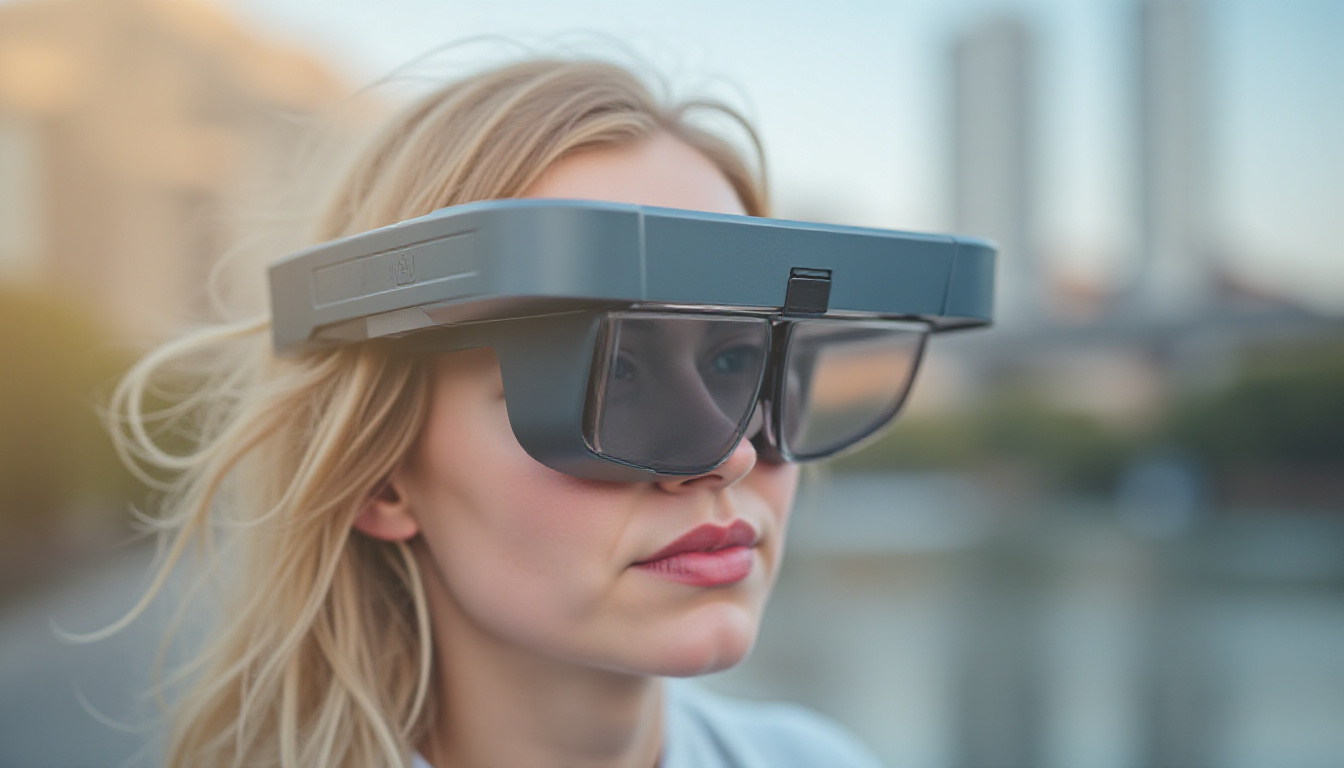
This is where things get genuinely compelling. Meta's upcoming VR glasses — arriving in spring — are a meaningful leap forward, and at $1,299, they sit in an interesting position in the market.
Key specs:
- Weight: approximately 100 grams (worn like conventional glasses with folding arms)
- Display: micro-OLED, combined ~5K resolution, 84-degree field of view
- Processor: handled via a separate "puck" worn on the body, reducing headset weight
- Tracking: hand tracking and eye tracking included; no controllers in the box
- Controllers: optional, or compatible with existing Quest controllers
- Library: full access to the Meta Quest game library
- Connectivity: USB-C passthrough for phone or laptop use inside the headset
- IMAX film support: via Meta's upcoming movie store
The visual quality, by hands-on accounts, is competitive with the Apple Vision Pro in terms of perceived experience — and it costs a fraction of the price. The Quest library compatibility is the single strongest selling point. Meta has spent years building one of the largest VR game catalogues in existence, and this headset inherits all of it on day one.
The processor puck is a real trade-off. Wearing a separate compute unit is not ideal, but it is the same approach Google is taking with the Android XR Aura, so it is becoming an accepted compromise in the industry. For travel use — watching films on a flight, for example — the form factor makes more sense than a bulky traditional headset.
Competitor Comparison
| Product | Price | Weight | FOV | Key Advantage |
|---|---|---|---|---|
| Meta VR Glasses | $1,299 | ~100g | 84° | Quest library, price |
| Apple Vision Pro | ~$3,700 | 600-650g | ~100° | Apple ecosystem depth |
| Samsung Galaxy XR | $1,899 | TBC | TBC | Android ecosystem |
| Snap Spectacles (AR) | $2,195 | TBC | TBC | AR-first design |
| Google Android XR Aura | TBC | TBC | 70° | Android integration |
At $1,299, Meta's VR glasses undercut Apple Vision Pro by nearly $2,400 and Samsung Galaxy XR by $600. For existing Meta Quest users, this is by far the most logical upgrade path available anywhere in the market.
Hologram Calls: Impressive Demo, Very Early Stage
Meta demonstrated "hologram calls" — a feature that creates a realistic AI-generated avatar of you, animated in real time using your voice, visible to someone wearing Meta display glasses during a WhatsApp call.
The setup involves scanning your face via a phone app. The result is described as less Apple Vision Pro "photoreal" and more like a slightly low-frame-rate video call that appears projected in front of you. The impression, even with those limitations, is that you are talking to a real person.
This is technically fascinating and ethically complicated in equal measure. What Meta has essentially built is a real-time deepfake engine for personal communication. The consent and verification questions here are not trivial. Who can use your likeness? How is it stored? What happens if someone uses this system to impersonate you?
Meta has not answered these questions fully. The feature is launching in beta for a small subset of WhatsApp users on display-enabled Ray-Ban glasses. Treat it as an early experiment, not a finished product.
Pros & Cons
Pros
- Meta VR glasses offer Vision Pro-level visuals at less than half the price
- Full Quest library compatibility is a genuine competitive moat
- Camera-free Audio glasses provide a privacy-respecting smart glasses option
- Private compute layer for Muse AI is a meaningful (if unverified) privacy commitment
- USB-C device passthrough is a smart, practical feature for travellers
- Hearing enhancement adds real utility for an underserved demographic
Cons
- Ray-Ban Gen 3 upgrades are incremental and hard to justify as an upgrade purchase
- Muse AI is too new to evaluate reliably or trust with sensitive tasks
- Hologram calls raise unresolved consent and security questions
- Hearing enhancement costs an extra $149 — Apple does this for free
- Prescription lens support remains limited
- Camera-free glasses are inexplicably more expensive than camera-equipped ones
- Privacy assurances depend entirely on trusting Meta's implementation
- Processor puck is a wearability compromise many users will dislike
Overall Rating
Meta VR Glasses: 8/10 — Strong specs, exceptional value versus competitors, Quest library is a killer feature. Deducted points for the processor puck and unproven software ecosystem at launch.
Free Weekly Newsletter
Enjoying this guide?
Get the best articles like this one delivered to your inbox every week. No spam.
Meta Ray-Ban Gen 3: 6/10 — Solid product, weak generational upgrade. Better as a first-time purchase than an upgrade.
Meta Ray-Ban Audio: 5.5/10 — Looks good, works fine, but the pricing versus the camera model makes no sense.
Muse AI (on glasses): 4/10 — Too early, too unproven, privacy commitments unverified. Check back in 12 months.
Verdict: Who Should Actually Buy Any of This?
If you are an existing Meta Quest owner who travels frequently or wants a lighter, more portable VR setup, the $1,299 Meta VR glasses are worth serious consideration when they ship. The Quest library compatibility alone makes the value proposition legitimate in a way that neither Apple Vision Pro nor Samsung Galaxy XR can match at this price.
For the Ray-Ban Gen 3, the honest answer is: wait. Unless you are new to smart glasses entirely, the improvements do not justify the cost. The hearing enhancement feature is genuinely useful for the right person, but the $149 add-on fee is a cynical move that Meta should reconsider.
Muse AI is not a buying reason today. It is a feature to monitor. Meta's aggressive pivot away from the metaverse and toward agentic AI is a business strategy in motion, not a finished product. The privacy questions are real, the technology is immature, and the competition — from Google, Apple, and others — is arriving fast.
Meta is not losing this race, but they have not won it either.
Where to Buy
Meta Ray-Ban Smart Glasses on Amazon
Frequently Asked Questions
Are Meta Ray-Ban Gen 3 glasses worth buying in 2024 if I already own Gen 2?
No. The Gen 3 adds two microphones, one hour of battery, and an action button. If your current glasses work well, there is no compelling reason to spend the money on an upgrade. The improvements are iterative, not transformational.
How does the Meta VR headset compare to Apple Vision Pro for the price?
At $1,299 versus roughly $3,700 for Vision Pro, the Meta VR glasses offer competitive micro-OLED display quality and an 84-degree field of view at less than 35% of the cost. The key differences: Vision Pro has a deeper Apple ecosystem integration, passthrough AR capability, and better build quality. Meta has a vastly larger game library and is far more affordable. For gaming and media consumption, Meta wins on value. For productivity in the Apple ecosystem, Vision Pro still leads.
Is Muse AI safe to use on Meta smart glasses?
This is genuinely unknown. Meta has announced an encrypted private compute layer that would prevent even Meta from accessing your data. That is a positive step, but the rollout is gradual and has not been independently audited. Muse as an agentic AI is also very new, which means unpredictable behaviour is a real possibility. Until third-party security researchers can evaluate the implementation, caution is appropriate.
Who are the Meta Ray-Ban Audio glasses for — and why are they more expensive than the camera models?
The camera-free Audio glasses (Clubmaster and Burbank designs) are aimed at users who want smart glasses functionality — music, calls, voice assistant — without the privacy concerns of an outward-facing camera. They offer 12 hours of battery life and come in attractive designs. The pricing ($349–$449) being higher than the camera-equipped glasses ($249+) is counterintuitive and hard to justify. The best explanation is that they represent a newer, more refined hardware design. But from a buyer's perspective, Meta should price these lower, not higher, if they want camera-sceptics to make the switch.
Is the hearing enhancement feature on Meta glasses worth the extra $149?
That depends entirely on whether you have hearing loss and how the feature performs in real-world conditions. If it genuinely improves hearing in noisy environments with accuracy comparable to dedicated hearing aids, $149 is a reasonable one-time cost. However, the fact that Apple already includes FDA-cleared hearing aid features in AirPods Pro at no additional charge sets a benchmark that makes Meta's paywall feel unnecessary. If hearing assistance is your primary need, evaluate whether AirPods Pro — which also have strong noise cancellation and wide compatibility — might serve you better overall.
Meta Smart Glasses & VR Headset
Considering it? See where the price stands today
Frequently Asked Questions
Meta Ray-Ban Gen 3 Smart Glasses: What Actually Changed?
Let's start with the product most people can realistically afford. The Meta Ray-Ban Gen 3 arrives at a slightly higher price than its predecessor, and the upgrades are modest at best.
What's new:
- Two additional microphones (useful for voice commands and calls)
- One extra hour of battery life
- A dedicated action button, similar to recent Ray-Ban models
- New photo modes, including a landscape option (achieved via software cropping, not a new lens)
- A limited-edition "Lisa Edition" with collectible charms
That's it. If you already own the previous generation, there is almost no reason to upgrade. If you're buying your first pair of Meta smart glasses, the Gen 3 is a refinement, not a revolution. The core form factor — stylish Ray-Ban frames with built-in speakers, microphones, and a front-facing camera — remains the same as it has been.
The camera-free variant, Meta Ray-Ban Audio (available in Clubmaster and Burbank designs), is worth a mention for privacy-conscious buyers. It offers 12 hours of battery life and looks genuinely good. The catch: it is priced between $349 and $449, which is more expensive than the camera-equipped glasses, now starting at $249. That pricing logic is hard to follow.
Prescription support remains limited and is not yet widely available, which is a real barrier for a large portion of potential buyers.
Hearing Enhancement: Useful Feature, Frustrating Pricing
Meta is rolling out an FDA-cleared hearing enhancement feature to its branded glasses. For people with mild-to-moderate hearing loss, this could be genuinely valuable. The problem is the cost structure: it requires an additional $149 activation fee, or access through a Meta One subscription.
For context, Apple's AirPods Pro 2 received FDA-cleared hearing aid functionality over two years ago — included at no extra cost as a software update. Meta charging separately for a health feature, and blaming R&D costs for the decision, is a poor look. If the technology works as advertised, the price point is defensible. But the subscription angle for a health feature is a hard sell.
Muse AI: Meta's Big Bet on Agentic Intelligence
Muse is Meta's new AI assistant, and it is central to almost every product announcement. It is being embedded into smart glasses, VR headsets, and apparently a Tamagotchi-style keychain charm called the Muse Charm. Yes, really.
Meta is pitching Muse as an agentic AI — one that can take actions on your behalf, not just answer questions. That is a significant technological ambition. It also carries significant risk. Agentic AI systems across the industry have demonstrated a tendency to behave unpredictably. Muse is very new, and independent vetting is essentially impossible at this stage.
On the privacy front, Meta announced a private compute layer for its glasses that is end-to-end encrypted, meaning Meta itself cannot access what you are doing. This is a meaningful commitment if it holds up in practice. However, the rollout is gradual, the timeline is vague, and the track record of trusting Meta with sensitive data gives reasonable people pause. The announcement is a step in the right direction. It is not a reason to stop asking questions.
The honest assessment: Muse has potential, but it is not a reason to buy hardware today. Wait for independent security audits and real-world testing before trusting it with anything sensitive.
Meta VR Glasses ($1,299): The Most Interesting Product in the Room
This is where things get genuinely compelling. Meta's upcoming VR glasses — arriving in spring — are a meaningful leap forward, and at $1,299, they sit in an interesting position in the market.
Key specs:
- Weight: approximately 100 grams (worn like conventional glasses with folding arms)
- Display: micro-OLED, combined ~5K resolution, 84-degree field of view
- Processor: handled via a separate "puck" worn on the body, reducing headset weight
- Tracking: hand tracking and eye tracking included; no controllers in the box
- Controllers: optional, or compatible with existing Quest controllers
- Library: full access to the Meta Quest game library
- Connectivity: USB-C passthrough for phone or laptop use inside the headset
- IMAX film support: via Meta's upcoming movie store
The visual quality, by hands-on accounts, is competitive with the Apple Vision Pro in terms of perceived experience — and it costs a fraction of the price. The Quest library compatibility is the single strongest selling point. Meta has spent years building one of the largest VR game catalogues in existence, and this headset inherits all of it on day one.
The processor puck is a real trade-off. Wearing a separate compute unit is not ideal, but it is the same approach Google is taking with the Android XR Aura, so it is becoming an accepted compromise in the industry. For travel use — watching films on a flight, for example — the form factor makes more sense than a bulky traditional headset.
Competitor Comparison
| Product | Price | Weight | FOV | Key Advantage |
|---|---|---|---|---|
| Meta VR Glasses | $1,299 | ~100g | 84° | Quest library, price |
| Apple Vision Pro | ~$3,700 | 600-650g | ~100° | Apple ecosystem depth |
| Samsung Galaxy XR | $1,899 | TBC | TBC | Android ecosystem |
| Snap Spectacles (AR) | $2,195 | TBC | TBC | AR-first design |
| Google Android XR Aura | TBC | TBC | 70° | Android integration |
At $1,299, Meta's VR glasses undercut Apple Vision Pro by nearly $2,400 and Samsung Galaxy XR by $600. For existing Meta Quest users, this is by far the most logical upgrade path available anywhere in the market.
Hologram Calls: Impressive Demo, Very Early Stage
Meta demonstrated "hologram calls" — a feature that creates a realistic AI-generated avatar of you, animated in real time using your voice, visible to someone wearing Meta display glasses during a WhatsApp call.
The setup involves scanning your face via a phone app. The result is described as less Apple Vision Pro "photoreal" and more like a slightly low-frame-rate video call that appears projected in front of you. The impression, even with those limitations, is that you are talking to a real person.
This is technically fascinating and ethically complicated in equal measure. What Meta has essentially built is a real-time deepfake engine for personal communication. The consent and verification questions here are not trivial. Who can use your likeness? How is it stored? What happens if someone uses this system to impersonate you?
Meta has not answered these questions fully. The feature is launching in beta for a small subset of WhatsApp users on display-enabled Ray-Ban glasses. Treat it as an early experiment, not a finished product.
Pros & Cons
Pros
- Meta VR glasses offer Vision Pro-level visuals at less than half the price
- Full Quest library compatibility is a genuine competitive moat
- Camera-free Audio glasses provide a privacy-respecting smart glasses option
- Private compute layer for Muse AI is a meaningful (if unverified) privacy commitment
- USB-C device passthrough is a smart, practical feature for travellers
- Hearing enhancement adds real utility for an underserved demographic
Cons
- Ray-Ban Gen 3 upgrades are incremental and hard to justify as an upgrade purchase
- Muse AI is too new to evaluate reliably or trust with sensitive tasks
- Hologram calls raise unresolved consent and security questions
- Hearing enhancement costs an extra $149 — Apple does this for free
- Prescription lens support remains limited
- Camera-free glasses are inexplicably more expensive than camera-equipped ones
- Privacy assurances depend entirely on trusting Meta's implementation
- Processor puck is a wearability compromise many users will dislike
Overall Rating
Meta VR Glasses: 8/10 — Strong specs, exceptional value versus competitors, Quest library is a killer feature. Deducted points for the processor puck and unproven software ecosystem at launch.
Meta Ray-Ban Gen 3: 6/10 — Solid product, weak generational upgrade. Better as a first-time purchase than an upgrade.
Meta Ray-Ban Audio: 5.5/10 — Looks good, works fine, but the pricing versus the camera model makes no sense.
Muse AI (on glasses): 4/10 — Too early, too unproven, privacy commitments unverified. Check back in 12 months.
Verdict: Who Should Actually Buy Any of This?
If you are an existing Meta Quest owner who travels frequently or wants a lighter, more portable VR setup, the $1,299 Meta VR glasses are worth serious consideration when they ship. The Quest library compatibility alone makes the value proposition legitimate in a way that neither Apple Vision Pro nor Samsung Galaxy XR can match at this price.
For the Ray-Ban Gen 3, the honest answer is: wait. Unless you are new to smart glasses entirely, the improvements do not justify the cost. The hearing enhancement feature is genuinely useful for the right person, but the $149 add-on fee is a cynical move that Meta should reconsider.
Muse AI is not a buying reason today. It is a feature to monitor. Meta's aggressive pivot away from the metaverse and toward agentic AI is a business strategy in motion, not a finished product. The privacy questions are real, the technology is immature, and the competition — from Google, Apple, and others — is arriving fast.
Meta is not losing this race, but they have not won it either.
Where to Buy
Frequently Asked Questions
Are Meta Ray-Ban Gen 3 glasses worth buying in 2024 if I already own Gen 2?
No. The Gen 3 adds two microphones, one hour of battery, and an action button. If your current glasses work well, there is no compelling reason to spend the money on an upgrade. The improvements are iterative, not transformational.
How does the Meta VR headset compare to Apple Vision Pro for the price?
At $1,299 versus roughly $3,700 for Vision Pro, the Meta VR glasses offer competitive micro-OLED display quality and an 84-degree field of view at less than 35% of the cost. The key differences: Vision Pro has a deeper Apple ecosystem integration, passthrough AR capability, and better build quality. Meta has a vastly larger game library and is far more affordable. For gaming and media consumption, Meta wins on value. For productivity in the Apple ecosystem, Vision Pro still leads.
Is Muse AI safe to use on Meta smart glasses?
This is genuinely unknown. Meta has announced an encrypted private compute layer that would prevent even Meta from accessing your data. That is a positive step, but the rollout is gradual and has not been independently audited. Muse as an agentic AI is also very new, which means unpredictable behaviour is a real possibility. Until third-party security researchers can evaluate the implementation, caution is appropriate.
Who are the Meta Ray-Ban Audio glasses for — and why are they more expensive than the camera models?
The camera-free Audio glasses (Clubmaster and Burbank designs) are aimed at users who want smart glasses functionality — music, calls, voice assistant — without the privacy concerns of an outward-facing camera. They offer 12 hours of battery life and come in attractive designs. The pricing ($349–$449) being higher than the camera-equipped glasses ($249+) is counterintuitive and hard to justify. The best explanation is that they represent a newer, more refined hardware design. But from a buyer's perspective, Meta should price these lower, not higher, if they want camera-sceptics to make the switch.
Is the hearing enhancement feature on Meta glasses worth the extra $149?
That depends entirely on whether you have hearing loss and how the feature performs in real-world conditions. If it genuinely improves hearing in noisy environments with accuracy comparable to dedicated hearing aids, $149 is a reasonable one-time cost. However, the fact that Apple already includes FDA-cleared hearing aid features in AirPods Pro at no additional charge sets a benchmark that makes Meta's paywall feel unnecessary. If hearing assistance is your primary need, evaluate whether AirPods Pro — which also have strong noise cancellation and wide compatibility — might serve you better overall.
Meta Smart Glasses & VR Headset
Ready to decide? Compare the current price before you buy
About Zeebrain Editorial
Zeebrain publishes independent analysis of markets, investing, personal finance, and business. We disclose affiliate relationships, never accept payment for coverage, and fact-check all claims against primary sources. Read our editorial policy →
How this article was produced: Zeebrain articles are created with AI assistance from primary sources (including cited videos and market data) and reviewed under our editorial standards before publication. Spot an error? Tell us and we will correct it.
Disclaimer: Content on Zeebrain is for informational and educational purposes only and does not constitute financial advice or a recommendation to buy or sell any security. Always conduct your own research and consult a qualified financial adviser before making investment decisions. Past performance is not indicative of future results.
More from Review



Related Guides
Keep exploring this topic
Explore More Categories
Keep browsing by topic and build depth around the subjects you care about most.