Jack the Ripper: The Real Story Behind the Myth
Quick Summary
Who was Jack the Ripper? Explore the real victims, letters, suspects, and unsolved mystery behind Victorian London's most infamous serial killer.
In This Article
The Case That Never Closed
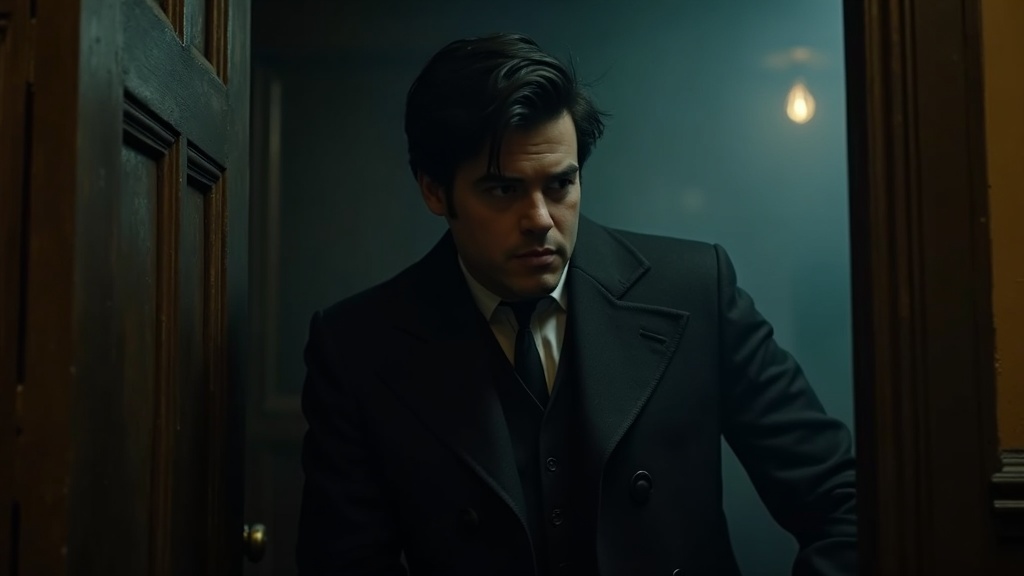
In the autumn of 1888, a killer stalked the fog-drenched streets of Whitechapel in London's East End — and more than 135 years later, no one has definitively identified him. Jack the Ripper is not merely a Victorian curiosity. He is arguably the world's first modern media serial killer: a figure whose crimes were amplified by a sensationalist press, dissected by an early forensic science still finding its feet, and mythologised into something almost supernatural. The reality, as is so often the case, is both more tragic and more instructive than the legend.

Behind every headline, every lurid theory, every Halloween costume, there are five women whose lives — and deaths — deserve far more serious attention than they typically receive. Understanding Jack the Ripper properly means starting with them.
The Victims: Lives the History Books Often Gloss Over
The canonical five victims of Jack the Ripper were Mary Ann "Polly" Nichols, Annie Chapman, Elizabeth Stride, Catherine Eddowes, and Mary Jane Kelly. What the mythology tends to obscure is how structurally similar their circumstances were — and how much those circumstances reveal about Victorian society.
All five were women navigating extreme poverty in one of the most overcrowded and under-resourced corners of one of the wealthiest cities on earth. Widowhood, alcoholism, marital breakdown, and a total absence of social safety nets had pushed each of them into street prostitution — not as a lifestyle choice, but as the only available means of securing a night's shelter. On the night she was murdered, Polly Nichols had already earned enough for a bed in a lodging house three times over. She had spent the money on drink each time. She went back out into the dark to earn it again.
Annie Chapman was in a similar bind. Separated from her husband after the death of their young daughter, she had scraped by on a modest allowance until his death ended even that. Elizabeth Stride, originally from Sweden, had fabricated a story about losing her husband and children in a famous Thames steamboat disaster — the sinking of the Princess Alice in 1878 — presumably to elicit sympathy from clients. Catherine Eddowes had been held in police custody earlier that same night for being drunk and disorderly, released at 12:55 a.m. onto the streets where she was murdered within the hour.
These were not nameless shadows. They were women with histories, relationships, and survival strategies operating in conditions that offered them almost no margin for error. The Ripper exploited precisely that vulnerability.
The Crimes: What the Evidence Actually Tells Us
The clinical detail of the murders tells us something important about the perpetrator. The killings were swift and remarkably quiet given their settings. Polly Nichols was murdered on a street near active slaughterhouses, with workers in an adjacent building, yet nobody heard a thing. The prevailing theory — supported by the coroner's testimony at the inquest — was that the killer covered his victims' mouths before cutting their throats, rendering them unable to cry out.
The surgical precision evident in several of the killings, particularly the removal of specific organs, prompted early speculation that the Ripper had medical training. Catherine Eddowes had her kidney removed cleanly and efficiently in the open air, at night, within a timeframe of roughly ten minutes before police patrol would return. Mary Jane Kelly — the final canonical victim — was killed indoors, and the absence of time pressure showed. Dr. Thomas Bond's post-mortem description of her room remains one of the most disturbing documents in British criminal history: organs arranged around the body, the face rendered unrecognisable, the heart missing entirely.
The double event of 30 September — the murders of Stride and Eddowes within approximately an hour of each other — has long fascinated investigators. Stride's wounds were comparatively minimal: her throat was cut, but none of the abdominal mutilation found in other victims. The widely held interpretation is that the killer was interrupted before he could finish, then redirected his violence onto Eddowes with exceptional ferocity.
Jack the Ripper's Letters: Genuine Evidence or Victorian Trolling?
The name "Jack the Ripper" didn't emerge from police files. It came from a letter. Before the famous "Dear Boss" letter arrived at the Central News Agency on 25 September 1888, the suspect had been referred to in the press as "Leather Apron." The letter — signed "Jack the Ripper" — introduced a brand so viscerally compelling that it has endured ever since.
A subsequent postcard, received on 1 October, referenced the cutting of a victim's ear — a detail that matched Catherine Eddowes's injuries and hadn't been widely reported. This gave the correspondence an air of authenticity. However, a journalist later reportedly admitted to writing both pieces, reasoning that his press access gave him knowledge of crime scene details before the public had them. Whether this confession was itself genuine is, characteristically for this case, impossible to verify.
The most disturbing correspondence was the "From Hell" letter, sent to George Lusk, chairman of the Whitechapel Vigilance Committee. It arrived with half a preserved human kidney. A physician who examined it concluded it belonged to a woman in her mid-forties with a history of heavy drinking — a description that matched Catherine Eddowes precisely. Lusk himself was sceptical, suspecting a prank by medical students with access to cadavers. That scepticism was reasonable; the East End's medical schools were not far away, and such grim humour was not unheard of in those circles.
Ripperologists — the devoted community of researchers who have studied this case for generations — generally consider the "From Hell" letter the most likely to be authentic. The "Dear Boss" letter, despite naming the killer, is now widely regarded as a journalistic fabrication.
Why Jack the Ripper Was Never Caught: The Investigation's Failures
The Metropolitan Police in 1888 were not the sophisticated investigative force we might imagine. Forensic science was embryonic. DNA profiling was a century away. Fingerprint evidence was not yet used in British courts. The crime scenes at Bucks Row and Mitre Square were compromised almost immediately by curious bystanders and well-meaning officials who moved bodies before thorough examinations could be conducted.
The police were also working against a community deeply mistrustful of authority. Whitechapel's population was largely composed of recent immigrants, many of them Jewish refugees from Eastern Europe fleeing pogroms. Early in the investigation, a suspect profile leaned heavily — and shamefully — on anti-Semitic assumptions. A chalked message found near one crime scene, reading "The Juwes are the men that will not be blamed for nothing," was controversially erased by the Metropolitan Police Commissioner before it could be properly documented, ostensibly to prevent public disorder.
Over 200 suspects have been named in the years since. They include a Polish barber, a barrister, a painter, a member of the royal family, and the royal physician. None of the cases against any of them are conclusive. The investigation was hampered at every turn by institutional limitations, social prejudice, and the fundamental challenge of policing a dense urban environment with the tools of the 1880s.
The Ripper's Legacy: What the Case Tells Us About Victorian England
Jack the Ripper didn't just reveal a killer. He exposed a city. The murders brought unprecedented press attention to the conditions in Whitechapel — the overcrowding, the poverty, the lack of basic sanitation, the desperation that drove women into dangerous work on dark streets at 3 a.m. just to secure a bed for the night.
Victorian England was simultaneously the centre of a global empire and home to some of the most abject urban poverty in the industrialised world. The East End was a pressure valve for both: it absorbed wave after wave of migrants and the rural dispossessed, provided cheap labour for the city's markets and docks, and received almost nothing in return by way of civic infrastructure.
In a grim irony, the Ripper killings accelerated social reform conversations that had been grinding slowly forward. The case became a lightning rod for journalists, social reformers, and politicians who used it to argue — correctly — that the conditions of the East End were themselves a kind of structural violence that predated anything the Ripper did with a knife.
The obsession with identifying the killer has, for generations, somewhat overshadowed that more important story. Five women were killed not simply because a murderer chose them, but because a society had placed them in harm's way and offered them no protection.
Free Weekly Newsletter
Enjoying this guide?
Get the best articles like this one delivered to your inbox every week. No spam.
What We Still Don't Know — and Why It Matters
The Ripper case remains officially unsolved, and it is very likely to stay that way. The evidence is too degraded, the witnesses long dead, the paper trail too thin and too contaminated by Victorian-era record-keeping. Modern forensic techniques have been applied to surviving material — most notably a shawl allegedly found at the Eddowes murder scene — but the chain of custody for such artefacts is too compromised to be legally meaningful, even if the science is genuinely interesting.
What matters now is less the identity of the killer than the framework the case provides for understanding crime, poverty, gender, and media in the modern world. Jack the Ripper is the prototype for every subsequent serial killer media narrative: the sinister nickname, the taunting letters, the investigative incompetence, the public fascination. Every true crime podcast, every criminal profile, every TV detective show operates in a cultural space the Ripper helped create.
He was never caught. But the world he exposed — and the questions his crimes forced people to ask about inequality, justice, and who society chooses to protect — remain as relevant as ever.
Frequently Asked Questions
How many victims did Jack the Ripper have?
The five "canonical" victims — Polly Nichols, Annie Chapman, Elizabeth Stride, Catherine Eddowes, and Mary Jane Kelly — are almost universally accepted by researchers. Several other murders have been attributed to the Ripper over the years, but the evidence linking them to the same perpetrator is far less compelling, and most serious ripperologists do not include them in the confirmed count.
Was Jack the Ripper ever identified?
No. Despite more than 200 named suspects and over a century of investigation, no definitive identification has ever been made. The most frequently cited suspects include Aaron Kosminski, a Polish-born barber; Montague John Druitt, a barrister; and various figures with dubious royal connections. None of the cases against any individual is conclusive.
Why did the Jack the Ripper killings stop?
No one knows with certainty. Theories include the killer's death (Druitt's body was found in the Thames in December 1888), incarceration for an unrelated offence, emigration, or simply a decision to stop. The absence of a solved case means the cessation of the murders is as mysterious as the murders themselves.
Are the Jack the Ripper letters authentic?
Almost certainly not in most cases. The "Dear Boss" letter, which introduced the name Jack the Ripper, was reportedly later admitted to be a journalistic fabrication. The "From Hell" letter, sent with a human kidney, is considered by many researchers to be the most likely genuine communication — though even this is disputed, with some arguing it was a macabre prank by medical students.
What was Whitechapel like during the Jack the Ripper murders?
Whitechapel in 1888 was one of London's most impoverished districts — densely overcrowded, poorly lit, and home to a large population of recent immigrants and destitute workers. Unemployment was high, housing was squalid, and social services were effectively nonexistent. The area's slaughterhouses, lodging houses, and street markets operated around the clock, creating an environment where strangers moved freely at all hours and went largely unnoticed.
Free Investing Tools
Frequently Asked Questions
The Case That Never Closed
In the autumn of 1888, a killer stalked the fog-drenched streets of Whitechapel in London's East End — and more than 135 years later, no one has definitively identified him. Jack the Ripper is not merely a Victorian curiosity. He is arguably the world's first modern media serial killer: a figure whose crimes were amplified by a sensationalist press, dissected by an early forensic science still finding its feet, and mythologised into something almost supernatural. The reality, as is so often the case, is both more tragic and more instructive than the legend.
Behind every headline, every lurid theory, every Halloween costume, there are five women whose lives — and deaths — deserve far more serious attention than they typically receive. Understanding Jack the Ripper properly means starting with them.
The Victims: Lives the History Books Often Gloss Over
The canonical five victims of Jack the Ripper were Mary Ann "Polly" Nichols, Annie Chapman, Elizabeth Stride, Catherine Eddowes, and Mary Jane Kelly. What the mythology tends to obscure is how structurally similar their circumstances were — and how much those circumstances reveal about Victorian society.
All five were women navigating extreme poverty in one of the most overcrowded and under-resourced corners of one of the wealthiest cities on earth. Widowhood, alcoholism, marital breakdown, and a total absence of social safety nets had pushed each of them into street prostitution — not as a lifestyle choice, but as the only available means of securing a night's shelter. On the night she was murdered, Polly Nichols had already earned enough for a bed in a lodging house three times over. She had spent the money on drink each time. She went back out into the dark to earn it again.
Annie Chapman was in a similar bind. Separated from her husband after the death of their young daughter, she had scraped by on a modest allowance until his death ended even that. Elizabeth Stride, originally from Sweden, had fabricated a story about losing her husband and children in a famous Thames steamboat disaster — the sinking of the Princess Alice in 1878 — presumably to elicit sympathy from clients. Catherine Eddowes had been held in police custody earlier that same night for being drunk and disorderly, released at 12:55 a.m. onto the streets where she was murdered within the hour.
These were not nameless shadows. They were women with histories, relationships, and survival strategies operating in conditions that offered them almost no margin for error. The Ripper exploited precisely that vulnerability.
The Crimes: What the Evidence Actually Tells Us
The clinical detail of the murders tells us something important about the perpetrator. The killings were swift and remarkably quiet given their settings. Polly Nichols was murdered on a street near active slaughterhouses, with workers in an adjacent building, yet nobody heard a thing. The prevailing theory — supported by the coroner's testimony at the inquest — was that the killer covered his victims' mouths before cutting their throats, rendering them unable to cry out.
The surgical precision evident in several of the killings, particularly the removal of specific organs, prompted early speculation that the Ripper had medical training. Catherine Eddowes had her kidney removed cleanly and efficiently in the open air, at night, within a timeframe of roughly ten minutes before police patrol would return. Mary Jane Kelly — the final canonical victim — was killed indoors, and the absence of time pressure showed. Dr. Thomas Bond's post-mortem description of her room remains one of the most disturbing documents in British criminal history: organs arranged around the body, the face rendered unrecognisable, the heart missing entirely.
The double event of 30 September — the murders of Stride and Eddowes within approximately an hour of each other — has long fascinated investigators. Stride's wounds were comparatively minimal: her throat was cut, but none of the abdominal mutilation found in other victims. The widely held interpretation is that the killer was interrupted before he could finish, then redirected his violence onto Eddowes with exceptional ferocity.
Jack the Ripper's Letters: Genuine Evidence or Victorian Trolling?
The name "Jack the Ripper" didn't emerge from police files. It came from a letter. Before the famous "Dear Boss" letter arrived at the Central News Agency on 25 September 1888, the suspect had been referred to in the press as "Leather Apron." The letter — signed "Jack the Ripper" — introduced a brand so viscerally compelling that it has endured ever since.
A subsequent postcard, received on 1 October, referenced the cutting of a victim's ear — a detail that matched Catherine Eddowes's injuries and hadn't been widely reported. This gave the correspondence an air of authenticity. However, a journalist later reportedly admitted to writing both pieces, reasoning that his press access gave him knowledge of crime scene details before the public had them. Whether this confession was itself genuine is, characteristically for this case, impossible to verify.
The most disturbing correspondence was the "From Hell" letter, sent to George Lusk, chairman of the Whitechapel Vigilance Committee. It arrived with half a preserved human kidney. A physician who examined it concluded it belonged to a woman in her mid-forties with a history of heavy drinking — a description that matched Catherine Eddowes precisely. Lusk himself was sceptical, suspecting a prank by medical students with access to cadavers. That scepticism was reasonable; the East End's medical schools were not far away, and such grim humour was not unheard of in those circles.
Ripperologists — the devoted community of researchers who have studied this case for generations — generally consider the "From Hell" letter the most likely to be authentic. The "Dear Boss" letter, despite naming the killer, is now widely regarded as a journalistic fabrication.
Why Jack the Ripper Was Never Caught: The Investigation's Failures
The Metropolitan Police in 1888 were not the sophisticated investigative force we might imagine. Forensic science was embryonic. DNA profiling was a century away. Fingerprint evidence was not yet used in British courts. The crime scenes at Bucks Row and Mitre Square were compromised almost immediately by curious bystanders and well-meaning officials who moved bodies before thorough examinations could be conducted.
The police were also working against a community deeply mistrustful of authority. Whitechapel's population was largely composed of recent immigrants, many of them Jewish refugees from Eastern Europe fleeing pogroms. Early in the investigation, a suspect profile leaned heavily — and shamefully — on anti-Semitic assumptions. A chalked message found near one crime scene, reading "The Juwes are the men that will not be blamed for nothing," was controversially erased by the Metropolitan Police Commissioner before it could be properly documented, ostensibly to prevent public disorder.
Over 200 suspects have been named in the years since. They include a Polish barber, a barrister, a painter, a member of the royal family, and the royal physician. None of the cases against any of them are conclusive. The investigation was hampered at every turn by institutional limitations, social prejudice, and the fundamental challenge of policing a dense urban environment with the tools of the 1880s.
The Ripper's Legacy: What the Case Tells Us About Victorian England
Jack the Ripper didn't just reveal a killer. He exposed a city. The murders brought unprecedented press attention to the conditions in Whitechapel — the overcrowding, the poverty, the lack of basic sanitation, the desperation that drove women into dangerous work on dark streets at 3 a.m. just to secure a bed for the night.
Victorian England was simultaneously the centre of a global empire and home to some of the most abject urban poverty in the industrialised world. The East End was a pressure valve for both: it absorbed wave after wave of migrants and the rural dispossessed, provided cheap labour for the city's markets and docks, and received almost nothing in return by way of civic infrastructure.
In a grim irony, the Ripper killings accelerated social reform conversations that had been grinding slowly forward. The case became a lightning rod for journalists, social reformers, and politicians who used it to argue — correctly — that the conditions of the East End were themselves a kind of structural violence that predated anything the Ripper did with a knife.
The obsession with identifying the killer has, for generations, somewhat overshadowed that more important story. Five women were killed not simply because a murderer chose them, but because a society had placed them in harm's way and offered them no protection.
What We Still Don't Know — and Why It Matters
The Ripper case remains officially unsolved, and it is very likely to stay that way. The evidence is too degraded, the witnesses long dead, the paper trail too thin and too contaminated by Victorian-era record-keeping. Modern forensic techniques have been applied to surviving material — most notably a shawl allegedly found at the Eddowes murder scene — but the chain of custody for such artefacts is too compromised to be legally meaningful, even if the science is genuinely interesting.
What matters now is less the identity of the killer than the framework the case provides for understanding crime, poverty, gender, and media in the modern world. Jack the Ripper is the prototype for every subsequent serial killer media narrative: the sinister nickname, the taunting letters, the investigative incompetence, the public fascination. Every true crime podcast, every criminal profile, every TV detective show operates in a cultural space the Ripper helped create.
He was never caught. But the world he exposed — and the questions his crimes forced people to ask about inequality, justice, and who society chooses to protect — remain as relevant as ever.
Frequently Asked Questions
How many victims did Jack the Ripper have?
The five "canonical" victims — Polly Nichols, Annie Chapman, Elizabeth Stride, Catherine Eddowes, and Mary Jane Kelly — are almost universally accepted by researchers. Several other murders have been attributed to the Ripper over the years, but the evidence linking them to the same perpetrator is far less compelling, and most serious ripperologists do not include them in the confirmed count.
Was Jack the Ripper ever identified?
No. Despite more than 200 named suspects and over a century of investigation, no definitive identification has ever been made. The most frequently cited suspects include Aaron Kosminski, a Polish-born barber; Montague John Druitt, a barrister; and various figures with dubious royal connections. None of the cases against any individual is conclusive.
Why did the Jack the Ripper killings stop?
No one knows with certainty. Theories include the killer's death (Druitt's body was found in the Thames in December 1888), incarceration for an unrelated offence, emigration, or simply a decision to stop. The absence of a solved case means the cessation of the murders is as mysterious as the murders themselves.
Are the Jack the Ripper letters authentic?
Almost certainly not in most cases. The "Dear Boss" letter, which introduced the name Jack the Ripper, was reportedly later admitted to be a journalistic fabrication. The "From Hell" letter, sent with a human kidney, is considered by many researchers to be the most likely genuine communication — though even this is disputed, with some arguing it was a macabre prank by medical students.
What was Whitechapel like during the Jack the Ripper murders?
Whitechapel in 1888 was one of London's most impoverished districts — densely overcrowded, poorly lit, and home to a large population of recent immigrants and destitute workers. Unemployment was high, housing was squalid, and social services were effectively nonexistent. The area's slaughterhouses, lodging houses, and street markets operated around the clock, creating an environment where strangers moved freely at all hours and went largely unnoticed.
About Zeebrain Editorial
Zeebrain publishes independent analysis of markets, investing, personal finance, and business. We disclose affiliate relationships, never accept payment for coverage, and fact-check all claims against primary sources. Read our editorial policy →
How this article was produced: Zeebrain articles are created with AI assistance from primary sources (including cited videos and market data) and reviewed under our editorial standards before publication. Spot an error? Tell us and we will correct it.
More from Curiosities


Related Guides
Keep exploring this topic
Jack the Ripper's Identity: Exploring the Top Suspects
History & Mysteries · Jack the Ripper · Ripper suspects
Who Is Pope Francis? Life, Legacy, and His Impact on the Modern Church
Curiosities
How Was William Wallace Captured? The Real Story
Curiosities
The US Military's Real Zombie Apocalypse Plan Explained
Curiosities
Explore More Categories
Keep browsing by topic and build depth around the subjects you care about most.