How Volcanoes Triggered the Black Death in Medieval Europe
Quick Summary
New research links a massive 1345 volcanic eruption to the Black Death. Discover how climate, famine, and trade routes unleashed history's deadliest pandemic.
In This Article
When a Volcano Half a World Away Changed Everything
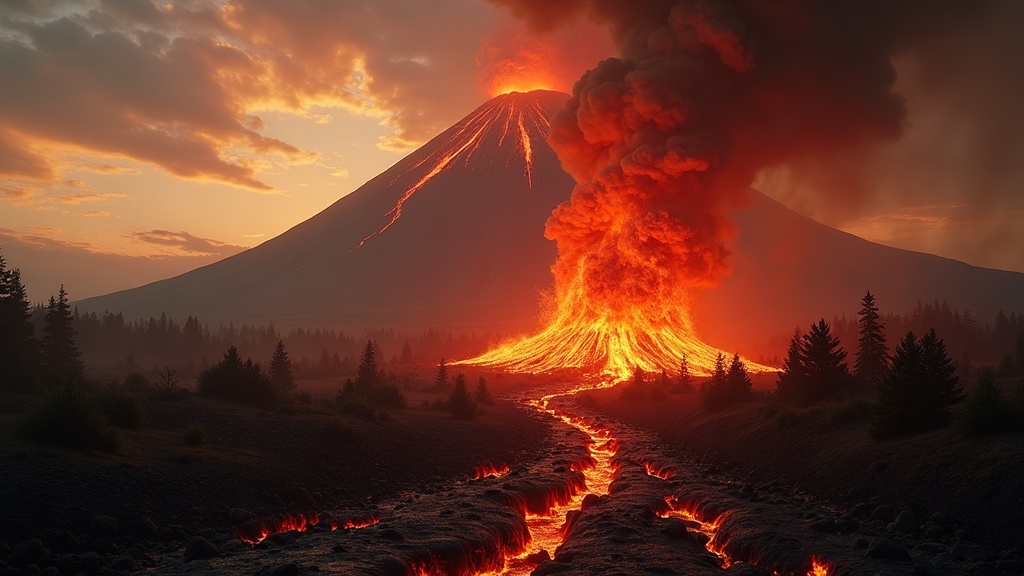
The Black Death did not begin in a European gutter or a rat-infested harbour. According to a landmark 2025 study, it may have begun with a volcanic eruption — somewhere near the equator, probably in the Indonesian archipelago, years before a single European dropped dead from plague. That single geological event is now thought to have set in motion a cascade of consequences so precisely aligned that the result was the worst demographic catastrophe in recorded human history.

Between 1347 and 1351, the Black Death killed an estimated 50 million people across Europe — up to half the continent's entire population. To put that in perspective, that figure is roughly seven times the total worldwide death toll from COVID-19. The scale is almost impossible to process. And yet for centuries, historians treated it as a story about rats, fleas, and bad luck. The emerging picture is far more complex, and far more instructive.
What the Ice and the Trees Have Been Trying to Tell Us
The detective work behind this theory is genuinely extraordinary. Researchers pieced together evidence from three entirely different archives of natural history: ice cores drilled from Greenland and Antarctica, tree rings sampled from forests across Europe, and written records ranging from Chinese chronicles to Italian poetry.
In the ice cores, each annual layer of compacted snow preserves a chemical snapshot of that year's atmosphere. Scientists found sulfur dioxide spikes in layers corresponding to 1329, 1336, and 1341, followed by a dramatically larger spike in 1345 — two years before the Black Death erupted in European port cities. That 1345 event deposited an estimated 14 million tonnes of sulfur into the atmosphere. For reference, the 1991 eruption of Mount Pinatubo in the Philippines — one of the largest volcanic events of the twentieth century — released around 6 million tonnes. The 1345 eruption was more than twice as powerful, and yet it has no name, no confirmed location, and almost no historical record.
The atmospheric sulfur from an eruption of that magnitude acts as a reflective aerosol, scattering sunlight before it reaches the Earth's surface. The result is what scientists call a volcanic winter: a temporary but potentially severe cooling of global temperatures. Pinatubo alone cooled the planet by half a degree Celsius in the year following its eruption. A 1345 event twice the size would have produced proportionally more dramatic effects — and the trees confirm exactly that.
In northern Spain and across much of Europe, tree cores from the mid-1340s show a striking anomaly: blue rings. These rings, invisible to the naked eye but visible under microscope with chemical staining, indicate wood cells that were never properly finished. The cell walls contain little or no lignin — the structural protein that makes timber rigid. This is a signature of stress, and researchers have linked it specifically to cold summers. Several consecutive blue rings do not happen by accident. They point to a sustained atmospheric disturbance. And across thousands of trees measured across Europe, the rings from 1345 to 1347 consistently show reduced density in their summer growth layers, the clearest possible signal of prolonged cold and poor growing conditions.
How Famine Set the Trap
The volcanic winter did not kill people directly. It did something more insidious: it destroyed the food supply. Written accounts from southern Europe describe a string of cold, wet summers from 1345 to 1347. Harvests failed across the Mediterranean — in southern Italy, Sicily, Sardinia, and northern Africa — the very regions that fed the densely populated Italian city-states.
This is where the story turns on a pivot that feels almost modern. By the mid-fourteenth century, cities like Venice, Genoa, and Pisa had grown beyond what their surrounding land could support. Urbanisation had outpaced agricultural capacity. These were sophisticated, globally connected commercial centres, but they were structurally dependent on imported grain. When the harvests in their supplier regions collapsed simultaneously, they faced a crisis that local solutions could not fix.
What they did next changed the course of history. Italian merchants and city governments turned to their longstanding trade relationships with the Mongol Empire in central Asia, where the climatic disruption appears to have been less severe and grain was still available. Extraordinarily, even though Italian and Mongol forces were technically at war at the time, famine brokered a ceasefire. Trade routes across the Black Sea were reopened, and grain ships began sailing from the Sea of Azov toward the Mediterranean.
The famine was averted. But something invisible had stowed away on those ships.
The Bacterium That Rode the Grain Route
Yersinia pestis, the bacterium responsible for plague, had been circulating in rodent populations across central Asia for decades. A 2022 genetic study traced the specific strain that caused the Black Death to cemeteries in Kyrgyzstan, dating to the 1330s and 1340s. By the time the grain trade with Italy resumed, that strain had already spread along overland Silk Road routes to the Black Sea region, where the Mongols were dealing with their own outbreak.
The transmission mechanism was brutally simple. Fleas carrying Yersinia pestis boarded the grain ships. There is even evidence that the fleas may not have required rat hosts on this particular journey — they may have survived by feeding on grain dust during the voyage. When the ships docked in Italian ports and the grain was unloaded, the fleas spread to harbour rodents, domestic animals, and eventually people.
The epidemiological fingerprints are striking. In Venice, the first plague cases were recorded less than two months after a grain shipment arrived from the Black Sea. When Venice later exported surplus grain to the nearby city of Padua, plague followed within weeks. Meanwhile, larger cities like Milan and Rome, which were more agriculturally self-sufficient and had not needed to import grain, were largely spared the first wave. Grain-producing regions like Verona and Ravenna, which had no reason to seek imports, also escaped initial devastation. The plague map of 1347 and 1348 is, to a remarkable degree, a map of where the Mongol grain went.
The Perfect Storm: Climate, Demography, and Globalisation
What makes the Black Death story so disturbing — and so relevant — is that no single factor was responsible. Remove any one domino and the pandemic either does not happen or does not spread as catastrophically as it did.
Without the volcanic eruption, there is no volcanic winter. Without the volcanic winter, the Mediterranean harvests likely do not fail in such dramatic and simultaneous fashion. Without the harvest failures, the Italian city-states do not urgently reopen trade routes to central Asia. Without those trade routes, the plague strain from Kyrgyzstan does not reach the densely packed port cities of the Mediterranean. And without those densely packed, nutritionally depleted, immunologically stressed urban populations, even if the bacterium had arrived, it might not have spread with the ferocity that it did.
Malnutrition compounds vulnerability to infectious disease in well-documented ways. A population that has just survived two years of crop failure and food insecurity is immunologically weaker, more likely to be living in cramped conditions sharing limited resources, and less capable of mounting the kind of public health response — however rudimentary — that might slow transmission.
This is the terrifying logic of compounding crises. Each individual event was survivable in isolation. The combination was not.
It also illuminates something that feels uncomfortably contemporary about globalisation. The trade networks that saved northern Italy from starvation were the same networks that delivered the plague. The interconnectedness that allows a crisis to be solved quickly is the same interconnectedness that allows a pathogen to travel halfway across the known world in the hold of a grain ship. This tension is not a medieval problem that humanity has since solved. It is a structural feature of any globally integrated system, from fourteenth-century maritime trade to twenty-first-century air travel and supply chains.
What This Means for How We Think About Historical Catastrophes
The conventional narrative of the Black Death has always centred on the bacterium itself: Yersinia pestis as the villain of the piece, with rats and fleas as its accomplices. That story is not wrong, but it is radically incomplete. It treats a multi-causal systemic collapse as if it were a simple infection story.
The 2025 study's methodology is a model for how historical science is evolving. By combining paleoclimatology, dendrochronology, glaciochemistry, and historical textual analysis, researchers are now able to reconstruct environments and events for which no direct human record exists. The 1345 eruption left no name in any chronicle. But it left its signature in Antarctic ice, in Spanish timber, and in the dark lunar eclipses described by observers from Japan to Germany. The past, it turns out, archives itself in more ways than we knew how to read until recently.
Free Weekly Newsletter
Enjoying this guide?
Get the best articles like this one delivered to your inbox every week. No spam.
This also matters for the future. Understanding that the Black Death was not just a bacteriological event but a climate-linked, socioeconomically mediated catastrophe changes how we should think about pandemic risk. Volcanic eruptions, food system vulnerabilities, global trade dependencies, and urban density are not historical curiosities. They are live variables in the modern world. The Yellowstone supervolcano, the volcanic systems beneath Iceland, the densely packed megacities of Southeast Asia, and the extraordinary fragility of globalised food supply chains are all still with us. History is not offering a cautionary tale about the medieval past. It is offering a structural analysis of how catastrophe actually works.
Frequently Asked Questions
What caused the Black Death according to the latest research?
The Black Death was caused by the bacterium Yersinia pestis, but a 2025 study suggests the pandemic was triggered by a chain of events beginning with a massive volcanic eruption in 1345. The eruption caused a volcanic winter, which led to crop failures across the Mediterranean, forcing Italian city-states to import grain from central Asia via Mongol trade routes. Those grain shipments carried flea-infected cargo harbouring Yersinia pestis, introducing the plague to European port cities.
How do scientists know a volcano erupted before the Black Death if there are no records of it?
Researchers identified the eruption through indirect evidence preserved in natural archives. Ice cores drilled from Greenland and Antarctica contain annual layers of compacted snow that preserve atmospheric chemistry. A major spike in sulfur dioxide — a volcanic byproduct — was found in layers corresponding to 1345, indicating an eruption releasing approximately 14 million tonnes of sulfur. Tree ring data from across Europe also shows cold summer conditions consistent with volcanic cooling during the mid-1340s.
Where did the volcanic eruption that may have triggered the Black Death occur?
The precise location has not been confirmed. However, the global distribution of sulfur found in both Arctic and Antarctic ice cores suggests the eruption occurred near the equator, which would have distributed volcanic gases evenly into both hemispheres. One leading candidate is the volcanic region around Mount Rinjani in Indonesia, which is known to have produced a similarly large sulfur spike in 1257. It is possible that the same volcanic system remained active and produced the 1345 event.
Could something like the Black Death happen again due to climate disruption?
The structural conditions that enabled the Black Death — climate-driven food system failure, global trade dependency, dense urban populations, and novel pathogens emerging from animal reservoirs — are all present in the modern world. While our medical knowledge and public health infrastructure are vastly more advanced, the interconnectedness of global supply chains means that a major volcanic eruption causing widespread agricultural disruption could still create cascading vulnerabilities. The 1991 Pinatubo eruption briefly disrupted global temperatures with just 6 million tonnes of sulfur; a significantly larger event could have meaningful food security implications across multiple continents simultaneously.
Frequently Asked Questions
When a Volcano Half a World Away Changed Everything
The Black Death did not begin in a European gutter or a rat-infested harbour. According to a landmark 2025 study, it may have begun with a volcanic eruption — somewhere near the equator, probably in the Indonesian archipelago, years before a single European dropped dead from plague. That single geological event is now thought to have set in motion a cascade of consequences so precisely aligned that the result was the worst demographic catastrophe in recorded human history.
Between 1347 and 1351, the Black Death killed an estimated 50 million people across Europe — up to half the continent's entire population. To put that in perspective, that figure is roughly seven times the total worldwide death toll from COVID-19. The scale is almost impossible to process. And yet for centuries, historians treated it as a story about rats, fleas, and bad luck. The emerging picture is far more complex, and far more instructive.
What the Ice and the Trees Have Been Trying to Tell Us
The detective work behind this theory is genuinely extraordinary. Researchers pieced together evidence from three entirely different archives of natural history: ice cores drilled from Greenland and Antarctica, tree rings sampled from forests across Europe, and written records ranging from Chinese chronicles to Italian poetry.
In the ice cores, each annual layer of compacted snow preserves a chemical snapshot of that year's atmosphere. Scientists found sulfur dioxide spikes in layers corresponding to 1329, 1336, and 1341, followed by a dramatically larger spike in 1345 — two years before the Black Death erupted in European port cities. That 1345 event deposited an estimated 14 million tonnes of sulfur into the atmosphere. For reference, the 1991 eruption of Mount Pinatubo in the Philippines — one of the largest volcanic events of the twentieth century — released around 6 million tonnes. The 1345 eruption was more than twice as powerful, and yet it has no name, no confirmed location, and almost no historical record.
The atmospheric sulfur from an eruption of that magnitude acts as a reflective aerosol, scattering sunlight before it reaches the Earth's surface. The result is what scientists call a volcanic winter: a temporary but potentially severe cooling of global temperatures. Pinatubo alone cooled the planet by half a degree Celsius in the year following its eruption. A 1345 event twice the size would have produced proportionally more dramatic effects — and the trees confirm exactly that.
In northern Spain and across much of Europe, tree cores from the mid-1340s show a striking anomaly: blue rings. These rings, invisible to the naked eye but visible under microscope with chemical staining, indicate wood cells that were never properly finished. The cell walls contain little or no lignin — the structural protein that makes timber rigid. This is a signature of stress, and researchers have linked it specifically to cold summers. Several consecutive blue rings do not happen by accident. They point to a sustained atmospheric disturbance. And across thousands of trees measured across Europe, the rings from 1345 to 1347 consistently show reduced density in their summer growth layers, the clearest possible signal of prolonged cold and poor growing conditions.
How Famine Set the Trap
The volcanic winter did not kill people directly. It did something more insidious: it destroyed the food supply. Written accounts from southern Europe describe a string of cold, wet summers from 1345 to 1347. Harvests failed across the Mediterranean — in southern Italy, Sicily, Sardinia, and northern Africa — the very regions that fed the densely populated Italian city-states.
This is where the story turns on a pivot that feels almost modern. By the mid-fourteenth century, cities like Venice, Genoa, and Pisa had grown beyond what their surrounding land could support. Urbanisation had outpaced agricultural capacity. These were sophisticated, globally connected commercial centres, but they were structurally dependent on imported grain. When the harvests in their supplier regions collapsed simultaneously, they faced a crisis that local solutions could not fix.
What they did next changed the course of history. Italian merchants and city governments turned to their longstanding trade relationships with the Mongol Empire in central Asia, where the climatic disruption appears to have been less severe and grain was still available. Extraordinarily, even though Italian and Mongol forces were technically at war at the time, famine brokered a ceasefire. Trade routes across the Black Sea were reopened, and grain ships began sailing from the Sea of Azov toward the Mediterranean.
The famine was averted. But something invisible had stowed away on those ships.
The Bacterium That Rode the Grain Route
Yersinia pestis, the bacterium responsible for plague, had been circulating in rodent populations across central Asia for decades. A 2022 genetic study traced the specific strain that caused the Black Death to cemeteries in Kyrgyzstan, dating to the 1330s and 1340s. By the time the grain trade with Italy resumed, that strain had already spread along overland Silk Road routes to the Black Sea region, where the Mongols were dealing with their own outbreak.
The transmission mechanism was brutally simple. Fleas carrying Yersinia pestis boarded the grain ships. There is even evidence that the fleas may not have required rat hosts on this particular journey — they may have survived by feeding on grain dust during the voyage. When the ships docked in Italian ports and the grain was unloaded, the fleas spread to harbour rodents, domestic animals, and eventually people.
The epidemiological fingerprints are striking. In Venice, the first plague cases were recorded less than two months after a grain shipment arrived from the Black Sea. When Venice later exported surplus grain to the nearby city of Padua, plague followed within weeks. Meanwhile, larger cities like Milan and Rome, which were more agriculturally self-sufficient and had not needed to import grain, were largely spared the first wave. Grain-producing regions like Verona and Ravenna, which had no reason to seek imports, also escaped initial devastation. The plague map of 1347 and 1348 is, to a remarkable degree, a map of where the Mongol grain went.
The Perfect Storm: Climate, Demography, and Globalisation
What makes the Black Death story so disturbing — and so relevant — is that no single factor was responsible. Remove any one domino and the pandemic either does not happen or does not spread as catastrophically as it did.
Without the volcanic eruption, there is no volcanic winter. Without the volcanic winter, the Mediterranean harvests likely do not fail in such dramatic and simultaneous fashion. Without the harvest failures, the Italian city-states do not urgently reopen trade routes to central Asia. Without those trade routes, the plague strain from Kyrgyzstan does not reach the densely packed port cities of the Mediterranean. And without those densely packed, nutritionally depleted, immunologically stressed urban populations, even if the bacterium had arrived, it might not have spread with the ferocity that it did.
Malnutrition compounds vulnerability to infectious disease in well-documented ways. A population that has just survived two years of crop failure and food insecurity is immunologically weaker, more likely to be living in cramped conditions sharing limited resources, and less capable of mounting the kind of public health response — however rudimentary — that might slow transmission.
This is the terrifying logic of compounding crises. Each individual event was survivable in isolation. The combination was not.
It also illuminates something that feels uncomfortably contemporary about globalisation. The trade networks that saved northern Italy from starvation were the same networks that delivered the plague. The interconnectedness that allows a crisis to be solved quickly is the same interconnectedness that allows a pathogen to travel halfway across the known world in the hold of a grain ship. This tension is not a medieval problem that humanity has since solved. It is a structural feature of any globally integrated system, from fourteenth-century maritime trade to twenty-first-century air travel and supply chains.
What This Means for How We Think About Historical Catastrophes
The conventional narrative of the Black Death has always centred on the bacterium itself: Yersinia pestis as the villain of the piece, with rats and fleas as its accomplices. That story is not wrong, but it is radically incomplete. It treats a multi-causal systemic collapse as if it were a simple infection story.
The 2025 study's methodology is a model for how historical science is evolving. By combining paleoclimatology, dendrochronology, glaciochemistry, and historical textual analysis, researchers are now able to reconstruct environments and events for which no direct human record exists. The 1345 eruption left no name in any chronicle. But it left its signature in Antarctic ice, in Spanish timber, and in the dark lunar eclipses described by observers from Japan to Germany. The past, it turns out, archives itself in more ways than we knew how to read until recently.
This also matters for the future. Understanding that the Black Death was not just a bacteriological event but a climate-linked, socioeconomically mediated catastrophe changes how we should think about pandemic risk. Volcanic eruptions, food system vulnerabilities, global trade dependencies, and urban density are not historical curiosities. They are live variables in the modern world. The Yellowstone supervolcano, the volcanic systems beneath Iceland, the densely packed megacities of Southeast Asia, and the extraordinary fragility of globalised food supply chains are all still with us. History is not offering a cautionary tale about the medieval past. It is offering a structural analysis of how catastrophe actually works.
Frequently Asked Questions
What caused the Black Death according to the latest research?
The Black Death was caused by the bacterium Yersinia pestis, but a 2025 study suggests the pandemic was triggered by a chain of events beginning with a massive volcanic eruption in 1345. The eruption caused a volcanic winter, which led to crop failures across the Mediterranean, forcing Italian city-states to import grain from central Asia via Mongol trade routes. Those grain shipments carried flea-infected cargo harbouring Yersinia pestis, introducing the plague to European port cities.
How do scientists know a volcano erupted before the Black Death if there are no records of it?
Researchers identified the eruption through indirect evidence preserved in natural archives. Ice cores drilled from Greenland and Antarctica contain annual layers of compacted snow that preserve atmospheric chemistry. A major spike in sulfur dioxide — a volcanic byproduct — was found in layers corresponding to 1345, indicating an eruption releasing approximately 14 million tonnes of sulfur. Tree ring data from across Europe also shows cold summer conditions consistent with volcanic cooling during the mid-1340s.
Where did the volcanic eruption that may have triggered the Black Death occur?
The precise location has not been confirmed. However, the global distribution of sulfur found in both Arctic and Antarctic ice cores suggests the eruption occurred near the equator, which would have distributed volcanic gases evenly into both hemispheres. One leading candidate is the volcanic region around Mount Rinjani in Indonesia, which is known to have produced a similarly large sulfur spike in 1257. It is possible that the same volcanic system remained active and produced the 1345 event.
Could something like the Black Death happen again due to climate disruption?
The structural conditions that enabled the Black Death — climate-driven food system failure, global trade dependency, dense urban populations, and novel pathogens emerging from animal reservoirs — are all present in the modern world. While our medical knowledge and public health infrastructure are vastly more advanced, the interconnectedness of global supply chains means that a major volcanic eruption causing widespread agricultural disruption could still create cascading vulnerabilities. The 1991 Pinatubo eruption briefly disrupted global temperatures with just 6 million tonnes of sulfur; a significantly larger event could have meaningful food security implications across multiple continents simultaneously.
About Zeebrain Editorial
Zeebrain publishes independent analysis of markets, investing, personal finance, and business. We disclose affiliate relationships, never accept payment for coverage, and fact-check all claims against primary sources. Read our editorial policy →
How this article was produced: Zeebrain articles are created with AI assistance from primary sources (including cited videos and market data) and reviewed under our editorial standards before publication. Spot an error? Tell us and we will correct it.
More from Curiosities



Related Guides
Keep exploring this topic
Explore More Categories
Keep browsing by topic and build depth around the subjects you care about most.