How the Modern Middle East Was Made — and Why It Burns
Quick Summary
Discover how secret treaties, colonial mapmaking, and oil politics in the early 20th century created the modern Middle East and set the stage for a century of war.
In This Article
The Map That Broke a Region
If you want to understand why the modern Middle East has been in a state of near-permanent conflict for more than a century, you don't need to start with the Iraq War of 2003, the Syrian Civil War, or even the founding of Israel. You need to go back to 1916, to a pair of diplomats in a quiet room, drawing lines across a map they barely understood. Those lines — and the political promises, colonial ambitions, and oil discoveries that followed — created a geopolitical fault line so unstable that it has been generating earthquakes ever since.

The modern Middle East is not an accident of history. It is the direct product of decisions made by outside powers for outside interests, with almost no regard for the people who actually lived there. Understanding how those decisions were made, why they were made, and what they ignored is the only real starting point for understanding why this region continues to dominate global headlines — and why it almost certainly will for the rest of your lifetime.
The Ottoman Foundation: What Was There Before
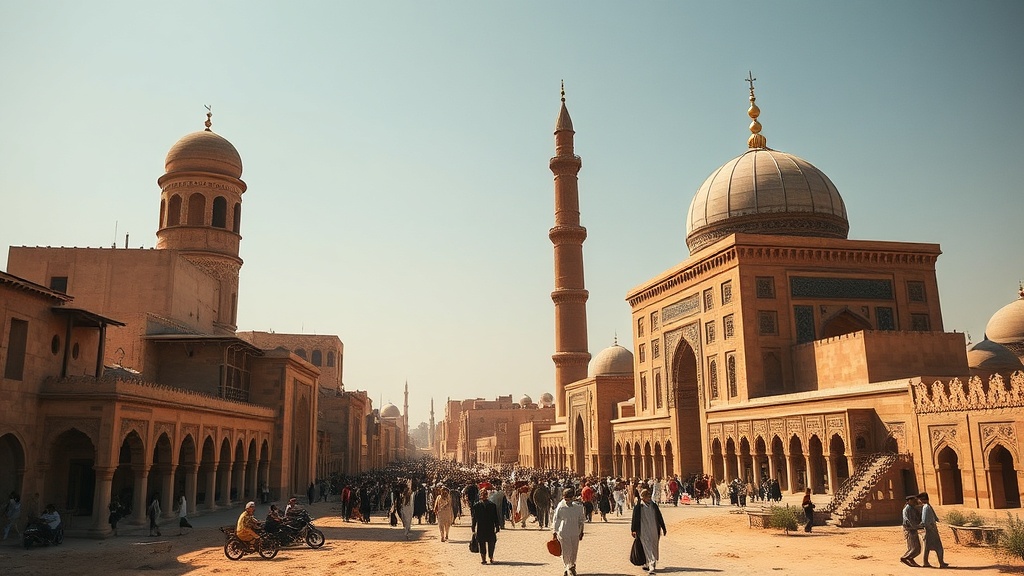
For centuries before European powers drew a single line on a Middle Eastern map, the Ottoman Empire held the region together through a combination of imperial authority, bureaucratic structure, and deliberate suppression of nationalist sentiment. At its peak, the Ottoman Empire stretched from the gates of Vienna to the tip of the Arabian Peninsula — a vast, multiethnic, multilingual, multireligious patchwork held in place not by shared identity, but by shared submission to a central authority in Constantinople.
This is a critical detail that gets overlooked in most popular accounts of the Middle East's troubles. The Ottomans never tried to forge a unified Arab, Kurdish, or Turkish national identity. They governed through provinces — administrative units designed for taxation and control, not cultural cohesion. A Sunni Arab merchant in Baghdad, a Kurdish farmer in Mosul, and a Shia Arab fisherman in Basra might all live within the same empire, but they were never encouraged, and certainly never required, to think of themselves as the same people. Nationalism was the empire's enemy, and it was stamped out wherever it appeared.
This matters enormously because when European powers later drew the borders of the modern Middle East, they largely used these Ottoman provincial lines as their template. They were inheriting a system that had never been designed to produce functioning nation-states — and then asking it to do exactly that.
Sykes-Picot and the Architecture of Instability
The Sykes-Picot Agreement of 1916 is one of the most consequential and least understood diplomatic documents in modern history. Negotiated in secret between British diplomat Mark Sykes and his French counterpart François Georges Picot, the agreement carved up the anticipated ruins of the Ottoman Empire into British and French spheres of influence. The British would control the area encompassing modern-day Iraq and Jordan. The French would control what would become Syria and Lebanon. Palestine would fall under some form of international administration — vaguely defined and left unresolved, a detail that would prove catastrophic.
What the agreement did not do was consult a single Arab, Kurdish, Armenian, or Jewish voice about what they actually wanted. It did not seriously map ethnic boundaries, linguistic communities, or religious fault lines. The diplomats were not ignorant of these complexities — they simply considered them secondary to the strategic interests of London and Paris.
The British were motivated significantly by their imperial lifeline to India. The Suez Canal, completed in 1869, had transformed the Middle East into the most strategically vital transit corridor on Earth for the British Empire. Control over Egypt, Palestine, and Mesopotamia meant control over that corridor. The French, meanwhile, had longstanding cultural and religious ties to the Christian communities of the Levant, and commercial ambitions stretching back to the Crusades. Neither power was thinking primarily about the long-term stability of the region they were dividing.
The Sykes-Picot lines were then further complicated by a series of contradictory British promises made simultaneously to different audiences. Arab leaders were told they would receive a large, unified independent Arab state in exchange for revolting against the Ottomans. Jewish leaders were told, via the 1917 Balfour Declaration, that Britain would support the creation of a Jewish national homeland in Palestine. Both promises were real. Both were irreconcilable. And both were made at the same time, to different people, about overlapping territory.
The Kurdish Question: The Largest Nation Without a State
Of all the unresolved consequences of the post-World War One settlement, the fate of the Kurdish people may be the most consistently underreported — and the most enduringly explosive. The 1920 Treaty of Sèvres, which imposed harsh terms on the defeated Ottoman Empire, actually included provisions for an independent Kurdish state carved out of southeastern Anatolia. For a brief moment, Kurdish statehood appeared to be on the table.
It never arrived. When Turkish military forces under Mustafa Kemal pushed back against the terms of Sèvres and forced a renegotiation, the resulting 1923 Treaty of Lausanne abandoned Kurdish statehood entirely. No independent Kurdistan was created. Instead, the Kurdish people — who share a distinct ethnic identity, language family, and cultural heritage — were divided between the borders of four newly drawn states: Turkey, Syria, Iraq, and Iran. In every single one of those countries, Kurds became a minority subject to varying degrees of discrimination, cultural suppression, and outright violence.
Today, there are an estimated 40 million Kurds worldwide, making them one of the largest stateless ethnic groups on the planet. Kurdish insurgencies have flared repeatedly in Turkey, Iraq, and Syria throughout the 20th and 21st centuries. The PKK conflict in Turkey alone has claimed more than 40,000 lives since 1984. The emergence of Iraqi Kurdistan as a semi-autonomous region after 2003 gave Kurds their closest approximation of self-governance yet, but it also triggered new tensions with Baghdad over oil revenues and territorial control. The Kurdish question, deferred in 1923, remains one of the most active political flashpoints in the modern Middle East.
Oil, Borders, and the Architecture of Resentment
If colonial mapmaking planted the seeds of the modern Middle East's instability, oil poured fuel on the ground around them. The timing of oil discoveries across the region is one of history's great geopolitical ironies: in nearly every case, the borders were drawn first, and the oil was found afterward — almost always in the wrong place relative to who held political power.
Oil was first discovered in what is now Iraq in 1927, five years after the borders of the British mandate for Mesopotamia had already been finalised. And its distribution within Iraq was almost perfectly designed to maximise internal conflict. The vast majority of Iraq's oil sits beneath the former Ottoman provinces of Basra, home to Shia Arab communities, and Mosul, home to Sunni Kurdish communities. The central Baghdad province — home to the Sunni Arab political elite who would dominate Iraq for much of the 20th century — contained almost none of it. This meant that whichever group controlled the Iraqi government would be extracting wealth from regions dominated by groups that resented central authority — a formula for perpetual internal tension that has never been resolved.
The same pattern repeated itself across the region. In Saudi Arabia, the overwhelming majority of oil reserves sit in the country's Eastern Province, home to Saudi Arabia's Shia Muslim minority — while the Sunni majority areas that form the kingdom's religious and political core are comparatively oil-poor. In Syria, the oil is concentrated in the northeast, in areas dominated by Sunni Kurdish and Sunni Arab communities, far from the Alawite-dominated western heartland that has anchored the Assad dynasty's power base. In Iran, roughly 90 percent of oil production is concentrated in the province of Khuzestan — a region historically inhabited by Arab Shia communities rather than the Persian majority that governs the country from Tehran.
These mismatches between political power and resource geography are not merely interesting footnotes. They are active drivers of conflict. They explain why Saddam Hussein invaded Kuwait in 1990 — a move that made strategic sense if you accept the Iraqi government's longstanding historical claim that Kuwait was artificially separated from the Basra province by British colonial administrators. They explain why the Assad regime in Syria fought so savagely to retake the country's oil-producing eastern regions during the civil war. They explain why Iran's government has always been acutely sensitive to any hint of Arab separatism in Khuzestan. Across the modern Middle East, oil and colonial borders interact in ways that make conflict almost structurally inevitable.
Palestine and the Unfinished Promise
No element of the post-Ottoman settlement has generated more sustained international conflict than the question of Palestine. The Balfour Declaration of 1917 was a single paragraph — 67 words — that promised British support for a Jewish national home in Palestine while simultaneously pledging that nothing would be done to prejudice the civil and religious rights of existing non-Jewish communities in the territory. The contradiction embedded in that single paragraph has driven conflict for more than a century.
The context matters enormously. The Zionist movement had been advocating for a Jewish homeland since the late 19th century, motivated by centuries of persecution across Europe that would find its ultimate expression in the Holocaust. Jewish immigration to Ottoman and then British Palestine accelerated throughout the early 20th century, fundamentally altering the demographic balance of a region that had a large Arab Muslim majority. The British found themselves in the impossible position of having promised the same land to two different peoples under two different justifications — and lacking both the will and the capacity to resolve the contradiction they had created.
When Britain finally relinquished the mandate in 1948 and the State of Israel declared independence, the result was an immediate war involving five Arab armies. More than 700,000 Palestinian Arabs were displaced in what Palestinians call the Nakba — the catastrophe. The refugee crisis generated in 1948 has never been resolved. Its third-generation descendants remain in refugee camps across Lebanon, Jordan, Syria, and Gaza. The borders of Israel and Palestine remain contested, the subject of failed peace processes, ongoing settlement expansion, blockades, and recurring military escalations that continue to draw in regional and global powers.
The Palestine question cannot be disentangled from the broader story of how the modern Middle East was made. It is not a separate conflict — it is the most visible and internationally charged expression of the same underlying problem: a region carved up by outside powers according to outside interests, leaving behind unresolved questions of sovereignty, identity, and belonging that no subsequent diplomatic process has been willing or able to fully address.
Free Weekly Newsletter
Enjoying this guide?
Get the best articles like this one delivered to your inbox every week. No spam.
Why This Still Matters Today
The modern Middle East's conflicts are often reported as though they are products of ancient hatreds, religious fanaticism, or cultural backwardness — framings that are not only inaccurate but actively misleading. The region's major fault lines are not ancient. They are largely modern, manufactured, and traceable to specific decisions made by specific people in specific rooms between 1916 and 1948.
This does not mean that external powers bear sole responsibility for every conflict in the modern Middle East. Local actors — governments, militias, religious movements, political parties — have made their own choices, committed their own atrocities, and pursued their own agendas with full agency. The Islamic State was not created by Sykes and Picot. But it did exploit the political vacuum and sectarian fault lines that the post-Ottoman settlement produced and that decades of authoritarian governance failed to resolve.
Understanding the modern Middle East requires holding two things simultaneously in mind. First, the region's structural instability has deep roots in external decisions made during a very specific historical window. Second, that structural instability has been actively exploited, reinforced, and deepened by both regional actors and outside powers — including the United States, Russia, Iran, Saudi Arabia, and Turkey — in the decades since. The map made in 1916 was a bad map. But it has been made worse by every generation that has fought over it rather than renegotiated it.
Until the underlying questions of sovereignty, minority rights, resource sharing, and political representation that the original colonial mapmaking left unresolved are genuinely addressed, the modern Middle East will continue to generate the conflicts that have defined it for the past hundred years. The fires burning today were lit a very long time ago — and understanding how they were lit is the only way to begin thinking seriously about how they might eventually be extinguished.
Frequently Asked Questions
What was the Sykes-Picot Agreement and why does it matter?
The Sykes-Picot Agreement was a secret 1916 treaty between British diplomat Mark Sykes and French diplomat François Georges Picot that divided the anticipated ruins of the Ottoman Empire into British and French spheres of influence. It matters because it laid the foundational borders of the modern Middle East with almost no regard for the ethnic, religious, or linguistic identities of the people living there. Its legacy — including the creation of Iraq, Syria, Lebanon, and the mandate for Palestine — continues to shape the region's conflicts today.
Why don't the Kurds have their own country?
The Kurdish people were promised a degree of self-determination under the 1920 Treaty of Sèvres, which included provisions for an independent Kurdish state. However, when Turkish military forces successfully pushed back against the treaty's terms, the subsequent 1923 Treaty of Lausanne abandoned Kurdish statehood entirely. As a result, approximately 40 million Kurds were divided between Turkey, Syria, Iraq, and Iran, where they have often faced discrimination and repression. Kurdish nationalism has been a persistent source of conflict in the region ever since.
How did oil discoveries make Middle Eastern conflicts worse?
Oil in the modern Middle East was almost invariably discovered after borders had already been drawn, and in locations that created structural tensions between political power and resource wealth. In Iraq, most oil sits in Shia and Kurdish areas while Sunni Arabs long dominated the central government. In Saudi Arabia, major reserves are in the Shia-majority Eastern Province. In Syria, oil is concentrated in Kurdish and Sunni areas far from the Alawite-dominated political core. These mismatches between who controls the state and who sits on the oil have fuelled internal repression, separatist movements, and interstate conflicts including Iraq's 1990 invasion of Kuwait.
Was the Balfour Declaration the cause of the Israel-Palestine conflict?
The Balfour Declaration of 1917 was a significant contributing factor, but the conflict's roots are more complex. The declaration promised British support for a Jewish national homeland in Palestine while pledging to protect the rights of existing Arab communities — a fundamental contradiction that Britain never resolved. Combined with rising Jewish immigration driven by persecution in Europe, the end of the British mandate in 1948, and the subsequent establishment of Israel, the declaration set in motion a displacement crisis and series of wars whose political consequences remain unresolved more than 75 years later. It is best understood as one critical node in a broader pattern of contradictory colonial promises rather than a single cause.
Is the Middle East's instability really the West's fault?
Colonial mapmaking and contradictory promises by Britain and France created the structural conditions for instability — that much is historically well-documented. But responsibility does not rest solely with Western powers. Regional governments, authoritarian regimes, sectarian militias, and religious movements have all made choices that deepened existing fault lines. External powers including the United States, Russia, Iran, Saudi Arabia, and Turkey have also intervened repeatedly in ways that have prolonged and intensified conflicts. The most honest answer is that the West created structurally unstable states, and many subsequent actors — local and foreign — have exploited that instability rather than working to resolve it.
Frequently Asked Questions
The Map That Broke a Region
If you want to understand why the modern Middle East has been in a state of near-permanent conflict for more than a century, you don't need to start with the Iraq War of 2003, the Syrian Civil War, or even the founding of Israel. You need to go back to 1916, to a pair of diplomats in a quiet room, drawing lines across a map they barely understood. Those lines — and the political promises, colonial ambitions, and oil discoveries that followed — created a geopolitical fault line so unstable that it has been generating earthquakes ever since.
The modern Middle East is not an accident of history. It is the direct product of decisions made by outside powers for outside interests, with almost no regard for the people who actually lived there. Understanding how those decisions were made, why they were made, and what they ignored is the only real starting point for understanding why this region continues to dominate global headlines — and why it almost certainly will for the rest of your lifetime.
The Ottoman Foundation: What Was There Before
For centuries before European powers drew a single line on a Middle Eastern map, the Ottoman Empire held the region together through a combination of imperial authority, bureaucratic structure, and deliberate suppression of nationalist sentiment. At its peak, the Ottoman Empire stretched from the gates of Vienna to the tip of the Arabian Peninsula — a vast, multiethnic, multilingual, multireligious patchwork held in place not by shared identity, but by shared submission to a central authority in Constantinople.
This is a critical detail that gets overlooked in most popular accounts of the Middle East's troubles. The Ottomans never tried to forge a unified Arab, Kurdish, or Turkish national identity. They governed through provinces — administrative units designed for taxation and control, not cultural cohesion. A Sunni Arab merchant in Baghdad, a Kurdish farmer in Mosul, and a Shia Arab fisherman in Basra might all live within the same empire, but they were never encouraged, and certainly never required, to think of themselves as the same people. Nationalism was the empire's enemy, and it was stamped out wherever it appeared.
This matters enormously because when European powers later drew the borders of the modern Middle East, they largely used these Ottoman provincial lines as their template. They were inheriting a system that had never been designed to produce functioning nation-states — and then asking it to do exactly that.
Sykes-Picot and the Architecture of Instability
The Sykes-Picot Agreement of 1916 is one of the most consequential and least understood diplomatic documents in modern history. Negotiated in secret between British diplomat Mark Sykes and his French counterpart François Georges Picot, the agreement carved up the anticipated ruins of the Ottoman Empire into British and French spheres of influence. The British would control the area encompassing modern-day Iraq and Jordan. The French would control what would become Syria and Lebanon. Palestine would fall under some form of international administration — vaguely defined and left unresolved, a detail that would prove catastrophic.
What the agreement did not do was consult a single Arab, Kurdish, Armenian, or Jewish voice about what they actually wanted. It did not seriously map ethnic boundaries, linguistic communities, or religious fault lines. The diplomats were not ignorant of these complexities — they simply considered them secondary to the strategic interests of London and Paris.
The British were motivated significantly by their imperial lifeline to India. The Suez Canal, completed in 1869, had transformed the Middle East into the most strategically vital transit corridor on Earth for the British Empire. Control over Egypt, Palestine, and Mesopotamia meant control over that corridor. The French, meanwhile, had longstanding cultural and religious ties to the Christian communities of the Levant, and commercial ambitions stretching back to the Crusades. Neither power was thinking primarily about the long-term stability of the region they were dividing.
The Sykes-Picot lines were then further complicated by a series of contradictory British promises made simultaneously to different audiences. Arab leaders were told they would receive a large, unified independent Arab state in exchange for revolting against the Ottomans. Jewish leaders were told, via the 1917 Balfour Declaration, that Britain would support the creation of a Jewish national homeland in Palestine. Both promises were real. Both were irreconcilable. And both were made at the same time, to different people, about overlapping territory.
The Kurdish Question: The Largest Nation Without a State
Of all the unresolved consequences of the post-World War One settlement, the fate of the Kurdish people may be the most consistently underreported — and the most enduringly explosive. The 1920 Treaty of Sèvres, which imposed harsh terms on the defeated Ottoman Empire, actually included provisions for an independent Kurdish state carved out of southeastern Anatolia. For a brief moment, Kurdish statehood appeared to be on the table.
It never arrived. When Turkish military forces under Mustafa Kemal pushed back against the terms of Sèvres and forced a renegotiation, the resulting 1923 Treaty of Lausanne abandoned Kurdish statehood entirely. No independent Kurdistan was created. Instead, the Kurdish people — who share a distinct ethnic identity, language family, and cultural heritage — were divided between the borders of four newly drawn states: Turkey, Syria, Iraq, and Iran. In every single one of those countries, Kurds became a minority subject to varying degrees of discrimination, cultural suppression, and outright violence.
Today, there are an estimated 40 million Kurds worldwide, making them one of the largest stateless ethnic groups on the planet. Kurdish insurgencies have flared repeatedly in Turkey, Iraq, and Syria throughout the 20th and 21st centuries. The PKK conflict in Turkey alone has claimed more than 40,000 lives since 1984. The emergence of Iraqi Kurdistan as a semi-autonomous region after 2003 gave Kurds their closest approximation of self-governance yet, but it also triggered new tensions with Baghdad over oil revenues and territorial control. The Kurdish question, deferred in 1923, remains one of the most active political flashpoints in the modern Middle East.
Oil, Borders, and the Architecture of Resentment
If colonial mapmaking planted the seeds of the modern Middle East's instability, oil poured fuel on the ground around them. The timing of oil discoveries across the region is one of history's great geopolitical ironies: in nearly every case, the borders were drawn first, and the oil was found afterward — almost always in the wrong place relative to who held political power.
Oil was first discovered in what is now Iraq in 1927, five years after the borders of the British mandate for Mesopotamia had already been finalised. And its distribution within Iraq was almost perfectly designed to maximise internal conflict. The vast majority of Iraq's oil sits beneath the former Ottoman provinces of Basra, home to Shia Arab communities, and Mosul, home to Sunni Kurdish communities. The central Baghdad province — home to the Sunni Arab political elite who would dominate Iraq for much of the 20th century — contained almost none of it. This meant that whichever group controlled the Iraqi government would be extracting wealth from regions dominated by groups that resented central authority — a formula for perpetual internal tension that has never been resolved.
The same pattern repeated itself across the region. In Saudi Arabia, the overwhelming majority of oil reserves sit in the country's Eastern Province, home to Saudi Arabia's Shia Muslim minority — while the Sunni majority areas that form the kingdom's religious and political core are comparatively oil-poor. In Syria, the oil is concentrated in the northeast, in areas dominated by Sunni Kurdish and Sunni Arab communities, far from the Alawite-dominated western heartland that has anchored the Assad dynasty's power base. In Iran, roughly 90 percent of oil production is concentrated in the province of Khuzestan — a region historically inhabited by Arab Shia communities rather than the Persian majority that governs the country from Tehran.
These mismatches between political power and resource geography are not merely interesting footnotes. They are active drivers of conflict. They explain why Saddam Hussein invaded Kuwait in 1990 — a move that made strategic sense if you accept the Iraqi government's longstanding historical claim that Kuwait was artificially separated from the Basra province by British colonial administrators. They explain why the Assad regime in Syria fought so savagely to retake the country's oil-producing eastern regions during the civil war. They explain why Iran's government has always been acutely sensitive to any hint of Arab separatism in Khuzestan. Across the modern Middle East, oil and colonial borders interact in ways that make conflict almost structurally inevitable.
Palestine and the Unfinished Promise
No element of the post-Ottoman settlement has generated more sustained international conflict than the question of Palestine. The Balfour Declaration of 1917 was a single paragraph — 67 words — that promised British support for a Jewish national home in Palestine while simultaneously pledging that nothing would be done to prejudice the civil and religious rights of existing non-Jewish communities in the territory. The contradiction embedded in that single paragraph has driven conflict for more than a century.
The context matters enormously. The Zionist movement had been advocating for a Jewish homeland since the late 19th century, motivated by centuries of persecution across Europe that would find its ultimate expression in the Holocaust. Jewish immigration to Ottoman and then British Palestine accelerated throughout the early 20th century, fundamentally altering the demographic balance of a region that had a large Arab Muslim majority. The British found themselves in the impossible position of having promised the same land to two different peoples under two different justifications — and lacking both the will and the capacity to resolve the contradiction they had created.
When Britain finally relinquished the mandate in 1948 and the State of Israel declared independence, the result was an immediate war involving five Arab armies. More than 700,000 Palestinian Arabs were displaced in what Palestinians call the Nakba — the catastrophe. The refugee crisis generated in 1948 has never been resolved. Its third-generation descendants remain in refugee camps across Lebanon, Jordan, Syria, and Gaza. The borders of Israel and Palestine remain contested, the subject of failed peace processes, ongoing settlement expansion, blockades, and recurring military escalations that continue to draw in regional and global powers.
The Palestine question cannot be disentangled from the broader story of how the modern Middle East was made. It is not a separate conflict — it is the most visible and internationally charged expression of the same underlying problem: a region carved up by outside powers according to outside interests, leaving behind unresolved questions of sovereignty, identity, and belonging that no subsequent diplomatic process has been willing or able to fully address.
Why This Still Matters Today
The modern Middle East's conflicts are often reported as though they are products of ancient hatreds, religious fanaticism, or cultural backwardness — framings that are not only inaccurate but actively misleading. The region's major fault lines are not ancient. They are largely modern, manufactured, and traceable to specific decisions made by specific people in specific rooms between 1916 and 1948.
This does not mean that external powers bear sole responsibility for every conflict in the modern Middle East. Local actors — governments, militias, religious movements, political parties — have made their own choices, committed their own atrocities, and pursued their own agendas with full agency. The Islamic State was not created by Sykes and Picot. But it did exploit the political vacuum and sectarian fault lines that the post-Ottoman settlement produced and that decades of authoritarian governance failed to resolve.
Understanding the modern Middle East requires holding two things simultaneously in mind. First, the region's structural instability has deep roots in external decisions made during a very specific historical window. Second, that structural instability has been actively exploited, reinforced, and deepened by both regional actors and outside powers — including the United States, Russia, Iran, Saudi Arabia, and Turkey — in the decades since. The map made in 1916 was a bad map. But it has been made worse by every generation that has fought over it rather than renegotiated it.
Until the underlying questions of sovereignty, minority rights, resource sharing, and political representation that the original colonial mapmaking left unresolved are genuinely addressed, the modern Middle East will continue to generate the conflicts that have defined it for the past hundred years. The fires burning today were lit a very long time ago — and understanding how they were lit is the only way to begin thinking seriously about how they might eventually be extinguished.
Frequently Asked Questions
What was the Sykes-Picot Agreement and why does it matter?
The Sykes-Picot Agreement was a secret 1916 treaty between British diplomat Mark Sykes and French diplomat François Georges Picot that divided the anticipated ruins of the Ottoman Empire into British and French spheres of influence. It matters because it laid the foundational borders of the modern Middle East with almost no regard for the ethnic, religious, or linguistic identities of the people living there. Its legacy — including the creation of Iraq, Syria, Lebanon, and the mandate for Palestine — continues to shape the region's conflicts today.
Why don't the Kurds have their own country?
The Kurdish people were promised a degree of self-determination under the 1920 Treaty of Sèvres, which included provisions for an independent Kurdish state. However, when Turkish military forces successfully pushed back against the treaty's terms, the subsequent 1923 Treaty of Lausanne abandoned Kurdish statehood entirely. As a result, approximately 40 million Kurds were divided between Turkey, Syria, Iraq, and Iran, where they have often faced discrimination and repression. Kurdish nationalism has been a persistent source of conflict in the region ever since.
How did oil discoveries make Middle Eastern conflicts worse?
Oil in the modern Middle East was almost invariably discovered after borders had already been drawn, and in locations that created structural tensions between political power and resource wealth. In Iraq, most oil sits in Shia and Kurdish areas while Sunni Arabs long dominated the central government. In Saudi Arabia, major reserves are in the Shia-majority Eastern Province. In Syria, oil is concentrated in Kurdish and Sunni areas far from the Alawite-dominated political core. These mismatches between who controls the state and who sits on the oil have fuelled internal repression, separatist movements, and interstate conflicts including Iraq's 1990 invasion of Kuwait.
Was the Balfour Declaration the cause of the Israel-Palestine conflict?
The Balfour Declaration of 1917 was a significant contributing factor, but the conflict's roots are more complex. The declaration promised British support for a Jewish national homeland in Palestine while pledging to protect the rights of existing Arab communities — a fundamental contradiction that Britain never resolved. Combined with rising Jewish immigration driven by persecution in Europe, the end of the British mandate in 1948, and the subsequent establishment of Israel, the declaration set in motion a displacement crisis and series of wars whose political consequences remain unresolved more than 75 years later. It is best understood as one critical node in a broader pattern of contradictory colonial promises rather than a single cause.
Is the Middle East's instability really the West's fault?
Colonial mapmaking and contradictory promises by Britain and France created the structural conditions for instability — that much is historically well-documented. But responsibility does not rest solely with Western powers. Regional governments, authoritarian regimes, sectarian militias, and religious movements have all made choices that deepened existing fault lines. External powers including the United States, Russia, Iran, Saudi Arabia, and Turkey have also intervened repeatedly in ways that have prolonged and intensified conflicts. The most honest answer is that the West created structurally unstable states, and many subsequent actors — local and foreign — have exploited that instability rather than working to resolve it.
About Zeebrain Editorial
Zeebrain publishes independent analysis of markets, investing, personal finance, and business. We disclose affiliate relationships, never accept payment for coverage, and fact-check all claims against primary sources. Read our editorial policy →
How this article was produced: Zeebrain articles are created with AI assistance from primary sources (including cited videos and market data) and reviewed under our editorial standards before publication. Spot an error? Tell us and we will correct it.
More from Curiosities


Related Guides
Keep exploring this topic
Explore More Categories
Keep browsing by topic and build depth around the subjects you care about most.