The Hidden Tech Behind Every NBA Broadcast Explained
Quick Summary
From $200,000 Canon lenses to six broadcast trucks, here's the real tech powering every NBA game you watch from your couch. No fluff, just facts.
In This Article
What You're Actually Watching When You Watch an NBA Game
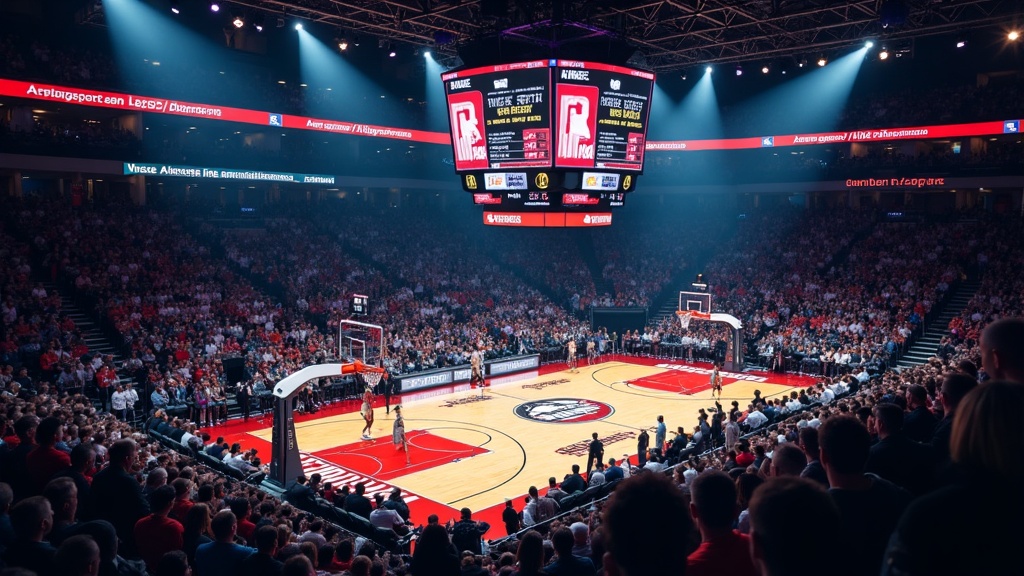
Most basketball fans can name every player on the court. Very few can name a single piece of equipment keeping them on your screen. That's not an accident — when an NBA broadcast is firing on all cylinders, the technology disappears completely. You stop seeing cameras and start seeing basketball. But the machinery behind that illusion is genuinely extraordinary, and understanding it changes how you watch the game forever.

Thanks to rare behind-the-scenes access captured by MKBHD (Marques Brownlee), we now have an unusually clear picture of the gear, the people, and the systems that turn a chaotic live sporting event into a polished, real-time cinematic experience. Let's break it down properly — camera by camera, truck by truck — and give you the full picture that a quick YouTube watch doesn't always deliver.
The Core Camera Setup: Sony P50s and Canon's Insane Glass
Here's a fact that surprises most people: the majority of broadcast cameras in an NBA arena are not shooting 4K. The workhorse of the operation is the Sony P50 — a broadcast box camera with a sub-1-inch sensor that tops out at 1080p 60fps. On paper, that sounds underwhelming in an era where your smartphone shoots 4K. In practice, it doesn't matter, and here's why.
Broadcast television infrastructure — from transmission pipelines to network delivery standards — is still largely built around 1080p. The Sony P50 is optimised for that environment, not consumer streaming specs. It also features a global shutter, which is critical for fast-motion sports. Rolling shutter, the kind you get in most consumer cameras, causes a jelly-like distortion effect when panning quickly. Global shutter eliminates that entirely, giving you clean, sharp frames even on the fastest drives and cuts to the basket. At $50,000 per unit, with roughly 40 to 50 cameras in a single arena, you're already looking at a staggering hardware investment before a single lens is mounted.
And then there are the lenses. The headliner is the Canon 122 — a lens named for its 122x optical zoom range, covering 8mm to 1,000mm. This is not a piece of kit you'll find at your local camera shop. It weighs a small fortune and costs approximately $200,000. The integrated servo motors allow operators to rack focus and adjust zoom simultaneously with precision that takes years to develop. The controls are actually relatively intuitive — a zoom dial on the right, a twist-to-focus handle on the left — but the skill gap between understanding the controls and executing broadcast-quality tracking shots is enormous. These operators are not just pointing a camera. They're tracking a moving subject at distance, in real time, while receiving audio directions through a headset, sometimes with a laminated cheat sheet of player faces nearby because they have roughly two seconds to identify, locate, and frame a specific athlete on command.
The Cable Cam, the Steadicam, and the Shots You Recognise
The sweeping aerial intro shot at the start of every NBA game — the one that descends from the rafters to court level in one majestic move — comes from a cable cam rig. It's a Sony P50 mounted on a DJI Ronin 2 gimbal, suspended from cables anchored to the roof of the arena and controlled by exactly two people sitting in the corner of the building.
The division of labour is precise: one operator controls the physical movement of the camera through 3D space, while the other handles zoom, focus, and camera direction. Together, they execute shots that look effortlessly cinematic on broadcast. Separately, neither could pull it off. The whole system transmits wirelessly, which means there's no tethering limiting its range across the arena. The fact that the entire rig is connected to those roof cables via four carabiners is either reassuring in its simplicity or mildly terrifying depending on your perspective.
Then there's the Steadicam — arguably the most physically demanding camera role in the building. The Steadicam operator is on the floor the instant a timeout is called, weaving between players and coaches to capture close-up reaction shots, conversations, and the raw emotion that sideline cameras can't reach. The rig they carry redistributes most of the weight to the waist rather than the back, which is a mercy given how much ground they cover over 48 minutes. It's another Sony P50 and Canon 14x lens combination, and the operator is essentially an athlete in their own right.
The Stanchion: The Most Overlooked Camera Position in the Arena
The stanchion — the support structure holding the basketball hoop — is a camera and microphone installation in its own right. Because it's the closest fixed structure to the actual court, it's prime real estate for capturing sounds and angles that would otherwise be impossible.
At the base, there's an ultra-wide camera and a floor microphone specifically placed to pick up sneaker squeaks and player chatter. Mid-stanchion, you'll find a mix of broadcast and press cameras including a Sony a9 and a Canon R6, plus Sennheiser MKH 416 shotgun microphones — a professional standard mic used in film production worldwide. Behind the backboard, there are two more cameras: a Sony P50 for broadcast and a Nikon D4 for stills photography. The lenses on the backboard cameras are wrapped in black tape, a practical trick to reduce reflections through the glass.
The above-the-rim camera is the genuinely special one. Positioned higher than the backboard and above the shot clock, it points straight down at the basket. For dunks, tip-ins, and contested layups, the view is unlike anything any other camera position can offer. A remote operator controls it throughout the game, and if you've ever been to a live NBA game, watching that camera move is its own entertainment.
The Audio Layer Most Viewers Never Think About
Video gets all the credit. Audio does most of the emotional work. An NBA broadcast relies on a dense microphone network that captures everything from the ball swishing through the net to a coach's half-time instructions leaking through a courtside mic.
Floor microphones at various points across the court capture the squeak of shoes — a sound so tied to basketball that broadcasts without it feel hollow and sterile. There are dedicated mics for crowd noise, because ambient crowd sound is mixed carefully rather than simply recorded. The commentators need to be audible, but the roar of the building needs to be felt. Balancing those two things in real time, without one drowning out the other, is a skilled audio engineering job that most viewers never consciously register.
Audio engineer Ben (documented in a separate YouTube deep-dive by Dallas Taylor) has mapped out the location and purpose of virtually every microphone in a typical NBA arena setup. The sheer density of that network — dozens of sources being mixed live — is comparable to a major concert production, except every element is unscripted and the whole thing has to work first time, every time.
The Broadcast Trucks: Where the Real Production Happens
Here's the part of the operation that gets almost no public attention despite being the most complex: the broadcast trucks parked 200 yards from the arena. For a playoff game, that's typically six trucks, each handling a specific function — one dedicated to replays alone.
This is where every camera feed arrives, where every microphone feed is processed, and where a director is watching dozens of screens simultaneously and calling cuts in real time. Engineers are actively white-balancing every camera to ensure colour consistency across the entire broadcast. If the floor camera and the above-the-rim camera don't match in colour temperature, the cuts between them look jarring. Someone is correcting for that, live, for the entire game.
The replay workflow is built around an EVS controller — a piece of broadcast equipment with a scrub wheel on one side and a playback speed lever on the other. When the director calls for a replay, the operator scrubs to the right moment and then uses the lever to modulate speed smoothly from full pace down to near-freeze frame. The source footage can be captured at up to 180fps, giving the replay operator substantial latitude to slow things down without losing sharpness. Those crisp slow-motion replays you see seconds after a big play? That's someone in a truck executing a physical, tactile performance with that lever, live, under instruction.
Free Weekly Newsletter
Enjoying this guide?
Get the best articles like this one delivered to your inbox every week. No spam.
The broader picture here is that what you're watching is a 48-minute live, unscripted, multi-camera film — edited, colour-graded, and mixed in real time by a crew of dozens. Hollywood productions routinely spend months in post-production on content shot over weeks. An NBA broadcast delivers a finished product as the action unfolds.
Bottom Line: What This Actually Costs and Why It Matters
Let's put some rough numbers on the hardware alone, because the scale is worth understanding. A single Sony P50 runs $50,000. A Canon 122x lens is around $200,000. The fluid head tripod setup costs approximately $25,000. With 40 to 50 cameras in the arena for a playoff game, the camera hardware alone likely exceeds $5 million per broadcast setup — and that's before trucks, EVS systems, Steadicam rigs, cable cams, audio equipment, or staffing.
For fans watching on a standard cable subscription or a streaming service, this is infrastructure that's been built, refined, and optimised over decades. It's not glamorous in the way the players are glamorous. But it is the reason you feel like you're at the game even when you're on your couch. When the technology does its job perfectly, you don't notice it at all. That invisibility is the whole point — and achieving it is far harder than it looks.
Frequently Asked Questions
Why do NBA broadcasts still use 1080p cameras instead of 4K?
Broadcast infrastructure — including transmission, switching, and delivery pipelines — is still largely standardised around 1080p. The Sony P50 cameras used in NBA arenas are optimised for reliability, global shutter performance, and compatibility with existing broadcast workflows rather than maximum resolution. 4K broadcast is expanding but hasn't fully replaced 1080p at the professional sports level.
How much does a Canon 122x broadcast zoom lens cost?
The Canon 122 (named for its 122x optical zoom range, covering 8mm to 1,000mm) costs approximately $200,000. It's a professional broadcast lens with integrated servo motors for zoom and focus control, designed specifically for live sports production. It is not available as a consumer product.
How many cameras are used during an NBA playoff game broadcast?
A typical NBA playoff broadcast uses between 40 and 50 cameras spread across the arena, including fixed broadcast cameras, cable cams, Steadicams, stanchion-mounted cameras, above-the-rim cameras, and various specialist angles for replays and ISO player coverage.
What is an EVS controller and how is it used in sports broadcasting?
An EVS controller is a broadcast replay device with a physical scrub wheel and a playback speed lever. Operators use it to locate specific moments in buffered camera footage and play them back at variable speeds — from full pace down to near-freeze frame — for the slow-motion replays viewers see seconds after a major play. It's a tactile, real-time performance tool requiring considerable skill to operate smoothly under live broadcast conditions.
Who controls the cable cam during an NBA game?
The cable cam is operated by a two-person team. One operator controls the physical movement of the camera through the arena's 3D space via the cable system, while the second operator handles zoom, focus, and the direction the camera points. All controls are wireless, and the camera itself is mounted on a DJI Ronin 2 gimbal for stabilisation.
Frequently Asked Questions
What You're Actually Watching When You Watch an NBA Game
Most basketball fans can name every player on the court. Very few can name a single piece of equipment keeping them on your screen. That's not an accident — when an NBA broadcast is firing on all cylinders, the technology disappears completely. You stop seeing cameras and start seeing basketball. But the machinery behind that illusion is genuinely extraordinary, and understanding it changes how you watch the game forever.
Thanks to rare behind-the-scenes access captured by MKBHD (Marques Brownlee), we now have an unusually clear picture of the gear, the people, and the systems that turn a chaotic live sporting event into a polished, real-time cinematic experience. Let's break it down properly — camera by camera, truck by truck — and give you the full picture that a quick YouTube watch doesn't always deliver.
The Core Camera Setup: Sony P50s and Canon's Insane Glass
Here's a fact that surprises most people: the majority of broadcast cameras in an NBA arena are not shooting 4K. The workhorse of the operation is the Sony P50 — a broadcast box camera with a sub-1-inch sensor that tops out at 1080p 60fps. On paper, that sounds underwhelming in an era where your smartphone shoots 4K. In practice, it doesn't matter, and here's why.
Broadcast television infrastructure — from transmission pipelines to network delivery standards — is still largely built around 1080p. The Sony P50 is optimised for that environment, not consumer streaming specs. It also features a global shutter, which is critical for fast-motion sports. Rolling shutter, the kind you get in most consumer cameras, causes a jelly-like distortion effect when panning quickly. Global shutter eliminates that entirely, giving you clean, sharp frames even on the fastest drives and cuts to the basket. At $50,000 per unit, with roughly 40 to 50 cameras in a single arena, you're already looking at a staggering hardware investment before a single lens is mounted.
And then there are the lenses. The headliner is the Canon 122 — a lens named for its 122x optical zoom range, covering 8mm to 1,000mm. This is not a piece of kit you'll find at your local camera shop. It weighs a small fortune and costs approximately $200,000. The integrated servo motors allow operators to rack focus and adjust zoom simultaneously with precision that takes years to develop. The controls are actually relatively intuitive — a zoom dial on the right, a twist-to-focus handle on the left — but the skill gap between understanding the controls and executing broadcast-quality tracking shots is enormous. These operators are not just pointing a camera. They're tracking a moving subject at distance, in real time, while receiving audio directions through a headset, sometimes with a laminated cheat sheet of player faces nearby because they have roughly two seconds to identify, locate, and frame a specific athlete on command.
The Cable Cam, the Steadicam, and the Shots You Recognise
The sweeping aerial intro shot at the start of every NBA game — the one that descends from the rafters to court level in one majestic move — comes from a cable cam rig. It's a Sony P50 mounted on a DJI Ronin 2 gimbal, suspended from cables anchored to the roof of the arena and controlled by exactly two people sitting in the corner of the building.
The division of labour is precise: one operator controls the physical movement of the camera through 3D space, while the other handles zoom, focus, and camera direction. Together, they execute shots that look effortlessly cinematic on broadcast. Separately, neither could pull it off. The whole system transmits wirelessly, which means there's no tethering limiting its range across the arena. The fact that the entire rig is connected to those roof cables via four carabiners is either reassuring in its simplicity or mildly terrifying depending on your perspective.
Then there's the Steadicam — arguably the most physically demanding camera role in the building. The Steadicam operator is on the floor the instant a timeout is called, weaving between players and coaches to capture close-up reaction shots, conversations, and the raw emotion that sideline cameras can't reach. The rig they carry redistributes most of the weight to the waist rather than the back, which is a mercy given how much ground they cover over 48 minutes. It's another Sony P50 and Canon 14x lens combination, and the operator is essentially an athlete in their own right.
The Stanchion: The Most Overlooked Camera Position in the Arena
The stanchion — the support structure holding the basketball hoop — is a camera and microphone installation in its own right. Because it's the closest fixed structure to the actual court, it's prime real estate for capturing sounds and angles that would otherwise be impossible.
At the base, there's an ultra-wide camera and a floor microphone specifically placed to pick up sneaker squeaks and player chatter. Mid-stanchion, you'll find a mix of broadcast and press cameras including a Sony a9 and a Canon R6, plus Sennheiser MKH 416 shotgun microphones — a professional standard mic used in film production worldwide. Behind the backboard, there are two more cameras: a Sony P50 for broadcast and a Nikon D4 for stills photography. The lenses on the backboard cameras are wrapped in black tape, a practical trick to reduce reflections through the glass.
The above-the-rim camera is the genuinely special one. Positioned higher than the backboard and above the shot clock, it points straight down at the basket. For dunks, tip-ins, and contested layups, the view is unlike anything any other camera position can offer. A remote operator controls it throughout the game, and if you've ever been to a live NBA game, watching that camera move is its own entertainment.
The Audio Layer Most Viewers Never Think About
Video gets all the credit. Audio does most of the emotional work. An NBA broadcast relies on a dense microphone network that captures everything from the ball swishing through the net to a coach's half-time instructions leaking through a courtside mic.
Floor microphones at various points across the court capture the squeak of shoes — a sound so tied to basketball that broadcasts without it feel hollow and sterile. There are dedicated mics for crowd noise, because ambient crowd sound is mixed carefully rather than simply recorded. The commentators need to be audible, but the roar of the building needs to be felt. Balancing those two things in real time, without one drowning out the other, is a skilled audio engineering job that most viewers never consciously register.
Audio engineer Ben (documented in a separate YouTube deep-dive by Dallas Taylor) has mapped out the location and purpose of virtually every microphone in a typical NBA arena setup. The sheer density of that network — dozens of sources being mixed live — is comparable to a major concert production, except every element is unscripted and the whole thing has to work first time, every time.
The Broadcast Trucks: Where the Real Production Happens
Here's the part of the operation that gets almost no public attention despite being the most complex: the broadcast trucks parked 200 yards from the arena. For a playoff game, that's typically six trucks, each handling a specific function — one dedicated to replays alone.
This is where every camera feed arrives, where every microphone feed is processed, and where a director is watching dozens of screens simultaneously and calling cuts in real time. Engineers are actively white-balancing every camera to ensure colour consistency across the entire broadcast. If the floor camera and the above-the-rim camera don't match in colour temperature, the cuts between them look jarring. Someone is correcting for that, live, for the entire game.
The replay workflow is built around an EVS controller — a piece of broadcast equipment with a scrub wheel on one side and a playback speed lever on the other. When the director calls for a replay, the operator scrubs to the right moment and then uses the lever to modulate speed smoothly from full pace down to near-freeze frame. The source footage can be captured at up to 180fps, giving the replay operator substantial latitude to slow things down without losing sharpness. Those crisp slow-motion replays you see seconds after a big play? That's someone in a truck executing a physical, tactile performance with that lever, live, under instruction.
The broader picture here is that what you're watching is a 48-minute live, unscripted, multi-camera film — edited, colour-graded, and mixed in real time by a crew of dozens. Hollywood productions routinely spend months in post-production on content shot over weeks. An NBA broadcast delivers a finished product as the action unfolds.
Bottom Line: What This Actually Costs and Why It Matters
Let's put some rough numbers on the hardware alone, because the scale is worth understanding. A single Sony P50 runs $50,000. A Canon 122x lens is around $200,000. The fluid head tripod setup costs approximately $25,000. With 40 to 50 cameras in the arena for a playoff game, the camera hardware alone likely exceeds $5 million per broadcast setup — and that's before trucks, EVS systems, Steadicam rigs, cable cams, audio equipment, or staffing.
For fans watching on a standard cable subscription or a streaming service, this is infrastructure that's been built, refined, and optimised over decades. It's not glamorous in the way the players are glamorous. But it is the reason you feel like you're at the game even when you're on your couch. When the technology does its job perfectly, you don't notice it at all. That invisibility is the whole point — and achieving it is far harder than it looks.
Frequently Asked Questions
Why do NBA broadcasts still use 1080p cameras instead of 4K?
Broadcast infrastructure — including transmission, switching, and delivery pipelines — is still largely standardised around 1080p. The Sony P50 cameras used in NBA arenas are optimised for reliability, global shutter performance, and compatibility with existing broadcast workflows rather than maximum resolution. 4K broadcast is expanding but hasn't fully replaced 1080p at the professional sports level.
How much does a Canon 122x broadcast zoom lens cost?
The Canon 122 (named for its 122x optical zoom range, covering 8mm to 1,000mm) costs approximately $200,000. It's a professional broadcast lens with integrated servo motors for zoom and focus control, designed specifically for live sports production. It is not available as a consumer product.
How many cameras are used during an NBA playoff game broadcast?
A typical NBA playoff broadcast uses between 40 and 50 cameras spread across the arena, including fixed broadcast cameras, cable cams, Steadicams, stanchion-mounted cameras, above-the-rim cameras, and various specialist angles for replays and ISO player coverage.
What is an EVS controller and how is it used in sports broadcasting?
An EVS controller is a broadcast replay device with a physical scrub wheel and a playback speed lever. Operators use it to locate specific moments in buffered camera footage and play them back at variable speeds — from full pace down to near-freeze frame — for the slow-motion replays viewers see seconds after a major play. It's a tactile, real-time performance tool requiring considerable skill to operate smoothly under live broadcast conditions.
Who controls the cable cam during an NBA game?
The cable cam is operated by a two-person team. One operator controls the physical movement of the camera through the arena's 3D space via the cable system, while the second operator handles zoom, focus, and the direction the camera points. All controls are wireless, and the camera itself is mounted on a DJI Ronin 2 gimbal for stabilisation.
About Zeebrain Editorial
Zeebrain publishes independent analysis of markets, investing, personal finance, and business. We disclose affiliate relationships, never accept payment for coverage, and fact-check all claims against primary sources. Read our editorial policy →
Disclaimer: Content on Zeebrain is for informational and educational purposes only and does not constitute financial advice or a recommendation to buy or sell any security. Always conduct your own research and consult a qualified financial adviser before making investment decisions. Past performance is not indicative of future results.
More from Review




Related Guides
Keep exploring this topic
Explore More Categories
Keep browsing by topic and build depth around the subjects you care about most.