The First Deep Ocean Dives: Inside the Bathysphere Story
Quick Summary
How two unlikely partners built a steel sphere and plunged into the abyss, changing ocean exploration forever. The remarkable story of the bathysphere dives.
In This Article
The Abyss Was Always There — We Just Had No Way In
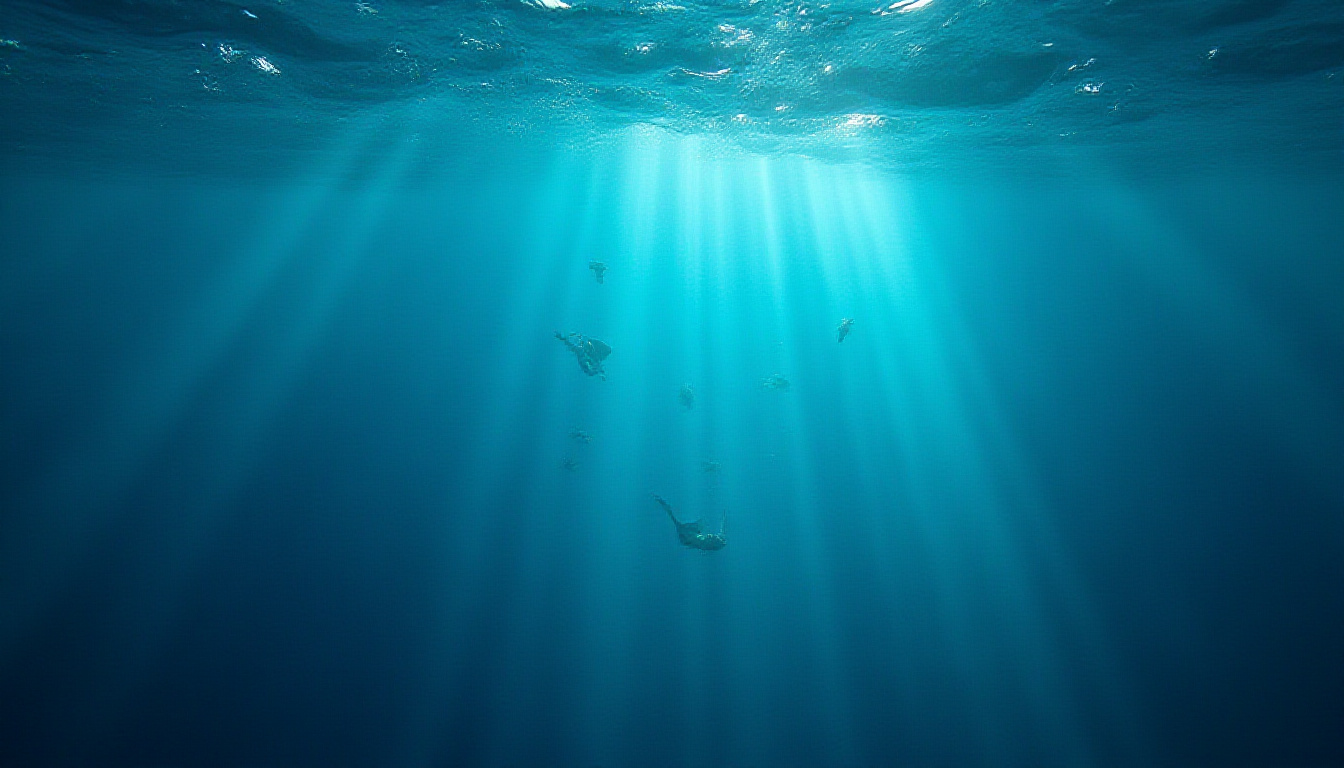
More than 80% of the world's oceans remain unexplored. That figure is worth sitting with for a moment. We live on a planet that is 70% ocean, and the vast majority of it is still, functionally, a mystery. We have more detailed maps of the surface of the Moon than we do of the ocean floor. For most of human history, the deep sea existed as a kind of enforced blank space — not because we weren't curious, but because we lacked the means to go there without being killed in the process.

That began to change on 6 June 1930, when two men folded themselves into a hollow steel ball barely four and a half feet across and were lowered into the waters off Bermuda on a cable. They descended to 800 feet — three times deeper than any human being had ever gone. The device was called the bathysphere, and the story of how it came to exist, and what it cost the men who built it, is one of the most remarkable episodes in the history of exploration.
Two Men, One Improbable Partnership
William Beebe and Otis Barton could hardly have been more different, which makes their collaboration both inevitable and combustible in equal measure.
Beebe, at 52, was already a celebrated figure — founding ornithologist at the New York Zoological Society, a bestselling author, and one of America's most recognisable science communicators. He was self-taught, having abandoned his degree at Columbia in 1897, and this lack of formal credentials meant the scientific establishment often kept him at arm's length, regardless of his output. He was a Victorian gentleman-explorer operating in the early twentieth century: disciplined, moralistic, prolific.
Barton was nearly twenty years younger, independently wealthy, and restless in a way that wealth often enables. He had built his own diving helmet as a young man, gone on safari in Africa, and eventually enrolled in Columbia's Department of Engineering. He was mercurial, prone to mood swings, and desperate to become the kind of explorer that Beebe already was.
What brought them together was practical necessity. Beebe had published an article in the New York Times outlining a concept for a cylindrical diving chamber that could be lowered into the ocean on a cable. Barton read it and immediately recognised the flaw: a cylinder would crumple under deep-sea pressure. A sphere distributes pressure evenly across its entire surface — it was the only viable geometry. Barton designed one, called it the bathysphere (from the Greek bathos, meaning deep), and then spent considerable effort simply getting Beebe to take his calls. Beebe had been flooded with proposals from inventors after the Times article. But Barton's design was sound, and Beebe had the connections and credibility to run the expedition. A deal was struck: Barton would fund the craft's construction; Beebe would organise the ship and equipment.
Engineering the Impossible on a Budget
The engineering challenges involved in building the bathysphere were formidable, especially given the era. The craft was a hollow cast-steel sphere with walls one inch thick, just large enough for two men to crouch inside without standing. Nothing of that size and complexity had ever been cast in a single piece. Barton contracted the Watson Stillman Hydraulic Machinery Company in New Jersey — a firm that specialised in casting cathedral bells — to do the job.
The first casting came in at five tons. Impressive, but useless: there wasn't a crane or winch in Bermuda capable of lifting it. The entire thing had to be melted down and recast at 2.5 tons, with a revised maximum depth of half a mile. The portholes were made from fused quartz glass developed by General Electric — the strongest transparent material then available. The lowering cable was manufactured by Roebling and Sons, the same firm that built the Brooklyn Bridge. Inside, calcium hydroxide trays absorbed the carbon dioxide from the divers' breath, and compressed oxygen cylinders replenished the air supply. A telephone line ran up the cable to the surface ship. A powerful searchlight mounted behind one porthole lit the darkness outside.
This was bespoke engineering at the edge of what was technically possible, assembled from components sourced across multiple industries, financed on a shoestring, and operated from an ageing Royal Navy barge called the Ready.
Descending Into the Dark: What They Found
The first deep dive on 6 June 1930 was eventful for all the wrong reasons. An electrical fire in the searchlight and a leaking porthole forced Beebe to halt the descent early. Even so, 800 feet was a record by a factor of three. Over the following weeks and months, the pair made dozens of dives, pushing deeper and cataloguing what they saw: bioluminescent organisms pulsing in the dark, fish never seen by human eyes, entire ecosystems operating in conditions that should, by surface logic, make life impossible.
The danger was never theoretical. During one unmanned test dive, the bathysphere came back up full of water. Beebe began loosening the hatch bolts — and was nearly killed. As he described in his bestselling book Half Mile Down, a bolt was torn from his hands and fired across the deck like an artillery shell, gouging a notch in a steel winch thirty feet away. A solid cylinder of pressurised water followed. Beebe later noted, with the dry gallows humour of someone who had genuinely thought about it, that a leak at depth wouldn't drown the divers — the pressure was so extreme that the first droplets of water would have passed through flesh and bone like bullets.
By 1934, Beebe and Barton had reached 3,028 feet — just over half a mile — a record that stood for fifteen years. The observations Beebe made during those dives, communicated to a radio operator on the surface and broadcast live to millions on NBC, made the pair international celebrities. Their dives were treated with the same reverence that the moon landings would receive four decades later.
The Science, the Controversy, and the Legacy
Beebe's scientific reputation took hits both during and after the bathysphere programme. The mainstream establishment criticised him for describing four new species of deep-sea fish based solely on visual observations through the portholes, with no physical specimens to verify the claims. Some of those species have never been confirmed by subsequent research. It is a legitimate scientific objection, and it illustrates a tension that still exists today between the need to record and communicate discoveries rapidly and the methodological rigour required to validate them.
But this criticism risks obscuring what the bathysphere programme actually achieved. It proved that human beings could survive at depths previously considered fatal. It demonstrated that the deep ocean was not the barren, lifeless place many scientists had assumed — it was teeming with organisms adapted to cold, pressure, and darkness. It pioneered techniques for live observation of marine life in its natural habitat, rather than the distorted snapshots produced by dredging. And it generated a wave of public interest in ocean science that helped legitimise the field and attract future funding.
Beebe's talent for science communication — his radio broadcasts, his books, his magazine articles for National Geographic — set a template that later popularisers including Jacques Cousteau and David Attenborough would inherit. The idea that science could be dramatic, accessible, and genuinely exciting to a mass audience: Beebe helped establish that.
What Happened to the Men Behind the Bathysphere
The partnership between Beebe and Barton did not survive their success. By the mid-1930s, the relationship had deteriorated badly. The media, predictably, focused on the already-famous Beebe and largely ignored Barton's indispensable engineering contribution. Beebe, for his part, found Barton's temperament impossible. They reportedly never spoke again after their final dive in 1934.
Beebe moved to South America and then Trinidad, where he studied insects and rainforest ecology until his death from pneumonia in 1962. He never returned to the deep ocean.
Barton spent decades trying to step out of Beebe's shadow. In 1938 he produced and starred in Titans of the Deep, a semi-documentary film about the bathysphere dives that was both a commercial failure and, painfully, somehow managed to promote itself in ways that implied Beebe's involvement — overshadowing Barton in his own project. He did eventually reclaim some recognition: in 1949 he descended to 4,500 feet in an improved vessel called the Benthoscope. That record for cable-lowered submersibles still stands.
Free Weekly Newsletter
Enjoying this guide?
Get the best articles like this one delivered to your inbox every week. No spam.
The bathysphere itself was donated to the New York Zoological Society, displayed at the 1939 World's Fair, and then spent nearly sixty years rusting in a storage yard beneath a Coney Island roller coaster. It was restored in 2005 and now sits on permanent display outside the New York Aquarium — a small steel sphere that once carried human beings into one of the most hostile environments on Earth.
The Ocean Is Still Waiting
The story of the bathysphere is not just a historical curiosity. It speaks directly to where we are now. Despite decades of advances in submersible technology, ROVs, sonar mapping, and satellite oceanography, more than 80% of the ocean floor remains unmapped at high resolution. The Mariana Trench was first reached by humans in 1960, thirty years after Beebe and Barton made their first deep dive. As of now, more people have been to space than have descended to the deepest point in the ocean.
Every year, new species are discovered in the deep sea. New geological formations, new chemical processes, new ecosystems built around hydrothermal vents. The deep ocean influences global climate, harbours undiscovered pharmacological compounds, and represents the largest habitat on Earth by volume. The bathysphere dives were the first tentative steps into that world — two men in a steel ball, terrified and exhilarated, speaking into a telephone every five seconds to prove they were still alive.
That impulse — to go where no one has gone, to see what no one has seen, to report back — is what drives science forward. Beebe and Barton had it in abundance. The ocean is still out there, and we are still barely scratching its surface.
Frequently Asked Questions
What was the bathysphere and how did it work?
The bathysphere was a hollow steel sphere 4.5 feet in diameter with one-inch-thick walls, designed to be lowered into the deep ocean on a cable. It carried two occupants who breathed from compressed oxygen cylinders, while calcium hydroxide absorbed exhaled carbon dioxide. Fused quartz portholes allowed observation, a mounted searchlight illuminated the exterior, and a telephone cable maintained contact with the surface ship.
Who invented the bathysphere — Beebe or Barton?
The bathysphere was designed and funded by Otis Barton, who recognised that the cylindrical design Beebe had publicly proposed would not survive deep-sea pressure. Barton's engineering background led him to design a sphere instead. William Beebe provided the scientific vision, organisational connections, and public profile that made the expeditions possible. Both contributions were essential, though media coverage at the time heavily favoured Beebe.
How deep did the bathysphere ultimately go?
The deepest dive made in the original bathysphere occurred on 15 August 1934, when Beebe and Barton descended to 3,028 feet — just over half a mile. Barton later reached 4,500 feet in 1949 using an improved vessel called the Benthoscope, a record for cable-lowered submersibles that remains unbroken.
Why were the bathysphere dives scientifically controversial?
Beebe described four new species of deep-sea fish based solely on visual observations through the bathysphere's portholes, without physical specimens to support the identifications. The scientific establishment criticised this methodology, and some of the species he described have never been confirmed. Despite this, the dives produced significant legitimate scientific data on light absorption, marine biodiversity, and deep-sea conditions.
Where is the original bathysphere today?
After its final dive in 1934, the bathysphere was donated to the New York Zoological Society, displayed at the 1939 New York World's Fair, and subsequently stored — largely forgotten — in a yard beneath the Cyclone Roller Coaster at Coney Island for nearly six decades. It was restored in 2005 and is now on permanent outdoor display at the New York Aquarium in Brooklyn.
Frequently Asked Questions
The Abyss Was Always There — We Just Had No Way In
More than 80% of the world's oceans remain unexplored. That figure is worth sitting with for a moment. We live on a planet that is 70% ocean, and the vast majority of it is still, functionally, a mystery. We have more detailed maps of the surface of the Moon than we do of the ocean floor. For most of human history, the deep sea existed as a kind of enforced blank space — not because we weren't curious, but because we lacked the means to go there without being killed in the process.
That began to change on 6 June 1930, when two men folded themselves into a hollow steel ball barely four and a half feet across and were lowered into the waters off Bermuda on a cable. They descended to 800 feet — three times deeper than any human being had ever gone. The device was called the bathysphere, and the story of how it came to exist, and what it cost the men who built it, is one of the most remarkable episodes in the history of exploration.
Two Men, One Improbable Partnership
William Beebe and Otis Barton could hardly have been more different, which makes their collaboration both inevitable and combustible in equal measure.
Beebe, at 52, was already a celebrated figure — founding ornithologist at the New York Zoological Society, a bestselling author, and one of America's most recognisable science communicators. He was self-taught, having abandoned his degree at Columbia in 1897, and this lack of formal credentials meant the scientific establishment often kept him at arm's length, regardless of his output. He was a Victorian gentleman-explorer operating in the early twentieth century: disciplined, moralistic, prolific.
Barton was nearly twenty years younger, independently wealthy, and restless in a way that wealth often enables. He had built his own diving helmet as a young man, gone on safari in Africa, and eventually enrolled in Columbia's Department of Engineering. He was mercurial, prone to mood swings, and desperate to become the kind of explorer that Beebe already was.
What brought them together was practical necessity. Beebe had published an article in the New York Times outlining a concept for a cylindrical diving chamber that could be lowered into the ocean on a cable. Barton read it and immediately recognised the flaw: a cylinder would crumple under deep-sea pressure. A sphere distributes pressure evenly across its entire surface — it was the only viable geometry. Barton designed one, called it the bathysphere (from the Greek bathos, meaning deep), and then spent considerable effort simply getting Beebe to take his calls. Beebe had been flooded with proposals from inventors after the Times article. But Barton's design was sound, and Beebe had the connections and credibility to run the expedition. A deal was struck: Barton would fund the craft's construction; Beebe would organise the ship and equipment.
Engineering the Impossible on a Budget
The engineering challenges involved in building the bathysphere were formidable, especially given the era. The craft was a hollow cast-steel sphere with walls one inch thick, just large enough for two men to crouch inside without standing. Nothing of that size and complexity had ever been cast in a single piece. Barton contracted the Watson Stillman Hydraulic Machinery Company in New Jersey — a firm that specialised in casting cathedral bells — to do the job.
The first casting came in at five tons. Impressive, but useless: there wasn't a crane or winch in Bermuda capable of lifting it. The entire thing had to be melted down and recast at 2.5 tons, with a revised maximum depth of half a mile. The portholes were made from fused quartz glass developed by General Electric — the strongest transparent material then available. The lowering cable was manufactured by Roebling and Sons, the same firm that built the Brooklyn Bridge. Inside, calcium hydroxide trays absorbed the carbon dioxide from the divers' breath, and compressed oxygen cylinders replenished the air supply. A telephone line ran up the cable to the surface ship. A powerful searchlight mounted behind one porthole lit the darkness outside.
This was bespoke engineering at the edge of what was technically possible, assembled from components sourced across multiple industries, financed on a shoestring, and operated from an ageing Royal Navy barge called the Ready.
Descending Into the Dark: What They Found
The first deep dive on 6 June 1930 was eventful for all the wrong reasons. An electrical fire in the searchlight and a leaking porthole forced Beebe to halt the descent early. Even so, 800 feet was a record by a factor of three. Over the following weeks and months, the pair made dozens of dives, pushing deeper and cataloguing what they saw: bioluminescent organisms pulsing in the dark, fish never seen by human eyes, entire ecosystems operating in conditions that should, by surface logic, make life impossible.
The danger was never theoretical. During one unmanned test dive, the bathysphere came back up full of water. Beebe began loosening the hatch bolts — and was nearly killed. As he described in his bestselling book Half Mile Down, a bolt was torn from his hands and fired across the deck like an artillery shell, gouging a notch in a steel winch thirty feet away. A solid cylinder of pressurised water followed. Beebe later noted, with the dry gallows humour of someone who had genuinely thought about it, that a leak at depth wouldn't drown the divers — the pressure was so extreme that the first droplets of water would have passed through flesh and bone like bullets.
By 1934, Beebe and Barton had reached 3,028 feet — just over half a mile — a record that stood for fifteen years. The observations Beebe made during those dives, communicated to a radio operator on the surface and broadcast live to millions on NBC, made the pair international celebrities. Their dives were treated with the same reverence that the moon landings would receive four decades later.
The Science, the Controversy, and the Legacy
Beebe's scientific reputation took hits both during and after the bathysphere programme. The mainstream establishment criticised him for describing four new species of deep-sea fish based solely on visual observations through the portholes, with no physical specimens to verify the claims. Some of those species have never been confirmed by subsequent research. It is a legitimate scientific objection, and it illustrates a tension that still exists today between the need to record and communicate discoveries rapidly and the methodological rigour required to validate them.
But this criticism risks obscuring what the bathysphere programme actually achieved. It proved that human beings could survive at depths previously considered fatal. It demonstrated that the deep ocean was not the barren, lifeless place many scientists had assumed — it was teeming with organisms adapted to cold, pressure, and darkness. It pioneered techniques for live observation of marine life in its natural habitat, rather than the distorted snapshots produced by dredging. And it generated a wave of public interest in ocean science that helped legitimise the field and attract future funding.
Beebe's talent for science communication — his radio broadcasts, his books, his magazine articles for National Geographic — set a template that later popularisers including Jacques Cousteau and David Attenborough would inherit. The idea that science could be dramatic, accessible, and genuinely exciting to a mass audience: Beebe helped establish that.
What Happened to the Men Behind the Bathysphere
The partnership between Beebe and Barton did not survive their success. By the mid-1930s, the relationship had deteriorated badly. The media, predictably, focused on the already-famous Beebe and largely ignored Barton's indispensable engineering contribution. Beebe, for his part, found Barton's temperament impossible. They reportedly never spoke again after their final dive in 1934.
Beebe moved to South America and then Trinidad, where he studied insects and rainforest ecology until his death from pneumonia in 1962. He never returned to the deep ocean.
Barton spent decades trying to step out of Beebe's shadow. In 1938 he produced and starred in Titans of the Deep, a semi-documentary film about the bathysphere dives that was both a commercial failure and, painfully, somehow managed to promote itself in ways that implied Beebe's involvement — overshadowing Barton in his own project. He did eventually reclaim some recognition: in 1949 he descended to 4,500 feet in an improved vessel called the Benthoscope. That record for cable-lowered submersibles still stands.
The bathysphere itself was donated to the New York Zoological Society, displayed at the 1939 World's Fair, and then spent nearly sixty years rusting in a storage yard beneath a Coney Island roller coaster. It was restored in 2005 and now sits on permanent display outside the New York Aquarium — a small steel sphere that once carried human beings into one of the most hostile environments on Earth.
The Ocean Is Still Waiting
The story of the bathysphere is not just a historical curiosity. It speaks directly to where we are now. Despite decades of advances in submersible technology, ROVs, sonar mapping, and satellite oceanography, more than 80% of the ocean floor remains unmapped at high resolution. The Mariana Trench was first reached by humans in 1960, thirty years after Beebe and Barton made their first deep dive. As of now, more people have been to space than have descended to the deepest point in the ocean.
Every year, new species are discovered in the deep sea. New geological formations, new chemical processes, new ecosystems built around hydrothermal vents. The deep ocean influences global climate, harbours undiscovered pharmacological compounds, and represents the largest habitat on Earth by volume. The bathysphere dives were the first tentative steps into that world — two men in a steel ball, terrified and exhilarated, speaking into a telephone every five seconds to prove they were still alive.
That impulse — to go where no one has gone, to see what no one has seen, to report back — is what drives science forward. Beebe and Barton had it in abundance. The ocean is still out there, and we are still barely scratching its surface.
Frequently Asked Questions
What was the bathysphere and how did it work?
The bathysphere was a hollow steel sphere 4.5 feet in diameter with one-inch-thick walls, designed to be lowered into the deep ocean on a cable. It carried two occupants who breathed from compressed oxygen cylinders, while calcium hydroxide absorbed exhaled carbon dioxide. Fused quartz portholes allowed observation, a mounted searchlight illuminated the exterior, and a telephone cable maintained contact with the surface ship.
Who invented the bathysphere — Beebe or Barton?
The bathysphere was designed and funded by Otis Barton, who recognised that the cylindrical design Beebe had publicly proposed would not survive deep-sea pressure. Barton's engineering background led him to design a sphere instead. William Beebe provided the scientific vision, organisational connections, and public profile that made the expeditions possible. Both contributions were essential, though media coverage at the time heavily favoured Beebe.
How deep did the bathysphere ultimately go?
The deepest dive made in the original bathysphere occurred on 15 August 1934, when Beebe and Barton descended to 3,028 feet — just over half a mile. Barton later reached 4,500 feet in 1949 using an improved vessel called the Benthoscope, a record for cable-lowered submersibles that remains unbroken.
Why were the bathysphere dives scientifically controversial?
Beebe described four new species of deep-sea fish based solely on visual observations through the bathysphere's portholes, without physical specimens to support the identifications. The scientific establishment criticised this methodology, and some of the species he described have never been confirmed. Despite this, the dives produced significant legitimate scientific data on light absorption, marine biodiversity, and deep-sea conditions.
Where is the original bathysphere today?
After its final dive in 1934, the bathysphere was donated to the New York Zoological Society, displayed at the 1939 New York World's Fair, and subsequently stored — largely forgotten — in a yard beneath the Cyclone Roller Coaster at Coney Island for nearly six decades. It was restored in 2005 and is now on permanent outdoor display at the New York Aquarium in Brooklyn.
About Zeebrain Editorial
Zeebrain publishes independent analysis of markets, investing, personal finance, and business. We disclose affiliate relationships, never accept payment for coverage, and fact-check all claims against primary sources. Read our editorial policy →
How this article was produced: Zeebrain articles are created with AI assistance from primary sources (including cited videos and market data) and reviewed under our editorial standards before publication. Spot an error? Tell us and we will correct it.
More from Curiosities

Related Guides
Keep exploring this topic
Explore More Categories
Keep browsing by topic and build depth around the subjects you care about most.