Fed vs Trump: What It Means for Your Money

Quick Summary
The Fed and the White House are pulling in opposite directions. Here's how rising debt, inflation, and interest rates affect your money — and what to do about it.
In This Article
When Central Banks and Governments Disagree, Your Wallet Pays the Price
The Federal Reserve's independence has always been a feature, not a bug, of the U.S. financial system. But when that independence collides with political pressure — especially over interest rates and government spending — the consequences ripple far beyond Washington. They hit your mortgage, your grocery bill, your savings account, and your investment portfolio.
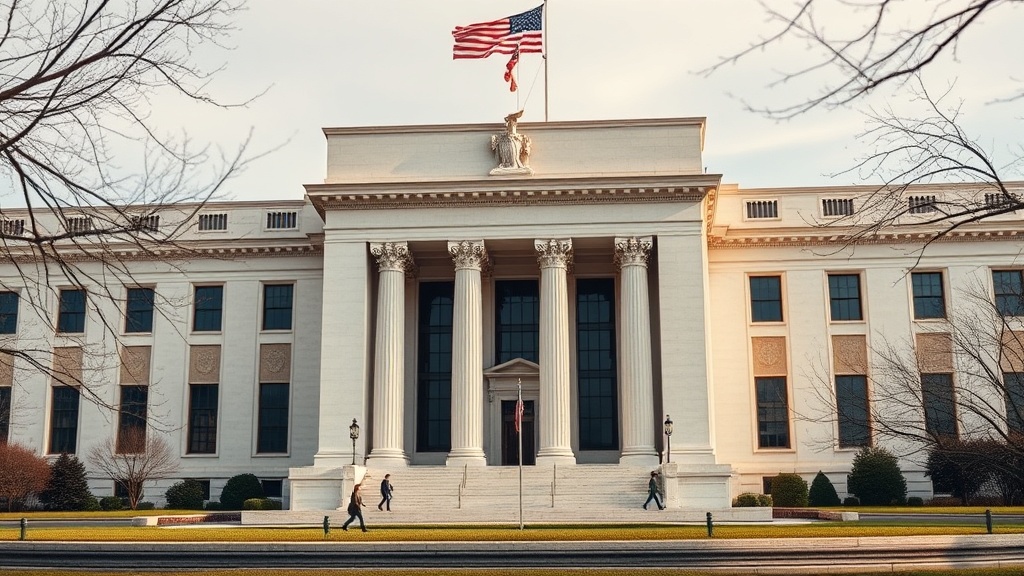
To understand where we are now, you need to understand how we got here. The chain of events that began in 2020 — pandemic stimulus, zero interest rates, runaway inflation, aggressive rate hikes, and then the geopolitical shocks that followed — has created one of the most complex economic environments in modern history. Whether you're a seasoned investor or just learning how to invest money for beginners, this context is not optional. It's the foundation everything else rests on.
The 2020 Playbook That Created Today's Problem
When the pandemic hit in 2020, the U.S. government made a calculated bet: flood the economy with money to prevent a depression. The numbers were staggering. Stimulus checks. Enhanced unemployment benefits. PPP loans. Business bailouts. Trillions of dollars deployed in months.
The problem? The government didn't have that money. It borrowed it — largely from the Federal Reserve, which created it out of thin air through a process called quantitative easing (QE). Simultaneously, the Fed slashed interest rates to near zero, making borrowing essentially free.
The short-term result looked like success. GDP grew. Markets rallied. Unemployment fell. But the long-term consequence was predictable to anyone who understood monetary history: inflation.
By mid-2022, U.S. inflation hit 9.1% — the highest in over 40 years. The Fed's response was equally aggressive. It pivoted from QE to quantitative tightening (QT), pulling money out of the economy, and began one of the fastest interest rate hiking cycles on record. The goal was to make borrowing expensive, slow spending, and bring inflation under control.
It worked — partially. Inflation fell. But prices didn't. They just stopped rising quite as fast. The average American family is still paying meaningfully more for housing, food, and energy than they were in 2019. That's the critical distinction most headlines miss.
Why the National Debt Is Now the Single Biggest Risk
Here's where things get genuinely alarming — and where the Fed-government split has the most real-world consequences.
The U.S. national debt now exceeds $40 trillion. That number is abstract until you understand how it's structured. Unlike a standard 30-year fixed mortgage, a significant portion of U.S. government debt is short-term borrowing that continuously rolls over at whatever the current interest rate happens to be.
During the pandemic, the government made a short-sighted decision. Instead of locking in 30-year debt at around 2%, officials borrowed at 5-year rates closer to 1.8% to save money on interest in the near term. It looked clever at the time. Now, with rates dramatically higher, roughly a third of that debt is repricing — not at pandemic-era rates, but at today's elevated ones.
The result: interest payments on the national debt have become the fastest-growing line item in the federal budget — surpassing military spending. Tax revenues that could fund infrastructure, healthcare, or education are instead flowing to bondholders. This is not a political observation; it's basic arithmetic.
This matters for investors because a government increasingly consumed by debt servicing has fewer tools to stimulate growth, fewer resources to respond to the next crisis, and more pressure to either print money (inflationary) or raise taxes (deflationary for consumer spending).
The Bond Market, Treasury Yields, and What They Signal
One of the most underreported stories in modern finance is the bond market's growing reluctance to fund U.S. debt at low yields. When the U.S. government needs to borrow, it issues Treasury bonds. Normally, these are considered the world's safest asset. Investors queue up to buy them.
But that dynamic is shifting. When demand for Treasuries falls — because investors are skeptical about fiscal discipline, or because better-yielding alternatives exist — the government has to raise the interest rate it offers to attract buyers. When Treasury yields spike, borrowing costs rise across the entire economy. Mortgage rates go up. Corporate borrowing becomes more expensive. Economic growth slows.
This is the bond market equivalent of a credit score warning. And it has significant implications for how to invest money — whether you're in the UK, Europe, India, or the U.S. Global investors treating Treasuries as the bedrock of their portfolios need to reconsider their assumptions.
Key takeaways from the Treasury yield situation:
- Higher yields mean higher borrowing costs for everyone, not just the government
- Foreign demand for U.S. Treasuries is not guaranteed — and declining demand would force yields even higher
- Long-duration bonds carry more risk in a high-rate environment; shorter-duration instruments offer more flexibility
- Treasury Inflation-Protected Securities (TIPS) are worth understanding as one tool against inflation erosion
Oil, Geopolitics, and the Second Inflation Wave
Fiscal policy isn't the only force pushing prices higher. Supply shocks — particularly in energy — have a direct, fast-moving impact on inflation that monetary policy cannot easily counter.
Oil is the lifeblood of the global economy. When supply is disrupted — whether through conflict, sanctions, or production cuts — every dollar of oil price increase cascades through the system. Diesel becomes more expensive. Trucking costs rise. Food transportation becomes pricier. Agricultural inputs (many derived from petrochemicals) cost more. The result is broad-based price increases across nearly every category of consumer spending.
This is the mechanism that links geopolitical events to your grocery bill. It's not abstract. It's one of the most direct channels through which global instability becomes personal financial pain.
For investors, this underscores the importance of understanding commodity exposure in a portfolio. Energy stocks, commodity ETFs, and inflation-linked bonds can all serve as partial hedges — not guarantees, but tools. Beginners learning how to invest money should understand that diversification across asset classes is partly about protecting against exactly these kinds of supply shocks.
What This Means for How You Invest Now
The Fed's conflict with political pressure isn't just a Washington drama. It's a signal about the investment environment you're operating in. Here's how to think about it practically:
1. Inflation is not solved — it's managed. The Fed may have brought headline inflation down from 9.1%, but structural pressures remain. Energy volatility, ongoing deficit spending, and debt monetisation all create upward price pressure. Investors should consider assets with inflation-hedging properties: real assets, commodities, TIPS, and equities in pricing-power sectors.
2. Cash is not as safe as it feels. Holding large amounts in low-yield savings accounts while real inflation erodes purchasing power is a slow-motion loss. For beginners learning how to invest for beginners with little money, even small allocations to diversified index funds have historically outpaced inflation over long periods.
3. Interest rate sensitivity matters across all asset classes. Bonds, real estate, and growth stocks are all sensitive to rate movements. Understanding duration risk — how much the value of an asset changes when rates move — is no longer just for professionals. It's basic financial literacy.
Free Weekly Newsletter
Enjoying this guide?
Get the best articles like this one delivered to your inbox every week. No spam.
4. Geographic diversification is more valuable than ever. For investors in Europe, India, and the UK asking how to invest money for beginners in their local context, the lesson from U.S. fiscal dynamics is clear: don't over-concentrate in any single economy. Global index funds, regional ETFs, and currency-diversified assets reduce the risk that one country's policy mistakes derail your entire portfolio.
5. Dollar exposure deserves scrutiny. When a government runs persistent deficits and its central bank monetises debt, the long-term purchasing power of that currency is under pressure. This doesn't mean the dollar collapses — it remains the world's reserve currency — but it does mean investors should think carefully about currency risk in their portfolio.
The Practical Conclusion: Knowledge Is the Only Edge Available to Everyone
The split between the Federal Reserve and political leadership over interest rates, spending, and monetary policy isn't a temporary disagreement. It reflects a deeper structural tension: a government addicted to deficit spending colliding with a central bank legally mandated to control inflation.
That tension doesn't resolve cleanly. It plays out over years — in interest rates, inflation prints, currency movements, and market volatility. The investors who understand this framework will make better decisions than those who don't.
If you're just starting out — whether you're searching for how to invest money for beginners in India, the UK, Europe, or anywhere else — the single most valuable thing you can do right now is build this macroeconomic literacy. Read widely. Understand the relationship between money supply, inflation, and interest rates. Start small, diversify early, and never let short-term noise override long-term strategy.
The numbers are daunting. $40 trillion in debt. 9.1% peak inflation. Treasury yields at multi-decade highs. But these same numbers contain opportunity for investors who understand what they mean — and act accordingly.
This article is for informational purposes only and does not constitute financial advice. Always consult a qualified financial professional before making investment decisions.
Frequently Asked Questions
What does it mean when the Fed raises interest rates?
When the Federal Reserve raises interest rates, it makes borrowing more expensive across the entire economy. Mortgage rates rise. Credit card rates go up. Business loans cost more. The goal is to reduce spending and cool inflation — but the side effect is slower economic growth and, in some cases, reduced asset prices. For investors, higher rates generally pressure growth stocks and long-duration bonds while benefiting cash holdings and certain financial sector stocks.
How does U.S. government debt affect ordinary investors?
When government debt grows faster than the economy, it creates several downstream effects. Interest payments crowd out productive government spending. The risk of inflation rises as the government may be tempted to print money to service debt. Treasury yields may rise as lenders demand higher compensation for risk. All of these factors affect interest rates, currency values, and asset prices — which means every investor, regardless of where they live, has a stake in understanding U.S. fiscal policy.
What is quantitative easing and why does it cause inflation?
Quantitative easing (QE) is when a central bank creates new money — digitally — and uses it to purchase financial assets, typically government bonds. This injects money into the financial system, lowers interest rates, and stimulates borrowing and spending. The inflationary effect comes from a basic economic principle: when the supply of money grows faster than the supply of goods and services, each unit of currency buys less. The 9.1% U.S. inflation peak in 2022 was a direct consequence of the aggressive QE deployed during 2020 and 2021.
How should beginners start investing when inflation is high?
For anyone learning how to invest for beginners with little money in a high-inflation environment, the core principles remain consistent: start early, diversify broadly, and focus on long-term compounding. Specifically in inflationary periods, financial analysts generally suggest considering: (1) broad equity index funds, which historically outpace inflation over 10+ year periods; (2) inflation-linked bonds such as TIPS in the U.S. or their equivalents in the UK and Europe; (3) real assets or commodity-exposed funds; and (4) avoiding large cash positions in low-yield accounts where inflation silently erodes value. The key is to begin — even with a small amount — rather than wait for a 'perfect' moment that rarely arrives.
Free Investing Tools
Frequently Asked Questions
When Central Banks and Governments Disagree, Your Wallet Pays the Price
The Federal Reserve's independence has always been a feature, not a bug, of the U.S. financial system. But when that independence collides with political pressure — especially over interest rates and government spending — the consequences ripple far beyond Washington. They hit your mortgage, your grocery bill, your savings account, and your investment portfolio.
To understand where we are now, you need to understand how we got here. The chain of events that began in 2020 — pandemic stimulus, zero interest rates, runaway inflation, aggressive rate hikes, and then the geopolitical shocks that followed — has created one of the most complex economic environments in modern history. Whether you're a seasoned investor or just learning how to invest money for beginners, this context is not optional. It's the foundation everything else rests on.
The 2020 Playbook That Created Today's Problem
When the pandemic hit in 2020, the U.S. government made a calculated bet: flood the economy with money to prevent a depression. The numbers were staggering. Stimulus checks. Enhanced unemployment benefits. PPP loans. Business bailouts. Trillions of dollars deployed in months.
The problem? The government didn't have that money. It borrowed it — largely from the Federal Reserve, which created it out of thin air through a process called quantitative easing (QE). Simultaneously, the Fed slashed interest rates to near zero, making borrowing essentially free.
The short-term result looked like success. GDP grew. Markets rallied. Unemployment fell. But the long-term consequence was predictable to anyone who understood monetary history: inflation.
By mid-2022, U.S. inflation hit 9.1% — the highest in over 40 years. The Fed's response was equally aggressive. It pivoted from QE to quantitative tightening (QT), pulling money out of the economy, and began one of the fastest interest rate hiking cycles on record. The goal was to make borrowing expensive, slow spending, and bring inflation under control.
It worked — partially. Inflation fell. But prices didn't. They just stopped rising quite as fast. The average American family is still paying meaningfully more for housing, food, and energy than they were in 2019. That's the critical distinction most headlines miss.
Why the National Debt Is Now the Single Biggest Risk
Here's where things get genuinely alarming — and where the Fed-government split has the most real-world consequences.
The U.S. national debt now exceeds $40 trillion. That number is abstract until you understand how it's structured. Unlike a standard 30-year fixed mortgage, a significant portion of U.S. government debt is short-term borrowing that continuously rolls over at whatever the current interest rate happens to be.
During the pandemic, the government made a short-sighted decision. Instead of locking in 30-year debt at around 2%, officials borrowed at 5-year rates closer to 1.8% to save money on interest in the near term. It looked clever at the time. Now, with rates dramatically higher, roughly a third of that debt is repricing — not at pandemic-era rates, but at today's elevated ones.
The result: interest payments on the national debt have become the fastest-growing line item in the federal budget — surpassing military spending. Tax revenues that could fund infrastructure, healthcare, or education are instead flowing to bondholders. This is not a political observation; it's basic arithmetic.
This matters for investors because a government increasingly consumed by debt servicing has fewer tools to stimulate growth, fewer resources to respond to the next crisis, and more pressure to either print money (inflationary) or raise taxes (deflationary for consumer spending).
The Bond Market, Treasury Yields, and What They Signal
One of the most underreported stories in modern finance is the bond market's growing reluctance to fund U.S. debt at low yields. When the U.S. government needs to borrow, it issues Treasury bonds. Normally, these are considered the world's safest asset. Investors queue up to buy them.
But that dynamic is shifting. When demand for Treasuries falls — because investors are skeptical about fiscal discipline, or because better-yielding alternatives exist — the government has to raise the interest rate it offers to attract buyers. When Treasury yields spike, borrowing costs rise across the entire economy. Mortgage rates go up. Corporate borrowing becomes more expensive. Economic growth slows.
This is the bond market equivalent of a credit score warning. And it has significant implications for how to invest money — whether you're in the UK, Europe, India, or the U.S. Global investors treating Treasuries as the bedrock of their portfolios need to reconsider their assumptions.
Key takeaways from the Treasury yield situation:
- Higher yields mean higher borrowing costs for everyone, not just the government
- Foreign demand for U.S. Treasuries is not guaranteed — and declining demand would force yields even higher
- Long-duration bonds carry more risk in a high-rate environment; shorter-duration instruments offer more flexibility
- Treasury Inflation-Protected Securities (TIPS) are worth understanding as one tool against inflation erosion
Oil, Geopolitics, and the Second Inflation Wave
Fiscal policy isn't the only force pushing prices higher. Supply shocks — particularly in energy — have a direct, fast-moving impact on inflation that monetary policy cannot easily counter.
Oil is the lifeblood of the global economy. When supply is disrupted — whether through conflict, sanctions, or production cuts — every dollar of oil price increase cascades through the system. Diesel becomes more expensive. Trucking costs rise. Food transportation becomes pricier. Agricultural inputs (many derived from petrochemicals) cost more. The result is broad-based price increases across nearly every category of consumer spending.
This is the mechanism that links geopolitical events to your grocery bill. It's not abstract. It's one of the most direct channels through which global instability becomes personal financial pain.
For investors, this underscores the importance of understanding commodity exposure in a portfolio. Energy stocks, commodity ETFs, and inflation-linked bonds can all serve as partial hedges — not guarantees, but tools. Beginners learning how to invest money should understand that diversification across asset classes is partly about protecting against exactly these kinds of supply shocks.
What This Means for How You Invest Now
The Fed's conflict with political pressure isn't just a Washington drama. It's a signal about the investment environment you're operating in. Here's how to think about it practically:
1. Inflation is not solved — it's managed. The Fed may have brought headline inflation down from 9.1%, but structural pressures remain. Energy volatility, ongoing deficit spending, and debt monetisation all create upward price pressure. Investors should consider assets with inflation-hedging properties: real assets, commodities, TIPS, and equities in pricing-power sectors.
2. Cash is not as safe as it feels. Holding large amounts in low-yield savings accounts while real inflation erodes purchasing power is a slow-motion loss. For beginners learning how to invest for beginners with little money, even small allocations to diversified index funds have historically outpaced inflation over long periods.
3. Interest rate sensitivity matters across all asset classes. Bonds, real estate, and growth stocks are all sensitive to rate movements. Understanding duration risk — how much the value of an asset changes when rates move — is no longer just for professionals. It's basic financial literacy.
4. Geographic diversification is more valuable than ever. For investors in Europe, India, and the UK asking how to invest money for beginners in their local context, the lesson from U.S. fiscal dynamics is clear: don't over-concentrate in any single economy. Global index funds, regional ETFs, and currency-diversified assets reduce the risk that one country's policy mistakes derail your entire portfolio.
5. Dollar exposure deserves scrutiny. When a government runs persistent deficits and its central bank monetises debt, the long-term purchasing power of that currency is under pressure. This doesn't mean the dollar collapses — it remains the world's reserve currency — but it does mean investors should think carefully about currency risk in their portfolio.
The Practical Conclusion: Knowledge Is the Only Edge Available to Everyone
The split between the Federal Reserve and political leadership over interest rates, spending, and monetary policy isn't a temporary disagreement. It reflects a deeper structural tension: a government addicted to deficit spending colliding with a central bank legally mandated to control inflation.
That tension doesn't resolve cleanly. It plays out over years — in interest rates, inflation prints, currency movements, and market volatility. The investors who understand this framework will make better decisions than those who don't.
If you're just starting out — whether you're searching for how to invest money for beginners in India, the UK, Europe, or anywhere else — the single most valuable thing you can do right now is build this macroeconomic literacy. Read widely. Understand the relationship between money supply, inflation, and interest rates. Start small, diversify early, and never let short-term noise override long-term strategy.
The numbers are daunting. $40 trillion in debt. 9.1% peak inflation. Treasury yields at multi-decade highs. But these same numbers contain opportunity for investors who understand what they mean — and act accordingly.
This article is for informational purposes only and does not constitute financial advice. Always consult a qualified financial professional before making investment decisions.
Frequently Asked Questions
What does it mean when the Fed raises interest rates?
When the Federal Reserve raises interest rates, it makes borrowing more expensive across the entire economy. Mortgage rates rise. Credit card rates go up. Business loans cost more. The goal is to reduce spending and cool inflation — but the side effect is slower economic growth and, in some cases, reduced asset prices. For investors, higher rates generally pressure growth stocks and long-duration bonds while benefiting cash holdings and certain financial sector stocks.
How does U.S. government debt affect ordinary investors?
When government debt grows faster than the economy, it creates several downstream effects. Interest payments crowd out productive government spending. The risk of inflation rises as the government may be tempted to print money to service debt. Treasury yields may rise as lenders demand higher compensation for risk. All of these factors affect interest rates, currency values, and asset prices — which means every investor, regardless of where they live, has a stake in understanding U.S. fiscal policy.
What is quantitative easing and why does it cause inflation?
Quantitative easing (QE) is when a central bank creates new money — digitally — and uses it to purchase financial assets, typically government bonds. This injects money into the financial system, lowers interest rates, and stimulates borrowing and spending. The inflationary effect comes from a basic economic principle: when the supply of money grows faster than the supply of goods and services, each unit of currency buys less. The 9.1% U.S. inflation peak in 2022 was a direct consequence of the aggressive QE deployed during 2020 and 2021.
How should beginners start investing when inflation is high?
For anyone learning how to invest for beginners with little money in a high-inflation environment, the core principles remain consistent: start early, diversify broadly, and focus on long-term compounding. Specifically in inflationary periods, financial analysts generally suggest considering: (1) broad equity index funds, which historically outpace inflation over 10+ year periods; (2) inflation-linked bonds such as TIPS in the U.S. or their equivalents in the UK and Europe; (3) real assets or commodity-exposed funds; and (4) avoiding large cash positions in low-yield accounts where inflation silently erodes value. The key is to begin — even with a small amount — rather than wait for a 'perfect' moment that rarely arrives.
About Zeebrain Editorial
Zeebrain publishes independent analysis of markets, investing, personal finance, and business. We disclose affiliate relationships, never accept payment for coverage, and fact-check all claims against primary sources. Read our editorial policy →
How this article was produced: Zeebrain articles are created with AI assistance from primary sources (including cited videos and market data) and reviewed under our editorial standards before publication. Spot an error? Tell us and we will correct it.
Disclaimer: Content on Zeebrain is for informational and educational purposes only and does not constitute financial advice or a recommendation to buy or sell any security. Always conduct your own research and consult a qualified financial adviser before making investment decisions. Past performance is not indicative of future results.
More from Business & Money



Related Guides
Keep exploring this topic
Fed Rate Hikes: What Rising Interest Rates Mean for Stocks and Housing
Business & Money · Federal Reserve · Interest Rates
Housing Market Affordability: What's Really Driving Mortgage Rates
Business & Money · housing market · mortgage rates
How the Federal Reserve Lost Billions Explained
Business & Money · Federal Reserve · Monetary Policy
Fed Rate Decision: What the Iran Oil Deal Means for Markets
Business & Money · Federal Reserve · Interest Rates
Explore More Categories
Keep browsing by topic and build depth around the subjects you care about most.