Europe's Ice Age Threat: The Ocean Current Collapsing
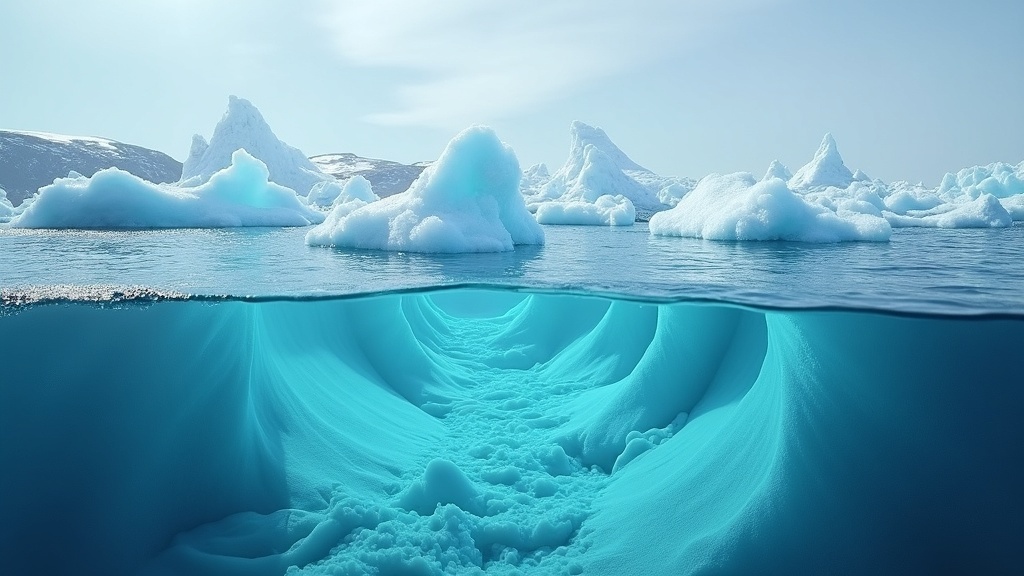
Quick Summary
The ocean current keeping Europe warm is slowing down. Here's what the AMOC collapse means, how fast it's happening, and why Europe could face a new ice age.
In This Article
Europe Is Not Where You Think It Is — And That Matters
Look at a flat map of the world and your brain plays tricks on you. Europe looks like it sits comfortably in the mid-latitudes, roughly parallel to the continental United States. It does not. Paris sits at roughly the same latitude as Calgary. Helsinki is further north than most of Alaska. Amsterdam is level with parts of Hudson Bay. By every climatic right, northwestern Europe should be a frozen, barely habitable frontier. Instead, it has some of the most temperate, agriculturally productive, and densely populated land on Earth. That is not a coincidence. It is the result of one of the most powerful natural systems on the planet: the Atlantic Meridional Overturning Circulation, or AMOC. And right now, that system is in serious trouble.

A growing body of scientific research — including a landmark paper published in the journal Science in April 2026 — suggests that the AMOC could weaken by 50% from pre-industrial levels before the end of this century. That is not enough to shut it down entirely by 2100, but it may be enough to push it past a point of no return, triggering a full collapse in the early 2100s. The consequences for Europe would be profound, paradoxical, and almost certainly irreversible for centuries.
What the AMOC Actually Does — And Why It's Hard to Replace
The AMOC is often described as a conveyor belt, but that analogy undersells its complexity. It is a vast, interlocking system of surface and deep-water currents that circulates heat, salt, nutrients, and carbon across the entire Atlantic Ocean. Its scale is genuinely difficult to comprehend: a single molecule of water can take between 500 and 1,000 years to complete one full circuit of the loop.
The mechanism that drives it is elegant but fragile. Warm, salty surface water travels northeast from the Gulf of Mexico across the Atlantic, releasing heat into the atmosphere as it goes — heat that moderates the climates of Britain, Ireland, northern France, Scandinavia, and the Low Countries. As this water reaches the high latitudes near Greenland, it cools down. It also becomes saltier due to evaporation and inflows from the Mediterranean. Cold, salty water is denser than warm, fresh water, so it sinks — plunging thousands of metres to the ocean floor and travelling south along the bottom of the Atlantic all the way to Antarctica. There, prevailing westerly winds drive upwelling that brings it back to the surface, completing the circuit.
Remove that sinking mechanism in the North Atlantic, and the whole engine stalls. The warm surface water from the tropics stops being pulled northeast. Europe loses its thermal subsidy. The impact is not subtle — during the Younger Dryas, a previous AMOC shutdown roughly 12,000 years ago, average temperatures in Europe dropped by around 5°C, Greenland cooled by 10°C, and the changes unfolded over just a few decades.
The Greenland Problem: A Feedback Loop Nobody Can Stop
The reason scientists are now alarmed is straightforward, even if the physics are not. Climate change is accelerating the melting of the Greenland ice sheet. That meltwater — fresh, low-density water — is pouring into the North Atlantic at an increasing rate. It dilutes the salt concentration of the ocean surface near Greenland, making the water less dense and less capable of sinking. Less sinking means less circulation. Less circulation means less warm water pulled from the tropics. Less warm water means less evaporation, which means even less salinity. And so the feedback loop tightens.
Simultaneously, as air temperatures over the North Atlantic rise with global warming, the ocean surface loses less heat to the atmosphere — another mechanism that would normally drive that sinking process. The two effects compound each other, and both are getting worse as emissions continue.
The most visible symptom of this process is what oceanographers call the cold blob: a persistent patch of anomalously cold water sitting just south of Greenland. It is the only region of the world's oceans that has been consistently cooling since the industrial revolution. Its location is exactly where a weakening AMOC would first manifest — where reduced heat transport and increased freshwater input would suppress surface temperatures. It is, in effect, the AMOC's distress signal written on the surface of the ocean.
What the Data Actually Shows — And What It Cannot Yet Tell Us
Since 2004, the RAPID Array — a network of 24 instrumented moorings stretching across the North Atlantic between the Bahamas and the Canary Islands — has been providing the most direct measurements of AMOC strength in history. The data, measured in sverdrups (one sverdrup equals one million cubic metres of water per second), shows a clear downward trend. AMOC strength has declined from roughly 18–19 sverdrups in 2004–2008 to approximately 15–17 sverdrups between 2011 and 2020. A 2025 paper in Geophysical Research Letters calculated the average rate of weakening at about one sverdrup per decade.
But here is where scientific honesty demands a critical caveat: 22 years of data is not enough to conclusively attribute this decline to human-caused climate change rather than natural variability. Researchers estimate they need at least 29 years of continuous measurement — meaning the scientific community will not be able to draw firm conclusions until around 2033. This is not uncertainty born of laziness or poor science. It is the honest acknowledgement of how long and slow-moving these systems are.
What makes this particularly unnerving is the threshold question. Most models suggest that if AMOC strength drops to around six sverdrups, the system enters a collapse phase. From a current 15–17 sverdrups, that sounds distant. But the trajectory is not linear, and tipping points by definition tend to arrive faster than gradual trend lines suggest.
A Spectrum of Scientific Opinion — From Cautious to Alarming
The scientific debate around AMOC collapse is genuinely wide, and it is worth understanding the full range rather than defaulting to either reassurance or panic.
At the more conservative end, the IPCC's 2021 Sixth Assessment Report concluded with medium confidence that the AMOC will not collapse before 2100, projecting a weakening of 24–39% depending on emissions trajectories. That is significant but manageable compared to full shutdown. A 2025 study by researchers at the UK Met Office and the University of Exeter broadly supported this position.
At the more alarming end, Stefan Rahmstorf — a physical oceanographer at the Potsdam Institute for Climate Impact Research and one of the world's foremost AMOC experts — has updated his own risk assessment dramatically. Having studied the system for over 35 years, he once placed the probability of collapse at around 5%. He now puts it at roughly 50/50. When models are run out to 2300 rather than the conventional 2100 cutoff, the probability of collapse under high-emissions scenarios rises to 70%, with collapse most likely occurring in the early 2200s.
The April 2026 Science paper from the University of Bordeaux added further weight to the pessimistic end of the spectrum. By incorporating real-world Atlantic temperature and salinity data — something many IPCC models have not fully done — it projected a 50% weakening from pre-industrial levels by 2100. Not a shutdown, but almost certainly past the tipping point.
A major methodological criticism of the IPCC models is that incorporating Greenland ice melt data at realistic volumes requires enormous computational resources that push current simulation capacity to its limits. Leaving it out produces models that are, critics argue, structurally biased towards stability. This is not a minor quibble — it may be the single most important gap between the official consensus and the emerging research.
What an AMOC Collapse Would Actually Mean for Europe
If the AMOC does collapse in the 2100s or 2200s, the consequences for northwestern Europe would be severe and deeply paradoxical. In a world that is globally warming, Europe could become colder — possibly dramatically so. Projected temperature drops for northwestern Europe range from 5°C to as much as 10–15°C in some regional models for areas like Scandinavia, the British Isles, and the Low Countries. Even accounting for a 2°C global temperature increase from greenhouse gas emissions, the thermal loss from AMOC shutdown would far outpace any warming offset in these regions.
The implications cascade outward. Agricultural systems across Britain, France, and Scandinavia would be severely disrupted by longer, harsher winters and shorter growing seasons. Energy demand would spike. Infrastructure designed for temperate conditions — from drainage systems to building standards — would need wholesale redesign. Sea level rise would paradoxically accelerate along parts of the North American coastline as the ocean circulation that currently suppresses it weakens. And marine ecosystems dependent on the nutrient cycling the AMOC enables could collapse over vast stretches of the Atlantic.
Free Weekly Newsletter
Enjoying this guide?
Get the best articles like this one delivered to your inbox every week. No spam.
Perhaps most sobering is the timescale of recovery. Because water molecules take up to a thousand years to complete a single AMOC circuit, once the system shuts down, restarting it — even if humanity dramatically reduces emissions — would take centuries. In November 2025, Iceland became the first country to formally designate AMOC shutdown as a national security threat. It will almost certainly not be the last.
The Uncomfortable Conclusion: Acting Before the Data Is Complete
The AMOC situation forces a deeply uncomfortable decision framework. We will not have definitive scientific confirmation that human-driven climate change is causing the current slowdown until at least 2033. We will not know whether the system is approaching its tipping point until we are dangerously close to it — if not past it. And once that tipping point is crossed, no amount of human intervention can reverse the trajectory for hundreds of years.
This is not a reason for fatalism. It is a reason for urgency. The asymmetry of the risk is stark: if we act aggressively on emissions and the AMOC stabilises on its own, we lose very little. If we delay and the system collapses, hundreds of millions of Europeans face centuries of consequences that no technology can quickly undo.
The AMOC is not a distant scientific abstraction. It is the reason London has roses in its gardens rather than permafrost. The reason Paris is a city rather than a frontier outpost. The reason Scandinavia is habitable at all. And right now, it is sending signals that deserve far more attention than they are currently receiving outside the scientific community.
Frequently Asked Questions
What is the AMOC and why does it matter for Europe?
The Atlantic Meridional Overturning Circulation (AMOC) is a vast system of ocean currents that transports warm water from the tropics northeast across the Atlantic towards Europe. Without it, northwestern Europe — which sits at the same latitude as parts of Canada — would experience a climate far colder and harsher than it currently does. It is essentially the reason countries like Britain, Ireland, France, and Scandinavia have mild, temperate climates despite their northern position.
Is the AMOC definitely collapsing?
Not definitively — and that honest uncertainty is important. Current data from the RAPID Array shows a downward trend in AMOC strength since 2004, but scientists need at least 29 years of data (meaning until around 2033) to confidently determine whether this is driven by human-caused climate change or natural variability. What is agreed is that a collapse is possible, that the probability is higher than previously thought, and that the consequences would be severe.
How quickly would Europe cool down if the AMOC collapsed?
Based on the best available models and historical evidence from the Younger Dryas period 12,000 years ago, temperature drops across northwestern Europe of 5–10°C are plausible over the course of a few decades following a full collapse. This would occur even against a backdrop of global warming — the cooling effect of AMOC loss in this region would outpace any warming from greenhouse gases.
Can the AMOC recover once it collapses?
Recovery is theoretically possible but would take centuries, potentially over a thousand years. Because the AMOC operates on extremely long timescales — a single water molecule can take up to 1,000 years to complete one full circuit — once the system shuts down, even a dramatic and immediate reversal of global emissions would not restart it quickly. This is why researchers emphasise that avoiding the tipping point, rather than recovering from it, is the only realistic strategy.
Frequently Asked Questions
Europe Is Not Where You Think It Is — And That Matters
Look at a flat map of the world and your brain plays tricks on you. Europe looks like it sits comfortably in the mid-latitudes, roughly parallel to the continental United States. It does not. Paris sits at roughly the same latitude as Calgary. Helsinki is further north than most of Alaska. Amsterdam is level with parts of Hudson Bay. By every climatic right, northwestern Europe should be a frozen, barely habitable frontier. Instead, it has some of the most temperate, agriculturally productive, and densely populated land on Earth. That is not a coincidence. It is the result of one of the most powerful natural systems on the planet: the Atlantic Meridional Overturning Circulation, or AMOC. And right now, that system is in serious trouble.
A growing body of scientific research — including a landmark paper published in the journal Science in April 2026 — suggests that the AMOC could weaken by 50% from pre-industrial levels before the end of this century. That is not enough to shut it down entirely by 2100, but it may be enough to push it past a point of no return, triggering a full collapse in the early 2100s. The consequences for Europe would be profound, paradoxical, and almost certainly irreversible for centuries.
What the AMOC Actually Does — And Why It's Hard to Replace
The AMOC is often described as a conveyor belt, but that analogy undersells its complexity. It is a vast, interlocking system of surface and deep-water currents that circulates heat, salt, nutrients, and carbon across the entire Atlantic Ocean. Its scale is genuinely difficult to comprehend: a single molecule of water can take between 500 and 1,000 years to complete one full circuit of the loop.
The mechanism that drives it is elegant but fragile. Warm, salty surface water travels northeast from the Gulf of Mexico across the Atlantic, releasing heat into the atmosphere as it goes — heat that moderates the climates of Britain, Ireland, northern France, Scandinavia, and the Low Countries. As this water reaches the high latitudes near Greenland, it cools down. It also becomes saltier due to evaporation and inflows from the Mediterranean. Cold, salty water is denser than warm, fresh water, so it sinks — plunging thousands of metres to the ocean floor and travelling south along the bottom of the Atlantic all the way to Antarctica. There, prevailing westerly winds drive upwelling that brings it back to the surface, completing the circuit.
Remove that sinking mechanism in the North Atlantic, and the whole engine stalls. The warm surface water from the tropics stops being pulled northeast. Europe loses its thermal subsidy. The impact is not subtle — during the Younger Dryas, a previous AMOC shutdown roughly 12,000 years ago, average temperatures in Europe dropped by around 5°C, Greenland cooled by 10°C, and the changes unfolded over just a few decades.
The Greenland Problem: A Feedback Loop Nobody Can Stop
The reason scientists are now alarmed is straightforward, even if the physics are not. Climate change is accelerating the melting of the Greenland ice sheet. That meltwater — fresh, low-density water — is pouring into the North Atlantic at an increasing rate. It dilutes the salt concentration of the ocean surface near Greenland, making the water less dense and less capable of sinking. Less sinking means less circulation. Less circulation means less warm water pulled from the tropics. Less warm water means less evaporation, which means even less salinity. And so the feedback loop tightens.
Simultaneously, as air temperatures over the North Atlantic rise with global warming, the ocean surface loses less heat to the atmosphere — another mechanism that would normally drive that sinking process. The two effects compound each other, and both are getting worse as emissions continue.
The most visible symptom of this process is what oceanographers call the cold blob: a persistent patch of anomalously cold water sitting just south of Greenland. It is the only region of the world's oceans that has been consistently cooling since the industrial revolution. Its location is exactly where a weakening AMOC would first manifest — where reduced heat transport and increased freshwater input would suppress surface temperatures. It is, in effect, the AMOC's distress signal written on the surface of the ocean.
What the Data Actually Shows — And What It Cannot Yet Tell Us
Since 2004, the RAPID Array — a network of 24 instrumented moorings stretching across the North Atlantic between the Bahamas and the Canary Islands — has been providing the most direct measurements of AMOC strength in history. The data, measured in sverdrups (one sverdrup equals one million cubic metres of water per second), shows a clear downward trend. AMOC strength has declined from roughly 18–19 sverdrups in 2004–2008 to approximately 15–17 sverdrups between 2011 and 2020. A 2025 paper in Geophysical Research Letters calculated the average rate of weakening at about one sverdrup per decade.
But here is where scientific honesty demands a critical caveat: 22 years of data is not enough to conclusively attribute this decline to human-caused climate change rather than natural variability. Researchers estimate they need at least 29 years of continuous measurement — meaning the scientific community will not be able to draw firm conclusions until around 2033. This is not uncertainty born of laziness or poor science. It is the honest acknowledgement of how long and slow-moving these systems are.
What makes this particularly unnerving is the threshold question. Most models suggest that if AMOC strength drops to around six sverdrups, the system enters a collapse phase. From a current 15–17 sverdrups, that sounds distant. But the trajectory is not linear, and tipping points by definition tend to arrive faster than gradual trend lines suggest.
A Spectrum of Scientific Opinion — From Cautious to Alarming
The scientific debate around AMOC collapse is genuinely wide, and it is worth understanding the full range rather than defaulting to either reassurance or panic.
At the more conservative end, the IPCC's 2021 Sixth Assessment Report concluded with medium confidence that the AMOC will not collapse before 2100, projecting a weakening of 24–39% depending on emissions trajectories. That is significant but manageable compared to full shutdown. A 2025 study by researchers at the UK Met Office and the University of Exeter broadly supported this position.
At the more alarming end, Stefan Rahmstorf — a physical oceanographer at the Potsdam Institute for Climate Impact Research and one of the world's foremost AMOC experts — has updated his own risk assessment dramatically. Having studied the system for over 35 years, he once placed the probability of collapse at around 5%. He now puts it at roughly 50/50. When models are run out to 2300 rather than the conventional 2100 cutoff, the probability of collapse under high-emissions scenarios rises to 70%, with collapse most likely occurring in the early 2200s.
The April 2026 Science paper from the University of Bordeaux added further weight to the pessimistic end of the spectrum. By incorporating real-world Atlantic temperature and salinity data — something many IPCC models have not fully done — it projected a 50% weakening from pre-industrial levels by 2100. Not a shutdown, but almost certainly past the tipping point.
A major methodological criticism of the IPCC models is that incorporating Greenland ice melt data at realistic volumes requires enormous computational resources that push current simulation capacity to its limits. Leaving it out produces models that are, critics argue, structurally biased towards stability. This is not a minor quibble — it may be the single most important gap between the official consensus and the emerging research.
What an AMOC Collapse Would Actually Mean for Europe
If the AMOC does collapse in the 2100s or 2200s, the consequences for northwestern Europe would be severe and deeply paradoxical. In a world that is globally warming, Europe could become colder — possibly dramatically so. Projected temperature drops for northwestern Europe range from 5°C to as much as 10–15°C in some regional models for areas like Scandinavia, the British Isles, and the Low Countries. Even accounting for a 2°C global temperature increase from greenhouse gas emissions, the thermal loss from AMOC shutdown would far outpace any warming offset in these regions.
The implications cascade outward. Agricultural systems across Britain, France, and Scandinavia would be severely disrupted by longer, harsher winters and shorter growing seasons. Energy demand would spike. Infrastructure designed for temperate conditions — from drainage systems to building standards — would need wholesale redesign. Sea level rise would paradoxically accelerate along parts of the North American coastline as the ocean circulation that currently suppresses it weakens. And marine ecosystems dependent on the nutrient cycling the AMOC enables could collapse over vast stretches of the Atlantic.
Perhaps most sobering is the timescale of recovery. Because water molecules take up to a thousand years to complete a single AMOC circuit, once the system shuts down, restarting it — even if humanity dramatically reduces emissions — would take centuries. In November 2025, Iceland became the first country to formally designate AMOC shutdown as a national security threat. It will almost certainly not be the last.
The Uncomfortable Conclusion: Acting Before the Data Is Complete
The AMOC situation forces a deeply uncomfortable decision framework. We will not have definitive scientific confirmation that human-driven climate change is causing the current slowdown until at least 2033. We will not know whether the system is approaching its tipping point until we are dangerously close to it — if not past it. And once that tipping point is crossed, no amount of human intervention can reverse the trajectory for hundreds of years.
This is not a reason for fatalism. It is a reason for urgency. The asymmetry of the risk is stark: if we act aggressively on emissions and the AMOC stabilises on its own, we lose very little. If we delay and the system collapses, hundreds of millions of Europeans face centuries of consequences that no technology can quickly undo.
The AMOC is not a distant scientific abstraction. It is the reason London has roses in its gardens rather than permafrost. The reason Paris is a city rather than a frontier outpost. The reason Scandinavia is habitable at all. And right now, it is sending signals that deserve far more attention than they are currently receiving outside the scientific community.
Frequently Asked Questions
What is the AMOC and why does it matter for Europe?
The Atlantic Meridional Overturning Circulation (AMOC) is a vast system of ocean currents that transports warm water from the tropics northeast across the Atlantic towards Europe. Without it, northwestern Europe — which sits at the same latitude as parts of Canada — would experience a climate far colder and harsher than it currently does. It is essentially the reason countries like Britain, Ireland, France, and Scandinavia have mild, temperate climates despite their northern position.
Is the AMOC definitely collapsing?
Not definitively — and that honest uncertainty is important. Current data from the RAPID Array shows a downward trend in AMOC strength since 2004, but scientists need at least 29 years of data (meaning until around 2033) to confidently determine whether this is driven by human-caused climate change or natural variability. What is agreed is that a collapse is possible, that the probability is higher than previously thought, and that the consequences would be severe.
How quickly would Europe cool down if the AMOC collapsed?
Based on the best available models and historical evidence from the Younger Dryas period 12,000 years ago, temperature drops across northwestern Europe of 5–10°C are plausible over the course of a few decades following a full collapse. This would occur even against a backdrop of global warming — the cooling effect of AMOC loss in this region would outpace any warming from greenhouse gases.
Can the AMOC recover once it collapses?
Recovery is theoretically possible but would take centuries, potentially over a thousand years. Because the AMOC operates on extremely long timescales — a single water molecule can take up to 1,000 years to complete one full circuit — once the system shuts down, even a dramatic and immediate reversal of global emissions would not restart it quickly. This is why researchers emphasise that avoiding the tipping point, rather than recovering from it, is the only realistic strategy.
About Zeebrain Editorial
Zeebrain publishes independent analysis of markets, investing, personal finance, and business. We disclose affiliate relationships, never accept payment for coverage, and fact-check all claims against primary sources. Read our editorial policy →
How this article was produced: Zeebrain articles are created with AI assistance from primary sources (including cited videos and market data) and reviewed under our editorial standards before publication. Spot an error? Tell us and we will correct it.
More from Curiosities



Related Guides
Keep exploring this topic
The Doomsday Glacier: What's Really Happening at Thwaites
Curiosities · Thwaites Glacier · climate change
Why Everyone on Earth Has the Same Daily Commute
Curiosities · commuting · human behaviour
The Strait of Messina: Science Behind Homer's Monster Myth
Curiosities · Strait of Messina · tidal science
Who Is Pope Francis? Life, Legacy, and His Impact on the Modern Church
Curiosities
Explore More Categories
Keep browsing by topic and build depth around the subjects you care about most.