The Doomsday Glacier: What's Really Happening at Thwaites
Quick Summary
Thwaites Glacier is melting faster than expected — and the reasons why are far stranger than rising temperatures alone. Here's what scientists have discovered.
In This Article
The Doomsday Glacier: What's Really Happening at Thwaites
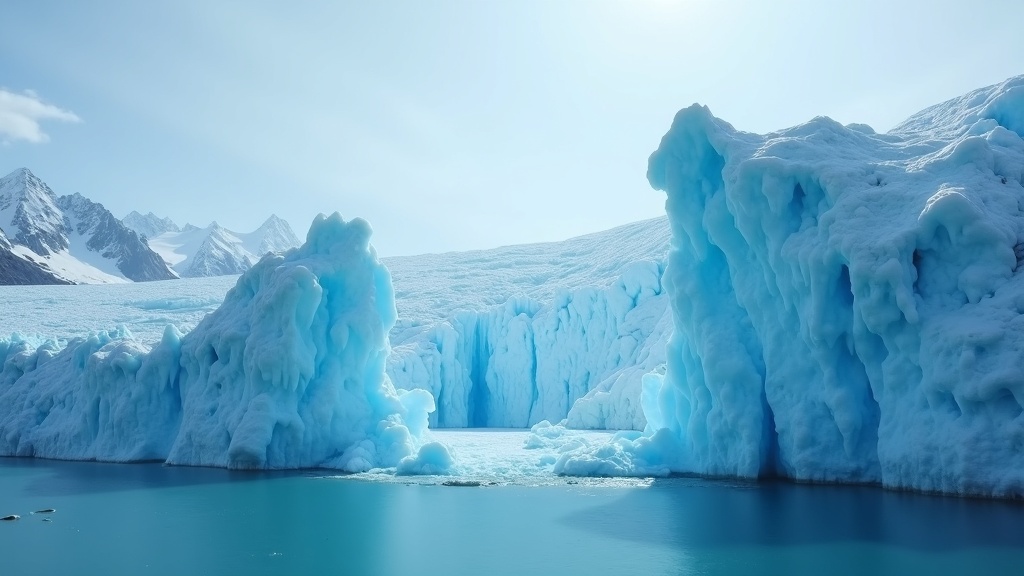
Somewhere beneath the ice of West Antarctica, a glacier the size of Florida is doing something that has climate scientists genuinely unnerved. It's not just shrinking — it's shrinking in ways that weren't fully predicted, driven by forces we're still working to understand. The Thwaites Glacier, popularly known as the Doomsday Glacier, has become one of the most intensely studied bodies of ice on Earth. And the more researchers look, the more complicated — and in some ways more alarming — the picture becomes.

But here's the thing: complicated doesn't mean hopeless. In fact, the recent surge in discoveries about Thwaites is precisely what gives scientists a fighting chance to slow things down. Understanding what's happening under that ice is the first step toward doing something about it.
Why the Doomsday Glacier Deserves Your Attention
Thwaites Glacier is not a modest body of ice. Spanning roughly 192,000 square kilometres, it's the widest glacier on the planet. The ice reaches depths of up to 4,000 metres in places — nearly five times the height of the Burj Khalifa. When large sections calve off and crash into the sea, seismometers register the impact from over 1,600 kilometres away.
The nickname 'Doomsday Glacier' stems from a straightforward but terrifying calculation: if Thwaites melts entirely, it could raise global sea levels by approximately 65 centimetres on its own. That's more than double the total sea level rise recorded since modern measurements began. Coastal cities from Miami to Mumbai would face dramatically increased flood risk.
But the real doomsday scenario isn't Thwaites alone. The glacier acts as a kind of cork for the broader West Antarctic Ice Sheet, helping hold it in place. If Thwaites destabilises significantly, it could trigger a cascade that releases far more ice — enough to raise sea levels by several metres over the coming centuries. That's the scenario that keeps glaciologists awake at night.
It's worth noting, as many researchers are quick to point out, that 'doomsday' is not a timeline. This is not inevitable, and it is not imminent in human-scale terms. But it is directional — and the direction, unchecked, is not good.
The Glacier Doesn't Melt Smoothly — It Retreats in Surges
One of the most significant recent findings is that Thwaites doesn't retreat the way a melting ice cube does — gradually and uniformly. Instead, it retreats in sudden spurts, with relatively stable periods in between. This was confirmed by a 2022 study that used an autonomous underwater vehicle to map the seafloor beneath the glacier, identifying sedimentary ridge deposits left behind as the glacier's grounding line — the point where ice separates from the seabed and begins to float — pulled back toward shore.
Those ridges are essentially geological breadcrumbs. Each one marks where the glacier's edge once was. The pattern they reveal is one of accelerating retreat: the spurts are happening more frequently than they did in past centuries, and the intervals between them are shrinking.
This matters because it reframes the risk. A glacier that retreats in pulses is harder to model and harder to predict than one that melts at a steady rate. It means we can't simply extrapolate from current observations — a period of relative stability could be followed by a rapid, dramatic retreat that catches projections off guard.
Underwater Storms and Warm Water Intrusions Are Making Things Worse
Below the surface of the Southern Ocean, something almost violent is occurring. When water masses of different densities collide — cold glacial meltwater meeting warmer, saltier seawater — they generate powerful rotating vortices. These underwater storms can stretch up to 10 kilometres wide, carrying momentum comparable to atmospheric hurricanes.
When these vortices travel beneath floating ice shelves like the edge of Thwaites, they don't just pass through harmlessly. The spinning motion pulls cold surface water away from the ice and draws warmer deep water upward in its place, effectively melting the ice shelf from below. Since 2025, these storm events have been linked to roughly a fifth of all observed underwater melting at Thwaites — a significant share, and one that is expected to grow as ocean temperatures continue rising.
There's also the matter of subglacial lakes. In 2013, a network of lakes beneath the glacier drained suddenly, flushing large volumes of fresh water into the surrounding seawater. This mixing created pockets of warm, salty water suspended within the cold meltwater flow — and some of those pockets appear to have accelerated localised melting where they came into contact with the glacier's underside. The full quantitative impact of that 2013 event is still being worked out, which is itself a reminder of how much remains unknown.
What makes both phenomena particularly concerning is their feedback potential. More melting produces more meltwater, which drives more density contrasts, which generates more vortices, which causes more melting. Feedback loops in complex systems rarely announce themselves before they become self-sustaining.
The Loss of the Glacier Tongue Changed Everything
For much of its history, Thwaites Glacier was partially shielded on one side by what's known as the Thwaites Glacier Tongue — a long, narrow extension of floating ice that projected well beyond the main glacier mass. It functioned as a natural buffer, dampening wave action and providing structural support.
Over the past two decades, that tongue has progressively broken apart. The calving of iceberg B-22 in 2002 — an iceberg roughly the size of Rhode Island — marked the beginning of a sustained fragmentation. Ironically, B-22's largest remnant, B-22A, ran aground about 100 kilometres offshore and ended up providing an unexpected benefit: acting as a refrigerant of sorts, keeping the surrounding water cooler than it otherwise would have been.
B-22A remained grounded for over two decades before beginning to drift again in 2022. Since then, the tongue has continued to fracture, with the most recently identified iceberg, B-22J, spotted in September 2025. Each new calving event removes another piece of natural protection, leaving the glacier's main body increasingly exposed to warmer ocean water and storm-driven vortices.
Interventions on the Table — Bold, Costly, and Controversial
Given the stakes, scientists and engineers have started exploring whether direct physical intervention could buy the glacier — and the coastlines it protects — more time. The proposals range from pragmatic to audacious.
At the more conventional end, researchers have discussed placing reflective material across portions of the glacier surface to reduce solar absorption, or constructing barriers to trap wind-blown snow that would otherwise be lost to the sea. Drying out or reinforcing the seabed beneath the glacier has also been proposed as a way to reduce the speed at which ice slides toward the ocean.
More ambitiously, there are designs for artificial berms or underwater sills — structures built from dredged or imported material — placed strategically to block warm water from reaching the glacier's base. And then there are the flexible underwater curtains: large-scale barriers designed to redirect cold water toward the glacier and deflect warmer deep water away. The physics are sound. The price tag, estimated at around $50 billion per curtain, is harder to swallow.
The debate around these interventions is genuine and unresolved. Some scientists worry that high-profile geoengineering projects create a false sense of security, diverting political will and resources away from the only solution that addresses the root cause: reducing global carbon dioxide emissions. Others argue that even in an optimistic emissions scenario, ocean temperatures will continue rising for decades due to existing atmospheric CO2, making physical interventions not a replacement for climate action but a potential complement to it.
Both arguments have merit. The honest answer is that we probably need both — aggressive emissions reduction and serious investment in understanding what can be done to protect the most vulnerable glacial systems while that reduction takes effect.
What Comes Next for the Doomsday Glacier
Free Weekly Newsletter
Enjoying this guide?
Get the best articles like this one delivered to your inbox every week. No spam.
The scientific community is not standing still. Research missions continue to deploy autonomous underwater vehicles, new satellite monitoring programmes are tracking surface changes in near real-time, and international collaborations like the International Thwaites Glacier Collaboration are bringing together glaciologists, oceanographers, and climate modellers to build more accurate predictive tools.
The goal isn't just to document the decline — it's to understand it precisely enough to identify the interventions most likely to make a meaningful difference. That requires closing the gap between what we observe happening to Thwaites and what our models predict should be happening. Currently, measured ice loss consistently outpaces model projections, which suggests there are still processes at work that haven't been fully characterised.
The Doomsday Glacier earned its name honestly. But nicknames can mislead. Doomsday implies inevitability; the science suggests agency. The trajectory is concerning, the timeline is uncertain, and the consequences of inaction are severe. But this is a problem being actively studied, actively debated, and — with sufficient political and scientific commitment — one that can still be meaningfully influenced.
The glacier is sending signals from the bottom of the world. Whether we act on them is still, for now, up to us.
Frequently Asked Questions
Why is Thwaites Glacier called the Doomsday Glacier?
Thwaites Glacier earned the nickname because of its potential impact on global sea levels. If it were to melt entirely, it could raise sea levels by around 65 centimetres on its own. More critically, Thwaites helps stabilise the broader West Antarctic Ice Sheet, which holds enough ice to raise sea levels by several metres if it were to collapse. Many scientists dislike the nickname, however, because it implies the outcome is inevitable — which it isn't.
How fast is Thwaites Glacier melting?
Thwaites doesn't melt at a uniform rate. Research has shown it retreats in sudden spurts rather than steadily, making precise projections difficult. What is clear is that the rate of retreat has been accelerating, with the intervals between major retreat events shortening over recent decades. Underwater vortices and warm water intrusions have been identified as contributing factors that weren't fully accounted for in earlier models.
Could we actually stop Thwaites Glacier from melting?
There are several proposals being researched, including underwater curtains to redirect warm water, artificial berms to block warm ocean currents, and surface interventions to reduce solar absorption. Some of these are technically feasible but extremely expensive — one proposed underwater curtain design carries an estimated cost of $50 billion. Most scientists agree that reducing global CO2 emissions remains the most critical action, but physical interventions may serve as a complementary strategy to buy time.
What would happen to sea levels if Thwaites Glacier collapsed entirely?
Thwaites alone could contribute approximately 65 centimetres of sea level rise — more than double the total rise recorded since modern measurements began. However, the larger concern is that its loss could destabilise the West Antarctic Ice Sheet, which holds enough water to raise sea levels by several metres over the coming centuries. This would threaten virtually every major coastal city on Earth, from New York and London to Shanghai and Mumbai.
What are the underwater vortices found at Thwaites, and why do they matter?
When water masses of different densities — cold glacial meltwater and warmer, saltier seawater — collide beneath the ocean surface, they generate powerful rotating vortices up to 10 kilometres wide. These underwater storms can travel beneath floating ice shelves and pull cold water away while drawing warmer deep water upward, melting ice from below. Since 2025, these events have accounted for roughly a fifth of observed underwater melting at Thwaites, and they are expected to intensify as ocean temperatures rise.
Frequently Asked Questions
Why the Doomsday Glacier Deserves Your Attention
Thwaites Glacier is not a modest body of ice. Spanning roughly 192,000 square kilometres, it's the widest glacier on the planet. The ice reaches depths of up to 4,000 metres in places — nearly five times the height of the Burj Khalifa. When large sections calve off and crash into the sea, seismometers register the impact from over 1,600 kilometres away.
The nickname 'Doomsday Glacier' stems from a straightforward but terrifying calculation: if Thwaites melts entirely, it could raise global sea levels by approximately 65 centimetres on its own. That's more than double the total sea level rise recorded since modern measurements began. Coastal cities from Miami to Mumbai would face dramatically increased flood risk.
But the real doomsday scenario isn't Thwaites alone. The glacier acts as a kind of cork for the broader West Antarctic Ice Sheet, helping hold it in place. If Thwaites destabilises significantly, it could trigger a cascade that releases far more ice — enough to raise sea levels by several metres over the coming centuries. That's the scenario that keeps glaciologists awake at night.
It's worth noting, as many researchers are quick to point out, that 'doomsday' is not a timeline. This is not inevitable, and it is not imminent in human-scale terms. But it is directional — and the direction, unchecked, is not good.
The Glacier Doesn't Melt Smoothly — It Retreats in Surges
One of the most significant recent findings is that Thwaites doesn't retreat the way a melting ice cube does — gradually and uniformly. Instead, it retreats in sudden spurts, with relatively stable periods in between. This was confirmed by a 2022 study that used an autonomous underwater vehicle to map the seafloor beneath the glacier, identifying sedimentary ridge deposits left behind as the glacier's grounding line — the point where ice separates from the seabed and begins to float — pulled back toward shore.
Those ridges are essentially geological breadcrumbs. Each one marks where the glacier's edge once was. The pattern they reveal is one of accelerating retreat: the spurts are happening more frequently than they did in past centuries, and the intervals between them are shrinking.
This matters because it reframes the risk. A glacier that retreats in pulses is harder to model and harder to predict than one that melts at a steady rate. It means we can't simply extrapolate from current observations — a period of relative stability could be followed by a rapid, dramatic retreat that catches projections off guard.
Underwater Storms and Warm Water Intrusions Are Making Things Worse
Below the surface of the Southern Ocean, something almost violent is occurring. When water masses of different densities collide — cold glacial meltwater meeting warmer, saltier seawater — they generate powerful rotating vortices. These underwater storms can stretch up to 10 kilometres wide, carrying momentum comparable to atmospheric hurricanes.
When these vortices travel beneath floating ice shelves like the edge of Thwaites, they don't just pass through harmlessly. The spinning motion pulls cold surface water away from the ice and draws warmer deep water upward in its place, effectively melting the ice shelf from below. Since 2025, these storm events have been linked to roughly a fifth of all observed underwater melting at Thwaites — a significant share, and one that is expected to grow as ocean temperatures continue rising.
There's also the matter of subglacial lakes. In 2013, a network of lakes beneath the glacier drained suddenly, flushing large volumes of fresh water into the surrounding seawater. This mixing created pockets of warm, salty water suspended within the cold meltwater flow — and some of those pockets appear to have accelerated localised melting where they came into contact with the glacier's underside. The full quantitative impact of that 2013 event is still being worked out, which is itself a reminder of how much remains unknown.
What makes both phenomena particularly concerning is their feedback potential. More melting produces more meltwater, which drives more density contrasts, which generates more vortices, which causes more melting. Feedback loops in complex systems rarely announce themselves before they become self-sustaining.
The Loss of the Glacier Tongue Changed Everything
For much of its history, Thwaites Glacier was partially shielded on one side by what's known as the Thwaites Glacier Tongue — a long, narrow extension of floating ice that projected well beyond the main glacier mass. It functioned as a natural buffer, dampening wave action and providing structural support.
Over the past two decades, that tongue has progressively broken apart. The calving of iceberg B-22 in 2002 — an iceberg roughly the size of Rhode Island — marked the beginning of a sustained fragmentation. Ironically, B-22's largest remnant, B-22A, ran aground about 100 kilometres offshore and ended up providing an unexpected benefit: acting as a refrigerant of sorts, keeping the surrounding water cooler than it otherwise would have been.
B-22A remained grounded for over two decades before beginning to drift again in 2022. Since then, the tongue has continued to fracture, with the most recently identified iceberg, B-22J, spotted in September 2025. Each new calving event removes another piece of natural protection, leaving the glacier's main body increasingly exposed to warmer ocean water and storm-driven vortices.
Interventions on the Table — Bold, Costly, and Controversial
Given the stakes, scientists and engineers have started exploring whether direct physical intervention could buy the glacier — and the coastlines it protects — more time. The proposals range from pragmatic to audacious.
At the more conventional end, researchers have discussed placing reflective material across portions of the glacier surface to reduce solar absorption, or constructing barriers to trap wind-blown snow that would otherwise be lost to the sea. Drying out or reinforcing the seabed beneath the glacier has also been proposed as a way to reduce the speed at which ice slides toward the ocean.
More ambitiously, there are designs for artificial berms or underwater sills — structures built from dredged or imported material — placed strategically to block warm water from reaching the glacier's base. And then there are the flexible underwater curtains: large-scale barriers designed to redirect cold water toward the glacier and deflect warmer deep water away. The physics are sound. The price tag, estimated at around $50 billion per curtain, is harder to swallow.
The debate around these interventions is genuine and unresolved. Some scientists worry that high-profile geoengineering projects create a false sense of security, diverting political will and resources away from the only solution that addresses the root cause: reducing global carbon dioxide emissions. Others argue that even in an optimistic emissions scenario, ocean temperatures will continue rising for decades due to existing atmospheric CO2, making physical interventions not a replacement for climate action but a potential complement to it.
Both arguments have merit. The honest answer is that we probably need both — aggressive emissions reduction and serious investment in understanding what can be done to protect the most vulnerable glacial systems while that reduction takes effect.
What Comes Next for the Doomsday Glacier
The scientific community is not standing still. Research missions continue to deploy autonomous underwater vehicles, new satellite monitoring programmes are tracking surface changes in near real-time, and international collaborations like the International Thwaites Glacier Collaboration are bringing together glaciologists, oceanographers, and climate modellers to build more accurate predictive tools.
The goal isn't just to document the decline — it's to understand it precisely enough to identify the interventions most likely to make a meaningful difference. That requires closing the gap between what we observe happening to Thwaites and what our models predict should be happening. Currently, measured ice loss consistently outpaces model projections, which suggests there are still processes at work that haven't been fully characterised.
The Doomsday Glacier earned its name honestly. But nicknames can mislead. Doomsday implies inevitability; the science suggests agency. The trajectory is concerning, the timeline is uncertain, and the consequences of inaction are severe. But this is a problem being actively studied, actively debated, and — with sufficient political and scientific commitment — one that can still be meaningfully influenced.
The glacier is sending signals from the bottom of the world. Whether we act on them is still, for now, up to us.
Frequently Asked Questions
Why is Thwaites Glacier called the Doomsday Glacier?
Thwaites Glacier earned the nickname because of its potential impact on global sea levels. If it were to melt entirely, it could raise sea levels by around 65 centimetres on its own. More critically, Thwaites helps stabilise the broader West Antarctic Ice Sheet, which holds enough ice to raise sea levels by several metres if it were to collapse. Many scientists dislike the nickname, however, because it implies the outcome is inevitable — which it isn't.
How fast is Thwaites Glacier melting?
Thwaites doesn't melt at a uniform rate. Research has shown it retreats in sudden spurts rather than steadily, making precise projections difficult. What is clear is that the rate of retreat has been accelerating, with the intervals between major retreat events shortening over recent decades. Underwater vortices and warm water intrusions have been identified as contributing factors that weren't fully accounted for in earlier models.
Could we actually stop Thwaites Glacier from melting?
There are several proposals being researched, including underwater curtains to redirect warm water, artificial berms to block warm ocean currents, and surface interventions to reduce solar absorption. Some of these are technically feasible but extremely expensive — one proposed underwater curtain design carries an estimated cost of $50 billion. Most scientists agree that reducing global CO2 emissions remains the most critical action, but physical interventions may serve as a complementary strategy to buy time.
What would happen to sea levels if Thwaites Glacier collapsed entirely?
Thwaites alone could contribute approximately 65 centimetres of sea level rise — more than double the total rise recorded since modern measurements began. However, the larger concern is that its loss could destabilise the West Antarctic Ice Sheet, which holds enough water to raise sea levels by several metres over the coming centuries. This would threaten virtually every major coastal city on Earth, from New York and London to Shanghai and Mumbai.
What are the underwater vortices found at Thwaites, and why do they matter?
When water masses of different densities — cold glacial meltwater and warmer, saltier seawater — collide beneath the ocean surface, they generate powerful rotating vortices up to 10 kilometres wide. These underwater storms can travel beneath floating ice shelves and pull cold water away while drawing warmer deep water upward, melting ice from below. Since 2025, these events have accounted for roughly a fifth of observed underwater melting at Thwaites, and they are expected to intensify as ocean temperatures rise.
About Zeebrain Editorial
Zeebrain publishes independent analysis of markets, investing, personal finance, and business. We disclose affiliate relationships, never accept payment for coverage, and fact-check all claims against primary sources. Read our editorial policy →
How this article was produced: Zeebrain articles are created with AI assistance from primary sources (including cited videos and market data) and reviewed under our editorial standards before publication. Spot an error? Tell us and we will correct it.
More from Curiosities



Related Guides
Keep exploring this topic
Why Everyone on Earth Has the Same Daily Commute
Curiosities · commuting · human behaviour
Europe's Ice Age Threat: The Ocean Current Collapsing
Curiosities · AMOC · climate change
Who Is Pope Francis? Life, Legacy, and His Impact on the Modern Church
Curiosities
How Was William Wallace Captured? The Real Story
Curiosities
Explore More Categories
Keep browsing by topic and build depth around the subjects you care about most.