Build Muscle, Fix Your Back & Stay Pain-Free for Decades
Quick Summary
Jeff Cavaliere reveals the small training fixes that protect your back, shoulders and hips — so you can build muscle and stay pain-free for decades.
In This Article
The Training Advice Nobody Wants to Hear (But Everyone Needs)
Most people who train seriously know the big stuff. Squat. Deadlift. Press. Pull. Eat enough protein. Sleep. Repeat. And yet, a huge portion of dedicated lifters — people who have put in years of work — end up sidelined by the same recurring injuries: lower back pain, shoulder impingement, knee tracking issues, hip tightness. They keep doing the big things and keep getting the same problems.

The reason, according to Jeff Cavaliere — physical therapist, certified strength and conditioning specialist, and the mind behind the massively influential Athlean-X platform — is that they're ignoring the small things. Not small in importance. Small in profile. The muscles that don't look impressive in the mirror, the exercises that won't get likes on social media, the movements that feel almost too simple to matter.
Those are the things that determine whether you're still training hard at 50, or whether you're managing pain and regret. Cavaliere himself is living proof: drug-free, natural, and built at 50 in a way that most people in their 30s would envy. His secret isn't a more extreme programme. It's a smarter one.
This article takes the core ideas from his conversation with neuroscientist Andrew Huberman and builds a practical framework around them — one that will help you build muscle, protect your joints, improve your posture, and train with resilience for decades.
Why Your Back Pain Is Probably Not a Back Problem
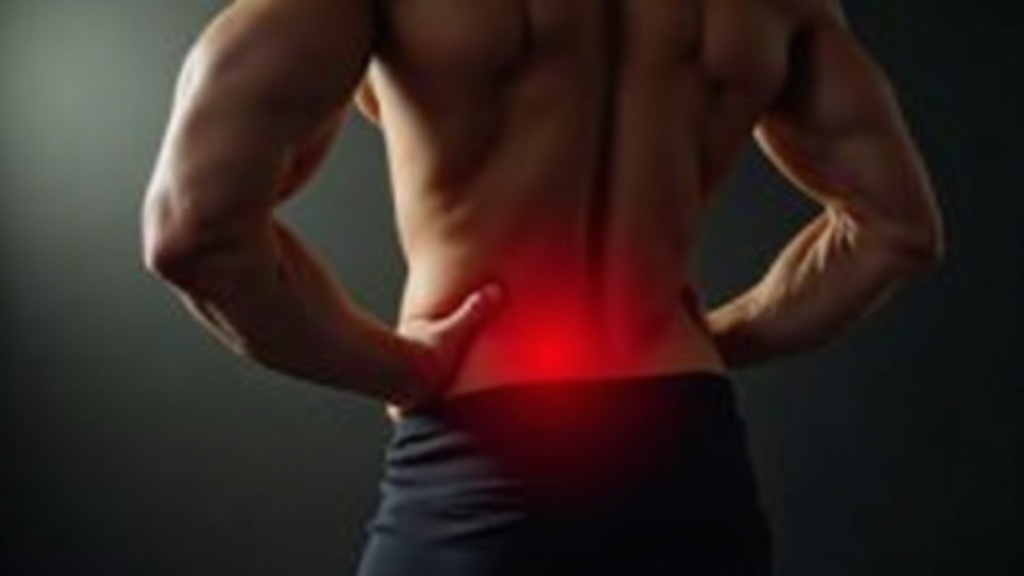
Here's something that surprises most people when they first hear it: a significant proportion of lower back pain has nothing structurally wrong with the spine. No herniated disc requiring surgery. No structural deformity. Just pain — often referred pain from a completely different area that's been neglected.
The most common culprit? The glute medius.
This relatively small muscle sits on the outer surface of the pelvis and controls lateral hip stability. Its job is to keep your pelvis level when you're on one leg — which, if you think about it, is every single step you take when you walk or run. When it's weak or in spasm, the pelvis tilts and rocks. The lumbar spine, which sits directly on top of the pelvis via the sacrum, has no choice but to adapt to that dysfunctional position. Over time, that's where the pain shows up.
Cavaliere describes a simple test you can do right now: stand sideways against a wall. The leg closest to the wall is your test leg. Allow your hips to drop lazily to one side. If you struggle to bring them back to level using only that hip — abducting it back toward the wall — you've found a weakness that may be silently loading your lower back every time you move.
The fix starts with releasing spasm (a targeted side-lying leg raise with pressure applied to the glute medius trigger point works remarkably well — Cavaliere's video on this has been viewed tens of millions of times for good reason), and then building genuine strength in that muscle so the spasm doesn't come back.
This is the pattern that underlies almost every overuse injury: weakness creates instability, instability creates compensatory spasm, spasm creates pain in an apparently unrelated area. Treat the pain, not the source, and it keeps coming back every two or three months like clockwork.
The Glute Exercises That Actually Address the Root Cause
Once you understand that back pain often originates in glute weakness, the training response becomes clear. But there's an important nuance here that most gym programmes miss entirely: the glutes are not one-dimensional.
The glute maximus is a sagittal plane muscle. It drives hip extension — the movement in squats, deadlifts, and hip thrusts. Most strength training hits it reasonably well. But the glute medius and the deep hip rotators operate in entirely different planes of motion. They control abduction and rotation of the hip, and conventional barbell training does almost nothing for them.
Cavaliere makes a striking point here: he has tested elite athletes — people squatting over 200 pounds — and found that when he tries to rotate their hip against manual resistance, they can barely resist it at all. The big lifts built big sagittal strength, but left enormous rotational weakness hiding underneath. That weakness is an injury waiting to happen.
The practical fix involves three simple additions:
1. Reverse hyperextensions — Lie face down with your lower body hanging off the edge of a bed or bench. Raise both legs until they're roughly parallel to the floor, hold briefly at the top, and lower with control. The hold at the top is critical: it confirms the glutes are doing the work, not the lower back muscles that are already overloaded. No equipment required. You can do this every morning before you even leave the bedroom.
2. Wall hip bumps for glute medius — Stand sideways against a wall, outside leg bearing your weight, inside hip resting lightly against the wall. Let the outside hip drop, then drive it back up to level using only the hip abductors. It looks almost embarrassingly simple. It's not.
3. Banded hip rotations — A small resistance loop band (often called a mini band or fit loop, available for under £10) placed around the ankles or heels opens up an entirely new range of training. Lie on your front, bend your knees to 90 degrees, and spread your feet apart against the band's resistance. Alternate between internal and external rotation. Watch your toes: if the toe turns out, the hip is rotating externally. If it turns in, you're getting internal rotation. Keep the knee and foot moving together.
None of these exercises look impressive. All of them are doing work that your squats and deadlifts simply cannot replicate.
Posture, Shoulder Health and the Most Underrated Exercise in the Gym
If glute weakness is the hidden driver of back pain, then posterior shoulder weakness is the hidden driver of most upper body problems — including shoulder impingement, rotator cuff issues, neck pain, and the kind of rounded posture that develops from years of sitting, pressing, and scrolling.
The muscle primarily responsible for pulling the shoulders back and down into proper position is the rear deltoid, along with the external rotators of the shoulder and the muscles of the mid and lower trapezius. These muscles are almost never the focus of a typical training programme, which loads up on bench pressing, overhead pressing, and front-loaded movements while giving the back of the shoulder almost nothing.
Cavaliere's signature corrective here is the face pull — a cable exercise performed at roughly face height, pulling a rope attachment directly toward your face while simultaneously rotating the arms into external rotation at the end of the movement. Done correctly, it directly targets the rear delts, the rotator cuff external rotators, and the mid-trap. It's the antidote to the internal rotation that modern life and most gym programmes impose on the shoulder joint.
The beauty of face pulls is that they can be loaded with meaningful resistance, making them a genuine strength exercise rather than a token warm-up. And they pair naturally with pressing movements — a set of face pulls between sets of bench press both corrects postural imbalances and may actually improve pressing performance by keeping the shoulder joint centred and healthy.
If you do nothing else from this article, add face pulls to your training three times a week. The cumulative effect on posture, shoulder health, and pain-free pressing over months and years is difficult to overstate.
Training for Longevity Means Training Your Balance and Stability Too
One of the most underappreciated dimensions of long-term physical health is balance — specifically, the kind of dynamic balance and proprioceptive awareness that allows you to control your body in space during demanding movements.
Cavaliere frames this clearly: balance and stability are skills. And like all skills, they are trainable. Which means if yours are poor — and for most people who train primarily with bilateral, stable, machine-based exercises, they will be — they can be improved deliberately.
The trendelenburg gait that results from glute medius weakness (the pelvis rocking side to side during walking) is a visible sign of poor single-leg stability. But the problem extends far beyond aesthetics. Every time you walk, run, climb stairs, or change direction, you're briefly on one leg. The body's ability to control that moment is what prevents falls, protects knees and hips, and keeps the entire kinetic chain functioning as it should.
Incorporating single-leg work into your training is one of the highest-return investments you can make. Bulgarian split squats, single-leg Romanian deadlifts, step-ups, and single-leg balance holds all challenge the stabilising systems that bilateral lifting leaves entirely untouched. They are not a replacement for compound lifts. They are a necessary complement.
The principle Cavaliere returns to again and again is this: if a muscle has a function, it can be strengthened. If it can be strengthened, a deficit in it can be fixed. Nothing is permanent. Weakness is a starting point, not a sentence.
The Compound Lifts Still Matter — But So Does How You Do Them
Nothing in this article should suggest that the big multi-joint lifts are unimportant. They are the foundation. Squats, deadlifts, rows, presses, lunges — these movements build the broad base of strength and muscle that supports everything else. The point is not to replace them. The point is to do them on a solid foundation rather than in spite of a broken one.
When the smaller stabilising muscles are doing their jobs, the larger prime movers can express their full potential. The athlete who has strong hip rotators can maintain better knee tracking in their squat. The lifter with strong rear delts and rotator cuff external rotators can keep their shoulder in a safer position during overhead press. The person who has trained their glute medius can hinge with a more stable pelvis, protecting the lumbar spine from the shearing forces a deadlift can generate.
Good programming doesn't choose between the big lifts and the small corrective work. It sequences them intelligently — corrective and activation work before sessions, targeted accessory work after, and an ongoing commitment to full range of motion that prevents the adaptive shortening and tightness that accumulates when muscles are only ever trained through partial ranges.
Free Weekly Newsletter
Enjoying this guide?
Get the best articles like this one delivered to your inbox every week. No spam.
Momentum is another thing worth calling out. Using momentum to complete a repetition means the muscles aren't actually doing the work. It means you're moving the weight, not controlling it. Cavaliere's cue — hold the contraction briefly at the top of each rep to confirm the right muscle is working — is a simple and reliable way to keep honest about whether the intended muscle is actually being loaded.
A Practical Weekly Framework for Resilience and Muscle
Putting this together into something actionable doesn't require rebuilding your entire programme. It requires adding the right layers around what you're already doing.
If you're training your lower body twice a week, add ten minutes of hip-focused corrective work before each session: a set of wall hip bumps, a set of banded hip rotations, and a set of reverse hyperextensions. These prime the glutes before loading, reduce compensation patterns during your main lifts, and accumulate genuine strengthening volume over time.
For upper body sessions, open with face pulls and a band pull-apart or two before pressing. These activate the posterior shoulder and set the scapula in a stable position, making your pressing both safer and stronger.
For general resilience, incorporate single-leg work at least once a week — not as a token gesture, but as a genuine training priority. Work through full ranges of motion on your compound lifts. Avoid letting tightness accumulate through chronic partial ranges.
None of this is complicated. But it requires the discipline to do the unsexy work consistently, week after week, year after year. That discipline — more than any particular programme or supplement — is what separates the people who are still training hard and feeling good at 50 from those who have long since given up due to injury and pain.
Longevity, as Cavaliere puts it, is about maintaining function as you age. Not just adding years, but filling those years with capability and vitality. That is worth investing ten minutes for.
Frequently Asked Questions
How often should I do glute medius exercises to fix lower back pain?
For most people dealing with recurrent lower back pain linked to glute weakness, two to three sessions per week of targeted glute medius work is sufficient to see meaningful improvement. The wall hip bump and banded rotations are low-impact enough to be done on consecutive days. The key is consistency over intensity — these muscles respond to regular, controlled stimulation, not occasional high-effort sessions.
Can I do reverse hyperextensions at home without equipment?
Yes. A bed or a sturdy table works well. Position yourself so your torso is supported on the surface and your legs can hang freely. The movement is the same: raise both legs to roughly parallel with the floor, hold briefly at the top to confirm glute activation, and lower with control. Even bodyweight is enough of a challenge for most people initially, particularly if glute weakness has been contributing to back pain.
Are face pulls suitable for people who already have shoulder pain?
In most cases, yes — and they're often part of the solution. Shoulder impingement frequently results from internal rotation dominance and weak posterior shoulder muscles, and face pulls directly address both. Start with light resistance and focus on the external rotation component at the end of the pull. If pain increases during the movement, reduce the weight or adjust the cable height, and consider consulting a physical therapist to rule out structural issues before continuing.
How do the small corrective exercises interact with heavy compound lifting? Do I do them before or after?
Generally, activation and corrective work belongs before your main lifts, where it primes the muscles you're about to use and reduces compensation patterns. Think of it as switching on the right muscles before asking them to do heavy work. More targeted strengthening work — higher-rep banded exercises, reverse hypers — can come after your main session as accessory work. The goal is to ensure the small muscles are genuinely contributing to the movement, not just along for the ride.
Frequently Asked Questions
The Training Advice Nobody Wants to Hear (But Everyone Needs)
Most people who train seriously know the big stuff. Squat. Deadlift. Press. Pull. Eat enough protein. Sleep. Repeat. And yet, a huge portion of dedicated lifters — people who have put in years of work — end up sidelined by the same recurring injuries: lower back pain, shoulder impingement, knee tracking issues, hip tightness. They keep doing the big things and keep getting the same problems.
The reason, according to Jeff Cavaliere — physical therapist, certified strength and conditioning specialist, and the mind behind the massively influential Athlean-X platform — is that they're ignoring the small things. Not small in importance. Small in profile. The muscles that don't look impressive in the mirror, the exercises that won't get likes on social media, the movements that feel almost too simple to matter.
Those are the things that determine whether you're still training hard at 50, or whether you're managing pain and regret. Cavaliere himself is living proof: drug-free, natural, and built at 50 in a way that most people in their 30s would envy. His secret isn't a more extreme programme. It's a smarter one.
This article takes the core ideas from his conversation with neuroscientist Andrew Huberman and builds a practical framework around them — one that will help you build muscle, protect your joints, improve your posture, and train with resilience for decades.
Why Your Back Pain Is Probably Not a Back Problem
Here's something that surprises most people when they first hear it: a significant proportion of lower back pain has nothing structurally wrong with the spine. No herniated disc requiring surgery. No structural deformity. Just pain — often referred pain from a completely different area that's been neglected.
The most common culprit? The glute medius.
This relatively small muscle sits on the outer surface of the pelvis and controls lateral hip stability. Its job is to keep your pelvis level when you're on one leg — which, if you think about it, is every single step you take when you walk or run. When it's weak or in spasm, the pelvis tilts and rocks. The lumbar spine, which sits directly on top of the pelvis via the sacrum, has no choice but to adapt to that dysfunctional position. Over time, that's where the pain shows up.
Cavaliere describes a simple test you can do right now: stand sideways against a wall. The leg closest to the wall is your test leg. Allow your hips to drop lazily to one side. If you struggle to bring them back to level using only that hip — abducting it back toward the wall — you've found a weakness that may be silently loading your lower back every time you move.
The fix starts with releasing spasm (a targeted side-lying leg raise with pressure applied to the glute medius trigger point works remarkably well — Cavaliere's video on this has been viewed tens of millions of times for good reason), and then building genuine strength in that muscle so the spasm doesn't come back.
This is the pattern that underlies almost every overuse injury: weakness creates instability, instability creates compensatory spasm, spasm creates pain in an apparently unrelated area. Treat the pain, not the source, and it keeps coming back every two or three months like clockwork.
The Glute Exercises That Actually Address the Root Cause
Once you understand that back pain often originates in glute weakness, the training response becomes clear. But there's an important nuance here that most gym programmes miss entirely: the glutes are not one-dimensional.
The glute maximus is a sagittal plane muscle. It drives hip extension — the movement in squats, deadlifts, and hip thrusts. Most strength training hits it reasonably well. But the glute medius and the deep hip rotators operate in entirely different planes of motion. They control abduction and rotation of the hip, and conventional barbell training does almost nothing for them.
Cavaliere makes a striking point here: he has tested elite athletes — people squatting over 200 pounds — and found that when he tries to rotate their hip against manual resistance, they can barely resist it at all. The big lifts built big sagittal strength, but left enormous rotational weakness hiding underneath. That weakness is an injury waiting to happen.
The practical fix involves three simple additions:
1. Reverse hyperextensions — Lie face down with your lower body hanging off the edge of a bed or bench. Raise both legs until they're roughly parallel to the floor, hold briefly at the top, and lower with control. The hold at the top is critical: it confirms the glutes are doing the work, not the lower back muscles that are already overloaded. No equipment required. You can do this every morning before you even leave the bedroom.
2. Wall hip bumps for glute medius — Stand sideways against a wall, outside leg bearing your weight, inside hip resting lightly against the wall. Let the outside hip drop, then drive it back up to level using only the hip abductors. It looks almost embarrassingly simple. It's not.
3. Banded hip rotations — A small resistance loop band (often called a mini band or fit loop, available for under £10) placed around the ankles or heels opens up an entirely new range of training. Lie on your front, bend your knees to 90 degrees, and spread your feet apart against the band's resistance. Alternate between internal and external rotation. Watch your toes: if the toe turns out, the hip is rotating externally. If it turns in, you're getting internal rotation. Keep the knee and foot moving together.
None of these exercises look impressive. All of them are doing work that your squats and deadlifts simply cannot replicate.
Posture, Shoulder Health and the Most Underrated Exercise in the Gym
If glute weakness is the hidden driver of back pain, then posterior shoulder weakness is the hidden driver of most upper body problems — including shoulder impingement, rotator cuff issues, neck pain, and the kind of rounded posture that develops from years of sitting, pressing, and scrolling.
The muscle primarily responsible for pulling the shoulders back and down into proper position is the rear deltoid, along with the external rotators of the shoulder and the muscles of the mid and lower trapezius. These muscles are almost never the focus of a typical training programme, which loads up on bench pressing, overhead pressing, and front-loaded movements while giving the back of the shoulder almost nothing.
Cavaliere's signature corrective here is the face pull — a cable exercise performed at roughly face height, pulling a rope attachment directly toward your face while simultaneously rotating the arms into external rotation at the end of the movement. Done correctly, it directly targets the rear delts, the rotator cuff external rotators, and the mid-trap. It's the antidote to the internal rotation that modern life and most gym programmes impose on the shoulder joint.
The beauty of face pulls is that they can be loaded with meaningful resistance, making them a genuine strength exercise rather than a token warm-up. And they pair naturally with pressing movements — a set of face pulls between sets of bench press both corrects postural imbalances and may actually improve pressing performance by keeping the shoulder joint centred and healthy.
If you do nothing else from this article, add face pulls to your training three times a week. The cumulative effect on posture, shoulder health, and pain-free pressing over months and years is difficult to overstate.
Training for Longevity Means Training Your Balance and Stability Too
One of the most underappreciated dimensions of long-term physical health is balance — specifically, the kind of dynamic balance and proprioceptive awareness that allows you to control your body in space during demanding movements.
Cavaliere frames this clearly: balance and stability are skills. And like all skills, they are trainable. Which means if yours are poor — and for most people who train primarily with bilateral, stable, machine-based exercises, they will be — they can be improved deliberately.
The trendelenburg gait that results from glute medius weakness (the pelvis rocking side to side during walking) is a visible sign of poor single-leg stability. But the problem extends far beyond aesthetics. Every time you walk, run, climb stairs, or change direction, you're briefly on one leg. The body's ability to control that moment is what prevents falls, protects knees and hips, and keeps the entire kinetic chain functioning as it should.
Incorporating single-leg work into your training is one of the highest-return investments you can make. Bulgarian split squats, single-leg Romanian deadlifts, step-ups, and single-leg balance holds all challenge the stabilising systems that bilateral lifting leaves entirely untouched. They are not a replacement for compound lifts. They are a necessary complement.
The principle Cavaliere returns to again and again is this: if a muscle has a function, it can be strengthened. If it can be strengthened, a deficit in it can be fixed. Nothing is permanent. Weakness is a starting point, not a sentence.
The Compound Lifts Still Matter — But So Does How You Do Them
Nothing in this article should suggest that the big multi-joint lifts are unimportant. They are the foundation. Squats, deadlifts, rows, presses, lunges — these movements build the broad base of strength and muscle that supports everything else. The point is not to replace them. The point is to do them on a solid foundation rather than in spite of a broken one.
When the smaller stabilising muscles are doing their jobs, the larger prime movers can express their full potential. The athlete who has strong hip rotators can maintain better knee tracking in their squat. The lifter with strong rear delts and rotator cuff external rotators can keep their shoulder in a safer position during overhead press. The person who has trained their glute medius can hinge with a more stable pelvis, protecting the lumbar spine from the shearing forces a deadlift can generate.
Good programming doesn't choose between the big lifts and the small corrective work. It sequences them intelligently — corrective and activation work before sessions, targeted accessory work after, and an ongoing commitment to full range of motion that prevents the adaptive shortening and tightness that accumulates when muscles are only ever trained through partial ranges.
Momentum is another thing worth calling out. Using momentum to complete a repetition means the muscles aren't actually doing the work. It means you're moving the weight, not controlling it. Cavaliere's cue — hold the contraction briefly at the top of each rep to confirm the right muscle is working — is a simple and reliable way to keep honest about whether the intended muscle is actually being loaded.
A Practical Weekly Framework for Resilience and Muscle
Putting this together into something actionable doesn't require rebuilding your entire programme. It requires adding the right layers around what you're already doing.
If you're training your lower body twice a week, add ten minutes of hip-focused corrective work before each session: a set of wall hip bumps, a set of banded hip rotations, and a set of reverse hyperextensions. These prime the glutes before loading, reduce compensation patterns during your main lifts, and accumulate genuine strengthening volume over time.
For upper body sessions, open with face pulls and a band pull-apart or two before pressing. These activate the posterior shoulder and set the scapula in a stable position, making your pressing both safer and stronger.
For general resilience, incorporate single-leg work at least once a week — not as a token gesture, but as a genuine training priority. Work through full ranges of motion on your compound lifts. Avoid letting tightness accumulate through chronic partial ranges.
None of this is complicated. But it requires the discipline to do the unsexy work consistently, week after week, year after year. That discipline — more than any particular programme or supplement — is what separates the people who are still training hard and feeling good at 50 from those who have long since given up due to injury and pain.
Longevity, as Cavaliere puts it, is about maintaining function as you age. Not just adding years, but filling those years with capability and vitality. That is worth investing ten minutes for.
Frequently Asked Questions
How often should I do glute medius exercises to fix lower back pain?
For most people dealing with recurrent lower back pain linked to glute weakness, two to three sessions per week of targeted glute medius work is sufficient to see meaningful improvement. The wall hip bump and banded rotations are low-impact enough to be done on consecutive days. The key is consistency over intensity — these muscles respond to regular, controlled stimulation, not occasional high-effort sessions.
Can I do reverse hyperextensions at home without equipment?
Yes. A bed or a sturdy table works well. Position yourself so your torso is supported on the surface and your legs can hang freely. The movement is the same: raise both legs to roughly parallel with the floor, hold briefly at the top to confirm glute activation, and lower with control. Even bodyweight is enough of a challenge for most people initially, particularly if glute weakness has been contributing to back pain.
Are face pulls suitable for people who already have shoulder pain?
In most cases, yes — and they're often part of the solution. Shoulder impingement frequently results from internal rotation dominance and weak posterior shoulder muscles, and face pulls directly address both. Start with light resistance and focus on the external rotation component at the end of the pull. If pain increases during the movement, reduce the weight or adjust the cable height, and consider consulting a physical therapist to rule out structural issues before continuing.
How do the small corrective exercises interact with heavy compound lifting? Do I do them before or after?
Generally, activation and corrective work belongs before your main lifts, where it primes the muscles you're about to use and reduces compensation patterns. Think of it as switching on the right muscles before asking them to do heavy work. More targeted strengthening work — higher-rep banded exercises, reverse hypers — can come after your main session as accessory work. The goal is to ensure the small muscles are genuinely contributing to the movement, not just along for the ride.
About Zeebrain Editorial
Zeebrain publishes independent analysis of markets, investing, personal finance, and business. We disclose affiliate relationships, never accept payment for coverage, and fact-check all claims against primary sources. Read our editorial policy →
How this article was produced: Zeebrain articles are created with AI assistance from primary sources (including cited videos and market data) and reviewed under our editorial standards before publication. Spot an error? Tell us and we will correct it.
More from Lifestyle & Hacks



Related Guides
Keep exploring this topic
How Cutting Training by 70% Can Get You Better Results
Lifestyle & Hacks · strength training · minimalist fitness
Why Minimalism Still Matters After 14 Years of Living It
Lifestyle & Hacks
Beyond the Buzz: Real-Life Benefits of Intermittent Fasting for a Healthier You
Lifestyle & Hacks
What Is “Decision Fatigue” and How Do You Beat It?
Lifestyle & Hacks
Explore More Categories
Keep browsing by topic and build depth around the subjects you care about most.