Apple AirPods 5 Review: Worth the Upgrade?
Quick Summary
AirPods 5 bring ANC, IP57 resistance, and force controls at a lower price than before. Is this Apple's best value earbud yet? Full review with scores.
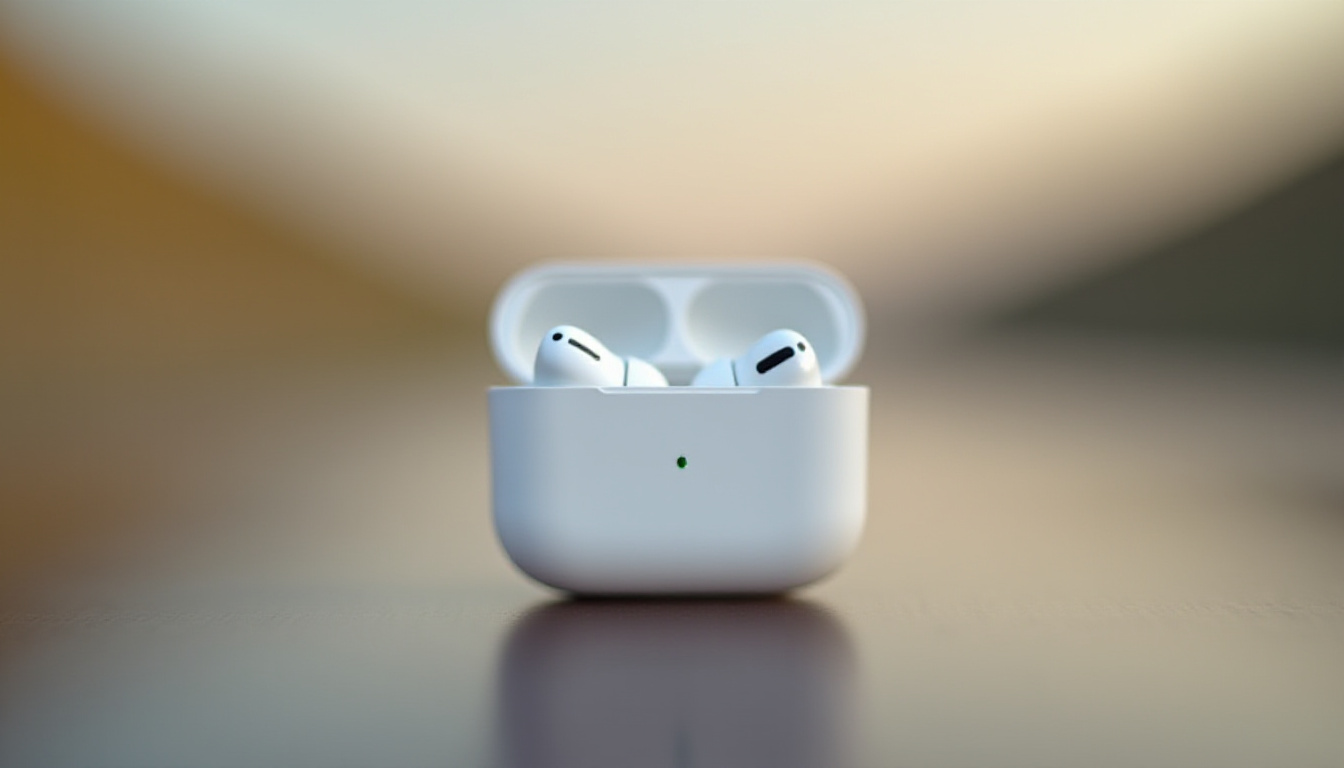
Apple AirPods 5
Check current price and availability on Amazon
In This Article
Apple AirPods 5 Review: Worth the Upgrade?
This article may contain affiliate links. We may earn a commission if you purchase through them, at no extra cost to you.

Apple has a long history of drip-feeding features down from its premium AirPods Pro line to the mainline AirPods — slowly, reluctantly, and usually at the same price or higher. The AirPods 5 break that pattern in a way that is genuinely hard to ignore. Active noise cancellation on both models, better water resistance, force sensor volume controls on the higher tier, and a launch price lower than the AirPods 4. For anyone who has been sitting on ageing AirPods waiting for the right moment to upgrade, or for anyone who has always wanted ANC but refused to pay Pro prices, the AirPods 5 may well be that moment.
But "on paper" and "in practice" are two different things. Let's break down exactly what you get, what the frequency response data actually tells us, where Apple cut corners, and whether the price difference between the two AirPods 5 tiers is justified.
AirPods 5 Specs and Pricing: What Has Actually Changed
The AirPods 5 come in two variants. Both share a common foundation that is a significant step up from the AirPods 4:
- Active Noise Cancellation (ANC): Present on both models, rated at 1.5× the effectiveness of AirPods 4 ANC
- IP57 dust and water resistance: Up from IP54 on the previous generation — a meaningful upgrade for gym-goers and commuters caught in rain
- Stem design: No silicone ear tips, open-ear fit retained for those who dislike in-canal earbuds
Where the two models diverge:
| Feature | AirPods 5 (Wired Case) | AirPods 5 (Wireless Charging Case) |
|---|---|---|
| Price (USD) | $129 | $149 |
| ANC | ✅ | ✅ |
| IP Rating | IP57 | IP57 |
| Volume Force Sensor | ❌ | ✅ |
| Extra Battery (ANC on) | — | +1 hour |
| Extra Case Battery | — | +2 hours |
| Find My Speaker in Case | ❌ | ✅ |
| Wireless Charging | ❌ | ✅ |
For context, the AirPods 4 with ANC launched at $179. The AirPods 5 wireless charging model lands at $149 — $30 cheaper and materially better. That is not a common sentence to write about an Apple product launch.
Sound Quality: The Frequency Response Data Explained
This is where things get interesting. Using a head and torso simulator — the same type of equipment used in professional audio labs — objective frequency response measurements reveal a nuanced picture of how the AirPods 5 actually sound.
The results, mapped against the average listener preference window, show:
Sub-bass (below 30 Hz): Rolls off slightly at the very deepest end, but stays remarkably close to the preferred range — exceptional performance for an open-ear earbud that does not seal into the ear canal. Most earbuds without a seal lose substantial bass energy here.
Bass (30 Hz – 200 Hz): Near-perfect. Described by audio engineers as "damn near perfect" — punchy and rich without being bloated or boomy. This is the sweet spot that most listeners instinctively prefer.
Mid-range: Starts with a slight warm elevation in the lower mids, which adds some richness to vocals and instruments. Acceptable, though lower male vocals may occasionally sound a touch fuller than intended.
Upper mid-range (around 2–4 kHz): Here is the biggest criticism. There is a noticeable scoop — a dip — that hits its lowest point at approximately 3 kHz, which happens to be one of the most sensitive frequency ranges for human hearing. This region governs vocal presence, the intelligibility of speech, and the forward clarity of instruments. The dip is not catastrophic, and for open-ear earbuds (as opposed to over-ear or in-canal headphones), some recess in this region is increasingly accepted and even preferred. But it is deeper than ideal, and the more natural target would be just barely below the preference window rather than this far under it.
Treble: Rises back up and occasionally peaks above the preference bounds, lending a slightly sparkly or airy character to high-frequency content. Not harsh, but present.
Compared to AirPods 4: The AirPods 4 had more bass, but the measurements suggest it crossed into "too much" territory for an open-ear design. The AirPods 5 pull that back to something more controlled. The upper mid-range dip exists on both models but takes a slightly different shape — neither is perfect, and both can make certain vocal frequencies sound mildly recessed. Overall, the AirPods 5 tuning is more refined and more broadly palatable.
One important caveat: because these are open-ear earbuds without a seal, fit variation dramatically affects bass response. The same pair of AirPods 5 can measure anywhere from very bass-heavy to relatively flat depending on exact placement in the ear. The treble consistency is much more reliable across placements.
ANC Performance: Real-World Context
The lab testing setup used for the frequency response measurements does not capture ANC efficacy directly — that requires a controlled noise environment. What we can say is that Apple claims 1.5× better ANC than the AirPods 4, and that the AirPods 4 ANC was already serviceable for commuter use.
For practical perspective: the AirPods 5 ANC will not compete with the AirPods Pro 2 or Pro 3 in raw noise reduction. An open-ear design has a fundamental physical limitation — without a seal, external sound has a direct acoustic path into the ear, meaning the ANC system is fighting an uphill battle compared to in-ear designs. What ANC on open-ear earbuds does well is reduce steady-state ambient noise — the drone of public transport, air conditioning hum, open-plan office chatter — rather than eliminating it entirely.
For commuters, students, or anyone who spends time in mildly noisy environments but finds silicone tips uncomfortable, the AirPods 5 ANC is a genuinely useful addition at this price point. For frequent flyers or those in loud factory or construction environments, the Pro models remain the more capable choice.
Pros and Cons
Pros
- ANC on both models — no longer a Pro-exclusive feature
- IP57 water resistance — a meaningful real-world upgrade for workouts and commutes
- Cleaner, more controlled bass than the AirPods 4
- Force sensor volume controls on the wireless charging model
- Priced lower than the AirPods 4 at launch — $129 / $149 vs $179
- No silicone tips — open-ear comfort retained
- Find My speaker in case (wireless charging version)
Cons
- Upper mid-range dip around 3 kHz affects vocal presence and clarity
- ANC limited by open-ear design — cannot match sealed in-ear performance
- Confusing naming scheme — both versions are called "AirPods 5" with the only differentiator being the case type, despite meaningful hardware differences
- Force sensor volume control is wireless-case-exclusive — an odd feature gate
- Fit-dependent sound — bass response varies significantly based on ear geometry
- No spatial audio personalisation without Face ID device
Who Should Buy the AirPods 5 — and Who Should Not
Buy the AirPods 5 if:
- You currently own AirPods 3 or older and want a meaningful upgrade
- You want ANC but find silicone ear tips uncomfortable
- You are a daily commuter on public transit or a regular traveller
- You have a budget closer to $130–$150 and cannot justify $249 for the AirPods Pro
- You are already in the Apple ecosystem and want seamless device switching
Skip the AirPods 5 if:
- You need maximum noise cancellation — the Pro 2 or Pro 3 are worth the premium
- You are an audiophile or someone who finds upper-mid recesses genuinely distracting
- You already own AirPods 4 with ANC — the incremental gains do not justify the cost
- You primarily use non-Apple devices — many competing earbuds offer similar or better specs with broader compatibility at similar prices
On the two tiers: The $20 premium for the wireless charging case model is almost certainly worth it. You gain the force sensor volume controls (a genuinely useful daily feature), Find My in the case, extra battery life, and wireless charging. Unless $20 is genuinely a stretch, go for the wireless charging version.
AirPods 5 vs The Competition
Free Weekly Newsletter
Enjoying this guide?
Get the best articles like this one delivered to your inbox every week. No spam.
| Product | Price (USD) | ANC | Fit Type | IP Rating | Battery (ANC on) |
|---|---|---|---|---|---|
| AirPods 5 (Wireless) | $149 | ✅ | Open-ear | IP57 | ~5 hrs |
| AirPods Pro 3 | $249 | ✅ (stronger) | In-ear | IP57 | ~6 hrs |
| Google Pixel Buds A-Series | $99 | ❌ | In-ear | IPX4 | ~5 hrs |
| Samsung Galaxy Buds FE | $99 | ✅ | In-ear | IPX2 | ~6 hrs |
| Sony WF-C510 | $99 | ✅ | In-ear | IP55 | ~5.5 hrs |
| Jabra Evolve2 Buds | $249 | ✅ | In-ear | IP57 | ~6 hrs |
The AirPods 5 sit in a genuinely interesting competitive position. For Android users, alternatives like the Sony WF-C510 or Samsung Galaxy Buds FE offer ANC at a lower price with better sealing. For iPhone users, the seamless integration, Transparency mode, and ecosystem features of the AirPods 5 carry real practical value that is difficult to replicate with third-party earbuds.
Overall Rating
Sound Quality: 7.5/10 — Impressive bass for an open-ear design; upper-mid dip is the only notable weakness ANC Performance: 6.5/10 — Useful for commuters; limited by open-ear physics Build & Comfort: 8.5/10 — IP57 is excellent; tip-free design suits many ears Value for Money: 9/10 — Harder to argue with at $129–$149 Feature Set: 8/10 — ANC, force controls, Find My, wireless charging across the range
Overall: 8/10
Verdict: The AirPods 5 are the most consumer-friendly mainstream AirPods Apple has released. Bringing ANC, IP57 resistance, and force sensor controls to the non-Pro line — at a price lower than their predecessor — is a move that deserves recognition. The sound quality is solid rather than exceptional, with a competent bass response undercut slightly by an upper-mid scoop that affects vocal clarity. For the open-ear earbud buyer who wants ANC without silicone tips and without Pro prices, the AirPods 5 are the obvious answer. Buy the wireless charging case version. The extra $20 buys you features you will use every day.
Where to Buy
Frequently Asked Questions
Are the AirPods 5 worth it if I already own AirPods 4?
Probably not. If you have the AirPods 4 with ANC, the upgrade gains — better IP rating, cleaner tuning, force sensor controls — are real but incremental. Wait for a generation. If you own the AirPods 4 without ANC and find yourself wishing for noise cancellation on public transport or in noisy offices, the $149 price point makes a switch much easier to justify.
Which AirPods 5 model should I buy — wired or wireless charging case?
Unless you are on a very tight budget, the wireless charging case model at $149 is the better buy. It adds force sensor volume controls (swipe up/down on the stem), one more hour of ANC listening time, two more hours of case battery, a Find My speaker in the case, and wireless charging. That is a meaningful feature difference for a $20 premium.
How does ANC on the AirPods 5 compare to the AirPods Pro?
The AirPods Pro 2 and Pro 3 deliver significantly stronger active noise cancellation because their in-ear design creates a physical seal. The AirPods 5 ANC is useful for reducing steady ambient noise — transit hum, office chatter, air conditioning — but cannot block out sound the way a sealed earbud can. If maximum noise isolation is your priority, the Pro models are worth the extra spend. If you just want the edge taken off your daily commute, the AirPods 5 ANC is more than adequate.
Are the AirPods 5 good for Android users?
They work with Android devices for basic audio playback, but you lose a significant portion of the value proposition. Features like seamless Apple device switching, Siri integration, Personalised Spatial Audio, and iCloud-synced settings are all iOS/macOS exclusive. For Android users, alternatives like the Sony WF-C510 or Samsung Galaxy Buds FE offer competitive ANC and sound quality at similar or lower prices with full Android feature support.
Is the upper mid-range dip a dealbreaker for music listening?
For most listeners, no. The dip around 3 kHz affects vocal presence and the forward clarity of certain instruments, but it is not an extreme distortion — it is a recess, not a spike or harsh peak. Many listeners actually prefer a slightly pulled-back upper mid-range, particularly in earbuds they wear for extended periods. If you are very sensitive to vocal clarity or primarily listen to acoustic music and spoken-word content, you may notice it. For pop, hip-hop, electronic, or mixed playlists, it is unlikely to bother you.
Apple AirPods 5
Considering it? See where the price stands today
Frequently Asked Questions
AirPods 5 Specs and Pricing: What Has Actually Changed
The AirPods 5 come in two variants. Both share a common foundation that is a significant step up from the AirPods 4:
- Active Noise Cancellation (ANC): Present on both models, rated at 1.5× the effectiveness of AirPods 4 ANC
- IP57 dust and water resistance: Up from IP54 on the previous generation — a meaningful upgrade for gym-goers and commuters caught in rain
- Stem design: No silicone ear tips, open-ear fit retained for those who dislike in-canal earbuds
Where the two models diverge:
| Feature | AirPods 5 (Wired Case) | AirPods 5 (Wireless Charging Case) |
|---|---|---|
| Price (USD) | $129 | $149 |
| ANC | ✅ | ✅ |
| IP Rating | IP57 | IP57 |
| Volume Force Sensor | ❌ | ✅ |
| Extra Battery (ANC on) | — | +1 hour |
| Extra Case Battery | — | +2 hours |
| Find My Speaker in Case | ❌ | ✅ |
| Wireless Charging | ❌ | ✅ |
For context, the AirPods 4 with ANC launched at $179. The AirPods 5 wireless charging model lands at $149 — $30 cheaper and materially better. That is not a common sentence to write about an Apple product launch.
Sound Quality: The Frequency Response Data Explained
This is where things get interesting. Using a head and torso simulator — the same type of equipment used in professional audio labs — objective frequency response measurements reveal a nuanced picture of how the AirPods 5 actually sound.
The results, mapped against the average listener preference window, show:
Sub-bass (below 30 Hz): Rolls off slightly at the very deepest end, but stays remarkably close to the preferred range — exceptional performance for an open-ear earbud that does not seal into the ear canal. Most earbuds without a seal lose substantial bass energy here.
Bass (30 Hz – 200 Hz): Near-perfect. Described by audio engineers as "damn near perfect" — punchy and rich without being bloated or boomy. This is the sweet spot that most listeners instinctively prefer.
Mid-range: Starts with a slight warm elevation in the lower mids, which adds some richness to vocals and instruments. Acceptable, though lower male vocals may occasionally sound a touch fuller than intended.
Upper mid-range (around 2–4 kHz): Here is the biggest criticism. There is a noticeable scoop — a dip — that hits its lowest point at approximately 3 kHz, which happens to be one of the most sensitive frequency ranges for human hearing. This region governs vocal presence, the intelligibility of speech, and the forward clarity of instruments. The dip is not catastrophic, and for open-ear earbuds (as opposed to over-ear or in-canal headphones), some recess in this region is increasingly accepted and even preferred. But it is deeper than ideal, and the more natural target would be just barely below the preference window rather than this far under it.
Treble: Rises back up and occasionally peaks above the preference bounds, lending a slightly sparkly or airy character to high-frequency content. Not harsh, but present.
Compared to AirPods 4: The AirPods 4 had more bass, but the measurements suggest it crossed into "too much" territory for an open-ear design. The AirPods 5 pull that back to something more controlled. The upper mid-range dip exists on both models but takes a slightly different shape — neither is perfect, and both can make certain vocal frequencies sound mildly recessed. Overall, the AirPods 5 tuning is more refined and more broadly palatable.
One important caveat: because these are open-ear earbuds without a seal, fit variation dramatically affects bass response. The same pair of AirPods 5 can measure anywhere from very bass-heavy to relatively flat depending on exact placement in the ear. The treble consistency is much more reliable across placements.
ANC Performance: Real-World Context
The lab testing setup used for the frequency response measurements does not capture ANC efficacy directly — that requires a controlled noise environment. What we can say is that Apple claims 1.5× better ANC than the AirPods 4, and that the AirPods 4 ANC was already serviceable for commuter use.
For practical perspective: the AirPods 5 ANC will not compete with the AirPods Pro 2 or Pro 3 in raw noise reduction. An open-ear design has a fundamental physical limitation — without a seal, external sound has a direct acoustic path into the ear, meaning the ANC system is fighting an uphill battle compared to in-ear designs. What ANC on open-ear earbuds does well is reduce steady-state ambient noise — the drone of public transport, air conditioning hum, open-plan office chatter — rather than eliminating it entirely.
For commuters, students, or anyone who spends time in mildly noisy environments but finds silicone tips uncomfortable, the AirPods 5 ANC is a genuinely useful addition at this price point. For frequent flyers or those in loud factory or construction environments, the Pro models remain the more capable choice.
Pros and Cons
Pros
- ANC on both models — no longer a Pro-exclusive feature
- IP57 water resistance — a meaningful real-world upgrade for workouts and commutes
- Cleaner, more controlled bass than the AirPods 4
- Force sensor volume controls on the wireless charging model
- Priced lower than the AirPods 4 at launch — $129 / $149 vs $179
- No silicone tips — open-ear comfort retained
- Find My speaker in case (wireless charging version)
Cons
- Upper mid-range dip around 3 kHz affects vocal presence and clarity
- ANC limited by open-ear design — cannot match sealed in-ear performance
- Confusing naming scheme — both versions are called "AirPods 5" with the only differentiator being the case type, despite meaningful hardware differences
- Force sensor volume control is wireless-case-exclusive — an odd feature gate
- Fit-dependent sound — bass response varies significantly based on ear geometry
- No spatial audio personalisation without Face ID device
Who Should Buy the AirPods 5 — and Who Should Not
Buy the AirPods 5 if:
- You currently own AirPods 3 or older and want a meaningful upgrade
- You want ANC but find silicone ear tips uncomfortable
- You are a daily commuter on public transit or a regular traveller
- You have a budget closer to $130–$150 and cannot justify $249 for the AirPods Pro
- You are already in the Apple ecosystem and want seamless device switching
Skip the AirPods 5 if:
- You need maximum noise cancellation — the Pro 2 or Pro 3 are worth the premium
- You are an audiophile or someone who finds upper-mid recesses genuinely distracting
- You already own AirPods 4 with ANC — the incremental gains do not justify the cost
- You primarily use non-Apple devices — many competing earbuds offer similar or better specs with broader compatibility at similar prices
On the two tiers: The $20 premium for the wireless charging case model is almost certainly worth it. You gain the force sensor volume controls (a genuinely useful daily feature), Find My in the case, extra battery life, and wireless charging. Unless $20 is genuinely a stretch, go for the wireless charging version.
AirPods 5 vs The Competition
| Product | Price (USD) | ANC | Fit Type | IP Rating | Battery (ANC on) |
|---|---|---|---|---|---|
| AirPods 5 (Wireless) | $149 | ✅ | Open-ear | IP57 | ~5 hrs |
| AirPods Pro 3 | $249 | ✅ (stronger) | In-ear | IP57 | ~6 hrs |
| Google Pixel Buds A-Series | $99 | ❌ | In-ear | IPX4 | ~5 hrs |
| Samsung Galaxy Buds FE | $99 | ✅ | In-ear | IPX2 | ~6 hrs |
| Sony WF-C510 | $99 | ✅ | In-ear | IP55 | ~5.5 hrs |
| Jabra Evolve2 Buds | $249 | ✅ | In-ear | IP57 | ~6 hrs |
The AirPods 5 sit in a genuinely interesting competitive position. For Android users, alternatives like the Sony WF-C510 or Samsung Galaxy Buds FE offer ANC at a lower price with better sealing. For iPhone users, the seamless integration, Transparency mode, and ecosystem features of the AirPods 5 carry real practical value that is difficult to replicate with third-party earbuds.
Overall Rating
Sound Quality: 7.5/10 — Impressive bass for an open-ear design; upper-mid dip is the only notable weakness ANC Performance: 6.5/10 — Useful for commuters; limited by open-ear physics Build & Comfort: 8.5/10 — IP57 is excellent; tip-free design suits many ears Value for Money: 9/10 — Harder to argue with at $129–$149 Feature Set: 8/10 — ANC, force controls, Find My, wireless charging across the range
Overall: 8/10
Verdict: The AirPods 5 are the most consumer-friendly mainstream AirPods Apple has released. Bringing ANC, IP57 resistance, and force sensor controls to the non-Pro line — at a price lower than their predecessor — is a move that deserves recognition. The sound quality is solid rather than exceptional, with a competent bass response undercut slightly by an upper-mid scoop that affects vocal clarity. For the open-ear earbud buyer who wants ANC without silicone tips and without Pro prices, the AirPods 5 are the obvious answer. Buy the wireless charging case version. The extra $20 buys you features you will use every day.
Where to Buy
Frequently Asked Questions
Are the AirPods 5 worth it if I already own AirPods 4?
Probably not. If you have the AirPods 4 with ANC, the upgrade gains — better IP rating, cleaner tuning, force sensor controls — are real but incremental. Wait for a generation. If you own the AirPods 4 without ANC and find yourself wishing for noise cancellation on public transport or in noisy offices, the $149 price point makes a switch much easier to justify.
Which AirPods 5 model should I buy — wired or wireless charging case?
Unless you are on a very tight budget, the wireless charging case model at $149 is the better buy. It adds force sensor volume controls (swipe up/down on the stem), one more hour of ANC listening time, two more hours of case battery, a Find My speaker in the case, and wireless charging. That is a meaningful feature difference for a $20 premium.
How does ANC on the AirPods 5 compare to the AirPods Pro?
The AirPods Pro 2 and Pro 3 deliver significantly stronger active noise cancellation because their in-ear design creates a physical seal. The AirPods 5 ANC is useful for reducing steady ambient noise — transit hum, office chatter, air conditioning — but cannot block out sound the way a sealed earbud can. If maximum noise isolation is your priority, the Pro models are worth the extra spend. If you just want the edge taken off your daily commute, the AirPods 5 ANC is more than adequate.
Are the AirPods 5 good for Android users?
They work with Android devices for basic audio playback, but you lose a significant portion of the value proposition. Features like seamless Apple device switching, Siri integration, Personalised Spatial Audio, and iCloud-synced settings are all iOS/macOS exclusive. For Android users, alternatives like the Sony WF-C510 or Samsung Galaxy Buds FE offer competitive ANC and sound quality at similar or lower prices with full Android feature support.
Is the upper mid-range dip a dealbreaker for music listening?
For most listeners, no. The dip around 3 kHz affects vocal presence and the forward clarity of certain instruments, but it is not an extreme distortion — it is a recess, not a spike or harsh peak. Many listeners actually prefer a slightly pulled-back upper mid-range, particularly in earbuds they wear for extended periods. If you are very sensitive to vocal clarity or primarily listen to acoustic music and spoken-word content, you may notice it. For pop, hip-hop, electronic, or mixed playlists, it is unlikely to bother you.
Apple AirPods 5
Ready to decide? Compare the current price before you buy
About Zeebrain Editorial
Zeebrain publishes independent analysis of markets, investing, personal finance, and business. We disclose affiliate relationships, never accept payment for coverage, and fact-check all claims against primary sources. Read our editorial policy →
How this article was produced: Zeebrain articles are created with AI assistance from primary sources (including cited videos and market data) and reviewed under our editorial standards before publication. Spot an error? Tell us and we will correct it.
Disclaimer: Content on Zeebrain is for informational and educational purposes only and does not constitute financial advice or a recommendation to buy or sell any security. Always conduct your own research and consult a qualified financial adviser before making investment decisions. Past performance is not indicative of future results.
More from Review




Related Guides
Keep exploring this topic
Explore More Categories
Keep browsing by topic and build depth around the subjects you care about most.